
Discover new books on Goodreads
Meet your next favorite book






“And so, beginning with the small early frustrations and deprivations, the child is helped to govern himself. his ego develops by learning to regulate his own food intake and feces evacuation: he has to learn to adapt to a social schedule, to an external measure of time, in place of a biological schedule of internal urges. In all this he makes a bitter discovery: that he is no longer himself, just by seeking pleasure. There may be more excitement in the world but the fun keep getting interrupted. For some strange reason the mother doesn’t share his glee over a bowel movement on the sofa. The child finds that he has to “earn" the mother’s love by performing in a certain way. He comes to realize that he has to abandon the idea of “total excitement" and “uninterrupted fun," if he wants to keep a secure background of love from the mother. This is what Alfred Adler meant when he spoke of the child’s need for affection as the “lever" of his education. The child learns to accept frustrations so long as the total relationship is not endangered. This is what the psychoanalytic word “ambivalence" so nicely covers: the child may hesitate between giving up what has previously been an assured satisfaction, and proceeding to a new type of conduct which will be rewarded by a new kind of acceptance. Does he want to keep the breast instead of switching to the bottle? He finds that if he makes this switch he gets a special cooing of praise and a little extra attention. Ambivalence describes the process whereby the infant is propelled forward into increasing mastery by his developing ego, while at the same time he is lulled backward into a safe dependence by his need for approval and easy gratification; he is caught in the bind, as we all are, between new and uncertain rewards and tried and tested ones.”
―
―
“By the time we grow up we become masters at dissimulation, at cultivating a self that the world cannot probe. But we pay a price. After years of turning people away, of protecting our inner self, of cultivating it by living in a different world, of furnishing this world with our fantasies and dreams—lo and behold we find that we are hopelessly separated from everyone else. We have become victims of our own art. We touch people on the outsides of their bodies, and they us, but we cannot get at their insides and cannot reveal our insides to them. This is one of the great tragedies of our interiority—it is utterly personal and unrevealable. Often we want to say something unusually intimate to a spouse, a parent, a friend, communicate something of how we are really feeling about a sunset, who we really feel we are—only to fall strangely and miserably flat. Once in a great while we succeed, sometimes more with one person, less or never with others. But the occasional break-through only proves the rule. You reach out with a disclosure, fail, and fall back bitterly into yourself. We emit huge globs of love to our parents and spouses, and the glob slithers away in exchange of words that are somehow beside the point of what we are trying to say. People seem to keep bumping up against each other with their exteriors and falling away from each other. The cartoonist Jules Feiffer is the modern master of this aspect of the human tragedy. Take even the sexual act—the most intimate merger given to organisms. For most people, even for their entire lives, it is simply a joining of exteriors. The insides melt only in the moment of orgasm, but even this is brief, and a melting is not a communication. It is a physical overcoming of separateness, not a symbolic revelation and justification of one’s interior. many people pursue sex precisely because it is a mystique of the overcoming of the separateness of the inner world, and they go from one partner to another because they can never quite achieve “it." So the endless interrogations: “What are you thinking about right now—me? Do you feel what I feel? Do you love me?”
―
―

“If, as Moses Mendelssohn maintains, Judaism is not a religion but a revealed legislation, it seems strange that such a God should be its author and symbol. He who has, precisely, nothing of the legislator about Him. Incapable of the slightest effort of objectivity, He dispenses justice according to His whim, without any code to limit His divagations and His impulses. He is a despot as jittery as He is aggressive, saturated with complexes, an ideal subject for psychoanalysis. He disarms metaphysics, which detects in Him no trace of a substantial, self-sufficient Being superior to the world and content with the interval that separates Him from it. A clown who has inherited heaven and who there perpetuates the wost traditions of earth, he employes means, astounded by His own power and proud of having made its effects felt. Yet His vehemence, His shifts of mood, His spasmodic outbursts finally attract, if they do not convince us. Not at all resigned to His eternity, He intervenes in the affairs of earth, makes a mess of them, sowing confusion and clutter. He disconcerts, irritates, seduces.”
― The Temptation to Exist
― The Temptation to Exist
“The only thing we accomplish by accenting the child’s constitution, his temperament, his natural dilemmas and his own synthesizing activity, is to take the parents “off the hook" of their own burden of guilt for how their children turn out. But why should they have such unreasonable guilt anyway? Didn’t Nietzsche point out that the only creatures who deserve to feel guilt (or pride) are gods, since only they have undisputed freedom of action? Perhaps we could say that if parents want to feel a bit godlike they are entitled to feel a little guilt; and if they were gods they would deserve to feel plenty.”
―
―
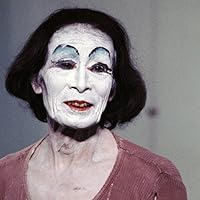
“In reply to the often asked question why he performs dressed as a woman, Kazuo has repeatedly stated: “My intention in dressing as a woman onstage has never been to become a female impersonator, or to transform myself into a woman. Rather, I want to trace my life back to its most distant origins. More so than anything else, I long to return to where I’ve come from.”
― Kazuo Ohno's World: from without & within
― Kazuo Ohno's World: from without & within


Marcus’s 2025 Year in Books
Take a look at Marcus’s Year in Books, including some fun facts about their reading.

240 books
|
22 friends

372 books
|
517 friends

1,327 books
|
100 friends

1,080 books
|
500 friends

435 books
|
113 friends

304 books
|
18 friends

385 books
|
65 friends

319 books
|
10 friends
More friends…


Favorite Genres
Polls voted on by Marcus
Lists liked by Marcus