This will prevent Jignesh from sending you messages, friend request or from viewing your profile. They will not be notified. Comments on discussion boards from them will be hidden by default.
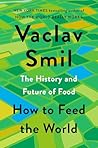
Before the advent of domestication (this began about 12,000 years ago in several regions of the Middle East), the most likely range of global population was 2–4 million people; by the beginning of the Common Era (that is when Augustus wasBefore the advent of domestication (this began about 12,000 years ago in several regions of the Middle East), the most likely range of global population was 2–4 million people; by the beginning of the Common Era (that is when Augustus was the first Roman emperor, around 2,000 years ago), the most likely range of the global population was roughly a hundred times larger, between 150 and 300 million people.[16]...more
“Curiosity might be pictured as being made up of chains of small questions extending outwards, sometimes over huge distances, from a central hub composed of a few blunt, large questions. In childhood we ask, ‘Why is there good and evil?’ ‘How does nature work?’ ‘Why am I me?’ If circumstances and temperament allow, we then build on these questions during adulthood, our curiosity encompassing more and more of the world until at some point we may reach that elusive stage where we are bored by nothing. The blunt large questions become connected to smaller, apparently esoteric ones. We end up wondering about flies on the sides of mountains or about a particular fresco on the wall of a sixteenth-century palace. We start to care about the foreign policy of a long-dead Iberian monarch or about the role of peat in the Thirty Years’ War.”
―
Alain de Botton,
The Art of Travel
“at the beginning of the eighteenth century, a word came to prominence by means of which it became possible to indicate a specific response towards precipices and glaciers, night skies and boulder-strewn deserts. In their presence one was likely to experience, and could count on being understood if one reported that one had felt, a sense of the sublime.”
―
Alain de Botton,
The Art of Travel
“One of Wordsworth’s poetic ambitions was to induce us to see the many animals living alongside us that we typically ignore, registering them only out of the corner of our eyes and feeling no appreciation for what they are up to and want: shadowy, generic presences such as the bird up on the steeple and the rustling creature in the bush. He invited his readers to abandon their usual perspectives and to consider for a time how the world might look through other eyes, to shuttle between the human and the natural perspective. Why might this be interesting, or even inspiring? Perhaps because unhappiness can stem from having only one perspective to play with.”
―
Alain de Botton,
The Art of Travel
“If the world seems unfair or beyond our understanding, sublime places suggest that it is not surprising that things should be thus. We are the playthings of the forces that laid out the oceans and chiselled the mountains. Sublime places gently move us to acknowledge limitations that we might otherwise encounter with anxiety or anger in the ordinary flow of events. It is not just nature that defies us. Human life is as overwhelming. But it is the vast spaces of nature that perhaps provide us with the finest, the most respectful reminder of all that exceeds us. If we spend time in them, they may help us to accept more graciously the great, unfathomable events that molest our lives and will inevitably return us to dust.”
―
Alain de Botton,
The Art of Travel