
Discover new books on Goodreads
Meet your next favorite book



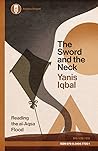
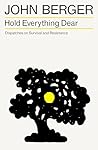

Throughout the Americas, from Canada down to Argentina, European colonization killed between fifty million and seventy million indigenous people, around 90 percent of the native American population. Scientists recently concluded that the
...more


“Perhaps to the soldier the civilian is the man who employs him to kill, who includes the guilt of murder in the pay-envelope and escapes responsibility.”
― The Quiet American
― The Quiet American

“For guardians of the status quo, there is nothing genuinely or fundamentally wrong with the prevailing order and its dominant institutions, which are viewed as just. Therefore, anyone claiming otherwise—especially someone sufficiently motivated by that belief to take radical action—must, by definition, be emotionally unstable and psychologically disabled. Put another way, there are, broadly speaking, two choices: obedience to institutional authority or radical dissent from it. The first is a sane and valid choice only if the second is crazy and illegitimate. . . . Radical dissent is evidence, even proof, of a severe personality disorder.” —Glenn Greenwald, No Place to Hide: Edward Snowden, the NSA, and the U.S. Surveillance State, 2014”
― Resisting Illegitimate Authority: A Thinking Person's Guide to Being an Anti-Authoritarian—Strategies, Tools, and Models
― Resisting Illegitimate Authority: A Thinking Person's Guide to Being an Anti-Authoritarian—Strategies, Tools, and Models

“Never believe that anti-Semites are completely unaware of the absurdity of their replies. They know that their remarks are frivolous, open to challenge. But they are amusing themselves, for it is their adversary who is obliged to use words responsibly, since he believes in words. The anti-Semites have the right to play. They even like to play with discourse for, by giving ridiculous reasons, they discredit the seriousness of their interlocutors. They delight in acting in bad faith, since they seek not to persuade by sound argument but to intimidate and disconcert. If you press them too closely, they will abruptly fall silent, loftily indicating by some phrase that the time for argument is past.”
―
―

“Elmore Leonard's Ten Rules of Writing
1. Never open a book with weather.
2. Avoid prologues.
3. Never use a verb other than "said" to carry dialogue.
4. Never use an adverb to modify the verb "said”…he admonished gravely.
5. Keep your exclamation points under control. You are allowed no more than two or three per 100,000 words of prose.
6. Never use the words "suddenly" or "all hell broke loose."
7. Use regional dialect, patois, sparingly.
8. Avoid detailed descriptions of characters.
9. Don't go into great detail describing places and things.
10. Try to leave out the part that readers tend to skip.
My most important rule is one that sums up the 10.
If it sounds like writing, I rewrite it.”
―
1. Never open a book with weather.
2. Avoid prologues.
3. Never use a verb other than "said" to carry dialogue.
4. Never use an adverb to modify the verb "said”…he admonished gravely.
5. Keep your exclamation points under control. You are allowed no more than two or three per 100,000 words of prose.
6. Never use the words "suddenly" or "all hell broke loose."
7. Use regional dialect, patois, sparingly.
8. Avoid detailed descriptions of characters.
9. Don't go into great detail describing places and things.
10. Try to leave out the part that readers tend to skip.
My most important rule is one that sums up the 10.
If it sounds like writing, I rewrite it.”
―

“There’s a simple reason for this. The more shots you get at the target, the more likely you’ll eventually score a bull’s-eye, but the more misses you’ll accrue as well. The bull’s-eyes end up in museums and on library shelves, not the misses. Which, when you think about it, is a shame. It feeds the myth that geniuses get it right the first time, that they don’t make mistakes, when, in fact, they make more mistakes than the rest of us. What”
― The Geography of Genius: A Search for the World's Most Creative Places from Ancient Athens to Silicon Valley
― The Geography of Genius: A Search for the World's Most Creative Places from Ancient Athens to Silicon Valley



Johnnie’s 2025 Year in Books
Take a look at Johnnie’s Year in Books, including some fun facts about their reading.

604 books
|
79 friends

1,234 books
|
3 friends

1,340 books
|
132 friends

18 books
|
103 friends

12 books
|
32 friends

0 books
|
27 friends

2 books
|
315 friends

0 books
|
46 friends
More friends…


Favorite Genres
Biography, Classics, Crime, Fiction, History, Music, Non-fiction, Philosophy, Science fiction, Self help, Sports, and Travel
Polls voted on by Johnnie
Lists liked by Johnnie