
 Sign in with Facebook


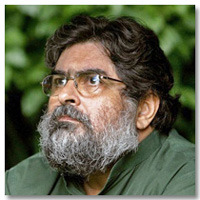
Nagender Sangra
is currently reading
Reading for the 2nd time
progress:
(3%)
"it is the most fantastic book in my hole history .I hope you have already read or done comments and get like in this book . I am crying for only three likes .If you like my comment please click on like button." — Oct 24, 2017 04:44AM
"it is the most fantastic book in my hole history .I hope you have already read or done comments and get like in this book . I am crying for only three likes .If you like my comment please click on like button." — Oct 24, 2017 04:44AM


“In my study, next to my desk, is a locked bookcase that contains a collection of volumes I value more than any of the hundreds of other books that fill a multitude of shelves in our home. Of these precious publications, the most prized and well-guarded is a slim first edition of 104 pages, simply titled Jungle Stories by Jim Corbett. The cover is of plain brown paper, with no illustrations or colouring. This thin little book was privately printed by Corbett, for family and friends, at the London Press in Nainital in 1935. Only a hundred copies were produced, of which very few remain. My copy came to me through my parents. They were given it by friends, who had once been Corbett’s neighbours in Nainital. By the time I received it, the book had been covered with a protective sleeve of clear plastic. The title page is signed by Jim Corbett, in a neat, fastidious hand. Several years after Jungle Stories was published, Lord Linlithgow, Viceroy of India from 1936-43, requested a copy. He had met Corbett, who assisted in organizing viceregal shoots in the terai and was already regarded as a legendary shikari and raconteur. After reading the book, Linlithgow recommended that it be published by the Oxford University Press in Bombay. Jungle Stories is, essentially, the first draft of Man-eaters of Kumaon. Several of the chapters are identical, including stories of ‘The Pipal Pani Tiger’ and ‘The Chowgarh Tigers’, as well as an angling interlude, ‘The Fish of My Dreams.’ Corbett expanded this book into its present form by adding six more tales, including an account of the first man-eater he killed in 1907, near Champawat. This tigress was responsible for the deaths of 436 victims and her destruction helped cement Corbett’s reputation as a hunter. In recognition of his success, Sir J. P. Hewett, Lieutenant Governor of the United Provinces, presented him with a .275 Rigby-Mauser rifle. An engraved citation on a silver plaque was fixed to the stock. Corbett later bequeathed this weapon to the Oxford University Press, who sent it to their head offices in England. Eventually, the gun was confiscated by the police in Oxford because the publishers didn’t have a licence. For a number of years, John Rigby & Co., gunsmiths, displayed the rifle at their showroom in London, along with a copy of Jungle Stories. In February 2016, Corbett’s rifle was purchased at auction by an American hunter for $250,000. Following this, the rifle was brought to India for a week and briefly displayed at Corbett Tiger Reserve, as part of a promotional event. The editor at OUP, who shepherded Man-eaters of Kumaon to publication, was R. E. ‘Hawk’ Hawkins, himself a legend, who contributed greatly to India’s canon of nature writing. In his introduction to a collection of Corbett’s stories, Hawkins describes how this book came into his hands:”
― Man-eaters of Kumaon
― Man-eaters of Kumaon

“he importance and influence of Charles Darwin’s theory of evolution by natural selection can scarcely be exaggerated. A century after Darwin’s death, the great evolutionary biologist and historian of science, Ernst Mayr, wrote, ‘The worldview formed by any thinking person in the Western world after 1859, when On the Origin of Species was published, was by necessity quite different from a worldview formed prior to 1859… The intellectual revolution generated by Darwin went far beyond the confines of biology, causing the overthrow of some of the most basic beliefs of his age.’1 Adrian Desmond and James Moore, Darwin’s biographers, contend, ‘Darwin is arguably the best known scientist in history. More than any modern thinker—even Freud or Marx—this affable old-world naturalist from the minor Shropshire gentry has transformed the way we see ourselves on the planet.’2 In the words of the philosopher Daniel C. Dennett, ‘Almost no one is indifferent to Darwin, and no one should be. The Darwinian theory is a scientific theory, and a great one, but that is not all it is… Darwin’s dangerous idea cuts much deeper into the fabric of our most fundamental beliefs than many of its sophisticated apologists have yet admitted, even to themselves.’3 Dennett goes on to add, ‘If I were to give an award for the single best idea anyone has ever had, I’d give it to Darwin, ahead of Newton and Einstein and everyone else. In a single stroke, the idea of evolution by natural selection unifies the realm of life, meaning, and purpose with the realm of space and time, cause and effect, mechanism and physical law.’4 The editors of the Cambridge Companion to Darwin begin their introduction by stating, ‘Some scientific thinkers, while not themselves philosophers, make philosophers necessary. Charles Darwin is an obvious case. His conclusions about the history and diversity of life—including the evolutionary origin of humans—have seemed to bear on fundamental questions about being, knowledge, virtue and justice.’5 Among the fundamental questions raised by Darwin’s work, which are still being debated by philosophers (and others) are these: ‘Are we different in kind from other animals? Do our apparently unique capacities for language, reason and morality point to a divine spark within us, or to ancestral animal legacies still in evidence in our simian relatives? What forms of social life are we naturally disposed towards—competitive and selfish forms, or cooperative and altruistic ones?’6 As the editors of the volume point out, virtually the entire corpus of the foundational works of Western philosophy, from Plato and Aristotle to Descartes to Kant to Hegel, has had to be re-examined in the light of Darwin’s work. Darwin continues to be read, discussed, interpreted, used, abused—and misused—to this day. As the philosopher and historian of science, Jean Gayon, puts it, ‘[T]his persistent positioning of new developments in relation to a single, pioneering figure is quite exceptional in the history of modern natural science.”
― On the Origin of Species
― On the Origin of Species
“I FIRST CAME UNDER THE TIGER’S SPELL FIFTY-FOUR years ago, at the age of ten, sitting astride an elephant in Corbett National Park in the Lower Himalayas of north India. It was early in the morning and ten elephants were sweeping through high grass in an attempt to spring some tigers into a clearing on the far side. I remember looking down from my perch and seeing a tigress snarling up at the elephant and then darting away with two large cubs at her heels. I was struck by that experience and continue to remember it vividly. It was thirteen years after this encounter that I saw my next tiger in Ranthambhore. The year was 1976. That was the year my life with tigers truly began. This book is not only about my favourite tigers but also the very best of my encounters with one of the most magnificent animals to walk the face of the planet. Over the past forty years I have tried to serve them as best as I could. It was a dream for me to publish my first book nearly thirty-five years ago and to share my experiences with tigers with people across the world. This is my thirtieth publication and I have loved every minute of my time as an author. Through my books I have shared some of the best photographs showing the diversity of tigers in the wild. This time around I have used only a bunch of sketches. I have to thank Rose Corcoran for her brilliant sketches. My Ranthambhore journey would not have been possible without Fateh Singh Rathore, the wildlife warden, welcoming me into the folds of the park.”
― Living with Tigers
― Living with Tigers
“Years ago, Once Upon a Time was Right Now. And eventually, Right Now will become Once Upon a Time. In fact, it just did. Time is funny like that. In most stories time is very important. Not in this one. The story may have horses and not cars, but really it could happen now like it did then. Then being Once Upon a Time, years and years ago. The story is one of passion, and last time I checked, passion was still around. It exists in love, hate, obsession. For instance, I have a passion for pickled herring. I can’t live without it. Every day I have to have some. In my salad, raw, on my sandwiches. It tastes great on hamburgers. However, this story is not about pickled herring, but it does have love, hate, and obsession. I tell you about these things first because it is these things that cause everything else, as we know they are prone to do. And there’s a lot of other things in this story, too: There are monsters and mobbers, heroes and heroines, villains and thieves, power and conquest, murder and mayhem (sounds like politics, doesn’t it?), beasts and battles, and last but not least, pride and honor. Oh, and don’t forget arugula! Arugula is very good, though not as good as pickled herring. Even arugula has a place in the story. And what a magnificent story it is! I give myself great credit for coming-up with it. OK. Slight lie. I didn’t (technically) come-up with it. It was actually told to me over and over again by my grandfather. He didn’t come-up with it either, though. I think he got it from his grandfather. And I’m not exactly sure where his grandfather got it from. Probably from some old folklore or something. But as far as I know, it’s a true story. Anyway, if credit is to be given, I guess you can give it to my grandfather, cause he always told it so well. I’ve done some of what ya might call “editing,” but basically I tried to tell it just like he did (he died some years back). I only hope I can give you what he gave me, even though he didn’t give me this story because this entire paragraph was a complete and utter lie. Either way, I think you’ll enjoy what comes...”
― The Stolen Kingdom
― The Stolen Kingdom

Nagender’s 2025 Year in Books
Take a look at Nagender’s Year in Books, including some fun facts about their reading.
Nagender hasn't connected with their friends on Goodreads, yet.


Favorite Genres
Polls voted on by Nagender
Lists liked by Nagender
