This will prevent Emmanuel from sending you messages, friend request or from viewing your profile. They will not be notified. Comments on discussion boards from them will be hidden by default.
Sign in to Goodreads to learn more about Emmanuel.
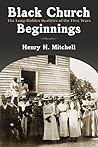
congregations are the main concern of this church history. It is primarily the story of churches as local congregations and spiritual families, and then as members of denominations and other groupings.
“If rules and regulations had the power to change the heart and life of your child , rescuing your child from himself and giving him a heart of submission and faith, Jesus would have never needed to come!”
―
Paul David Tripp,
Parenting: 14 Gospel Principles That Can Radically Change Your Family
“Modern culture has disenchanted the world by disenchanting numbers. For us, numbers are about quantity and control, not quality and contemplation. After Bacon, knowledge of numbers is a key to manipulation, not meditation. Numbers are only meaningful (like all raw materials that comprise the natural world) when we can do something with them. When we read of twelve tribes and twelve apostles and twelve gates and twelve angels, we typically perceive something spreadsheet-able. By contrast, in one of Caldecott’s most radical claims, he insists, “It is not simply that numbers can be used as symbols. Numbers have meaning—they are symbols. The symbolism is not always merely projected onto them by us; much of it is inherent in their nature” (p. 75). Numbers convey to well-ordered imaginations something of (in Joseph Cardinal Ratzinger’s metaphor) the inner design of the fabric of creation. The fact that the words “God said” appear ten times in the account of creation and that there are ten “words” in the Decalogue is not a random coincidence. The beautiful meaningfulness of a numberly world is most evident in the perception of harmony, whether in music, architecture, or physics. Called into being by a three-personed God, creation’s essential relationality is often evident in complex patterns that can be described mathematically. Sadly, as Caldecott laments, “our present education tends to eliminate the contemplative or qualitative dimension of mathematics altogether” (p. 55). The sense of transcendence that many (including mathematicians and musicians) experience when encountering beauty is often explained away by materialists as an illusion. Caldecott offers an explanation rooted in Christology. Since the Logos is love, and since all things are created through him and for him and are held together in him, we should expect the logic, the rationality, the intelligibility of the world to usher in the delight that beauty bestows. One”
―
Stratford Caldecott,
Beauty for Truth's Sake: On the Re-enchantment of Education
“Theology that steps back in time only to hide there from the problems to be faced in the present ends up hidebound and moribund. Or, worse, it becomes an empty scholasticism that refuses to attend to the needs of the present, accepting only what has been hallowed by time and use, as if it is sufficient to look backward without looking forward.”
―
Oliver D. Crisp,
Christology, Ancient and Modern: Explorations in Constructive Dogmatics
“Indeed, the Father was and the Son was born. Do not say, “When?” That’s a stupid question. Do not ask, “How?” An answer is impossible. For “when” has temporal overtones and “how” makes us slide toward corporeal ways of conceptualizing his birth.”
―
Basil the Great,
On Fasting and Feasts
“I propose that so much of what drives our responses to our kids is an unannounced set of laws that are more about what we want for ourselves and our lives than what God wants for and from our children. In our allegiance to our law, we end up breaking God’s law in our interactions with our children. In this way we are just like our children: people who need to be rescued from ourselves.”
―
Paul David Tripp,
Parenting: 14 Gospel Principles That Can Radically Change Your Family
Goodreads Librarians Group
— 339642 members
— last activity 4 minutes ago
Goodreads Librarians are volunteers who help ensure the accuracy of information about books and authors in the Goodreads' catalog. The Goodreads LibraGoodreads Librarians are volunteers who help ensure the accuracy of information about books and authors in the Goodreads' catalog. The Goodreads Librarians Group is the official group for requesting additions or updates to the catalog, including:
* Adding new books or editions
* Editing book information (including covers)
* Combining and merging book editions
* Edits to page counts, quotes or awards
* Correcting author profiles for authors not in the Goodreads Author Program
If you're a Goodreads member with a new request, click Join Group. Once you're added to the group, you can post your question following this link.
Simple requests (e.g. page count updates) typically take around 48 hours depending on the volume of requests, while more complex requests could take up to a couple of weeks (e.g. adding a new book).
Authors, if you are a member of the Goodreads Author Program, you can edit information about your own books. Find out how in this guide.
Keep in mind that Librarians don't:
* Grant or give insights into Librarian applications / Librarian status
* Move ISBNs or ASINs between editions
* Help with non-catalog Support questions (e.g. How do I reset my password?)
For help with these queries or to submit general questions, comments or feature requests, try Goodreads Help or use the Contact Us form.
If you're a Librarian and want to process requests, please refer to our Librarian Manual to ensure edits are performed in line with Goodreads policies....more






 Goodreads Librarians Group
— 339642 members
— last activity 4 minutes ago
Goodreads Librarians Group
— 339642 members
— last activity 4 minutes ago



