
Discover new books on Goodreads
Meet your next favorite book


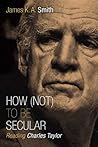
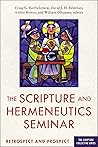
On the one hand, this is a book about a book — a small field guide to a much larger scholarly tome.1 It is both an homage and a portal to Charles Taylor’s monumental Secular Age, a book that offers a genealogy of the secular and an
...more



“The Sanctuary was empty and the Holy of Holies untenanted. —BOOK V OF THE HISTORIES BY TACITUS, COMMENTING ON THE DISCOVERY OF GNAEUS POMPEIUS MAGNUS UPON ENTERING THE HOLY OF HOLIES IN 63 BCE”
― The Divine Magician: The Disappearance of Religion and the Discovery of Faith
― The Divine Magician: The Disappearance of Religion and the Discovery of Faith

“Boredom is a sentiment of disconnectedness. While we are busy with many things, we wonder if what we do makes any real difference. Life presents itself as a random and unconnected series of activities and events over which we have little or no control. To be bored, therefore, does not mean that we have nothing to do, but that we question the value of the things we are so busy doing. The great paradox of our time is that many of us are busy and bored at the same time.”
― The Spiritual Life: Eight Essential Titles by Henri Nouwen
― The Spiritual Life: Eight Essential Titles by Henri Nouwen
“Being in the world without being of the world.” These words summarize well the way Jesus speaks of the spiritual life. It is a life in which we are totally transformed by the Spirit of love. Yet it is a life in which everything seems to remain the same. To live a spiritual life does not mean that we must leave our families, give up our jobs, or change our ways of working; it does not mean that we have to withdraw from social or political activities, or lose interest in literature and art; it does not require severe forms of asceticism or long hours of prayer. Changes such as these may in fact grow out of our spiritual life, and for some people radical decisions may be necessary. But the spiritual life can be lived in as many ways as there are people. What is new is that we have moved from the many things to the kingdom of God. What is new is that we are set free from the compulsions of our world and have set our hearts on the only necessary thing. What is new is that we no longer experience the many things, people, and events as endless causes for worry, but begin to experience them as the rich variety of ways in which God makes his presence known to us.”
― The Spiritual Life: Eight Essential Titles by Henri Nouwen
― The Spiritual Life: Eight Essential Titles by Henri Nouwen
“All these other things,” which so occupied and preoccupied us, now come as gifts or challenges that strengthen and deepen the new life which we have discovered. This does not mean that the spiritual life makes things easier or takes our struggles and pains away. The lives of Jesus’ disciples clearly show that suffering does not diminish because of conversion. Sometimes it even becomes more intense. But our attention is no longer directed to the “more or less.” What matters is to listen attentively to the Spirit and to go obediently where we are being led, whether to a joyful or a painful place.”
― The Spiritual Life: Eight Essential Titles by Henri Nouwen
― The Spiritual Life: Eight Essential Titles by Henri Nouwen
“Worrying causes us to be “all over the place,” but seldom at home. One way to express the spiritual crisis of our time is to say that most of us have an address but cannot be found there. We know where we belong, but we keep being pulled away in many directions, as if we were still homeless. “All these other things” keep demanding our attention. They lead us so far from home that we eventually forget our true address, that is, the place where we can be addressed.”
― The Spiritual Life: Eight Essential Titles by Henri Nouwen
― The Spiritual Life: Eight Essential Titles by Henri Nouwen
 Catching up on Classics (and lots more!)
— 16829 members
— last activity 45 minutes ago
Catching up on Classics (and lots more!)
— 16829 members
— last activity 45 minutes ago
The world is made up of two kinds of people: first, those who love classics, and second, those who have not yet read a classic. Be bold and join us as ...more


Tim’s 2025 Year in Books
Take a look at Tim’s Year in Books, including some fun facts about their reading.

12,929 books
|
710 friends

964 books
|
138 friends

231 books
|
147 friends

93 books
|
100 friends

302 books
|
325 friends

1 book
|
19 friends
0 books
|
60 friends
1 book
|
17 friends
More friends…


Polls voted on by Tim
Lists liked by Tim