
Discover new books on Goodreads
Meet your next favorite book


![गोदान [Godaan] by Munshi Premchand](https://i.gr-assets.com/images/S/compressed.photo.goodreads.com/books/1205467570l/694226._SY75_.jpg "गोदान [Godaan] by Munshi Premchand")


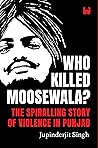
He was a Jatt-Sikh from the dominant Sidhu clan. The Sidhus, according to historians, came from the Bhatti Rajputs, who descended from the Yaduvanshis of the erstwhile Rajputana sometime in the thirteenth century.2 They moved to Punjab in
...more



“Because information is so accessible and communication instantaneous, there is a diminution of focus on its significance, or even on the definition of what is significant. This dynamic may encourage policymakers to wait for an issue to arise rather than anticipate it, and to regard moments of decision as a series of isolated events rather than part of a historical continuum. When this happens, manipulation of information replaces reflection as the principal policy tool.”
― World Order: Reflections on the Character of Nations and the Course of History
― World Order: Reflections on the Character of Nations and the Course of History
“The state is a fragile organization, and the statesman does not have the moral right to risk its survival on ethical restraint.”
― World Order
― World Order
“From all the great and indispensable achievements the Internet has brought to our era, its emphasis is on the actual more than the contingent, on the factual rather than the conceptual, on values shaped by consensus rather than by introspection. Knowledge of history and geography is not essential for whose who can evoke their data with the touch of a button. The mindset for walking lonely political paths may not be self-evident to those who seek confirmation by hundreds, sometimes thousands of friends on Facebook”
― World Order
― World Order
“To undertake a journey on a road never before traveled requires character and courage: character because the choice is not obvious; courage because the road will be lonely at first. And the statesman must then inspire his people to persist in the endeavor.”
― World Order: Reflections on the Character of Nations and the Course of History
― World Order: Reflections on the Character of Nations and the Course of History
“In any of these evolutions, India will be a fulcrum of twenty-first-century order: an indispensable element, based on its geography, resources, and tradition of sophisticated leadership, in the strategic and ideological evolution of the regions and the concepts of order at whose intersection it stands.”
― World Order
― World Order
 Assam Readers' Club
— 14 members
— last activity Oct 15, 2018 11:28PM
Assam Readers' Club
— 14 members
— last activity Oct 15, 2018 11:28PM
In this vast universe of Goodreads, I failed to come across a group totally dedicated to the book readers of Assam. I know a lot of people who are avi ...more
 Indian Readers
— 17815 members
— last activity 40 minutes ago
Indian Readers
— 17815 members
— last activity 40 minutes ago
"For Indians /non Indians/Earthlings/Aliens, who have a zeal to read and are passionate about books" says the Creator of this group :) To add to it, ...more
 James Joyce Reading Group
— 323 members
— last activity Sep 01, 2026 10:55PM
James Joyce Reading Group
— 323 members
— last activity Sep 01, 2026 10:55PM
A discussion group dedicated to the writings of James Joyce.

Pulakesh’s 2025 Year in Books
Take a look at Pulakesh’s Year in Books, including some fun facts about their reading.

771 books
|
230 friends

377 books
|
212 friends

102 books
|
59 friends

111 books
|
18 friends

1,232 books
|
168 friends

365 books
|
592 friends

1,077 books
|
578 friends

878 books
|
207 friends
More friends…


Polls voted on by Pulakesh
Lists liked by Pulakesh