
Discover new books on Goodreads
Meet your next favorite book

Jocelyn
https://www.goodreads.com/jocelynjoy


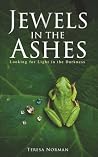

So many of us let faith atrophy because we don’t truly know God’s character. We’ve never had to completely rely on it and therefore can’t trust he is good. We lack stamina to walk the long, steep, narrow path we’re often called to. It’s
...more
Watermarked Pages liked this


“In Jewish culture, days begin in the evening with the setting of the sun. (We see this in Genesis 1 with the repetition of “And there was evening and there was morning.”) The day begins with rest. We start by settling down and going to sleep. This understanding of time is powerfully reorienting, even jarring, to those of us who measure our days by our own efforts and accomplishments. The Jewish day begins in seemingly accomplishing nothing at all. We begin by resting, drooling on our pillow, dropping off into helplessness. Eugene Peterson says, “The Hebrew evening/morning sequence conditions us to the rhythms of grace. We go to sleep and God begins his work.”
― Liturgy of the Ordinary: Sacred Practices in Everyday Life
― Liturgy of the Ordinary: Sacred Practices in Everyday Life

“As we see, he had a strange and peculiar way of judging things. I suspect that he acquired it from the Gospel.”
― Les Misérables
― Les Misérables
“Everyone wants a revolution. No one wants to do the dishes.”
― Liturgy of the Ordinary: Sacred Practices in Everyday Life
― Liturgy of the Ordinary: Sacred Practices in Everyday Life
“In reality, the church has led the way in the art of enjoyment and pleasure. New Testament scholar Ben Witherington points out that it was the church, not Starbucks, that created coffee culture.4 Coffee was first invented by Ethiopian monks—the term cappuccino refers to the shade of brown used for the habits of the Capuchin monks of Italy. Coffee is born of extravagance, an extravagant God who formed an extravagant people, who formed a craft out of the pleasures of roasted beans and frothed milk.”
― Liturgy of the Ordinary: Sacred Practices in Everyday Life
― Liturgy of the Ordinary: Sacred Practices in Everyday Life
“My willingness to sacrifice much-needed rest and my prioritizing amusement or work over the basic needs of my body and the people around me (with whom I'm far more likely to be short-tempered after a night of little sleep) reveal that these good things—entertainment and work—have taken a place of ascendancy in my life. In the nitty-gritty of my daily life, repentance for idolatry may look as pedestrian as shutting off my email an hour earlier or resisting that alluring clickbait to go to bed. The truth is, I'm far more likely to give up sleep for entertainment that I am for prayer. When I turn on Hulu late at night I don't consciously think, "I value this episode of Parks and Rec more than my family, prayer, and my own body," But my habits reveal and shape what I love and what I value, whether I care to admit it or not.”
― Liturgy of the Ordinary: Sacred Practices in Everyday Life
― Liturgy of the Ordinary: Sacred Practices in Everyday Life



Jocelyn’s 2025 Year in Books
Take a look at Jocelyn’s Year in Books, including some fun facts about their reading.

1,566 books
|
96 friends

732 books
|
135 friends

628 books
|
36 friends

1,676 books
|
32 friends

1,734 books
|
115 friends

352 books
|
21 friends

681 books
|
39 friends

152 books
|
13 friends
More friends…


Favorite Genres
Polls voted on by Jocelyn
Lists liked by Jocelyn