
Discover new books on Goodreads
Meet your next favorite book


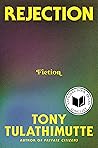

The men began to prod the unforgiving earth with their spades, then reached down and lifted up the once white casket, now dirt blackened, and forced open the lid. An awful vapor, death itself, filled the air.

“I think the distinction between fiction and nonfiction is less about “Did it really happen or was it made up?” than it is about form. And, more than form, it’s about the expectations that are brought to certain forms. According to how a book is presented, packaged, or identified, readers have certain expectations. Following from that they expect books within broadly identified categories to behave in certain ways. So people can find it quite disconcerting when a book isn’t doing what they think it’s meant to be doing, even if the book is completely fine on its own terms and has no desire to conform to some external set of expectations. My books are often disappointing in that regard. Maybe in other ways, too, but I am mercifully and necessarily oblivious on that score.”
―
―
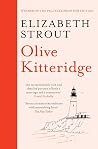
“The perfect life, the perfect lie … is one which prevents you from doing that which you would ideally have done (painted, say, or written unpublishable poetry) but which, in fact, you have no wish to do. People need to feel that they have been thwarted by circumstances from pursuing the life which, had they led it, they would not have wanted; whereas the life they really want is precisely a compound of all those thwarting circumstances. It is a very elaborate, extremely simple procedure, arranging this web of self-deceit: contriving to convince yourself that you were prevented from doing what you wanted. Most people don’t want what they want: people want to be prevented, restricted. The hamster not only loves his cage, he’d be lost without it. That’s why children are so convenient: you have children because you’re struggling to get by as an artist—which is actually what being an artist means—or failing to get on with your career. Then you can persuade yourself that your children prevented you from having this career that had never looked like working out. So it goes on: things are always forsaken in the name of an obligation to someone else, never as a failing, a falling short of yourself.”
― Selfish, Shallow, and Self-Absorbed: Sixteen Writers on The Decision Not To Have Kids
― Selfish, Shallow, and Self-Absorbed: Sixteen Writers on The Decision Not To Have Kids
“In his book Real Presences, George Steiner asks us to "imagine a society in which all talk about the arts, music and literature is prohibited." In such a society there would be no more essays on whether Hamlet was mad or only pretending to be, no reviews of the latest exhibitions or novels, no profiles of writers or artists. There would be no secondary, or parasitic, discussion - let alone tertiary: commentary on commentary. We would have, instead, a "republic for writers and readers" with no cushion of professional opinion-makers to come between creators and audience. While the Sunday papers presently serve as a substitute for the experiencing of the actual exhibition or book, in Steiner's imagined republic the review pages would be turned into listings:catalogues and guides to what is about to open, be published, or be released.
What would this republic be like? Would the arts suffer from the obliteration of this ozone of comment? Certainly not, says Steiner, for each performance of a Mahler symphony is also a critique of that symphony. Unlike the reviewer, however, the performer "invests his own being in the process of interpretation." Such interpretation is automatically responsible because the performer is answerable to the work in a way that even the most scrupulous reviewer is not.
Although, most obviously, it is not only the case for drama and music; all art is also criticism. This is most clearly so when a writer or composer quotes or reworks material from another writer or composer. All literature, music, and art "embody an expository reflection which they pertain". In other words it is not only in their letters, essays, or conversation that writers like Henry James reveal themselves also to be the best critics; rather, The Portrait of a Lady is itself, among other things, a commentary on and a critique of Middlemarch. "The best readings of art are art."
No sooner has Steiner summoned this imaginary republic into existence than he sighs, "The fantasy I have sketched is only that." Well, it is not. It is a real place and for much of the century it has provided a global home for millions of people. It is a republic with a simple name: jazz.”
― But Beautiful: A Book About Jazz
What would this republic be like? Would the arts suffer from the obliteration of this ozone of comment? Certainly not, says Steiner, for each performance of a Mahler symphony is also a critique of that symphony. Unlike the reviewer, however, the performer "invests his own being in the process of interpretation." Such interpretation is automatically responsible because the performer is answerable to the work in a way that even the most scrupulous reviewer is not.
Although, most obviously, it is not only the case for drama and music; all art is also criticism. This is most clearly so when a writer or composer quotes or reworks material from another writer or composer. All literature, music, and art "embody an expository reflection which they pertain". In other words it is not only in their letters, essays, or conversation that writers like Henry James reveal themselves also to be the best critics; rather, The Portrait of a Lady is itself, among other things, a commentary on and a critique of Middlemarch. "The best readings of art are art."
No sooner has Steiner summoned this imaginary republic into existence than he sighs, "The fantasy I have sketched is only that." Well, it is not. It is a real place and for much of the century it has provided a global home for millions of people. It is a republic with a simple name: jazz.”
― But Beautiful: A Book About Jazz
“Photographers sometimes take pictures of each other; occasionally they take pictures of each other at work; more usually they take photographs - or versions - of each other's work. Consciously or not they are constantly in dialogue with their contemporaries and predecessors.”
― The Ongoing Moment
― The Ongoing Moment
“People say it's not what happens in your life that matters, it's what you think happened. But this qualification, obviously, did not go far enough. It was quite possible that the central event of your life could be something that didn't happen, or something you thought didn't happen. Otherwise there'd be no need for fiction, there'd only be memoirs and histories...”
― Jeff in Venice, Death in Varanasi
― Jeff in Venice, Death in Varanasi


Jason’s 2025 Year in Books
Take a look at Jason’s Year in Books, including some fun facts about their reading.


Favorite Genres
Polls voted on by Jason
Lists liked by Jason