
Discover new books on Goodreads
Meet your next favorite book



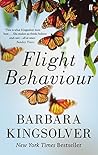
Dellarobia felt an entirely new form of panic as she watched her son love nature so expectantly, wondering if he might be racing toward a future like some complicated sand castle that was crumbling under the tide. She didn’t know how
...more


“It was an insult to having enough—to knowing that there was such a thing as enough. Inside those houses weren’t altruistic, good people whom fortune had smiled down on in exchange for their kind acts and good works. No, inside those columned, great-lawned homes were pirates for whom there was never enough. There was never enough money, goods, clothing, safety, security, club memberships, bottles of old wine. There was not a number at which anyone said, “I have a good life. I’d like to see if I can help someone else have a good life.” These were criminals—yes, most of them were real, live criminals. Not always with jailable offenses, but certainly morally abhorrent ones: They had offshore accounts or they underpaid their assistants or they didn’t pay taxes on their housekeepers or they were NRA members.”
― Fleishman Is in Trouble
― Fleishman Is in Trouble

“A journey of a thousand miles begins with one step.’— Lao-Tse ‘The first draft of anything is shit!’— Ernest Hemingway ‘Don’t be afraid to go out on a limb. That’s where the fruit is.’— H. Jackson Browne ‘Twenty years from now you will be more disappointed by the things that you didn’t do than by the ones you did do. So throw off the bowlines. Sail away from the safe harbour. Catch the trade winds in your sails. Explore. Dream. Discover.’— Mark Twain”
― The Happiness Trap: Stop Struggling, Start Living
― The Happiness Trap: Stop Struggling, Start Living

“Australia eventually offered us sanctuary. Mum and Dad were overjoyed. Dad walked around the island asking people if they had any spare warm clothes. He collected a big bundle of jumpers and blankets because he’d heard about Australia—‘Beautiful country, friendly people, but really cold. It’s right near Switzerland.’ That’s my dad, great at rescues, crap at geography. We touched down in Sydney, Australia in thirty-degree Celsius heat and my family were thinking, Geez, Austria’s really hot, man!”
― The Happiest Refugee
― The Happiest Refugee

“When children are demonised by the newspapers, they are often described as feral,’ wrote George Monbiot in the Guardian.6 ‘But feral is what children should be: it means released from captivity or domestication. Those who live in crowded flats, surrounded by concrete, mown grass and other people’s property, cannot escape their captivity without breaking the law. Games and explorations that are seen as healthy in the countryside are criminalised in the cities. Children who have never visited the countryside live under constant restraint.”
― Another Day in the Death of America
― Another Day in the Death of America
“How could it be, she wondered. How could it be that the simple act of having a child did this to you? Had every birth in the world ruined every woman in the world? Was this a secret they’d been keeping, or had she just not been listening? Underneath all the vacuous, cruel wisdom the women who saw her in her late stages of pregnancy imparted to her, most of which had to do with banking sleep or measuring every precious moment because it all goes so fast, were they really telling her to mark her personhood? The other women in her prenatal yoga class had kept up an email chain, and in their messages, she tried to discern that they, too, were terrified and violated and sad and broken, but they weren’t. Trust her, they just weren’t. They made jokes about how they were tired and it was a tragedy that one of them had had an epidural and it was a tragedy that one of them couldn’t produce enough milk for her baby and had to supplement with formula. She wanted to write back to tell them she couldn’t look in the mirror at herself. She wanted someone to understand how small she was now. She wanted to ask one of them if this was the real her—if the real her had been revealed to her suddenly that day in the hospital, or if she would somehow bounce back. Bouncing back was a language they understood: their vaginas needed to bounce back, their breasts needed to bounce back, would their abdomens ever bounce back. With a few small adjustments, these women would acclimate to life. They would recognize themselves. But would Rachel? Would Rachel bounce back? The entire phrase “bouncing back” seemed to her like it existed to make fun of her. There was no bouncing. There was no back.”
― Fleishman Is in Trouble
― Fleishman Is in Trouble
 EB Friends Book Club
— 4 members
— last activity Dec 30, 2015 05:38PM
EB Friends Book Club
— 4 members
— last activity Dec 30, 2015 05:38PM
A place to discuss favourite and currently reading books


Sara’s 2025 Year in Books
Take a look at Sara’s Year in Books, including some fun facts about their reading.

367 books
|
52 friends

448 books
|
55 friends

98 books
|
65 friends

2 books
|
14 friends

1 book
|
6 friends

2 books
|
8 friends

1 book
|
52 friends

35 books
|
6 friends
More friends…


Favorite Genres
Polls voted on by Sara
Lists liked by Sara