
Discover new books on Goodreads
Meet your next favorite book







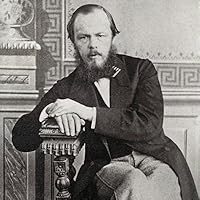
“The centripetal force on our planet is still fearfully strong, Alyosha. I have a longing for life, and I go on living in spite of logic. Though I may not believe in the order of the universe, yet I love the sticky little leaves as they open in spring. I love the blue sky, I love some people, whom one loves you know sometimes without knowing why. I love some great deeds done by men, though I’ve long ceased perhaps to have faith in them, yet from old habit one’s heart prizes them.”
―
―
“Look, suppose that there was one among all those who desire nothing but material and filthy lucre, that one, at least, is like my old Inquisitor, who himself ate roots in the desert and raved, overcoming his flesh, in order to make himself free and perfect, but who still loved mankind all his life, and suddenly opened his eyes and he saw that there is no great moral blessedness in achieving perfection of the will only to become convinced, at the same time, that millions of the rest of God's creatures have been set up only for mockery, that they will never be strong enough to manage their freedom, that from such pitiful rebels will never come giants to complete the tower, that it was not for such geese that the great idealist dreamt his dream of harmony.”
― The Brothers Karamazov
― The Brothers Karamazov

“True confessions are written with tears only. But my tears would drown the world, as my inner fire would reduce it to ashes.”
― On the Heights of Despair
― On the Heights of Despair

“Let me advise you, then, to form the habit of taking some of your solitude with you into society, to learn to be to some extent alone even though you are in company; not to say at once what you think, and, on the other hand, not to attach too precise a meaning to what others say; rather, not to expect much of them, either morally or intellectually, and to strengthen yourself in the feeling of indifference to their opinion, which is the surest way of always practicing a praiseworthy toleration. If you do that, you will not live so much with other people, though you may appear to move amongst them: your relation to them will be of a purely objective character. This precaution will keep you from too close contact with society, and therefore secure you against being contaminated or even outraged by it.[1] Society is in this respect like a fire—the wise man warming himself at a proper distance from it; not coming too close, like the fool, who, on getting scorched, runs away and shivers in solitude, loud in his complaint that the fire burns. [Footnote”
― The Essays of Arthur Schopenhauer; Counsels and Maxims
― The Essays of Arthur Schopenhauer; Counsels and Maxims
“Do I look like someone who has something to do here on earth?' —That's what I'd like to answer the busybodies who inquire into my activities.”
― The Trouble With Being Born
― The Trouble With Being Born
 Provocateurs and Peacemakers
— 12 members
— last activity Jul 13, 2020 11:22PM
Provocateurs and Peacemakers
— 12 members
— last activity Jul 13, 2020 11:22PM
Science - Philosophy - History - Psychology - Current Affairs - Spirituality - Christianity - Atheism --> Provocative Discussion ...more

Brad’s 2025 Year in Books
Take a look at Brad’s Year in Books, including some fun facts about their reading.

4,034 books
|
838 friends

372 books
|
788 friends

1,787 books
|
670 friends

860 books
|
283 friends

828 books
|
5 friends

304 books
|
331 friends

197 books
|
819 friends

42 books
|
223 friends
More friends…


Polls voted on by Brad
Lists liked by Brad