Goodreads helps you follow your favorite authors. Be the first to learn about new releases!
Start by following Stephen Bungay.

Showing 1-30 of 64
“If…there is a conflict between structure and strategy, the structure will win.”
― The Art of Action: How Leaders Close the Gaps between Plans, Actions and Results
― The Art of Action: How Leaders Close the Gaps between Plans, Actions and Results
“Do not try to predict the effects your actions will have, because you can’t. Instead, encourage people to adapt their actions to realize the overall intention as they observe what is actually happening. Give them boundaries which are broad enough to take decisions for themselves and act on them.”
― The Art of Action: How Leaders Close the Gaps between Plans, Actions and Results
― The Art of Action: How Leaders Close the Gaps between Plans, Actions and Results
“In any case, a leader who believes that he can make a positive difference through continual personal interventions is usually deluding himself. He thereby takes over things other people are supposed to be doing, effectively dispensing with their efforts, and multiplies his own tasks to such an extent that he can no longer carry them all out. The demands made on a senior commander are severe enough as it is. It is far more important that the person at the top retains a clear picture of the overall situation than whether some particular thing is done this way or that.”
― The Art of Action: How Leaders Close the Gaps between Plans, Actions and Results
― The Art of Action: How Leaders Close the Gaps between Plans, Actions and Results
“If Clausewitz is right, no one should develop a strategy without taking into account the effects of organizational friction. Yet we continue to be surprised and frustrated when it manifests itself. We tend to think everything has gone wrong when in fact everything has gone normally.”
― The Art of Action: How Leaders Close the Gaps between Plans, Actions and Results
― The Art of Action: How Leaders Close the Gaps between Plans, Actions and Results
“Having worked out what matters most now, pass the message on to others and give them responsibility for carrying out their part in the plan. Keep it simple. Don’t tell people what to do and how to do it. Instead, be as clear as you can about your intentions. Say what you want people to achieve and, above all, tell them why. Then ask them to tell you what they are going to do as a result.”
― The Art of Action: How Leaders Close the Gaps between Plans, Actions and Results
― The Art of Action: How Leaders Close the Gaps between Plans, Actions and Results
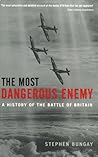
“Most of them kept going because they had a job to do, and they were the only ones who could do it. The closest thing to heroism was displaying humour:”
― The Most Dangerous Enemy: A History of the Battle of Britain
― The Most Dangerous Enemy: A History of the Battle of Britain
“Indeed the degree of psychic and somatic fulfilment offered by a life filled with ‘beer, women and Spitfires’ seemed to most who enjoyed it then, and to many who contemplate it now, to leave little wanting. The RAF was not a hunting fraternity, but a flying club, the best flying club in the world.”
― The Most Dangerous Enemy: A History of the Battle of Britain
― The Most Dangerous Enemy: A History of the Battle of Britain
“What cannot be made simple cannot be made clear and what is not clear will not get done.”
― The Art of Action: How Leaders Close the Gaps between Plans, Actions and Results
― The Art of Action: How Leaders Close the Gaps between Plans, Actions and Results
“The thing that sticks out in my mind was the laughter. Some of the things we laughed at might be regarded as a bit macabre. ‘Old so-and-so ended up on his back and they had to get a crane to lift his aircraft to get him out.’ The fact that old so-and-so was in hospital was neither here nor there. It was still a hell of a laugh. We didn’t take ourselves too seriously. If anybody was heard waxing a bit heavy, and asking if any of us would survive another week, he’d be laughed out of the room. It was taboo to admit that you were in any sort of personal difficulties. We were kids, but at the same time at the top of our profession. We were demonstrating that we were better than the enemy and were saving our country.19 Professional pride and technical skill, about which Wellington’s officers cared little, were important, but if you tried to out-do your colleagues they would usually find a way of taking you down a peg or two.”
― The Most Dangerous Enemy: A History of the Battle of Britain
― The Most Dangerous Enemy: A History of the Battle of Britain
“The word for ‘fighter’ in German is ‘Jäger’ (‘hunter’), and the Luftwaffe’s tradition was that of a hunting club. The war was a wonderful opportunity for the gifted few to engage in a dangerous but exhilarating sport. At the beginning of the war trophies were collected. Mölders and Galland actually went hunting in their spare time, and after Galland had visited to Berlin at the end of September to collect Oak Leaves to add to his Knight’s Cross for forty victories, he joined Göring and Mölders for a deer hunt at the Reichsjägerhof in East Prussia. It was seen as an entirely appropriate way for the three of them to be spending their time.”
― The Most Dangerous Enemy: A History of the Battle of Britain
― The Most Dangerous Enemy: A History of the Battle of Britain
“It was just beer, women and Spitfires, a bunch of little John Waynes running about the place.”
― The Most Dangerous Enemy: A History of the Battle of Britain
― The Most Dangerous Enemy: A History of the Battle of Britain
“A full and painstaking account of the day’s fighting, from which this summary is largely derived, is given by Alfred Price in the work which gave this day its name. First published in 1979, it remains one of the best books yet written about the Battle of Britain.”
― The Most Dangerous Enemy: A History of the Battle of Britain
― The Most Dangerous Enemy: A History of the Battle of Britain
“If company objectives are in conflict with personal ones, only one of them will win. Either the employees leave the company (as regularly happens in the most obvious form of conflict – forced redundancy) or the strategy will be sabotaged, consciously or unconsciously.”
― The Art of Action: How Leaders Close the Gaps between Plans, Actions, and Results
― The Art of Action: How Leaders Close the Gaps between Plans, Actions, and Results
“Understanding gets compliance. Only belief gets commitment.”
― The Art of Action: How Leaders Close the Gaps between Plans, Actions, and Results
― The Art of Action: How Leaders Close the Gaps between Plans, Actions, and Results
“History was always present for Churchill. He understood, perhaps, that the essence of history is the present, for the present is nothing other than what the past has made it, only those most essential elements of the past being retained in the present. That is what makes them essential. One’s understanding of the past is therefore a constituent part of one’s understanding of current events and a guide as to how to act in it.”
― The Most Dangerous Enemy: A History of the Battle of Britain
― The Most Dangerous Enemy: A History of the Battle of Britain
“response entirely off its own bat.29 When asked about an official reply, Churchill responded that he had no intention of replying to Hitler himself, as he was not on speaking terms with him.”
― The Most Dangerous Enemy: A History of the Battle of Britain
― The Most Dangerous Enemy: A History of the Battle of Britain
“What matters about creating alignment around a strategy is not the volume of communication, but its quality and precision.”
― The Art of Action: How Leaders Close the Gaps between Plans, Actions, and Results
― The Art of Action: How Leaders Close the Gaps between Plans, Actions, and Results
“Hitler had to be defeated, because if he won: All courage will die out of the world – the courage to love, to create, to take risks, whether physical, intellectual or moral. Men will hesitate to carry out the promptings of the heart or the brain because, having acted, they will live in fear that their action may be discovered and themselves cruelly punished. Thus all love, all spontaneity will die out of the world. Emotion will have atrophied. Thought will have petrified. The oxygen breathed by the soul, so to speak, will vanish, and mankind will wither.”
― The Most Dangerous Enemy: A History of the Battle of Britain
― The Most Dangerous Enemy: A History of the Battle of Britain
“Strategy is about fighting the right battles, the important ones you are likely to win. Operations are about winning them.”
― The Art of Action: How Leaders Close the Gaps between Plans, Actions and Results
― The Art of Action: How Leaders Close the Gaps between Plans, Actions and Results
“Shakespeare gave Henry V before the Battle of Agincourt, when the King addresses his men as ‘we few, we happy few, we band of brothers’. Churchill was wont to compare the fighter pilots with knights.”
― The Most Dangerous Enemy: A History of the Battle of Britain
― The Most Dangerous Enemy: A History of the Battle of Britain
“There was a history of entrepreneurialism, but it was getting them nowhere. In fact, it was making things worse. They needed to leverage their scale globally, but as long as country managers were calling the shots and demanding scarce technical resources from the center to fix trivial local problems, the fundamental need for a new technology platform could never be addressed. To hell with entrepreneurialism; it was just an excuse for selfishness and waste.”
― The Art of Action: How Leaders Close the Gaps between Plans, Actions and Results
― The Art of Action: How Leaders Close the Gaps between Plans, Actions and Results
“Budgets were originally designed as control mechanisms. As such they are traps …”
― The Art of Action: How Leaders Close the Gaps between Plans, Actions and Results
― The Art of Action: How Leaders Close the Gaps between Plans, Actions and Results
“The main object of the dogfight was to get on the opponent’s tail – hence the name. The German word for”
― The Most Dangerous Enemy: A History of the Battle of Britain
― The Most Dangerous Enemy: A History of the Battle of Britain
“We are extraordinarily reluctant to admit that luck plays a part in business success.”
― The Art of Action: How Leaders Close the Gaps between Plans, Actions and Results
― The Art of Action: How Leaders Close the Gaps between Plans, Actions and Results
“The Origins and Development of the Spirit of the Prussian Officer,” he tells the story of a staff officer dutifully carrying out an order without question, only to be pulled up short by a high-ranking general with the words: “The King made you a staff officer because you should know when not to obey.” In contrast to other European officer corps, Prince Friedrich Karl comments, the Prussians do not allow themselves to be hemmed in with rules and regulations, but give rein to the imagination and exploit every opportunity opened up by unexpected success. Such behavior would not be possible if senior commanders were to demand full control over every unit.10”
― The Art of Action: How Leaders Close the Gaps between Plans, Actions and Results
― The Art of Action: How Leaders Close the Gaps between Plans, Actions and Results
“A Prussian officer was expected to share a set of core values, defining his “honor,” which took precedence over an order. If he acted in accordance with honor – or, as we might more commonly say today, with integrity – disobedience was legitimate. The right talent and the right behavioral biases were put in place as a first step.”
― The Art of Action: How Leaders Close the Gaps between Plans, Actions and Results
― The Art of Action: How Leaders Close the Gaps between Plans, Actions and Results
“dogfight’ is ‘Kurvenkampf’’ i.e. turning fight.”
― The Most Dangerous Enemy: A History of the Battle of Britain
― The Most Dangerous Enemy: A History of the Battle of Britain
“it is these miracles of execution,” Clausewitz writes, “that we should really admire.”9 The fact is that in war “things do not happen of their own accord like a well-oiled machine, indeed the machine itself starts to create resistance, and overcoming it demands enormous willpower on the part of the leader.”10 In war, “everything is very simple, but the simplest thing is difficult… taking action in war is movement in a resistant medium.”11”
― The Art of Action: How Leaders Close the Gaps between Plans, Actions and Results
― The Art of Action: How Leaders Close the Gaps between Plans, Actions and Results
“In a stable, predictable environment it is possible to make quite good plans by gathering and analyzing information. We can learn enough about the outside world and our position in it to set some objectives. We know enough about the effects any actions will have to be able to work out what to do to achieve the objectives. We can then use a mixture of supervision, controls, and incentives to coerce, persuade, or cajole people into doing what we want. We can measure the results until the outcomes we want are achieved. We can make plans, take actions, and achieve outcomes in a linear sequence with some reliability. If we are assiduous enough, pay attention to detail, and exercise rigorous control, the sequence will be seamless.”
― The Art of Action: How Leaders Close the Gaps between Plans, Actions and Results
― The Art of Action: How Leaders Close the Gaps between Plans, Actions and Results
“Clausewitz’s account contains another insight: that organizations are made up of people. If this should seem obvious, the implications of acknowledging it are not. In contrast to those of the scientific school like von Bülow, Clausewitz includes psychological factors in his basic account of war, and regards them as an inherent source of friction. Not only is an army not a “well-oiled machine,” the machine generates resistance of its own, because the parts it is made of are human. Although Clausewitz’s metaphors are all taken from mechanics rather than biology, he clearly sees where the metaphor itself begins to break down. He is reaching toward the idea of the organization as an organism. While the scientific school sought to eliminate human factors to make the organization as machine-like as possible, Clausewitz sought to exploit them.”
― The Art of Action: How Leaders Close the Gaps between Plans, Actions and Results
― The Art of Action: How Leaders Close the Gaps between Plans, Actions and Results