Derek Nudd's Blog
November 23, 2025
Forgotten Fleet
In fact this book covers two forgotten fleets: the British Pacific Fleet and the East Indies Fleet. After the eye-watering Japanese advances of late 1941 and early 1942 there was little Britain could do except hang on grimly to its few footholds remaining. Pre-war plans for rapid reinforcement were overtaken by events in the Atlantic, Arctic and Mediterranean, and the most of bases for that reinforcement were gone.
Winton tells the story of the Royal Navy's gritty recovery from such an unpromising start, including the improvisation from scratch of a fleet train to support the Pacific Fleet in mid-ocean and learning to integrate its operations with the US Navy's vastly greater resources. The Brits had one great advantage in overcoming Washington obstructionism at local level - the USN was 'dry' while the RN wasn't. A bottle (or for really big favours a crate) of whisky could do wonders.
British carriers' armoured flight decks proved their worth under constant attack by suicide pilots. As Indefatigable's USN liaison officer put it after a strike, 'When a kamikaze hits a US carrier, it's six months repair at Pearl. In a Limey carrier it's a case of "Sweepers, man your brooms".'
On the subject of suiciders, it is interesting that some of the officers who graduated from the SOAS crash course in Japanese went to sea and listened in to the control aircraft instructing the kamikazes (who in the nature of things were inexperienced) which ships to go for and what tactics to adopt. This gave the targets a little bit of valuable time to react.
Personally I would have liked a bit more attention given to the East Indies Fleet, and especially its submarine component. Once the big American boats had made the oceans an extremely hostile environment for the Japanese it fell to the 8th Flotilla's S and T class boats operating at the limit of their (and their crew's) endurance to tackle the coastal trade.
The first two appendices list the ships which made up the two fleets at VJ Day. The lists are impressive, doubly so when we consider that these forces - enormous by our standards - were dwarfed by the US component.
Bearing in mind that this work dates from 1969 and much material has been declassified since then, it remains a worthwhile read.
Winton tells the story of the Royal Navy's gritty recovery from such an unpromising start, including the improvisation from scratch of a fleet train to support the Pacific Fleet in mid-ocean and learning to integrate its operations with the US Navy's vastly greater resources. The Brits had one great advantage in overcoming Washington obstructionism at local level - the USN was 'dry' while the RN wasn't. A bottle (or for really big favours a crate) of whisky could do wonders.
British carriers' armoured flight decks proved their worth under constant attack by suicide pilots. As Indefatigable's USN liaison officer put it after a strike, 'When a kamikaze hits a US carrier, it's six months repair at Pearl. In a Limey carrier it's a case of "Sweepers, man your brooms".'
On the subject of suiciders, it is interesting that some of the officers who graduated from the SOAS crash course in Japanese went to sea and listened in to the control aircraft instructing the kamikazes (who in the nature of things were inexperienced) which ships to go for and what tactics to adopt. This gave the targets a little bit of valuable time to react.
Personally I would have liked a bit more attention given to the East Indies Fleet, and especially its submarine component. Once the big American boats had made the oceans an extremely hostile environment for the Japanese it fell to the 8th Flotilla's S and T class boats operating at the limit of their (and their crew's) endurance to tackle the coastal trade.
The first two appendices list the ships which made up the two fleets at VJ Day. The lists are impressive, doubly so when we consider that these forces - enormous by our standards - were dwarfed by the US component.
Bearing in mind that this work dates from 1969 and much material has been declassified since then, it remains a worthwhile read.


October 31, 2025
Japanese Prisoners of War in India 1942-46
This is the only book I know to tackle an inadequately researched subject. Japanese captives, in any theatre, were few enough until the last stages of WW2. Japanese soldiers who experienced the collapse of the Arakan, Imphal and Kohima offensives had plenty of orders from high command to motivate them. What they didn't have was food, ammunition or relief. Those who were too sick, wounded, exhausted or hungry to fight or retreat were left to die or, in some cases, killed by their own medics. Their lot seldom improved when overtaken by advancing allied troops, as there were enough booby-trapped corpses and indoctrinated casualties determined to take a foreigner with them to make British and Indian soldiers cautious about taking them alive.
For the survivors, who had been warned to expect torture and death if captured, relatively civilised treatment during interrogation and internment created a sense of obligation totally at odds with their Field Service Code which demanded victory or death. The book traces the authorities' efforts to educate them in the Geneva Convention and the option of living for their country rather than dying for it.
It is comprehensively researched if a tad repetitive in places. There are a few topics I would have liked to see addressed in more depth. The author briefly mentions the transfer of naval prisoners from (then) Ceylon but the CSDIC / SEATIC establishment at Colombo and Kandy could easily have merited a chapter of its own. Equally he mentions the different outcomes for PoWs held in India from those housed in Australia and New Zealand - and interesting comment which could be followed up. Then there is the question of how and when Japanese attitudes to prisoners of war changed from the relatively benign behaviour seen in WW1 to the uncompromising brutality of WW2. Sareen adresses this but not, to my mind, entirely convincingly. Is 'bushido' even an appropriate word? I don't know. Finally, while not Japanese, he mentions the soldiers of the Indian National Army who allied with them and were taken prisoner. They were treated as traitors not PoWs. So what happened to them?
Despite these minor whinges it is an interesting, well researched and written book. One I will keep coming back to.
For the survivors, who had been warned to expect torture and death if captured, relatively civilised treatment during interrogation and internment created a sense of obligation totally at odds with their Field Service Code which demanded victory or death. The book traces the authorities' efforts to educate them in the Geneva Convention and the option of living for their country rather than dying for it.
It is comprehensively researched if a tad repetitive in places. There are a few topics I would have liked to see addressed in more depth. The author briefly mentions the transfer of naval prisoners from (then) Ceylon but the CSDIC / SEATIC establishment at Colombo and Kandy could easily have merited a chapter of its own. Equally he mentions the different outcomes for PoWs held in India from those housed in Australia and New Zealand - and interesting comment which could be followed up. Then there is the question of how and when Japanese attitudes to prisoners of war changed from the relatively benign behaviour seen in WW1 to the uncompromising brutality of WW2. Sareen adresses this but not, to my mind, entirely convincingly. Is 'bushido' even an appropriate word? I don't know. Finally, while not Japanese, he mentions the soldiers of the Indian National Army who allied with them and were taken prisoner. They were treated as traitors not PoWs. So what happened to them?
Despite these minor whinges it is an interesting, well researched and written book. One I will keep coming back to.
September 2, 2025
The Quest for C
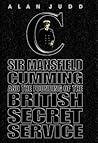 The Quest for C: Sir Mansfield Cumming and the Founding of the British Secret Service by Alan Judd by Alan Judd
My rating: 4 of 5 stars
Largely based on Cumming's diaries, this book gives a valuable insight into the man himself and the early years of Britain's foreign intelligence service. Pulled from active retirement by the head of the Naval Intelligence Division (NID) Cumming was constantly defending his nascent operation from tight-fisted paymasters in the Foreign Office, NID perception that his was the deniable face of their own business, and takeover bids from the army's much better resourced counter-intelligence department.
Inevitably, given the secret environment, the story is hedged in speculation and inference. Nonetheless there is valuable material in here - for example a whole chapter on the remarkable agent TR16 (Karl Kruger) who produced detailed material on German dockyards during the First World War and much of the inter-war period. It is a bit disappointing, though, that material from outside the diaries which should be referenced, isn't.
This is already a big book focussed on one individual, so I hesitate to suggest loose ends which could have been followed up more thoroughly.
Overall then, a worthwhile read whose value comes and goes a bit with the garrulousness of the subject's diaries.
View all my reviews
August 15, 2025
Radio - A True Love Story
 Radio: A True Love Story by Libby Purves
My rating: 4 of 5 stars
I'm not a big fan of speech radio but this book had me wondering what I've been missing. As a combined professional memoir and love letter to the medium it draws on Purves' wide experience and articulacy to paint a humorous, persuasive picture of the world of intelligent speech broadcasting. The last chapter is a blistering attack on the Birtian 'reforms' of the nineties, finishing with a more hopeful view of developments in the early 21st century. It would be interesting to know her views on progress since the book was published in 2002.
View all my reviews
August 10, 2025
Spies in Uniform
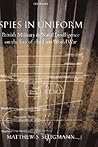 Spies in Uniform: British Military and Naval Intelligence on the Eve of the First World War by Matthew S. Seligmann
My rating: 5 of 5 stars
In the febrile atmosphere of the years leading up to the First World War, British service attaches had to walk a narrow path between their role as accredited diplomats and their more or less overt intelligence commitment to the War Office or Admiralty.
Seligmann's study is structured around five questions specifically about Germany: where does intelligence fit into attaches' role profile? How did they gather that intelligence? How did they report what they learnt? Did Germany have the capacity and intention to attack Britain? Did their reports influence British policy? I don't think it's too much of a spoiler to say his answer to the last two questions is 'Yes'.
The scholarship is remarkable considering that so many of the sources have been 'weeded' out of existence. Even better, the result is readable - Seligmann is clearly not one of those academics who gain status from obscurantism. My main whinge is the price. I managed to find a second hand copy and even that, for about 280 pages with no illustrations, was eye-watering.
View all my reviews
August 2, 2025
More than a Shirt
 More Than A Shirt: How Football Shirts Explain Global Politics, Money and Power by Joey D'Urso
My rating: 3 of 5 stars
Well written, interesting look at the worlds of politics, crime, commerce, bigotry, migration and conflict through football (soccer if you're American or Australian) sponsorship. A very few editing whoopsies don't detract from the achievement. A sports writer with a wider interest might have brought in Formula One sponsorship, which started about five years earlier and introduced such innovations as Colin Chapman renaming his team (twice) so he could repaint his cars in the sponsor's colours. Still, an entertaining read - this from someone who doesn't follow footy.
View all my reviews
July 13, 2025
Armageddon
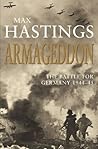 Armageddon: The Battle for Germany 1944-45 by Max Hastings
My rating: 3 of 5 stars
On a positive note, Hastings in this enormous volume covers the last phase of the European conflict from the British, American, Russian and German angles and from perspectives ranging from grand strategy to foot soldier or civilian caught up in the maelstrom. It is written with his usual energy and clarity. So why only three stars?
He claims to have learned and grown since writing Overlord: D-Day and the Battle for Normandy. It is not always obvious how - the Hastings haste to get on his soapbox and say how much better things would have worked if so-and-so had done this instead of that is still evident. As is his underlying admiration for the fighting skills of the autocracies' soldiers. This may at times obscure 'home advantage', the edge given to desperate men and women fighting on familiar terrain.
Where he digresses from his main theme some factual lapses creep in. One is his account of the sinking of Tirpitz, another - surprising for a former editor - is when he discusses the US forces' newspaper Stars and Stripes without mentioning Hugh Cudlipp's British equivalent, Union Jack.
So, well written and comprehensive but, despite the length, I can't feel I'm getting the whole story.
View all my reviews
June 15, 2025
The Safeguard of the Sea
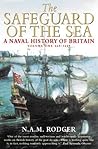 The Safeguard of the Sea: A Naval History of Britain, 660-1649 by N.A.M. Rodger
My rating: 4 of 5 stars
'Sea power cannot be improvised. In every age and in every circumstance, the successful navies have been those which rested on long years of steady investment in the infrastructure essential to keep running the complex and delicate machinery of a seagoing fleet. ... This is a truth not universally acknowledged in the twentieth century and hardly demonstrated at all in the sixteenth, yet it was precisely in this that the precocious strength of the Elizabethan Navy rested.'
Rodger's slightly pointed opening to Chapter 23 encapsulates the narrative of this book taking in a thousand years of British maritime history, from the Saxon raiders of the seventh century to the execution of Charles 1. For most of this time sea power involved the transport and supply of armies by co-opted merchants and pirates (often the same people). The concept of a standing 'Navy Royal' emerged under the Tudors and was almost, but not quite, lost in the civil war. Which is where this book hands over to The Command of the Ocean: A Naval History of Britain 1649-1815.
I came to this volume out of sequence, having read the two later ones first. As with the others its great strength is the way Rodger places the narrative of events in its political, social and technological context. It is well written and, unlike many paperbacks, has proper plate sections for the illustrations. Over a third of the page count is taken up by ancillary pages - appendices, notes, bibliography and index.
Overall, highly recommended.
View all my reviews
April 28, 2025
Pyrates
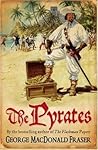 The Pyrates by George MacDonald Fraser
My rating: 3 of 5 stars
Take some (approximately) real characters, fling a wild sequence of adventures at them (though hardly less plausible than reality) and season with a blizzard of anachronisms. Here we have a classic formula for GMF's comic historical novels, exemplified in the 'Flashman' series. I'm not sure it works quite as well here because Flashman, the cartoon villain, was glued onto the backdrop of real events while here we have real characters (suitably exaggerated) stuffed into a fictional scenario. Nonetheless it's an entertaining and occasionally hilarious read, with a dig in the ribs at every 'serious' pirate novel and screenplay.
View all my reviews
April 15, 2025
From the Dardanelles to Oran
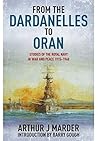 From the Dardanelles to Oran by Arthur J. Marder
My rating: 4 of 5 stars
This book comprises five essays, four of which are updated versions of earlier work and the last written especially for this 1974 publication.
The first chapter, The Dardanelles Revisited, revisits the thorny question of whether a purely naval assault on the straits in 1915 could have succeeded. In this he revises his earlier view in From the Dreadnought to Scapa Flow: Vol II The War Years: To and argues that there were two moments when it might just have worked. The better opportunity was in April 1915 when the navy had fast, shallow-draught minesweepers, it had worked out the techniques of air spotting naval gunfire, and the Turkish batteries were still critically short of armour-piercing ammunition - a fact which the British knew. What then? Granted casualties would have been heavy and the fleet would have had to face the battlecruiser Yavuz Sultan Selim (formerly SMS Breslau) the investment of Constantinople (Istanbul) would either have knocked Turkey out of the war or it would not. In the latter case Marder dismisses the risk of the allied fleet being cut off because it would control the supply routes to the forts, which were in any case undefended from the rear. In the former he argues that the loss of Turkey to the Central Powers would have appreciably shortened the war - worth almost any risk. I scratch my head over this. Arguably the only saving grace of the Dardanelles campaign was that it prevented any serious consideration of Fisher's Baltic adventure, which might have been an even greater disaster.
And so to Chapter 2, The Influence of History on Sea Power, which addresses the lessons learnt (and ignored) from the conflict of 1914-18 during the inter-war period. As such it invites comparison with Hugh Roskill's Naval Policy Between the Wars, though Marder's chapter is much shorter and easier to read. He also makes no bones about the rivalry between the two authors. It is a brief chapter and takes a bleak view of the - sometimes wilful - loss of knowledge and skills that characterised the period. It may not give enough credit (if that is the word) to the financial stringency that cut programme after programme and drove out some of the navy's best brains. Now, what does that remind me of?
Chapter 3, The Royal Navy and the Ethiopian Crisis of 1935-1936 returns to the theme of alternative history. What would have happened if the Royal Navy had stopped Mussolini in his tracks by blocking his access to the Suez Canal and to the Atlantic via Gibraltar? It is reasonable to suggest that, starved of supplies, his Ethiopian adventure would have collapsed. The longer term consequences are imponderable. Marder suggests that a show of force then could have avoided WW2 altogether. On the other hand, Britain was in no condition to fight a war and still had hopes of retaining Italy as an ally. Sorry, Ethiopia.
Winston is Back, the penultimate chapter, addresses Churchill's time as First Lord of the Admiralty in 1939-1940 before he became Prime Minister. It resumes Marder's sparring with Roskill by inviting comparison with Churchill and The Admirals. Marder's argument is that, as First Lord, Churchill did not directly interfere in operational matters. His frequent, annoying 'prayers' ('Pray this', 'Pray that') and nutty ideas caused First Sea Lord Pound to task his already overworked staff to develop plans showing why they were impossible. Nonetheless they fostered a spirit of pace and aggression which served the navy well. Interestingly, in view of the current debate about Churchill's views, he insisted on naval recruitment and promotion being open to people of all colours and classes. Up to a point. Marder's case is interesting but I am not convinced that his examples wholly support it. Best to read for yourself and see what you think.
And so to the meat of the book, Oran, 3 July 1930. This review of the attack on Mers-el-Kébir is by far the longest chapter. It takes in the background to the French Armistice, the strength and disposition of the French fleet, the events at Portsmouth, Plymouth and Alexandria, and the military and political consequences. Running through it all is the question, could and should the bloodshed have been avoided? Marder wisely avoids coming down on one side or the other but lays out the arguments coherently and clearly.
Originally published in 1974 and reprinted in 2015 this work loses nothing with the passing of time. While I am not convinced by every point he makes the issues he raises are as relevant today as ever. Heartily recommended.
View all my reviews