
Andy Littleton's Blog: Shorts by Andy Littleton
November 28, 2025
Offering Uncertainty
Two conversations in the past week reminded me of something we care deeply about at Mission Church. We care about being a community known for its depth. We often phrase this in the positive: we want to think deeply and dig deep into the meaning of our Scriptures. But depth has another side. We also want to know one another deeply. We want others to see the depths of our hearts. When we do this — when we really go there — what we see is not always pretty, simple, or certain.
The first conversation was one I didn’t actually have. I did talk with Daniel — in fact, I spent an entire evening watching a blowout basketball game with him — but in the back of my mind I kept returning to the conversation he’d shared on his podcast a few days earlier. After a grueling month, my very faith-inclined and passionate friend reflected on where his mind wandered during a flurry of trials. He asked his audience, “If faith is the answer, what was your question?” He went on to ask what we hand to those who watch and participate in our lives as Christians. Do we exhibit faith or certainty? He added,
“We show them our intense, perfect confidence in the goodness of God. We show them the clarity of the truth that we hold. We show them the postures of the heart that come from living in and through the gospel in a community of believers, and we miss the part where we show them the fear, the doubts, and the uncertainty that the faith is an answer to. If you aren’t uncertain, then what exactly do you need faith for? Faith is a verb. It is a verb that answers the weakness of our heart.”
Earlier in the week, I sat down to some incredible locally brewed beers with my friend Porter. He is on a quest — a quest to find what feels like a missing part of who he is through artistic exercises. For him, this quest has a lot to do with faith, faith that once characterized generations of his family and feels buried, though deeply, in his identity. His quest brings questions, concerns, and predicaments. His feelings of inner conflict and curiosity excite and overwhelm him at the same time.
At one point he paused and said that few people he knows feel able to have these conversations with Christians, even though they want to. I asked what gets in the way. He told me that many times there is no room to be unsure. Christians often come across as if they have it all figured out, and that’s really, really hard to relate to. It just feels like there’s no room for those of us who aren’t sure.
I rarely read Young’s Literal Translation, but its rendering of Hebrews 11:1 feels both clunky and beautiful. It follows the Greek closely and invites more reflection than translations that smooth out the meaning. It reads: “And faith is of things hoped for a confidence, of matters not seen a conviction…”
“Of things hoped for…a confidence.”
“Of matters not seen…a conviction.”
Anytime you hope for something or acknowledge that you cannot see, you step into uncertainty by definition. But when faith enters the equation, it grants conviction and confidence right in the middle of that uncertainty. I think both of my friends long for that kind of faith — faith that meets them in their weakness at the ends of their quests, where the questions still linger.
Are we people who carry faith yet acknowledge that being unsure is OK? Do we have the depth of faith that lets us sit with people who live in uncertainty and look across the table and say, “I am too?”
These two friends encouraged me. Christians who show up in their uncertainty will find plenty of people who want to explore faith across the table with them.
What We Do With Jesus: Reflections on Modern Faith through the History of Tucson's Garden of GethsemaneWatch What You Say About ChurchWell-Equipped Christians are Checking Out, Right when Churches Need Them MostDispatches from the Outpost[image error]Offering Uncertainty was originally published in Dispatches from the Outpost on Medium, where people are continuing the conversation by highlighting and responding to this story.


October 10, 2025
No More Unbelievers
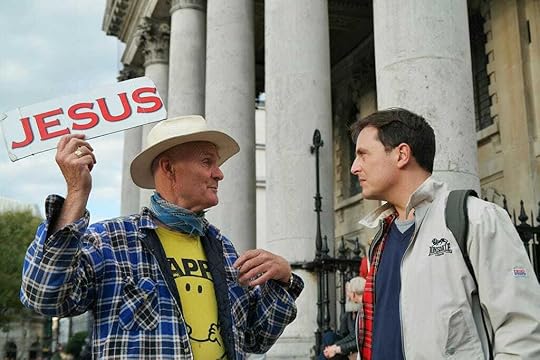 The Skeptic — Photo by Malcolm Lightbody on Unsplash
Perhaps your neighbor is an unbeliever.
My parents were believers.
Will your kids grow up to be believers?
Can you date an unbeliever?
Can you be friends with a believer — one who believes differently than you?
I want to challenge these categories. In fact, I want to suggest that we stop using them altogether. No more unbelievers! Everyone believes something. Everyone is on a journey. Our categories are flawed and need to be reconsidered.
Where Did They Come From?I assume my Christian tradition has a lot to do with this — and I can understand why. Jesus talks about the necessity of believing in him. Yet he says this to people who already believed in the God of Abraham. His disciples went on to say the same to those who believed in the gods their priests and politicians tried to appease, and to those who believed that “Caesar is lord.”
These were not unbelievers; they were people who needed to transfer their belief — to place it in the one who could fulfill what their former objects of faith could not, both within themselves and in their world.
I also assume that our modern Western culture has reinforced these labels. Step by step, we’ve moved toward the assumption that faith is a personal choice rather than a human characteristic. We think that when we stop believing one thing in a certain way, we stop believing altogether. We tell ourselves that trusting our perception and instincts is not belief but unbelief. We imagine we can free ourselves from faith — that we are capable of trusting only ourselves.
But what is trust if not faith? And what is a god, if not the object of our worthship? Could our belief in ourselves mean we are believers, just like those who believe in spirits?
Why Do We Use Them?In religious communities, these labels help us identify who is “in” and who is “out.” Of course, as we all know, belief alone is never enough. We must believe right, so we create even more labels to describe what real believing is.
But is the label “unbeliever” actually helpful? Do we ever ask what we imply about our neighbors when we use it? Did Jesus or Paul assume general unbelief among those they engaged with?
In our broader culture, we often scoff at “believers,” as if they are naïve for assuming that reality is layered and deeper than what we can see. Instead of the “who’s in vs. who’s out” mindset of religion, we adopt an “us vs. them” mentality. There are those people who believe silly things, and then there’s us — the ones who supposedly avoid the pitfalls of those beliefs and remain “neutral.”
The question we fail to ask is: what beliefs lie behind our supposed neutrality?
My Humble SuggestionI do believe in Jesus, and I take his command to believe seriously. My argument is that he — and those he sent (the apostles) — didn’t categorize the people they engaged as unbelievers. Their starting point seems to be that their audience already believed many things, but that God’s kingdom coming in Jesus was also something to be believed in.
In other words, they invited people to believe more — or to believe in a different Savior or Lord — rather than to believe for the first time.
I think this matters because it acknowledges that both the religious and the irreligious stand on the same playing field. All must ask what it means to believe — and what it means to believe in Jesus. As a longtime Christian, it is good for me to ask whether I could believe in Jesus more deeply, to trust God through him more fully. And I would invite us to consider that our friend or neighbor, who believes other things, might be invited to do the same.
We could all benefit from asking:
What do I believe in most ultimately?Could I believe more by embracing Jesus?Perhaps this way of thinking would also be more respectful toward those outside our systems.
So What Do We Call People?I get it. We need categories. We need to be able to describe and distinguish between different kinds of people.
But I’d like to suggest that we describe each person uniquely.
Perhaps the person you went on a date with considers themselves spiritual but feels uncomfortable with organized religion because of past experiences. How about you say that? The word unbeliever doesn’t capture that story.
Maybe you have a friend who has held onto the Mormonism of their family to stay connected, but in private conversation admits they’re open to many other faiths. How do you say that? The word believer doesn’t quite do their story justice either.
It takes a little more work to describe a person in all their complexity, but I suggest we try. It honors them — and it helps us more accurately portray their beliefs to one another.
Watch What You Say About ChurchWhat Ships Are For[image error]No More Unbelievers was originally published in Dispatches from the Outpost on Medium, where people are continuing the conversation by highlighting and responding to this story.
October 1, 2025
I Care
If this quest piques your interest, you can follow it more closely on Patreon!
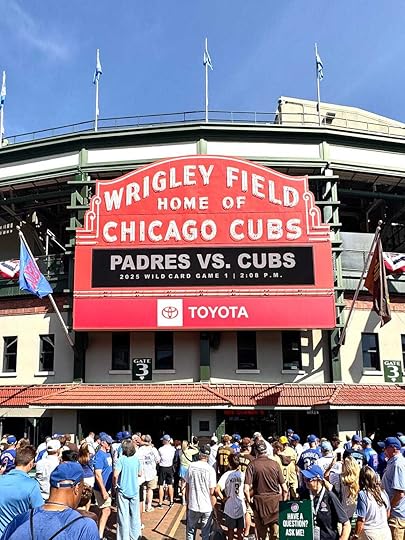
The Cubs have made the postseason for the first time in the era of my fandom, and I didn’t want to miss the chance to see a playoff game at Wrigley Field.
The first hurdle to cross: could I even make it happen schedule-wise? Games on Tuesday, Wednesday, and Thursday (if needed) were not the ideal scenario. Tuesday wasn’t great, but it was better than Wednesday.
The second hurdle: who could I get to join me? I started with some of the Cubs fans and season ticket holders I know. Next, I moved to the Padres fans I know. Finally, I tried Chicago residents. The first Chicago friend I asked — my buddy Mike — was down to make it happen and host me on his air mattress.
The third hurdle: not overpaying for this. I tried my best to balance timing and opportunism to get the flight and ticket at the right moment. I messed both of these up. I bought the flight assuming the game time based on my research, and I got that wrong. Changing the flight negated the good deal I got by using my miles a little early. Buying more miles was my only option — not terrible, but not “free” anymore.
I got seats with a good view at a low-ish price point on a third-party site after trying online and missing out, as the remaining seats sold out in two minutes. A day before the game, a buddy with season tickets offered his unsold ones to me. It was a unique scenario in which waiting until the last minute would have been beneficial. Still, I have a sneaking suspicion that if I’d waited, it wouldn’t have worked out either.
So, why cross all of these hurdles in the first place?
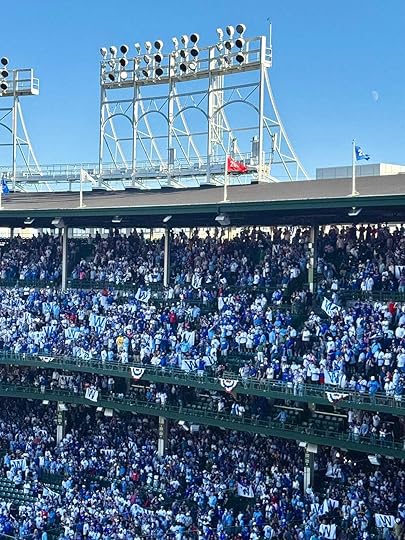
That sunk in during the third inning, as Mike hopped over the railing to go get some beers and hot dogs. I was standing, looking out over the field, and I felt a wave of emotion wash over me. My eyes were watering. Why, in the third inning of a baseball game?
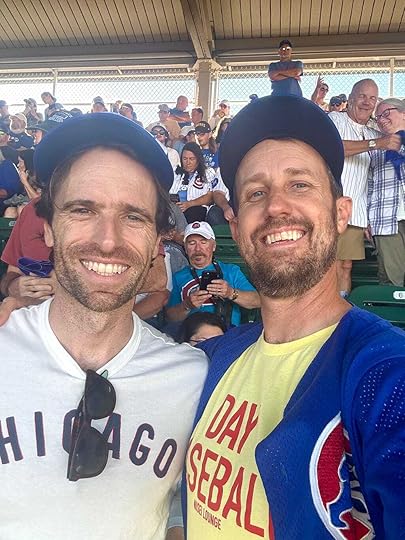
Because I really wanted to be there, and I really wanted to meet a friend — and it was happening. On top of that, I really wanted the Cubs to win. I realized that in this year of paying more attention for the sake of this memoir — listening to Cubs games, postgames, and podcasts — I’d begun to care about this team and the roller coaster season they’ve been on. I’m invested, I’ve been showing up, and I care.
Maybe that’s the friendship lesson for the day as well. As Mike and I hung out over beer and burgers afterward, and I heard about his day, I became more invested in him. As he dropped me off at the train and headed off to work, I was left hoping his meetings would go well. I was hoping his year would go well, and that all sorts of things I heard about would resolve or move in a good direction.
I want him to win. I care!
And to care, I had to be there. Maybe that’s the simple truth.
 Andy Littleton | PatreonThe Little Man: A Father's Legacy Of Smallness[image error]
I Care was originally published in 2,000 Miles to Wrigley on Medium, where people are continuing the conversation by highlighting and responding to this story.
September 20, 2025
What Now?
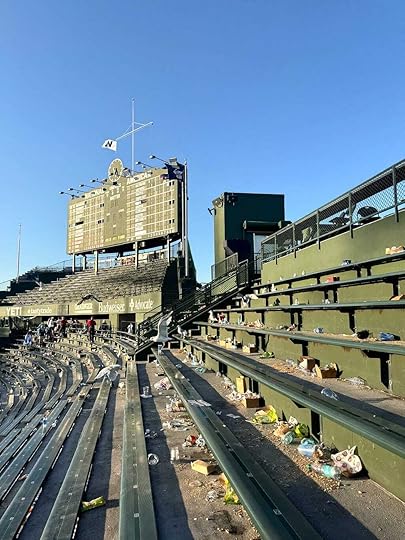
O, the rollercoaster ride of life!
The Cubs clinched their spot in the playoffs after a sweep in Pittsburgh. Immediately afterward, they lost at least three straight to the Reds.
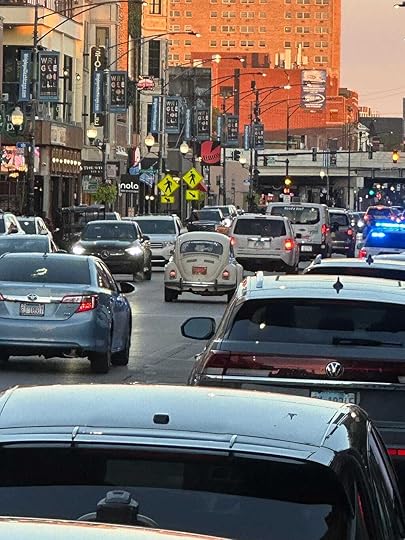
My trip to Wrigley with friends was everything I could have asked for. The memories of my friend Sam and his fiancée Valerie — though painful at times — were a gift. The time with friends was a blast. The Bug made it all the way to Wrigley — no further, mind you — but it did its job. We drove 2,000 miles to Wrigley! It will go down as one of the most meaningful weeks of my life. Thank you for your support along the way!
Then, I came home to my loving wife as we transitioned my mother into our house following her new cancer diagnosis. The next day, my father-in-law was hospitalized. He still isn’t able to return home. We are increasingly concerned as our parents age and decline quickly. A few days later, our little pet goat was gone in the backyard. My wife does not take these things well. On top of all that, the pile of work I returned to is still sitting there, as these other things had to take priority.
I had intended to update you, my readers, almost two weeks ago. But…such is life. The rollercoaster of life.
So, what now?
Now, there is a book to write. I’m excited about this process, but I’m also aware of the constraints I’ll have to battle. About twenty-one thousand words fill the manuscript, but there’s still a long way to go. Over the years, I’ve been capturing vignettes and ideas. I’ve established a structure to organize the material. I’ve identified themes I plan to weave throughout the story. I am also brainstorming some upcoming get-togethers with friends — meant to keep me committed to this quest, which isn’t just about writing a book. It’s about living well and becoming a better friend in real life. Of course, the better the Cubs do in the postseason, the more fun we’ll have, so I need you all to cheer and follow along with our boys on the North Side! We also have a new Mexican League team in Tucson, so I plan to hang out around the local ballpark with good people, too.
For those who have signed up to support me, I want to let you know what you’re giving to. I’ll be carving out chunks of time — some short, some extended — to focus on writing. There will be minimal costs associated with this, mostly fuel and coffee. I’ll also be working on the necessary steps to pursue a publisher. That will include creating materials, building a website, and seeking opportunities to share this journey publicly. These steps will involve expenses that I have no way to offset without your continued generosity.
So, for now, I say thank you! Thank you for caring enough about me, my friends, and this journey to follow along; for caring about the state of friendship in our world; for your prayers, encouragement, and practical help that made this crazy idea of a road trip in a 1971 Volkswagen to Wrigley Field move from dream to reality. I hope you continue this journey with me as the story continues to unfold.
So here’s to you, my friends! Here’s to riding the rollercoaster of life together. Here’s to October baseball. And Go Cubs Go!
 Why I’m Driving 2,000 Miles to WrigleyTalking Tucson Toros, Autographs, and the Quest for Friendship LostThe Little Man: A Father's Legacy Of Smallness[image error]
What Now? was originally published in 2,000 Miles to Wrigley on Medium, where people are continuing the conversation by highlighting and responding to this story.
August 23, 2025
6 Books Inspiring My Process
Writers must be readers in my opinion, and I have been trying to read works that will prepare me for this process over the past few years. Here are my top 6 discoveries along the way!
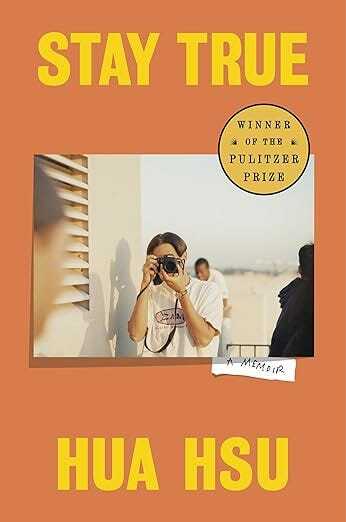
6. Stay True — Hua Hsu
This memoir of friendship is rooted in tragedy, as the author’s friend was murdered. Su reflects on the depth of their bond, the shared passions that forged their connection, and the sacredness of friendship even in the face of loss.
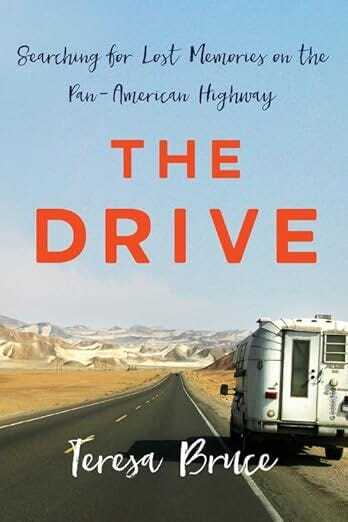
5. The Drive: Searching for Lost Memories on the Pan-American Highway — Teresa Bruce
I read several beloved travel and friendship memoirs, and Bruce’s journey stood out. In it, she retraces her parents’ attempt to drive the Pan-American Highway after tragedy had struck their family. Traveling with her husband, she not only searches for her father’s homemade camper and reconnects with people from her past, but also uncovers insights into the political dynamics of the regions she visits. Along the way, she learns more about herself, her fears, and what matters most.
The Drive: Searching for Lost Memories on the Pan-American Highway
4. Small Wonder — Walter Henry Nelson
This book focuses on the history of the Volkswagen. While it wasn’t the most riveting read, I learned a great deal about the Porsche legacy, pre- and post-WWII Germany, and the transition that led to Volkswagen’s long-term success. For my project, I found myself reflecting on how relationships form and grow when people share a dream and vision together.
Small Wonder: The Amazing Story of the Volkswagen Beetle
3. On Friendship — Cicero
Of all the books I’ve read on friendship, this short work by the Roman statesman ended up with the most dog-eared pages. Written as a dialogue between friends reflecting on the death of a companion, it examines what makes a good friend, the meaning of friendship, and the ways it can be distorted. Cicero’s reflections come from someone who had clearly thought deeply about the subject, and I appreciated the ancient perspective compared to the more modern works I’ve read.
2. The Church in an Age of Secular Mysticisms — Andrew Root
Root is an academic writer who consistently engages with the great philosophers and theologians of both the past and present. One idea from this book that has stayed with me is his claim that today’s average person — whom he sees as deeply religious, but in a hyper-individualized way — is more likely to look to memoirs for spiritual guidance. A memoir is, after all, one individual authentically opening themselves to another. This poses both a challenge and an opportunity for Christians like me. Root maps how contemporary memoirs intersect with the true spirituality that comes only from God. My hope, in light of this, is to invite people into connection with me while pointing beyond myself to the gift only God can give.
Church in an Age of Secular Mysticisms (Ministry in a Secular Age)
1. Wait Till Next Year — Doris Kearns Goodwin
Kearns Goodwin is well-known for her gift in blending memoir with rich historical storytelling. At first glance, this book is about the Brooklyn Dodgers, but as always, it’s about much more. One of the most striking elements for me was the relationship between Doris and her childhood neighbor and friend. That layer of the story made me reflect on what it might look like to reconnect with old friends after years apart.
Wait Till Next Year - A MemoirGet more from Andy Littleton on PatreonThe Little Man: A Father's Legacy Of Smallness[image error]6 Books Inspiring My Process was originally published in 2,000 Miles to Wrigley on Medium, where people are continuing the conversation by highlighting and responding to this story.
August 22, 2025
Baseball is a Bridge
If this quest piques your interest, you can follow it more closely on Patreon!
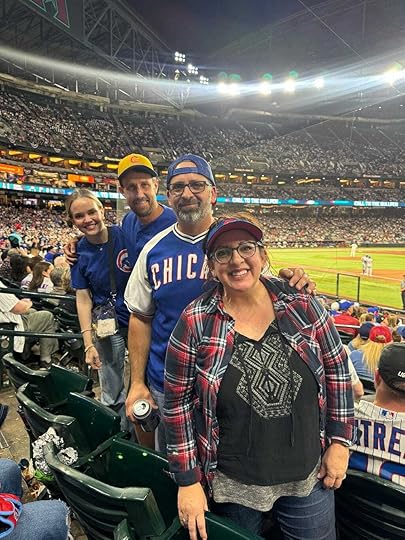
I decided to be a baseball fan again, and a Cubs fan for the first time, in 2020. At that point, I didn’t have any close friends that cared — not enough to really engage in fandom with me. When we attended our first Cubs game as fans, we went as a family and had no idea who else would have wanted to come too, unless they came to cheer for the opposition.
This year the Cubs opened the (stateside) season in Arizona. (I forget about the two games in Japan!) While I attended opening day alone since I was in town for school, we attended the next game with friends who were decked out in Cubs gear and itching to see how the new players performed. Johnny and Angi are longtime Cubs fans, and they’ll be with me at the game in Chicago.
The connection to Johnny and Angi came through shared faith and similar passions. Angi and I met at an event and had a meaningful conversation. She soon visited our church, and eventually Johnny came too. He was curious to see what his wife was so interested in. Somewhere in these early weeks, I caught that they were Cubs fans and began to throw little comments their way about the season. I could tell that they were the types who actually kept tabs. Johnny and I were listening to the same podcast, and Angi was aware of the outcome of games and recent team transactions.
Getting to know people can be a little weird. You never know if things will click or if something will come up that makes you uncomfortable. I have often debated how much to say or share early on, and how to connect over the small stuff. Shared interests like a sport, a board game, your field of work, or a favorite genre of literature can be a bridge. Sometimes one bridge leads to discovering others. Some of those bridges can lead into the deeper layers of life.
With Johnny and Angi, our faith and the Cubs provided and continue to provide a starting point. I find myself making a comment about the last game when I see them, and then we see where things go.
The game in Arizona was somewhat early in the story, and we haven’t really known each other all that long, but something can happen when you take a long drive and cheer for a team with each other. You learn the subtle things, like sense of humor and style of communication. It’s like relational training wheels that can help you get moving.
These days we see the two of them more and have watched some games in their home. We joke about how Johnny and I dabble in being superstitious, trying to figure out if and how we allowed to watch games or what hat we can wear to help the Cubbies win. I connected them to a free pop-up trailer. Johnny and I worked on a hands-on bathroom project. Johnny let me borrow his power tool (a huge relational step for some dudes).
In Chicago, Angi will get to see her first games at Wrigley, and the three of us will try being around each other for more than a day for the first time. The cool thing is that the bonds have grown deeper this year than we may have expected, especially when we consider that just a couple of years ago we were in the same city, going to church in the same zip code, living on the same side of town, but entirely unaware of each other.
Baseball has been a meaningful bridge of connection, but I’m sure we’ll find more. The beauty of fandom is that a team can bring you together with people, and people always have more than just one thing in common.
Here’s to the Cubbies, and all the other bridges we cross to find friends.
The Little Man: A Father's Legacy Of Smallness
[image error]Baseball is a Bridge was originally published in 2,000 Miles to Wrigley on Medium, where people are continuing the conversation by highlighting and responding to this story.
August 18, 2025
Friendship, Change, and Ritual
If this quest piques your interest, you can follow it more closely on Patreon!
Jim is a friend who recently tipped me off that he’ll be with us in Chicago, along with another friend of his whom I’ve never met. The Chicago game with friends is coming up on September 1st, and we depart in the VW on August 28th. You’ll start seeing a lot more from us during the trip itself!
—
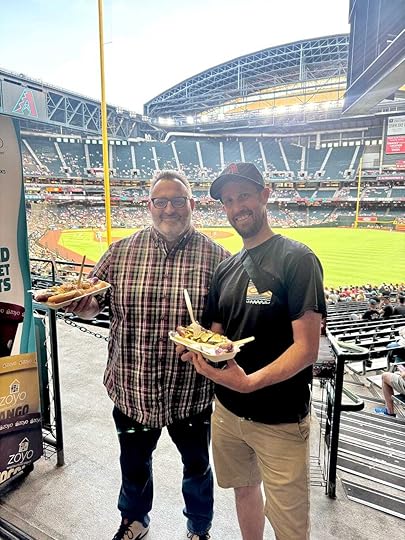
Earlier this year, Jim and I caught a game in Phoenix: Diamondbacks versus the Tampa Bay Rays. We had originally planned to attend a Spring Training game earlier, but both of us are busy, and scheduling was a problem. As I drove toward the little open-air ballpark, the absolute deluge — hurricane-esque winds and all — assailed my vehicle, and it dawned on me that this attempt was not going to pan out. We rescheduled well in advance at Chase Field, where neither wind, nor rain, nor a temperature of 118 can stop you from watching baseball.
I showed up early, as I often do, and spotted my young buddy Mason, whom I had met on Opening Day. He and I both had a smattering of Rays cards with us. Jim was headed my way on the local rail, so I hung out with Mason by the dugout for a while. At Chase Field, you have hardly any chance to engage with the D-Backs during the time you’re allowed inside, but you can catch the visiting team’s practice. I’m not a huge Rays fan, but I did want to get a signed card of former Cubbie Christopher Morel (who had been traded away for third baseman Isaac Paredes at the end of 2024) and planned to send any others over to Anna DiTomasso of the Baseball Bucket List podcast. She’s the only Rays fan I know! I got three cards signed during practice, but no luck on Morel. Jim texted that he was at the gate, so my autograph time had come to a close.
What I love about Jim is how immediately arresting he is in conversation. He is such a creative guy, and his mind runs at another level compared to the rest of us. He hadn’t been to a game in some time, though he used to be a fan of the Rangers and Rockies. To prepare, he’d done some AI reports on the teams and the rule updates to the sport. He was beyond ready to engage on multiple topics. Once we ordered up some specialty city-themed hot dogs (I got the Cuban, with ham, pickle, and mustard — a surprise favorite for the year thus far!), we jumped right in.
My favorite conversation we had was about friendship. Jim and I are both leaders in churches with young attendees. We share a common experience: people leave. People leave your church, and they leave your life. In most cases, when people are young, they hit a life transition that moves them away from college communities such as ours, and off to the place where they plan to lay down roots. Sometimes the leaving is for other reasons all leaders understand: when people are unhappy with you or your organization. Jim admitted to me that he sometimes withholds from deep relationships because of the high likelihood they won’t last. I can totally relate.
Jim, though, is rarely content to give up hope and concede defeat in the face of a creative possibility. He told me about a ritual he’s created to press against his desire to distance himself, especially when he learns someone is about to move away. He invites them over for dinner and creates a unique recipe just for them, one that reminds him of their best characteristics. There might be a salty-but-sweet dessert, as a way of remembering that he experienced their opinions first but learned to love them for their heart. He might include a regional sauce, to bring to mind the stories they would tell about their childhood home. In doing this, he gave his and their families a way to recall the best things about one another, and he made their last meal together extra memorable and special.
One thing I’ve been pondering is the fact that friendships often change along with our lives — and sometimes they even come to an end. For many things in life, we have a ceremony that brings closure, but for friendships we often don’t. Jim is one of the few people I know who does, and his report is that it’s deeply meaningful and helps process the change with gratitude.
Thank you, Jim, for rescheduling and for sharing your amazing ideas and recipes for meaningful relationships with friends like me!
After the game, I strolled over toward the dugout, where Chris Morel was being interviewed after hitting the game-winning homer. He took the time to sign for the few remaining fans, and I got my limited-edition Topps card (from a giveaway game at Wrigley) signed by the beloved former Cubbie. Morel was a player with a great smile and personality. Kids loved him. He isn’t on the Cubs anymore, but he’ll forever be part of my experience as a fan.
Like Morel, every person who has ever been part of my life still is, even if they’ve moved on or moved away. I want to learn to reflect on that in meaningful ways, like Jim does, in the hope that our reunions might be sweet.
[image error]Friendship, Change, and Ritual was originally published in 2,000 Miles to Wrigley on Medium, where people are continuing the conversation by highlighting and responding to this story.
July 29, 2025
Ryno Cards and Memories
If this quest piques your interest, you can follow it more closely on Patreon!
I am now the trustee of Samuel Zawada’s baseball cards. This was not my plan, nor did I realize that they were still around.
One of my visits to Bob and Ann’s house in April included this surprise. Bob excused himself to visit the “inner sanctum” (some people would call this a shed full of Volkswagen parts), from whence he produced two dusty old boxes full of cards.
Some of them had been meticulously organized by Sam. He’d created boxes for the American League and National League, which he’d labeled in his best handwriting and plastered with Topps stickers. Team names such as the Montreal Expos were handwritten in his more casual childhood style on colored index cards.
Some cards had “All Star” handwritten in the bottom front white margin; others had an ichthus symbol, signifying that the player was a known Christian. These seemed to be his oldest and exhibited a youthful commitment to the sport and the hobby.
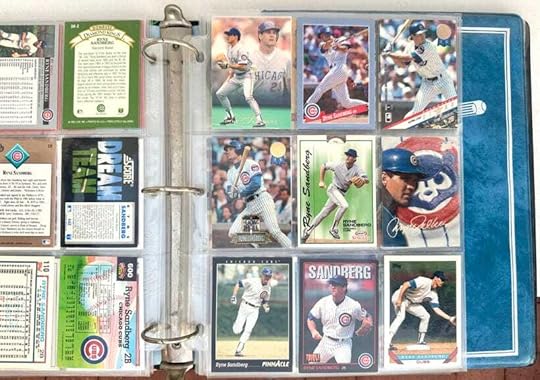
In later years, Sam graduated to binders and pages of nine cards each. Again, he organized them by team and by sport into three binders. At this stage, he had expanded to collecting basketball and football cards as well.
At some point though, the collecting continued, but the organization gave way. Cards were stacked into shoeboxes — some in protective sleeves, most not. But there was one special box, no longer appearing organized, though it clearly once was. This box had held his treasures.
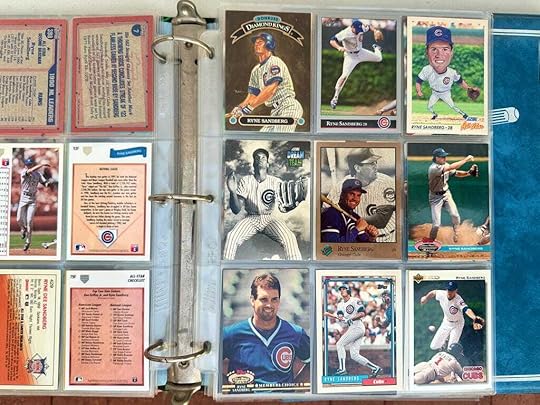
His favorite cards were those of the Bears’ young running back Rashaan Salaam and the Cubbies legend, Ryne Sandberg. Sam had stacks of Sandbergs from each year of his career, including one rookie card and one autographed card in thick acrylic cases. I didn’t realize he had the autographed card, and I began to wonder if he was at the Spring Training game where I got Ryno and Sammy Sosa to sign my ball.
Over the summer, I decided to move the Sandberg collection from the jumbled box into a cool old ’90s binder he had filled with common cards, adorned with Cubs and White Sox stickers on the front. In honor of the organizational style of his younger years, I combined my childhood Sandberg cards with his and placed them in order by year and card brand — Bowman, Donruss, Flair, Fleer, Leaf, Pinnacle, Score, Stadium Club, Studio, Topps, Upper Deck. I sorted out the doubles.
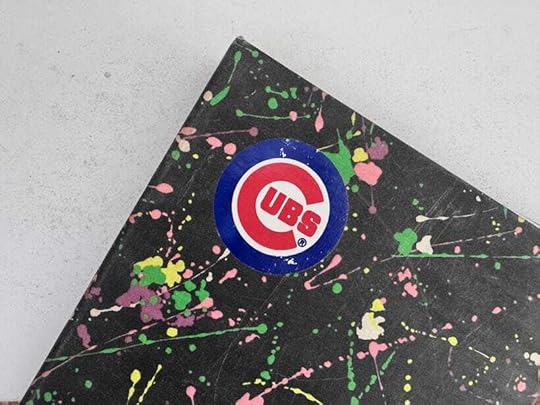
What to do with the doubles? Well, I decided that I’d send a few Ryno’s way. I’d heard that he is responsive to fan mail and autograph requests, so I decided to send some of Sam’s cards and write him a note about Sam being his fan and our friendship quest — to see if I could get a response. I thanked him for signing for both of us when we were kids.
The last I’d heard, he was cancer-free or maybe resuming a little treatment, and I hoped the note and its best wishes would find him well. I had no idea how near we were to the end of his life, which began on 9/18/59 — meaning that we share a birthday. (I’ve been aware of this since I was a kid.) It ended far too early, in his 65th year, on July 28, 2025 — exactly a month before our journey to explore friendship will begin.
It feels very important to me, the whole scenario. I’m so grateful that Bob decided to entrust me with the cards, and for the subtle invitation to remember the greatness of Ryne Sandberg through all the images and scenes on those little rectangles of cardboard.
I now have a treasure book, full of my best friend’s cards of his favorite player mingled with the ones I kept. I also had the prompt and opportunity to express our gratitude to Ryno in my little note — and be on the front end of the chorus of gratitude now pouring out to him for being not only a great ballplayer, but the kind of player a kid could be proud to emulate in their life on and off the field.
I find it quite fitting that the patch the Cubs will wear to pay tribute to the great Ryne Sandberg bears his signature — for he gave it, and his attention, to so many adoring fans. I’m so glad that Sam and I both got to get a real one when we were young!
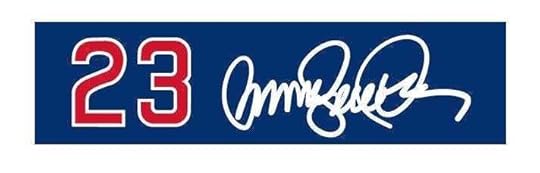
(Sidenote: I am making a sticker of the uniform patch for the VW and the trip. If you’re interested in one reply back to this article. I’ll come up with a recommended donation and all proceeds will go toward feeding the guys as we drive to-and-from Wrigley.)
Get more from Andy Littleton on PatreonWhy I’m Driving 2,000 Miles to WrigleyThe Little Man: A Father's Legacy Of Smallness[image error]Ryno Cards and Memories was originally published in 2,000 Miles to Wrigley on Medium, where people are continuing the conversation by highlighting and responding to this story.
July 28, 2025
The Fourth Annual
If this quest piques your interest, you can follow it more closely on Patreon!
The reason for messaging Sarah and Colin was to make sure they were OK with me doing this whole project, since it had so much to do with Sam. Without the family’s blessing, this trip would not occur. Bob and Ann had given me this, and now it rested in Sarah — Sam’s sister’s — hands. I messaged Sarah. The phone call would be with her husband Colin.
I did stun them a bit, which I understand. The idea of focusing on a painful story — the story of your brother and fiancé’s tragic death — is not an easy idea to process. How could it be? When Colin called, he filled me in on their immediate reaction. He wanted to know more about the book. What was the point?
I filled him in on the idea and how it had developed. I talked to him about my questions about friendship, and how so many of them trace back to Sam’s death. I shared the data on friendship decline, and how a story like this might speak to the deeper questions lurking under the surface of people who might be drawn by a story about a road trip to Wrigley Field. I said something about it being different for them — for family. Colin stopped me.
There’s a lot I don’t remember about the days after Sam’s death. I remember a few things about a funeral — and those vividly — but the rest is a blur. Colin mentioned his comments to me. I had forgotten them entirely.
Colin’s speech went into the development of his relationship with Sam, the “kid brother” of his girlfriend, now wife, Sarah. At first, he was the pesky young kid — lovable, but not someone Colin factored into his life nearly as much as the woman he loved. This was a little dude who came as part of the deal.
What surprised Colin was that the relationship developed into something far deeper than he expected. At the funeral, he reflected and named their relationship: best friends. His grief was for more than a “kid brother,” as devastating as that would be. His grief was the loss of the friendship he’d married into — and come to depend upon. So Colin informed me that he understood my quest more than I realized. That’s why Colin will be joining us.
As Colin explained this to me, it dawned on me that I was currently experiencing something similar.
In my case, as an only child, I’d always wished for an older brother or sister. It always seemed like a wonderful thought to have someone near my age, but just a bit ahead of me. The older sister, in my mind, would have explained girls to me. They were always so baffling, and the ones I found myself talking to were the ones I kind of liked and couldn’t quite comprehend. A sister could have schooled me on their mysterious ways.
A brother, though… we could have played baseball together, instead of me waiting for Dad to get off work so I could have a very ill-equipped partner to play catch and practice with. We could have ridden bikes together, and played one-on-one on the old metal basketball hoop on the dirt driveway.
When I met Michaela, her older siblings felt like obstacles. They were people who I had to impress and convince of my capability to care for their sister. I especially felt this way about Nat — that is, Dr. Nathaniel. Michaela viewed him as being very well-on-his-way in life, as a medical resident, husband, and father. To me, this was very intimidating. I was recently divorced, not finished with my degree, and back in a rental house. My main objective was to project that I was on track and capable of successfully taking care of his sister.
As the years have gone by, Nat and I have slowly become more acquainted. Home projects, similarly aged kids, bikes, and baseball emerged as similarities. It didn’t hurt when I chose to be a Cubs fan — even though Nat, being from St. Louis, is a fan of the rival dead birds — or, excuse me, Cardinals. Now we had an easy entry point into conversation, whether during the season or in between as we tracked the teams’ off-seasons. It wasn’t long before catching a game together entered the discussion.
The first trip came up because I had work-related reasons to pass through St. Louis during one of the Cubs/Cardinals series. I had never been to their ballpark and wanted to check it off my list. When I mentioned my intentions to Nat, he was immediately intrigued. I had a friend to crash with at a local seminary and had to leave the next morning, so it was a pretty low-cost and low-risk endeavor. If we drove each other nuts, it would only be for an afternoon. Nat booked a ticket on my flight out and one back later the next day, and a trio of tickets were purchased for the two of us and my buddy Caleb.
You learn a lot by traveling with a person — even more when you face a challenge together. In this first case, we had the opportunity to learn a lot!
The chances of rain entered the forecast as we prepared for the trip, but it seemed that the storm might roll in after the game. We remained cautiously optimistic. Our flight was smooth, Caleb picked us up, and he and his wife welcomed us to their new apartment. We figured out the train to the game, and off we went.
The clouds rolling in did look a little ominous, but the lightning sealed the deal. As we approached the ballpark, the official word came down: rain delay. OK, no problem. We had all night. We found a great-looking burger place and walked through the light rain to get there.
Our first challenge was due to our personal appearance — we weren’t quite prepared for the level of class expected at this “burger joint.” We came in very underdressed and wet, but no service was refused. The bill was steep, but the food was delicious.
We walked out to a cloudy but dry city streetscape. We had a ways to go to the ballpark, so we decided to download an app and ride electric scooters. As we started down the street, the floodgates of the heavens flew open and it began to absolutely pour. Within 30 seconds we were entirely saturated and could get no wetter at any place on our bodies. We were effectively submerged.
At this point, as we yelled to one another in panic and for the sake of choosing our course, we decided to bail and get to the train, a mere five minutes away.
I do not recommend riding an electric scooter through 2–4 inches of standing water on urban streets. It is terrifying. What is under my wheels? Will this little front wheel disappear into a pothole and buck me off and onto the pavement? — legitimate concerns!
It turns out that the scooters also stop working — and suddenly. As we passed through an underpass, they died one by one, and we were faced with walking the rest of the way. At some point though, there’s no getting wetter. We calmly sloshed the rest of the way, and it began to become hilarious.
We arrived at the train station as the most drenched passengers. Those with umbrellas or wet hair looked on as the water drained out of the bottom of our pant legs. Caleb snuck off behind a pillar to wring out his pants, and we stood guard to protect his dignity. The train arrived as we plopped down on the benches, oozing water like three soaked sponges.
As we re-created the story of our journey to the station, began to brainstorm about making the rescheduled game the next day, and fell into fits of laughter like teenage boys, we heard an announcement over the intercom: the tunnels had flooded, and we were being asked to exit the train.
We exited out and back into the rain in a slightly sketchy part of town. It was way too late, and all we could do was laugh.
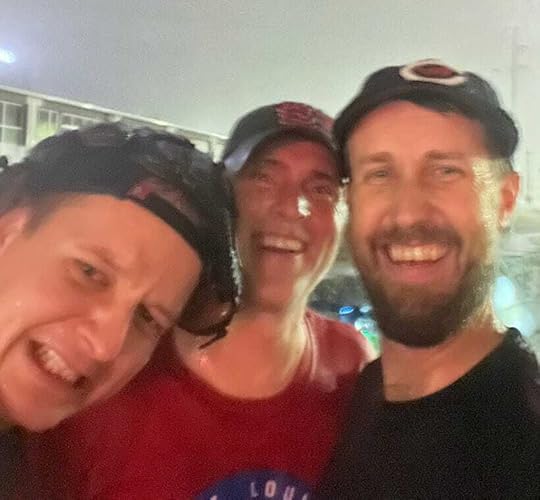
We made it back to Caleb’s apartment eventually — to the relief of his wife — surprisingly energized. We did make it to the rescheduled game the next day. The Cubs lost to the Cardinals on a putout at home plate in the top of the 9th. I had to jump in an Uber to the airport. Nat and Caleb stuck around for the regularly scheduled second game together. Nat and I have recounted our adventure to as many as will listen. It ranks as one of the highlights of the last decade of my life.
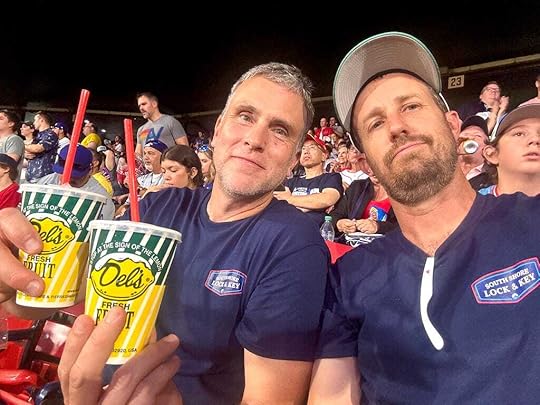
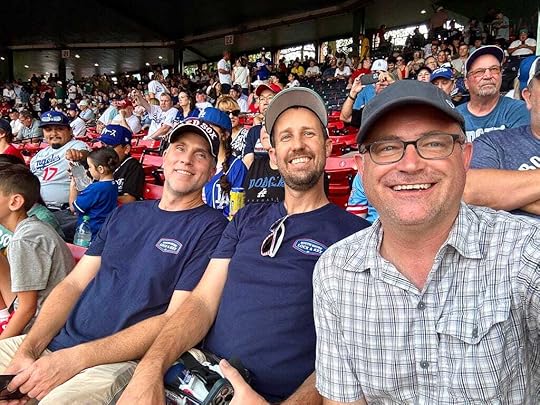
This past week, Nat and I went on what is now our 4th annual brother-in-law trip — this time to Boston, where we met his brother-in-law Troy for a day in the city and a ballgame. We ate great food, toured Fenway Park and the Freedom Trail, and caught an entertaining game in the evening. It rained that day, but almost exclusively when we were inside. We even got a double rainbow in the sky over Fenway in the early innings!
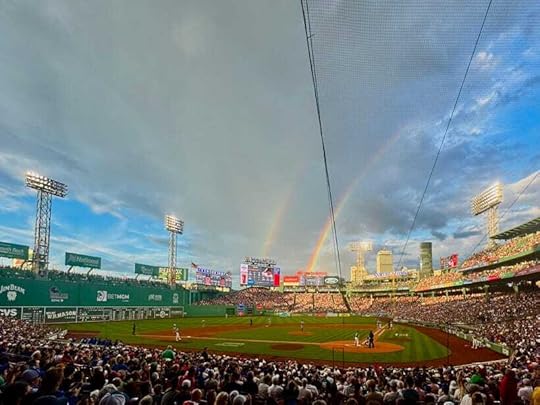
On our second and third summer trips — to London (for Cubs vs. Cardinals!) and Wrigley Field — Nat and I discovered that we both like art museums as well. A formula is falling into place. We visit a city, a ballpark (ideally to see the Cubs, Cardinals, or a team we both want to lose like the Dodgers), some great local food, and an art museum. We’re already scheming about next year.
It turns out that the guy I once saw as an obstacle — the older brother of my sweetheart — has become one of my best friends. I get it, Colin, and I am so sorry for all that you’ve lost. I can’t wait to see you in about a month. Let’s see what memories lie in store for us.
 Get more from Andy Littleton on PatreonWhy I’m Driving 2,000 Miles to WrigleyThe Little Man: A Father's Legacy Of Smallness[image error]
July 10, 2025
What Ships Are For
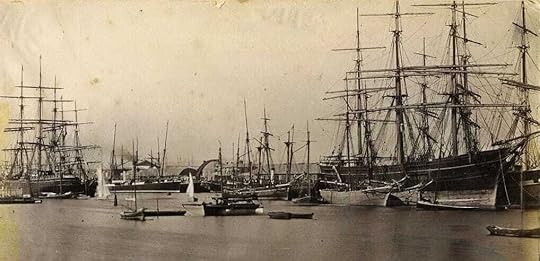 Public Domain — Port Adelaide
Mission Church is unique. I’m always curious to hear how other people perceive it and what draws them to it.
Such a conversation occurred over coffee today. In this case, I was hearing from a middle-aged dad who is moving out of town soon. We reflected on his time with us and why Mission was a good space for him to connect with God. He started off in a surprising way.
“Your church is not safe…” he said hesitantly. “Well, it is, but it’s unpredictable. It doesn’t always make you feel stable.”
He went on to describe our community meals after church, and how some homeless friends attend our church — while others come late and just join for dinner. He described some friends and church members with special needs, who aren’t always predictable. We talked about the fact that some people who show up at our church have wildly divergent views on faith and life. He noted that the mural in our entryway is pretty up front with the fact that we are all “Broken People, Given Grace.” He clarified that he needed a church to help him break out of his normal patterns and habits.
All of this means you may not get the same experience every week — and some weeks can actually leave you feeling the impact of the brokenness in the world. People sometimes leave unhappy. There are days when a church member ends up bandaging a wound, helping someone out of soiled pants, diffusing an argument, or fielding a complaint.
Then he uttered a familiar maxim — one I had never thought of in connection with our church: “Ships are safest in the harbor, but that’s not what ships are for.”
This is what drew him to our church: he saw it was doing what churches are for. When he came to our church, he could sense the mission of God’s church happening in real time. The poor, the weak, those saying “help my unbelief” were in the room. This feedback is so encouraging to me, as it’s something I have hoped and prayed would be true of us over the years.
In my early years of ministry, I went off to study urban ministry in Chicago. One of my observations was that some churches I encountered were very focused on their worship and doctrine, while others were very focused on the work they did in the community. I asked myself why it couldn’t be both. I came away convinced that you have to do both.
In our denomination, we call our regional body of churches a classis — a term for a fleet of ships that sail together. The most natural work of a classis can often default to decisions about doctrinal application and administrative work. That is all fine. Ships need maintenance and a crew. But that’s not what ships are for.
Mission is far from perfect — recall that we openly declare we are broken people — but I do hope that we are exemplifying that a church can indeed do the work of outreach and ministry parallel to the preaching of the Word and administration of the sacraments.
By parallel, I do not mean that we put on a really great event in which we encourage people to go and be in community, evangelize, and serve later. I mean that we are working out a model in which it all happens at the same time. We are trying to do good works and love our neighbor while we’re all together for worship.
Perhaps this is an important thing to consider doing, as it keeps a church’s time from being skewed in the direction of ship-defining and maintenance — without ever sailing out into the choppy waters of the world. Perhaps it would be good for someone who visits your church to experience it doing what it is for, during the primary time that it gathers together.
Watch What You Say About ChurchChristian; Your “What’s Next” is Impacting How You Feel About Current Events.[image error]What Ships Are For was originally published in Dispatches from the Outpost on Medium, where people are continuing the conversation by highlighting and responding to this story.
Shorts by Andy Littleton

- Andy Littleton's profile
- 13 followers

