Tim Calkins's Blog
April 17, 2026
Branding Lessons from The Pitt’s Noah Wyle
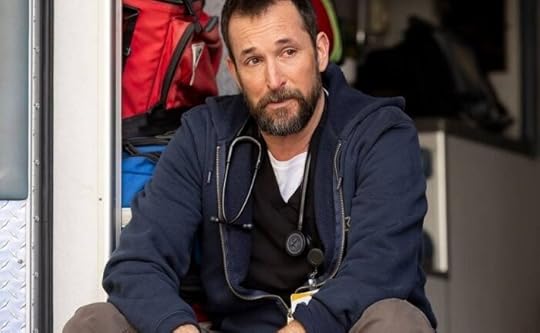
Every once in a while I read something that really sticks with me, like Sam Anderson’s recent NY Times Magazine profile of Noah Wyle, who plays The Pitt’s Dr. Robby.
It is a remarkable article about a career, but also about personal branding and positioning. I shared my observations with my MBA class this week.
The StoryWyle's story is astonishing. You can read the article here.
Here is a quick summary. He began his acting career focused on film and theater. At 22, Wyle landed a part in ER, playing the young John Carter. He stayed with ER for 11 of its 15 seasons.
Wyle left ER thinking he would quickly gain parts in movies and other shows, like his ER castmate George Clooney.
This didn’t happen. Wyle struggled to find roles and earn a living, at one point even considering selling his baseball card collection to raise funds. According to Sam Anderson, “In the public imagination, he seemed to have been permanently frozen as John Carter,”
After the pandemic, he talked with two of his former ER colleagues about creating a new medical drama. That became “The Pitt,” now one of TV’s most successful shows.
Wyle is once again – and more than ever - a beloved star.
Personal Branding LessonsThere is a lot to learn from Wyle’s journey. Here are three branding lessons that stuck with me.
Understand Your Brand
The most important part of Wyle’s story, from a branding perspective, is that he stayed so long with ER.
This decision – made for lots of reasons – had a huge impact on his reputation. Wyle’s brand was tied to medicine, emergency rooms and ER. Could Wyle play a funny character in a romantic comedy? Maybe, but that wouldn’t fit his brand. How about a villain in a horror film? No. That would definitely not be a brand fit.
Young people will encounter the same question. How long should you stay in a job or with a company? There is no correct answer, but be aware that the longer you stay, the more the role and the company will define your brand.
Similarly, if you came to business school from consulting and then go back to consulting, well, you are a consultant. Your personal brand is defined by consulting.
You can change a brand positioning, but it isn’t easy.
Prepare for Career Setbacks
It is tempting to think that things will continue to go well.
Wyle left ER believing, not unreasonably, that the projects would come rolling in. He was very disappointed.
If you have some career success, it is similarly tempting to think the opportunities will continue to appear, that you’ll be just as successful in the next phase of your career. You may well be disappointed.
The problem is that the future is uncertain. You don’t know what is ahead and how things will turn out. Perhaps you won’t get on with your new boss, or your first project at your new company will turn out poorly. There are any number of potential pitfalls.
You can take steps to prepare. Building a network is perhaps the best career insurance you can get. If you have a group of supporters and friends, you will be well positioned to navigate a rough phase. Financially, you can keep expenses low and build up a cash reserve. Interests outside of work are important to keep perspective.
Then you have to hang in there, keep trying, and don’t give up.
Build on Your Strengths
Wiliey’s career rebounded when he embraced his brand. Who is Noah Wyle, professionally? He is an actor who excels in medical settings, especially the ER.
He built this brand and when he embraced it, he rebounded.
For young people, the learning is important. Build on your unique experiences. Everyone has different strengths, different stories and different experiences. If you try to be someone else, you will likely stumble. If you build on your strengths, you will be unique and positioned for success.
The post Branding Lessons from The Pitt’s Noah Wyle appeared first on STRONGBRANDS.


March 24, 2026
A Missed Opportunity for Nespresso
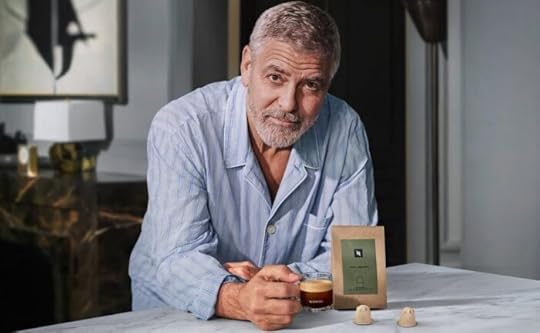
I am a big fan of coffee and drink it throughout the day. Some people suggest that I drink too much coffee, but I am comforted by the latest research that suggests coffee reduces the risk of dementia.
We have a Nespresso machine here in the marketing department here at Northwestern University’s Kellogg School of Management. Kellogg recently stopped providing free coffee in the faculty lounge, so my coffee purchase rate is going up dramatically.
An Appealing OfferWhen ordering some replacement Nespresso coffee pods today, I came across this appealing promoted offer on Google: "Nespresso: Buy 8 Sleeves, Get 2 Free."
So, I clicked the link, logged on and ordered 120+ coffee pods.
The only issue: I couldn’t locate the promo link for the two free sleeves, so I reached out to Nespresso.
The response:
“After reviewing the details, it appears the specific offer you found through your search has already expired.”
I thought that was odd because it was a promoted link on Google.
So, I asked again and received this response:
“To ensure you have access to the most accurate and active offers, I recommend visiting the Promotions page directly on our website. Searching through external engines can sometimes display outdated or sponsored links that are no longer valid in our system.”
Another follow-up discussion led to this:
“I hear you completely, and I apologize for any confusion caused by outdated search results. This usually happens because search engines "cache" or index pages from previous campaigns that linger even after we have deactivated them on our end.”
I asked if Nespresso would offer anything in light of the situation and they replied no, but did say this:
“Customer satisfaction is very important to us, so if there is anything else I can assist you with before you go, please do not hesitate to let me know.”
ObservationsWhat can we learn from all this?
One thing: be careful of old web offers. It can indeed be difficult to manage promotional links. But an outdated offer can still create customer unhappiness. Just because an offer tecnically expired doesn’t mean a customer won’t be disappointed and frustrated when they try to use it.
This is just one more reason to avoid aggressive, limited-time discounts.
Another thing: a misleading offer on the web isn’t the customer’s fault. The offer I saw had no expiration date or anything suggesting it wasn’t a legitimate promotion. I logically assumed it was valid and then I was disappointed when it wasn’t. This isn't a big issue, of course, but it is still slightly frustrating.
And perhaps the most important thing: prioritize service recovery. When you disappoint a customer, come up with something to try to make things right.
The data on service recovery is quite striking: done well, it can lead to higher long-term customer loyalty. It sends the message that the brand values the customer and will take steps to address concerns. This message is positive in many different ways.
Now a brand like Ryan Air doesn’t need to focus on service recovery. That is the Ryan Air proposition: a low fare and little customer service.
A premium brand like Nespresso has to take a different approach.
In this case, Nespresso could have simply honored the offer that I saw. That would have cost, well, perhaps $4 in cost of goods expense? My customer lifetime value to Nespresso is dramatically more than this. If I order 500 coffees a year at $1 each, that is $500 in revenue. With perhaps a 60% gross margin, I’m worth $300 in just one year. Over a lifetime?
I didn't order those coffee pods and now I’m rethinking my entire approach. Getting a simple drip coffee machine in my office would be a much cheaper long-term solution.
The overall result is that Nespresso is missing out on thousands of dollars in margin by not addressing a disappointed customer.
I don’t fault the customer service agent; they apparently didn’t have anything to offer. This is a bigger issue for the customer service team at Nespresso and its corporate parent, Nestle.
Brand LoyaltyLoyalty is a fleeting thing. It takes time to build it, but it can vanish quickly. It is important to pay attention to things like old links and to prioritize service recovery when customers are disappointed.
The post A Missed Opportunity for Nespresso appeared first on STRONGBRANDS.
March 17, 2026
2026 Kellogg Super Bowl Ad Review Highlights Video
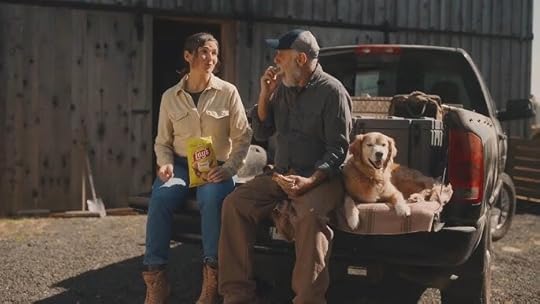
The 2026 Kellogg Super Bowl Ad Review was a big success. For the 22nd year, a panel of Kellogg MBA students evaluated all the spots. The focus: which spots will build the business and build the brand.
Here are some scenes from the event:
https://vimeo.com/1174466273?share=co...
The post 2026 Kellogg Super Bowl Ad Review Highlights Video appeared first on STRONGBRANDS.
February 9, 2026
2026 Super Bowl Advertising Review
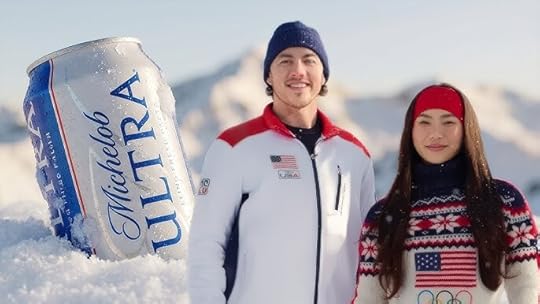
It was a great year for Super Bowl advertising. Prices reached a new high, with some ads being reported to sell for more than $10 million for thirty seconds. The overall quality was high. Companies wisely kept the focus on the product this year; this approach avoids controversy and makes for more effective spots.
Once again, a panel of students at Northwestern University's Kellogg School of Management evaluated all the ads. Here are the scores and our thoughts on some of the spots.
The Best Spots: A
This is the fourth time Google has held the top spot in the Kellogg Super Bowl Ad Review, a remarkable accomplishment. This year’s spot about moving to a new house was essentially a product demonstration showing all the different functions Gemini can perform. Linkage was strong and there was a clear benefit. The beauty of the spot is that it also moves into the emtional space; it tapped into very human feelings around moving and transitions, with Google Gemini helping ease concerns.
Novartis
Last year Novartis had the top spot with an ad about breast cancer screening. This year Novartis was back with a different effort, now a campaign to increase PSA testing. The ad, featuring NFL tight ends, attracted attention and broke through the clutter. One of the benefits of advertising a test, as opposed to a drug, is that you don’t have to list all the side-effects.
Bosch
It is hard to get better linkage than this spot from Bosch. The product name was emblazoned through the ad. The spot manages to cross categories, showing tools and appliances. And it did all of this with a playful hook: a normal guy that uses Bosch becomes Guy Fieri – glamorous, exciting, edgy.
Anthropic Claude
The strategic game is changing in AI. It is now less about introducing and building the category – this is already happening. Now, brands face a classic marketing problem: differentiation. This terrific Super Bowl spot from Anthropic cleverly shows a clear point of difference: advertising is coming to some AI platforms, but not Claude.
Michelob Ultra
Last year Michelob Ultra had one of the top spots with an ad focused on pickleball. This year the brand was back with an ad about skiing. The storyline for the brand is a great fit: Ultra is all about sports and fitness. And the message, “Last one down buys the Ultras,” is perfect. It is worth competing for an Ultra.
TurboTax
TurboTax embraced a simple benefit in its Super Bowl spot: avoid the drama when doing your taxes. Adrian Body was perfectly cast, seeking to build the drama. The spot shows a classic creative tension, between dynamic creative and a product focused message.
Levi's
Breakthrough and branding – that sums up the Levi's ad. The spot featured butts, one after the next, all in well-branded Levi's.
Pepsi
Perhaps the best moment in a Super Bowl lacking football drama was Pepsi’s parody of the Coldplay kiss-cam scandal. Pepsi embraced the Coke polar bears to dramatize its superior taste. We wonder, however, if Coke might benefit more than Pepsi from this spot.
Very Good Spots: BLay’s
Perhaps the sweetest spot this year was from Lay’s. The brand’s first ad focused on a famer’s retirement and celebrated family farms. Clearly, Lay's is trying to make people feel good about the brand.
Lay’s ran a second spot later in the Super Bowl that didn’t perform as well; the message was harder to follow and the ad included a QR code that was on screen for just a few seconds.
Budweiser
This year’s popular favorite was Budweiser. It is hard to go wrong with a story about the friendship between a horse and an eagle. The storytelling in this spot was tremendous. It is interesting to see Budweiser, after a few years of appearing lost in the desert, to have potentially found their way.
Ring
We live in a polarized time, but hopefully most of agree that it is a good thing to return lost dogs to the children that miss them. In its Super Bowl spot, Ring highlighted a new technology that allows Ring cameras to look for missing pets. This spot was unique and communicated a clear benefit.
Hellmann’s
In recent years Hellmann’s has become a Super Bowl regular, and the brand often finishes near the top of the list. For this year’s spot, the brand rolled out "Meal Diamond" singing about sandwiches. Linkage here is strong, and benefit. It also gets your attention.
Microsoft Copilot
Copilot followed Google’s product demonstration approach this year, with an ad demonstrating Co-Pilot’s ability to sift through and process data. The spot clearly delivers the positioning, but it was not the most memorable ad on the field.
Squarespace
We had a mixed reaction to this spot. It scored well with the Kellogg panel, and the message that you can register a domain at Squarespace was news. And, in past years, people had trouble remember what the Squarespace ad was about. Still, registering a domain name feels like old news.
Uber Eats
In terms of execution, the Uber Eats spot scores high. This is an engaging, fun spot that makes tremendous use of celebrity talent.
We just aren’t convinced by this overall strategy. When delivery firms are battling for orders, how does talking about whether the NFL is just a plot to remind us to eat build Uber Eats relative to the competition?
Grubhub
The message in the Grubhub spot was clear: no fees on orders over $50. The brand delivered the news in a fun way, with George Clooney providing the key line. It’s possible that Grubhub won the strategy this year compared to rival Uber Eats. However, how much staying power this one piece of news has remains to be seen.
T-Mobile
T-Mobile had excellent linkage and branding in this remarkable spot with the Backstreet Boys.
The problem? The spot was a jumble of messages. The ad talked about quality, price, switching and more. A simple, more focused message might have led to an ultimately more impactful execution.
Meta
With any new technology, there is always a basic question to be addressed: when would we use it? The Oakley Meta spot provided a clear message: Oakley Meta glasses are for people doing active sports, the adventure seekers. The ad cleverly showed different ways an active person might use the technology.
Other Bs: Fanatics, Xfinity, Wix, Pokemon, Red Bull
Other Spots: Cs and DsLiquid IV: C
One of the top spots for distinction and attention this year was the ad from Liquid IV. Singing toilets aren’t common on the Super Bowl—we cannot remember the last time we saw one-- so this ad stood out. Toilets, however, are not the most positive-inducing stimulus, so we worry a little about amplification. In addition, the dehydration message is fine but doesn’t highlight how Liquid IV is better than water or other options.
Amazon: C
This is perhaps the strangest ad on the Super Bowl. To highlight the power of Alexa, the brand showed different ways the technology could kill you. We found this to be a bizarre message in a world where people already are nervous about AI.
Wegovy: C
This spot from Novo delivered a simple message: you can now get a GLP-1 in a pill form. However, one issue is was the massive amount of time spent on side-effects. These are required for branded advertising, and understandably so, but represent a questionable message for the Super Bowl. Disease state advertising seems to work better.
Dunkin: C
For star power, you have to admire what Dunkin was able to pull off. What a remarkable collection of celebrities! Branding was strong, and linkage. The benefit just seems lacking. Why go to Dunkin? One explanation is that they are established enough that they have decided to focus solely on building an affinity with their fans.
Salesforce: D
Mr. Beast apparently agreed to be in Salesforce’s Super Bowl ad if he could control the content. The result: a great spot for Mr. Beast and a very weak spot for Salesforce. The ad communicated that Mr. Beast has created a puzzle but says nothing about Salesforce. This ad should be a lesson on working with influencers.
Instacart: D
This ad scored low with the Kellogg panel y. The clever band scene is distinctive and there is a benefit: with Instacart you can choose your bananas. Perhaps the problem is that the funny moments in the spot aren’t really about the product, so where attention is focused could be a problem.
Svedka: D
Svedka aired an AI generated spot that was generally unpleasant. What is the benefit?
Other Cs: Apartments/Homes.com, Liquid IV, Toyota, Dove, Universal Orlando Resort, Pringles, Anti-Defamation League, Hims and Hers, Wegovy, Nerds, Base44, Ro, Dunkin, Bud Light, Toyota, Genspark, State Farm, Draft Kings, Detect the SOS (BI), Cadillac, Kinder Bueno, Weathertech, Amazon, Chat GPT
Other Ds: Ritz, MAHA, Poppi, Instacart, Redfin/Rocket Mortgage, Salesforce, HeGetsUs.com, Svedka, VW
Poor Spots: F
Coinbase
One of the most unfortunate ads on the Super Bowl was from Coinbase. The ad was basically an 80s karaoke song. This was initially confusing (“Wait, what am I supposed to do here?”). By the end, it was all interesting enough but told us next to nothing about Coinbase. What is the firm? Why should we use it?
Ai.com
This is a new company – so the priority is clarity. Yet our panel was left with questions. What is this company? Why should we care about it? The ad was just a call to register a name. It wasn’t clear why we should register.
Overall, the 2026 Super Bowl featured a lot of good advertising. While a couple brands missed the mark, we think most advertisers will walk away pleased with their creative.
Tim Calkins and Derek D. Rucker
The post 2026 Super Bowl Advertising Review appeared first on STRONGBRANDS.
January 28, 2026
Super Bowl Ads in a Time of Crisis
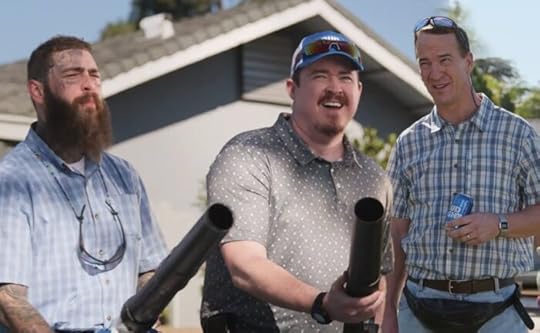
This is a difficult moment for Super Bowl advertisers. Polarization in the U.S. is reaching new heights following the shootings in Minneapolis. We are almost two weeks away from the big event, so this is the time for firms to make the final decision: Stick with the planned creative? Or modify it?
The ChallengeThe most effective Super Bowl ads meet the moment; their creative fits the spirit of the country. Bud Light ran a spot last year that featured a party at the cul-de-sac. It aligned with the country's shift towards traditional values. Michelob Ultra’s spot focused on pickleball, another timely choice.
The challenge for advertisers this year is simple: What is this moment? How is the country feeling? What are the themes that will resonate broadly? Remember that more than 100 million people will watch the Super Bowl: liberals, conservatives, Republicans and Democrats.
The CrisisIf this was shaping up to be a complex year for advertisers, things just got more complicated. Two shootings in Minneapolis have led to intense, emotional protests. Tariffs, inflation, Venezuela and Greenland…there is no lack of divisive issues.
For advertisers, this is an opportunity and a risk. There is an opportunity to say something relevant and important, but a risk of appearing opportunistic and tone deaf.
Avoid or Embrace?Most advertisers will wisely steer clear of controversy. This makes the most sense. Why get involved in a complex issue that isn’t directly related to your business?
Will some try to address the conflicts? Perhaps. Ads featuring patriotic themes are a Super Bowl staple. Calls for coming together and unity feel appealing. I could see how an advertiser might take that path. Perhaps someone will make a joke about Greenland.
Still, trying to take on the controversy this year feels particularly difficult. When emotions are raw, appealing for unity can seem inappropriate. People might think, “Unity? Absolutely not. There is no unity here and it is insulting to even suggest that.”
This weekend, top corporations in Minneapolis put out a statement calling for a “de-escalation of tensions.” While well-intentioned, the bland statement avoided anything controversial – and some might see it as reflecting a lack of leadership by business leaders.
What To DoEvery Super Bowl advertiser should now do two things.
First, go back and review the planned creative. Does the spot work in this new environment? Will a silly, funny spot still seem appropriate for such a serious moment? It is a good time to gather feedback from a wide range of people. Revisions might be necessary or even a completely new spot.
Second, pre-release the ad. Many advertisers already have plans to release their Super Bowl spots in advance; this is a way to build viewership before the game and get some early feedback. This year, it is particularly important because it is a way to test the spot’s fit with the moment. If there is a problem, an advertiser wants to figure that out before showing the ad to over 100 million people. More time means more options.
The Super Bowl is always an intense event. With the country wracked by protests, it is more challenging than ever for advertisers.
The post Super Bowl Ads in a Time of Crisis appeared first on STRONGBRANDS.
January 9, 2026
2026 Brands to Watch
Happy New Year! Each year I highlight a few brands that are worth following. These are brands poised for interesting years. Some are positioned to do well, and others are likely to struggle.
You can see my 2025 post here.
TylenolTalk about a bad year! Tylenol, a long-trusted brand, suffered a massive hit when the Trump administration attacked it for causing autism and being unsafe.
In September, HHS Secretary Kennedy, Mehmet Oz and Donald Trump held a press conference to highlight the dangers. According to Donald Trump, "Taking Tylenol is not good — I'll say it: It's not good."
The publicity was disastrous for Tylenol and its parent company Kenvue. The firm’s stock price slumped and Kimberly-Clark took advantage of the situation and agreed to acquire the firm.
Will Tylenol bounce back?
I suspect it will. The brand has enormous equity. People have used Tylenol for years with no negative impact. The story has faded away in the news. I predict Kimberly-Clark will be a big winner, picking up Kenvue’s collection of valuable consumer brands at a discount.
Kraft HeinzStruggling Kraft Heinz announced in 2025 that it would be splitting in two, and CEO Carlos Abrams-Rivera stepped down at the end of the year. The new CEO is Steve Cahillane, formerly CEO of Kellogg and Kellanova.
The question: What will happen to Kraft Heinz? Will the company proceed with the split? If so, how will it play out?
Steve Cahillane isn’t against splits; he split up Kellogg and the two resulting firms were both acquired at a premium.
I’m not sure he will do the same thing with Kraft Heinz.
The problem at Kraft Heinz is that there isn’t a fast-growing group of brands to split out. Heinz ketchup will apparently join one firm, for example, and Kraft Singles will join the other. How does this create value? Both Heinz ketchup and Kraft Singles are mature, stable brands.
Keep an eye on Kraft Heinz and watch how Steve Cahillane navigates things.
67If there is a phrase of the moment, it is 67. The catchy, popular 67 fits today’s environment. How are things going? I’m feeling 67. What’s ahead for the economy? Sort of 67. How is 2026 starting out? 67?
While 67 fits the moment, I predict it will quickly fade away. People have short attention spans and quickly get bored. There is a fine line between being trendy and being old. At the end of 2026 people will have a new phrase.
Pete ButtigiegThis might be the year when Pete Buttigieg emerges as a front-runner for the presidency.
At the moment, the next presidential race seems to be a battle between the combo of Donald Trump and JD Vance, and California’s Gavin Newsome. Both sides have embraced a competitive, sarcastic, negative tone.
Some thought Donald Trump was unique in his abrasive comments. This was incorrect: Newsome has adopted the same style.
Buttigieg has a different approach. He is direct but thoughtful. He is willing to call people out and disagree, but he does so in a respectful manner. He seeks the good. He doesn’t mock, attack or denigrate his opponents.
Buttigieg is making the right moves. He generates lots of content. He is out on social media. He is holding town halls. This is all important groundwork.
It might be that Buttigieg’s approach can’t work in our abrasive world. I predict (and hope) this isn’t the case.
Generative AIMarketing strategy is soon going to become important in the world of Generative AI. There are now multiple platforms competing in the market: Chat GPT, Anthropic Claude, Google Gemini, Microsoft Copilot…the list goes on. All of the companies are growing and investing.
The problem is simple. Where is the money? Who will pay for these products?
To capture value, differentiation will be critical. And that means marketing strategy will become important.
The platforms can’t all be good at everything. In a world like that, price will dominate – and that destroys margins.
In 2026, look for firms to make some choices. How is one platform different than the next? Why should someone believe that difference?
If firms can’t differentiate, look for people to start asking questions about the economics behind generative AI. Given the valuations, these will not be happy questions.
MoviesThe movie business has been struggling, and I anticipate this will continue in 2026. Ticket sales in 2025 were about 780 million, sharply lower than 2019’s 1.2 billion.
There are two key factors driving down the business. The first factor is streaming. It is easy to watch shows and movies through streaming platforms. Why go to the theater?
The second, bigger problem is that the movie-going experience is tired. I went a few weeks ago. The first thirty minutes were just a collection of preview and commercials. Who wants to pay to watch commercials? The snacks were expensive. The theater felt old. The ticket price seemed high, but I suspect this was only because the experience was weak.
And then the movie was available on Netflix a few weeks later.
The only way to get people going to movies is to deliver a special, unique experience. Without that, streaming platforms will continue to grow and the days of going to the movies will more and more fade into the past.
Zohran MamdaniAll eyes are on New York City Mayor Zohran Mamdani, a declared socialist who calls on people to embrace the warm idea of collectivism.
The question? What happens now? Will Mamdani succeed?
The branding question here is a little different: will Mamdani appear to succeed?
Branding is all about perceptions. Whether Mamdani’s policies lead to favorable outcomes is an interesting question, though largely irrelevant in terms of branding.
The bigger question. What will people see? What perceptions will they form?
Mamdani desperately wants to see wins. He is a savvy brand builder, so look for him to declare victory on many fronts: new affordable housing here, new development there, free child-care and free buses.
His opponents want to create the opposite impression. Look for them to highlight crime, fraud, homelessness and all the rest.
This is marketing battle of the first degree. I suspect Mamdani might do better than we expect at shaping perceptions. Remember, this is a fellow who went swimming on New Year’s Day to reinforce the idea that he was going to freeze your rent. He knows how to work social media and build a brand.
All the best for the new year.
The post 2026 Brands to Watch appeared first on STRONGBRANDS.
January 4, 2026
Looking Back at My 2025 Brands to Watch
Each year I identify a few brands to watch; these are brands that are heading into interesting years. Some seem poised to do well and others face challenges.
Let’s see how I did on my 2025 list.
Private College TuitionPrivate colleges have long embraced a simple tuition strategy: raise tuition each year and boost financial aid for families that need assistance. This makes a lot of sense on the surface, but the strategy no longer works. Fewer and fewer students pay the full tuition, which means that most of the incremental revenue is just given back in financial aid.
The higher tuition makes the institutions seem elite and inaccessible. They become easy targets for political attacks.
I wondered if a leading college would embrace a new strategy such as freezing tuition levels or even reducing them.
I thought this wasn’t likely and I was right. Private colleges continue with the usual approach.
This was a missed opportunity.
The cause has now been politicized as a tuition freeze was one part of Donald Trump’s “Compact for Academic Excellence in Higher Education.” This makes it less likely that school leaders will embrace an approach that makes sense because they don’t want to be seen supporting an idea from Donald Trump.
Beyond MeatI predicted that Beyond Meat would have more troubles in 2025 and I was correct.
This company started this year with its stock trading at $3.85 and ended the year with its stock at just $0.82, a decline of 79%.
Beyond Meat has quite a collection of troubles, but its most significant is the lack of a motivating benefit. Why should the average person eat Beyond Meat products? It isn’t clear.
Louis VuittonThe Louis Vuitton brand began 2025 in a difficult spot, as demand for luxury goods around the world softened.
I predicted there wouldn’t be a quick recovery for Louis Vuitton and LVMH and this was not entirely correct. The stock price rose, from $125 at the start of the year to $151 today.
The LVMH recovery reflects the power of strong brands; people are willing to spend for special brands that provide value.
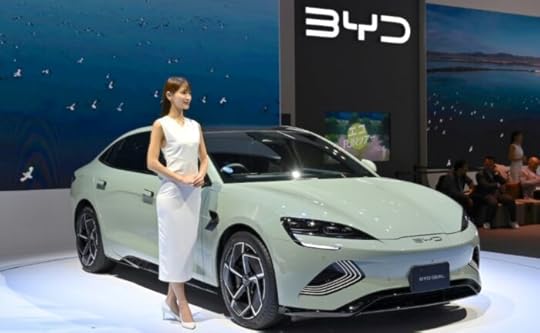
BYDI anticipated that Chinese EV car manufacturer BYD would have a big year, and that was correct. BYD has now surpassed Tesla as the largest EV manufacturer in the world, with sales up 28% to 2.26 million globally. Tesla sales fell 8%.
Still, BYD faces challenges, including small margins due its value pricing strategy and import restrictions in different parts of the world.
DEII predicted that we would hear little about DEI, as firms abandon the now toxic brand. This certainly was the case in 2025. It is hard to think of a brand that has fallen so far, so fast.
I wondered if business leaders would find a new word to describe efforts to reach diverse customers and attract a wide range of employees. We haven’t seen one emerge.
Stock MarketThe stock market did well this year, and I didn’t see that happening. I predicted that the stock market (S&P 500) would finish at 5,706, down 3%. Results were quite different, with the actual finish at an impressive 6,846.
The good news: I know it is almost impossible to accurately forecast the market, so I didn’t sell anything. My advice continues to be simple: buy stocks and never sell them.
I’ll be back with my 2026 Brands to Watch later this week.
The post Looking Back at My 2025 Brands to Watch appeared first on STRONGBRANDS.
November 19, 2025
Why Influencer Marketing is the Future
This fall I’ve been teaching the Influencer Marketing course at Northwestern University’s Kellogg School of Management for the first time.
It has been terrific fun, from preparing to teach the material to assembling the slides, to working the students and welcoming some amazing guest speakers.
One of the big takeaways from the class is that influencer marketing is likely the future of brand building.
The DataThe numbers behind influencer marketing are incredible.
A remarkable 86% of companies are using influencer marketing in 2025, and 71% of companies will be increasing spending in this area. Overall spending on influencer marketing is up by 55% vs prior year.
Unilever, for example, has committed to dramatically expanding its focus on influencer marketing. CEO Fernando Fernandez recently said, “Today, brands – by definition and by default – are met with skepticism when their messages come directly from corporations. Creating marketing activity systems where others can speak for your brand at scale is incredibly important. Influencers, celebrities, TikTokers – these are the voices that matter."
The ForcesThere are three factors driving the growth of influencer marketing.
The first factor is a basic truth: almost everyone has a smart phone. There are about 8 billion people in the world, and 5.8 billion have a smart phone. Virtually all of these people are on social media platforms.
Second, people pay attention to social media. We live in a world of information and clutter, so getting people to pay attention to anything is an enormous challenge.
One trend is clear: fewer people pay attention to traditional TV. Viewership statistics are dramatically down. The trends are similar for all the old media platforms: magazines, radio stations, movies and newspapers.
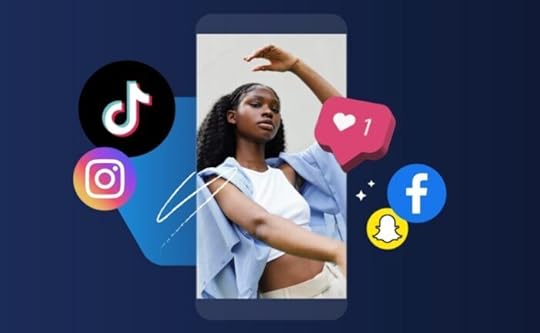
What do people pay attention to? Social media platforms like TikTok and Instagram. If you are a marketer, you have to follow your audience. If people are devoting their attention to social networks, that is where you have to be.
Social media is undergoing a fascinating shift. It is now less about following friends and family and more about watching engaging content. TikTok, for example, is an entertainment platform with millions of creators, most of which viewers don’t personally know.
Finally, there is trust, or lack of trust. People are skeptical, and reluctant to trust. Traditional experts no longer have the impact that they did previously. People are skeptical of politicians, doctors, insurance executives and marketers.
Remarkably, people trust the creators they see on platforms like TikTok and Instagram. While there isn’t a personal connection, people feel like they can relate to influencers. The authentic content of a creator has a significant impact.
The ImplicationThe combination of factors leads to just one possible conclusion. Influencer marketing is going to become more and more important.
This means that marketers are going to have to learn new skills, because influencer campaigns are dramatically different than traditional advertising efforts.
A marketer explained just one difference to me last week. In a traditional ad campaign, a company might develop two or three advertisements. Each one is tested and polished. In an influencer campaign, a company might engage 40 influencers, with each one creating three pieces of content. Instead of two or three spots, the company now has perhaps 120 spots of wildly varying quality.
Companies that understand influencer marketing can drive growth and new product adoption. Firms that are late to this world will miss out on opportunities and are vulnerable to disruption by innovative new entrants.
The post Why Influencer Marketing is the Future appeared first on STRONGBRANDS.
October 24, 2025
Creating a New Course on Influencer Marketing
I’ve been teaching at Northwestern University’s Kellogg School of Management for more than 20 years. During that time, I’ve taught the Marketing Strategy for Growth and Defense course every year. By this point, I have completed more than 100 sections and taught over 10,000 students. I created the Biomedical Marketing course more than a decade ago and have taught that class more than 25 times.
This week is the first class of my new course: Influencer Marketing. Creating a new course is a very different challenge.
The ChallengeMost of the time, instructors are teaching familiar material. Perhaps they’ve taught the class before, like my experience in Marketing Strategy. If not, there usually is an existing course design. We have a new instructor teaching Marketing Management this fall at Kellogg; he is following the established course flow and teaching the same cases.
A new class? That is a completely different endeavor.
Start with a basic question: what should the course cover? That isn’t a simple question, especially when the topic is influencer marketing, a completely new space.
Then there is a design question. Which topics come first? What is the flow?
Then there are questions about examples, cases and exercises. How many slides do we need on a topic? What are the interesting topics for a class discussion? How do we engage students?
The entire venture is somewhat unknown. How long will a particular topic take? Is this block of material likely to take ten minutes? Or twenty? If it runs short, the class might end early and that isn’t ideal. If it goes long, then the end of the class will be a scramble and that also isn’t good.
Influencer MarketingMy first step when considering the Influencer Marketing course was to get some help. Linda Kim, a former student and digital marketing leader at lululemon recently taught in my Marketing Strategy course and was terrific. She was willing to partner with me on the class.
Then came the process of learning about the topic. What is happening today in the world of influencer marketing? We did a series of interviews with brand leaders and influencer firms and read a lot of white papers and research studies.
From there, we sat down to design the overall flow. The course goes like this:
Week 1 is an introduction to the topic: why is it so important and growing so fast?
Week 2 gets into the brand decision. When should a business consider an influencer program? Are real influencers the best way to go, or virtual influencers?
Week 3 will cover different ways of working with influencers.
Week 4 walks through the process. What happens first? This class gets into all the complicated steps in the process: the brief, approvals, measurement.
Then week 5 focuses on the risks: what can go wrong?
After getting the flow, we shifted to the next question: case studies and guests. What case studies will add to the discussion? Who could be our guest speakers?
Finally, it was time to construct the content, which includes developing pages and finding materials.
Fortunately, I’ve been able to teach the topic in a few different executive sessions. This was enormously valuable; I could figure out where students were interested and how the materials flowed. In one section, I realized it was too much talking and not enough class interaction. I redesigned that section.
First WeekThe class kicks off this week. We have a full class of 70 with a waitlist, so the topic is appealing. That is a start. I’ll keep you posted on how things work out.
The post Creating a New Course on Influencer Marketing appeared first on STRONGBRANDS.
September 24, 2025
Building Chicago’s Brand with a Swim

How do you build a city’s brand? Here’s one idea: swim.
Last weekend, Chicago hosted an open water swim in the Chicago River. Organized by the non-profit A Long Swim, the one and two-mile swims raised money for ALS. The event was successful at raising funds. It also did remarkable things for the City of Chicago’s brand.
City BrandsBrands are the associations linked to a name, mark or symbol. Almost anything can be a brand, because associations develop: Products, services, people and, yes, cities.
Many cities have strong, positive brands. When you think of Paris you might think about the Louvre, the Eiffel Tower, the glorious boulevards, French culture, food and wine. Sydney brings to mind the iconic Sydney Opera House, the spectacular harbor and Bondi beach. New Orleans is linked to jazz, Bourbon Street, the Mississippi River, amazing restaurants and beignets.
Not all city brands are positive; most are a mix of positive and negative associations. Minneapolis has lakes and lively downtown, but also associations of cold and George Floyd.
City brands matter. People decide about vacations, conferences, job opportunities and corporate relocations based on perceptions, and perceptions are shaped by brands.
Chicago’s Branding ChallengeChicago is a city with a questionable brand. Chicago has incredible assets, including a clean, clear lake, a spectacular urban core and an astonishing collection of cultural institutions, corporations and restaurants.
But Chicago also has associations linked to crime, financial instability and urban decay.
Donald Trump is not a fan of Chicago; his constant attacks reinforce the negative parts of Chicago’s brand.
The Chicago River SwimThe only way to improve a brand is to create positive associations. You can’t debate the negatives; this just highlights the problems. You have to replace the negative associations with positive associations.
This is why the Chicago River Swim was such a triumph for Chicago.
The event captured attention. The headline story was catchy: the first open-water swim event in the Chicago River since 1926.
The entire event was surprising: who would think that there would be a swimming race in the middle of downtown Chicago?
The coverage was remarkable. Media outlets around the world featured the story, including the New York Times, NBC, NPR, the Guardian, CBC and many more. The common theme: the Chicago River has bounced back and is now clean enough for swimming.
More importantly, social media lit up. If you search on TikTok for Chicago River Swim you’ll see post after post, all positive. Influencers talked about the event; it was interesting, promising content to work with.
The Chicago River Swim was an enormous positive boost for Chicago’s brand. Hundreds of swimmers took part. Chicago looked glorious. The participants were excited and happy. The Chicago River looked clean and appealing.
What is Chicago? It is an urban, vibrant city with clean waters where people swim and have fun.
There were no drownings on Sunday. No dead fish. No notable crime. No overwhelming police presence. It was all positive associations for Chicago.
Apparently, the organizers had trouble getting a permit from the City of Chicago. This is ridiculous. The City of Chicago should rush to host more surprising and unique events like this that puts Chicago in the news in a positive way.
It is the only way to rebuild Chicago’s brand.
I missed this year’s swim but I’m planning to swim next year and be part of a new Chicago tradition. I hope to see you there.
The post Building Chicago’s Brand with a Swim appeared first on STRONGBRANDS.