Erika Andersen's Blog
September 21, 2025
Writing a New Script About Getting Old
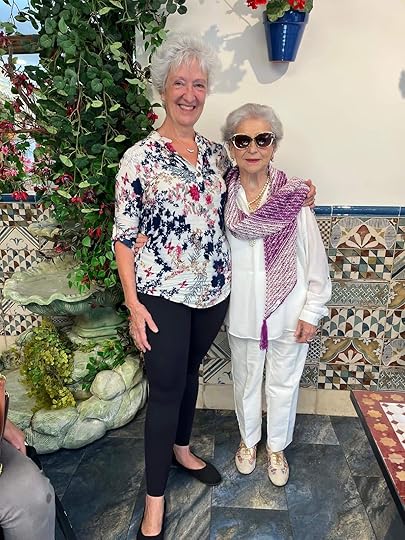
This is my friend Pilar, who’s turning 90 today. I made her that scarf, and she wanted a picture of the two of us with her wearing it.
Look how cool she is. Not only elegant and stylish, but straight and strong as well. She’s tiny, but she’s not frail. When you hug her, she hugs back and her body feels present.
She accuses me, laughing, of having copied her hairstyle. It’s not actually true (my hairstyle is entirely the idea of my peluquero), but it could be — I love her hair.
Pilar has her own apartment, walks all over the city, hangs out with friends, takes classes at the Universidad Popular, does charity work. Since her husband died ten years ago, she says she has grown even closer to her daughter, who also lives in Oviedo, and her husband’s cousin Mirenchu and her husband, who often bring Pilar with them when they travel
She lived through Franquismo (she was born during the Spanish civil war), went to college in the late fifties, and became a high school language teacher. She told me once that she has taught three generations of many local families. Pilar still advises the committee that creates the Spanish language test that college-bound seniors in high school take every year in Asturias (and in all of Spain). I love it when she waxes feisty, telling me about all the ways in which kids today need to be taught the proper usage of their language; how that prepares them to be better professionals, better communicators, better parents.
Why am I telling you all this?Because Pilar is not what society believes — and tells us — about being 90. The depressing, continuous, ageist story we hear about being anything north of 80 is one of weakness, dependence, and increasing frailty both mental and physical.
And Pilar is really not that unusual here in Spain: every day you see men and women who are certainly in their 80s and 90s walking around the city, often on the arm of a younger relative. I see them shopping, eating, laughing, hanging out with each other, taking care of grandchildren and great grandchildren. The mayor of our city of Oviedo is 78, and a more energetic and enthusiastic person would be hard to find anywhere.
I’ve been thrilled to find similarly vital and engaged older people here on Substack: and , to name just a few.
We are what ‘old’ can look like now, and I want society to see and celebrate that. As I noted in The New Old, this is the first time in history that most people will get old — and the first time that old age can be a time of joy, purpose, discovery and fun.
Society needs to catch up to us.
And telling these stories is part of how that will happen. What stories do you have? I’d love to hear about your awesome oldness or that of your friends and family!
The post Writing a New Script About Getting Old appeared first on Erika Andersen.


May 26, 2025
Is Everyone Over 60 Just a Big Pile of All-the-Same Old People?
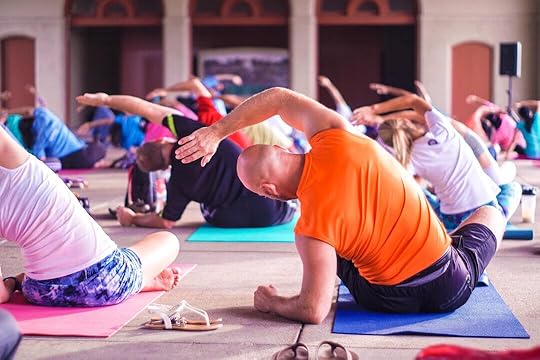 Photo by Anupam Mahapatra on Unsplash
I’ve been having a conversation with one of my subscribers on Substack about how difficult is to find helpful information about how to best shift using your body and mind as you age into your 60s, 70s, 80s, 90s and beyond. I wrote this article for my Substack newsletter, The New Old, but I thought it might be helpful to post it here, too, since I know not everyone is on Substack.
The problem we discussed is that most surveys, quizzes and articles about healthy living divide their advice and questions by decade until they get to 60 or 65, and then they just say “Over 60″,” or “65+” — implying that everyone over 60 or 65 is exactly the same.
A Recent Example
I found an article in one of the most widely-read US newspapers about “how to assess your fitness at any age.” It was a well-designed interactive online article that offered 5 self-tests you could take and then note your results to see how you stacked up against your age peers.
The main problem? The age categories were 20–30, 30–40, 40–50, 50–60, and then “60+.” When I took the tests, it told me my results were above average for “women in my age group,” implying that the same result would be above average for a woman of 62, 75, 83, or…100? Seems ridiculous, right?
In fact, I’ve found that my physical condition is changing more quickly now than when I was younger. For instance, I’d say that my results wouldn’t have been much different when I was 43 than when I was 30 – but my results now, at 73, are definitely different than they would have been at 60. I’m fortunate to be in very good health, but I notice that my strength, balance, and flexibility are all somewhat less than they were 10 or 15 years ago. It’s not terrible, and I’m working on it–but it’s a change.
One of the resulting problems with this “how to stay fit at any age” article was that it proposed no modifications of any kind to the physical tasks suggested. For example, one of the tests involved doing “burpees.” As you may know, this exercise involves squatting, thrusting your legs backward in a jumping motion to a plank position, doing a full push-up, jumping your legs back to a squat position, and then quickly standing upright. It’s a very good conditioning exercise – but only if you don’t have problems with your knees, hips, or shoulders. Even if you don’t have specific problems, for most older people, it puts a lot of unnecessary stress on those joints; there are better ways to get the same conditioning without the stress.
So…How Do We Modify?
It’s irritating that we, as older people, don’t have better support for modifying our approach to various aspects of our lives as we age. Learning to modify is a key capability for having a great later life. It’s so critical (and so under-addressed) that I’ve included a whole chapter on it in The New Old, but I thought it would be helpful to give you a brief overview here, as well.
This skill consists of being able to recognize when something needs modifying (from your exercise routine, to how you approach work, to eating habits, to relationships, to medical support); figuring out how to modify it in a way and to an extent that works for you; getting whatever support or agreement you need from others; and then making the modification without giving yourself a hard time about it.
Recognize the need to modify. Seeing ourselves clearly is very hard. We often have a distorted sense of our skills and capabilities (the awful manager who thinks she’s great, the talented musician who thinks he’s no good), and it’s true when it comes to our aging minds and bodies as well. For instance, an avid tennis player might notice that as she ages into her 70s, playing tennis is getting much harder on her joints and muscles, and she just doesn’t react or recuperate as fast…but she’s likely to either dismiss it and keep going, or the opposite — assume she’s “too old,” and stop playing altogether.The key to recognizing the need to modify is to look at yourself objectively, as though you’re observing another person. If our tennis playing friend does this, she might observe, “When I’m on the court these days, my knees start to hurt almost immediately, and I no longer seem to have the speed I need to return cross-court volleys. And an hour of playing tires me out a lot more than it did a few years ago.” With that neutral assessment, it probably looks like it’s time to do some modification.
Figure out your modification. Once you’ve decided you need to modify some aspect of your life, the next step is to figure out how to do it. This step might involve some research and experimentation. Our tennis player might realize that she very much likes getting out on a court with friends, and that the back-and-forth rhythm of tennis is something she loves. She could experiment with playing pickleball or padel to retain the things she most likes about tennis with less stress on her body. She might also research other related sports she might enjoy and that would have those same benefits. Finally, she could talk to other older tennis players who have modified their approach, to find out what has worked for them. Then, as she tries out some alternatives, she would need to observe her physical and emotional reactions with the same objective eye to see how they’re working. Get support or agreement. Getting others on board with your modifications can be anything from very easy (“Sure, I’d love to try pickleball — that sounds fun.”) to very challenging (“What? Not play tennis? Aren’t you being kind of a wimp?”). During this process, you’ll have to stay focused on and committed to what you need. It may mean holding your ground in some difficult conversations, or even finding new partners. But remember, you’re doing this to support your own aging process and to create the life you want. Be kind to yourself . Most of us can talk to ourselves in really negative ways when we’re trying to make a change — especially a change that’s a modification of a long-time habit. In fact, that negative reaction I noted above (“What? Not play tennis? Aren’t you being kind of a wimp?”) is just as likely to have happened inside your own head as to have come from someone else! If you find you’re having a negative internal monologue about a modification you’re making or planning to make; remember, you can talk back to yourself. You can say to yourself something like, “No, I’m actually being kind to myself, and helping assure I can stay active and fit throughout my life by not overdoing it.” Whenever that negative self-talk rears its unhelpful head, you can choose to respond with a more accurate and supportive thought.I hope you’ve found this helpful, and if you’ve had experiences (positive or negative) of modifying aspects of your life as you age, I’d love to hear about them. Here’s to creating the lives we want, at any age…
The post Is Everyone Over 60 Just a Big Pile of All-the-Same Old People? appeared first on Erika Andersen.
April 19, 2025
And Now For Something Different: How to Grow Old Well!
 Me in Vitruvian Sound studio
Those of you who’ve been with me for awhile are probably aware of my books, and may have even read or listened to some of them. Writing books is a joy for me, and I’m always hopeful that what I offer will be helpful to people. If you’re not familiar with my previous books, you can check them out here or here. Until now, I’ve focused on leadership, learning, and change.
Well, I’ve Done It Again!My sixth book is coming out in June, but for this one I’ve turned my attention in a different direction. As you may know, I’m always trying a to crack a code when I write a book, and with this book the code I’m trying to crack is how to grow old well. It’s called The New Old: Crafting your Best Later Life, and rather than offering specific recommendations about what to eat, where to live, how to exercise — I offer 3 key principles for deciding who you most want to be as an older person and creating the ‘third act’ of life that you most want:
Be the Boss of Your Life: Create a compelling vision for your future and then take the steps and build the support system to help you achieve it.Master Your Mindset: Transform how you talk to yourself about aging, and build skiils of mindfulness and gratitude that research shows can dramatically improve both quality and length of life.Get Good at Change: Learn to thrive in the uncertain parts of life’s transitions with grace, without resentment, and continuing to explore new possibilities. Audiobook in the CanOver the past two days I recorded The New Old audiobook in a studio in Brooklyn (that’s me getting ready to record in the photo above). The wonderful studio owner, Stephen, gave me the best possible compliment at the end of the session. He said, “I definitely need to get a copy of this book for my parents!” That made me so happy; I hope this book can be helpful to anyone who wants to figure out how to grow old well.
Stay TunedI’ll be blogging a lot about the book and what’s happening with it over the next couple of months. Please don’t hesitate to weigh in, ask questions, tell me what you’d like to know about it — or start any conversation you’d like about how to have a purposeful and fascinating later life.
The post And Now For Something Different: How to Grow Old Well! appeared first on Erika Andersen.
March 6, 2024
The Wild Ride of Real Learning, Part II
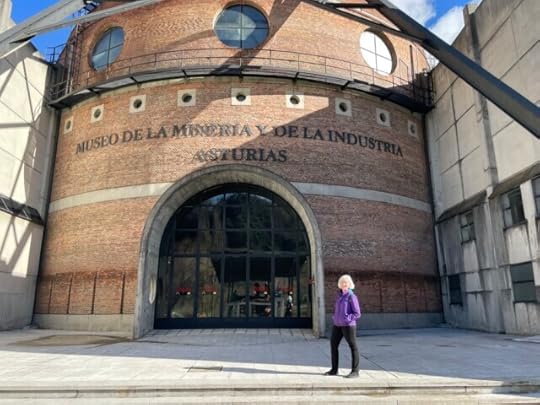 Museo de Minería y la Industria
It’s been just about a year since I wrote my last post, and I realize I’m finding out even more about learning as we evolve our life here in Spain. I just reread my first “Long Wild Ride of Real Learning” post, and everything I shared in it is still true. However, I want to add another element that I think will be helpful to anyone who’s on a serious learning journey of any kind.
Given that I’ve been working on learning the Spanish language and culture for another twelve months, you’d think I would be pretty perfect by now, right? If you said “no way,” then you have much more realistic expectations than I do.
Most days, at some point I think to myself some version of, “My god, Erika, you’ve been learning Spanish for 8 years now, really intensively for the past 2 years AND YOU’RE NOT 100% FLUENT YET? What’s your problem?!”
Your Self-talk Can Really Beat You Up
My negative self-talk about this topic seems to have gotten worse instead of better over the past year. I neglect to notice that I conduct my entire life in Spanish while we’re here. I read newspapers and books in Spanish daily, rarely having to stop and look up words; I’ve been working with our lovely lawyer, Belén, to navigate the wildly complex and contradictory process of getting a digital nomad visa — all in Spanish. Youtube videos in Spanish are my go-to to find out whether stuff I’m interested in exists here (can we change our heating system in the apartment to a heat pump?). Every day I have conversations with friends and acquaintances, and people often tell me how good my Spanish is.
Instead of all these positive things, though, what I notice are all the small mistakes I make, the times I have to ask someone who’s speaking very quickly to repeat themselves, the fact that I sometimes don’t know a word I want to say. Focusing on the negative in this way is exhausting and not fun.
Enoughness; An Important Idea for Learning
So, what I’m trying to do now (as I recommended last year) is to be kind to myself, and more specifically to remind myself that I am enough just just as I am. “Enoughness” is a powerful concept that I learned from my friend and colleague JC Lippold, and it means just what it says: to acknowledge to yourself that who and what you are right now is, indeed, enough.
It doesn’t mean that you don’t want to keep growing, and it has nothing to do with complacency. It just means that if you are enough right now, your motivation for continuing to improve can be the joy of evolution, the thrill of discovery, and the satisfaction of new knowledge and new skill.
When we feel as though we’re not enough, then all too often our motivation for improvement is negative: “I want to get better because I’m not happy with who I am or what I can do right now.”
So these days, when my mind starts to beat me up and tell me my progress is not enough (and that therefore I am not enough), I consciously stop and say, “I am enough. I am having a lovely life, and enjoying every day, and I am able to do everything I need to do to live in my adoptive language and land.”
And once I’ve relaxed into that, it’s easy (and pretty joyful) to add — “and I’m excited about continuing to improve.”
What are you working on learning and how can you start from a place of “enough’?
Big props to JC: here’s his website. Thank you, buddy!
The post The Wild Ride of Real Learning, Part II appeared first on Erika Andersen.
March 2, 2023
The Long Wild Ride of Real Learning
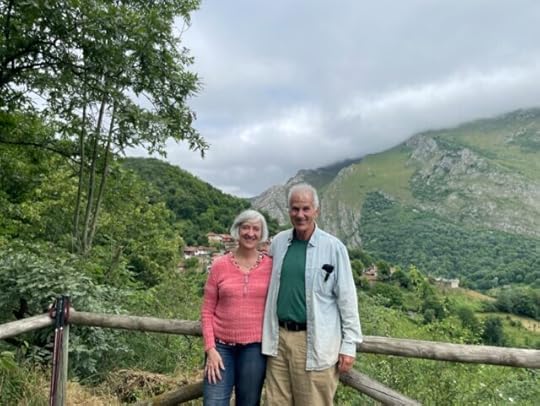 Pongas Parque Natural
When Be Bad First came out in 2016, I often noted in interviews (and in the book itself) my belief that being able to learn new skills and new ways of operating was the key skill for success in this 21st century.
I still think that. And by the time my next book, Change From the Inside Out, came out in 2021, I had understood the profound two-way connection between learning and change: almost all external change requires learning, and real learning requires internal change.
Wait — What?If that idea of the learning-change cycle doesn’t quite land in your brain, let me offer an example. In early 2016, I decided I needed a real learning challenge — partly to practice what I was preaching in Be Bad First, and partly because I’m committed to continually challenging myself. So, I decided to learn Spanish. I already knew a little of the language (like a lot of people, I took classes in junior high), so I wasn’t starting from zero…I figured that would make it easier. And it just seemed like having the ability to speak Spanish would give me more flexibility to interact and operate in this modern world.
I discovered a language learning app called Duolingo, (I highly recommend it if you’re trying to learn a language), and also found video content for learners from a variety of sources. Finally, I asked my colleague Vanessa Defournier, who is fluent in a number of languages, if she would be willing to have conversations with me in Spanish. These conversations challenged me more than any other aspect of my early learning journey. I had to continually manage my self-talk toward Of course I’m bad at this, I’m just getting started — and I know I can improve and away from Oh my god, I’m such an idiot, and she’ll think I’m lame.
Next Level of Learning Difficulty — and ChangeThe next year my dear husband Patrick suggested that we vacation somewhere in the Spanish-speaking world, so I would have a chance to practice. After some research we settled on Asturias, a province in the north of Spain. We both fell in love with the place and the people (and the food!) — and it was a great place to practice, because almost no one there speaks English. (They have tourists — but the vast majority are from other parts of Spain.)
So, for the first time, I had to speak Spanish — if I wanted to get directions, to buy anything, to order food, I didn’t have a choice. It was a change that required me to turbo-charge my learning; and for the first time, my language learning path was requiring me to change critical aspects of how I was thinking and behaving. There was the two-way cycle: an external change (having to speak another language to operate day-to-day) required learning (improving my Spanish); the learning required internal change (thinking, listening and responding in new and untested ways).
Ramping Up the Change/Learning ChallengeAs I noted, we both loved Asturias right away, and so we went back every year (except for the 2020 pandemic year), and when we returned at the end of 2021, we looked at each other and said “We want to live here part-time.” And that ramped up both the change and the learning dramatically. Now I was going to have to speak Spanish well enough to find and buy an apartment; open a bank account; get utilities, internet and phone service; contract for any needed renovations…etc., etc. And that was just the nuts-and-bolts stuff. We also wanted to understand the local and national culture, make friends, understand references and jokes, be — ultimately — supportive and helpful members of the community.
So much learning! So many changes! (And at this point, Patrick decided he really needed to learn Spanish as well, so he started his own Duolingo journey.)
Fast forward: now in March of 2023, we have an apartment that we love and some wonderful new friends; we seem to be navigating all the Spanish/Asturian policies and procedures and figuring out how to do fun stuff as well (concerts, yoga classes, museums and historical sights, visiting new areas and trying new restaurants).
But my learning journey continues — and is in some ways even more challenging. Every day I find subtle and not so subtle differences in language and culture that I have to learn and incorporate, and I’m continually running up against my own discomfort and negative self-talk about learning and change. Here are the main things I’m learning abut learning -
Being Good at Learning/ChangeBe kind to yourself: Almost every time I make a mistake in conversation with someone (or even while doing Duolingo, which is still my go-to), my default is still to feel frustrated/embarrassed. I’m learning to say kinder, more supportive things to myself instead — Well, it was mostly right — at least they understood you vs. Why can’t I get that? What’s wrong with me? That hopeful self-talk is both more accurate and more motivating — and it feels a lot better, too.
Pick your shots: When you take on a big learning challenge, it’s important to chunk it into pieces and prioritize the pieces so you don’t get overwhelmed.For instance, in Spain everyone uses the informal third person plural (vosotros) of verbs, while almost all Latin American speakers use the formal (ustedes). I only know the Latin American approach, and I’ve decided that learning the “vosotros” conjugation isn’t a priority while I’m still working on vocabulary and getting my verb tenses right. It doesn’t get in the way of people understanding me — I’ll learn it later.
Be help-able: We will be forever grateful to our real estate agent and now friend, Antonio. He found our lovely apartment and held our hands (almost literally) through the buying process; he has connected us with great contractors; he supported us through the weirdly complex and time-consuming process of getting the power turned on. He answers my questions, is patient with my mistakes, helps us understand the culture, is endlessly funny and kind. In most learning journeys, you can find people who both want to help and are able to help — let them. Otherwise, you’ll be making it much harder on yourself than it needs to be.
Celebrate the wins: I may not have understood every word, and sometimes I had to ask people to repeat things, but — by god — we bought an apartment in Spanish! We’ve gone out with new friends and had 2‑hour conversations and everybody had fun and mostly understood each other — I even got the jokes! Recognizing and giving yourself props for your progress when you’re in the middle of a long learning journey is essential to your mental health.
Realize there is no finish line: When you’re learning something big and important to you — speaking a new language; being a better leader; operating well in a new company, industry or job; addressing climate change — it’s critical to understand that there will never a be a point when you’re done learning. I was talking to a colleague the other day who’s going to be on my podcast, and she’s very nervous about it because she’s not a native English speaker. From my perspective, her English is perfect — other than her charming French accent, I would consider her 100% fluent. But she feels like she’s still learning, and isn’t completely confident about her ability to express herself in this alternative language. When she said that, I realized that when (I hope) my Spanish gets as good as her English is — I’ll still feel like I have a lot to learn! Framing this fact as a gift (I get to keep learning and growing) vs. a problem (What? I have to keep working on this?) will make your life in learning very much more pleasant.
So — all good luck on your learning challenges, whatever they may be, and as they say in Spain, Nunca es tarde para aprender. It’s never too late to learn…
The post The Long Wild Ride of Real Learning appeared first on Erika Andersen.
November 7, 2022
A Very Old Thing That Now Seems Precious
Don’t it always seem to go, that you don’t know what you’ve got till it’s gone…
- Joni Mitchell, Big Yellow Taxi
Good art captures and reflects timeless truths. I’ve always loved those lines of Joni Mitchell’s because they’re so universally true: it often requires the absence of something to appreciate it.
Just last week a colleague and I were facilitating a session with a dozen executives from three different companies. During a break, some of the participants were talking about how good it was to see each other, and how much they had missed having in-person meetings during the pandemic. That led into a larger discussion about how much they now appreciate being able to spend time with co-workers, individually and in groups, having not been able to do it much for a couple of years — and also lamenting having less opportunity to do it now than pre-pandemic, since most companies are operating in a more “hybrid” way than before.
What’s the big deal with “in person”?
I’ve heard some version of this conversation many, many times over the past year, as we’re all figuring out the balance of in-person and virtual work post-pandemic. It doesn’t surprise me. We human beings have operated almost exclusively face-to-face with each other for all but the tiniest percentage of our time as a race on earth. Think about it: Homo Sapiens has been around for about 300,000 years. It’s only been in the past 500 years or so that literacy and transportation (letter-writing, ships and fast horses) made it even remotely possible to do business at a distance in any capacity (think: The British East India Company). Then, around 150 years ago, telegraphs, railroads and then telephones made it a whole order of magnitude more possible. But still, even in those times, the vast majority of the day-to-day work needed to be done by people working together physically in the same location. It has only been in the past 20–30 years, with international phone coverage, email, broadband access, and videoconferencing, that real daily work at a distance has become possible. That’s one-hundredth of one percent of the time we humans have been around! No wonder it feels so right and good for us to work together in person.
Build it in
If you’re a leader, I suggest you remember and honor that. Even if your folks’ jobs are such that they don’t have to come together much in person for practical reasons — if their work doesn’t require physical proximity with customers, or high degrees of collaborative effort with colleagues — remember that being with other people is deeply wired into us in terms of what feels normal and comfortable. It’s how we connect and understand each other, it’s an important way to build trust, and it’s especially necessary when we’re exploring new ideas or figuring out how to operate in new ways. So, even if your team is primarily virtual, build in times for your team to be together face-to-face, and make that time a combination of fun, expansive thinking, and problem-solving. I suspect that your colleagues (even those who aren’t very people-focused) will appreciate it…and you’ll all work better and feel better as a result.
The post A Very Old Thing That Now Seems Precious appeared first on Erika Andersen.
April 5, 2022
Change Really Has Changed
It’s been almost 6 months since Change From the Inside Out was published. And it feels very different than 6 months post-publication for my other books. For one thing, I’m still getting asked to write articles and do podcasts about it (here’s a podcast I did recently where I thought the hosts asked great questions); I’m being interviewed on two more podcasts later this week.
Why the interest, and why now?
I believe it’s because change is on everyone’s mind now in a way it never has been before. The pandemic ripped the lid off our expectations about change. During the first couple of months of the pandemic, in the spring of 2020, we all experienced so many changes that we would have believed, pre-pandemic, could never happen. All schools closed. Millions of people working remotely. No live sporting events or concerts. Tens of thousands of people suddenly ill or dying.
And then, as 2020 and 2021 rolled on with no end in sight for the pandemic, it seemed to create an environment that allowed other changes to happen. For example, there were the huge waves of demand for racial justice first catalyzed by the George Floyd murder but carried forward by the wider recognition of crimes against people of color overall. In response, many organizations have increased their focus on creating a more diverse workforce and figuring out how to establish more equitable and inclusive policies. Big changes (perhaps not big enough, but a step in the right direction…)
And now, as the pandemic seems to be shifting into a long-term “endemic” phase, most organizations are struggling with how, and whether, to ask their employees to come back to the office for work.
No wonder we’re all tired…
One thing I learned, when writing about change, is that most of us are wired to see change — especially change imposed on us from outside — as a threat and a danger. Given that, it’s safe to assume that most of us feel like we’ve been under constant threat on some level for the past two years. So, here are three things you can do take care of yourself during this time of unrelenting change:
Lean into some things that feel the sameWhen everything around you seems to be changing at lightning speed, the most relaxing and rejuvenating thing, sometimes, is simply to focus on something that feels familiar. This can be as simple as a cozy dish that you’ve always liked to eat, or spending time with an old friend who knows and loves you just as you are. When I feel overwhelmed by change, I love to hang out and cuddle with my husband (so solid), or walk in the huge old forest surrounding our house.
Ask yourself, when a change comes: “How can I make this easier and more rewarding?”When we’re tired of things changing, our self-talk about the next new thing that comes along tends to be along the lines of, “Oh my god, this is going to be awful — it’s going to be hard, and strange, and I won’t be able to do X anymore.” In other words, we focus on all the ways this new thing is going to be difficult, costly, and weird. Unfortunately, thinking about it this way just makes it harder to do. So, shift your thinking about the change: start getting curious about what you could do to make it easier, and how it might actually benefit you.
Cut yourself some slack.Most of us aren’t wired for change — and almost no one is wired for this quantity and speed of change. We do need to re-wire ourselves, because I honestly believe this level of change is now normal. But that doesn’t mean we can’t be nice to ourselves in the process of coming to terms with this new reality. Rather than beating yourself up for feeling exhausted and confused, acknowledge that it’s a legitimate response to the past couple of years. It is tough. AND you can learn to be change-capable.
We’re all in this together…and human beings are remarkably resilient.
The post Change Really Has Changed appeared first on Erika Andersen.
November 23, 2021
The Confluence of Passions

I love it when different parts of my life intersect. It’s like a double helping of goodness.
Those of you who have been with me on this journey for awhile know that I am passionate about helping people to create the lives, the teams and the organizations they want — and to become who they want to become. That’s why I write books, and that’s why I’m building Proteus with all my colleagues.
Many of you also know — especially if you read this blog or follow my twitter feed — that I am passionate about helping the US have a future where everyone is supported to be able to build safe, healthy, prosperous lives for themselves and their children.
Change in America — ZevShalev’s Narativ
Recently I had the chance to bring those two passions together. My friend Zev Shalev, a hugely talented and thoughtful veteran media professional, has an online show called Narativ. He had read my new book, Change From the Inside Out, and asked if I would be on his show to talk about applying some of the ideas from the book to the topic of healing polarization in the the US.
We had an amazing conversation; we talked about letting go of our fear and hatred of those with deeply different perspectives than our own by shifting our mindset to be neutral and curious — the best way to approach any change.
Many of Zev’s listeners (we were taking comments the whole time we talked), agreed and supported the idea of more dialogue across the political spectrum, with people on both sides open to having their minds changed. Some, ironically, simply shared their belief that everyone on the other side is evil and stupid, and that a dialogue isn’t possible.
The Bottom Line
My point of view: there are evil, stupid people on both sides of every important political question. But most people are well-intended, and think that their approach is best for the country. And we need to have more open, curious conversations with people who see things very differently than we do, or our national situation will continue to deteriorate.
You can watch the show on twitter, or at Amazon (just scroll down to “Change in America”).
The post The Confluence of Passions appeared first on Erika Andersen.
October 19, 2021
The Birth of a Book: Lots of Work, Kind of a Mess, Joy at the End
There are ways in which publishing a book is like having a baby. It’s a spark of creation leading to a long, quiet, largely invisible process, followed a by a flurry of activity and anxiety, and then — voila — a wonderful, new thing.
Sometimes it seems like the main difference (other than, of course, the fact that we’re talking about an inanimate object vs. a real live human) is that the flurry-of-activity-and-anxiety period lasts a whole lot longer with a book than with a baby.
With a book, things start to ramp up as soon as you have an OK’d final manuscript. At that point you begin months of copy-editing, design (interior figures, cover, fonts and layout) and gathering testimonials. You create and finalize the index and the cover text, and build the marketing/PR strategy, while jumping through all of Amazon’s hoops and trying to get foreign rights deals. You record the audiobook. Then once all that’s done, there’s the final pre- and post-launch focus on publicity: getting articles and interviews published, guesting on podcasts, amplifying all that on social media, asking people to write reviews, thanking people for mentioning and promoting the book in various contexts…
It’s a lot. But I have to admit I really like almost all of it. It’s fun, and also exciting and interesting — and, most important from my point of view — it gives me a chance to share with people important ideas and skills that I believe will help them, both in the book itself and in all the associated interviews, articles and podcasts.
That’s something I’m feeling even more strongly this time around than I did with my previous books. I’m so grateful to have the chance to put something out in the world that will provide people with tools and insights to build better, more satisfying lives and better, more functional and human organizations.
So when Change from the Inside Out officially launches next week, and people start getting their ebook copies delivered to their Kindles and Nooks and iPads, and their hard copies in the mail or from a bookstore, I’ll be thrilled to think of all those hundreds and thousands of people who, having read it, will be better equipped to live and thrive in this world of non-stop change.
My mission in life, as I’m sure I’ve said to you before, is to help people become who they want to become. Everything I write, and everything I do professionally, serves that mission. So to you, dear reader, if you have the chance to read this latest book, I hope most ardently that it will support you in creating the life you truly want.
The post The Birth of a Book: Lots of Work, Kind of a Mess, Joy at the End appeared first on Erika Andersen.
September 27, 2021
“It Was the Best of Times, It Was the Worst of Times…
…it was the age of wisdom, it was the age of foolishness, it was the epoch of belief, it was the epoch of incredulity, it was the season of Light, it was the season of Darkness, it was the spring of hope, it was the winter of despair, we had everything before us, we had nothing before us, we were all going direct to Heaven, we were all going direct the other way – in short, the period was so far like the present period, that some of its noisiest authorities insisted on its being received, for good or evil, in the superlative degree of comparison only.”
-Charles Dickens

I’ve been reflecting lately on this opening sentence from Dickens A Tale of Two Cities. It describes so accurately my perceptions of the moment we find ourselves in; wonderful and dreadful, awe-inspiring and gut-wrenching.
The example I’ve been thinking of most often: the global COVID pandemic that has taken almost 5 million lives over the past 22 months, thrown most of the world’s economies into a tailspin, and further increased the already-huge wealth gap in the US. It has also led to one of the most astonishing scientific achievements in history – the development, testing and distribution of not one but a number of safe and remarkably effective vaccines against the disease. Over 6 billion shots have been given over the past year.
I’m also seeing other “best of times” outcomes of this “worst of times” situation. The ever-more un-heard-of changes we made in response to the pandemic (Wait, no St Patrick’s Day parade in NYC? Wait, schools are closing??? Wait, millions of people are working from home?????) have unhooked many of us from what we considered possible, and have resulted in lots of self-initiated positive change. Millions of people leaving underpaid jobs or demanding better working conditions; millions of people acknowledging and working to change the institutionalized inequities in the US and other countries; millions of people newly inspired to work for change in their local and state governments.
And yet, at the same time – those who are frightened by the changes are working hard to take us back to a time that felt safer to them: a time when women and people of color had even less say in the political process – and even less control over their bodies and their choices.
As I said: the best of times and the worst of times.
So, here’s how I’ve decided to move through this crazy time. I’m doing everything I can to assess what I find the worst about these times, and do something about it. For instance, I can give time, brain power and money to support efforts to fight systemic racism and sexism; to rebalance our economy; to address the climate crisis; to keep us moving toward overcoming this pandemic.
And, when wonderful things happen, I can cherish them and spread the word about them. It might be a personal joy: watching our grandkids grow and blossom, and all our kids and kids-in-law make their way to good post-pandemic lives, or the affection and respect I feel for all my marvelous colleagues at Proteus. Or it might be a lovely thing on the world stage: developed countries providing millions of doses of COVID vaccines to poorer countries; data showing that the COVID relief package instituted in March actually is reducing child poverty by almost half (as promised – I read this on Upworthy, one of my most reliable sources of good things). I’ve found that gratitude is the most powerfully beneficial emotion in difficult times. When I can feel genuinely grateful for something, it strengthens and motivates me for all the challenges yet to be addressed.
Here’s hoping that in these wild times, your bests outweigh your worsts, and that you keep moving forward with those you love.
The post “It Was the Best of Times, It Was the Worst of Times… first appeared on Erika Andersen.