
 Sign in with Facebook
Afsaneh Najmabadi’s Followers (147)


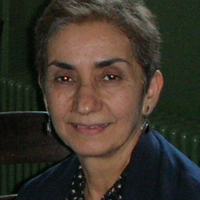
Afsaneh Najmabadi
Born
Iran


|
Women with Mustaches and Men without Beards: Gender and Sexual Anxieties of Iranian Modernity
—
published
2005
—
6 editions
|
|

|
چرا شد محو از یاد تو نامم؟
by
—
published
1991
|
|

|
Professing Selves: Transsexuality and Same-Sex Desire in Contemporary Iran
—
published
2013
—
5 editions
|
|

|
جریانهای پنهان خانوادگی
by |
|

|
حکایت دختران قوچان
—
published
1995
—
4 editions
|
|

|
اتوبیوگرافی زنان در ایران معاصر
by |
|

|
معایب الرجال
by
—
published
1895
|
|

|
Vatan Millet Kadınlar
by
—
published
2000
|
|

|
Land Reform and Social Change in Iran
—
published
1987
|
|
|
|
Nimeye Digar: A Persian Language Journal of Feminist Studies ( Vol. 2, No. 3)
—
published
1997
|
|
“A unified Iran is constituted not only politically but also affectively. Liberty and constitutional rule bring "Affection among us." The affective sentiment- that of bonding among differing brothers-produces political bonds of national unity and was associatively linked with other desires. Perhaps foremost was the desire to care for and defend the mother, in particular her bodily integrity. The same words were commonly used to discuss territory and the female body. Laura Mulvey calls these words keys "that could turn either way between the psychoanalytic and the social" (1980, 180). They are not "just words" that open up to either domain; they mediate between these domains, taking power of desire from one to the other. More appropriately, they should be considered cultural nodes of psyhosocial condensation. Tajavuz, literally meaning transgression, expresses both rape and the invasion of territory. Another effective expression, as already noted, was Khak-i pak-i vatan, the pure soil of the homeland. The word used for "pure," pak, is saturated with connotations of sexual purity. Linked to the idea of the purity of a female vatan was the metaphoric notion of the "skirt of chastity" (daman-i 'iffat) and its purity-whether it was stained or not. It was the duty of Iranian men to protect that skirt. The weak and sometimes dying figure of motherland pleaded t her dishonorable sons to arise and cut the hands of foreigners from her skirt. Expressing hope for the success of the new constitutional regime by recalling and wishing away the horrors of previous years, an article in Sur-o Israfil addressed Iran in the following terms: "O Iran! O our Mother! You who have given us milk from the blood of your veins for many long years, and who have fed us with the tissues of your own body! Will we ever live to see your unworthy children entrust your skirt of chastity to the hands of foreigners? Will our eyes ever see foreigners tear away the veil of your chastity?”
― Women with Mustaches and Men without Beards: Gender and Sexual Anxieties of Iranian Modernity
― Women with Mustaches and Men without Beards: Gender and Sexual Anxieties of Iranian Modernity
“معشوق و شاهد در شعر عاشقانه فارسی آشکارا مذکر بود، حتی اگر نبودن نشانه های جنسیتی در دستور زبان فارسی، بهانه ای به دست نسل های بعدی منتقدان ادبی تجددگرا داده باشد تا به انکار و خنثی سازی این امر بپردازند.”
― زنان سیبیلو و مردان بیریش: نگرانیهای جنسیتی در مدرنیته ایران
― زنان سیبیلو و مردان بیریش: نگرانیهای جنسیتی در مدرنیته ایران
“Even women deeply committed to the emancipatory promises of modernity were alarmed by the "inappropriateness" of unrelated men and omen socializing in the streets. In the women's press, articles exhorted young men to treat women respectfully in public. Other articles encouraged women to act as their own police and to be more observant of their hijab and public modesty.
From the beginning, then, women's entry on the streets was subject to the regulatory harassment of men. The modernist heterosocializing promise that invited women to leave their homosocial spaces and become educated companionate partners for modernist men was underwritten by policing of women's public presence through men's street actions. Men at once desired heterosociality of the modern and yet would not surrender the privileged masculinity of the streets. Women's public presence was also underwritten by disciplinary approbation of modernizing women themselves whose emancipatory drive would be jeopardized by unruly public conduct.”
― Women with Mustaches and Men without Beards: Gender and Sexual Anxieties of Iranian Modernity
From the beginning, then, women's entry on the streets was subject to the regulatory harassment of men. The modernist heterosocializing promise that invited women to leave their homosocial spaces and become educated companionate partners for modernist men was underwritten by policing of women's public presence through men's street actions. Men at once desired heterosociality of the modern and yet would not surrender the privileged masculinity of the streets. Women's public presence was also underwritten by disciplinary approbation of modernizing women themselves whose emancipatory drive would be jeopardized by unruly public conduct.”
― Women with Mustaches and Men without Beards: Gender and Sexual Anxieties of Iranian Modernity
Topics Mentioning This Author
| topics | posts | views | last activity | |
|---|---|---|---|---|
| Goodreads Librari...: add info | 70 | 350 | May 05, 2017 11:51PM |
Is this you? Let us know. If not, help out and invite Afsaneh to Goodreads.
