Laura Gilfillan's Blog - Posts Tagged "nature"
Poetry Corner: Willow Tree, by Laura Gilfillan

Willow Tree
Its branches hang down
like graceful strings of tears,
Some turning yellow.
The wind blows;
they sway sadly.
O willow tree,
Mourn for us,
Mourn for us,
For our lives are full of grief.
Laura Gilfillan
2003


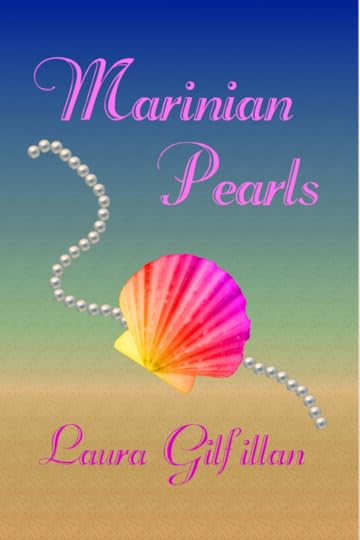
MARINIAN PEARLS, reviewed by Marigold Deidre Dicer

Thank you Marigold, for reviewing my book. Here is an excerpt from her review:
I’ve never read a mermaid book, and after reading this book I realise that I need to read more. Marinian Pearls shows off the ocean and all its diversity, and I fell in love with it. The sequences where we explore under the sea were magical, from the bright, sunny surface down to the very depths of the ocean floor.
See the rest of the review at Versus Blurb, her blog. https://versusblurb.wordpress.com
View more on Laura Gilfillan's website
Another review for Marinian Pearls, from Christina Escamilla
Christina Escamilla has written a thoughtful review of my novel, Marinian Pearls.
Mermaids are a concept that I feel is still begging to be explored. When they are done, it's generally in a folkloric sense or a strange little romantic tale that attempts to be a Disney-true "The Little Mermaid" copycat. However, that's not what this book is. The author manages to add her own spin on the allegorical creature and rather than having the focus on the physical transformation, the focus is instead on character growth. Although there were some areas that slowed a bit for me, as a reader, I would say as a whole this was a nice, pleasant read that is perfect for the YA crowd. Very original!
Thank you Christina for taking time to read and review my book.
View more on Laura Gilfillan's website
Mermaids are a concept that I feel is still begging to be explored. When they are done, it's generally in a folkloric sense or a strange little romantic tale that attempts to be a Disney-true "The Little Mermaid" copycat. However, that's not what this book is. The author manages to add her own spin on the allegorical creature and rather than having the focus on the physical transformation, the focus is instead on character growth. Although there were some areas that slowed a bit for me, as a reader, I would say as a whole this was a nice, pleasant read that is perfect for the YA crowd. Very original!
Thank you Christina for taking time to read and review my book.
View more on Laura Gilfillan's website


Images for the Imagination
A sparkling gown left behind by a careless fairy

photo by Amanda Gilfillan
View more on Laura Gilfillan's website

photo by Amanda Gilfillan
View more on Laura Gilfillan's website


Watch out Captain Kirk
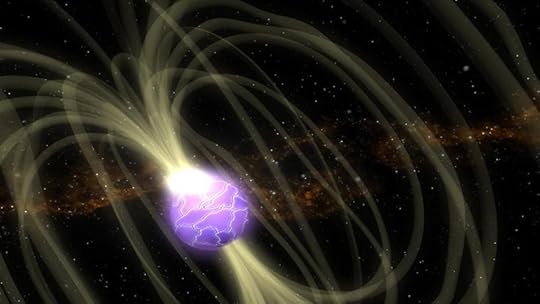
Okay, Captain Kirk, here's another danger you've got to watch out for while you're wandering around the cosmos. Here's an article from Curiosity about magnetars.
Magnetars are one of the most extreme and mysterious objects in space. They're surprisingly small, they're incredibly dense, and, like their name suggests, they pack one heck of a magnetic pull.
At the final stage of a star's life, it explodes into a supernova. As it collapses in on itself, it outshines all of its neighbors before fading slowly away. If the living star was big enough, it leaves over a neutron star: a star so dense that, although it can often be the diameter of a small city, a teaspoon of its matter weighs at least a billion tons. Meanwhile, they spin fast—really fast. Hundreds of times per second fast. All this density equates to a really powerful magnetic field—about a trillion times more powerful than Earth's. But magnetars? Scientists aren't sure why, but they're an especially magnetic form of neutron star. Their magnetic fields measure at about 1,000 trillion times that of Earth.
Scientists have been on the search for magnetars since 1979, when a shock of gamma rays (later identified as coming from magnetar SGR 0525-66) pulsed through the solar system, resulting in space equipment disruptions and atmospheric abnormalities. In the decades since, fewer than 25 neutron stars out of about 2,000 across the galaxy have been dubbed magnetars, though a handful of other candidates are pending confirmation. From Earth's standpoint, that's a good thing. Just over a decade ago, in 2004, effects from an explosion, or "starquake," of SGR 1806-20, (50,000 light years away), was powerful enough to impact the Earth. It damaged and disabled satellites, and even partially ionized the planet's upper atmosphere.
Read more about magnetars
View more on Laura Gilfillan's website
Let's Talk to the Animals
Who hasn't ever wished they could talk with animals? What if they already have their own language, and what if we could learn it?
curiosity.com
Will We Ever Speak To Animals In Their Own Language?What if you could eavesdrop on the conversations of songbirds or politely introduce yourself to a dolphin? With recent scientific advances, a future like that might not be too far off.
An Elephant Never Splits An Infinitive
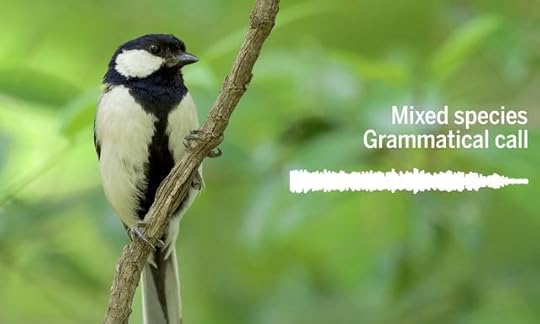
In 2017, researchers introduced the world to an animal that's particular about its grammar: a small bird called the Japanese tit. In the same way humans convey meaning through word order ("Attack an enemy" means something different than "An enemy attack"), these birds put calls in a specific sequence to communicate with one another.
Researchers gathered a variety of the birds' own calls and played them back to the flock. As Giorgia Guglielmi writes in Science Magazine, "When a predator threatens the flock, Japanese tits produce something called a 'mobbing call,' with the sequence ABC-D. By itself, the ABC part of the call means 'danger.' But the D part of the call — similar to the 'recruitment call' of a close relative, the willow tit — attracts flock members when there's something to share, such as food. When the two parts are produced together, Japanese tits flock together to mob the intruder."
When researchers played the ABC-D call for the birds, they turned their heads and approached the loudspeaker. But when the sequence was reversed to D-ABC, the birds didn't react. Something similar happens with the Carolina Chickadee, which is a good indication that when it comes to birdsong, syntax matters.
There's at least one animal you can talk to — kind of. Elephant biologist Joyce Pool and a team at the the nonprofit ElephantVoices has...
curiosity.com
Will We Ever Speak To Animals In Their Own Language?What if you could eavesdrop on the conversations of songbirds or politely introduce yourself to a dolphin? With recent scientific advances, a future like that might not be too far off.
An Elephant Never Splits An Infinitive
In 2017, researchers introduced the world to an animal that's particular about its grammar: a small bird called the Japanese tit. In the same way humans convey meaning through word order ("Attack an enemy" means something different than "An enemy attack"), these birds put calls in a specific sequence to communicate with one another.
Researchers gathered a variety of the birds' own calls and played them back to the flock. As Giorgia Guglielmi writes in Science Magazine, "When a predator threatens the flock, Japanese tits produce something called a 'mobbing call,' with the sequence ABC-D. By itself, the ABC part of the call means 'danger.' But the D part of the call — similar to the 'recruitment call' of a close relative, the willow tit — attracts flock members when there's something to share, such as food. When the two parts are produced together, Japanese tits flock together to mob the intruder."
When researchers played the ABC-D call for the birds, they turned their heads and approached the loudspeaker. But when the sequence was reversed to D-ABC, the birds didn't react. Something similar happens with the Carolina Chickadee, which is a good indication that when it comes to birdsong, syntax matters.
There's at least one animal you can talk to — kind of. Elephant biologist Joyce Pool and a team at the the nonprofit ElephantVoices has...