Ian Little's Blog
October 11, 2014
The Fallow Season of Hugo Hunter by Craig Lanca...
 The Fallow Season of Hugo Hunter by Craig Lancaster
My rating: 4 of 5 stars
The Fallow Season of Hugo Hunter is a fast-paced story about Mark Westerly, a seasoned journalist at the local rag who recounts stories from his own past and his long association with Hugo Hunter, a young Olympic medallist who never quite reached his potential in the pros.
Although the book charts the life-long friendship between journalist and boxer, the heavier blows are landed in the scenes from Westerly’s personal life. He covers his stormy relationship with first wife Marlene, his fractious father-son with Von in particular, and also the psychological aftermath of a failed marriage sunk by overwhelming guilt. This book is certainly not just for boxing fans, it’s about everyday dreams, losses, and possible chances of redemption.
The central plot is familiar, a small-town kid makes good, turns pro and then hits the skids as his skills begin to fade, but there's enough here – set at a decent pace – to keep you reading. Mark’s own story serves as a foil to Hugo’s, in many ways the two men grow up together with a shared goal, but they also face their own struggles away from the glamour of boxing. Hugo pulls no punches in the ring, and Mark can’t avoid the punches outside of it.
This is the first Craig Lancaster book I’ve read. He has an easy style reminiscent of Elmore Leonard, the story moves along with a silky smoothness that’s hard to achieve. That said, I didn't really connect with Hugo as much as the story demanded. Leonard’s ability to make heroes of his villains was missing and I kept asking myself why Mark Westerly was so dedicated to such an obvious repeat offender. Lancaster doesn’t yet have Elmore’s sassy edge, but there are hints of it here and there. (“You know,” he said, “I don't think I want to live in a world where you can’t kick the ass of someone who deserves it.”)
In between chapters there are excerpts from Hugo’s own efforts at an autobiography, the excerpts reinforce the sense of missed opportunity he feels. The female characters are strong, providing some balance to the testosterone on show.
An enjoyable read. Overall a winner on points.


September 21, 2014
The Zone of Interest by Martin Amis
 The Zone of Interest by Martin Amis
My rating: 4.5 of 5 stars
This is not a love story, nor is it truly a comedy. I’ve seen those phrases inserted in front of the Auschwitz tag and they’re misleading. Is there a love story? Yes, I suppose so ... or more accurately a lust story. Is there comedy? Yes, there is, but not so much as to overwhelm the narrative, which is essentially about daily life at Kat Zet (AKA Auschwitz). This means genocide, death on a massive scale – the incredible smell that accompanies burning thousands of bodies around the clock. That said, The Zone of Interest is not a horror story either; the confusion is because it sits smugly in a niche of its own.
The narrative is shared by three characters; Golo Thomsen, a Nazi middle manager (and Martin Bormann’s nephew) involved in the planning of new camps; Phil Doll, the camp’s Commandant and biggest nut; and Szmul, a Jewish POW and leader of the team assigned to the gassing of prisoners and disposing of their bodies.
Golo, like close friend Boris Eltz, is a womaniser. He finds himself struck by Cupid’s arrow after catching sight of Mrs Hannah Doll on the very first page. Up close he realises an affair with the Commandant’s wife would be a huge gamble. (“This would be a big fuck. A big fuck: that was what I said to myself.”) Golo is not as fully committed to the war effort as others…
Commandant Doll, fond of numbers, is a genuine brute; he is aware of the threat from handsome Golo but he keeps a keen eye on his wife while running the camp. When Doll gets a spare moment he drinks to excess and terrorises poor Szmul. Doll is the mad face of the Third Reich, struggling constantly to keep the horror of what he is doing from tearing him asunder. He ought to be the story's most horrific character but Amis dresses him as a clown, and instead he becomes the comedy turn. (“Some people claim that the Zone of Interest is a dumping ground for 2nd-rate blunderers. And I would agree (if it didn’t tend to reflect badly on myself.)”)
Always lurking in the background is the infamous IG Farben, conducting horrific experiments and supporting the war effort with its huge cash reserves.
Poor Szmul is the narrator afforded the least pages, but his words do not lack impact. He attempts to help the new arrivals while counting the days to his own inevitable death. Szmul has the least hope of anyone in the story, at one point declaring himself scared to sleep in case he dreams he goes home to his wife and has to tell her what he has been doing.(“I love my wife, but I’m glad I’ll never see her again.”) The scene with Witold, a boy he knew from back home, shows how impossibly he is trapped in the war; he finds himself doing the dirty work for those who are trying to kill his people (“they recast you in their own image”). Part of Szmul’s job on the SK squad is to extract any valuables from the cavities of the dead.
The background to this story is well known, and Amis sticks to the script with minimal ad-libbing (anyone who has read Koba the Dread will find the themes and descriptions familiar). In Zonehe leans on history for his scenario, leaving himself free to provide the frills. Making the running of an extermination camp enjoyable is a tough task, but he manages it with a style that flows as well as anything he has written before. Crucially, he indicates and gestures, there are no stark signposts, and style does not trump content. This book reads well a second and third time, both for plot and detail. E-readers will utilise their online dictionaries as there is a fair smattering of German and French. The author has done his homework and wants it to show.
Amis’ trick to the story is the way the viewpoints of the three characters twist and combine to reveal the truth to the reader (boozer Doll is especially negligent where the truth is concerned as he narrates). The last chapter ties up the story lines and gives a glimpse of what life was like after the war; while the careful film noir ending is suited to the time period. In the Afterword Amis takes the opportunity to think out loud regarding his own feelings in coming to terms with the holocaust (if such a thing is possible). His research has enabled him to include many real life incidents (and people) in Zone.
The Booker brouhaha is old hat; all you can say is the list must be full to the brim this year with authors tackling serious subjects while still being able to entertain. As with any Amis novel, those that need ammunition will no doubt dig to find it. The rest of us can get on with enjoying a very good book.
In the latter part of his career Amis has somewhat made his own bed, what with his comments about writers declining in their later years. He's set himself a challenge that will stand to the last word he types. In The Zone of Interest there is no sign of decline, nor of losing the battle.
May 8, 2014
A Blaze of Autumn Sunshine by Tony Benn

A Blaze of Autumn Sunshine by Tony Benn
My rating: 5 of 5 stars
An interesting read, a snapshot of former MP Tony Benn's life as it neared its conclusion. This book is interesting enough for its political diary, but the human element to its stories is what makes this a great book. Benn, on the fringe of politics when he wrote this, was still very active politically in many communities as well as being a doting grandfather, one who revels in his busy life.
He pulls no punches regarding his increasing frailty and worries about his ability to do something useful with his life at an age when most people yearn only for a comfortable chair and a blanket. His schedule is exhausting to read about, up and down the country on a regular basis and abroad when required, he even mentions a plan to keep working if he is hospitalised when his health fails!
You may not have agreed with the man's political views but you cannot help but admire his drive and determination to help others, while always keeping an eye on the scoundrels who populated the benches in the House of Commons. There is a feeling that Benn considered himself almost an independent, and as such his critical eye is free to roam across friends and foes alike; his distaste for New Labour and its Blairites is not concealed, neither are his opinions on the abilities of up-and-comers such as Boris Johnson and David Cameron. Even in his eighties he still feared being thrown out of the Labour Party, mainly out of concern for any embarrassment it might cause his son Hilary, a member of the Cabinet at the time.
His final diary is full of concern for the future, he doesn't always paint a rosy picture, and unfortunately a lot of things he feared have come true; Labour not being able to win an election under Brown, a coalition government being bad for the country - what chance his prediction of twenty years of Tory rule?
A proud grandfather he keeps us informed of what the kids are doing - Hilary in the Cabinet, Josh fixing and repairing, Lissie's writing career - it's plain he enjoys their adventures very much. His own address book is an interesting mix of socialists, old foes and attractive TV stars (Natasha Kaplinsky, Saffron Burrows, Selina Scott, etc.). It's a miracle he found time for politics and demonstration marches!
The abrupt end to his regular diary (he lost the urge to record his views after a bout of ill health) is softened somewhat by his own summation at the book's end, something which I was very glad for. Alan Clark's diary entries simply stopped, but here Benn gets to have his final say. I shall seek out Benn's previous diaries on the strength of this volume. Tony Benn, socialist, diarist, campaigner - much missed but not forgotten.
December 23, 2013
LUCKBOX on Countdown Promotion
From the 26th December to the 1st of January "Luckbox" will be on a Countdown promotion on Amazon.com and Amazon.co.uk. Starting at 99c and 99p the price will rise over that time period until it reaches full price again on January 1st. The sooner you buy the smaller the price!
Click here to visit the Amazon page in your area.
Click here to visit the Amazon page in your area.
December 21, 2013
New Luckbox cover
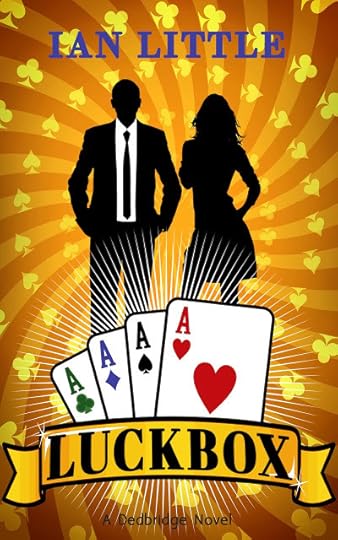
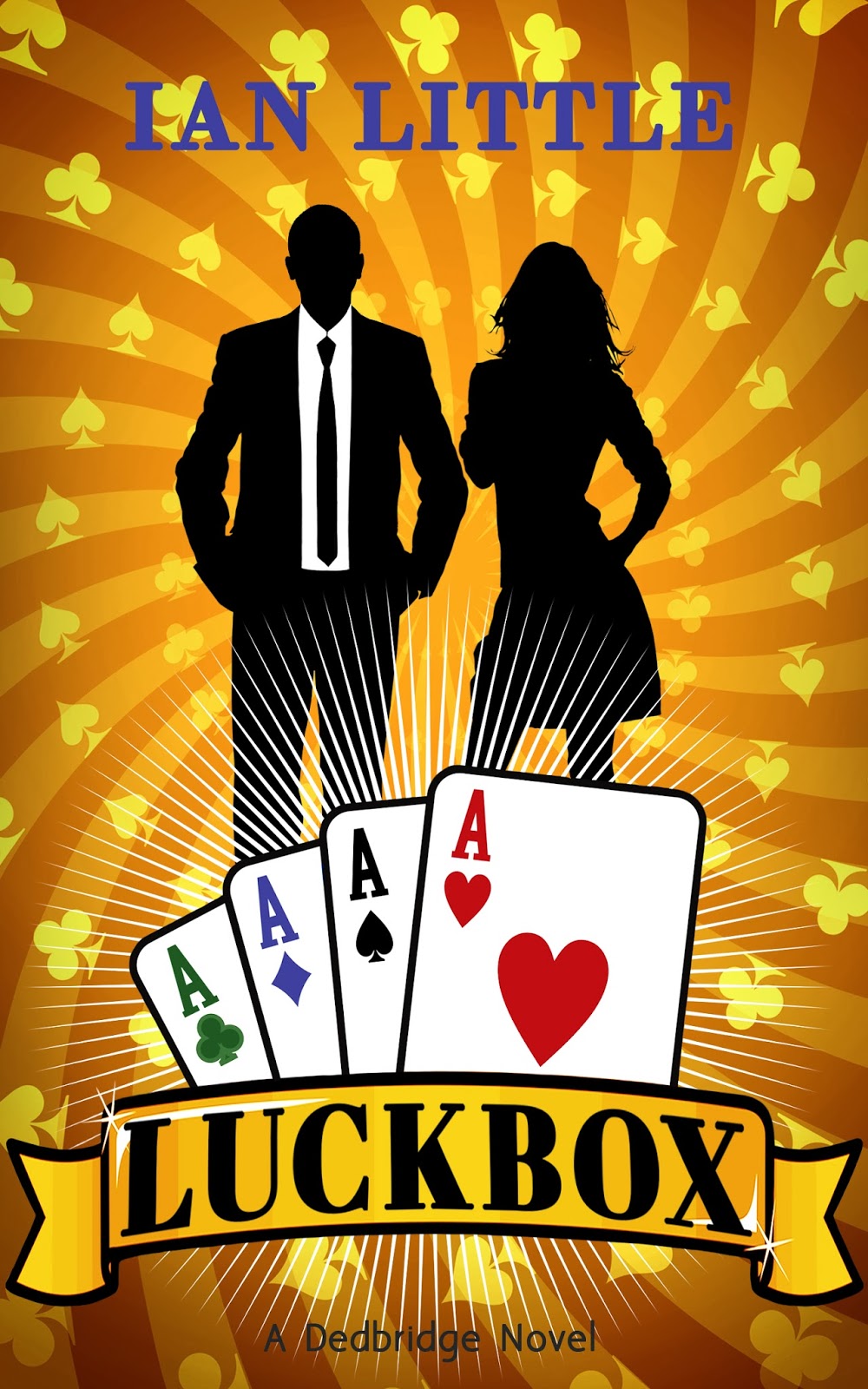
Just in time for Crimbo, here's the new cover for Luckbox. Bigger, brighter better. What do you think?
November 13, 2013
Book review: The Dying Animal
 The Dying Animal by Philip Roth
My rating: 4 of 5 stars
The bleach bath I'd taken after reading Sabbath's Theater has now worn off so I decided to delve once more into the murky psychological waters of Philip Roth. The Dying Animal seemed just right. On the cover a Modigliani nude is sprawled, as if we needed warning...
This book is written from the point of view of David Kepesh, a sixty-something lecturer at a New York university who is also a culture critic on local TV. He's divorced, his son hates him, but the little bit of celebrity his TV fame gives him makes Kepesh a likeable host to the young female students at his end of term cocktail parties. ("...they are helplessly drawn to celebrity, however inconsiderable mine may be.")
These parties are how Kepesh makes his moves on his students. This is a man with a moral compass, however, his own rule of the past 15 years is no touchy until his students have finished the course. Given Kepesh's age we can assume he's had trouble 'teaching' students in the past. This should make him unlikeable but it doesn't, it just makes those capable of reading between the lines more aware. Like ignoring a stop sign but keeping your foot as near to the brake as possible.
Kepesh, who felt too old and therefore not part of the crowd during the sexual revolution of the Sixties ("One was a thief in the sexual realm. You "copped" a feel. You stole sex."), is a determined man to still be seducing students thirty years later. He considers himself to have lived an "emancipated manhood" since dumping his wife and child. He's aware of his own mortality, and especially fears the dwindling fate of the "organ most conspicuous". If the term "dirty old man" is flashing across your mind right now, replace it with "educated dirty old man", as Kepesh is steeped in the arts and uses them as a distraction when he is infatuated. Plus his married best friend, poet George O'Hearn, is seen kissing a younger mistress at breakfast in a coffee shop so it's more like "educated dirty old men".
This new term Kepesh's lust fixates itself on the lovely Consuela Castillo, a quiet Cuban girl struggling to understand culture and possessor of the world's most gorgeous breasts. She's in need of a teacher and Kepesh - describing her as "a masterpiece of volupté" - offers his help at a cocktail party. But this time the great seducer has bitten off more than he can chew, Consuela is special and makes him insanely jealous. Suddenly he feels his age whenever his mind drifts to what she must think when she's with him. He has acute Cuban fever, and can't stop thinking about her or whom she is with. This doesn't stop him from continuing an affair with Carolyn Lyons, a student of his twenty-five years and thirty-five pounds ago. You have to admire Kepesh's ability to overcome his anxiety like this at an age when a lot of men would suffer anxiety just thinking about getting an erection in the first place.
Philip Roth is a technically gifted writer, there's no question about that. He's also a writer who searches out the truth, and when he finds it he puts it down on paper no matter what. Fear is not a word related to his style. ("Though now even gays want to get married... I expected more from those guys.") Here he is putting down a strong record of one man's views on the blossoming of sexual freedom in the opposite sex, and his disdain for the traditional family model which everyone else clings to. He pulls no punches, he grits his teeth and he writes, which is what his core readers demand. If reading Bellow is like being taken on a dance then Roth is like trying to read while being punched in the mouth every ten pages.
The Dying Animal is part lecture as Kepesh gives his take on life - he left his wife and child and encourages his son to do the same to his family - but it comes with the occasional zip of sharp humour. ("This is a generation of astonishing fellators.") Is David Kepesh for everyone? No, but strong characters written in this style never are. With Roth you are always made to think, you sometimes agree with the unpalatable truths (mainly to do with sexuality and emotion) which are too raw to be false, while always needing to keep an eye out for when he pushes too far and allows himself the odd comedic flourish. On finishing a Roth book I'd be more disturbed if I agreed with everything one of his characters did, than when I don't.
This could so easily have been the sad, erotic ramblings of an old man: the book is much more than that. It's a short read (under 200 pages) and whether you'll enjoy it depends on how well you get on with the voice of the narrator. Kepesh is given plenty to think about in the end. The story provides him with chances to show genuine warmth and compassion; does he have it in him, or is he just another dying animal?
October 28, 2013
Be Careful What You Wish For by Simon Jordan
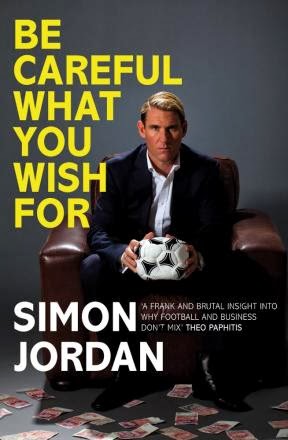 Be Careful What You Wish For by Simon Jordan
My rating: 4 of 5 stars
Simon Jordan, mobile phone king, perma-tanned, loud, silly suits. This was the image the football world was confronted with when Jordan became the youngest ever owner of a football team at the age of thirty-two. He then talked a lot, somehow mistaking the business world with how soccer worked. "Good luck with that" was the popular view at the time.
The book briefly covers the author's childhood and early business endeavours; in IT he became an expert in unplugging computer systems he ought not to unplug. From there he moved/was pushed into mobile phone sales, eventually setting up in business with a friend and striking it rich. When he sold the business he instantly became a multi-millionaire. This should be a happily-ever-after story, but Jordan decided to plough his riches into a new venture, the ownership of his boyhood club in south London, Crystal Palace. This was a dream deal for Jordan, but he soon realised business mixed with football is more like a nightmare.
Brash and outspoken, he didn't mind upsetting a few of the incumbents. Here he doesn't mind dropping a few names and listing the trappings of his good fortune, but he doesn't come across as a particularly flash personality. Of course he spends a lot of money, but who wouldn't if they had the best part of £40 million in the bank?
With regards to the football world Jordan misses no targets. He doesn't care for many of the pampered players (Neil Ruddock and Jamie Pollock get special mentions), other chairmen (Brum, Wigan, Charlton, etc.), rival supporters ("Simon Jordan, what a w**ker!") or even Wayne Routledge's mum(!); and he doesn't mind telling you. Somehow even Sir Nick Faldo gets a put-down. He finds himself at odds with the footballing wisdom "That's how we do it in football" and his problems spiral from there.
A genuine fan (he attended 490 of the 500 games during his tenure) the passion he has for the club often shines through. Jordan obviously struggled to understand the mentality of the managers he employed, finding them to be as interested in money as they should have been in success on the pitch. Even Iain Dowie, who won promotion with Palace, is taken to court after he moves to Charlton, Jordan proving that he was not an owner to be messed with. Neil Warnock, subsequently a hit at QPR, was too little too late at CPFC, although the book insinuates there was light at the end of the Championship tunnel when Jordan brought him in.
The author is candid about his own mistakes, he did almost no research into a lot of the players he was asked to buy, spending millions of pounds in the process. Panic buying was a standard practice. Certainly not a blueprint for success in any proper business. Jordan also has the grace to admit he outstayed his welcome at Palace, he describes a moment in 2009 when he knew that he ought to place the club into administration but couldn't bring himself to do it. By the time a creditor did it for him he was nearly £40 million out of pocket and suffering severe financial cramps brought on by the global recession. It's grim reading for anyone who's been in business and caught in a similar trap. In sports, if the heart is in charge of the money then the money won't be around too much longer, and so it proved for Simon Jordan.
Jordan claims to have written every word, which is probably true as the book is very much a personal viewpoint. There are a few too many exclamation marks used in unexpected places, particularly near the end as it all goes Pete Tong, but that's a sign of exuberance. My only real gripe is that I wished Jordan had finished the book with more details of the aftermath; we're left wondering how badly damaged he really was financially and what the psychological ramifications were, although perhaps the wounds from the experience are still too raw to be explored on the page.
An enjoyable read, certainly not just for Palace fans. 'Cash flow is king' is not a business lesson Jordan should have needed to learn, but he knows he was the architect of his own downfall. When put into administration the immediate debt was only around ten percent of the value of the playing squad, meaning that Jordan lost control of Palace because of poor administration as much as anything else. It must sting to admit that, but admit it he does, describing the loan agreement he signed which brought about his downfall as "...my own death warrant."
I was intrigued to read Simon Jordan's version of events as he'd been so outspoken when he was within the game. During his appearances on Sky TV I'd found myself agreeing with a lot of his views, so I enjoyed this insight into the wacky world of football. It's not a great advert for British football or its people, nor does Jordan cover himself in glory given the amount of errors he admits to. It's said that conflict makes for entertainment, this is a tale which reinforces the aphorism.
October 21, 2013
The Adventures of Augie March by Saul Bellow
 The Adventures of Augie March by Saul Bellow
My rating: 4 of 5 stars
Ever since Humboldt's Gift I've wanted to sit down with another Saul Bellow novel and The Adventures of Augie March, which won the National Book Award for fiction in 1954 when it was published, was my first choice.
This is a fairly large book, coming in at just under 600 pages. Rich in character, deep in detail, the first part of Augie was...close to being a terrible slog. Every bit-parter that enters the fray gets a long physical, historical and personality description, so much so that the details seem to obscure whatever story there is. To find that you sometimes need a magnifying glass and a Sherlockian keenness for hidden clues. I have neither.
The initial buzz from delving into another Bellow novel began to fade, as reading it felt like I was walking uphill. The only thing that kept me going was the style of the prose. I noticed that although 100 pages of very little had passed, they had done so in a serene flow. Then something wonderful happened. All of a sudden Augie's on the move, he's out of school and ducking and diving trying to scratch a dollar to take home to his beloved Mama. The landscape is set – we've had the background in minute detail – so now we can become immersed in the time and characters of depression-era Chicago. "Bellow," I bellowed, "you clever man."
Augie stumbles from situation to situation, following his nose but paying close attention to the "No" in him when folk try to exert too much influence. He knows the game of the people who employ him, and makes an art of stepping away from them before he's lost entirely in their worlds. Then the love bug strikes, and poor Augie goes down pretty hard to Thea Fenchel, the sister of a girl he fell in love with while on holiday. Determined Thea tracked him down and stakes her claim, knocking at Augie's door just as he's finished entertaining a female friend. As soon as this new flattery presents itself the friend and Chicago are forgotten; Augie leaves for steamy Mexico, where more steamy adventures await.
Augie's friends often describe him as a smiling, happy-go-lucky kind of guy without being able to work out why. He's a nice enough fellow, but he's searching for his own place in life, a distinctness he sees in others (such as brother Simon) which he cannot seem to lay hands on for himself. As he becomes older he realises the world is moving on without him, and he looks to women for some sort of foothold in reality. Between adventures he returns to Chicago like a homing pigeon, so the earlier work laid down with regards to characterisation pays off as we meet up time and again with a familiar crowd. A bit like Cheers for the 1920s.
The one thing which doesn't quite ring true is the way in which Augie, who enjoyed a patchy education at best, regularly waxes lyrical with references to historic people and places; to me it felt like the author's own education intruding on the young hero. Later on in the story Augie does play catch-up, reading as much as he can on a wide range of topics to better himself as he realises he's falling behind his peers, but the many references do hang a little heavy early on in the story. I suppose it's a small price to pay for premium language. ("You will understand, Mr Mintouchian, if I tell you that I have always tried to become what I am. But it's a frightening thing. Because what if what I am by nature isn't good enough?")
Saul Bellow's gift for examining character is always at the fore. Throughout this picaresque tale Augie's push-pull relationship with his brother Simon is under the spotlight whenever the two brothers' paths cross. The love/hate relationship with Grandma Lausch and the fate of poor, simple George are very real in detail. His concern for Mama and her failing sight is ever-present, as is his own search for the love that he feels will finally make him. This is Augie's weak spot; he is easily led by those that genuinely like him. "You can't stand up to flattery," one of his girlfriends tells him, and so it is. Augie is pushed from pillar to post without ever understanding what he wants. ("Promise you a joke, a laugh, a piece of candy, or a lick of ice-cream, and you'll leave everything and run. In short, you're a fool," his Grandma tells him.)
There are flashes of the comic brilliance to come, the scene where Augie summons up the courage to ask Thea's sister for a date being one such highlight. The dialogue is rich and colourful ("If he floated down the river with a hard-on he expected them to raise the bridges for him, that's how he was an egotist."), the angst of human relationships very real and thought-provoking. Written in the first person with a sharp-witted narrator, it's the sort of book that film could never do justice. (Although I'd be happy to write the first draft of the screenplay if the right amount of 0s were on the cheque!)
The Adventures of Augie March is beautifully written, Bellow breathes fire and failure into all of the characters, of which there are many. The words cascade down through lines and then pages, the reader glides along like a child on a well-greased sled. Prose like this is enchanting; if it were any smoother it would have to be waxed.
Although already an established writer at the time of publication, this book was Bellow's breakout novel, the one where he trusted the voice. As a reading experience Augie March is all about that voice, if you find it agreeable then you will enjoy the ramble through his many capers, and 600 pages will seem almost not long enough for Augie's adventures after all.
October 14, 2013
Death by Hollywood by Steven Bochco
 Death by Hollywood by Steven Bochco
My rating: 4 of 5 stars
The author of Death by Hollywood has won ten Emmys for shows like Hill Street Blues, LA Law and NYPD Blue, but this is his first and, so far, only novel.
The story revolves around a murder witnessed by a peeping Tom writer and its subsequent investigation by veteran cop Dennis Farentino. When the cop finds a Latino stud dead in his bedroom the chance of answering the questions who and why seem remote with no leads to go on. Farentino, however, is a Columbo fan and decides to let the story come to him, which it duly does in the shape of Bobby Newman, a washed-up screenwriter looking to turn the murder into a screenplay after he witnessed it via his telescope from high up in the hills. Bobby has been a naughty boy, he visited the crime scene and removed evidence before the police had a chance to act.
Farentino does the Columbo thing and lets Bobby reveal himself as his lead, but he then becomes involved with Newman's estranged wife. Newman, meanwhile, has hooked up with the murderer and he's fallen in love. Criss-cross applesauce ftw. Newman then decides to frame his ex-wife and so crosses swords with his cop buddy. Just in case you were worried, there's a twist in the tail too, if you can keep up with who's tail is whose and who's twisting it. There's more sizing up here than in a gents outfitter's on a Saturday afternoon.
The style of this book is interesting, the narrative (present tense) is given by a third party, veteran Hollywood agent Eddie Jelko. The story is delivered in a conversational style, reminiscent of an experienced cop chatting over a cup of coffee. Yes, there are nods to the genre but it fits the style of the narration and its a fast read, so no real harm done. There's also plenty of observation on humankind, of the fallibility of people involved in relationships, crime or violence. With Bochco's TV background it's not too hard to think he slipped into character here as easily as most of us ease into our favourite chair.
Death by Hollywood rattled along for me. The language and descriptions pulled no punches, they are realistic and hit hard, the wit is sharp and street-smart ("He works his ass off staying fit, on the theory that if you’re going to abuse yourself, you gotta be in shape for it."). A quick, entertaining read, in a contemporary pulp style (“Exactly,” she says, giving him that smile that puts a little ache in him he never thought he’d feel again.), which I found to be a decent yarn about Hollywood's supporting cast.
October 7, 2013
The Great Gatsby by F. Scott Fitzgerald
 The Great Gatsby by F. Scott Fitzgerald
My rating: 4 of 5 stars
The Great Gatsby is a fairly simple story, old sport, about people who've gotten married and then want to have sex with anyone other than the person they're married to. Throw in a playboy who isn't married but who wants to have sex with someone who is, and there you just about have it. Two other characters, who aren't married (narrator Nick Carraway and golfer Jordan Baker), aren't having sex with anyone married, but also aren't having sex with each other. Perhaps they wanted to stand out from the swinging 1920s crowd?
Once the scene is set the driving force to the whole jig is Mr Gatsby himself, a self-created man on a complex mission to recapture his pre-war sweetheart by any means necessary. Like any good soldier story, the further he goes behind enemy lines the more dangerous his mission becomes. Daisy Buchanan, his WMD of choice, is an unobtainable target who soon becomes teasingly obtainable. Husband Tom, however, gets wind of this and has no intention of letting the playboy blow his mansion house down, despite being a little bit of a pig himself by snuffling in the trough of the local mechanic's wife, Myrtle. Pigs at War could well have been an alternate title, but I can see why they stuck with Gatsby.
TGG is a short novel containing a fair amount of dialogue and so the pages zip by. But this story doesn't need to be any longer; Fitzgerald gets it all done and does it well. Although we see the world through the eyes of Nick Carraway, his own thoughts don't intrude often on the description of what is essentially playing out before him. Nick even skims his own details, such as the slim relationship he has with golf pro Jordan Baker. This makes for a quick read about quick-minded folk mainly interested in...quickies.
Great writers are outlived by their art; why has this endured? Partly, I think, because Fitzgerald captured the spirit of the age he was living in, one in which people were so busy keeping up a front that they had no back. The characters in the book, except Gatsby, lack any great depth because of the time they lived in, when appearances were everything. What's at the front is not just what you get, but all that you get. The bohemian lifestyle is enjoyed, everyone drinks and has affairs (there's little else to do), and Carraway's career plans falter as he becomes sucked into his neighbour's quest for love. At heart this is a love story, of course, which is as relevant today as it was back then; it's up to the reader as to how much it resonates.
Gatsby is written with style (He knew that when he kissed this girl, and forever wed his unutterable visions to her perishable breath, his mind would never romp again like the mind of God.), a neat ear for dialogue ("He's an Oggsford man") and a concise handling of pent-up emotions ("She had told him that she loved him, and Tom Buchanan saw."); the scene where Tom and Gatsby confront each other over Daisy's future being a great example. Gatsby becomes more of its time the more it ages, so it will live on and on, like Pete Seeger.
As Nick Carraway observes these people he realises how fallible and unhappy they are. (He isn't married himself so he has no one to cheat on, but no doubt if he was then he would.) In the end he realises Gatsby, a romantic, is actually the most human of a disagreeable bunch. Tom wants everything as he likes it, as does Daisy, Myrtle and perhaps Jordan too. Carraway is so busy being on the receiving end he forgets to want everything his own way too, which is just as well, as the have-nots come out of this better than the haves.
Whenever Gatsby is mentioned the term 'The American Dream' often follows, but to me the strongest theme in the book is about life itself. It's about how empty the lives of the characters are without love or happiness to fulfill them. By the end Nick, our reliable man on the spot, rejects his own efforts at pursuing 'The Dream'. Gatsby himself is not the sort who plays by the rules, his is not a tale of how 'The Dream' is supposed to work, although he is successful at what he does. Sitting on the sand looking out over the Sound, Nick knows this is no longer what he is searching for.
The tragedy of Gatsby is that the author went to his grave not knowing its success. Although he sold enough copies (25k) to make most self-pubbers weep, he never suspected it would go on to shift the 25 million it eventually has. Although, perhaps his death by natural causes (heart attack) made him luckier than some of his contemporaries (Hemingway committed suicide).
Written with style, a quick, easy read; in other words, old sport, a book published in 1925 which is tailor-made for the readers of 2013.