Steve Bareham's Blog
September 17, 2016
Lightning kills more than terrorists
 Americans have reason to be concerned about radical jihadist terror attacks in the homeland, but what is the appropriate level of concern? Since September 2001, a total of 151 Americans have been killed by terrorists linked to radical jihadism (includes the 49 killed in Orlando). That’s an average of only 10 per year.
Ten is not an insignificant number, but neither does it seem large enough to warrant people living in constant fear and especially when you learn:
about 100 children accidentally kill others with guns every year
51 people die from lightning strikes, and
30,000 die in accidental falls.
It’s quite remarkable, when you think about fear of dying suddenly and violently, that you are five times more likely to be killed by lightning that terrorism.
And, if Americans really want to reduce violent deaths, consider that 11,000 people, on average, are murdered with gun each year. Arguably, if more resources and smarter laws were applied in that area, there would be much less to fear.
Why the focus on terrorism?
It’s interesting that far more people used to die in Western Europe in the 1970s than in recent years. Thru the ’70s the number killed ranged between 200-400 each year, in recent years, on average, far fewer. Number killed each year by terrorists Western Europe
Strangely, in the U.S. the degree of concern varies widely depending political party affiliation. Gallup reports that 64% of Republicans and Republican-leaning independents say they are “very” or “somewhat” worried about themselves or a family member being a victim of a terrorist attack by the Islamic State, while only 35% of Democrats and Democratic-leaning independents feel the same way. One can theorize that the significant difference has to do with repeated statements from GOP leaders and also the television, radio, print and online media that Republicans are exposed to. Republicans fear terrorism far more than Democrats
A recent article in Vox notes: “…not one domestic terrorist attack since 9/11 has been committed by a foreign terrorist organization. Overall, terrorism in America is happening from homegrown radicals.
“There is a conventional wisdom that terrorism in the US is the province of foreigners and is seen as a problem of infiltration,” says David Sterman, a senior program associate with the international security program at the New America Foundation. “And while there is certainly a reason for that perception, as the September 11 attacks were conducted by people who came in from abroad, in the more than 360 cases [of jihadist terrorism] we’ve examined since September 11, we found 80 percent are US citizens and legal residents.”
The New America data reveals that since 2001, 12 refugees have been charged with terrorism-related crimes, a number dwarfed by the 346 American citizens charged with the same crime.
Causes of Accidental Deaths
A report from the National Safety Council (NSC) reveals that drug overdose has overtaken car crashes as the top cause of accidental deaths in the U.S. killing more than 42,000 people in 2014. Figures from the Centers for Disease Control and Prevention showed that between the years 2000 and 2014, nearly half a million people died because of drug overdoses. Every day, 78 people in the U.S. die from opioid overdose.
Thanks to vehicle safety innovations, in 2014, motor vehicle accidents killed 35,398, or 22 percent fewer compared with the figures a decade ago. The number is significantly down from a peak of more than 53,000 in 1980.



September 10, 2016
Lightning kills more than terrorists
 Americans have reason to be concerned about radical jihadist terror attacks in the homeland, but what is the appropriate level of concern? Since September 2001, a total of 151 Americans have been killed by terrorists linked to radical jihadism (includes the 49 killed in Orlando). That’s an average of only 10 per year.
Ten is not an insignificant number, but neither does it seem large enough to warrant people living in constant fear and especially when you learn:
about 100 children accidentally kill others with guns every year
51 people die from lightning strikes, and
30,000 die in accidental falls.
It’s quite remarkable, when you think about fear of dying suddenly and violently, that you are five times more likely to be killed by lightning that terrorism.
And, if Americans really want to reduce violent deaths, consider that 11,000 people, on average, are murdered with gun each year. Arguably, if more resources and smarter laws were applied in that area, there would be much less to fear.
Why the focus on terrorism?
It’s interesting that far more people used to die in Western Europe in the 1970s than in recent years. Thru the ’70s the number killed ranged between 200-400 each year, in recent years, on average, far fewer. Number killed each year by terrorists Western Europe
Strangely, in the U.S. the degree of concern varies widely depending political party affiliation. Gallup reports that 64% of Republicans and Republican-leaning independents say they are “very” or “somewhat” worried about themselves or a family member being a victim of a terrorist attack by the Islamic State, while only 35% of Democrats and Democratic-leaning independents feel the same way. One can theorize that the significant difference has to do with repeated statements from GOP leaders and also the television, radio, print and online media that Republicans are exposed to. Republicans fear terrorism far more than Democrats
A recent article in Vox notes: “…not one domestic terrorist attack since 9/11 has been committed by a foreign terrorist organization. Overall, terrorism in America is happening from homegrown radicals.
“There is a conventional wisdom that terrorism in the US is the province of foreigners and is seen as a problem of infiltration,” says David Sterman, a senior program associate with the international security program at the New America Foundation. “And while there is certainly a reason for that perception, as the September 11 attacks were conducted by people who came in from abroad, in the more than 360 cases [of jihadist terrorism] we’ve examined since September 11, we found 80 percent are US citizens and legal residents.”
The New America data reveals that since 2001, 12 refugees have been charged with terrorism-related crimes, a number dwarfed by the 346 American citizens charged with the same crime.
Causes of Accidental Deaths
A report from the National Safety Council (NSC) reveals that drug overdose has overtaken car crashes as the top cause of accidental deaths in the U.S. killing more than 42,000 people in 2014. Figures from the Centers for Disease Control and Prevention showed that between the years 2000 and 2014, nearly half a million people died because of drug overdoses. Every day, 78 people in the U.S. die from opioid overdose.
Thanks to vehicle safety innovations, in 2014, motor vehicle accidents killed 35,398, or 22 percent fewer compared with the figures a decade ago. The number is significantly down from a peak of more than 53,000 in 1980.


September 6, 2016
Trump displays traits of egomania
 Do you know how to recognize an egomaniac?
To aid your deliberation, here’s a definition:
An egomaniac is someone suffering from an obsessive preoccupation with self, someone who follows his/her own ungoverned impulses and who is possessed by delusions of personal greatness.
So, for which presidential candidate are the following traits, actions, and behaviors apt descriptors?
Prone to exaggeration and ridicule of others
Cuts people off and talks loudly to dominate discussion and to intimidate
Ostentatious shows of wealth and power
Thinks his stories are always better than anyone else’s.
Loves to make grand entrances.
Brags about doing things rather than just doing them quietly
Makes a grand show of generosity, but tries to do so on the cheap
Places huge importance on having attractive significant others
Begins almost every sentence with “I”
Fixates on how perceived by others, what people say about him
Often refers to self in the third person
Brags about how much money he makes
Speaks about self in superlatives, like “I’m the smartest. I’m the richest.” etc.
Constantly blames others and never accepts personal blame.
Knows everything about everything.
Always right, never wrong, will not accept criticism.
Very judgmental
Knows exactly what’s wrong with you, the world and everyone else
Hypersensitive
Hates losing
Has difficulty paying attention and focusing
Uses manipulative division tactics in order to conquer
Anyone possessing more than a few of the foregoing traits and behaviors is not likely to be the best person to unite an increasingly divided nation or to forge important partnerships with other nations.
The best national leaders are well grounded, humble, intelligent and socially adept. Let’s hope Americans ultimately elect someone like that, both for themselves and for the benefit of the rest of the world, too.


September 5, 2016
Will an egomaniac become POTUS?
 Do you recognize an egomaniac among any of the four presidential candidates?
An egomaniac is defined as someone suffering from an obsessive preoccupation with self, someone who follows his/her own ungoverned impulses and who is possessed by delusions of personal greatness.
So, do you see some or most of the following traits, actions, and behaviors in any of the four people currently running for president?
Prone to exaggeration and ridicule of others
Cuts people off and talks loudly to dominate discussion and to intimidate
Ostentatious shows of wealth and power
Thinks his/her stories are always better than anyone else’s.
Loves to make grand entrances.
Brags about doing things rather than just doing them quietly
Makes a grand show of generosity, but tries to do so on the cheap
Places huge importance on having attractive significant others
Begins almost every sentence with “I”
Fixates on how perceived by others, what people say about them
Often refers to self in the third person
Brags about how much money they make
Speaks about self in superlatives, like “I’m the smartest. I’m the richest.” etc.
Constantly blames others and never accepts personal blame.
Knows everything about everything.
Always right, never wrong, will not accept criticism.
Very judgmental
Knows exactly what’s wrong with you, the world and everyone else
Hypersensitive
Hates losing
Has difficulty paying attention and focusing
Uses manipulative division tactics in order to conquer
Anyone possessing more than a few of the foregoing traits and behaviors is not likely to be the best person to unite an increasingly divided nation or to forge important partnerships with other nations.
The best national leaders are well grounded, humble, intelligent and socially adept. Which of the four best demonstrate those attributes?


August 15, 2016
Trump needs to study ISIS history
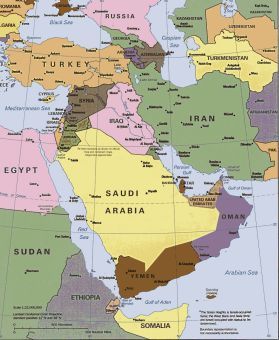 Donald Trump presumes to understand how ISIS came to be, but one need barely scratch the surface to expose his woeful ignorance of world affairs, U.S. policy and historical context.
With a few hours of study, or by receiving counsel from informed advisors, Trump could easily determine the genesis of ISIS. The role of a president should be to inform, educate, and elevate. Trump seems incapable, or unwilling, to do any of these things, and without getting inside his head, we can’t tell if he’s Machiavellian or just dumb. To paraphrase Maslow, he seems to be an unthinking hammer who sees every complex issue as a nail.
To his claim about the founding of ISIS, in truth, its seeds began 1,500 years ago when a blood rift formed between the two sects of Islam: the Sunni and the Shia over which sect should be the rightful rulers. The perpetual hatred between the sects continues to modern day, but fertile ground for ISIS came with the U.S. and NATO invasion of Iraq, an event that allowed ISIS to grow and gain footholds relatively unchecked in the vacuum of chaos.
Thus, if Trump seriously wanted to identify the “founders” of ISIS, he needed look no further than the people who perpetuated the ruse of weapons of mass destruction in 2003. The threat of WMDs caused near panic among Western nations that Saddam Hussein was capable of killing millions. Those fictional weapons were the tinder that let the war machine light the match.
ISIS is comprised of people belonging to the Sunni sect of Islam. ISIS grew initially in Iraq in response to militias of Shia slaughtering Sunnis after the U.S. and its NATO allies seized control. ISIS began to fight against Shia in Syria and Iraq to seek retribution for persecuted Sunnis.
What has happened since then, and what is ISIS trying to achieve?
ISIS has three objectives.
Establish a caliphate in the Middle East region
Expand Islam and Sharia law worldwide, and
Recreate the power and glory of Sunni Islam.
The success of objectives #2 and #3 are largely dependent on achieving #1, specifically, ISIS set about to establish the caliphate.
Within the lands ISIS seized, it sees itself as battling heretical presences (including people/states of the West). Of course, ISIS also encourages terrorist attacks outside of the region in pursuit of the other two goals. All of this explains the war and terrorist attacks against the U.S. and allies that have been militarily active in the region. Note that ISIS is not focused on attacking countries that have not engaged in attacks against Muslim nations.
Initially, ISIS followers came mostly from disenfranchised Sunni youths in Iraq and Syria. Subsequently the group attracted foreign fighters from other Arab countries and the West. Over time, it has become a significant military force, with an army estimated at upwards of 50,000 members spread throughout the Middle East and with branches throughout the world.
Insofar as the U.S. strategy to fight, and eventually eliminate ISIS, the Obama administration has moved to strike at the primary objective of the terrorist group, to establish a regional caliphate. This campaign by the U.S. and its allies has been underway for some time, and significant gains have been made to reclaim areas where ISIS had gained control. If successful, the denial of land in which to establish a caliphate, will also negatively impact ISIS’s ability to achieve its other two objectives.
When the military actions of the U.S. and its allies are viewed in context with the objectives of ISIS, a clear plan is easily discernible. It is unclear why Mr. Trump can’t see this plan, and it’s also unclear how he proposes to improve upon if he does understand it.
While many in the West seem to believe that ISIS is singularly waging war on the U.S. and its allying nations and peoples, the truth is that ISIS has killed far more Muslims, mostly Shia, as it pursues its campaign of ethno-sectarian cleansing in areas that it controls.
Within the territories controlled by ISIS, the choice of the citizenry is to convert to their strict version of Islam or to die. Thousands have been killed, many more Muslims than Christians.
So, there in just a few paragraphs, one can explain how ISIS came to be.
By ignoring facts in order to pursue inflammatory ethnocentric jingoism, Trump seeks to excite a similarly uninformed, emotional base. In so doing, he achieves nothing in the way of proposing or advancing solutions.
Primary information source:http://teamcore.usc.edu/projects/security/Muri_publications/ISIL%20Paper%20Revision%20-%20Main%20Body%208-22-15.pdf


August 14, 2016
America on wrong track? If so, why?

In the latest poll by YouGov/Economist, 63% of Americans say the country is moving in the wrong direction. Republicans, of course, seize on the negative number to place 100% of blame at the foot of President Obama and the Democrats.
I’m losing patience, in particular, with Trump TV surrogates who suggest that Republicans are squeaky clean and always on the right side of the “wrong track” debate. Too often, these people go unchallenged by interviewers and even by Clinton surrogates.
Following are counter arguments that probe more deeply to dissect why people see things as awry. Yes, people are dissatisfied, but not about the same things. They blame different people, organizations, and things.
THE ECONOMY: The Huffington Post reports: “Despite the world’s string of high-profile terror attacks this year, the economy remains at the top of American voters’ minds. A 45 percent plurality name the economy as one of the two issues most important to them, ranking it first on a list of 10 topics.”
Following economic concerns is a wide range of items where there’s plenty of blame to go around:
SUPREME COURT: comes next in terms of importance to Americans in the Huff Post poll at 30%. Again, polls do not favor the GOP approach of blocking Obama’s Garland selection, with a majority of both Democrats and Republicans supporting POTUS’s right to select.
HEALTH CARE: 26% of Americans are concerned, but the negative view cuts two ways. Some have concerns that access should be easier, more affordable and single payer, while others say Obama Care is the problem. Again, a divided issue that simple statistics and arguments don’t address.
IMMIGRATION: 22% are concerned, but not all blame the government; many want reform, not mass deportations and bans.
HOW WASHINGTON WORKS: 14% are dissatisfied, but it’s not hard to make a case that the GOP bears more of the blame since it is widely seen as obstructionist of anything coming from Obama and Democrats. An additional telling number is the disapproval rating for the House and Senate: 62% disapprove of performance, while only 13% approve. The elevated “wrong track” numbers relate to growing partisan polarization, combined with continued perceptions of government gridlock and the GOP gets a lot of the blame.
Further, public perceptions of the Republican Party have plummeted; 60 percent of Americans holding an unfavorable view of the GOP according to a recent Bloomberg poll, the party’s lowest standing in the poll’s seven-year history. By comparison, 49 percent held a negative view of Republicans at the same point in the 2012 election cycle, so the GOP message is ringing hollow.
SOCIAL ISSUES: 13% unhappy, but too broad a question to know why.
GUN POLICIES: 13% see problems, but again slices down party lines. Many in GOP want unfettered gun access, while others want controls on assault weaponry.
FOREIGN POLICY: 13% want change, and terrorism concerns are in this number. GOP thinks current government doing nothing to stop terrorism, while evidence suggests otherwise.
TERRORISM: Donald Trump talks about ISIS and terrorism daily, to the point where it would seem he sees terrorists at almost every door. It is true that Americans think terrorist attacks in the U.S. are more imminent now than at any point since 2003. According to a recent CNN/ORC Poll conducted after the shooting in Orlando and attacks in Europe, 60% of Democrats believe an attack is likely, compared to 72% of independents and 84% of Republicans. A staggering 41% of those in the poll are “…at least somewhat worried that they or a family member will become a victim.”
But, what level of fear about terrorism in the U.S. could be seen as rational? If you believe in statistics, excessive fear is not founded in facts.
In the 16 years since 9/11, slightly less than six people have died, on average, per year in homeland terror attacks. To put that number in perspective, so far in 2016, 18 people have been killed by lightning.
In a July 2016 interview with the BBC, President Obama said: “If you look at the number of Americans killed (on U.S. soil) since 9/11 by terrorism, it’s less than 100.” Compare the number of Americans murdered each year in gun violence; that number tops 11,000 or 1,833 times more that from terror attacks. http://www.bradycampaign.org/key-gun-violence-statistics .
It’s easy to claim that America is on the wrong track, but every country on earth can make the same claim; people are never totally satisfied with the state of affairs — that’s human nature.
What we could keep in mind is that the simplistic placement of blame by political surrogates and some journalists is often disingenuous and just plain wrong.
One conclusion is that the way Americans view “concerns” about the U.S. right or wrong track issue is largely dependent on political affiliation — a familiar refrain world wide.


August 13, 2016
Why is America on wrong track?
In the latest poll by YouGov/Economist, 63% of Americans say the country is moving in the wrong direction, more than double the number who think the country is generally on a positive heading (29%).
Republicans, of course, seize on the negative number to place 100% of blame at the foot of President Obama and the Democrats. But probe more deeply into follow-up questions to dissect “why” people see things as going awry, and you discover that people are dissatisfied, but not about the same things; they blame different people, organizations, and things.
IT’S THE ECONOMY FIRST: The Huffington Post reports: “Despite the world’s string of high-profile terror attacks this year, the economy remains at the top of American voters’ minds. A 45 percent plurality name the economy as one of the two issues most important to them, ranking it first on a list of 10 topics.”
Following economic concerns is a wide range of items where there’s plenty of blame to go around:
the selection of Supreme Court justices comes next in terms of importance to Americans in the Huff Post poll at 30%
health care at 26%
immigration: 22%
the way things work in Washington: 14%
social issues: 13%
gun policies: 13%
foreign policy: 13% (terrorism concerns are in this number)
the environment: 10%
voting rights: 3%
CONGRESS: One telling additional number is the disapproval rating for the House and Senate: 62% disapprove of performance, while only 13% approve. But even that statistic doesn’t get to the nub of the issue since Congress is comprised of members of both parties. One explanation is that the elevated “wrong track” numbers are related to growing partisan polarization, combined with continued perceptions of government gridlock.
TERRORISM: Donald Trump talks about ISIS and terrorism daily, to the point where it would seem he sees terrorists at almost every door. It is true that Americans think terrorist attacks in the U.S. are more imminent now than at any point since 2003. According to a recent CNN/ORC Poll conducted after the shooting in Orlando and attacks in Europe, 60% of Democrats believe an attack is likely, compared to 72% of independents and 84% of Republicans. A staggering 41% of those in the poll are “…at least somewhat worried that they or a family member will become a victim.”
But, what level of fear about terrorism in the U.S. could be seen as rational? If you believe in statistics, excessive fear is not founded in facts.
In the 16 years since 9/11, slightly less than six people have died, on average, per year in homeland terror attacks. To put that number in perspective, so far in 2016, 18 people have been killed by lightning.
In a July 2016 interview with the BBC, President Obama said: “If you look at the number of Americans killed (on U.S. soil) since 9/11 by terrorism, it’s less than 100.” Compare the number of Americans murdered each year in gun violence; that number tops 11,000 or 1,833 times more that from terror attacks. http://www.bradycampaign.org/key-gun-violence-statistics .
It’s easy to claim that America is on the wrong track, but every country on earth can make the same claim; people are never totally satisfied with the state of affairs — that’s human nature.
What we could keep in mind is that the simplistic placement of blame by media pundits is often disingenuous and just plain wrong. With health care, for example, some people may have concerns that it should be more affordable and single payer, while others would say Obama Care is the problem. Likewise with the environment and gun policies; it’s very likely many Republicans would have views almost diametrically opposed to those held by Democrats.
One conclusion is that the way Americans view “concerns” about the U.S. right or wrong track issue is largely dependent on their political affiliation — a familiar refrain.
August 12, 2016
Trump, a hammer in search of nails
 Donald Trump’s latest accusation du jour, now couched as “sarcasm,” that President Obama and Sec. Clinton are founders of ISIS, again illustrates his woeful ignorance of world affairs, U.S. policy and historical context.
With a few hours of study, or by receiving counsel from informed advisors, Trump could have easily determined how and why ISIS came to be. The role of a president should be to inform, educate, and elevate. Trump seems incapable, or unwilling, to do any of these things, and without getting inside his head, we can’t tell if he’s Machiavellian or just dumb. To paraphrase Maslow, he seems to be an unthinking hammer who sees every complex issue as a nail.
To his claim about the founding of ISIS, in truth, its seeds began 1,500 years ago when a blood rift formed between the two sects of Islam: the Sunni and the Shia over which sect should be the rightful rulers. The perpetual hatred between the sects continues to modern day, but fertile ground for ISIS came with the U.S. and NATO invasion of Iraq, an event that allowed ISIS to grow and gain footholds relatively unchecked in the vacuum of chaos.
Thus, if Trump seriously wanted to identify the “founders” of ISIS, he needed look no further than the people who perpetuated the ruse of weapons of mass destruction in 2003. The threat of WMDs caused near panic among Western nations that Saddam Hussein was capable of killing millions. Those fictional weapons were the tinder that let the war machine light the match.
ISIS is comprised of people belonging to the Sunni sect of Islam. ISIS grew initially in Iraq in response to militias of Shia slaughtering Sunnis after the U.S. and its NATO allies seized control. ISIS began to fight against Shia in Syria and Iraq to seek retribution for persecuted Sunnis.
What has happened since then, and what is ISIS trying to achieve?
ISIS has three objectives.
Establish a caliphate in the Middle East region
Expand Islam and Sharia law worldwide, and
Recreate the power and glory of Sunni Islam.
The success of objectives #2 and #3 are largely dependent on achieving #1, specifically, ISIS set about to establish the caliphate.
Within the lands ISIS seized, it sees itself as battling heretical presences (including people/states of the West). Of course, ISIS also encourages terrorist attacks outside of the region in pursuit of the other two goals. All of this explains the war and terrorist attacks against the U.S. and allies that have been militarily active in the region. Note that ISIS is not focused on attacking countries that have not engaged in attacks against Muslim nations.
Initially, ISIS followers came mostly from disenfranchised Sunni youths in Iraq and Syria. Subsequently the group attracted foreign fighters from other Arab countries and the West. Over time, it has become a significant military force, with an army estimated at upwards of 50,000 members spread throughout the Middle East and with branches throughout the world.
Insofar as the U.S. strategy to fight, and eventually eliminate ISIS, the Obama administration has moved to strike at the primary objective of the terrorist group, to establish a regional caliphate. This campaign by the U.S. and its allies has been underway for some time, and significant gains have been made to reclaim areas where ISIS had gained control. If successful, the denial of land in which to establish a caliphate, will also negatively impact ISIS’s ability to achieve its other two objectives.
When the military actions of the U.S. and its allies are viewed in context with the objectives of ISIS, a clear plan is easily discernible. It is unclear why Mr. Trump can’t see this plan, and it’s also unclear how he proposes to improve upon if he does understand it.
While many in the West seem to believe that ISIS is singularly waging war on the U.S. and its allying nations and peoples, the truth is that ISIS has killed far more Muslims, mostly Shia, as it pursues its campaign of ethno-sectarian cleansing in areas that it controls.
Within the territories controlled by ISIS, the choice of the citizenry is to convert to their strict version of Islam or to die. Thousands have been killed, many more Muslims than Christians.
So, there in just a few paragraphs, one can explain how ISIS came to be.
By ignoring facts in order to pursue inflammatory ethnocentric jingoism, Trump seeks to excite a similarly uninformed, emotional base. In so doing, he achieves nothing in the way of proposing or advancing solutions.
Primary information source: http://teamcore.usc.edu/projects/security/Muri_publications/ISIL%20Paper%20Revision%20-%20Main%20Body%208-22-15.pdf


August 10, 2016
Trump or Clinton out: what next?
The 2016 presidential campaign is ugly, so ugly that it’s possible one candidate may have to withdraw before Nov. 8.
Yes, this is unlikely, but consider two highly explosive existing scenarios. If either one matures, an exit by one candidate is not impossible.
First, WikiLeaks promises a new dump of damaging Clinton information in October, and
Second, there are stories on the web about rape charges laid recently against Donald Trump: Trump rape stories
If either of the foregoing blows up into something substantive, a candidate would have no option but to withdraw.
Laying the groundwork for a future incident is hyperbolic rhetoric thrown daily by both parties: crazy, monstrous, crooked, liar, racist, xenophobic, narcissist, corrupt, demagogue, etc. Clearly, the intent of the escalating verbal onslaughts is to destroy character and make a candidate unpalatable to electors.
So, what if something unexpected happens. What if one side is successful in driving the opponent out? Following are scenarios for the upheaval of unintended consequences that would come if either Trump or Clinton existed.
First the Grand Old Party
The GOP should be careful what it wishes for as it continues its unrelenting attacks to demolish the character and viability of Hillary Clinton. Assuming that Trump, his dutiful surrogates, and the GOP have considered logical outcomes for the all-out months-long assault strategy, one might ask: What is the endgame if they prove successful?
Specifically, what if a combination of often reckless and unfounded accusations about Benghazi, the ongoing email scandal, the Clinton Foundation, or some other potential scandal the GOP undoubtedly has on simmer, results in Clinton withdrawing from the race prior to Nov. 8?
Are Republicans prepared for that possibility? And would it place the GOP in a better position to win the election?
One could argue not.
Without Clinton, who would become the Democratic candidate? Logically, Bernie Sanders. That isn’t an outcome Republicans should cheer.
As recently as May 29, polls showed Sanders beating Trump by a considerable margin over Hillary Clinton in virtually every poll. PolitiFact Poll Summaries
PolitiFact reported: “…Sanders is correct that he fares better against Trump than Clinton does in every poll over the past six weeks — more than 6 points better than Clinton, on average. And Sanders is beating Trump by an average of 12 points in these eight polls, so ‘big numbers’ seems like a reasonable description for Sanders to use.”
Clinton being forced out, and Sanders parachuting in this late in the campaign could solidify and motivate Democratic supporters nation wide from young to old, and across ethnic and cultural groups. The “liberal” turnout spurred by anger could be stunning.
It’s difficult to imagine that Donald Trump could win given current polls that strongly favor Clinton. It could be postured that Bernie Sanders would maintain the same levels of support, maybe more given a surge of high emotions. Further, although the GOP would undoubtedly try, there may not be sufficient time for Trump and Co. to mount a new, effective character assassination campaign on Sanders.
What if Trump is forced out?
Of course, the case could also be made in the reverse. If the Clinton camp and news media, with the help of an increasingly Trump-weary GOP, managed to force Trump out, who would take his place?
It’s doubtful it would be Ted Cruz given his performance at the GOP convention and the distaste he engenders among many in the party. So, if not him, who? Would any of the primary contenders have the appeal necessary to pick up a campaign and unite the party with less than three months to go? Doubtful.
But, what if the new GOP flag bearer was Paul Ryan? The Democrats could find themselves in an unenviable position since it’s likely that the Party’s Congressional leader would gain wide support. Ryan has said he has no intention of running, but in the event Trump had to leave, it is not difficult to conceive him feeling a patriotic duty. It’s entirely possible that Ryan could motivate Republicans to turn out in much the same way that Sanders could do for Democrats.
Bottom line, both parties are likely stuck and perhaps better off with the candidates now in place. Smart replacements could really turn the 2016 presidential race on its head.
So, note to both parties: There’s reason to fear the law of unintended consequences.


What if Trump or Clinton exited?
 The presidential campaign of 2016 is ugly.
Hyperbolic rhetoric thrown daily by both parties is frequently cruel and often devoid of facts to substantiate the vitriol. Americans tuned into the election, indeed people watching around the world, could be forgiven for feeling angst, fatigue and disappointment bordering on depression at the caustic nature of charges batted back and forth between the contending candidates: crazy, monstrous, crooked, liar, racist, xenophobic, narcissist, corrupt, demagogue, etc.
Clearly, the intent of the escalating verbal onslaughts is to destroy. But, what if one or the other side is successful? Following are scenarios for the upheaval of unintended consequences that would come if either Trump or Clinton were somehow forced out before Nov. 8.
Unlikely? Absolutely. Impossible given all the charges being thrown? Arguably, no.
First the Grand Old Party
The GOP should be careful what it wishes for as it continues its unrelenting attacks to demolish the character and viability of Hillary Clinton. Assuming that Trump, his dutiful surrogates, and the GOP have considered logical outcomes for the all-out months-long assault strategy, one might ask: What is the endgame if they prove successful?
Specifically, what if a combination of often reckless and unfounded accusations about Benghazi, the ongoing email scandal, the Clinton Foundation, or some other potential scandal the GOP undoubtedly has on simmer, results in Clinton withdrawing from the race prior to Nov. 8?
Are Republicans prepared for that possibility? And would it place the GOP in a better position to win the election?
One could argue not.
Without Clinton, who would become the Democratic candidate? Logically, Bernie Sanders. That isn’t an outcome Republicans should cheer.
As recently as May 29, polls showed Sanders beating Trump by a considerable margin over Hillary Clinton in virtually every poll. PolitiFact Poll Summaries
PolitiFact reported: “…Sanders is correct that he fares better against Trump than Clinton does in every poll over the past six weeks — more than 6 points better than Clinton, on average. And Sanders is beating Trump by an average of 12 points in these eight polls, so ‘big numbers’ seems like a reasonable description for Sanders to use.”
Clinton being forced out, and Sanders parachuting in this late in the campaign could solidify and motivate Democratic supporters nation wide from young to old, and across ethnic and cultural groups. The “liberal” turnout spurred by anger could be stunning.
It’s difficult to imagine that Donald Trump could win given current polls that strongly favor Clinton. It could be postured that Bernie Sanders would maintain the same levels of support, maybe more given a surge of high emotions. Further, although the GOP would undoubtedly try, there may not be sufficient time for Trump and Co. to mount a new, effective character assassination campaign on Sanders.
What if Trump is forced out?
Of course, the case could also be made in the reverse. If the Clinton camp and news media, with the help of an increasingly Trump-weary GOP, managed to force Trump out, who would take his place?
It’s doubtful it would be Ted Cruz given his performance at the GOP convention and the distaste he engenders among many in the party. So, if not him, who? Would any of the primary contenders have the appeal necessary to pick up a campaign and unite the party with less than three months to go? Doubtful.
But, what if the new GOP flag bearer was Paul Ryan? The Democrats could find themselves in an unenviable position since it’s likely that the Party’s Congressional leader would gain wide support. Ryan has said he has no intention of running, but in the event Trump had to leave, it is not difficult to conceive him feeling a patriotic duty. It’s entirely possible that Ryan could motivate Republicans to turn out in much the same way that Sanders could do for Democrats.
Bottom line, both parties are likely stuck and perhaps better off with the candidates now in place. Smart replacements could really turn the 2016 presidential race on its head.
So, note to both parties: There’s reason to fear the law of unintended consequences.