Allen Stroud's Blog
March 3, 2024
That Was A Week

This week has been a roller coaster of different moments. Brian Stableford
At the start of the week, I learned that Brian Stableford had passed away. When I first started as a university lecturer at Buckinghamshire New University, I took over the Writing Science Fiction, Fantasy and Horror module from Andrew Butler, who was leaving the university for places new. One of the books he left me was Brian's Writing Fantasy & Science Fiction and Getting Published.
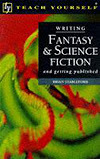 This book, and Lisa Tuttle's excellent Writing Fantasy and Science Fiction were my constant companions for the next three years. I read everything in them and then went hunting for more. I was a young teacher learning my subject and trying to stay a few steps ahead of my students.
 I next encountered Brian's work as a Ph. D. Student when I was studying with Andy Melrose. It turned out Brian had taught at Winchester University,earlier known as King Alfred's College. I took my undergraduate degree there between 1996-1999. I never met him. I wish I had.
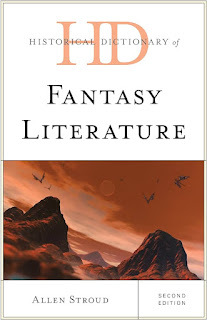
My next encounter with Brian's work was when I agreed to write the second edition of the Historical Dictionary of Fantasy Literature for Rowman and Littlefield. Brian had written the first edition, originally back in 2004/2005. His work on this was amazing. The amount of research and reading he did to ensure he was able to comment on every author and fantasy writing concept included in the text. I was able to use his work as a guide for my own.
Brian's portfolio in science fiction and fantasy is prodigious. He wrote a huge collection of academic and critical works as well as a massive amount of fiction in both genres. His bibliography listing in the Science Fiction Encyclopaedia is formidable. He also wrote under several pseudonyms, with early Warhammer novels among his output. By all accounts his reading and research of the genres was just as extensive, indeed it must have been to produce such an detailed portfolio of so many writers.
British Science Fiction AwardsOn Tuesday evening, the BSFA newsletter went out, announcing the short lists for works published in 2023.
This is the first year the BSFA has had such a large slate of awards. Motions at the AGM last year passed an expansion of the categories and this provides extra opportunities for the association to highlight some of the amazing work being done in the genre. Members have embraced this, recommending an amazing selection of work in the long lists, published in January.
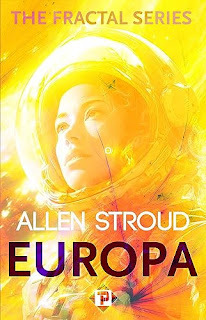 For me, a specific personal highlight is to see one of my Fractal Series Episodes,
Europa
, make it to one of the short lists! I am absolutely delighted and humbled by this.Thank you so much to everyone who voted for the book.
For me, a specific personal highlight is to see one of my Fractal Series Episodes,
Europa
, make it to one of the short lists! I am absolutely delighted and humbled by this.Thank you so much to everyone who voted for the book.In practical terms this means as Chair of the BSFA, I am recused from the voting process from this point onwards. This is an established process we have applied when any member of the BSFA team has a work nominated to the short lists. In fact, if you go through this year's lists, you'll see several BSFA officers appearing. Congratulations to all of them and to all of our other nominees.
If you would like to read Europa, it can be found on Amazon for free. Flame Tree Press released the story as an alternative introduction to the Fractal Series. In fact, because the episode stories are standalone, but connected, you can start with any of them and then continue with Fearless, Resilient and the forthcoming Vigilance.
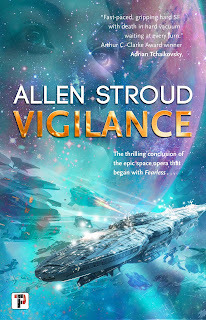
Speaking of Vigilance, the cover and publishing date have been announced. Once again, Flame Tree Press have knocked it out of the park with the cover. We are in the process of arranging a book launch at Glasgow Worldcon (which will be amazing), with a general publishing date at the start of September.
I have really enjoyed writing these books.Vigilance needed a lot of work in December. I was a long way behind reaching the deadline to get the draft finished, but it got done and the edits were turned around very quickly. Some amazing work from my two editors, Don D'Auria and Imogen Howson.
From here, the series will continue with more stories. I'm looking forward to working on them.
The rest of my week was busy too. Work meetings, teaching, and a masterclass delivered on writing and designing games. I really enjoyed all of the different activities, discussing a variety of new projects and explaining some of my work to new audiences. I think one of the things that has renewed my enthusiasm for university lecturing and research is that I'm seeing a pathway for myself again. That pathway is very much about clearing the route as I walk it, but people are being very supportive and appreciative, which is lovely.
Being a Healthy WriterOne of the things that I need in my life is to make space to spend time out and enjoying good company. Occasionally, I need a nudge. Thursday night brought together a few of the writers from Emily Inkpen's Discord group, and we got to chat about all of our current projects. I was also very fortunate that Alex Cochran decided to arrange a little social in Cambridge on Friday night. This was a lovely opportunity to get out and see people. A lovely little group wiled away the evening in the Blue Moon pub. I hope there will be many more gatherings in the future.


February 25, 2024
Publishing: Signal to Noise/Noise to Signal

This week I want to talk about the amount of writers who are writing books and trying to get them published.
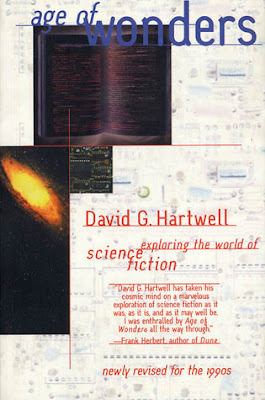 In the revised edition of Age of Wonders (1996) David G. Hartwell described the state of publishing of fantasy and Science Fiction at the time as being the most popular moment ever. He talked about previous decades, when attending conventions were about members discussed the works they had already and compared their impressions of them. This evolved into attending conventions to discover new works of science fiction and fantasy. Perhaps getting reading recommendations from friends who you rarely see apart from those conventions.
Fast forward three decades and it is rare that any individual would truly be capable of reading or even knowing about every novel published in a specific genre. It is impossible to truly collate a "Best Science Fiction of 2024" because no one has read all the science fiction published in 2024. Even if you were to be the editor of an anthology that focused on shorter works, it is highly unlikely you will be able to read every short story and determine a list. Granted, your list would also be subjective owing to your personal taste, but this does illustrate the lie of any title claiming to be the "best of".
Additionally, the annual awards of the genres cannot really claim to be the best in show. However, they are a recognised badge of status. For an author to win a Hugo, a Nebula, or a Locus award says something important about the story they have written. These awards, and also the World Fantasy Award, the British Fantasy Award, the British Science Fiction Association award, and the Mythopoeic Award all provide an endorsement from a community of peers. They give a guide to a wider reading public, and often publishers will place a little roundel on the cover of new printed editions of award winning titles.
 However, with the rise of the e-book and the deconstruction of publishing as solely a gateway industry, there are hundreds of writers telling their stories without any knowledge or interest in the conventions and events of Science Fiction and fantasy or the award lists and submission processes. Indeed, many of these writers have no need for them, as they have managed to establish audiences for themselves and are content to keep writing to service those audiences with new stories featuring favoured characters. There is absolutely nothing wrong with this. After all, what most writers want is to be able to tell their stories and to be able to afford to spend their time writing.
In some respects, I would argue the aspiration of being able to write for a living is a more real ambition, in that the tangible qualities of knowing your books will pay your mortgage and pay for your grocery shopping are more meaningful to your life than a trophy on the mantelpiece. This might be a goal that is more obtainable now than it ever was. A century ago there were less fully professional writers in the world and there are now, century before that even less, and so on. Perhaps the globalisation of publishing and audiences through the Internet has increased opportunities for all of us.
However, in other respects, this goal is all the more unobtainable for many writers owing to the aforementioned signal-to-noise and noise to signal ratio. A book launch on Amazon on any day of the year is likely to coincide with another book launch from someone else. In fact, many someone else's. In any given week, there will be multiple new titles appearing, being promoted, being advertised, and being talked about. As an author, you are quite lucky if those conversations are being had by people other than yourself! Perhaps your publisher has a marketing person or a marketing department, that can make life a little easier, but if you are self-published, then the majority of awareness may well come from your social media and your efforts to advertise.
It is here where the writer becomes vulnerable. Writing about very nature is not a sociable profession. Most writers will spend long periods of time alone in a room with a laptop for company trying to get today's words down or going through and edit or trying to think of a new story idea. Most writers are not natural marketers and promoters. Most writers did not decide they wanted to write for a living because they were good salespeople.
Just as there are a myriad of writers trying to find an audience for their stories, we now have a variety of additional support services that exist to deal with all the different processes that will take a writers story from their word processor to a printed book. Some of these services and people that provide them are excellent. I'm a big supporter of sensitivity reading, beta reading, professional editing offered as freelance service, and a variety of other efforts offered by experienced people with specialist knowledge. What I am not a fan of are book coaches, predatory marketing and promotion services, hybrid publishing packages and many of the other offerings that lurk around the independent book industry. Most of these seek to earn from the author, rather than assist the author in finding their readership. I would be surprised if many of the aforementioned marketing and promotion services offered a refund if the book being promoted did not sell a minimum number of copies.
For note here, I'm not talking about all independent book marketing and promotion. I know several excellent freelance book marketing and promotion companies who work with authors and with established publishers to arrange blog tours, book trailers, and a variety of other important and useful content to promote a writer's latest work. Some of the people in this industry do genuinely "give a shit". They do genuinely have the ability to cut through the noise and reach a readership. However, there are many bad eggs lurking around different social media groups to find writers who they can promise their services to. These will be upfront payments for an opaque package of promotional activities which will likely result in very little return. The problem, is that a writer will likely have little experience to compare with. After all, every Frodo, carrying a ring to Mordor needs a Gandalf to guide them. But whether you are truly hiring a marketing wizard or a marketing charlatan can only be determined by reading the sales figures.
I was reminded this week about the origin of a phrase: Yog's Law, nicely discussed here by John Scalzi. The key element of what should happen: "Money flows towards the writer". Not the other way around.
In some respects, writers don't help themselves. It can be easy to lean in to the solitary aspect of the craft. This can manifest in the way in which some writers socialise. The introspective nature of writing can lead to an introspective outlook. When we talk about our own work and neglect to engage with the work of others we reinforce this aspect of the writer stereotype. In some respects, joining a writing community and shouting about a book you have written and got published without engaging with any of the posts from other writers who have also published books is somewhat insular. To then expect people to engage with your post (when you have an engaged with theirs) is obvious hypocrisy. But I understand why it happens. Writing is a solitary craft. Writers do live with their stories. Those stories stay in their heads for quite some considerable time.
To my mind, this is where it is important to be a reader and it is important to be a reviewer. I have been very fortunate over the years to read many wonderful stories in a variety of genres not least Science Fiction and fantasy. I will continue to read, I will continue to review and every time I find something good I try to champion it, highlight it and talk about it. Granted, I may not get the same treatment in return, but the process is not an exchange or a trade. It is about recognising genuine quality. Recognising the signal amongst the noise.
 We stand in a moment where our ability to find the best stories may be threatened even further. With the rise of Chat GTP and other artificial intelligence tools, what once was considered a specialist craft may well become a product of Fordism. Stories may end up being assembled rather than created.
 Interestingly I reviewed a book several years ago that predicted this moment. An Android Awakes (2015) is an illustrated novel that tells the story of a robot trying to write a story that will pass as being written by a human. If it does not manage it, it will be destroyed. You can find my review here.
In this difficult time, perhaps I can offer some highly subjective advice? Your journey is your journey. Find good people who can help you on it and do your best to retain them. What works for you may not work for someone else, but share your experience anyway. Be generous and maybe people will recognise you for your generosity and be generous in return.
Being a Healthy WriterI've had some illness this week. A stomach bug has lingered for a few days, disturbing my sleep, but I have managed to establish 'date night' with my partner on Thursdays. That's something we've wanted to do for a while and was something we did prior to the Covid lockdowns. It was nice to go back to going out to spend a little time having a meal and chatting, even if I felt unwell that night.
Some nice spring weather has also helped with me restarting the DIY and gardening tasks. I'm taking it steady, but the regular activity is a good thing.
I'm working on finishing my fantasy novel draft. I've set low word count goals for myself (500 words a day), which means I am regularly exceeding this, rather than trying to write 1000-2000 words every time, which adds pressure to the process.
 I also did a little interview with Run Along The Shelves about the Fractal Series. You can find it here.
February 18, 2024
Awards

In the last few years, one of the parts of being involved in science fiction and fantasy conventions has meant that I have become quite familiar with the major awards given each year to celebrated works within each genre.
Disclosure: I have been involved in the British Fantasy Awards (The BFAs) and the British Science Fiction Association awards (The BSFAs). As chair of the British Science Fiction Association, I have presided over the awards ceremony seven times and as chair of fantasycon I have been the master of ceremonies for the British fantasy awards as well.
As chair of the BSFA, I am also asked to recommend Clarke Award judges for the panel.
It is quite surprising to me how aware or unaware people are of the different award lists. By that I mean I find Science Fiction and fantasy writers who are very interested in the Hugos, Nebulas and Locus awards (for example), or who are completely unaware of them and unaware of the processes that are gone through before we get to handing out a winning trophy.
Over the last few weeks, there has been a lot of talk about science fiction and fantasy awards. Mostly, this is down to the release of information from the Hugos and the issues around the Chengdu Worldcon administration of the awards slight in 2023. The details of this particular situation can be found in a variety of different articles online. This blog post is not going to go back over those details, but it is worth briefly commenting on them and providing some links for people who might be interested to learn more. Essentially, there has been a controversy over the a variety of works being ruled ineligible during the 2023 voting process, with no reason given as to why these works were ineligible. Recent information suggests the reason for this happening and you can read about it at the links below.
https://file770.com/the-2023-hugo-awards-a-report-on-censorship-and-exclusion/
Different awards go through different processes to arrive at their shortlists and winning works. The BSFAs, for example, allow any member of the BSFA to nominate a selection of works for the long list. The BSFA members then vote on these to determine a shortlist. Once we have shortlists, BSFA members and attendees of Eastercon can vote for the eventual winners.
The British Fantasy Awards are nominated by members of the British Fantasy Society. But, after this a selection of juries are convened to determine the eventual winners of the British Fantasy Award in each category.
Speaking as a writer, being nominated by your peers is something very special. This suggests that something you have written has made an impression on somebody. That is quite a humbling experience. Writing a story that affects the people who read it is usually my biggest ambition when beginning a work.
I find the open nomination period difficult as a writer. I see other writers promoting their works through social media. Generally, I don't do that. There are couple of important reasons for this. Firstly, as chair of the British Science Fiction Association, and helping with the awards every year, taking a moment to promote my own stories doesn't sit well. A few years ago, I was emailed privately about my decision to post on social media that my works had been nominated to the BSFA longlist. Whilst other nominees do this, and indeed the BSFA long list is supposed to be about spotlighting and highlighting the variety of science fiction that members are reading throughout the award year, I can understand why one individual decided my action in highlighting and mentioning my own work might "look bad".
We do have very stringent rules at the BSFA when it comes to the awards. Any member of the team who has a work that is shortlisted cannot be involved in assisting with the awards. This happened to me in 2021, when Worlds Apart: Worldbuilding in Fantasy and Science Fiction, published by Luna Press won the BSFA non-fiction award. I had a chapter in the book and once the voting reach the shortlist, remove myself from the conversations in relation to the rest of the process.
Another reason I don't promote my own work very well is that I just don't like doing it. I'm happiest when I'm acknowledging the brilliant work of others and least happy when I'm trying to promote my own. That's a typical thing for many writers I guess. Imposter syndrome flairs up in a variety of ways and looking specifically at your own creativity is a way in which (for me) the Imposter Monster can be summoned.
However, somebody very wise said to me, we all have to do it. If you don't say, no-one is going to know. So, here is a list of my eligible works from 2023:

Non-Fiction: The Historical Dictionary of Fantasy Literature

Novellas:
Europa, Ceres, Lagrange Point, Terra.

'The First' in Adventures in Space (April 2023)
 Being a Healthy WriterThis week my shoulder has been so so and my back has been okay. I've tried to stay busy and am gradually building up my activity as the winter fades away.
With the completion of my next SF novel, I've been working on a re-write and re-edit of a Fantasy novel and will be looking to complete that this month.
I've also run a workshop for the British Fantasy Society. If you didn't have time to join us, the recording will be made available on their website soon.
February 9, 2024
Am I a working class writer?
This is a question I've asked myself many times when I've seen different opportunities promoted for working class writers in the UK and some of the articles written about those initiatives, asking "Where are the working class writers?"
By most metrics, my background is working class, economically, and educationally. However, I generally don't consider myself a working class writer, but when I've asked how people define 'working class writer' many of the answers I've been given have been that the category is self-defined. So, I thought the question was worth exploring.
There have been a variety of really good initiatives advertised for the promotion of diversity and inclusion in publishing. When looking at the people who are published by different imprints in the UK, it is clear that these kind of initiatives are necessary.
 I recall going through the metrics of publishing in science fiction and fantasy back in 2015 and 2016. There were some excellent data sources produced in the late Gardner Doizois's Best of Science Fiction annual anthology along with some excellent material contributed to the BFS Journal #16 back when I was the editor.
More recently, the BSFA has been involved in several initiatives to increase diversity, working to highlight the Nommo nominees, providing digital memberships to underrepresented groups, and more. This isn't enough, we need to be doing more and we are trying to at every stage.
An element that affects any project to increase diversity lies in the fact that there are many underrepresented groups in the writing communities of the UK and the wider world. Defining a group that you are attempting to advocate for or champion does not necessarily mean you are unsupportive of other groups, but it does mean that there is a choice made and a focus given.
Growing up, my family were not wealthy. If there was something that I needed, my father would work hard to provide it, but his career wasn't a lucrative one. Circumstances made us a working class family, aspiring to be middle class. Most of my friends had more toys than I did, went on more trips abroad, etc. I'm sure we weren't the least privileged, but I'm also sure we weren't the most privileged. We were probably in the bottom third or quarter.
Other than my parents, I'm not sure if anyone realised this and I only really recognised this factor later in life, when I was making my way through university. I was part of the first generation in my family to go, but even then, I didn't think about it very much. I was fortunate enough to graduate before student loans became a necessary evil for young people aspiring to better themselves. I lived at home and commuted to university, cutting the cost of my education significantly.
Later, I moved into a career in teaching, starting in schools and then quickly moving to work in the university environment. From here I took a masters degree and then later, a PhD, taking advantage of any and all financial support that was available.
Throughout my academic career, I have always valued practical engagement. At times where I have been asked to lead or manage, I am the first to "get my hands dirty", and try to encourage others by example. I have little time for people in authority who are not prepared to put the work in on the ground. Perhaps this comes across in how I am when I socialise with others? I'm not sure. I know it does come across in how I live, day-to-day. I buy food based on how many meals I can make out of each item and I am painfully aware of incomings and outgoings each month.

 Looking back through my work, my Wisimir stories do describe an underclass in the city's society. Jack Von Drey finds allies in an outcast group, led by Lynchpin, a benevolent crime boss who saves those who have been cast out in the city.
In fact, Jack himself is a young man who was denied his family birthright. By stealing a bag of gold, he sets in motion a whole series of events that lead to an exploration of Wisimir's underbelly - people trying to survive and eke out a living any way they can.
Some of my favourite characters in the series are harder harsher individuals, made that way by the lives they have been forced to lead.
 Lave Revolution was a story about overthrowing a tyrannical dictator, Hans Walden. The motivation for that was both internal and external. When writing the character Pasion, I was drawing on ideas from my undergraduate days reading Paulo Freire, and learning about praxis and oppression. The character Betrum Kowl was also subject to very specific discrimination, bullying and humiliation that caused him, eventually to retaliate.
 Later, I spent a lot of time working on the self-rationalisation of the dictator, Hans Walden. Trying to understand how an individual could justify their own monstrous actions
 Jezero (2024), the sixth Fractal Episode in my series of stories published by Flame Tree Press is perhaps the nearest to being a story about working class people. The story begins in the aftermath of Phobos Station being destroyed. The colonists on Mars are trying to survive as debris rains down upon them. In this desperate moment, they recognise the extreme capitalism that has shaped their lives since their arrival cannot be sustained. This is an opportunity for them to change the balance of power.
The Fractal Series describes a global capitalism that fuels humanity's expansion to colonise the moon, Mars and beyond. The brave individuals who choose to leave Earth for a life in these harsh environments do so knowing they are condemning themselves to debt. The price of travel is leveraged against each individual's contribution to their colony, or the facility they work in. The price is astronomical, but dangling at the end is the opportunity to strike out on their own, finding a way to establish themselves as essential parts of this new venture.
Within the Fractal Series, there is still an aspiration built into the system that promises economic freedom. But this is subjugation, dressed up as aspiration. An imaginative and vivid promise of a better life, drenched in debt and obligation. Eventually, something breaks and there is a chance to make something new, but as with any realistic circumstance involving oppression, these things are never simple.
So we returned to the title of this blog post. Am I a working class writer?
Since I learned the word, intersectionality has always been something I strive to make part of my approach to life. Trying to understand how people are disadvantaged owing to some aspect of who they are is incredibly important to me and is one of the reasons why representations of disabled people (for example) are important in my stories.
As with many writers, my own experience also fuels my stories. Moments of hardship and success, moments of understanding and ignorance. When I read stories, these moments affect me, so in turn when I write, I try to find ways in which I can use what I know and understand to affect others. Perhaps that is a 'working class'approach? I don't know. But I do know initiatives that support groups who are economically disadvantaged and help them get a voice and an audience is worth supporting.
Being a Healthy WriterGood progress this week. Different commitments have meant I am walking and active, doing things as well as editing and writing. Thursday was a tricky day though.I didn't sleep well on Wednesday night and had a 'heavy head' throughout the next day. When I set myself tasks to complete and don't reach them, the self-critical goblins emerge, telling me off for not doing enough. Ridiculous really, but my guilty conscious has always been a motivator, driving me to 'not let people down'.February 4, 2024
Returning to Fantasy

A cold beginning to February, not least because the central heating and water pressure decided to become "issues" for us. However, by Thursday morning, after the diligent work of three engineers, both were eventually fixed.
The cold does affect me. My sinuses have a tendency to lock up in cold weather, bringing about pressure headaches. These can prevent me from being able to write anything or read anything on computer. However, have one or two coping strategies, and usually I can find ways around the issue.
This week has seen several developments in my writing. To begin with, I made a start on revisiting my original novel. This is something I began writing in 1997.
What has inspired this shift? Well, having finished a draft of my next SF novel, a change of genre and mode of address (from first person present to third person past) is a chance to refresh my perspective and challenge myself.
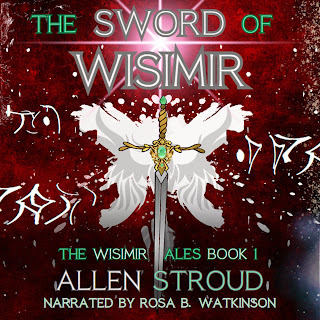 In part, I'm inspired by the work done by Rosa Watkinson and Nikki DeKeuster working on the audio versions of my Wisimir novels. These were set in the same secondary world as the first novel I decided to write.
Back in 1997, I was a second-year student at King Alfred's College (now the University of Winchester) and still had no idea what I wanted to do with my life. However, I knew I wanted to write, and having successfully adapted Terry Pratchett Reaper Man the stage, decided that I should make an attempt at writing long form fiction. The moment came about because my long-running role-playing game evenings were moving into a different phase and some of the original stories that had inspired them were becoming lost to the passage of time.
 At that time, finding novelists who were inspired by role-playing games wasn't as easy as it is now. Those of us involved in UK live role-playing knew that Mary Gentle had been very involved in the Lorien Trust game system as Queen Roxanne of the Lions Faction. One or two other writers occasionally confessed to having played Dungeons & Dragons or another system. To me, all the American writers who published novels for Dragonlance and Forgotten Realms were very far away.
But it was those novelists who inspired me initially. I always felt I would be fantasy writer, writing stories that explored secondary worlds that were very much Tolkien analogues. At the time, this is the kind of fiction that I read, and therefore this was the kind of fiction that I wrote. In many ways, I wanted to be innovative and interesting, changing different elements and experimenting with different ideas. But of course, at that time, what I saw as innovation was really a repetition of existing tropes. My lack of reading showed in my writing.
In some respects, that is part of this week's discovery which I wanted to write about here.
 I completed the first draft on my first epic fantasy novel back in 2000. At the time, I was living in Derby having moved in with my girlfriend, who is now my partner of nearly twenty-five years. After reading all the advice I could find, I printed out a full copy of my manuscript stuffed it into a series of pink folders, bound that a parcel, and sent by post to myself, thereby establishing my copyright on the work. Looking back, I was quite naive.
The next 18 months involved me sending out a series of queries to publishers and agents, following the advice given in the Writers and Artists Yearbook. I worried about querying multiple sources at the same time, so waited for a boilerplate rejection before sending out again. This meant the process took an exceedingly long time and once the list of addresses given in the yearbook were exhausted, I dusted off the draft copy and started making revisions.
 The feedback I was given from my initial rejections was wholly unhelpful. Every rejection was boilerplate and bland. I found nothing that could identify strengths or weaknesses in my writing and it would be several years before I began teaching writing, which would begin to allow me to develop an understanding of my ability. For a long time, thought I was good, but hadn't been given a chance. Considering that now, I think I was lucky to get boilerplates. The writing really wasn't good.
 It was only much later, when I began to engage with writing communities such as Youwriteon, or Authonomy, both long gone now, where I started to identify some of the ways in which I could improve. Additionally, I was fortunate to have a class of students who were writing assignments for their creative writing degree. By reading and identifying areas where they can improve, I was able to get around the blind spot I had with my own work.
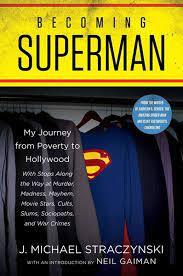 A few years ago, I read the autobiogaphy of J. Michael Straczynski, the writer and showrunner of Babylon 5. I identified a lot with his early forays into writing. The ignorant urge and fumbling steps of an individual both blessed and cursed with an active imagination, who can see scenes, and moments in stories, but cannot express them.
My writing journey moves on. The first novel remained as an old digital file and a printed parcel kept in the loft. Occasionally, the digital file would get another read and edit. Most of the time, I would despair at the poor prose. This was a book that would take longer to make good then it would to write anew.
However, this week I have taken out the draft once more. Some rewriting done in 2021 and 2022 has vastly improved what was a very tired and cliched fantasy quest. Now in 2024 I think we are close to having a draft that is acceptable. Whether acceptable becomes anything better than that and worth submitting to anyone remains to be seen.
However, when reading through the old story I am able to look back at the writer I was and see that young frustrated individual with new eyes (not least because I've had laser surgery since then).
I have said before, that every writer's journey is different. Looking back, I can see that the stories I wanted to tell are not stories I have the writing skill to pull off. Some of the novels I have written have needed to sit for a period of time so that I can come back to them and figure out what is not working. In some respects, that can be a matter of confidence. It is somewhat refreshing to look over what I was able to do see how I have changed and possibly improved.
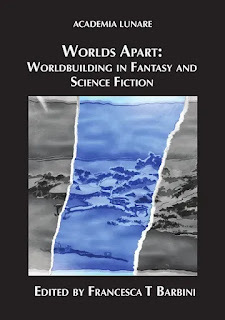 Certainly, the process of reacquainting myself with epic fantasy is a beneficial one this month. On 18th February, I am leading a workshop for the British Fantasy Society on "Fantasy Worlds and the Reader's Imagination". This will draw from the chapter I wrote in Worlds Apart: Worldbuilding in Fantasy and Science Fiction (2021) for Luna Press. and also explore some of the ways in which writer 'worldbuilding' is commonly discussed as being about exposition and detail. I also want to touch on the ways in which worldbuilding can become a skill that is useful in areas outside of writing novels.
 Another development this week has been a short conversation with the fantasy literature research project at the University of Oxford. I am hoping that the discussion we have started will develop into something exciting that I can talk more about in the future.
Being A Healthy WriterA week in the cold with no central heating does not lend itself to being active. However, there have been some developments. I am working on improving the strength in my left shoulder, and continuing to observe the lifestyle changes I have indicated over the last few weeks. I've also taken to missing the occasional evening meal. This is something that a variety of different people have mentioned as being a way to lose or maintain a healthy weight. I am a creature who needs regular fuel. I do find that if I don't eat for a period of time I can become irritable and occasionally, my hands will get shaky. However, changing the evening meal to a series of snacks is something I can do and does have a small benefit. Small benefits are what I am looking for at the moment. I wanted to go into a phase of strict diet and exercise, then I would be doing that. This is not what I want at the moment, those kind of periods in my life due come with a certain amount of stress attached as well.
Generally, my back has been a little better this week and I've been able to be more mobile. Hopefully that will continue and an increased level of activity will help with this.
January 28, 2024
Voluntary Works
The world turns, 2023 fades and 2024 moves into February.
This month has been cold but comforting. A gradual ease into a variety of different small projects has allowed me a little time to move out of my winter cocoon. I don't know if other people do this, but I find myself living and working in a smaller and smaller space in the house during the cold weather. Brighter days and a little time provide an opportunity to redress this, to return to some of the different places in my life that I enjoy.

I have new music released. The Fractals album track Resonance came out on the 26th of January. You can listen to all the released tracks here with the full album due in April.
A little bit of bad news on the music front. This week, one of my computers died. Fortunately, no material has been lost. I'm just waiting on a new (old) motherboard to replace the broken one.
One matter that has been a constant throughout the last few years, and that has remained constant over the last few weeks has been my work for the British Science Fiction Association. As chair, there are always a selection of different projects and initiatives that I find myself involved in. We are a volunteer organisation, and as such rely on the goodwill and enthusiasm of those who wish to give us their time and energy.
 I became chair of the BSFA in 2019 and am very proud of how the last four years gone. We've worked hard to build the membership numbers and revise some of the issues that were present back at the start. Under the constitution, authorised in 2020, I have until 2025 before I am required to step down as chair. Six years, two terms, is the maximum permitted for one person to lead the Association, and by that point I will certainly have done my time.
Volunteering for any organisation is a matter of personal motivation. Over the years I have assisted a variety of different initiatives, working with live role-playing organisations, church preservation organisations, canal heritage organisations, the girl guides, scouts, and many others, including the British Fantasy Society and the British Scene Fiction Association. I have enjoyed each experience, and learn something about the nature volunteering from the interactions with others of a similarly supportive mind.
My partner, Karen, is well versed and experienced in the management of volunteers. This is something she did as a profession for many years.
One thing that I have observed, is that the decision to be a volunteer demonstrates a commitment that can be stronger than a professional arrangement. I have worked professionally for organisations where I have also been a fan. However, it is important to note that the motivation of someone who is not paid for their time is a gift. It should never be confused with a professional, contractual arrangement. To do so denigrates the professionals who are in such a situation and also (arguably more importantly) diminishes the role of the volunteer.
Language when communicating with volunteers is incredibly important. It is easy to confuse some terms at times. Volunteers are not staff, they are not employees, and so on. Again this choice of language should not diminish their role or their given responsibility, but it should always be remembered.
Additionally, over the years I have seen many different organisations work with volunteers in a variety of different ways. Cultures are established by those that find themselves in leadership positions. The way in which we work with people determines our attitude and approach to the work that needs to be done. Positive communities focus around the positive results and the communal nature of volunteering. Individuals are not isolated, they feel connected and the day-to-day business of the organisation is communicated with an air of informal respect. Sure, being a leader gives an individual responsibility to make a decision, but that does not mean that responsibility needs to be impressed on the rest of the group.
Also, there is nothing wrong with volunteering to achieve something or gain something. It is perfectly acceptable for a voluntary position to be transactional. Suppose you want to learn something about a particular process, perhaps with the British Science Fiction Association that might be how to write reviews, or how to make magazines, or something else. A volunteer organisation can provide a really good starting point for gaining this kind of experience. It should be valued by a potential employer and provide a talking point in interviews or other assessments for new career roles.
Organisations that are run by volunteers aspire to provide a service or user experience that is comparable to what we call "professional". Applying this term can be a bit of an oxymoron. Some of the worst "services" I've ever received come from organisations that consider themselves to be professional. However, I know what is meant. By professional, we mean good.
Occasionally, people forget that organisations are run by volunteers. In my experience, when this happens, it is a good idea to politely remind them. This is particularly true in the world of genre fiction literature. Many conventions are run and organised by volunteers. Even the "chairs" or event organisers are essentially administrators, providing their services free and trying to keep the ticket prices as low as possible so as to ensure the event business pays for itself.
In those situations, it is important to recognise the value of what you are getting compared to what you might get if the whole experience was paid for at every level. We all want to make events accessible and available to as many people as possible. UK events like Fantasycon or Lavecon would see ticket or membership prices rise by 300 or 400% to try and accommodate the necessary wages. I'm sure every organiser would love to be able to pay people well for everything they do for an event. But attendees just wouldn't come. A massive price rise would see whole communities destroyed.
When I volunteer, I give my time because I support something. I support its existence, and I want to spend some of my life working to further that existence and the values expressed by the thing that I support. To all you volunteers out there, I want to say that I get it. I see you and I want to value everything you do in your volunteering.
Being a healthy writerThis week I have tried to ensure I up my activity. The bright but cold weather has helped, in that I have spent quite a lot of time rebuilding, reorganising, and rediscovering many of the half abandoned projects of the last few years. As the weather improves in February, I hope to get back into the summerhouse and continue the building project I started back in 2021. For those of you that don't know about this, I started work on a little house in the garden during lock down, and over the last few years have gradually built this into a cosy little place that I can exercise, work, rest and play in.
Pictured here is the space as it looked in May 2021, and below that how it looks this morning (28/01/2024)
 My plan is to clad the exterior walls this year and do a couple of other fixes, but the space is ready and usable. Although, it currently gets used as storage.It has a solar powered electric set up with a battery and lighting as well. Last year I built a desk, put in a sofa bed and other furniture, including a little wood burning stove.Basically, it was built as a little house to get away from the usual surroundings without actually going very far. Out garden has a lovely little woodland, so you can sit at the desk and look out into that as you write.During lock down, I found working on the summerhouse was an escape from laptops and screens, which I sorely needed at the time. I could make something tangible and lasting that would add to my life. I guess there is a connection between that and volunteering. In both senses, you can feel a sense of tangible achievement.
In February, I am hoping to get the exercise bike in the summer house working again and to begin building the strength in my left shoulder. The muscle injury I had over the winter period has now healed sufficiently for me to start on this, so this next week will be a gradual process of trying to exercise and build muscle in this particular area.
January 19, 2024
Roleplaying Games: My Journey
I like roleplaying games. I've always liked roleplaying games since I tried to start playing them back in the late 1980s.
Back then, at the start, I didn't really understand the difference between boardgames and roleplaying games. When I played boardgames, I always got caught up in the narrative of the game. I still do. If I played Risk, I would see the warfare and the military leaders, clustered around a tactical map, if it played Monopoly, I would be the entrepreneur walking down the street and gambling everything on my investments.
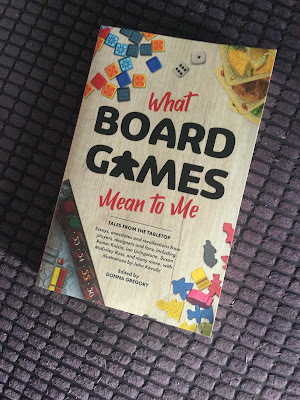
I wrote about this in What Boardgames Mean to Me (2023).
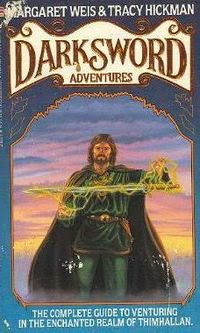 My first attempts at playing roleplaying games involved the Darksword Adventures book and Advanced Dungeons and Dragons first edition.
 Most of those experiments were failures. I remember building huge dungeon boards out of old cardboard, drawing squares on them and moving miniatures around. The problem was, I didn't understand the way roleplaying games need a bit of looseness in how you transition from the narrative into a tabletop game. That first bit should have been a strength for me, but I didn't get the change. I wanted to play a game where I took a turn, adventured, found stuff, fought stuff, rinse and repeat. I didn't need the storytelling, not because I didn't like the storytelling (I devoured all the stories in every RPG book I read), but because I was already there.
It took a few years for me to realise that roleplaying games are an opportunity to tell stories and that the tabletop element is actually the least immersive part of play. The moment when the rules are present is the moment when a game can feel less like a a story, the participants feel less like they are playing or being their characters.
 Advanced Dungeons and Dragons second edition was my proper starting point with roleplaying. After playing a few games, I started to try being a games master, then started picking holes in the rules, like all good games masters do. I ran a regular Sunday evening game in my own fantasy world. I loved the Dragonlance setting, but never quite found a way into it as an RPG game. I loved the novels and didn't want to replace the characters with characters created by my friends.
 Our game ran for years. Between 1994 and 2000, every Sunday from 7pm to late.I would spend most of my Sunday afternoon writing content. In 1995, I started a second game on Wednesdays at College. Eventually, both games merged into one. I kept running the sessions and played other games too, Rolemaster, GURPS, RIFTS, Paranoia, Vampire, Werewolf, Mage, Cyberpunk, Call of Cthulhu, and more.
My introduction to live roleplaying in 1996 also changed my perspective. I started to see characters as more than just numbers on a page. The people playing the different parts in a huge story demonstrated to me how much more meaningful and immersive a story can be when it involves more people.
 Live roleplaying – dressing up and playing the characters for real – sacrifices an element of control. Most games have referees, not games masters. The referee ensures the rules are adhered to, but doesn't try to shape the narrative. The rule systems for live roleplaying games tend to be lighter than tabletop roleplaying games, as many of the resolutions are resolved with either a competitive contest of skills (in games like the live version of Vampire: The Masquerade), or through a form of combat with 'larp safe' weapons.
During my time 'larping' I wrote different systems. I worked on the rules for some of the biggest fest games in the UK.
I retired from LARP in 2013. I'd fallen out of love with the games I was playing and it was time to move on. I still have most of my costumes. Maybe I'll go back to it some day.
My own roleplaying game remained a focus throughout. Gradually, the rules became less and less reliant on the existing publications from D&D and other fantasy systems. My preference for detailed 'simulation' rules relaxed as I realised the more intrusive the mechanics of a game are, the more they can be a distraction from immersion and narrative.
The world of my roleplaying game became the setting for the Wisimir novels. All the background work and source material became a rich base for a set of stories. Jack Von Drey's adventures in the city are part of a wider world, one that I used for my Sunday night sessions and that I set my first fantasy novel in – an awful piece of work that I regularly revisit and try to fix!
Roleplaying Games Now
These days, I get the chance to work on a variety of different roleplaying games. Karen and I did a lot of editing on Solemn Vale (pictured above). We also worked on Revolutionaries and I Am Zombie from Make Believe Games. We're continuing to work with Dirty Vortex on a variety of new projects that should emerge in the next few years.Being a Healthy Writer
An update on my health and fitness journey in 2024.
One of the downsides of giving up larp in 2013, was my fitness. I would work at the gym all winter to ensure I could run around in the summer.
However, that cycle wasn't good for me. I would push hard and injure myself. I have a weak left shoulder from a bike accident when I was seventeen, and a bad back owing to a twisted right leg that I've had since I was a young child.Time at the gym would lead to a hip injury or a shoulder injury. I would scale back and slow down, then start again, and get the same problems. I'd end up at the events in pain from one or the other.
In 2013, I went to an osteopath. I was given a programme of exercises to strengthen my back. I did them for a few weeks, then woke up one morning and couldn't walk.
A week later, and thanks to prescription anti-inflammatories, I was back to work, then back to the larp field. I finished the events for the year and retired.
This time, I'm working on trying to find a better balance.
This week, I started a regular walk and tried to stick to my sitting down plan. At the moment, I have a better balance with regards to work and life. I'm managing my to do list and trying to make sure I have leisure time too.
When projects are fun and interesting, it can be a little difficult to distinguish between work and play. Working on games or novels or music can blur the line. Sometimes you find yourself resenting the other work, or you find you don't get the same switch off you would get from setting aside the laptop and doing something else.
I play games I work on, that helps me be motivated to play them, it feels like progress, but it also doesn't really mean I'm stopping, like I should.
So we start with some small steps. Walking, regular breaks, leisure activities.
I'll let you know how it goes.
January 14, 2024
Into 2024...

So we start a new year.
The first few days of January were all about catching up on 2023 tasks, but I'm there now.
The last week has been easier, gradually preparing all the materials for teaching this semester and establishing a selection of possible projects for 2024.
One of the first 2024 things is the release of Fractal Episode 5, Luna.
https://www.amazon.co.uk/Luna-Fractal-Episodes-Book-5-ebook/dp/B0CCKGFXVC
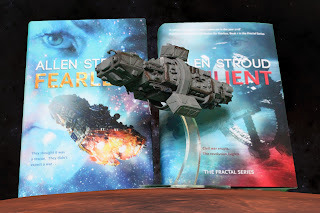 As mentioned before, the Fractal Episodes are standalone stories in the same setting as Captain Ellisa Shann's adventures in
Fearless
,
Resilient
and the forthcoming, Vigilance. These shorter works expand the narrative and provide context to what was happening elsewhere whilst Shann and her crew were on their mission. The idea for them came from Nick Wells at Flame Tree Press. The first four episodes have been released in September, October, November and December. The last two are coming out this month and next month.
As mentioned before, the Fractal Episodes are standalone stories in the same setting as Captain Ellisa Shann's adventures in
Fearless
,
Resilient
and the forthcoming, Vigilance. These shorter works expand the narrative and provide context to what was happening elsewhere whilst Shann and her crew were on their mission. The idea for them came from Nick Wells at Flame Tree Press. The first four episodes have been released in September, October, November and December. The last two are coming out this month and next month.The aftermath of finishing another novel draft takes a little bit of time to adjust to. I've been able to spend a bit of time playing games, watching some television, catching up on the housework. All the things that I struggle with as a deadline approaches and my focus narrows into a smaller and smaller space.
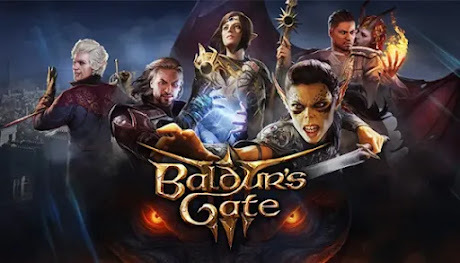
One of the nice diversions has been the opportunity to play more Baldur's Gate 3. I play a multiplayer adventure with some of my old friends from childhood and its been brilliant way for us to get together regularly every Sunday night.
 Back in 2021, during the Covid lockdown, I had the opportunity to work for Larian Studios on Act 2 of the game. During the winter break between semesters, I was approached to join a freelance writing group who were working on the scenes under the direction of the studio writers. I produced a selection of scenes alongside some of the others invited onto the project.
 Revisiting some of those scenes to see what made it into the game has been a really nice experience. I was only part of the development process for a little while, but BG3 has been received incredibly well since it's release and Larian deserve all of the plaudits. The way they prioritised writing in their studio's work shines through in the final product. The huge sprawling story of this game is incredible and provides a wonderful gaming experience for everyone who decides to play.
 Part of the game's appeal is its approach to the different types of character you can play and interact with. BG3 embraces social and personal relationships in a way that fantasy roleplaying games have not managed to do in the past.
I grew up reading fantasy quests where the intimacies between characters were hinted at, but never explored. As a teenage fantasy fan, I learned from the characters in books how to be a part of the adventure as the cleric, the thief, the warrior or the wizard. But I didn't learn how to be anything more than a friend to the people I was adventuring with. There was a strange hesitation among the writers of the day. Feist, McCaffrey, Brooks, Eddings, Weis and the rest all fed my imagination, but left out some of the detail. Making the awkward, even more awkward.
Baldur's Gate 3 embraces that missing detail - the intimacy between characters thrown together on a quest and exploring their identities as young adults. Maybe some of the attractions aren't for you, but that's part of the point. They don't have to be. We can all accept each other. We don't have to disapprove.
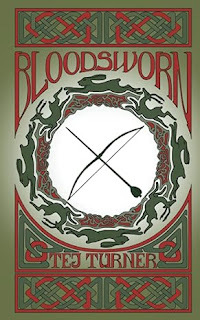 In some respects, that's the kind of thing writers like Tej Turner are trying to do so in their novels. The Blood Legacy trilogy is very much a series in the tradition of all those epic fantasies of the past, but it doesn't shy away from heroes being attracted to each other and following up on those feelings.
I think there may be a post Baldur's Gate 3 reaction among fantasy writers. In the past, we've certainly seen the influence of roleplaying games on fantasy novels, and there are more and more writers in the genre who grew up on playing Dungeons and Dragons, or Runequest or something similar. Now, we might see another generation of inspired creators who use Larian's epic game as a roadmap to explore fantasy in a more mature and less inhibited way. Teenage readers are looking for roadmaps and rolemodels in their lives all the time. It doesn't matter if they find them in fantasy worlds so long as they find them and they get good advice.
Being a Healthy WriterSo, I promised a weekly update on my slow journey towards getting fit and health again after a long period dealing with imminent deadlines and the like.
This week has been about taking a little time to rest and relax alongside the tasks and to do lists. However, I have started to explore some ideas around health and wellbeing that is lasting, positive and part of enjoying life, not just about being fit or dieting.
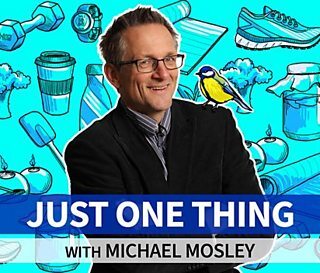 If you're not a listener to Michael Mosley's Just One Thing series on Radio 4, let me be the first to recommend it to you. There are a whole series of life lessons that address different habits we all have and evaluate them in relation to how we live. Whether you're a tea drinker (like me) and need a little validation for why your favourite drink is good for you, or need a little advice on how to make your morning rituals to be a little healthier, there will be something in this series for you.
Currently, I'm taking a few of the tips from the series and starting to construct a steady plan for myself. I want it to be a lasting change, so some of the previous 'exercise blitz' periods in my life aren't going to work.
A small change for right now, is around being sat down. We all know sitting down for too long is really bad for you. So, I'm changing my habits. Going forwards, I'm sitting down for no more than an hour at a time.
January 7, 2024
2023: Well that was quite a year.
2023: Well that was quite a year.
About four weeks ago, I made a pledge to myself that I would restart my blog on here and try to post regularly. During a period I was working on Vigilance, the third novel in the fractal series, and also managing a few other projects to completion. Suddenly, with the word count requirements going up, the deadlines getting closer, and everything else, opportunities to write a blog post every week started to evaporate.
So, here we are again. New Year, new resolution. Every week I intend to write a blog post updating anyone who is interested in one up to and what I've been doing. Hopefully, 2024 will see this pledge being more successful.
So, what I've been up to over the last few weeks? Well, as mentioned, I had an imminent deadline for Vigilance. At the beginning of December, after a productive few months, I still had 50,000 words to write. So, December had to be the most productive writing month I have ever had if I were to meet the deadline in time.
Many be clear. I generally don't write a lot of fiction in the winter. The reason for this is that semester one is always the most busy period of my academic year. When I'm teaching modules in semester one, I find that I have a lot to do with marking and with creating content for the different sessions. As with most university degrees, the first semester is always about heavy loading, with the second semester about extended project. The latter is generally easier on the academics, providing a bit more time for research projects and the like.
Thankfully, with Vigilance, I was already immersed in the story. 70,000 word into a novel means that you are well into the plot and often the third act of a story is all about resolving the events that you have set up earlier on. In the case of Vigilance, the scope of my narrative had changed quite a lot from how I had considered it previously, owing to the presence of the additional fractal episodes, which are currently being published. This widened the plot considerably, and gave me a variety of new characters who I really wanted to weave into the main narrative. Any opportunity where that could happen, I started to exploit. Even down to small cameos with character names inserted in different extracts. I know that this will help when it comes to developing the story further after the third book is released.

By 31st of December, I reached my goal. 50,000 words in one month. The website Nanowrimo, regularly sets this as an achievement goal for November. I have never completed that goal. I did try to do rhino the first year was set up, but completely misunderstood the website and posted hundred and 20,000 word novel on the first day of the month. I got hate mail from participants, complaining that I couldn't possibly have written everything within 24 hours. Of course, I took down my post immediately. I had thought that this was a month for people to post up the novels, not for encouraging people to write. I haven't really been back to Nanowrimo since.
However, despite reaching my writing goal, Vigilance was not finished. It took another couple of days to tweak edit and write the final scenes for the first draft. Still, this was within the holiday period, and meant that my editor was able to start work on the first day back in 2024 with a drafted manuscript on his desk.
I'm not sure how successful the story is at this stage. I was fine that I doubt myself when a bit in the days after a completed draft has been submitted. When my thoughts strayed to the story, I find myself having ideas and remembering things, then wondering if I have included them in the draft. Of course, there will be another chance to right from the beginning.

I also have a short story in a forthcoming anthology with PS Publishing. The draft copy was returned to me just before Christmas. The amount of edits required were minimal and this was quickly dispatched back to the anthology editor, Dan Coxon. I really like working with Dan. He was one of the editors who helped with Resilient (2022) and he is a regular attendee at Fantasycon. His careful suggestions on my short story were immediately accepted, and I resolved the questions that he asked about the story.
 In terms of publications in 2023, I have been incredibly fortunate.
The Historical Dictionary of Fantasy Literature
came out in June, published by Rowman and Littlefield and the Fractal Episodes, Europa, Ceres, Lagrange Point, and Terra have all come out in the last few months. Additionally, I had an essay in the fabulous gaming collection from Aconyte Books,
What Boardgames Mean To Me
, along with some of gaming's greatest names. The UK publication of this comes out in February 2024.All of these opportunities have led to other opportunities. I've enjoyed working with new people, getting used to new processes. Everything bodes well for what may come in the future.
In terms of publications in 2023, I have been incredibly fortunate.
The Historical Dictionary of Fantasy Literature
came out in June, published by Rowman and Littlefield and the Fractal Episodes, Europa, Ceres, Lagrange Point, and Terra have all come out in the last few months. Additionally, I had an essay in the fabulous gaming collection from Aconyte Books,
What Boardgames Mean To Me
, along with some of gaming's greatest names. The UK publication of this comes out in February 2024.All of these opportunities have led to other opportunities. I've enjoyed working with new people, getting used to new processes. Everything bodes well for what may come in the future.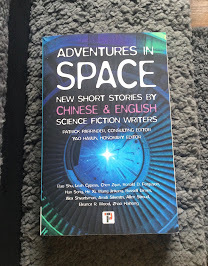
I also had a short story in Adventures in Space, published in March 2023. This was a collaboration between UK and Chinese SF writers. This was edited by Professor Patrick Parrinder, who I had the good fortune to work with a little when I was reviews editor for SF Foundation.
However, this long extended period of writing during the winter has taken its toll. I tend to find that my workload during this period along with the colder weather makes me nest a little bit. Other projects are discarded and left on pause whilst I try to manage the immediate requirements on me that have deadlines. During this last winter, my health has suffered. I have had issues with my back for nearly 30 years. However, the pain I experience in early mornings generally goes off, only to return in the evening or the next day. Unfortunately, the last few months have not seen this happening. Instead, my back has given me constant trouble. I had similar issues when I was completing my PhD in 2017. My health suffered owing to the long periods sat writing.
So, for 2024, a plan to make my physical health a priority. Exercise and diet are going to be an important part of the next few months. I always find that I have more mental capacity for different creative projects when my physical health is better. Hopefully, regular exercise and activity will improve my general well-being.
I'm not sure how much writers talk about this part of their lives. It is easy to fall into unhealthy habits, particularly when you are trying to placate the muse. I want to be creative and to be immersed in a story that I'm telling, so finding ways to surround myself with things that support this or rewarding my engagement with regular snacks and treats can be unhealthy if done the wrong way.
Going forwards, 2024 will bring a lot of really interesting opportunities. Be talking more about those in the next few weeks. What I'm also going to pledge to do is to give regular updates on how I am managing my health. This isn't just for the benefit of you, gentle reader. By documenting how I am feeling, perhaps I may be able to reflect on any improvements as the year rolls on.

December 8, 2023
Birthday Launch: Terra
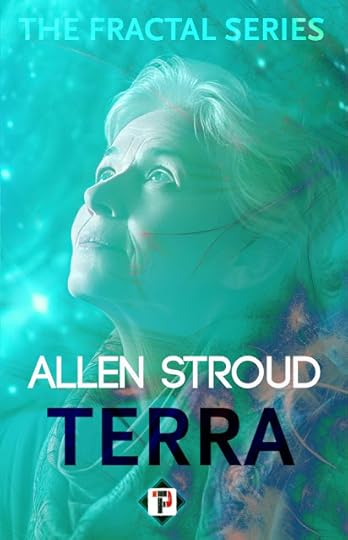
Today is my 47th Birthday!
And, on this day, the 4th book in the Fractal Series is released!
Fourth episode in the Fractal mini-series, building on the heavily-praised worlds of Fearless and Resilient set in 2118AD, now accompanied by an awesome soundtrack.The aftermath of the Atacama incident. An investigator tries to piece together clues on who might be to blame as corporations move in to exploit the situation and cover up the evidence. As she gets closer to the truth, she gets closer to danger.
Terra was very interesting to write. I've noticed that I have a tendency to like mystery plots in my science fiction. Investigations are a nice vehicle. They give your protagonist a clear function. Sometimes that follows all the way to a nice reveal and solve of the case, but it can also be used to discover chaos, events that quickly escape the control of the investigator.
Each Fractal episode expands on a specific element of the world context in 2118 AD. Terra explores the nature of human consciousness. How it is created in this future world and how it is valued. The events provide a little more insight into what is going on.
Again, if you are new to the series, you can read Terra first if you want to. All of the episodes can be the first book you read, or a continuation from one of the others.
Winter time is interesting for me. University teaching has always tended to be busiest in the first semester from September to December, with the second semester a little like 'going downhill' to quote a particular walking tree.
I don't tend to write in the winter. Instead, I get the job done and find myself living in an increasingly smaller part of the house as work priorities take up more and more of my time.
However, this year, the Fractal Series requires that I write in the winter. So, every day, I'm juggling the work tasks to make a little evening time to work on Vigilance. As I said in the previous blog article, the challenge of writing a book that concludes some of the story when you have eight previous publications in the series as opposed to two, as I'd originally envisaged, is quite a thing. In some ways it's great to be able weave little continuances from the episodes into the novels, in others, it's an exercise in keeping track.
My previous work on computer games, my Ph. D. and my Government research has involved ways in which you can keep track. Writing support documents to co-ordinate huge collaborations between games and books. These macrotexts sit behind all the shiny new publications. They are often sprawling and messy, but they are a map and they help, particularly when you aren't sure about something. The last thing you want as a writer is your hesitation to end up in the writing.
However, there is also an argument for keeping it in the brain. There is an immediacy I get when I'm thinking about the elements of this sprawling story that I want to tell. I've mentioned before that the Fractal books are written without much of a plan. I used to plan more with other stories, but for me, the specific, first person present style doesn't led itself to allowing much planning. I have a few notes, but that's it. Instead, I write as fast as I can and then tidy up in the second draft.
 Other news this week was our annual excursion to Dragonmeet. The British Science Fiction Association and the British Fantasy Society has run a table at the event for the last three years, mostly because Karen and I attend with the gracious support of John Dodd, the event organiser. It is great fun and a nice change of pace, with a chance to spend a day looking at boardgames and roleplaying games.
 This year was particularly nice as Flame Tree Press were in attendance along with the BSFA events team, Zoe Mantas and Robyn Moore.
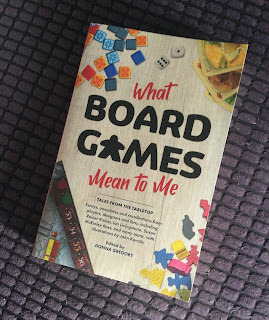 What was also nice was that I got to pick up a copy of this: What Boardgames Mean to Me was published in America in November and arrives in the UK in January. There was a panel on the book and the writers who have contributed to it are a veritable who's who of boardgaming and roleplaying. It's an absolute prvilege to have my little piece: 'Board Games are a Story, Not a Destination' right there in the middle alongside, Steve Jackson, Ian Livingstone, Alessio Calvatore, Gav Thorpe and many others who have been luminary names for me throughout my life.
 My little piece was inspired by my regular boardgame evening in Andover with my old childhood friends. Going back every so often really does remind me how important those shared moments really are. It doesn't matter whether you win, lose or draw, you get to spend time with people you care about.