
Vered Neta's Blog
September 13, 2026
How to Write Time as a Character.
The first time I understood what time actually was, I was kneeling in a trench in Israel in the early eighties.
Last century, thank you. It was my summer vacation, which for archaeology students means volunteering to be slowly cooked. We drank warm water out of jerry cans and none of us could feel our knees by ten in the morning.
Then the shoulder of an amphora came up under my brush. Then another. Wine and olive oil, a whole cluster of them, stacked where somebody had left them.
Not museum pieces behind glass. Storage jars. Ordinary, functional, still lined with resin. Somebody sealed those, stacked them carefully, and fully intended to come back.
For about four seconds I was standing in two times at once. Mine, and his.
My father was a professor of history, so dinner in our house was a running argument about who owned the past. He had documents. I had other people’s storage jars. He thought I was digging up bins. I thought he was reading press releases written by the winners.
We were doing the same thing, of course. Reading time in layers.
That’s what archaeology is…stratigraphy. You dig down and each century sits directly on top of the last, touching. The Roman floor and the medieval floor are separated by four hundred years and eleven centimetres of soil. Which, if you’ve ever written a dual timeline, will sound familiar.
I’ve been chasing that four-second double vision ever since. It’s how I wrote Full Circle, and why the novel I’m drafting now, The Widow and the Kabbalist (working title; don’t hold me to it), runs on two timelines that refuse to leave each other alone.
So: time as a character. A phrase writers nod along to at festivals and then go home and do absolutely nothing with, because it sounds profound and tells you nothing about what to type on Monday. The only question that helps is this one: what job is time doing in this story?
6 Screen-Tested Ways to Make Time Do the Work.

#1. Time As The Antagonist You Cannot Negotiate With.
An antagonist needs to want something and act on it.
Time wants nothing, which is why most writers demote it to the role of atmosphere. A vague sense of urgency, a deadline mentioned twice and then forgotten.
Time only works as opposition when it has a rate. Not a date in the diary, but a quantity the audience can watch decreasing. Countdown, not calendar.
Watch Dunkirk do it. Nolan runs three timelines at three speeds. A week on the beach, a day at sea, an hour in the air, and lets them collide.
But the moment that tightens your chest is small: the Spitfire’s fuel gauge is broken, so the pilot does his sums in grease pencil on the cockpit glass. A number, going down, in the corner of the frame.
Nobody says time is running out. The audience feels three speeds at once and couldn’t tell you why.
Steal This: Find the decreasing quantity in your story and put it where the reader can see it. Fuel, money, doses left in the bottle, a tide coming in.

#2. Time As The Third Person In The Love Story.
Most romantic obstacles come with somebody attached. A rival, a disapproving father, a misunderstanding at a wedding.
Anything with a person behind it can be resolved by a conversation, which means your reader is always half-aware that the problem is optional.
Time has nobody behind it. You can’t apologise to it or win it round with a grand gesture at an airport. That’s what makes it the cleanest source of yearning available.
Past Lives is twenty-four years long and almost nothing happens in it. Nora and Hae Sung are twelve. Then they’re twenty-four on a bad Skype connection. Then they’re thirty-six on a New York stoop, waiting for an Uber, still loving each other exactly as much.
Nothing has gone wrong. Nobody betrayed anybody. They met in the wrong decade and kept living anyway, and there’s no version of the film in which a better conversation would fix it.
It’s the engine of the book I’m writing now. I chose it deliberately. It’s the only obstacle I’ve never managed to argue my way out of.
Steal This: If your lovers could solve it over coffee, it isn’t an obstacle yet. Ask what would still keep them apart if every human being in the book wished them well.

#3. Time As Your Unreliable Narrator.
Telling a reader that a character’s memory is failing puts them outside that character, looking in with sympathy.
Breaking the chronology puts them inside it. Distorted time isn’t a structural flourish; it’s a point-of-view technique, and it’s more efficient than any amount of interiority.
The Father never explains itself.
Anthony Hopkins is in his flat. The chairs
move between scenes. A man he doesn’t recognise says he’s his son-in-law, and then
a different actor delivers the same line.
His daughter announces she’s moving to Paris, and twenty minutes later she has never heard of Paris.
His watch keeps going missing.
Nobody says the word dementia to the audience. You sit inside a broken chronology until you’re the one checking the door.
Steal This: Stop describing the unreliability and let the timeline misbehave instead. A scene that repeats with two details changed.A conversation that happens twice. An hour nobody can account for.

#4. Time As Elastic.
Story-Time Versus Page-Time.
Story-time and page-time are separate currencies, and you set the exchange rate. Three seconds can take four pages. Twenty years can take a line.
Most of us get this backwards under pressure, hurrying through the scene that frightens us and padding the one that’s comfortable to write.
Length on the page is how you tell a reader what matters. Sprint through the confession and you’ve told them it didn’t.
Hamnet has a chapter that should not work.
A child is dying. Maggie O’Farrell has us at the bedside, and then she leaves.
She follows the plague backwards instead.
A flea on a monkey on a ship, a glassmaker in Venice, a box of beads travelling across Europe for months.
Twenty pages of detour while a boy lies ill, and the reader is left in the doorway the whole time, desperate to be let back in. Three days of story, stretched into a continent of page-time.
Steal This: Open your manuscript at the moment that matters most and count the pages. If it’s shorter than the scene before it, you flinched.

#5 – The Dual Timeline Handshake.
Where The Layers Have To Touch.
Now we’re on my ground.
Two timelines aren’t automatically a dual-timeline novel. They’re two novels sharing a spine.
The structure only starts working when each strand changes how you read the other, when the past answers a question the present just asked, or flatly refuses to.
The mistake I made in the first draft of
Full Circle was assuming the strands only had to take turns. Chapter past, chapter present, repeat. Very tidy, very balanced, completely inert. It took a structural rewrite to see it, and once you’ve felt the difference you can’t unfeel it.
This Is Us is the clearest demonstration going. It doesn’t alternate politely; it rhymes. Jack in 1980 is cut against his adult children in 2018, so a decision in the past lands like a punch decades later. And a slow cooker with a faulty switch, planted seasons earlier, takes out a household.
Steal This: Cut on a question, not a chapter break. End in the past with something unresolved, then open in the present with somebody standing directly on top of it, oblivious.

#6. Time As A Loop.
Repetition As Character Arc.
A loop is only bearable if the events stay identical and the person inside them does not.
Nothing external can move, or there’s no loop. Everything internal must, or you’ve written a screensaver.
Russian Doll kills Nadia over and over. Same party, same bathroom door, same Harry Nilsson song, same cigarette lit at the same mirror.
What changes is her posture towards it.
She starts out treating the loop as a puzzle to outsmart, and ends up treating it as a life to account for;
the answer, when it comes, is that she can’t get out alone.
The sci-fi is a delivery mechanism. Underneath it’s grief and inherited damage.
Steal This: You don’t need time travel. Any character who keeps recreating the same relationship or the same row is already in a loop. Structure it like one and let the repetition do the arguing.
Back To The Trench.Nobody assembles the layers. They were always touching. The man who stacked those amphorae and the sunburnt student who found them.
That’s the job when you write time well. Not organising a chronology, not building a structure that impresses other writers at conferences. Pressing two moments together hard enough that a reader feels both at once.
Four seconds of double vision. That’s all of it.
So ask the awkward question of your current draft: what is time actually doing here? If the honest answer is “passing,” you’ve got a setting where you could have had a character.
Now it’s YOUR turn – Which story has done time best for you?
The post How to Write Time as a Character. appeared first on Vered Neta.


September 6, 2026
The Opening Line Is a Promise.
I’ve been racing to finish the first draft of my romance novel. Head down, word count climbing, thirty-plus chapters barrelling along at a very respectable clip.
And then I did the maths.
I have spent more time on the first page, more time on the first line, than I have on all thirty-something other chapters combined. Which sounds absurd when you say it out loud.
It sounds like world-class procrastination dressed up as craft.
Except I don’t think it was. Because I know exactly what that one line has to do, and I wasn’t willing to let it do the job badly.
Here’s the uncomfortable truth about first lines: you’re not “easing readers in.”
You’re signing a contract.
That first sentence tells your reader exactly what kind of ride they’ve bought a ticket for.
The voice, the tone, the genre, the question that’s going to keep them up past midnight.
Keep that promise, and they’ll trust you completely, forgive you a slow patch, follow you anywhere. Break it by opening a cosy mystery like a literary weepie, or promising laughs and handing them a sermon, and they feel that little flicker of betrayal, even if they can’t name it. They just quietly set the book down for now.
You know exactly what for now means.
Screenwriters, don’t tune out: your “opening line” might be a first image, a first slug, a first line of dialogue. Doesn’t matter. The reader on page one is still deciding whether to keep turning, and the promise works the same way.
So let’s look at six kinds of promise a great opening line can make. Six books from the last decade that absolutely nailed it, and exactly what you can steal from each.
6 Promises Your First Line Makes – And How to Keep Them.
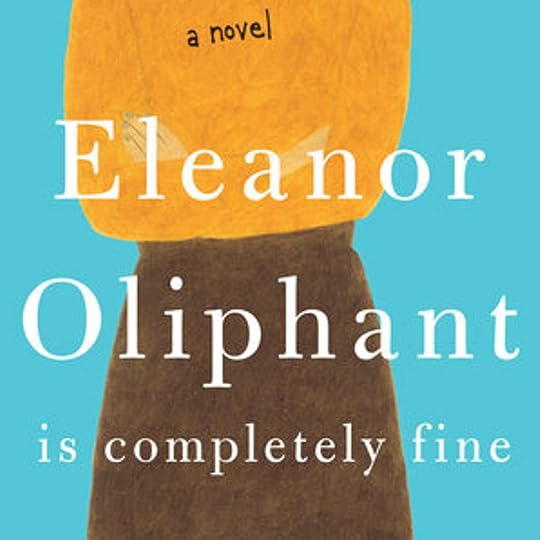
#1. The Promise Of Voice:
“You’re In Safe, Interesting Hands”.
Eleanor Oliphant Is Completely Fine – Gail Honeyman.
“When people ask me what I do…”
Eleanor’s answer is a tiny masterclass in deflection. She simply tells them she works in an office. She notes, perfectly deadpan, that in almost nine years, not one person has ever asked which one.
Before we get a single plot point, we know her completely. That flat, precise, faintly defensive delivery is a whole human being. We can hear her. We can hear that she’s the kind of narrator who says the slightly wrong thing in a slightly wonderful way. So we lean in because we suspect she’s about to be very funny and very quietly heartbreaking. (She is.)
Readers commit to a person long before they commit to a plot. Nail the voice, and you’ve bought yourself pages of patience.
Steal This: Read your opening line out loud. Could it have been written by anyone else, about anyone else? If yes, it’s not a voice yet; it’s just information wearing a coat.
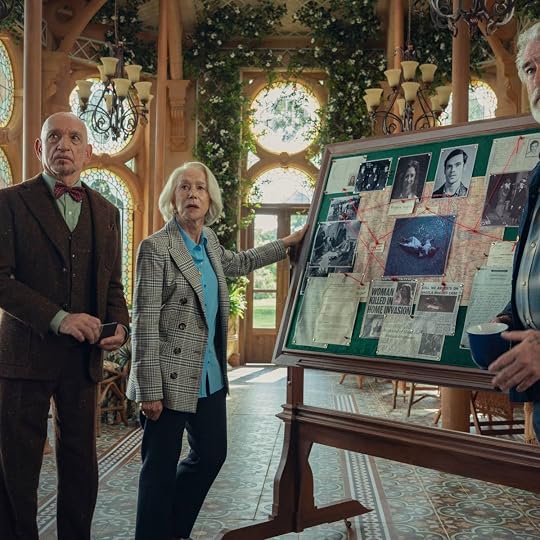
#2. The Promise Of Tone:
The Genre Handshake.
The Thursday Murder Club – Richard Osman
“Well, let’s start with Elizabeth, shall we? And see where that gets us?”
That is not how a grisly thriller opens.
That’s how your favourite gossip leans across the café table.
Chatty, warm, conspiratorial. It promises cosy, and cosy is a genre with rules Osman fully intends to honour. Charm, wit, a body, and absolutely no gratuitous nastiness.
Sneaky detail worth noticing: he actually opens the book with a few cold, quiet lines from the killer first, then hands over to Joyce’s cuppa-and-a-natter voice. So, in two beats, you’re promised real menace humming beneath the cosiness. That’s the entire cosy-crime contract, signed before you’ve finished page one.
Steal This: Whatever your genre promises, your first line should already be behaving like it.
A tragedy shouldn’t open on a punchline unless the whiplash is the point. And if it is, make sure it’s a point,
not an accident.
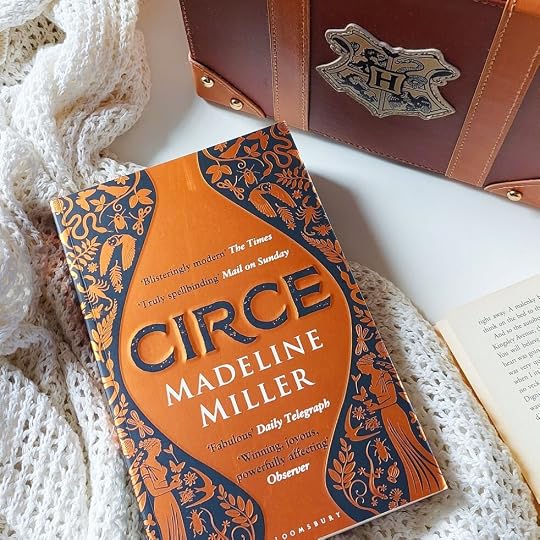
#3. The Promise Of A Question:
The Itch They Have To Scratch.
Circe – Madeline Miller
“When I was born, the name for what I was did not exist.”
Oh, come on. Now you have to know. What was she? Why didn’t the word exist yet?
Miller hands you a small, elegant mystery and dares you not to read on. This is the curiosity gap in its purest form. She withholds the payoff and makes the withholding downright delicious.
If that principle sounds familiar, it should. It’s the exact same engine behind a subject line that actually gets opened, or a link in comments that actually gets clicked. Same muscle, different room.
Steal This: A great question-opener creates a gap the reader needs closed. Not vague fog(“Something was wrong that morning”) but a specific, answerable itch. Specific beats mysterious every single time.
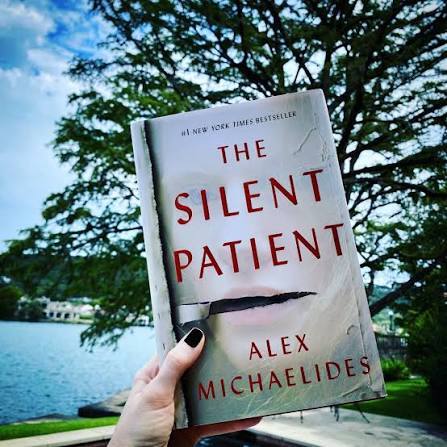
#4. The Promise Of Stakes:
Something Is Already On Fire.
The Silent Patient – Alex Michaelides
“Alicia Berenson was thirty-three years old when she killed her husband.“
No throat-clearing. No weather report. A murder, delivered in the flat tone of a fact you half-knew already, which somehow makes it land harder.
In eleven words you’ve got a victim, a killer, a marriage, and the only question that matters: Why?
Not incidentally, Michaelides trained as a screenwriter before he wrote this, and it shows.
That’s a cold open with all the fat trimmed off. The promise is momentum: this book starts in motion and has no intention of wasting your afternoon.
Steal This: If your first line could be swapped for “It was a quiet morning,” cut it. Start where something is already wrong. Your reader will happily absorb the backstory after you’ve got the hook in.
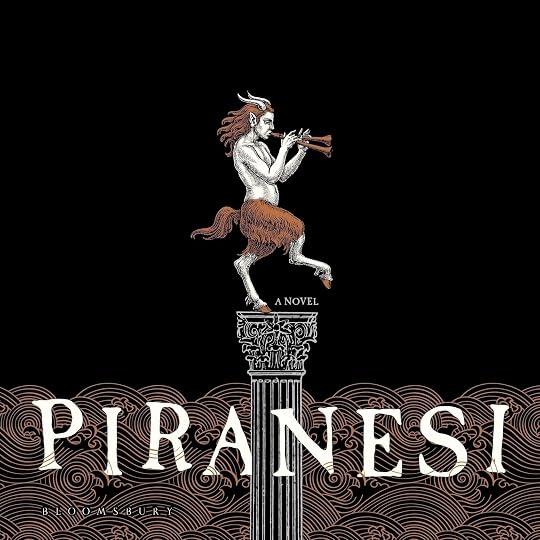
#5 – The Promise Of A World:
“These Are The Rules, And I’ll Keep Them”.
Piranesi – Susanna Clarke
“When the Moon rose in the Third Northern Hall…”
Capital letters where they’ve no business being. Halls numbered like rooms in a dream. You don’t fully understand it, and that’s the promise.
Clarke is telling you: this world runs on its own strange internal logic. I know precisely what that logic is, and if you trust me, I will not break it once. That quiet confidence is exactly what lets a reader relax into a genuinely disorienting book rather than bail.
Notice, too, that it’s a teaching line. It’s already training you how to read everything that follows.
Steal This: In any heightened or speculative world, your opening line is a tuning fork. Set the strangeness at precisely the pitch you can sustain for 300 pages. Then sustain it. Nothing loses a reader faster than a world that forgets its own rules.
 #6.
The Promise Of Theme:
#6.
The Promise Of Theme:
The Sentence Your Whole Book Is Secretly About
.
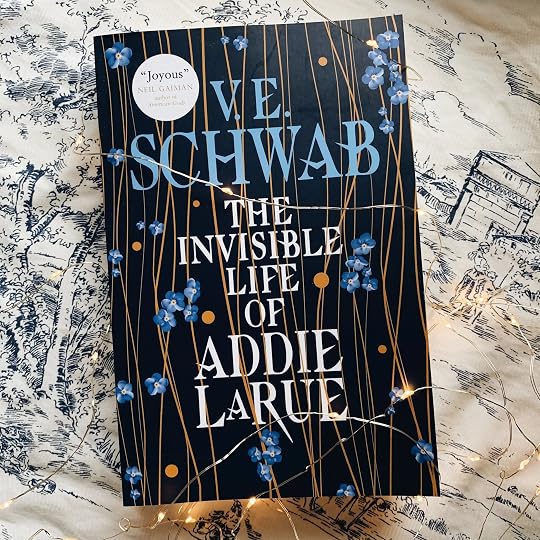
The Invisible Life of Addie LaRue – V.E. Schwab
“A girl is running for her life.”
Seven words, and every one is pulling double shifts. On the surface: a girl, fleeing, danger.
But this is a novel about a woman who trades an ordinary, forgettable life for an eternal, invisible one. So running for her life quietly also means running toward a life, running from a life, running out of time. On a reread, that opener has already handed you the entire book.
Opening lines and closing lines are almost always in conversation. The great ones start having that conversation from the very first word.
Steal This: When your draft is done, go back and interrogate your first line. Does it secretly know what your book is about? If it’s only a nice sentence, you can do better. Make it a promise your ending actually pays off.
So, Before You Send That Thing Out…Go and reread your own opening line. Out loud. Then ask the only question that matters:
What am I promising here, and does the rest of the book keep it?
Because that’s the real job of a first line. Not to be clever. Not to be pretty. To make a promise so specific
and so tempting that the reader can’t help but turn the page to watch you keep it.
Your reader is standing in the doorway with their coat still on, deciding whether to stay for the whole party. You get one sentence.
Make them a promise worth keeping.
Now it’s YOUR turn – Which opening line has never let go of you?
The post The Opening Line Is a Promise. appeared first on Vered Neta.
August 30, 2026
Mirror Structure: Subplots That Reflect Your Story.
Here’s a confession that will make your inner editor twitch: most of us treat subplots like garnish. A sprig of parsley on the side of the plate. Something to fill the gap while the real story catches its breath. The love interest gets a little arc. The best friend has a Thing going on. The B-team does their B-plot business, and then, when the main story needs the spotlight back, they politely clear the table.
And that’s fine. It works. But it also leaves an enormous amount of power on the floor.
Because the sneakiest, most satisfying subplots aren’t garnish at all. They’re the same meal, served on a second plate. They take your central theme, hand it to a completely different character, and say: now you carry it for a while.
When the audience feels that click, that “wait, this is the same story” shiver, you’ve hit mirror structure, and it’s one of the most reliable ways to make a story feel deep instead of just busy.
So let’s break down the six flavours of narrative mirror, with recent screen examples you’ll recognise, plus the actual move you can steal for your own work-in-progress. Grab a coffee. This is the good stuff.
6 Subplot Secrets from Screenwriting.

#1. The Echo: Say It Twice So It Sounds Like Truth.
What It Does: An echo mirror gives a secondary character the same lesson your protagonist learns through a different door.
When two people arrive at the same truth by different roads, the audience stops thinking “that’s this character’s opinion” and starts thinking “oh, this is just true.”
You’ve turned a moral into a law of the story’s universe.
Spot It: In Ted Lasso, Ted’s whole gospel is that stubborn kindness beats cynicism. On its own, that could read as naive. But watch Roy Kent (Brett Goldstein), gruff, furious, allergic to feelings, slowly, grumpily learn
to be gentle and open. Roy arrives at Ted’s truth from the opposite personality, and that second data point is what makes the show’s optimism land instead of curdle.
Steal The Move: Take the single most important thing your protagonist learns. Now hand a version of that lesson to a supporting character who’d never phrase it the way your hero does. Same destination, different vehicle.

#2. The Inversion: The Road Not Taken, Walking Around On Two Legs.
What It Does: Where the echo agrees, the inversion argues. This mirror gives you a character who wants the same fundamental thing as your protagonist: to matter, to be loved, to be free, but chases it in the opposite direction.
Each one throws the other into sharp relief. You can’t fully see the shape of a choice until you see its reverse.
Spot It: Barbie runs this beautifully. Barbie’s arc is about deconstructing a perfect identity and building a real, messy self. Ken’s arc is the exact photographic negative: a nobody desperate to matter who over-corrects straight into cardboard patriarchy. Neither story means as much alone. Together, they’re a conversation about how we build a self when the world hands us a role.
Steal The Move: Find your protagonist’s core wound or want. Now build a foil who shares that exact want but responds to it with the opposite strategy. Don’t make them enemies by default; make them two answers to the same question.

#3. The Warning: A Ghost From Your Protagonist’s Future.
What It Does: This is the mirror that makes your reader nervous. You plant a character who is already standing where your protagonist is heading: same path, further along, and it did not end well.
Every time the hero glances at them, the stakes tighten. It’s a crystal ball disguised as a supporting cast member.
Spot It: Parasite is the master class. The Kim family schemes their way up into a rich household, rung by desperate rung. Then they discover the previous housekeeper’s husband, living in a hidden bunker beneath the house. Trapped, feral, forgotten. That’s not a random twist. That’s the Kims’ future, waiting in the basement. The film shows you exactly what clawing upward costs by letting the protagonists meet the people it already broke.
Steal The Move: Ask where your protagonist ends up if they don’t change. Now give that outcome a face and a pulse, and put them onstage early. Let your hero look this ghost in the eye at least once.
#4. The Amplifier: The Same Fight, Cranked Up To A Scream.
What It Does: Sometimes the subplot isn’t smaller than the main plot. It’s enormous, humming in the background, giving a private, human-sized story a mythic weight.
The big conflict and the small one rhyme, and the small one borrows gravity from the large.
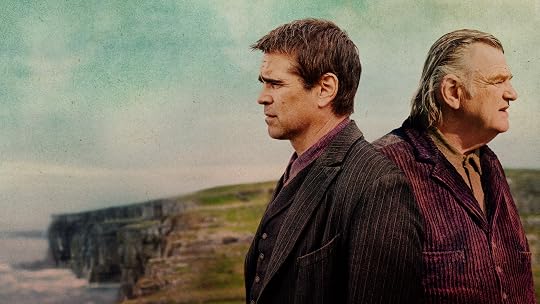
Spot It: The Banshees of Inisherin looks like a story about two men and a broken friendship. But across the water, the Irish Civil War is rumbling.
Former brothers-in-arms turned enemies over something that started small and spiralled into pointless, permanent damage.
Pádraic and Colm’s petty, escalating feud is that war, shrunk to two stubborn men on a rock. The gunfire drifting over the sea reminds you, again and again, that this tiny quarrel is the whole tragedy of a nation in miniature.
Steal The Move: Take your intimate, personal conflict and ask what its huge, societal-scale version would be. Put that big version in the background: a war, an election, a collapsing institution, and let the resonance do the heavy lifting for free.

#5 – The Doppelgänger: Your Protagonist Versus Themselves, Made Flesh.
What It Does: The most literal mirror of all. You take the protagonist’s internal war and split it into two characters who are, in some real sense, one person.
Now the fight the hero was having in their own head can happen out loud, with stakes, knives, and consequences.
Spot It: The Substance externalises this with horror-movie glee. Elisabeth Sparkle (Demi Moore), fading and terrified of ageing, uses a black-market drug to birth Sue (Margaret Qualley). A younger, “better” version of herself. They’re supposed to share one life, switching every seven days. Instead they go to war.
But it’s a war between one woman and her own self-loathing, made physical. Every wound one inflicts, the other feels, because they were never actually two people.
Steal The Move: Find the argument your protagonist keeps having with themselves. Give each side of that argument its own body. Bonus points if the audience only slowly realises the antagonist was the hero all along.
 #6. The Frame: The Outer Story Asking The Inner Story’s Question.
What It Does: When you’ve got a story-within-a-story, a dual timeline, or a “present day” narrator unspooling the past, the frame shouldn’t just be scaffolding.
The best frames are secretly asking the same dramatic question as the tale they contain. The outer story mirrors the inner one, and the two release their meaning together.
Spot It: Arrival pulls one of the great frame tricks in modern film. It opens on what looks like grief-soaked backstory: Louise raising a daughter who laughs, grows up, and dies young. We spend most of the movie reading those scenes as flashbacks. The sad past our heroine drags around while she learns to talk to aliens. Then the bottom drops out.
They were never flashbacks. They’re flash-forwards. Learning the alien language rewires how Louise experiences time, and the film’s own scrambled, out-of-order structure has been quietly doing the exact same thing to us the whole way through.
The frame doesn’t just contain the theme. The frame is the theme: would you still choose a life if you could see, from the very beginning, precisely how it’s going to break your heart?
Steal The Move: If your outer layer (a narrator, a second timeline, a framing device) isn’t wrestling with the same core question as your inner story, you’ve got scaffolding, not a mirror. Rewrite the frame until it aches for the same thing.
The One-Question Test.Here’s the gift you get from all six: a subplot stops being filler the moment it starts arguing with your main plot: agreeing, inverting, warning, amplifying, or reflecting. A subplot that just occupies space is plumbing. A subplot that mirrors is a second witness to your theme, and juries believe things a lot faster when two witnesses say them.
So before your next draft, hold your subplot up to the light and ask one question: If I deleted this storyline, would my main theme get any quieter?
If the answer is no, if the theme sails on, undimmed, your subplot isn’t mirroring anything. It’s just there.
But if the answer is yes, if cutting it would leave your central idea half-lit and lonely, then congratulations. You’ve built a mirror. And your reader is about to feel that gorgeous little click of recognition without ever knowing why.
Now go make your subplot do a full day’s work.
Now it’s YOUR turn – What subplot secretly was the main plot?
The post Mirror Structure: Subplots That Reflect Your Story. appeared first on Vered Neta.
August 23, 2026
How to Fix a Flat Scene.
Last week I got stuck on a chapter in the novel I’m drafting.
Nothing was wrong with it, exactly. Two of my characters had a conversation, and by the end of it they’d worked out that they needed to dig deeper into the case they were investigating, do more research,
and chase a new lead. On paper, the chapter did its job. The story moved forward. Box ticked.
And it was flat as a pancake.
I read it back three times trying to name what was missing, and I couldn’t. The dialogue was fine.
The information landed. The plot advanced. So why did it feel like watching someone fill in a form?
Then I did the thing I always do when a scene won’t come alive: I stopped thinking like a novelist and started thinking like a screenwriter.
Because screenwriting teaches you something prose writers are rarely forced to learn. Screen time is brutally expensive, and a scene that only does one thing gets cut in the edit. In a script, “it moves the story forward”
is not a defence; it’s the bare minimum.
The question a screenwriter is trained to ask is sharper, and far more useful: What else is this scene doing?
When I asked that of my flat little chapter, the answer was: nothing. It was moving the story and nothing else. A single-purpose scene, and single-purpose scenes are precisely the ones readers skim.
The scenes we actually remember, the ones that lodge in us for years, are quietly doing several jobs at once. That’s the whole trick.
Let me show you what I mean, and because I want these to stick, I’m reaching for film. We hold images far longer and far more strongly than we hold sentences, so a scene you’ve watched is a scene you can feel your way back into. Every example below is from the last ten years, so nobody can mutter “well, that worked in 1972.”
Here are the jobs you can load onto a scene so it stops merely functioning and starts landing.
7 Screen-Tested Tricks to Make Every Scene Do More.

#1. Give It A Second Agenda Underneath The First.
The surface of the scene is one thing. The real scene is what’s happening underneath it, a conversation about X that is secretly about Y.
Watch the opening of Lady Bird. A mother and daughter drive home from a college tour, teary and close over an audiobook.
And within two minutes they’re in a full-blown row about money, ambition and worth, which ends with the daughter throwing herself out of a moving car.
On the surface: a car journey. Underneath: the entire mother-daughter relationship, the class anxiety that drives the whole film, and a girl reckless enough to hurl herself into the road to win an argument.
The scene doesn’t “just” gets them home. It’s doing four other things while it does.
Your Version: Never let a scene be only its surface errand. Ask what it’s actually about, then write toward that.
#2. Reveal Character Through A Choice, Not A Description.
Don’t tell me who someone is. Put them in a moment where what they DO gives them away.
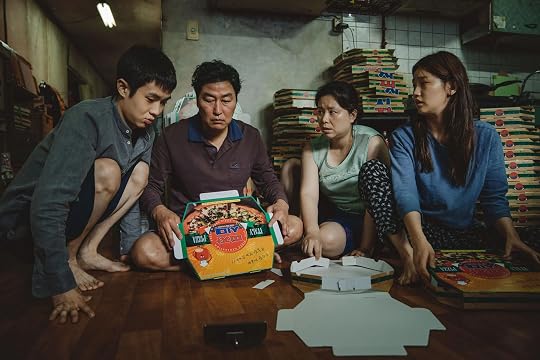
Parasite opens with the Kim family folding pizza boxes for a pittance and creeping around their flat hunting for a neighbour’s unsecured wi-fi.
Nobody explains that they’re poor, sharp, proud and endlessly resourceful. We watch them be it. By the end of the scene we know exactly who these people are, and we learned it entirely from behaviour, not a single line of exposition.
Your Version: Wherever you’ve written a paragraph describing a character’s nature, see if you can delete it and let one choice carry the weight instead.

#3. Let The Scene Argue The Theme Without Stating It.
The best scenes dramatise the question your whole story is asking, and, crucially, they do it while getting other work done, so the theme rides on top of a moving plot rather than stopping it dead.
Look at the recital in CODA. Ruby, the only hearing member of a deaf family, sings at her school concert.
The film cuts the sound to silence, dropping us into her parents’ experience of watching their daughter do the one thing they can’t share. Later that night her father asks her to sing again, just for him, and rests his hands on her throat to feel the vibrations he’ll never hear.
Nobody says a single word about what the film is about. But the entire theme is right there in that pair of hands. Love reaching across a gap that can’t be closed, and the same scene turns the father from resisting Ruby’s music to backing it, which is the pivot the whole story swings on. Theme, relationship and plot, all in one wordless beat.
Your Version: Somewhere in your draft, one scene should quietly stage the argument your book is making, while it’s also doing something else. Don’t have a character say the theme. Let an action mean it.

#4. Shift A Relationship – Someone Should Leave Changed.
Two people walk in with one dynamic between them and walk out with another.
In Top Gun: Maverick, Maverick visits his old rival Iceman, now gravely ill and unable to speak, typing his side of the conversation on a screen.
It’s a short scene. Very little “happens.”
But Iceman gives Maverick the one thing he can’t give himself: permission, a push, “It’s time to let go”, and a decades-long relationship completes and closes in a few quiet minutes. Nobody’s in a jet. The plot barely twitches. It’s one of the most-remembered scenes in the film.
Your Version: Mark the scenes where a relationship measurably moves. If you don’t have enough of them, you have a plot but not a story.
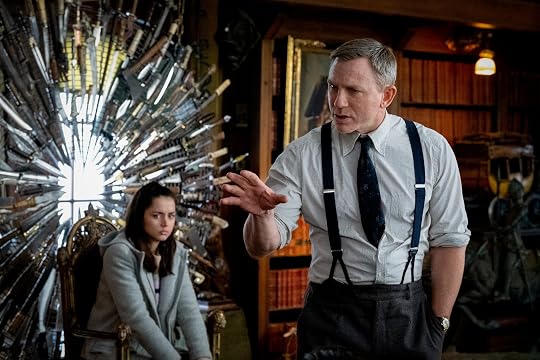
#5 – Plant Or Pay Off Something So The Scene Reaches Beyond Itself.
A scene can do work now and work later at the same time, a detail dropped here that detonates a hundred pages on.
Knives Out does this gorgeously. Early on we learn, almost as a throwaway joke, that Marta physically cannot lie without vomiting. It’s a character beat, good for a laugh.
It’s also the entire engine of the plot, and it pays off again and again right through to the end. One casual scene, quietly doing double duty across time.
Your Version: Comb your early chapters for details you can load, so a later scene lands like a trap you set on purpose
 #6. Run Tension Or Subtext Under A Calm Surface.
Keep something unresolved humming beneath the dialogue, even, especially, when the conversation is polite.
The “meet the parents” scenes in Get Out are all smiles and small talk on the surface, and quietly unbearable underneath.
Every courteous line is doing menacing work; the pleasantness is the threat. You lean in because you can feel something wrong that nobody in the room will name.
Your Version: A scene where everyone’s being nice, and nothing is at stake, is a scene with the tension drained out. Put something under it that neither character will say out loud.
 #7. Let The Atmosphere Carry Meaning.
Sometimes the where and the mood do a job all by themselves.
When Paul first steps onto Arrakis in Dune, the scene technically just delivers plot: they’ve arrived.
But the crushing scale, the heat, the sense of a planet that would happily kill you make the setting itself an antagonist. You don’t merely learn where you are. You feel the place as a force pressing down on the people in it.
Your Version: Ask whether your setting is a backdrop, or whether it’s actively doing something to the characters standing in it.
Back To My Flat Chapter.So, my two characters are working out that they need to do more research.
Once I stopped asking “does this move the story” and started asking “what else could it do,” the fixes came tumbling out. The same conversation could show me who these two are under pressure.
One of them attacking the dead end like a puzzle to be cracked, the other quietly rattled by it in a way they’d never admit, so the setback revealed character instead of just handing over information (job two).
And the one that finally made the chapter crackle: it could let the will-they-won’t-they tension surface for the first time, so that underneath two colleagues talking about a case there’s a current neither of them will name.
A beat where they almost, almost close the distance, then don’t, and that near-miss hangs over everything that follows (job three). The plot point stayed exactly the same. I just stopped making it carry the whole scene on its own.
That’s the test, and it’s a beautifully simple one to run on a second draft. Go through scene by scene and jot in the margin every job each one is doing. One job? Cut it, or fold it into its neighbour. Two? Solid. Three or four? Now you’re writing scenes people remember.
A word of warning, because I know some of you will hear “three jobs” as “cram in as much as humanly possible.” Don’t. Five agendas fighting for air makes a scene muddy and airless. Three is a sweet spot, not a scoreboard. The aim isn’t a busy scene; it’s a scene that reads as one smooth, single moment while doing quiet work on several floors at once.
Try This Out: Open your work-in-progress, find the flattest scene in it and ask it the screenwriter’s question: What else are you doing? Then make it answer.
Now it’s YOUR turn – What scene has stuck with you for years, and how many jobs was it doing?
Would love to get your input in the comment box below.
The post How to Fix a Flat Scene. appeared first on Vered Neta.
August 16, 2026
Pitch Your Book Without the Ick.
Confession time, and it’s an embarrassing one.
I have spent more than twenty years in marketing. I have taught marketing. I have stood in front of rooms full of clever people and explained how to make strangers want things.
And yet, the moment I have to pitch one of my own books, my mouth goes dry, my stomach drops, and a small, unhelpful gremlin perches on my shoulder to whisper: You are a fraud. Also, is it just me, or does this feel a little like standing on a street corner in a short skirt going “psst… wanna read my book?”
If you’ve felt that too, congratulations. You’re not broken. You’re a writer.
Let me tell you about the day I figured out why it happens, and, more importantly, how to make it stop.
The Moment It Clicked.Years ago I was pitching Things We Do For Love, a novel so close to my own bones it hurt. It was built on something my family actually lived through, Alzheimer’s. And everything that vicious disease drags in with it. Every single time I pitched it, I’d walk away feeling faintly dirty. Exposed. Like I’d handed a stranger my diary and then asked them for £9.99.
Then one day I changed what I was saying. Instead of “here’s my story,” I started saying: this book exists to give hope to families living with Alzheimer’s. To show that even inside something so devastating, there can be light.
And the dirty feeling vanished. Poof. Gone.
Because I finally understood the thing that had been tripping me up for years.
I’d been confusing two completely different activities. Selling vs. Marketing (they are NOT the same thing)
Here’s the distinction that will save your dignity:
Selling is “buy my thing.” It’s transactional. It’s one-directional. It’s you, grabbing a lapel, praying the card doesn’t decline. No wonder it feels gross. You’re essentially asking someone to hand you money.
Marketing is “here’s something that might matter to you, and here’s why.” It’s a connection. It’s matchmaking. It’s finding the right reader for your book and gently waving them over, while letting the wrong reader wander happily off to someone else’s shelf.
The fraud feeling comes from believing you have to sell. The relief comes from realising you only ever have to market, which is just a fancy word for telling the truth about your book to the people who’d genuinely love it.
Nobody feels like a con artist recommending a book they adore to a friend. Pitching your own book is the exact same act. You’ve just cruelly turned up the volume on your own ego.
So. Six Ways To Turn It Back Down.

#1. Remember You’re Marketing, Not Selling.
A salesperson needs every yes.
That pressure is exactly what makes pitching feel so grubby, because deep down you know your book isn’t for everyone, so flogging it to everyone feels a bit like lying.
Marketing sets you free from all that.
Your job isn’t to convert the whole room; it’s to find your people and let the rest wander happily off, no hard feelings.
Which means a “no thanks” isn’t rejection;
it’s just a wrong match. And wrong matches are useful: every no is one fewer disappointed reader leaving you a snippy one-star review.
So don’t pitch to the room. Picture one real reader who needs your book, and pitch to her. The right people lean in. The wrong ones were never yours to win.

#2. You’re Not The Product. The Story Is.
Half of that flustered, fraudy feeling comes from winging it.
Someone asks, “So what’s your book about?”, you hear yourself waffling, and the gremlin pounces: see? You don’t even know what your own book is about.
So don’t wing it. Build the thing in advance.
As a screenwriter, I live and die by the logline.
One sentence that captures the whole story with its emotional stakes baked in. Write yours. Then write a three-sentence version, and a chatty one-paragraph version. Now you’ve got a pitch for every occasion: the quick “ooh, what’s it about?” at a party, and the proper sit-down with an agent.
A prepared pitch doesn’t come out robotic; it comes out confident. Because you’re no longer fishing around for words. You’re just telling someone about your book, like a person who wrote a book would.
#3. Lead With Why, Not What.
This is the one that saved me with Things We Do For Love, so I’m handing it to you while it’s still hot.
A pitch that’s all what, “it’s about a woman whose mother has Alzheimer’s“, is just a plot summary wearing a name tag. Accurate, tidy, and instantly forgettable.
But a pitch that leads with why, “I wrote this so families facing Alzheimer’s know that something good can come from it too“, well, that’s a reason to care.
What is the box the book comes in. Why is the reason anyone bothers to open it. So lead with the why. Always.

#4. Steal Shamelessly From Your Reader-Self.
You recommend books to friends all the time without a flicker of guilt. “Oh my god, you HAVE to read this.”
No cringe. No gremlin. Just pure, unfiltered enthusiasm.
That’s the exact muscle you need.
Pitch your own book the way you’d rave about someone else’s that you happened to fall in love with. You already know how to do this. You just have to grant yourself permission to do it for your own work.

#5 – A Pitch Is A Gift — And Delivering It Is A Moral Obligation.
Here’s the reframe that changed everything for me.
You’re not taking something when you pitch. You’re offering something.
If it’s not for them, no harm done; they wander off, and you’ve lost precisely nothing. Fraud requires deception, and you’re not deceiving anyone. So you literally cannot be a fraud.
But it goes deeper than that. If you truly believe your story can help someone, comfort them, wake them up, make them feel less alone, then getting it into their hands isn’t self-promotion. It’s your responsibility. Keeping a book that could matter locked in a drawer because pitching feels awkward? That’s the actual crime.
And yes, sometimes the story is just for fun. Sometimes it’s a cosy crime caper (hello, Crime Cleaners), or a collection about women over sixty refusing to fade quietly into grandmother-shaped wallpaper (that would be Not Done Yet, because we still have dreams, thank you, and not all of them involve babysitting).
Fun counts too. Lord knows we could use more of it right now. Delivering a few hours of joy is a gift worth giving.
 #6. Practise Being Cringe Until It Stops Being Cringe.
Here’s what cranks the nerves up to eleven: treating a pitch like a recital.
A memorised speech you have to deliver flawlessly while someone sits there judging every word. Of course that’s terrifying. Nobody on earth enjoys an audition.
So stop performing and start chatting.
A pitch is a two-way thing. Open with a question: “Do you like slow-burn mysteries?” or “Ever read anything set in a nosy little Cotswolds village?“, and let the answer steer where you go next. Suddenly you’re not reciting at a stranger; you’re talking with a fellow human about a book you both might love.
And conversations? You already have brilliant ones every single day. This is just one of them, with slightly higher stakes and a much better story.
The TakeawayYou are not a fraud. You are a writer with a story someone out there actually needs, whether they need the light, the truth, or just a few delicious hours of escape.
So stop selling. Start marketing. Lead with your why.
And then, for heaven’s sake, go and tell people about your book. Somebody’s waiting for it.
Now it’s YOUR turn – Pitch me. Your book, one sentence, in the comments.
The post Pitch Your Book Without the Ick. appeared first on Vered Neta.
August 9, 2026
How Genre Secretly Controls Your Characters.
Here’s a thing nobody tells you in writing workshops: your character isn’t just built from backstory, wants, and a tragic flaw. They’re also built from genre.
Genre is the invisible physics engine running underneath every scene. It decides what counts as brave, what counts as normal, what a character is even allowed to feel out loud, and what “winning” even means for them.
Drop a character bred for one genre’s rules into another genre’s rules, and they don’t adapt. They just stop making sense. Like a fish that’s suddenly expected to climb a tree and everyone’s annoyed it’s bad at it.
Let’s break down exactly how this works, what happens when writers (accidentally or on purpose) move the goalposts, and what you can actually do with that on the page.
7 Character Secrets from Every Genre.
#1. Genre Decides What Counts As Strength.
In horror, hesitation is heroic.
The characters who survive in A Quiet Place are the ones who freeze, listen, and don’t act rashly. Evelyn Abbott’s whole arc is built on restraint and quiet competence.
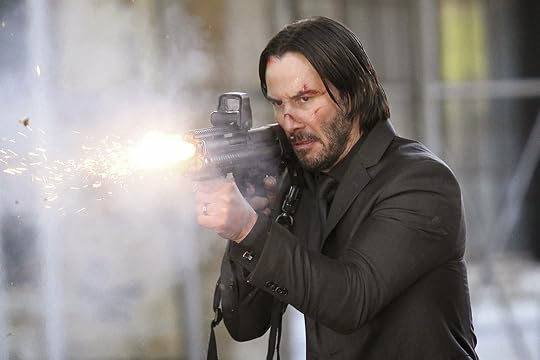
Now imagine transplanting her into a John Wick movie. Her caution wouldn’t read as wisdom anymore. It’d read as a character who’s in the wrong film, getting in the way of the plot.
Wick’s strength is decisive violence; hers is stillness. Same trait: patience under threat, coded as opposite values depending on genre.
For writers: before you label a beat “brave,” check what your genre already rewards. Courage only reads as courage if the genre’s stakes make the alternative, restraint, or action genuinely costly.

#2. Genre Sets the Emotional Vocabulary.
Some genres let characters say the quiet part loud. Beef runs almost entirely on that principle.
Its tragicomic engine is people saying the cruellest, truest thing out loud, escalating a road-rage feud into a two-person war of blunt confession.
That’s the genre’s contract: verbal detonation is the plot.
Now look at Aftersun, where a father and daughter circle enormous unspoken grief and almost never name it. Meaning lives in a look, a dance floor, a home-video frame rate, not dialogue.
If either character in Aftersun did a Beef-style monologue about their feelings, it wouldn’t feel honest; it’d feel like the wrong movie borrowed their faces.
For writers: decide early whether your genre trades in confession or omission, then make sure your character’s silence (or overshare) is a deliberate choice the story can justify, not just a mood you liked in the first draft.
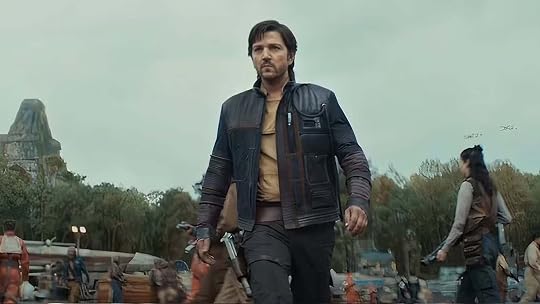
#3. Genre Determines What “Winning” Actually Means.
Every genre has its own scoreboard. Andor is a great study in running two at once: the political-thriller scoreboard.
Did the mission succeed, did the rebellion survive? And the character-drama scoreboard. Did Cassian become someone willing to die for something bigger than himself?
The show is disciplined about never letting one scoreboard quietly cancel the other out.
A mission can succeed while the personal cost is devastating, and the finale has to answer to both tallies, not just one.
For writers: know which scoreboard your climax is actually keeping score on. If your protagonist can “win”
by two genres’ metrics simultaneously, decide on the page which victory matters more. Otherwise the ending reads like it’s hedging its bets.
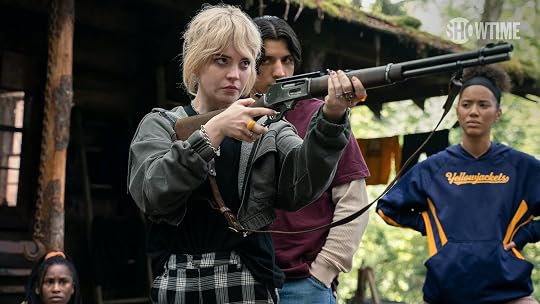
#4. Genre Decides What Trauma Is For.
In survival horror, trauma is fuel. It explains why someone does something reckless in act three. In literary drama, trauma is the actual subject, meant to be sat with, not weaponised.
Yellowjackets runs both simultaneously, and that’s the whole trick of the show. The teenage timeline treats trauma as a pressure cooker driving plot (desperation, hunger, ritual)
While the adult timeline treats the same events as unresolved psychological wreckage that therapy-speak can’t quite touch. It’s the same wound doing two structurally different jobs, because it’s living in two genres at once.
For writers: if you’re running two timelines or tones, don’t just double the plot, double the function of the wound. What fuels action in one register should curdle into something unresolved in the other.

#5 – Genre Sets the Statute of Limitations on Consequences.
Comedy has a reset button. Someone can be selfish, petty, or cruel in one episode and be forgiven by the cold open of the next, because the genre’s contract is “we’re here to feel good, not to litigate.”
Ted Lasso leans on this constantly. Characters get away with emotional messes that would sink a relationship in a straight drama, because the tone keeps signalling Don’t worry, we’ll fix this with a group hug in twenty minutes.
Compare that to Cobra Kai, which started as a nostalgic underdog comedy and increasingly asked its characters to face real injuries and real fallout. You can feel the show negotiating, sometimes uneasily, how much comic reset it’s still allowed to use.
For writers: know your story’s tone-reset policy before you write the apology scene.
If consequences don’t stick, the emotional stakes can’t fully stick either. Otherwise you’re asking the audience to feel something the format won’t let you pay off.
 #6. Genre Controls the Speed of Change.
Some genres compress growth into a handful of scenes. Others insist change is slow, resisted, and mostly failed at.
Everything Everywhere All At Once
gets away with Evelyn’s transformation from resentful, checked-out mother to someone choosing radical kindness, happening at lightning speed, because the genre’s own frenetic, everything-at-once metabolism makes rapid epiphany the whole point.
Now put that same speed into Past Lives, where two people’s entire unresolved history resolves through years of accumulated small silences and a single conversation. If Nora and Hae Sung suddenly had an Everything Everywhere-style multiverse-fuelled epiphany, the film’s whole restrained ache would evaporate.
For writers: match your character’s change-speed to your genre’s metabolism. A slow-cinema epiphany dropped into a high-concept genre film feels like a missed cue; a lightning-fast genre-style turn dropped into slow cinema feels like cheating.
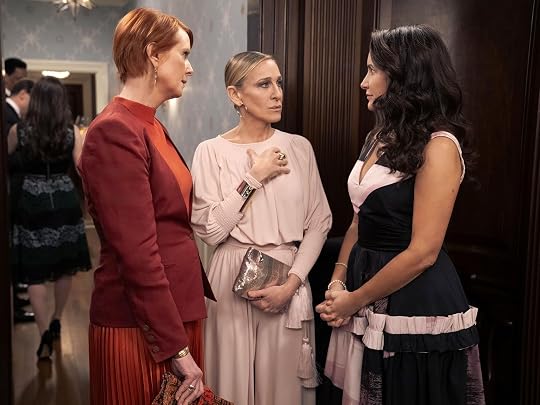
#7. What Happens When the Genre Changes Under a Character’s Feet.
Here’s the part that actually breaks characters: when a story shifts genre mid-run without recalibrating what its people are allowed to do, feel, or get away with.
And Just Like That is the clearest recent case study. Characters written for the banter-and-consequence-light rules of a romantic comedy got dropped into a tonally heavier, more socially self-aware drama. And audiences felt the mismatch instantly, even when they couldn’t name it.
The characters didn’t change. The rulebook did, and nobody rewired the characters to match it.
House of the Dragon wrestles with something similar. Early Game of Thrones ran partly on political-fantasy-adventure logic, where scheming had a gamesmanship to it.
House of the Dragon is playing a grimmer, tragedy-first genre, and characters who might have been darkly fun schemers in the old register instead read as bleak and joyless, because the show correctly refuses to let them enjoy it anymore.
Compare that to a genre-shift done well. Stranger Things‘ Steve Harrington starts as a teen-drama antagonist: smug, controlling, playing high-school hierarchy rules.
The show consciously moves him into adventure-comedy rules instead, and rebuilds his traits from scratch. The confidence becomes charm, the protectiveness becomes found-family loyalty. Same actor, same face, completely re-keyed internal logic. That’s the difference between a genre shift that breaks a character and one that resurrects them.
For writers: before a sequel, spinoff, or tonal pivot, run every major trait through one question: is this personality, or is this a coping mechanism built for the old genre’s rules? Recode on the page. Don’t just hope the audience won’t notice the ground shifting under them.
The Actual Takeaway (Because You’re Not Here for Vibes).If you’re moving a character across genres: sequel, spinoff, tonal pivot, adaptation, even just a shift in a later act of the same book, audit every trait and ask whether it’s a personality or a survival strategy for the old genre’s climate.
Traits built to survive one genre’s rules often need to be re-coded, not just carried over wholesale, or they’ll read as inconsistency instead of growth.
So next time a beloved character feels “off” in a sequel or a later season, don’t just blame the writing.
Check the genre. Odds are, someone changed the climate and forgot to tell the fish.
Now it’s YOUR turn – Any genre-swaps that broke a character for you?
Would love to get your input in the comment box below.
The post How Genre Secretly Controls Your Characters. appeared first on Vered Neta.
August 2, 2026
Why Your Unreliable Narrator Is Cheating Your Reader.
I want to tell you about the exact moment I understood what an unreliable narrator could actually do.
I was reading Alex Michaelides’s The Silent Patient. I’d been enjoying it well enough. Clean prose, a strong hook, a woman who won’t speak and the therapist determined to make her. And then, somewhere near the end, the book did a thing. I’m not going to tell you what. I’m not a monster.
But I will tell you that I put it down, stared at a wall for a full minute, and then flipped back forty pages
to check whether Michaelides had actually pulled off what I thought he’d just pulled off.
He had. It was all there. I’d simply read it wrong…because he’d let me.
That was the moment the trope stopped being a tidy definition in my head and turned into something
with real power. And ever since, I’ve been slightly obsessed with the difference between writers who
wield that power well and the ones who fumble it.
So let’s talk about it. First, let’s un-know what we think we know.
Here’s the trouble with “unreliable narrator”. We all half-understand it the instant we hear it.
Unreliable = can’t be trusted. Narrator = the one telling the story.
Brilliant. We’ve defined it and learned absolutely nothing.
Because the name hides the good part. To feel why an unreliable narrator is powerful, you have to remember what a narrator actually is, and it isn’t a person. It’s a lens.
The narrator is the only pair of eyes your reader is allowed to borrow. Every single thing the reader knows about your story, they know because the narrator handed it to them. That’s true in swaggering first person, and it’s true in the quietest close third; someone is always deciding what you get to see.
Which means the narrator isn’t just telling the story. The narrator is deciding what counts as the story.
And the second a reader suspects those borrowed eyes might be lying, or squinting, or pointedly looking
the wrong way, every fact they’ve collected goes straight back up for review.
That vertigo, that whole-book reappraisal, is the power. The twist is only the trigger.
It’s a whole family, not one trick
Once you see the narrator as a lens, “unreliable” stops being a single move and becomes a whole palette:
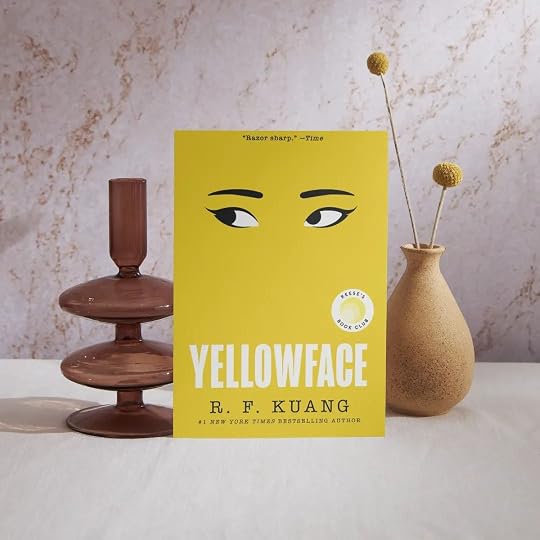
The Liar knows the truth and keeps it from you on purpose. Rarest and hardest, because it’s one wrong step from a con.The Deluded lies to themselves, and you get to watch. Think of the narrator of Yellowface, rationalising the indefensible in real time while you sit there wincing.The most gloriously fun kind to write.The Half-Blind sees the room perfectly and reads it completely wrong. Molly in The Maid hands you every detail and misinterprets all of them, so you end up doing the detective work.The Innocent simply doesn’t know what they don’t know. Piranesi narrates a world he’s been deceived about, and the truth assembles as gently as he does.The Rememberer tells it true…true to them. In The Affair, every point of view is a different film of the same afternoon, and nobody’s lying. They just remembered.
Notice how few of these involve outright lying. Unreliability is mostly about the shape of a person’s blind spot. It lives everywhere…including in history itself. We’ve been talking as if this is a crime-and-thriller gadget.
It absolutely isn’t.
Literary fiction runs on it. Kazuo Ishiguro has built an entire shelf out of narrators so quietly, heartbreakingly wrong about their own lives that you want to climb into the page and shake them.
Romance runs on it: half the genre is a narrator who’s the last person in the book to notice she’s in love. Memoir doesn’t just use it; memoir is it. One human being curating the myth of themselves, choosing which scenes make the final cut. The most unreliable narrator you will ever meet is a person describing their own divorce.
And then there’s the big one. History.
History doesn’t arrive from nowhere. It arrives from someone. Someone with a side, a grudge,
a reputation to burnish or bury. The victors write the textbooks. The survivors write the memoirs.
The losers mostly don’t get to write anything at all.
Every “primary source” is a narrator with an agenda, and every date and fact we inherited was chosen by a hand we can no longer see.
So when we sit down to write historical fiction, we aren’t smuggling unreliability into history. History was already the unreliable narrator. We’re just the first ones honest enough to say so out loud. (I think about this daily, writing a story that lives in two different centuries, both of which are lying to me with a completely straight face.)
Done Right Vs Done Lazily – Five Places It Lives Or Dies.Here’s the part you came for. The lazy versions nearly all fail in the same handful of ways, so here’s how to stay on the right side of each line.

#1. Play Fair – Plant The Clues.
A great reveal rewards a reread; a lazy one punishes it.
This is my Silent Patient forty-pages moment: I flipped back, and everything was there, in plain sight, quietly meaning something completely different from what I’d let it mean.
That’s the fair-play contract, honoured.
Mr Robot does the same on screen. It hides Elliot’s reality precisely because Elliot is hiding it from himself, yet it seeds the tells everywhere, and that matey “let me tell you a secret” he keeps murmuring straight down the lens is the biggest clue of all.
The lazy version, by contrast, drops out of a clear sky, and when you flip back there’s nothing to find,
because nothing was ever planted.
Quick Test: could a sharp reader, in principle, have caught it? If not, it isn’t a twist. It’s a cheat.
#2. Let Them Lie To Themselves, Not Just
To You.
The richest unreliability is self-deception you can see straight through. The narrator believes their own spin. And the daylight between what they say and what’s plainly true is the whole story.
Watch June rationalise her way through Yellowface; she never hides the theft from us, she justifies it, hammering together a taller and taller scaffold of self-serving logic while we wince at every plank.
The lazy cousin is the opposite move: the withhold. A narrator in deep first person who somehow never once thinks about the enormous secret they’re hiding. “I walked into the kitchen and did not, no sir, think about the body in the freezer.”
That isn’t a character being unreliable. That’s the author’s hand clamped over the character’s mouth, and readers feel the pressure of it every single time.
Writer’s Tip: a convincing self-deceiver doesn’t dodge the subject. She has a justification ready and waiting. So don’t write around the damning thing. Write your narrator’s excuse for it. Silence reads as the author hiding something. A confident, slightly-too-neat explanation reads as a person hiding it from herself… and that’s the gold.
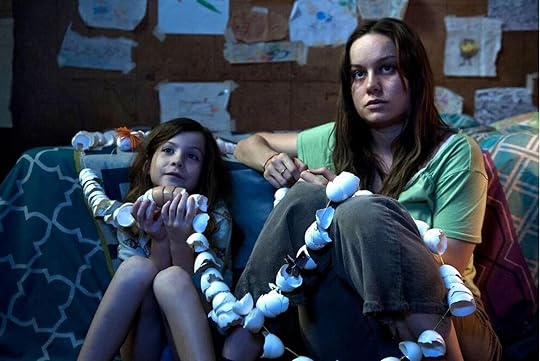
#3. Grow It From Character, Not Convenience.
The unreliability has to be this person’s specific way of being wrong. Their wound, their blind spot, their conditioning.
Five-year-old Jack narrates Room as a place of wonder rather than a prison, because a prison is all he has ever known; his blind spot isn’t a device, it’s his whole childhood.
The lazy move is the opposite: the bolt-on. Amnesia that turns up precisely when the plot needs a gap, a blackout that politely swallows the one scene that matters, an “I was too drunk to remember” doing the author’s dirty work of hiding information.
The Tell – If you could swap in a different narrator and the unreliability worked identically, it was never character. It was convenience.

#4. Trust The Gap.
Leave space and let the reader assemble the truth themselves. The click that happens in their head is a hundred times more satisfying than one you spell out.
It’s the whole engine of Big Little Lies.
We know someone died at the school trivia night, but the show refuses to tell us who or how, feeding us only the contradictory gossip of bystanders until we’ve quietly pieced the truth together ourselves.
The lazy version is the opposite reflex.
The villain-monologue reveal, where someone stops the story dead to explain the twist you were meant to feel. If your big turn needs a character to sit the reader down with a diagram, the unreliability didn’t do its job.
Quick Test – Find the paragraph where someone spells the twist out, and delete it. If the scene still lands, if the reader can feel what happened even without the caption, you’ve trusted the gap. If it collapses into confusion, resist the urge to paste the explanation back in. The real fix is almost always upstream: plant one more clue earlier, rather than lecture at the end.

#5 – Make It Mean Something.
The best recontextualisation deepens the point of the story, not just the plot.
Arrival spends its whole runtime quietly letting us mistake premonition for memory. We read Louise’s scenes with her daughter as her past, when they’re actually her future.
The moment that lands, the film stops being about aliens at all. It becomes a question: would you still choose love, knowing in advance exactly how much it’s going to cost you?
The turn doesn’t just startle you; it hands you the entire meaning of the story in a single move.
The lazy version is the opposite. A twist that exists only to be a twist, a narrator who was lying purely so the author could yell boo on the last page.
Ask Yourself – When the trick’s over, ask the only question that really counts: did I just understand something truer about people, or did I only get surprised?
Three Questions Before You Unleash Your Liar.The Reread Test: if someone flipped back, would the clues be there? (Fair play.)The Character Test: is this their particular blindness, or would anyone’s amnesia have done? (Character, not convenience.)The Meaning Test: when the mask comes off, do we understand something truer, or just get surprised? (Meaning.)Because here’s the thing I finally learned staring at that wall: an unreliable narrator done right isn’t a trapdoor you spring on your reader. It’s a magic trick you perform with them. And the best magic leaves the audience feeling clever, not conned. Because a reader who feels clever will follow you anywhere, and a reader who feels cheated just quietly closes the book.
So plant your clues. Let your liars lie to themselves. And trust your reader to be sharp enoughto catch you…eventually.
Now it’s YOUR turn – What’s the one twist that made you flip back and check?
Would love to get your input in the comment box below.
The post Why Your Unreliable Narrator Is Cheating Your Reader. appeared first on Vered Neta.
July 26, 2026
Great Scenes, Failing Story? Here’s Why.
I’m currently elbow-deep in my new novel, a romance, and about halfway through, I hit a wall. Every scene I’d written held up beautifully on its own. My critique partners loved them individually. And yet the whole middle third of the manuscript felt like wading through wet sand.
So I did what any recovering perfectionist does: I went back to page one to figure out what had actually
gone wrong.
It wasn’t the scenes. It was the thing that should have been holding several of them together…and wasn’t.
My sequences were failing, even though my scenes were fine.
Here’s the thing: I only caught it because I came to fiction through screenwriting, where scene and sequence are the actual ABCs of the craft. You learn the difference before you learn much else. Most novelists never get taught this distinction at all. Fiction craft books will talk your ear off about scene structure and barely mention what’s supposed to be happening between scenes to make them add up to something.
So let’s fix that gap.
First, The Quick Definitions.A SCENE is a single unit of dramatic action. One character, in one place, chasing one goal, hitting one obstacle. It has a beginning, a turn, and an end.
A SEQUENCE is a cluster of scenes, all orbiting one bigger dramatic question, that builds to its
own mini-climax before the story moves on to the next thing.
Think of it like this: a scene is a really good Instagram post. A sequence is the carousel, a set of images in a deliberate order, each one making the next swipe irresistible, all building to that final slide that makes the whole thing land. One great photo gets a like. A great carousel keeps people coming back.
7 Sequence Secrets from Screenwriting.
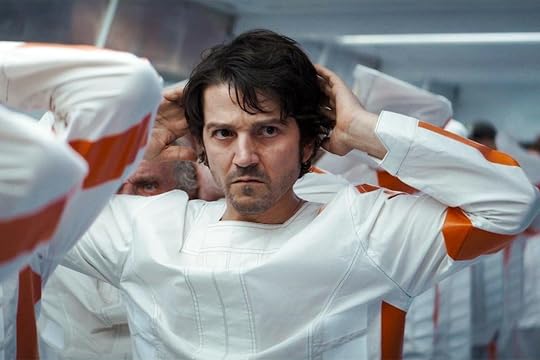
#1. A Sequence Is Not “Scenes That Happen to Be Near Each Other”.
The single most common mistake: treating proximity as connection. Three scenes in a row, all set at the same wedding, are not automatically a sequence.
They’re a sequence only if each one is escalating the same dramatic question.
Look at Andor and the Narkina 5 prison arc.
Every scene inside that factory floor is in service of one question. The counting of the shifts. The whispered conversations.
The growing awareness that no one is coming to rescue them. All of it asks the same thing: Can Cassian get these men to believe escape is possible before it’s too late?
Remove any one of those scenes and the escape doesn’t land the same way. That’s the tell of a real sequence: nothing in it is swappable.
Try This: Pick any three consecutive scenes from your WIP. Write one sentence for each, describing the dramatic question it answers. If the answers don’t build on each other, you’ve found scenes standing near each other, not a sequence.

#2. The “Great Scene, Now What?” Problem.
This is the energy-reset trap. You land a brilliant scene. A confrontation, a confession, a betrayal, and then, because you’ve poured everything into that one scene, the next one starts stone cold.
New location, new mini-goal, no acknowledgement that the emotional temperature of the story just changed.
A sequence refuses to let you reset.
Watch how Killing Eve handles it: the show never lets Eve, or us, catch our breath after a close call with Villanelle. The scene immediately following a near-miss doesn’t drop back into ordinary spy-procedural business; it carries the dread and the obsession straight through, so the pressure keeps compounding instead of resetting. That’s a sequence protecting its own momentum.
Try This: Find the scene immediately after your strongest, highest-tension scene. Read its opening paragraph in isolation. Does it acknowledge what just happened emotionally, or does it start as though nothing occurred? If it’s the latter, rewrite the opening beat so the temperature carries over.

#3. Every Sequence Needs One Driving Question.
Not a vague vibe. An actual, answerable, ideally ticking-clock question.
Daisy Jones & The Six builds its tour sequences around a driving question you could write on an index card: will the band survive its own success before it destroys the thing that made it good?
Every scene on that tour, the fights, the near-misses, the songs written in hotel rooms, is chasing that one question from a different angle.
That’s what makes the tour feel like a single unbroken slide toward the inevitable, rather than a string of “and then this happened” anecdotes.
Try This: Write the driving question for your current sequence in one sentence. If you can’t, that’s your revision task before you touch another line of prose.

#4. The Sequence Needs Its Own Turn.
Just like a scene ends on a turn (things are better, worse, or irrevocably different), a sequence needs its own, bigger turn.
A mini-climax that changes the story’s trajectory before you’re allowed to move on.
Watch how The Queen’s Gambit handles the Moscow tournament. It isn’t one long chess scene stretched thin. It’s a sequence of matches, each raising the stakes, each testing a different piece of Beth’s psychology.
All building up to the actual turn: the final game against Borgov, which resolves not just “who wins” but the entire emotional question the show’s been asking: whether she can do this clean. Notice that the turn belongs to the sequence, not to any single scene inside it.
Try This: Identify the biggest turn in your current sequence. Is it landing in one clear, isolated beat, or is it smeared thin across several scenes with no single moment carrying the weight? Give it its own beat.
#5 – Sequences Are the Secret to “I Couldn’t Put It Down”.
That breathless, one-more-chapter feeling readers rave about? It’s rarely down to individual scenes being exciting. It’s down to sequences that refuse to let the driving question resolve early.
Each scene answers it just enough to raise a new, sharper version of the same question.
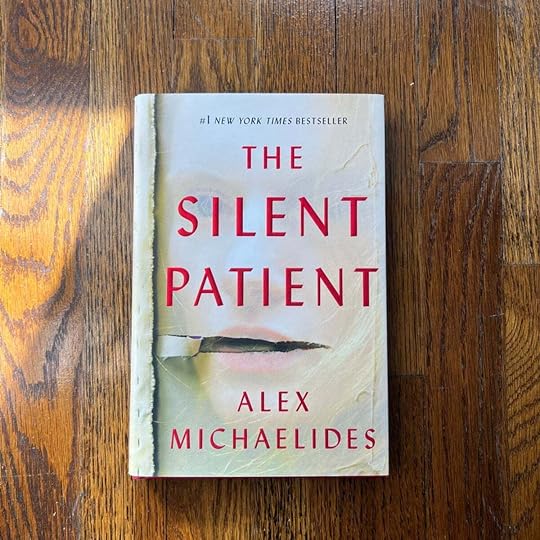
The Silent Patient is basically a masterclass in this. The therapy-session scenes between Theo and the mute Alicia could, individually, feel slow. Two people in a room, one of them silent.
But because every session is chasing the same unresolved question (why won’t she speak, and what is Theo not telling us either?), the sequence pulls you forward the way a single scene never could on its own. Slow scenes, relentless sequence.
Try This: In a sequence you suspect is dragging, check whether each scene answers your driving question just enough to sharpen it, or whether one scene quietly answers it in full, killing the tension for everything that follows.
 #6. The Shuffle Test: How to Tell If You Actually Have a Sequence.
Here’s a diagnostic you can run on your own manuscript right now. Take a run of three or four scenes you’ve written, back-to-back.
Ask: could I shuffle these into a different order without the story really minding?
If yes, if scene three could just as easily happen before scene one, you don’t have a sequence. You have a collection.
A real sequence resists reordering because each scene is a necessary escalation of the one before it, not just another example of the same situation.
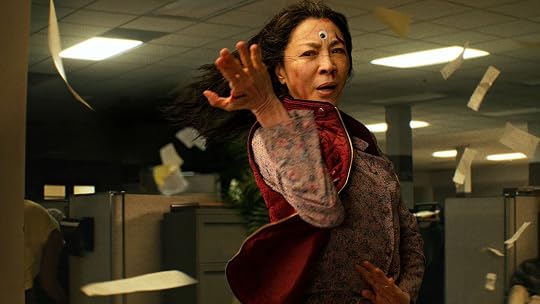
Everything Everywhere All at Once is the extreme version of this done right. Verse-jump to verse-jump, nothing is interchangeable, because each jump answers an increasingly specific version of
“what does Evelyn actually want.” Try to shuffle that film, and it falls apart instantly.
That’s not chaos. That’s a sequence with an iron grip on its own logic.
Try This: Literally do the shuffle test. Take a run of three or four scenes and try reordering them on paper.
If nothing breaks, you know exactly which cluster needs rebuilding

#7. Building Sequences in Revision: The Index Card Fix.
If you’re realising your first draft is scenes without sequences (welcome to the club, most first drafts are), here’s the practical fix.
Go through your manuscript and label every scene with its immediate goal on a single line.
Then look for clusters of scenes that share a broader goal above the individual ones. That’s your sequence. Give that cluster its
own index card with the driving question written across the top.
Fleabag is a lovely example of how tightly this can be done. The confession booth scene doesn’t work in isolation nearly as well as it works as the payoff of an entire sequence of near-misses and deflections with the priest that came before it. Pull that one scene out and put it on its own, and it’s good. Leave it where it belongs, at the top of its sequence’s arc, and it’s devastating.
Try This: Take one act of your manuscript. Give every scene a one-line goal, then group them into sequences by shared driving question, index-card style. Any scene that won’t fit a card is either misplaced or missing a job.
The Takeaway.Great scenes get you noticed. Great sequences get you read to the end. If your manuscript has plenty of the former and still isn’t landing, stop polishing individual scenes for a moment and go hunting for your sequences instead. Nine times out of ten, that’s where the real fix is hiding.
It’s certainly where mine was.
Now it’s YOUR turn – What’s the best sequence you’ve ever read or watched?
Would love to get your input in the comment box below.
The post Great Scenes, Failing Story? Here’s Why. appeared first on Vered Neta.
July 19, 2026
Why Isn’t My Writing Funny? Ask Mel Brooks.
Mel Brooks turned 100 on 28 June. To mark the occasion, the American Film Institute named
Blazing Saddles the funniest film ever made, knocking Some Like It Hot off a throne it had occupied
for decades, a verdict Brooks had been loudly insisting on since roughly 1974.
There is also, somehow, a Spaceballs sequel arriving in 2027. The man has outlived most of his critics,
several film genres, and at least one Hollywood studio, purely through the medicinal power of being funny
on purpose.
Which raises the question every writer eventually whispers into their third coffee: how do you do that on purpose? Comedy feels like the one thing you can’t reverse-engineer. Tragedy, you can outline.
Suspense has a formula you could teach a Labrador. But funny seems to either happen or sit there on the page wearing a little paper hat, waiting for a laugh that never comes.
It isn’t magic.
Brooks spent eighty years proving comedy is a craft with rules; he just broke the ones that deserved it. Here are seven of those rules, with evidence from the master and from people still alive enough to collect a paycheque.
7 Comedy Rules from Mel Brooks.
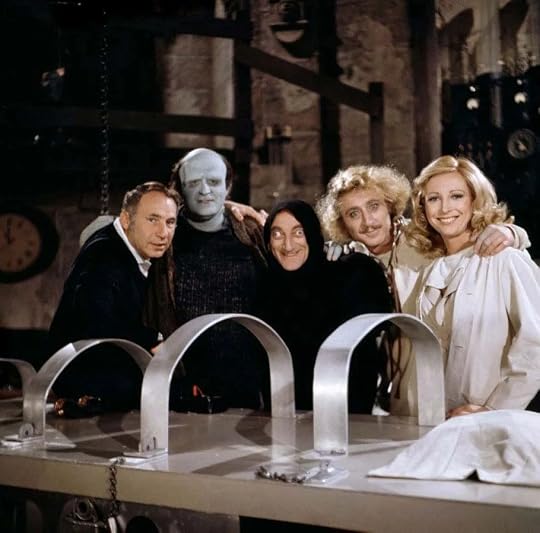
#1. Be Specific, Because Vague Is The Enemy Of Funny.
“A man fell over” is not a joke.
“A man in a rented tuxedo fell into the only open grave at his ex-wife’s wedding” is at least auditioning to be one.
Specificity does the comedic heavy lifting because the precise detail is what makes a reader see it, and you cannot laugh at what you can’t see.
Brooks understood this in his bones.
In Young Frankenstein, the monster’s brain isn’t merely “the wrong one”; it belonged to “Abby Normal.” One invented name, and a whole creature’s behaviour suddenly makes sense and is funnier for it.
Compare Barbie, which mines comedy from the brand-specific absurdities of the doll itself, the permanently arched feet, the beach that is only ever the concept of beach. Greta Gerwig didn’t write “a doll’s world is strange.” She wrote the exact strangeness down to the heels.
The Takeaway: When a line isn’t landing, it’s usually too general. Zoom in until it’s uncomfortably exact.
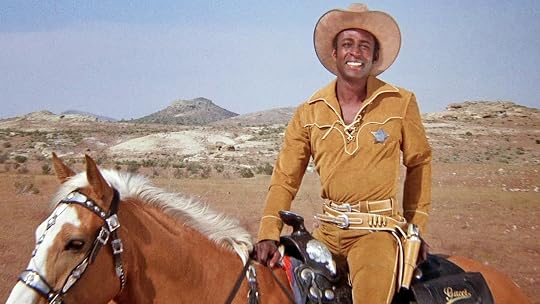
#2. Punch Up, And Earn The Taboo.
Brooks made a Western whose villains are racists, a musical in which Nazis sing and dance, and a Spanish Inquisition production number. People sometimes mistake this for shock for its own sake. It isn’t.
In Blazing Saddles, the joke is never the Black sheriff; it’s the slack-jawed bigotry of the townsfolk, who are humiliated relentlessly for ninety minutes. The target is the powerful and the stupid, never the vulnerable.
That’s the difference between satire and cruelty, and it’s why Jojo Rabbit works while a lesser film would curdle. Taika Waititi plays Hitler as a needy imaginary friend, an idiot, a punchline, and a coward, which is the most insulting possible thing to do to a dictator.
Mockery is a weapon.
The target in Jojo Rabbit isn’t the tragedy of WWII; the target is the fragile, pathetic ego of fascism.
The Takeaway: Before you write the bold joke, check who’s bleeding at the end of it. If it’s the powerful, swing harder. If it’s the powerless, you’ve stopped writing comedy and started writing cruelty.
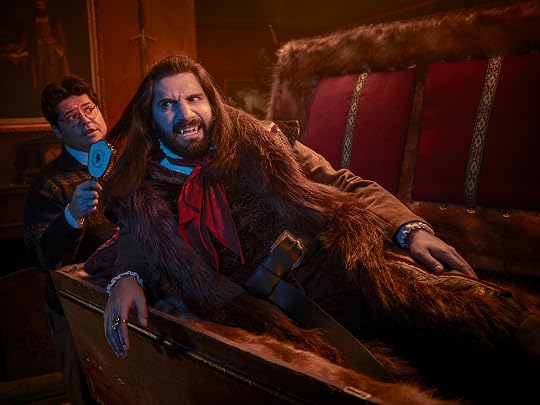
#3. Play It Utterly Straight.
The single most common mistake new comic writers make is letting the characters know they’re in a comedy. Nobody winks.
The funniest people in any scene are the ones taking the ridiculous situation with total, tragic seriousness.
This is the entire engine of Gene Wilder in Young Frankenstein, a man passionately, sincerely insisting he is not his grandfather while standing in a castle full of evidence to the contrary.
He isn’t doing bits. He’s having a genuine emotional crisis that happens to be hysterical.
The modern gold standard is What We Do in the Shadows, where centuries-old vampires bicker about the washing-up rota with the deadpan conviction of a documentary about flatmates.
The horror is played for real; that’s precisely why it’s funny.
The takeaway: your characters should want their goals desperately. The comedy is the reader’s, not theirs.
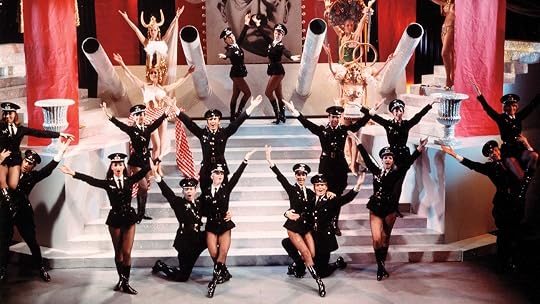
#4. Master The Turn – Comedy Is Rhythm
On The Page.
A joke is a tiny act of misdirection: you lead
the reader confidently in one direction, then yank the rug.
The mechanics are musical. Setup, setup, turn. The rule of three exists because two examples establish a pattern and the third gets to violate it.
“Springtime for Hitler,” the deliberately appalling showstopper in The Producers, is built entirely on escalation, each verse more lavishly tasteless than the last, until the audience’s jaws are somewhere near the floor.
The comedy lives in the build. On the page, this is about controlling exactly when the reader gets the information.
Palm Springs does this with structure itself: the reveal that the love interest is also trapped in the time loop lands like a massive punchline because the film withheld that information until precisely the right beat.
But this structural misdirection doesn’t just apply to big plot twists; it applies to the literal syntax of your sentences. If the reader’s brain can predict the end of your sentence halfway through it, the laugh dies. You have to hide the turn until the absolute last second.
The Takeaway: Read your funny lines aloud. If the surprising, joke-delivering word isn’t the final word of the sentence, rewrite it until it is.
#5 – Build The Joke Into The Character, Not On Top Of Them.
Detachable gags, the kind you could lift out and drop into any other scene, are the styrofoam packing peanuts of comedy.
They fill space and nourish no one. The jokes that last grow out of who someone is.
Hedley Lamarr in Blazing Saddles is funny because of his bottomless, fragile vanity, including his fury at being called “Hedy.”
The comedy is inseparable from the man.
The contemporary masterclass is Bridesmaids, where the entire dress-shop catastrophe is character-driven: it’s funny because we know exactly how broke, jealous, and barely holding on Annie is.
Strip the character out, and you have people being ill in expensive clothes. Leave her in, and it’s a tragedy
with the best timing of the decade.
The Takeaway: If you can give your best joke to any other character without changing it, it isn’t a character joke yet. Make it one.
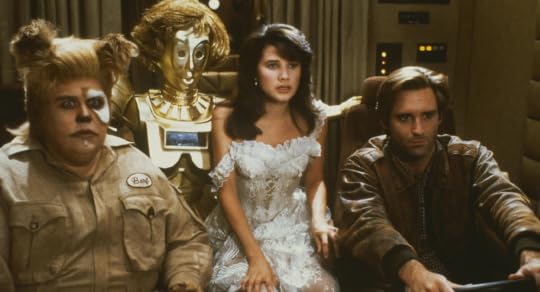 #6. Surprise Yourself, Then Surprise
The Reader.
Brooks loved breaking the frame entirely.
The cowboys in Blazing Saddles literally ride off the set into a neighbouring musical number.
Spaceballs features a character watching a VHS of the very film he’s in to find out what happens next, and a merchandising gag so cheerfully cynical it predicted the next forty years of cinema.
The comedy is the audacity… the swerve nobody saw coming.
Deadpool built a franchise on exactly this energy, the hero turning to the camera to complain about his own budget and studio. But notice what makes it work, because it’s the same principle from Tip #2, wearing a disguise. Deadpool isn’t laughing at his budget; he’s genuinely, furiously stressed about it.
The Spaceballs characters watching that VHS aren’t winking at us; they’re panicking, because the film is about to catch up to real time and trap them.
Breaking the fourth wall only lands when the character takes the broken reality completely seriously. They’re still playing it straight; they’ve just been handed a more ridiculous world to be sincere about. Wink at the audience and the joke dies. Be desperate inside the absurdity, and it soars.
The Takeaway: When you’ve written the obvious version of a scene, ask what the reckless version looks like. Then ask if you’re brave enough to write it. (Hint – You are.)
#7. Cut Everything, Then Cut The
Laugh Shorter.
Comedy has no patience for the extra word.
A beat too long and the soufflé collapses. Brooks made Silent Movie, a feature-length comedy with exactly one spoken word in it, delivered perfectly, by a famous mime, which is the entire philosophy of comic economy compressed into a single gag.
Say less. Trust the reader. Get out.
The best modern comic scripts are merciless self-editors.
The Grand Budapest Hotel is wall-to-wall jokes precisely because Wes Anderson never lets one breathe past its welcome; the film moves at the clip of a man who knows exactly how funny he is and refuses to wait around for applause.
On the page, this means killing your explanation. If you’ve landed the joke, do not add the sentence that tells the reader it was a joke. That sentence is where comedy goes to die.
The Takeaway: Find your funniest line, then delete the sentence after it. That sentence is almost always an apology.
The Punchline.Brooks once described his own work as rising “below vulgarity,” which is both a joke and a genuine artistic statement. He aimed low on purpose and hit something profound by accident, over and over, for a century.
The lesson underneath all seven of these is the one he embodied longest: comedy is not a lesser form.
It’s the hardest thing to do well. It’s the first thing to vanish the moment a writer gets self-conscious.
And, if Mel is right about laughter, it might be the thing keeping you alive.
So write the bold version. Cut it shorter. And for heaven’s sake, let your characters take themselves
seriously; somebody in the scene has to, and it certainly shouldn’t be you.
Happy 100th, Mel. It’s good to be the king.
Now it’s YOUR turn – What film makes you laugh every time, even when you know every beat?
Would love to get your input in the comment box below.
The post Why Isn’t My Writing Funny? Ask Mel Brooks. appeared first on Vered Neta.
July 12, 2026
BOOK VS. TV SHOW: Shōgun.
Do we really need to adapt a 1,200-page doorstopper about feudal Japan twice?
Apparently, we do. James Clavell’s Shōgun has now been turned into two of the most celebrated television events of their respective decades, once in 1980, once in 2024, separated by forty-four years and, it turns out, by a complete revolution in how we tell stories and who we let tell them.
Here’s what fascinates me as a writer. The novel didn’t change. The history didn’t change. What changed was us, and you can read that change with almost forensic precision simply by asking one question of each version: whose eyes are we watching through?
Because the answer keeps moving. And every time it moves, it tells you less about 1600 Japan than about the year the adaptation was made. Shōgun isn’t just a great story that got told three times. It’s a mirror held up to three different cultural moments. So let’s hold it up.
 The Book.
Clavell published Shōgun in 1975, and it became one of those era-defining bestsellers that seemed to live on every bedside table for a decade.
The setup is irresistible. The year is 1600. John Blackthorne, an English pilot, is shipwrecked on the coast of Japan, the first Englishman ever to set foot there.
He arrives ignorant, arrogant, and utterly out of his depth, and he is promptly swept into a lethal game of thrones between rival warlords as the country teeters on the edge of civil war.
Chief among them is the brilliant, patient Lord Toranaga, who sees in this strange “barbarian” a useful pawn. Standing between the two of them, translating every word, is the noblewoman Lady Mariko, a Christian convert with a tragic past and divided loyalties, and the woman Blackthorne falls for.
It’s a sprawling epic of politics, faith, war, and forbidden love, and Clavell anchored it in real history: Blackthorne is loosely based on the navigator William Adams, Toranaga on the future shogun Tokugawa Ieyasu, and Mariko on the martyred noblewoman Hosokawa Gracia.
But notice the architecture. We enter Japan as Blackthorne does, confused, frightened, learning the rules one humiliation at a time. The whole novel is built to make the reader a foreigner.
And that is a brilliant, efficient piece of craft: the outsider-hero is the oldest trick in the book for making an unfamiliar world legible. It also makes a quiet, telling decision. It decides that the person worth following in this world is the Englishman.
The 1980 Mini-Series. The first adaptation arrived in 1980, on NBC, in the golden age of the television event, the era that Roots had kicked open three years earlier.
It starred Richard Chamberlain, the reigning king of the romantic mini-series, as Blackthorne, with the legendary Toshiro Mifune as Toranaga and Yoko Shimada as Mariko.
It was an enormous gamble that paid off spectacularly. The series drew one of the largest audiences in television history, second only to Roots, and sent Clavell’s paperback soaring back up the bestseller lists. For millions of Americans, it was their first real glimpse of feudal Japan.
And it made one truly radical creative choice, the one that defines it. The Japanese dialogue ran almost entirely without subtitles. The producers’ logic was elegant: what Blackthorne doesn’t understand, the audience shouldn’t understand either. We are stranded exactly where he is stranded. (Orson Welles popped up now and then in voiceover to throw us a rope.)
As a piece of POV discipline, it’s genuinely bold. I admire the nerve of it. But sit with what it actually does.
It takes the book’s outsider perspective and welds it into the very form of the show.
Japan stays beautiful, dangerous, and fundamentally unknowable. The Japanese characters become an exquisite, opaque backdrop to one Englishman’s adventure.
And it mirrors its moment perfectly: 1980 America was intensely curious about a rising Japan, but perfectly content to view it from the outside, as spectacle, through Western eyes.
 The 2024 TV Show.
Then came FX’s Shōgun… and it didn’t just remake the story. It rebuilt the engine.
Showrun by the married team of Justin Marks and Rachel Kondo, the 2024 version starred Hiroyuki Sanada as Toranaga, Anna Sawai as Mariko, and Cosmo Jarvis as Blackthorne.
It arrived in a landscape that Parasite and Squid Game had already transformed, a world where Western audiences had finally learned to read subtitles and love it.
So this time, every line of Japanese is subtitled. And that single decision changes everything, because we are no longer trapped inside Blackthorne’s ignorance. We sit inside Toranaga’s mind as he plots ten moves ahead.
We feel the weight of Mariko’s faith and her grief. Blackthorne, far from being our hero, becomes one disoriented thread in a far richer tapestry, and frankly, he fades into the background for long stretches, which is rather the point.
The numbers told the story. The series won a record-breaking 18 Emmys, became the first non-English-language show ever to win Best Drama, and made Sanada and Sawai the first Japanese actors to win Emmys. This was not a niche prestige curio. It was the most awarded drama season in television history.
 Changes and Additions.
This is where it gets delicious for anyone who loves the craft, because almost every change flows from that one re-centred point of view.
The subtitles. I’ve already made the case, but it bears repeating because it’s the master key.
In 1980, no subtitles meant one perspective, the Englishman’s.
In 2024, full subtitles mean many perspectives, and suddenly the story can live inside Toranaga, Yabushige, Ishido, and Mariko.
The plot doesn’t change. The whose-story-is-this changes completely.
Toranaga moves to the centre. Look at the billing: Sanada is top-billed, above Blackthorne.
The book and the 1980 series treated Toranaga as the inscrutable chess master moving the foreigner around the board. The 2024 series lets us into the chess master’s head and, in doing so, quietly announces that this was always his story, not the visitor’s.
 Mariko gets her interiority back. This is the change I love most. In the older versions, Mariko risks becoming the beautiful, doomed love interest, the translator who exists to bridge the hero to his world.
The 2024 series gives her an inner life equal to anyone’s: her faith, her shame, her long-plotted act of defiance. Her arc shifts from a romance subplot to the spine of the whole season. (Anyone who’s ever watched a story hand its quietest woman the sharpest blade knows exactly why this lands.)
Blackthorne gets demoted… on purpose. The biggest “change” is really a subtraction.
By stripping Blackthorne of his automatic centrality, the show transforms the theme itself.
It stops being “a man finds himself in an exotic land” and becomes “a civilisation fights for its own future, with a foreigner stumbling through the edges of it.” Same events. Opposite meaning.
A few craftier touches. Both screen versions keep the clever convention of rendering the Portuguese characters’ speech as English, so we feel the language barrier without drowning in it. And the 2024 finale makes a daring move: it withholds the enormous battle you’ve been bracing for and lands instead on Toranaga’s interior strategy, trusting that a man’s hidden intentions are more gripping than a thousand swords.
As one of its creators joked while collecting yet another statue, they greenlit an expensive, subtitled, Japanese-language period piece whose climax hinges on a poetry competition.
And it worked.
 Verdict
I’ll be blunt, because this one isn’t close.
The book and the 1980 mini-series have not aged well. I say that with real affection.
Clavell laid the foundation that made everything that followed possible, and Chamberlain’s series was a brave, beautiful thing for its time.
But both are products of an era that assumed the only way into Japan was through a Western man’s eyes, and that assumption now feels like a window we’ve simply outgrown.
Watching them today, you feel the distance.
The 2024 Shōgun is, without question, the superior work, and not only for the more honest storytelling. It is breathtaking at every level of craft: the attention to historical and cultural detail, the discipline of the writing, the painterly artistry of every single frame. It’s one of the most beautiful things ever put on a screen.
But the real reason it wins goes beyond any one production. It marks a genuine breakthrough in how we watch, proof that a subtitled, non-English, culturally specific story can be the most decorated drama in television history. It didn’t just adapt a novel better than its predecessor.
It moved the boundary of what mainstream audiences will embrace, and held the door open for every global story that comes after it.
That’s the deepest lesson here for us as writers. A source novel is a fixed canvas. What each generation chooses is where to stand, and where you choose to stand is never a neutral, technical decision. It’s an argument about whose story matters. The migration of Shōgun‘s point of view, from Blackthorne’s eyes outward to Toranaga’s and Mariko’s, is the whole history of that argument, told three times
Now it’s YOUR turn – Team Book or Team Show — which version won your heart and why?
Would love to get your input in the comment box below.
The post BOOK VS. TV SHOW: Shōgun. appeared first on Vered Neta.

