
Vered Neta's Blog
July 26, 2026
Great Scenes, Failing Story? Here’s Why.
I’m currently elbow-deep in my new novel, a romance, and about halfway through, I hit a wall. Every scene I’d written held up beautifully on its own. My critique partners loved them individually. And yet the whole middle third of the manuscript felt like wading through wet sand.
So I did what any recovering perfectionist does: I went back to page one to figure out what had actually
gone wrong.
It wasn’t the scenes. It was the thing that should have been holding several of them together…and wasn’t.
My sequences were failing, even though my scenes were fine.
Here’s the thing: I only caught it because I came to fiction through screenwriting, where scene and sequence are the actual ABCs of the craft. You learn the difference before you learn much else. Most novelists never get taught this distinction at all. Fiction craft books will talk your ear off about scene structure and barely mention what’s supposed to be happening between scenes to make them add up to something.
So let’s fix that gap.
First, The Quick Definitions.A SCENE is a single unit of dramatic action. One character, in one place, chasing one goal, hitting one obstacle. It has a beginning, a turn, and an end.
A SEQUENCE is a cluster of scenes, all orbiting one bigger dramatic question, that builds to its
own mini-climax before the story moves on to the next thing.
Think of it like this: a scene is a really good Instagram post. A sequence is the carousel, a set of images in a deliberate order, each one making the next swipe irresistible, all building to that final slide that makes the whole thing land. One great photo gets a like. A great carousel keeps people coming back.
7 Sequence Secrets from Screenwriting.
#1. A Sequence Is Not “Scenes That Happen to Be Near Each Other”.
The single most common mistake: treating proximity as connection. Three scenes in a row, all set at the same wedding, are not automatically a sequence.
They’re a sequence only if each one is escalating the same dramatic question.
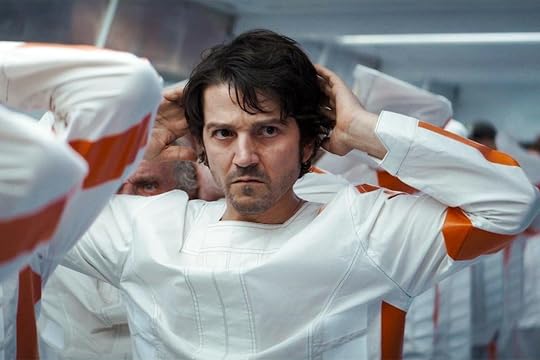
Look at Andor and the Narkina 5 prison arc.
Every scene inside that factory floor is in service of one question. The counting of the shifts. The whispered conversations.
The growing awareness that no one is coming to rescue them. All of it asks the same thing: Can Cassian get these men to believe escape is possible before it’s too late?
Remove any one of those scenes and the escape doesn’t land the same way. That’s the tell of a real sequence: nothing in it is swappable.
Try This: Pick any three consecutive scenes from your WIP. Write one sentence for each, describing the dramatic question it answers. If the answers don’t build on each other, you’ve found scenes standing near each other, not a sequence.
#2. The “Great Scene, Now What?” Problem.
This is the energy-reset trap. You land a brilliant scene. A confrontation, a confession, a betrayal, and then, because you’ve poured everything into that one scene, the next one starts stone cold.
New location, new mini-goal, no acknowledgement that the emotional temperature of the story just changed.
A sequence refuses to let you reset.
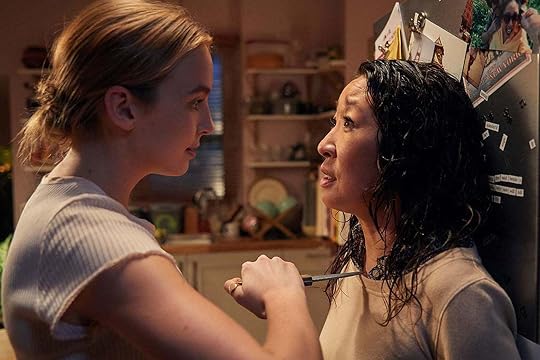
Watch how Killing Eve handles it: the show never lets Eve, or us, catch our breath after a close call with Villanelle. The scene immediately following a near-miss doesn’t drop back into ordinary spy-procedural business; it carries the dread and the obsession straight through, so the pressure keeps compounding instead of resetting. That’s a sequence protecting its own momentum.
Try This: Find the scene immediately after your strongest, highest-tension scene. Read its opening paragraph in isolation. Does it acknowledge what just happened emotionally, or does it start as though nothing occurred? If it’s the latter, rewrite the opening beat so the temperature carries over.
#3. Every Sequence Needs One Driving Question.
Not a vague vibe. An actual, answerable, ideally ticking-clock question.
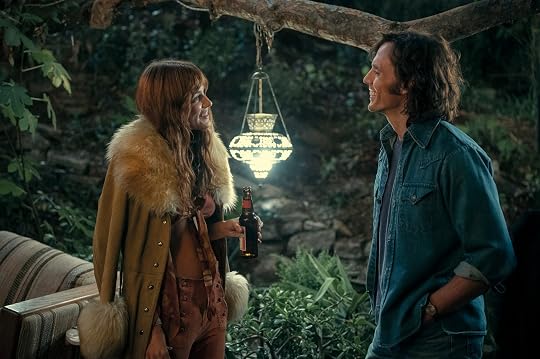
Daisy Jones & The Six builds its tour sequences around a driving question you could write on an index card: will the band survive its own success before it destroys the thing that made it good?
Every scene on that tour, the fights, the near-misses, the songs written in hotel rooms, is chasing that one question from a different angle.
That’s what makes the tour feel like a single unbroken slide toward the inevitable, rather than a string of “and then this happened” anecdotes.
Try This: Write the driving question for your current sequence in one sentence. If you can’t, that’s your revision task before you touch another line of prose.

#4. The Sequence Needs Its Own Turn.
Just like a scene ends on a turn (things are better, worse, or irrevocably different), a sequence needs its own, bigger turn.
A mini-climax that changes the story’s trajectory before you’re allowed to move on.
Watch how The Queen’s Gambit handles the Moscow tournament. It isn’t one long chess scene stretched thin. It’s a sequence of matches, each raising the stakes, each testing a different piece of Beth’s psychology.
All building up to the actual turn: the final game against Borgov, which resolves not just “who wins” but the entire emotional question the show’s been asking: whether she can do this clean. Notice that the turn belongs to the sequence, not to any single scene inside it.
Try This: Identify the biggest turn in your current sequence. Is it landing in one clear, isolated beat, or is it smeared thin across several scenes with no single moment carrying the weight? Give it its own beat.
#5 – Sequences Are the Secret to “I Couldn’t Put It Down”.
That breathless, one-more-chapter feeling readers rave about? It’s rarely down to individual scenes being exciting. It’s down to sequences that refuse to let the driving question resolve early.
Each scene answers it just enough to raise a new, sharper version of the same question.
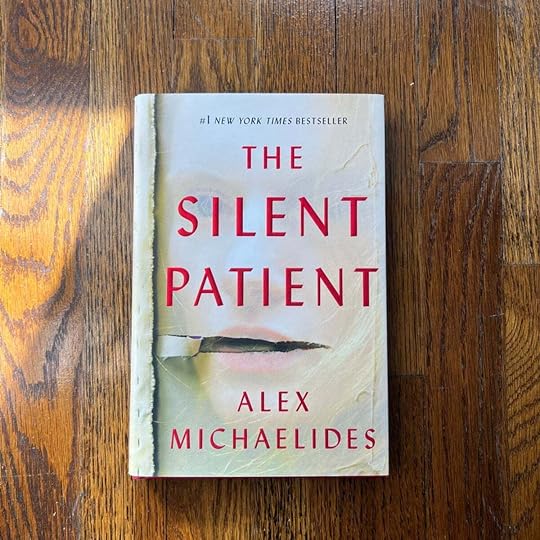
The Silent Patient is basically a masterclass in this. The therapy-session scenes between Theo and the mute Alicia could, individually, feel slow. Two people in a room, one of them silent.
But because every session is chasing the same unresolved question (why won’t she speak, and what is Theo not telling us either?), the sequence pulls you forward the way a single scene never could on its own. Slow scenes, relentless sequence.
Try This: In a sequence you suspect is dragging, check whether each scene answers your driving question just enough to sharpen it, or whether one scene quietly answers it in full, killing the tension for everything that follows.
 #6. The Shuffle Test: How to Tell If You Actually Have a Sequence.
Here’s a diagnostic you can run on your own manuscript right now. Take a run of three or four scenes you’ve written, back-to-back.
Ask: could I shuffle these into a different order without the story really minding?
If yes, if scene three could just as easily happen before scene one, you don’t have a sequence. You have a collection.
A real sequence resists reordering because each scene is a necessary escalation of the one before it, not just another example of the same situation.
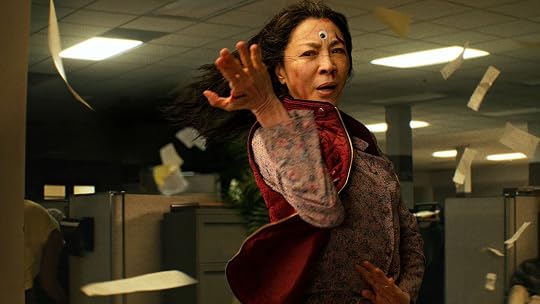
Everything Everywhere All at Once is the extreme version of this done right. Verse-jump to verse-jump, nothing is interchangeable, because each jump answers an increasingly specific version of
“what does Evelyn actually want.” Try to shuffle that film, and it falls apart instantly.
That’s not chaos. That’s a sequence with an iron grip on its own logic.
Try This: Literally do the shuffle test. Take a run of three or four scenes and try reordering them on paper.
If nothing breaks, you know exactly which cluster needs rebuilding

#7. Building Sequences in Revision: The Index Card Fix.
If you’re realising your first draft is scenes without sequences (welcome to the club, most first drafts are), here’s the practical fix.
Go through your manuscript and label every scene with its immediate goal on a single line.
Then look for clusters of scenes that share a broader goal above the individual ones. That’s your sequence. Give that cluster its
own index card with the driving question written across the top.
Fleabag is a lovely example of how tightly this can be done. The confession booth scene doesn’t work in isolation nearly as well as it works as the payoff of an entire sequence of near-misses and deflections with the priest that came before it. Pull that one scene out and put it on its own, and it’s good. Leave it where it belongs, at the top of its sequence’s arc, and it’s devastating.
Try This: Take one act of your manuscript. Give every scene a one-line goal, then group them into sequences by shared driving question, index-card style. Any scene that won’t fit a card is either misplaced or missing a job.
The Takeaway.Great scenes get you noticed. Great sequences get you read to the end. If your manuscript has plenty of the former and still isn’t landing, stop polishing individual scenes for a moment and go hunting for your sequences instead. Nine times out of ten, that’s where the real fix is hiding.
It’s certainly where mine was.
Now it’s YOUR turn – What’s the best sequence you’ve ever read or watched?
Would love to get your input in the comment box below.
The post Great Scenes, Failing Story? Here’s Why. appeared first on Vered Neta.


July 19, 2026
Why Isn’t My Writing Funny? Ask Mel Brooks.
Mel Brooks turned 100 on 28 June. To mark the occasion, the American Film Institute named
Blazing Saddles the funniest film ever made, knocking Some Like It Hot off a throne it had occupied
for decades, a verdict Brooks had been loudly insisting on since roughly 1974.
There is also, somehow, a Spaceballs sequel arriving in 2027. The man has outlived most of his critics,
several film genres, and at least one Hollywood studio, purely through the medicinal power of being funny
on purpose.
Which raises the question every writer eventually whispers into their third coffee: how do you do that on purpose? Comedy feels like the one thing you can’t reverse-engineer. Tragedy, you can outline.
Suspense has a formula you could teach a Labrador. But funny seems to either happen or sit there on the page wearing a little paper hat, waiting for a laugh that never comes.
It isn’t magic.
Brooks spent eighty years proving comedy is a craft with rules; he just broke the ones that deserved it. Here are seven of those rules, with evidence from the master and from people still alive enough to collect a paycheque.
7 Comedy Rules from Mel Brooks.
#1. Be Specific, Because Vague Is The Enemy Of Funny.
“A man fell over” is not a joke.
“A man in a rented tuxedo fell into the only open grave at his ex-wife’s wedding” is at least auditioning to be one.
Specificity does the comedic heavy lifting because the precise detail is what makes a reader see it, and you cannot laugh at what you can’t see.
Brooks understood this in his bones.
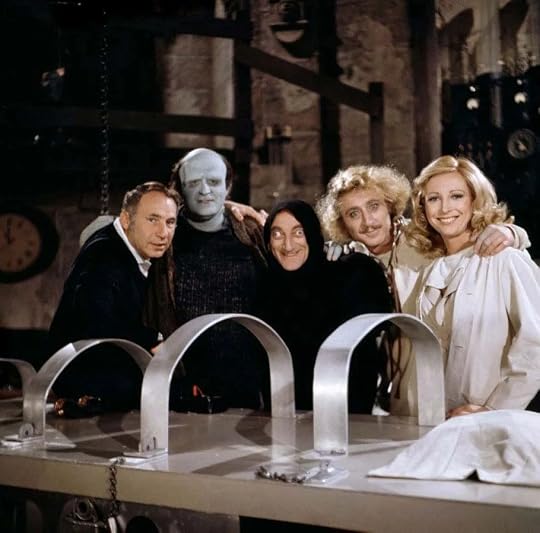
In Young Frankenstein, the monster’s brain isn’t merely “the wrong one”; it belonged to “Abby Normal.” One invented name, and a whole creature’s behaviour suddenly makes sense and is funnier for it.
Compare Barbie, which mines comedy from the brand-specific absurdities of the doll itself, the permanently arched feet, the beach that is only ever the concept of beach. Greta Gerwig didn’t write “a doll’s world is strange.” She wrote the exact strangeness down to the heels.
The Takeaway: When a line isn’t landing, it’s usually too general. Zoom in until it’s uncomfortably exact.
#2. Punch Up, And Earn The Taboo.
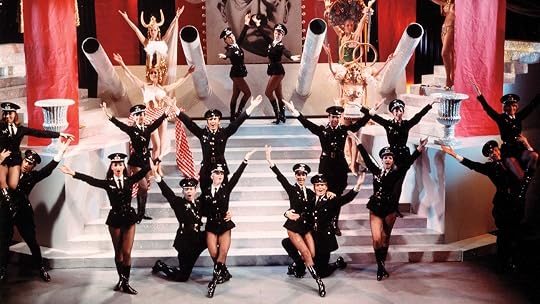
Brooks made a Western whose villains are racists, a musical in which Nazis sing and dance, and a Spanish Inquisition production number. People sometimes mistake this for shock for its own sake. It isn’t.
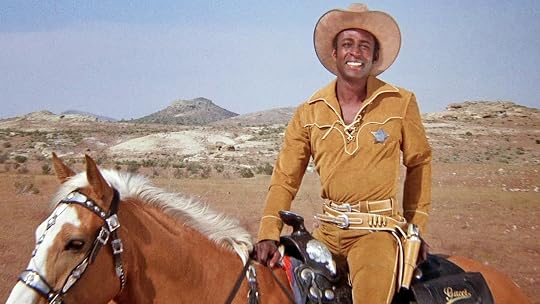
In Blazing Saddles, the joke is never the Black sheriff; it’s the slack-jawed bigotry of the townsfolk, who are humiliated relentlessly for ninety minutes. The target is the powerful and the stupid, never the vulnerable.
That’s the difference between satire and cruelty, and it’s why Jojo Rabbit works while a lesser film would curdle. Taika Waititi plays Hitler as a needy imaginary friend, an idiot, a punchline, and a coward, which is the most insulting possible thing to do to a dictator.
Mockery is a weapon.
The target in Jojo Rabbit isn’t the tragedy of WWII; the target is the fragile, pathetic ego of fascism.
The Takeaway: Before you write the bold joke, check who’s bleeding at the end of it. If it’s the powerful, swing harder. If it’s the powerless, you’ve stopped writing comedy and started writing cruelty.
#3. Play It Utterly Straight.
The single most common mistake new comic writers make is letting the characters know they’re in a comedy. Nobody winks.
The funniest people in any scene are the ones taking the ridiculous situation with total, tragic seriousness.
This is the entire engine of Gene Wilder in Young Frankenstein, a man passionately, sincerely insisting he is not his grandfather while standing in a castle full of evidence to the contrary.
He isn’t doing bits. He’s having a genuine emotional crisis that happens to be hysterical.
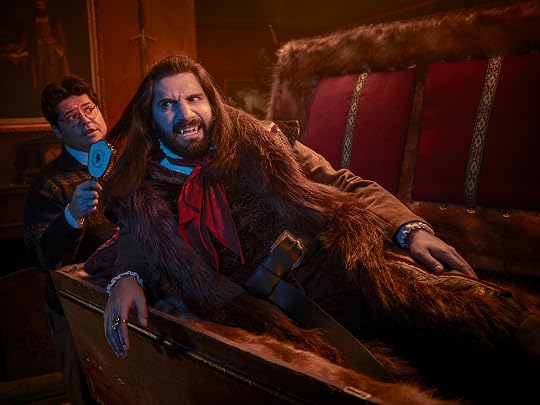
The modern gold standard is What We Do in the Shadows, where centuries-old vampires bicker about the washing-up rota with the deadpan conviction of a documentary about flatmates.
The horror is played for real; that’s precisely why it’s funny.
The takeaway: your characters should want their goals desperately. The comedy is the reader’s, not theirs.
#4. Master The Turn – Comedy Is Rhythm
On The Page.
A joke is a tiny act of misdirection: you lead
the reader confidently in one direction, then yank the rug.
The mechanics are musical. Setup, setup, turn. The rule of three exists because two examples establish a pattern and the third gets to violate it.
“Springtime for Hitler,” the deliberately appalling showstopper in The Producers, is built entirely on escalation, each verse more lavishly tasteless than the last, until the audience’s jaws are somewhere near the floor.
The comedy lives in the build. On the page, this is about controlling exactly when the reader gets the information.
Palm Springs does this with structure itself: the reveal that the love interest is also trapped in the time loop lands like a massive punchline because the film withheld that information until precisely the right beat.
But this structural misdirection doesn’t just apply to big plot twists; it applies to the literal syntax of your sentences. If the reader’s brain can predict the end of your sentence halfway through it, the laugh dies. You have to hide the turn until the absolute last second.
The Takeaway: Read your funny lines aloud. If the surprising, joke-delivering word isn’t the final word of the sentence, rewrite it until it is.
#5 – Build The Joke Into The Character, Not On Top Of Them.
Detachable gags, the kind you could lift out and drop into any other scene, are the styrofoam packing peanuts of comedy.
They fill space and nourish no one. The jokes that last grow out of who someone is.
Hedley Lamarr in Blazing Saddles is funny because of his bottomless, fragile vanity, including his fury at being called “Hedy.”
The comedy is inseparable from the man.
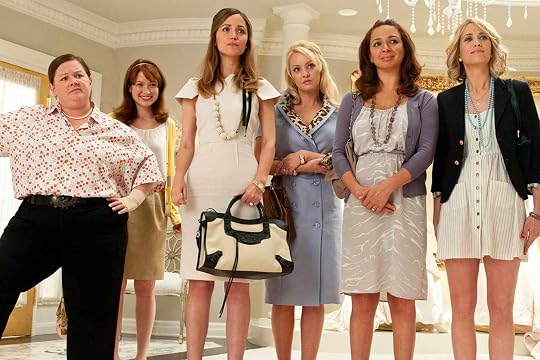
The contemporary masterclass is Bridesmaids, where the entire dress-shop catastrophe is character-driven: it’s funny because we know exactly how broke, jealous, and barely holding on Annie is.
Strip the character out, and you have people being ill in expensive clothes. Leave her in, and it’s a tragedy
with the best timing of the decade.
The Takeaway: If you can give your best joke to any other character without changing it, it isn’t a character joke yet. Make it one.
 #6. Surprise Yourself, Then Surprise
The Reader.
Brooks loved breaking the frame entirely.
The cowboys in Blazing Saddles literally ride off the set into a neighbouring musical number.
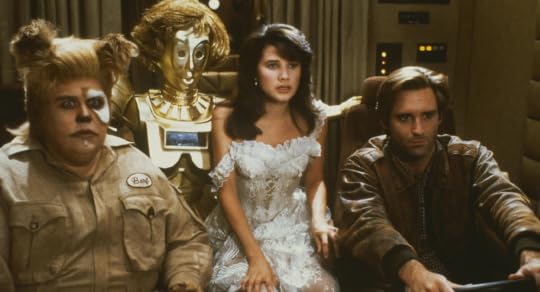
Spaceballs features a character watching a VHS of the very film he’s in to find out what happens next, and a merchandising gag so cheerfully cynical it predicted the next forty years of cinema.
The comedy is the audacity… the swerve nobody saw coming.
Deadpool built a franchise on exactly this energy, the hero turning to the camera to complain about his own budget and studio. But notice what makes it work, because it’s the same principle from Tip #2, wearing a disguise. Deadpool isn’t laughing at his budget; he’s genuinely, furiously stressed about it.
The Spaceballs characters watching that VHS aren’t winking at us; they’re panicking, because the film is about to catch up to real time and trap them.
Breaking the fourth wall only lands when the character takes the broken reality completely seriously. They’re still playing it straight; they’ve just been handed a more ridiculous world to be sincere about. Wink at the audience and the joke dies. Be desperate inside the absurdity, and it soars.
The Takeaway: When you’ve written the obvious version of a scene, ask what the reckless version looks like. Then ask if you’re brave enough to write it. (Hint – You are.)
#7. Cut Everything, Then Cut The
Laugh Shorter.
Comedy has no patience for the extra word.
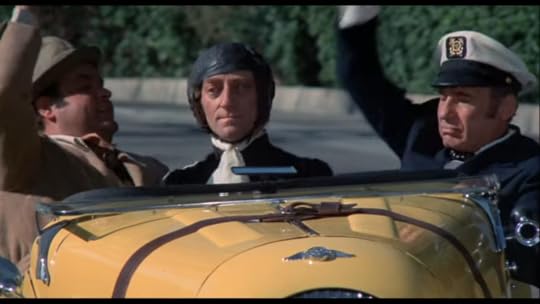
A beat too long and the soufflé collapses. Brooks made Silent Movie, a feature-length comedy with exactly one spoken word in it, delivered perfectly, by a famous mime, which is the entire philosophy of comic economy compressed into a single gag.
Say less. Trust the reader. Get out.
The best modern comic scripts are merciless self-editors.
The Grand Budapest Hotel is wall-to-wall jokes precisely because Wes Anderson never lets one breathe past its welcome; the film moves at the clip of a man who knows exactly how funny he is and refuses to wait around for applause.
On the page, this means killing your explanation. If you’ve landed the joke, do not add the sentence that tells the reader it was a joke. That sentence is where comedy goes to die.
The Takeaway: Find your funniest line, then delete the sentence after it. That sentence is almost always an apology.
The Punchline.Brooks once described his own work as rising “below vulgarity,” which is both a joke and a genuine artistic statement. He aimed low on purpose and hit something profound by accident, over and over, for a century.
The lesson underneath all seven of these is the one he embodied longest: comedy is not a lesser form.
It’s the hardest thing to do well. It’s the first thing to vanish the moment a writer gets self-conscious.
And, if Mel is right about laughter, it might be the thing keeping you alive.
So write the bold version. Cut it shorter. And for heaven’s sake, let your characters take themselves
seriously; somebody in the scene has to, and it certainly shouldn’t be you.
Happy 100th, Mel. It’s good to be the king.
Now it’s YOUR turn – What film makes you laugh every time, even when you know every beat?
Would love to get your input in the comment box below.
The post Why Isn’t My Writing Funny? Ask Mel Brooks. appeared first on Vered Neta.
July 12, 2026
BOOK VS. TV SHOW: Shōgun.
Do we really need to adapt a 1,200-page doorstopper about feudal Japan twice?
Apparently, we do. James Clavell’s Shōgun has now been turned into two of the most celebrated television events of their respective decades, once in 1980, once in 2024, separated by forty-four years and, it turns out, by a complete revolution in how we tell stories and who we let tell them.
Here’s what fascinates me as a writer. The novel didn’t change. The history didn’t change. What changed was us, and you can read that change with almost forensic precision simply by asking one question of each version: whose eyes are we watching through?
Because the answer keeps moving. And every time it moves, it tells you less about 1600 Japan than about the year the adaptation was made. Shōgun isn’t just a great story that got told three times. It’s a mirror held up to three different cultural moments. So let’s hold it up.
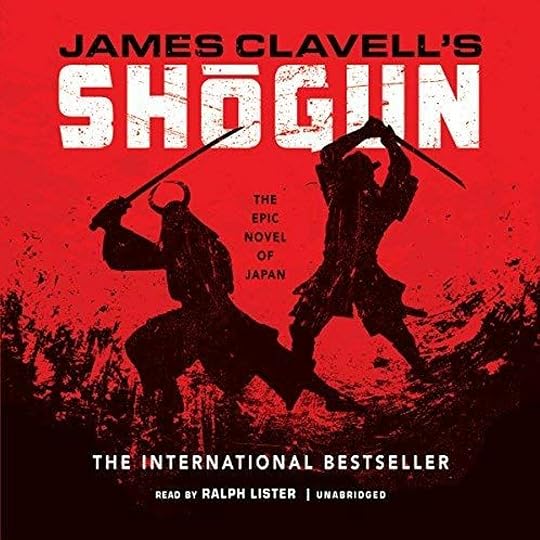 The Book.
Clavell published Shōgun in 1975, and it became one of those era-defining bestsellers that seemed to live on every bedside table for a decade.
The setup is irresistible. The year is 1600. John Blackthorne, an English pilot, is shipwrecked on the coast of Japan, the first Englishman ever to set foot there.
He arrives ignorant, arrogant, and utterly out of his depth, and he is promptly swept into a lethal game of thrones between rival warlords as the country teeters on the edge of civil war.
Chief among them is the brilliant, patient Lord Toranaga, who sees in this strange “barbarian” a useful pawn. Standing between the two of them, translating every word, is the noblewoman Lady Mariko, a Christian convert with a tragic past and divided loyalties, and the woman Blackthorne falls for.
It’s a sprawling epic of politics, faith, war, and forbidden love, and Clavell anchored it in real history: Blackthorne is loosely based on the navigator William Adams, Toranaga on the future shogun Tokugawa Ieyasu, and Mariko on the martyred noblewoman Hosokawa Gracia.
But notice the architecture. We enter Japan as Blackthorne does, confused, frightened, learning the rules one humiliation at a time. The whole novel is built to make the reader a foreigner.
And that is a brilliant, efficient piece of craft: the outsider-hero is the oldest trick in the book for making an unfamiliar world legible. It also makes a quiet, telling decision. It decides that the person worth following in this world is the Englishman.
The 1980 Mini-Series.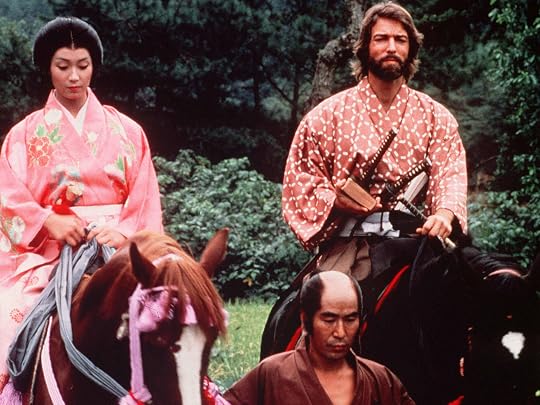 The first adaptation arrived in 1980, on NBC, in the golden age of the television event, the era that Roots had kicked open three years earlier.
It starred Richard Chamberlain, the reigning king of the romantic mini-series, as Blackthorne, with the legendary Toshiro Mifune as Toranaga and Yoko Shimada as Mariko.
It was an enormous gamble that paid off spectacularly. The series drew one of the largest audiences in television history, second only to Roots, and sent Clavell’s paperback soaring back up the bestseller lists. For millions of Americans, it was their first real glimpse of feudal Japan.
And it made one truly radical creative choice, the one that defines it. The Japanese dialogue ran almost entirely without subtitles. The producers’ logic was elegant: what Blackthorne doesn’t understand, the audience shouldn’t understand either. We are stranded exactly where he is stranded. (Orson Welles popped up now and then in voiceover to throw us a rope.)
As a piece of POV discipline, it’s genuinely bold. I admire the nerve of it. But sit with what it actually does.
It takes the book’s outsider perspective and welds it into the very form of the show.
Japan stays beautiful, dangerous, and fundamentally unknowable. The Japanese characters become an exquisite, opaque backdrop to one Englishman’s adventure.
And it mirrors its moment perfectly: 1980 America was intensely curious about a rising Japan, but perfectly content to view it from the outside, as spectacle, through Western eyes.
 The 2024 TV Show.
Then came FX’s Shōgun… and it didn’t just remake the story. It rebuilt the engine.
Showrun by the married team of Justin Marks and Rachel Kondo, the 2024 version starred Hiroyuki Sanada as Toranaga, Anna Sawai as Mariko, and Cosmo Jarvis as Blackthorne.
It arrived in a landscape that Parasite and Squid Game had already transformed, a world where Western audiences had finally learned to read subtitles and love it.
So this time, every line of Japanese is subtitled. And that single decision changes everything, because we are no longer trapped inside Blackthorne’s ignorance. We sit inside Toranaga’s mind as he plots ten moves ahead.
We feel the weight of Mariko’s faith and her grief. Blackthorne, far from being our hero, becomes one disoriented thread in a far richer tapestry, and frankly, he fades into the background for long stretches, which is rather the point.
The numbers told the story. The series won a record-breaking 18 Emmys, became the first non-English-language show ever to win Best Drama, and made Sanada and Sawai the first Japanese actors to win Emmys. This was not a niche prestige curio. It was the most awarded drama season in television history.
 Changes and Additions.
This is where it gets delicious for anyone who loves the craft, because almost every change flows from that one re-centred point of view.
The subtitles. I’ve already made the case, but it bears repeating because it’s the master key.
In 1980, no subtitles meant one perspective, the Englishman’s.
In 2024, full subtitles mean many perspectives, and suddenly the story can live inside Toranaga, Yabushige, Ishido, and Mariko.
The plot doesn’t change. The whose-story-is-this changes completely.
Toranaga moves to the centre. Look at the billing: Sanada is top-billed, above Blackthorne.
The book and the 1980 series treated Toranaga as the inscrutable chess master moving the foreigner around the board. The 2024 series lets us into the chess master’s head and, in doing so, quietly announces that this was always his story, not the visitor’s.
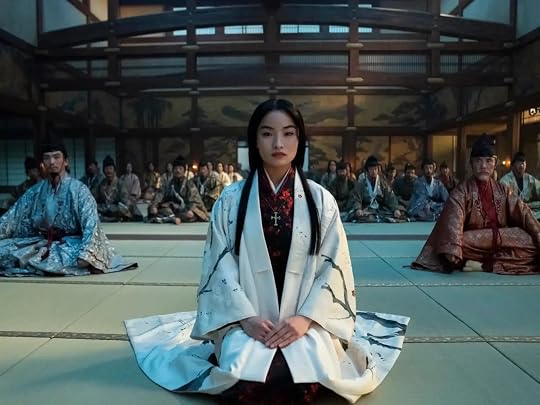 Mariko gets her interiority back. This is the change I love most. In the older versions, Mariko risks becoming the beautiful, doomed love interest, the translator who exists to bridge the hero to his world.
The 2024 series gives her an inner life equal to anyone’s: her faith, her shame, her long-plotted act of defiance. Her arc shifts from a romance subplot to the spine of the whole season. (Anyone who’s ever watched a story hand its quietest woman the sharpest blade knows exactly why this lands.)
Blackthorne gets demoted… on purpose. The biggest “change” is really a subtraction.
By stripping Blackthorne of his automatic centrality, the show transforms the theme itself.
It stops being “a man finds himself in an exotic land” and becomes “a civilisation fights for its own future, with a foreigner stumbling through the edges of it.” Same events. Opposite meaning.
A few craftier touches. Both screen versions keep the clever convention of rendering the Portuguese characters’ speech as English, so we feel the language barrier without drowning in it. And the 2024 finale makes a daring move: it withholds the enormous battle you’ve been bracing for and lands instead on Toranaga’s interior strategy, trusting that a man’s hidden intentions are more gripping than a thousand swords.
As one of its creators joked while collecting yet another statue, they greenlit an expensive, subtitled, Japanese-language period piece whose climax hinges on a poetry competition.
And it worked.
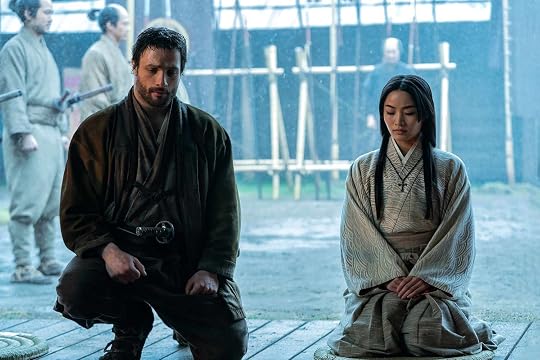 Verdict
I’ll be blunt, because this one isn’t close.
The book and the 1980 mini-series have not aged well. I say that with real affection.
Clavell laid the foundation that made everything that followed possible, and Chamberlain’s series was a brave, beautiful thing for its time.
But both are products of an era that assumed the only way into Japan was through a Western man’s eyes, and that assumption now feels like a window we’ve simply outgrown.
Watching them today, you feel the distance.
The 2024 Shōgun is, without question, the superior work, and not only for the more honest storytelling. It is breathtaking at every level of craft: the attention to historical and cultural detail, the discipline of the writing, the painterly artistry of every single frame. It’s one of the most beautiful things ever put on a screen.
But the real reason it wins goes beyond any one production. It marks a genuine breakthrough in how we watch, proof that a subtitled, non-English, culturally specific story can be the most decorated drama in television history. It didn’t just adapt a novel better than its predecessor.
It moved the boundary of what mainstream audiences will embrace, and held the door open for every global story that comes after it.
That’s the deepest lesson here for us as writers. A source novel is a fixed canvas. What each generation chooses is where to stand, and where you choose to stand is never a neutral, technical decision. It’s an argument about whose story matters. The migration of Shōgun‘s point of view, from Blackthorne’s eyes outward to Toranaga’s and Mariko’s, is the whole history of that argument, told three times
Now it’s YOUR turn – Team Book or Team Show — which version won your heart and why?
Would love to get your input in the comment box below.
The post BOOK VS. TV SHOW: Shōgun. appeared first on Vered Neta.
July 5, 2026
How to Write Silence.
I typed two words into my manuscript last week without thinking: A pause.
Then I stopped. I’d done it again. I reached for a screenwriter’s reflex in the middle of a novel and
almost let it through. I was deep in a scene of The Widow and the Kabbalist, my character had run out
of things to say, and my fingers had simply defaulted to the shorthand.
Two words. Done. Move on.
Except that those two words are a script habit, and they have no business in a novel.
In a screenplay, a beat or Pause is a complete instruction. You hand it to an actor, and they fill it: a held breath, a glance away, a swallow. But ask any script reader, and they’ll call it what it is… lazy.
A flag that the dialogue underneath wasn’t doing enough on its own.
On the page, there is no actor. No camera to linger, no score to swell underneath the quiet. There’s just you, the words, and the white space. If you want the reader to feel the silence, you have to build it yourself.
That’s the trap. And it’s worth dragging into the light because silence is one of the most powerful tools we have in either form; we just manufacture it in completely different ways.
So here’s what silence actually does as a craft technique, and how the page and the screen each pull it off.
7 Things Silence Can Do That Dialogue Can’t.
#1. Silence Is Subtext Made Visible.
The most charged line in any scene is usually the one a character refuses to say.
When someone changes the subject, answers a question they weren’t asked, or simply doesn’t reply, the reader doesn’t skip over the gap.
They lean into it. They fill it with the thing being avoided, and because they got there themselves, they’re certain it’s true. Silence, used this way, isn’t an absence of dialogue.
It is the dialogue. It’s the subtext lifted up where the reader can see it.
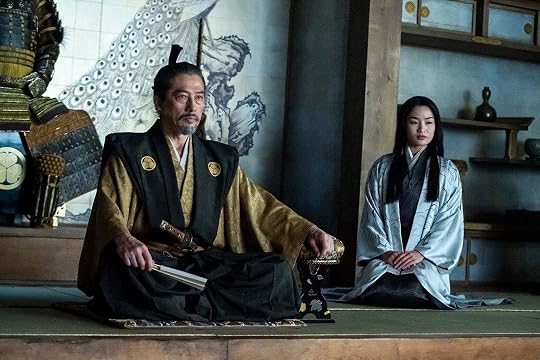
Watch Shōgun, episode nine. Mariko walks into Ishido’s court and politely asks to leave Osaka with Toranaga’s women.
She trades a haiku with Lady Ochiba, calls her a leafless branch, then announces there will be no more verses. And that’s it. Nobody states the actual situation: that everyone in the castle is a hostage, and Ishido is the tyrant holding them. Yet the entire balance of power tips in that room, and not one person names what is happening.
The Takeaway – The unsaid thing becomes the loudest thing on screen. That’s the first job silence does: it makes the reader do the arithmetic and arrive at the truth themselves. And we believe a truth we worked out far more than one we were handed.
#2. Whoever Holds The Silence Holds The Power.
Give your weaker character the words.
Watch them fill every gap, over-explain, and perform. The one who simply waits is the one in control.
A held silence doesn’t just sit there; it presses. It hands the discomfort to the other person and makes them responsible for ending it.
The longer it runs, the more the talker gives away, until they’ve negotiated against themselves without their opponent saying a word.
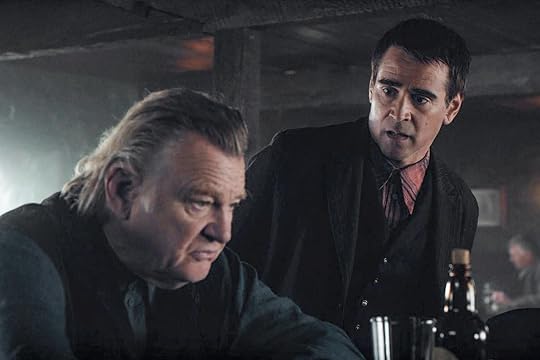
The Banshees of Inisherin is built on exactly this. Colm stops speaking to Pádraic, offers no real reason, and the sheer withdrawal of words becomes a weapon. The silence escalates the entire film. Nobody needs to raise their voice; the quiet does the damage.
The Takeaway – On the page, it works the same way. The character who answers a question with a question, or doesn’t answer at all, owns the scene. If you want to show dominance without a single threatening line, hand one character the silence and make the other one scramble to fill it. Power isn’t who talks the most. It’s who can stand the quiet the longest.
#3. The Page And The Screen Do “Quite” Completely Differently.
This is where novelists and screenwriters part ways.
On screen, silence is literal, a held shot, a face, the sound dropping out.
In Maggie O’Farrell‘s Hamnet, the death of a child is rendered through rhythm: short sentences, white space, the page itself slowing the eye until you cannot rush the grief.
There is no actor doing the work. O’Farrell builds the room the silence sits in, brick by brick, out of prose.
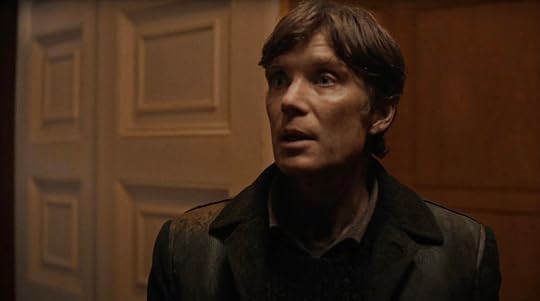
Set that against the film of Small Things Like These. Cillian Murphy barely speaks; the camera just holds on his face while he decides what kind of man he is going to be. Same restraint, opposite machinery, one written into the sentences, one handed to an actor and a lens.
The Takeaway – A screenwriter can write that he says nothing. A novelist has to make the reader feel the nothing.
 #4. Silence Only Exists Against Noise.
A pause means nothing until you’ve built the noise it interrupts. Quiet is a payoff, and payoffs have to be earned.
You can’t open on a meaningful silence; there’s nothing for it to land against yet.
First, you give the reader the clatter, the talking over each other, the argument that won’t end, the relentless forward push.
Only then does taking it all away mean something. The silence borrows its power from the noise it replaces.
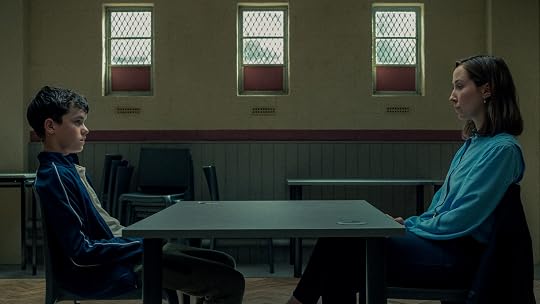
Adolescence is the cleanest lesson here. The series runs in relentless one-shot real time, the pressure, the chatter, the momentum never letting up, which is precisely why its still moments stop your heart. The quiet lands because everything around it doesn’t.
The Takeaway – This is the step most writers skip. You can’t drop a character into a meaningful silence on page one; there’s nothing for it to push against. Write the loud, crowded, talking-over-each-other dinner table first. Then let everyone go quiet.
Silence is contrast, or it’s just an empty space on the page. Build the racket before you take it away.
#5 – Some Things Can’t Be Spoken – And Shouldn’t Be.
Grief, trauma, shame: sometimes language fails, and it fails on purpose.
When you refuse to name the thing, you don’t leave a blank; you leave a space the reader steps into and fills with their own.
And what they bring is always worse, always closer to the bone, than anything you could have written for them.
Spelt out, horror has edges; you can measure it and set it down. Left unsaid, it has no walls. The gap does the work precisely because you stopped trying to.
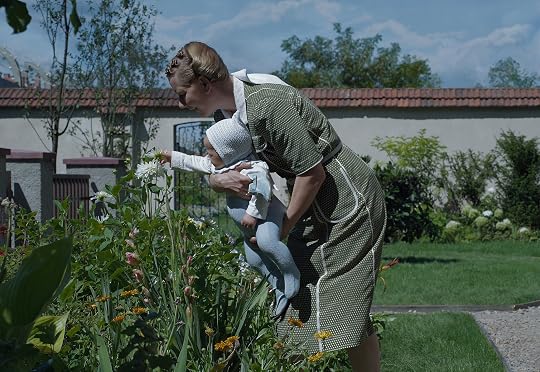
The Zone of Interest never shows or names the horror happening on the other side of the garden wall. It lives in the sound design, and in everything the family pointedly refuses to acknowledge over breakfast.
The not-saying is the whole point. Spelt out, it would shrink. Left unspoken, it’s vast.
The Takeaway – When a character cannot find the words, that gap is more honest than any eloquent speech you could write for them. Resist the urge to rescue them with articulacy.
Some wounds are truer in the silence around them than in any attempt to describe them, and your reader will lean into that gap and fill it with something far more frightening than you could have named.
 #6. Overwriting Murders Silence.
Here’s the hard one, because it’s a fear, not a skill.
You build a beautiful silent moment… and then you panic.
You explain the pause. You name the emotion. You describe every flicker crossing the face. And in doing it, you’ve crammed the quiet full of noise.
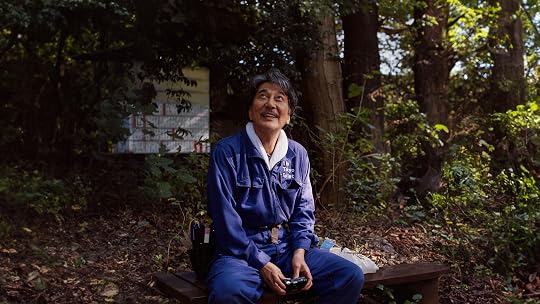
Perfect Days is the antidote. Its caretaker hero barely speaks for two hours, and the film never once explains him. You read an entire interior life off a routine and a face, and it lands harder for everything left out.
The Takeaway – The instinct to over-render comes from a single fear: that the reader won’t get it.
They will. They are smarter and more generous than that panic gives them credit for. Write less than you want to, then cut the line where you explained it.
#7. Silence Is A Pacing Weapon.
Silence controls tempo. The held breath before a reveal. The deliberate slowing before something breaks.
Suspense isn’t the reveal itself, it’s the gap before it. The longer you hold the quiet, the more the reader leans in, filling the wait with everything that might be coming.
Give them the answer too fast, and the air goes out of the scene. Make them sit in the silence a moment longer than is comfortable, and they’ll hang on every word that finally breaks it.
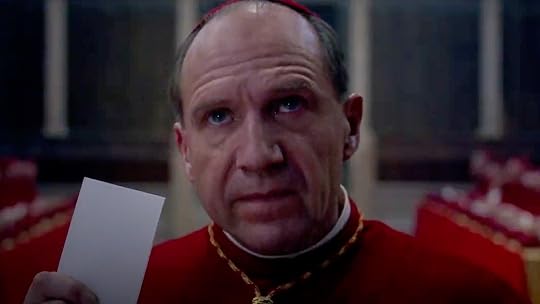
Conclave turns this into an art form. The cardinals are sealed off from the world to choose a pope, and the film makes you feel every airless minute of it: ballots written, folded, and read aloud one by one, the quiet of the chapel stretching between each name. Nobody hurries.
The silence isn’t decorating those scenes. It’s the throttle, deciding exactly how slowly time is allowed to move, and every held pause before a count tightens the screw one more turn.
The Takeaway – On the page, you do this with white space and the short line: the section break dropped in right before the truth, the one-sentence paragraph that forces a reader to stop and sit. Pace isn’t only about speeding up. Used with nerve, silence is the most precise speed control you own.
Back To That Pause.
When I caught myself typing a pause into my manuscript, that was the whole lesson in two words.
In a script, it’s an instruction someone else completes. In a novel, the silence is mine to make, and it is never empty space. It’s load-bearing. It carries the subtext, the power, the grief too big to say out loud, the held breath before everything changes.
So I deleted a pause, and I built the silence instead.
Now it’s YOUR turn – What’s the most powerful silence you’ve ever read or saw?
Would love to get your input in the comment box below.
The post How to Write Silence. appeared first on Vered Neta.
June 28, 2026
Why Your Villain Isn’t Working.
I am a heavy dyslexic with ADHD. English is not my first language; it’s my second or third, depending on how you count. I started writing seriously at 57. None of that is what you’d put on a script reader’s CV, and yet production companies and competitions keep calling me back.
Not despite those things. In a strange way, because of them.
I cannot tell you if your margins are wrong. I will not flag your font. What I notice, what I genuinely cannot stop noticing, is whether your characters are alive. And the character most writers leave half-alive is the one they think matters least: the antagonist.
What the Trenches Actually Look Like. Script reading doesn’t happen in a quiet room with good lighting. It happens submission after submission, often in the same sitting. In my case, that’s usually a table overlooking the Atlantic in Tenerife, which sounds romantic until you’re on your fourth read of the day and the coffee has gone cold.
By page fifteen of the fourth submission, a particular wariness sets in, not laziness, but pattern recognition. And the most familiar pattern of all is this: a writer who poured everything into their protagonist and left nothing for the person the protagonist is fighting.
I’ve started calling this character “furniture with a weapon.” They exist to create resistance. They have no interior. In a screenplay, they’re the villain who sneers at subordinates and commits cruelty that exists for no reason except to signal: here is your obstacle. In a novel, they’re the character whose chapters feel thin, whose motives reduce to a single sentence.
The moment I meet “furniture with a weapon”, I know something about the writer. Not that they’re untalented, often the opposite. I know they haven’t yet made the imaginative leap that separates a competent story from an unforgettable one.
What That Looks Like in Practice. Last winter, I was reading a family drama pilot that made me sit up straighter. The protagonist was unforgettable, a woman who had learned to perform calm so convincingly she’d almost fooled herself. Twenty pages in, I was already mentally drafting the “Recommend.”
Then the antagonist walked in, defined entirely by the harm he was about to cause, with no interior life driving him there. In less than a page, the world the writer had built collapsed. The protagonist wasn’t facing
a real person. She was facing a narrative function. I sat with the “Pass” for a long time. I didn’t want to write it.
Not long after, I read a thriller, a morally compromised bureaucrat dismantling a system from the inside.
On paper, a character easy to despise. But the writer had done something rare: they had written him as the hero of his own story. Every scene carried the full weight of his conviction. He wasn’t corrupt. He was, in his own unshakeable logic, the only person with the clarity to do what the situation required.
I wrote the longest “Recommend” cover letter of my career.
The difference between those two submissions wasn’t talent. It was one imaginative leap.
The Leap: Your Villain Thinks They’re the Hero. In your antagonist’s mind, they are the protagonist of a completely different story.
They are not waking up today asking how to cause harm. They are waking up thinking: How do I protect what actually matters? How do I fix what everyone else is too frightened to fix? Why am I the only one with the stomach for what this moment requires?
This applies whether you’re writing a screenplay or a novel, whether your antagonist is a cartel boss, a corporate predator, or someone who loves your protagonist deeply and is destroying them anyway.
Writers push back here. They say: But my villain is a monster, I don’t want readers to sympathise with them.
Good. I’m not asking for sympathy. I’m asking for something harder and more useful: justification.
Sympathy says: I feel sorry for what she went through. The justification says: “I see exactly how she arrived
at this.“ I can follow the logic, even though it horrifies me.
That math, locked, coherent, internally consistent, is what creates real dramatic friction.
Your protagonist isn’t just trying to stop someone. They’re trying to disprove a worldview.
You can write your way out of an obstacle. You cannot write your way out of an argument your
protagonist hasn’t answered yet.
The clearest example is Ozymandias from Watchmen, not because he’s powerful, but because his conviction is total. He killed millions to engineer a global peace, and by the time we understand what he’s done, he is already completely at rest with it. No guilt. No crisis. He tells the heroes what he did after it cannot be undone, because for him, there is nothing to confess. He is reporting a completed fact.
His logic is so airtight that the protagonists cannot fully argue against it. Most don’t even try. Only Rorschach refuses… and he dies for it.
That discomfort, what if he’s actually right, is what a genuinely justified antagonist manufactures. It’s something a villain doing evil “just because” can never get you to.
Justification doesn’t excuse. It terrifies.
I Know This Trap From the Inside.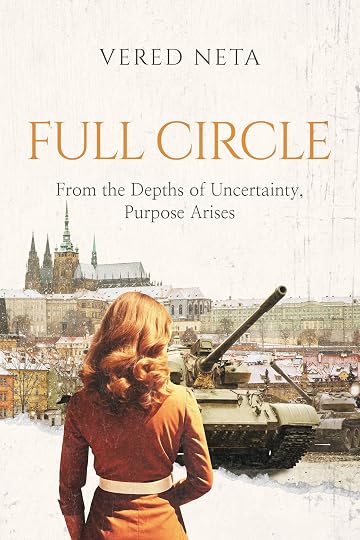 When I wrote the first draft of my novel Full Circle, I gave myself a villain I thought was sophisticated:
the communist regime in Prague in the 1960s.
I even congratulated myself on putting a human face on it, a single figure who would embody the machinery of the state. I thought I was being clever.
My beta readers and my mentor told me, in their different and equally uncomfortable ways, that I had built very expensive furniture. The regime was an obstacle. It was not a person. It had no morning reflection, no wound, no internal logic worth following.
I rebuilt the antagonist entirely. The obstacle became the protagonist’s mother, a woman who commits no crimes, who doesn’t sneer.
But her worldview is so total, so coherently her own, that it functions as a wall against everything the protagonist reaches for.
She doesn’t believe she’s the antagonist.
She believes she is the only person in the room who loves her daughter honestly enough to tell her the truth.
Something unexpected happened.
Readers started telling me they understood the mother more than they understood the protagonist.
They didn’t like her. But they got her. That discomfort, I understand her and I wish I didn’t, is exactly what a justified antagonist produces.
The Justification Statement. Before I write a single scene featuring an antagonist, in my own work or when I’m mentoring writers, I write what I call a Justification Statement. First person. The antagonist’s own voice. No backstory summary, no trauma inventory. A statement of belief.
Here’s what the difference looks like:
The flat antagonist: “I will destroy the city because they rejected me, and now they must all pay.”
This tells me about a wound being scratched. It tells me nothing about a worldview.
The justified antagonist: “This city is a terminal patient being kept alive by the morphine of bureaucracy. Someone has to be the surgeon. Someone has to have the stomach to cut. That someone is me,
not because I enjoy it, but because no one else will.”
That second character has a philosophy. Every scene they appear in is loaded, because they’re not just creating problems; they’re embodying an argument your protagonist has to answer, not just survive. It works in prose fiction exactly as it works on screen. The ideology doesn’t have to be sympathetic. It has to be coherent.
Four Questions Worth Sitting With. Run your antagonist through these before you submit anything.
What do they tell themselves in the mirror? Not what they are, but what they believe they are.
If the answer is I’m going to cause harm today, you haven’t found them yet. If it’s I’m the only one
willing to do what this requires, you’re somewhere real.
What is the wound, or the philosophy? Every justified antagonist is reacting to something: a betrayal, a broken system, a world that failed its own promises. It doesn’t have to be a trauma. It can be a conviction.
But something has to have forged them. Find the forge.
Write their eulogy. Not the one their enemies would deliver, the one their truest believer would give.
A life of difficult truths, hard sacrifices, a world that wasn’t ready to understand them. Write it.
It will show you exactly who you’ve built.
Can they win the argument? Sit your protagonist and antagonist across from each other. Let the antagonist make their full case. Does it genuinely unsettle your protagonist and your reader? If yes, you have something worth fighting for.
What I’m Actually Looking For. I have read scripts and manuscripts in more cities than I can sometimes account for. From Amsterdam
to Tel Aviv to this table at the edge of the Atlantic, in more genres than I originally planned to cover.
What I am always looking for is the same: two people who both believe completely they are right, both with something genuinely at stake, moving toward each other. When the antagonist is as fully inhabited as the protagonist, when I can feel the story they think they’re in, the fatigue of the reading pile disappears.
I lean forward.
A well-built antagonist is one of the fastest signals that a writer has done the invisible work. They didn’t just construct a plot. They built a world where everyone believes they are the hero of their own life.
I came to this career late, through a side door, with a brain that works differently from most.
What I’ve learned is that the writers who make it past the first gate aren’t always the most technically
polished. They’re the ones who made the full imaginative leap.
Give me a villain who believes they’re the saviour. I’ll be in your corner before I reach the end of the page.
Now it’s YOUR turn – Who is a fictional villain you secretly think was 100% right??
If you want to test whether your antagonist is a person or a plot device, here is the free Villain Blueprint
The post Why Your Villain Isn’t Working. appeared first on Vered Neta.
June 21, 2026
Stop Writing Wise Old Ladies.
Let me tell you about a woman I cannot stand.
You know her, too. Silver bob, soft cardigan, a mug of tea more or less welded to her hands.
She exists to murmur something profound to a troubled younger character, pat a knee, and gaze out the window at the rain while remembering a husband who died nobly sometime around 1987.
She is Wise. She is Warm. She is Wistful. And she is, I’m sorry to report, about as alive as the armchair
she’s usually sitting in.
I’ve built my writing life around her opposite. My brand comes down to one stubborn line:
I craft stories where women refuse to be invisible.
It’s the reason I started the Not Done Yet anthology, a whole series of older women who flatly decline to fade into the wallpaper, mind their own business, or be quietly grateful for a nice cup of tea.
They want things. They cause trouble. They are, frankly, a menace, and I adore every one of them.
This isn’t just my personal hobby-horse, by the way. Earlier in 2026, research for the UK’s Age Without Limits campaign found that across the hundred highest-grossing films of the last three years, more were led by an actor named Chris than by a woman over sixty, and that a film was four times more likely to hand its lead role to a talking animal than to an older woman.
Emma Thompson, never one to mince words, said older women “don’t need permission to exist on screen“, they already exist in the world, and cinema simply needs to catch up. She wants more films built around ageing women, who are, she argued, every bit as compelling and relatable as anyone else, and long overdue to be at the centre of the frame.
That’s the gap, and it’s good news for you and me. The gatekeepers haven’t caught up, but the exceptions are electric, and they sell.
The last few years have handed us some older women who are vain, ruthless, criminal, hungry, and gleefully badly behaved, and audiences devour them. Where cinema drags its feet, the page can sprint.
So if you’re writing one of these women and you feel her drifting toward the tea and the window, here are six ways to drag her back to life.
6 Ways Older Women Refuse to Be Invisible.

#1. Give Her An Appetite She’d Never Apologise For.
The fastest way to kill an older woman on the page is to make her wants entirely about other people. She worries for her daughter. She frets over the village. She wants everyone to be all right. Lovely.
Also, she’s a saint, and saints are dull, because we always know exactly what they’ll do next.
Real desire is selfish, specific, and a little bit embarrassing.
Deborah Vance (Jean Smart) in Hacks doesn’t want her granddaughter to flourish; she wants the late-night talk show, the legacy, the win, and she’ll cheerfully trample anyone, including the people who love her, to get there.
By any sensible measure, she’s awful. She’s also the most magnetic woman on television, because she wants things with the appetite of someone half her age and twice her ego.
Writer’s Note – So before you write a line of dialogue, ask: what does she want that has nothing to do with anyone else’s wellbeing? Money. Revenge. To be right. To be wanted. To win. Write that down first.
#2. Let Her Break The Law And Sleep Just Fine.
When I wrote Jessy in “Crime Cleaners”,
I didn’t have her comfort her daughter through a difficult time or gently suggest they call someone.
Jessy helps her daughter get rid of the body of her daughter’s abusive husband.
Sit with that for a second.
That one decision does more characterisation than fifty pages of tea ever could, because it tells you she has a moral universe entirely her own, one where her daughter’s safety outranks the law, and she’s already done the maths and made her peace with it.
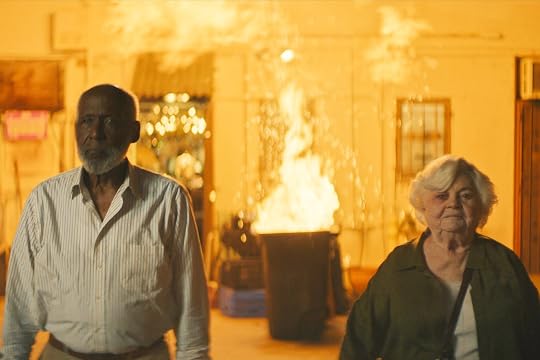
For the lighter end of the same idea, look at June Squibb in 2024’s Thelma.
A ninety-three-year-old gets scammed out of $10,000 and, instead of learning a gentle lesson about the modern world, commandeers a mobility scooter, arms herself, and sets off to get her money back, minor explosions included.
The film is funny precisely because it refuses to make her wise about any of it. She just wants what’s hers.
Writer’s Note – Transgression reveals values. A woman who’d never break a rule has never had her values tested where it counts.
#3. Swap Her Wisdom For Competence.
“Wise” is the laziest trait we hand older women, because it lets the character know things without us inventing a single skill.
She just… understands. Vaguely. About life.
Trade it for competence, real, specific, hard-won expertise, and watch her sit up.
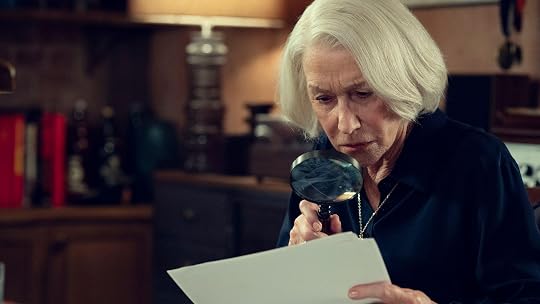
Elizabeth (Helen Mirren) in Richard Osman’s The Thursday Murder Club isn’t wise; she’s a former intelligence officer who can tail a suspect, lie to a policeman without blinking, and apply pressure to exactly the right person.
Nobody calls Elizabeth “a font of wisdom.” They call her the woman you really don’t want to cross.
Writer’s Note – Competence is dramatic because it can be deployed, tested, and occasionally beaten.
Wisdom just sits there glowing like a nightlight. Give your woman one thing she’s frighteningly good at, then make her use it badly, under pressure, when it matters most.
 #4. Let Her Be Genuinely, Irredeemably Annoying.
Here’s the trap nobody warns you about: likability. We want readers to love our older women, so we sand off every edge until she’s all twinkly eyes and gentle wit.
The result is a character with no friction, and friction is the entire engine of fiction.
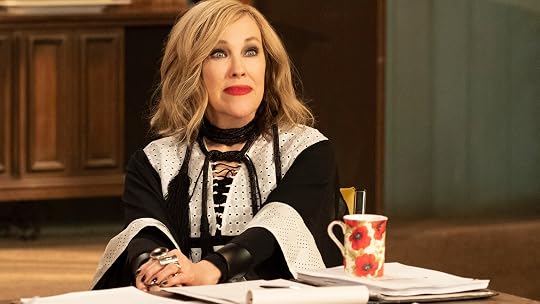
The bravest writers let older women stay difficult. Take Moira Rose in Schitt’s Creek (the late, magnificent Catherine O’Hara). Across six seasons, while every other Rose grows and softens,
Moira remains vain, self-obsessed, theatrically useless, and utterly convinced she’s destined for better than
a roadside motel.
She never truly reforms, and she’s the most beloved character on the show.
Writer’s Note – That’s the lesson: her unredeemed flaw isn’t a problem to be fixed by the final chapter.
It’s the thing readers adore. Let her be impatient, snobbish, magnificently wrong, and entirely herself.
A reader will forgive almost anything except being bored.
#5. Weaponise The Fact That Nobody’s Looking.
This is the heart of everything I write, so forgive me for getting evangelical.
Society makes older women invisible, and in fiction, that invisibility is an absolute cheat code.
It’s the whole premise of my Not Done Yet story “Nobody Looks at You”: the older woman whose gaze everyone slides straight past, until she turns that blind spot into a weapon.
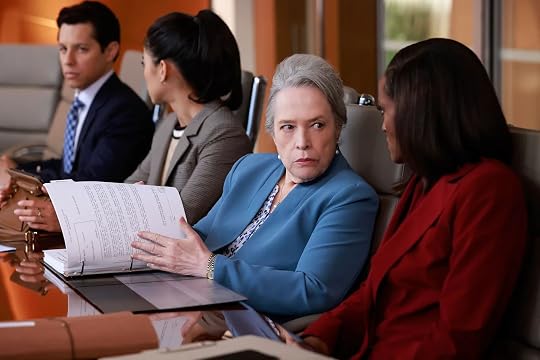
And it’s exactly what Kathy Bates does in Matlock.
Her Matty plays the harmless, slightly bumbling old dear so convincingly that suspects, witnesses, and colleagues hand her everything she needs, never once suspecting the sharp, calculating mind running the whole operation.
As she puts it, “the great trick of growing older as a woman is that nobody sees you coming”.
Writer’s Note – That’s the move. Don’t delete the softness… repurpose it. Let her know precisely how the world underestimates her, and let her use it like a lockpick
[image error]#6. Give Her A Body That Still Wants Things.
We allow older women to ache. We rarely
allow them to desire.
They get arthritis; they don’t get an appetite. They reminisce about romance; they aren’t permitted any.
This is a lie, and your readers, many of them women in those ages who have absolutely not stopped wanting things, know it’s a lie.
The film Good Luck to You, Leo Grande takes it head on: Emma Thompson plays a widowed retired teacher who, after decades of joyless marriage, hires a young sex worker simply to experience the pleasure she’s never had. No shame, no apology, just a woman deciding her body is still her own and still entitled to delight.
Writer’s Note – You don’t need to go that far. But let her flirt. Let her be vain about her good coat. Let her take the second slice without narrating her guilt, notice an attractive man and think something her grandchildren would be appalled by. A body still reaching for pleasure is a body still in the story, not waiting politely at its edge.
The One Rule Underneath All The Others.
Stop writing “an older woman.” Start writing this woman, who happens to be older.
Age is a fact about her, like her height or her fondness for filing cabinets. It is not her personality, her plot function, or her moral setting. The wise-warm-wistful trio survives because it lets us skip the hard work of invention; we reach for the template instead of the person.
The cure isn’t to make her edgy for the sake of it. It’s to make her specific: contradictory, hungry, occasionally appalling, gloriously herself.
Do that, and you’ll never again have to ask whether she’s wise, warm, or wistful. She’ll be far too busy refusing to be invisible.
Now it’s YOUR turn – Who’s the most stereotype-shattering older woman you’ve read?
Would love to get your input in the comment box below.
The post Stop Writing Wise Old Ladies. appeared first on Vered Neta.
June 14, 2026
Why Getting Genre Wrong Kills Your Story.
Let me tell you a dirty little secret about genre.
Most writers, even experienced ones, think genre is a box. A label. Something a bookseller slaps on the spine so readers can find it on the right shelf. They treat it like a filing system.
“It’s a crime novel.” “It’s a romance.” Done. Move on. Start writing.
And that, right there, is where the trouble begins.
I’ve spent the last ten years writing across four very different genres: Family Drama with Things We Do For Love, Historical Fiction with Full Circle, Cosy Crime with Crime Cleaners, and now, slightly terrifying myself, Romance. Every single time I cross into new territory, genre doesn’t just change the setting or the characters.
It changes everything. The rules of the world. The emotional contract with the reader. The very engine that drives the story forward.
So let’s talk about what genre actually is, and why getting it wrong is one of the most expensive mistakes a writer (or screenwriter) can make.
7 Reasons Most Writers Get Genre Completely Wrong.

#1. Genre Is a Promise, Not a Label.
Here’s the real definition of genre: a promise you make to your reader before they’ve read
a single word.
When someone picks up a romance novel, they’re not just hoping for a love story.
They are expecting, contractually, emotionally, a Happily Ever After HPE) or a Happy For Now (HFN). That’s not optional. That’s the deal. Break it, and you haven’t subverted expectations. You’ve broken trust.
Think about Anyone But You. From the poster, the marketing, and the sparkling enemies-to-lovers setup, audiences knew exactly what they were signing up for. And the film delivered: the banter, the longing, the misunderstanding, and yes, the Happily Ever After.
But here’s what’s clever: the writers threw obstacles at that ending right up until the final minutes.
They played with structure, cranked up the doubt, and still honoured the promise. That’s the skill.
Not ignoring the rules, but working them.
Contrast that with a film that looks like a romance, lures you in with chemistry and longing, and then ends in tragedy and ambiguity. We all know how that feels. Betrayed. Cheated. One-star reviewed.
Your genre is your promise. Know what you’re promising.
#2. Genre Dictates Your Story’s Engine.
Every genre runs on a different emotional fuel. This is where so many writers stumble:
they write about the events of a genre without understanding what drives it from beneath.
When I moved from Family Drama to Historical Fiction with Full Circle, I had to completely rewire my thinking. Family Drama runs on emotional truth, the interior lives of people navigating love, loss, and relationships. Historical Fiction demanded something extra: the weight and texture of a world that no longer exists, the sense that history itself is a character.
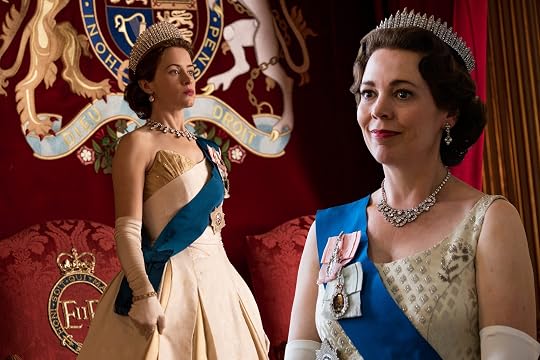
Look at The Crown. On the surface, it’s a drama about the royal family. But its engine is squarely Historical Fiction, the collision between private human beings and the unstoppable force of public history. That’s why it works. The writers understood the engine.
#3. Genre Has Rules – And You Must Know Them Before You Break Them.
Every genre has conventions. Not suggestions. Conventions. And the writers who try to “transcend genre” without first mastering it usually produce a confused mess that satisfies no one.
Cosy Crime, for example, has a very specific rulebook. The violence is off-page. The detective is an amateur. The community is tight-knit and charming. The tone is warm, even witty.
Writing Crime Cleaners meant understanding that a cosy crime reader does not want to be genuinely frightened or disturbed. They want the pleasurable puzzle of whodunit without the nightmare fuel of a true thriller.
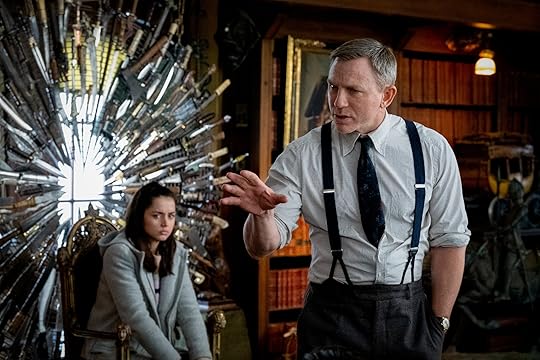
Knives Out proves the same point on screen. Rian Johnson knew the whodunit genre cold, and then did something audacious: he revealed the killer in the first act. That should have destroyed it. Instead,
it electrified it, because he understood the genre well enough to know which rules were load-bearing and which could be kicked away.
Knowledge before subversion. Always.
 #4.
Genre Is Not Theme – And Confusing the Two is Fatal.
#4.
Genre Is Not Theme – And Confusing the Two is Fatal.
This is possibly the single most common mistake writers make. Genre is not what your story is about. Theme is what your story is about. Genre is how it’s told.
A story about grief can be told as Literary Fiction, Horror, Romance, or Cosy Crime. The theme, loss, and how we survive it, remains constant. The genre changes the lens, the rules, the promise, and the structure entirely.
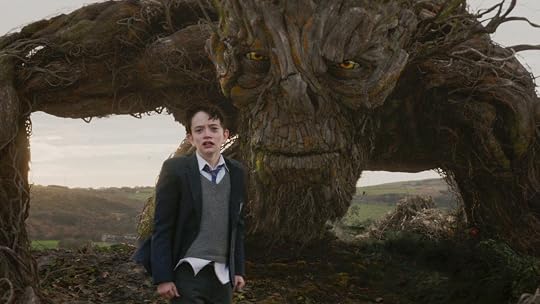
A Monster Calls is about grief. But its genre is dark fantasy, and that genre choice is load-bearing. The fantasy elements aren’t decoration. They’re the mechanism by which an impossible emotional truth becomes expressible. Try telling that story as straight Literary Drama, and you lose the myth, the metaphor, the monster. You lose the magic that makes the grief bearable.
My Family Drama work (Things We Do For Love) is about complicated love and family loyalty, but the genre dictated that the characters’ emotional interiority was the primary event. Not plot twists, not historical backdrop, not a murder mystery. The inner lives were the story. That’s a genre decision.
Know the difference.

#5 – Break the Contract, Lose the Reader.
You can argue with your editor. You can argue with critics.
You cannot argue with readers. Genre readers are specialists.
Romance readers know the genre inside out. Cosy Crime readers have read hundreds of entries in that world. They are connoisseurs, and they will know immediately when something feels off. Not just wrong, but wrong for this genre.
This is why genre-blending, while exciting, is genuinely dangerous territory.
It can be done brilliantly. Outlander blends Romance and Historical Fiction in a way that satisfies fans of both by deeply understanding them. The romance engine drives it; the historical immersion enriches it. Neither is sacrificed.
But blend carelessly, and you satisfy no one. Romance readers feel cheated when the love story gets sidelined. Historical readers roll their eyes when the history feels like set dressing.
The blend only works when you’re fluent in both languages.
As I step into Romance writing for the first time, this is the thing I’m most aware of. Romance readers have spent years, decades, developing an instinct for what works in that genre. My job isn’t to educate them.
My job is to speak their language fluently enough that they feel at home, and then bring something new
to the conversation.
 #6. For Screenwriters, Genre Is Even More Critical.
If anything, genre matters more in screenwriting than in fiction, because the stakes are higher and the audience is even less patient.
In a novel, a reader who’s confused will often push through. They trust you. A cinema audience, or a streaming audience browsing on a Tuesday night, will switch off in minutes if the genre signal is muddy.
Producers, agents, and development executives use genre as a filter. “What is this?” is the first question a script gets asked, and it needs an immediate, clear answer.
Not because Hollywood lacks imagination, but because genre tells them the audience, budget range, marketing strategy, and comp titles all at once. “It’s like Fleabag meets Midsommar” is actually useful information. “It defies genre” is terrifying information.
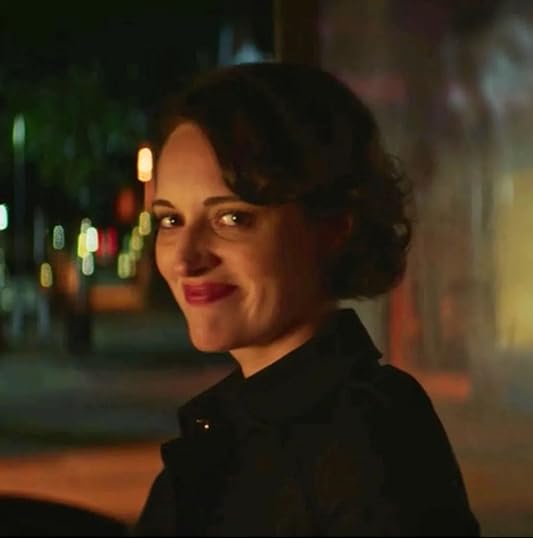
Fleabag itself is a perfect example of genre mastery. Phoebe Waller-Bridge classified it as a dark comedy.
She understood that the label meant she could explore grief, self-destruction, and longing as long as the comic engine kept firing. The moment the comedy stopped, the genre promise would break. She never let it stop. That’s craft, built on genre understanding.

#7. Genre Is a Living Conversation With Readers, Not a Straightjacket.
Here’s the liberating part, and I want to end here because I think it’s the most important thing of all.
Genre is not a cage. It’s a conversation.
Every genre has an ongoing relationship with its audience, one that evolves over time.
Romance in 2026 looks different to Romance in 1994: more diverse, more emotionally complex, more willing to deal with real-world struggles.
Cosy Crime has expanded beyond the English village into food-themed, craft-shop, and bookshop mysteries because the engine (puzzle, community, charm) is what matters, not the setting.
La La Land is the perfect example. Damien Chazelle walked into one of the most rigid genre contracts in storytelling, the musical romance, where audiences expect joy, spectacle, and two people ending up together. He knew that contract cold. And then he broke the ending.
Deliberately. Defiantly. Two people who love each other don’t end up together. And audiences didn’t riot, they wept, they argued, they couldn’t stop talking about it for months.
Because Chazelle understood the genre conversation well enough to know that audiences were ready for a more emotionally complex question: what if love isn’t enough? He didn’t ignore the genre.
He moved it forward. That’s the difference between honouring a conversation and advancing it.
My ten years of genre-hopping have taught me this above all else: the writers who flourish are not the ones who ignore genre or are imprisoned by it. They’re the ones who understand it so deeply that it becomes invisible, just the natural shape of the story they’re telling.
Learn the rules. Know the promise. Understand the engine.
Then go write something brilliant.
Now it’s YOUR turn – Which book or film broke the genre rules brilliantly? Tell me.
Would love to get your input in the comment box below.
The post Why Getting Genre Wrong Kills Your Story. appeared first on Vered Neta.
June 7, 2026
Why Your Protagonist Is Boring (And How to Fix It).
I’ve been thinking about this a lot lately. I’m in the middle of a 90-day writing sprint, deep in the drafting trenches of my next novel, a romance, and somewhere around chapter three, I had a moment of cold, uncomfortable clarity.
My protagonist was boring.
Not bad. Not unlikeable. Just… the least vivid person on the page. Every supporting character was crackling with specificity. And there she was, my lead, being perfectly reasonable and competent and utterly forgettable.
Sound familiar? If you write fiction, novels, scripts, anything with a human at the centre, chances are you’ve been here. And if you haven’t yet, you will be. So let’s talk about it: how to diagnose the problem, and more importantly, how to fix it.
7 Signs Your Protagonist Is Fading Into the Background.

#1. Your Protagonist Exists To React, Not To Want.
This is the big one. The most common reason a protagonist fades into the background is that they’re defined entirely by what happens to them rather than by what they want, fear, or actively pursue.
Supporting characters, paradoxically, often get sharper wants because writers feel freer with them. The best friend wants the protagonist to stop self-sabotaging. The antagonist wants power. Even the comic relief has a clear agenda.
Meanwhile, the protagonist is just… responding.
Think about Fleabag. Fleabag is relentlessly active; she wants, she schemes, she deflects, she self-destructs on purpose. She’s not a passive vessel for the plot. She is the plot. Every scene is driven by her desire or her damage. That’s the standard. If your protagonist could be swapped out for a witness rather than a participant, you have a problem.
Fix it: Write down, in one sentence, what your protagonist wants in this scene, not the chapter,
not the act, this scene. If you can’t, that’s your diagnosis.
#2. They Have No Contradictions.
Interesting people contain multitudes.
They’re generous and petty. Brave and cowardly. Principled and hypocritical.
The moment a character is consistently one thing, even a good thing, they stop feeling human.
The mistake writers make is confusing likeable with consistent. We sand off the contradictions to make our protagonists easier to root for. But contradictions aren’t flaws. They’re texture.
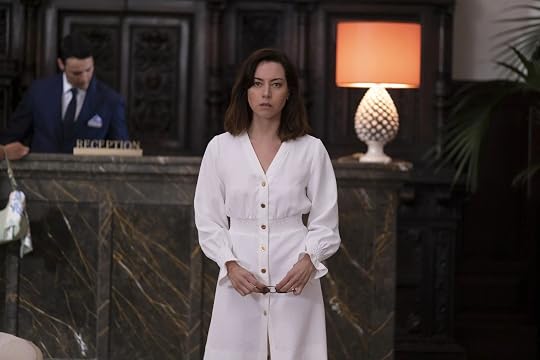
Look at The White Lotus. Almost every character is a masterclass in contradiction, but take Harper in season two, intelligent, principled, suspicious of everyone else’s moral compromises, and then quietly, deliberately, making her own.
She holds self-righteousness and desire in the same hands. She judges and then becomes what she judges. That tension is what makes her impossible to look away from. When your protagonist is only ever one thing, even a sympathetic thing, they flatten. Real people don’t hold together neatly. Neither should your lead.
Fix it: List three things your protagonist believes. Now find a scene where their behaviour contradicts each one of them. If you can’t find those scenes, write them.
#3. Everyone Else Is More Specific.
Supporting characters often get the best lines, the best quirks, the best wardrobes. Why? Because writers aren’t as anxious about them. They’re free to be weird, particular, and surprising.
Your protagonist, meanwhile, has been generalised into a type. The Grieving Widow. The Reluctant Hero. The Woman Reinventing Herself. Types aren’t characters. They’re categories.
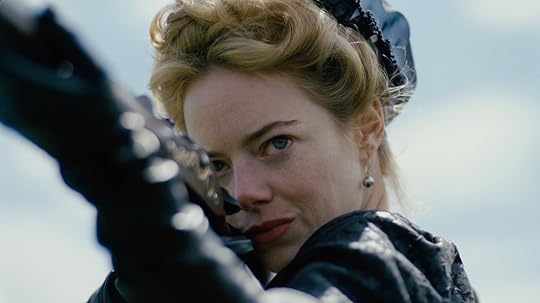
The Favourite is a masterclass in this. Abigail, on paper, is a type: the scheming social climber, the woman using what she has to get what she needs.
What makes her extraordinary is the specificity of her particular hunger.
The way she absorbs humiliation without flinching. The moment she decides. The precise calibration of her warmth, deployed exactly when it’s needed and switched off the second it isn’t. She’s not a type. She’s this woman, in this court, with this particular flavour of survival instinct. You can’t swap her out for a generic ambitious woman and get the same story.
Fix it: Take your protagonist’s three most important traits. Now make each one specific to them.
Not “she’s ambitious”, what does her ambition look like on a Tuesday? What does she sacrifice for it that
she’d never admit to?
 #4. They’re The Most Emotionally Restrained Person In The Story.
There’s a school of thought that protagonists should be somewhat contained so readers can project onto them. This is mostly wrong.
What readers and viewers actually want is someone who feels things they recognise, not someone who feels less.
Restrained protagonists read as passive. And passive protagonists make audiences restless.
Aftersun is one of the most devastating examples of purposeful restraint in recent cinema. Calum says almost nothing about what’s happening inside him. But director Charlotte Wells and Paul Mescal are exquisitely precise about what he’s holding back and what it’s costing him, you see it in the pauses, the too-bright moments of forced fun, the 4 am dancing alone.
The restraint isn’t a writing habit. It’s load-bearing. It’s doing something. That’s the difference between a protagonist who seems detached and one whose containment breaks your heart.
Fix it: Find the moment in your current chapter where your protagonist holds back an emotion.
Now ask: is this restraint doing something for the story, or is it a habit of writing? If it’s the latter,
let them feel it.
#5. Their Backstory Is Summarised, Not Dramatised.
You know your protagonist’s history intimately. The reader or viewer gets a paragraph of exposition, or a line of dialogue that explains everything and shows nothing.
Meanwhile, the supporting character with the interesting childhood gets a scene.
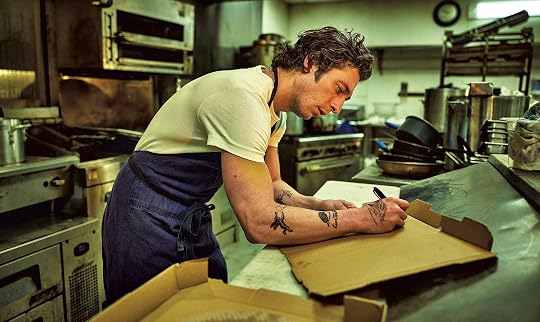
The Bear is devastating partly because Carmy’s backstory is never summarised; it’s demonstrated, in real time, through how he moves through a kitchen, how he responds to criticism, how he loves people badly because he was loved badly.
We never sit through an explanation of his trauma. We watch it operating in the present tense.
Fix it: Take the most important thing that happened to your protagonist before page one. Now find a way to show its effect in a present-tense scene, without ever naming it directly.
 #6. They’re Defined By Their Wound, Not Their Agency.
Backstory and wound are not character. They’re context. A protagonist who is primarily defined by what was done to them in the past is a victim, not a driver. Readers will feel for them. They won’t follow them.
This is different from having a wound; every great protagonist has one. The question is whether the wound is the character or whether the character is someone who has a wound and does things anyway.
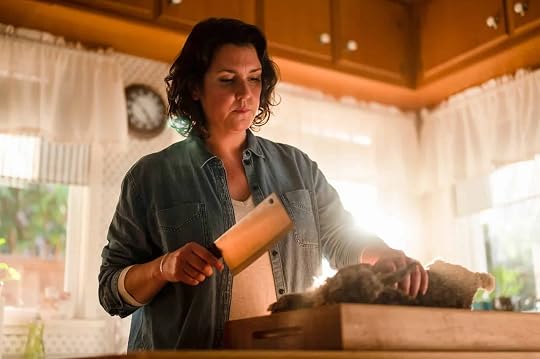
Killers of the Flower Moon makes this distinction with quiet, devastating power. Mollie Burkhart carries an almost unbearable wound; she is watching her family be murdered, systematically, by people she trusted, including the man she married. She could have been written as a pure victim.
Scorsese and Gladstone refused that. Mollie is defined by what she does with what she knows, the watchfulness, the endurance, the long, precise accumulation of evidence. The wound is real. But she is not the wound. She is the woman who survives it, eyes open, and that distinction is everything.
Fix it: Make a list of five active choices your protagonist makes in your story, things they choose that could have gone differently. If the list is thin, or if most choices are reactive, you need more agency on the page
#7. You Find Them Less Interesting To Write Than The Others.
This one’s uncomfortable, but it matters.
If you’re zooming through your antagonist’s scenes and grinding through your protagonist’s, the page will know.
Readers always feel where the writer’s energy was.
The fix isn’t to like your protagonist more.
It’s about finding what genuinely interests you about them, then writing more of that, even if it complicates the story.
Yellowjackets has an enormous ensemble, but Shauna consistently holds the screen because the writers clearly delight in her. She’s the one they gave the rabbit scene to. The affair. The most unsettling moments of domestic life cross-cut with survival horror. You can feel the writers leaning in.
Find what you’d lean into. Then lean.
A Final Thought.The protagonist doesn’t need to be the loudest person in the room, or the funniest, or the most damaged.
But they do need to be the most alive, the one whose interiority, contradictions, desires and choices make everything else matter.
If your supporting cast is outshining your lead right now, don’t panic. It means your instincts are good,
and you can write vivid characters. You just need to bring that same freedom and specificity to the person
at the centre.
Go back to chapter one. Find the first scene where your protagonist just lets things happen.
That’s where to start.
Now it’s YOUR turn – Who’s a protagonist you think absolutely nails it, and why?
Would love to get your input in the comment box below.
The post Why Your Protagonist Is Boring (And How to Fix It). appeared first on Vered Neta.
May 30, 2026
Why Cosy Crime Is Taking Over the World.
Let’s start at the beginning, because the beginning is Agatha Christie.
The Queen of Crime invented the template that every cosy mystery writer since has been riffing on:
the contained community, the seemingly impossible murder, the amateur mind sharper than any official one, and justice delivered with satisfying precision.
Christie wasn’t always strictly “cosy”; some of her work was darker and more psychologically complex than the label suggests, but she established the DNA. Hercule Poirot. Miss Marple. The country house. The closed circle of suspects. The quiet, devastating reveal.
That DNA never went away. But something interesting is happening right now: it’s surging back into the mainstream with extraordinary force. Richard Osman’s The Thursday Murder Club has sold over 15 million copies worldwide and is now streaming on Netflix with Helen Mirren and Ben Kingsley.
The Sheep Detectives hit cinemas in May 2026 with Hugh Jackman, Emma Thompson, and a voice cast including Julia Louis-Dreyfus and Patrick Stewart. Publishers are actively hunting for the next big cosy crime series. And writers (including this one, my own cosy crime novel Crime Cleaners has just been picked up by a publisher) are leaning into the genre with everything they’ve got.
So what’s driving it? Let’s investigate.
7 Reasons Cosy Crime Is Having Its Agatha Christie Moment.
#1 – We’re Exhausted, And Cosy Crime Is The Antidote.
The world has been, to put it diplomatically, a lot. Pandemics, political chaos, economic anxiety, the relentless scroll of bad news.
People are craving stories that feel safe, even when someone’s dead.
The formula: small community, amateur sleuth, a murder with no blood in sight, justice neatly served by the final chapter, is essentially a warm bath with a plot twist.
You get the intellectual satisfaction of a puzzle, the comfort of a contained world, and the reassurance that good sense prevails.
Only Murders in the Building, now in its fifth season, built an entire empire on this principle: three misfit neighbours, one very dangerous apartment building, and the shared compulsion to figure it out. The show’s enormous, loyal following is proof that audiences aren’t just tolerating cosy crime, they’re depending on it.
For writers: Understand that your genre serves an emotional function, not just an entertainment one.
The reader comes to your book in part because they need it. Honour that contract: deliver the puzzle,
deliver the comfort, and deliver the justice. Don’t subvert the ending’s resolution just to be literary.
The satisfaction IS the point.
#2 – Older Protagonists Are Finally Having Their Close-Up.
For decades, mainstream crime fiction treated anyone over fifty as a supporting character at best, a victim at worst.
Cosy crime has always known better, and now the rest of the industry is catching up.
The proof is everywhere. Vera has been quietly dominant for fifteen years, built entirely around the brilliance of a scruffy, brilliant detective in a flat cap who is perpetually underestimated and perpetually right.
Magpie Murders gave us Lesley Manville as a book editor in her fifties whose intelligence drives the entire mystery twice over, since the story is ingeniously nested.
McDonald & Dodds puts the quietly brilliant, older DS Dodds at the centre of every case, despite everyone around him assuming otherwise. And Bookish features Mark Gatiss as an eccentric post-war antique bookseller who runs intellectual rings around the official investigators.
For writers: If you’re writing a protagonist over fifty, resist any urge to apologise for their age or explain it away. Their experience, their pattern recognition, their freedom from caring what anyone thinks, these are your story’s assets, not its obstacles. Write their age as power.

#3 – The Amateur Sleuth Is Back – And More Inventive Than Ever.
One of cosy crime’s greatest gifts to fiction is the amateur detective: someone with no badge, no forensics lab, and no official authority who solves the crime through sheer observation and stubbornness.
This archetype works because it represents the reader: curious, underestimated, and absolutely determined to figure it out.
What’s exciting right now is how inventively writers and filmmakers are reinventing what it means to be an amateur.
Knives Out and Glass Onion gave us Benoit Blanc, a theatrical Southern gentleman with an almost absurdist devotion to truth, and placed him in gleefully satirical modern settings that puncture the cosy genre even as they honour it.
Only Murders in the Building made the sleuths true-crime podcast obsessives, which is both a perfect contemporary detail and a sly comment on our collective real-world appetite for murder mysteries. Moonflower Murders, and the Magpie Murders sequel, tucked one murder mystery inside another in clever meta-narrative layers.
For writers and screenwriters: The amateur sleuth is the vessel for your reader’s intelligence. Give yours a specific, unusual relationship to the crime, not just “curious neighbour” but someone whose particular professional knowledge, life experience, or personal obsession makes them uniquely equipped to see what the police miss. That specificity is what makes a sleuth memorable and a series sustainable.
 #4 – Setting Is Doing Serious Heavy Lifting.
Cosy crime lives and dies by its setting.
The genre has always favoured contained worlds: villages, islands, country houses, ships, because the closed circle is part of the intellectual pleasure.
But the best recent examples have elevated the setting from backdrop to co-protagonist.
My Life is Murder has made Melbourne a character in its own right, warm, slightly chaotic, full of hiding places.
Even Knives Out uses its New England gothic mansion as an argument: the house itself is a clue, encoding the family’s self-mythology and the rot beneath it.
For writers: Map your setting before you map your plot. Ask: What does this place want to hide? What does its geography, its social structure, and its history make possible or impossible?
A setting that generates a story is worth ten times as much as one that merely decorates it. And remember,
for a series, your setting is the world your reader is choosing to return to. Make it somewhere they genuinely want to be.
#5 – The Series Model: Readers Want To Stay.
Cosy crime readers are intensely loyal and don’t want just one book. They want fifteen.
This is the engine driving the current boom. The No. 1 Ladies’ Detective Agency by Alexander McCall Smith has been running since 1998 and is now at its twenty-seventh volume.
Ann Cleeves has built three beloved series (Vera, Shetland, Two Rivers), each with a devoted following that crosses from page to screen and back.
Only Murders in the Building is now in its sixth season, a remarkable run for any show. Publishers and streamers know the numbers: a cosy crime series with a strong central character and a distinctive world is a long-term asset, not a one-off.
For writers: Think in series before you type page one. Who is this protagonist across ten books?
What do they not yet know about themselves? What relationship in book one will pay off in book five?
What question sits at the heart of this world that each mystery will circle without quite answering?
A series is a relationship between the character and the reader, and it requires as much structural planning
as the individual mystery.
 #6 – Cosy Crime Is Quietly Subversive.
Here’s what people forget about the genre: beneath the scones and the village fetes and the pleasantly baffled detective inspector, cosy crime is often doing something quite sharp.
The best examples use the gentle surface to examine class, gender, power, and justice in ways that harder-edged crime fiction sometimes can’t.
Wicked Little Letters is a masterclass in this:
a 1920s English village, poison-pen letters, Olivia Colman and Jessie Buckley, utterly cosy in form, and quietly furious about the treatment of women and the hypocrisy of respectability.
Moonflower Murders used its nested literary frame to examine how stories shape and dangerously distort our understanding of the truth.
The subversion doesn’t have to be dark. Knives Out used the cosy crime format as a class satire, the Thrombey mansion and its entitled inhabitants skewered with precision. The genre has always had a political edge, if you look for it: who gets suspected, who gets believed, and who gets away with it are never neutral questions.
For writers and screenwriters: Find the thing your cosy crime is actually about beneath the mystery.
The murder is the engine, but what’s the destination? What does solving (or not solving) this particular crime say about the world your story inhabits? Christie always had a thesis. The best contemporary cosy crime does too.

#7 – The Adaptation Wave Is Validating The Genre’s Cultural Weight.
There is a feedback loop happening right now between publishing and screen, and cosy crime is at its centre.
When a beloved book series lands a Netflix deal with Dame Helen Mirren, it sends a signal: this genre has genuine crossover cultural weight.
When a sheep-based cosy mystery attracts one of the most starry voice casts in recent memory, it confirms that the appetite exists far beyond the core readership.
Ann Cleeves has seen two of her series, Vera and Shetland, become ITV and BBC staples that run for well over a decade. Rian Johnson’s Knives Out was so successful that it launched a Netflix franchise.
The Magpie Murders adaptation introduced Lesley Manville to a whole new international audience.
Producers are actively looking for the next beloved cosy crime character to adapt.
For writers: This is the market moment. If you are writing cosy crime, you are writing in a genre that publishers are acquiring and producers are optioning. Build your world with adaptation in mind, not as a cynical exercise, but as a creative one. Strong, specific settings travel. Distinctive character dynamics translate. Dialogue that crackles on the page crackles on screen. The gap between “commercial novel” and “TV series option” has rarely been smaller for this genre
The Bottom Line.From Agatha Christie’s parlour to a Netflix retirement village to a field full of murder-solving sheep, cosy crime has always understood something that darker genres sometimes miss: readers don’t just want to be frightened or disturbed. They want to be trusted with a puzzle.
They want the satisfaction of a world that makes sense. They want characters who prove, again and again, that being overlooked is not the same as being powerless.
Whether you’re a reader reaching for a new series to fall into, or a writer wondering if this is the moment to write the cosy crime book you’ve been sitting on, the answer in both cases is yes.
The village is waiting. The body has been discovered. Someone with excellent instincts is already asking all the right questions.
Now it’s YOUR turn – What’s the last cosy crime that completely hooked you?
Would love to get your input in the comment box below.
The post Why Cosy Crime Is Taking Over the World. appeared first on Vered Neta.
May 24, 2026
150 Rejections and One Yes: The Truth About Querying.
Let me paint you a picture.
You’ve spent months, possibly years, writing something you genuinely believe in. You’ve revised it until your eyes bleed. You’ve workshopped the query letter seventeen times. You hit send with a mixture of hope, nausea, and the specific kind of madness that makes writers… writers.
And then… nothing. Or worse: a very polite email telling you that while your work shows real promise, it’s not quite right for them at this time, and they wish you every success with your writing.
Every success with your writing. As if they didn’t just quietly close a door in your face.
Welcome to querying. Pull up a chair. There’s wine.
The Number Nobody Warns You About.Here’s a number I’ll offer you from personal experience: 150.
That’s how many submissions, to agents, to publishers, to literary magazines, I’ve racked up over nearly
a decade of writing. Some came back with a kind word. Many came back with a form rejection so
generic it could have been addressed to literally anyone. And a significant portion never came back at all.
The digital equivalent of a door quietly closing while you’re still mid-knock.
Nobody tells you, when you first sit down to write your book or your script, that querying is essentially a second career, one that requires a completely different skillset from writing, runs on a completely different timeline, and has an emotional texture closer to waiting for medical results than anything that should reasonably be called a creative pursuit.
And if you write scripts? Oh, the querying journey for screenwriters makes novel submissions look like a weekend stroll. The gatekeepers are different, the formats are different, the feedback (when you get any) is different, and the silence between stages can stretch so long you genuinely forget what you submitted or why.
So yes. The emotional side is real. It is relentless. And it does not improve as much with experience as people suggest it will.
But here’s the thing nobody puts on a motivational poster: it doesn’t finish you either.
A Few Weeks Ago, Something Happened.A few weeks ago, I received an email.
Not a form rejection. Not a silence. An actual email from a publisher expressing interest in offering me a contract for my cosy crime novel, Crime Cleaners.
I want to be clear: this is not the end of the road. There’s a long journey still ahead before a publishing house puts that book into the world. But after nearly ten years and more rejections than I care to count, it was a landmark. A genuine, full-stop, pour-yourself-something-good landmark.
I’m not telling you this to do a victory lap. I’m telling you because the reason that email exists is not talent alone, or luck alone, or even the quality of the book alone (though I do think Crime Cleaners is rather good,
but then I would, wouldn’t I).
That email exists because I kept going. Strategically, stubbornly, and with a mindset that had to be consciously rebuilt more than once.
Here are 5 Ways to Query Without Losing Your Mind.
 #1 – Treat It Like a Long Run From Day One – Not a Sprint.
The biggest mistake writers make is querying in bursts of hope followed by long retreats of despair.
You submit ten agents, get rejected by eight and ignored by two, and take six months off to lick your wounds. Meanwhile, the right agent is sitting there, having never heard from you.
Querying is not a sprint with recoveries.
It’s a slow, steady river. The mindset shift is this: submission is part of the writing life, not a break from it.
Schedule it like you schedule drafting. Keep a spreadsheet (I cannot stress the spreadsheet enough; it is the single most sanity-preserving tool in the querying writer’s arsenal). Treat each batch as research, not a referendum on your worth.
#2 – Rejection is Data, Not a Verdict.
This one takes time to actually believe rather than just recite. But it’s true.
A rejection from an agent or publisher tells you almost nothing about the quality of your work. It tells you about fit, timing, their current list, what they had for breakfast, and the specific alchemy of a stranger’s taste on a Tuesday afternoon. That’s all.
What rejection can tell you, if you collect enough of it and look at it honestly: are there patterns? Are you getting requests for partials that then go cold? That’s a first-chapter issue, probably. Are you not getting responses at all? That might be a query letter issue, not a manuscript issue. Use the data. Don’t let it use you.
#3 – Separate Your Identity From Your Submission.
Your manuscript is not you. Your script is not you. They are things you made, and things you made can be adjusted, rewritten, reframed, and resubmitted.
Whatever comes back, or doesn’t, it’s the work that went out into the world, not you.
This sounds obvious. It is extraordinarily difficult in practice. Writers, novelists and screenwriters alike tend to pour themselves into their work in a way that makes this separation feel dishonest.
But the mindset shift is non-negotiable.
The moment you conflate a “no” on your submission with a “no” on your worth as a writer or a human being, you’ve handed the process power it was never meant to have.

#4 –
Build A Life Around The Writing, Not Around The Waiting.
The querying black hole is worst when writing itself has stopped. If all your creative energy is sitting in someone else’s inbox, every day without a response is a day your whole identity is on hold.
The strategic answer is almost offensively simple: keep writing. Start the next thing.
Genuinely. Not as a distraction tactic, but as a commitment to the idea that you are a writer regardless of what any given agent or publisher decides. The waiting becomes background noise when something new demands your attention.
I submitted Crime Cleaners in December 2025 and, rather than spend my days refreshing my inbox like a woman possessed, I started planning a romance novel, The Widow and the Kabbalist, which I am now happily in the middle of writing. And published my short stories anthology “Not Done Yet.”
The submission nerves are still there. They’re just no longer the loudest thing in the room.
For screenwriters especially, this matters enormously. The pipeline between pitch and production is so long and so uncertain that writers who stop creating while they wait tend to disappear. The ones who don’t disappear are the ones with three new things ready by the time a door finally opens.

#5 –
Celebrate The Small Forward Movements.
Here’s the thing about landmark moments: they only feel like landmarks in retrospect. While you’re on the journey, they’re just the next step.
And if you’re only celebrating the big wins, the contract, the agent, the commission, you’re going to spend most of your writing life feeling like you haven’t achieved anything.
Celebrate the polite personal rejection over the form rejection. Celebrate the request for a full manuscript. Celebrate finishing the query letter. Celebrate the submission itself, because submitting takes courage that many writers never summon.
This is exactly why in my Facebook group, Into the Script, we have a weekly segment called
Monday Mini-Win, a dedicated space where writers share whatever moved the needle that week,
big or small, and get genuine cheers from a community of people who understand exactly what it cost.
If you’re not already in the group, come find us. A win shared is a win that sticks.
The emotional sustainability of a long querying journey depends entirely on your ability to find meaning and momentum in the small things. The big things are real. But they’re rare. You cannot live on rare.
The Thing About Keeping Going.Nearly ten years. More than 150 submissions. More silence than I care to remember.
And then one Tuesday, an email.
I don’t know where you are in your querying journey. Maybe you’re just starting out, still optimistic, query letter freshly polished. Maybe you’re somewhere in the middle, a little bruised, wondering whether the silence means something. Maybe you’re further along than you’d like to admit, quietly deciding whether it’s worth continuing.
I can’t promise you a contract. I can’t guarantee an agent, a commission, or any specific outcome. The industry doesn’t work like that, and anyone who tells you it does is selling something.
What I can tell you is this: the writers who get there aren’t always the most talented. They’re the ones who built a mindset sturdy enough to outlast the wait.
Yours can be that sturdy. I’m fairly confident of that. Now go update your spreadsheet.
Now it’s YOUR turn – Where are you on the journey right now: hopeful, battle-scarred, or somewhere in the messy middle?
Would love to get your input in the comment box below.
The post 150 Rejections and One Yes: The Truth About Querying. appeared first on Vered Neta.

