Wellth: how I learned to build a life, not a resume – book review
I was initially drawn to this book by the title. A lot of the discussions I have about creating a wellbeing centred society build on the idea that we need to start valuing people’s health and happiness above material wealth. That, and I always like a clever play on words such that the whole argument is conveyed by the title[image error]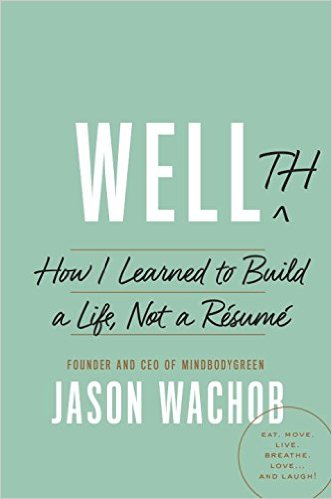
Overall, I liked the book and found it to be a simple, straightforward account of the author’s life journey thus far as he shifted from believing in, and aspiring towards, a traditional definition of a ‘successful’ life – one in which money, status and material possessions feature heavily as the rewards of long hours of hard work – towards a more holistic appreciation of living a Wellthy life – one in which physical and mental health, relationships and a sense of purpose take priority over the accumulation of traditional wealth.
The structure feels a little like a blog in book format and the 11 chapters are each focused on an aspect of Wellth. He introduces each element with a story from his own life to illustrate the point he is trying to make. He also includes several ‘how to’ lists of instructions from experts in the relevant fields so it’s not entirely self-referential and, does include some more ‘evidence based’ reporting for those who are interested, along with a decent reference list for those who want to explore more.
What did I learn?
The content itself was unsurprising to me and, I think, will serve more as a reminder, than a revelation, to those who have already read (or written) a lot in this area. I found the book to be well written and persuasive about the need to both refocus our priorities and make the follow up behavioural changes that will help us live a wellthy life. The examples he gives from his own (and his wife’s) experience are helpful in providing concrete ways that this can be done.
My main disappointment was that there was too much emphasis on work being life’s purpose for my liking with no examples given of anyone who had found another source of meaning to draw from.
Personally I think this overemphasis on work as the core source of identify, meaning and purpose places too much importance on what is, after all, only one aspect of a wellthy life. I feel that this continued emphasis on finding or creating the right job actually contributes to the experience of work as the primary source of anxiety and stress in contemporary life. It was bad enough when you just had to worry about not being late too often or how to deal with annoying co-workers, but, add the pressure of feeling like you have to make your primary contribution to the world through your work, and that elevates work-related stress to a whole new level!
I would have also liked to see him delve deeper into the idea that, in order to fully embrace life, we have to first embrace death. Not as a scary, ticking time bomb that we’re racing against as we try to fit everything in, but rather as a natural passing for every natural organism. A reminder that our time is finite which both, liberates us from the need to place too much importance on any one act or decision, AND helps us remember that prioritising that which is of relatively more personal importance, is the key to living an authentic life. One in which we know why we do the things and make the choices we do, even if they make no sense to anyone else.
My favourite chapter was ‘feel’ in which he lays out the case for why it’s important to pick the people with whom you travel through life. Given my current preoccupation with understanding the role of social connections and community in relation to wellbeing, I was especially interested in his discussion of Dunbar’s work on friendship.
Dunbar has argued that, although we all need social connections there are a finite number of relationships we can actually manage. He also argues that the closer and more intense these friendships the fewer people we can actually include in our inner sanctum.
Dunbar reports that the maximum number of social connection any person can handle is about 150 which some have argued is about the size of a typical village from the pre-industrial past. Within that group we each have about 50 friends who are not close, but would get invitations to a party we were throwing. Then there are 15 close friends or intimate confidents and, finally our 5 best friends. Furthermore, we ourselves are a reflection of our 5 best friends at the time – so you see the need to choose wisely.
You can try an interesting exercise to test out the theory for yourself. First think of the 5 people you spend the most time with, those you would consider your true best friends. Now come up with one word per person to describe the essence of that person. When you have your list of 5 words, reflect on whether that would be a pretty good description of yourself at this point in time.
Remember that list might be positive or negative. If you find yourself describing someone you don’t like very much but that sounds a lot like you, one response might be to reconsider who you spend your time. Consciously seek out those people who bring the qualities you want to embody into the relationships and see if a little more of them could rub off on you.
Who would benefit from this book?
Overall, I liked the book and found it to be a simple, straightforward account of the author’s life journey thus far which, in many places, mirrored my own. It’s not a deep book, nor does it offer any ground-breaking ‘new’ insights into taking a more holistic approach to health and happiness but it seems an honest story, authentically told.
Because of the lightness of tone and content, I think this book would appeal to many people who are coming into the holistic health world for the first time and are looking for an interesting, engaging, personal story to introduce them to the fundamentals of living a wellbeing centred or wellthy life.
Conversely, it’s also a great summary of ideas for those who already have a deeper familiarity with the material either as a timely refresher or, as in my case, to focus more on one or more of the elements that are your current focus.
All in all an enjoyable, engaging and accessible book. Perfect for a long flight or, to take to your local café when you’re leaving your laptop at home for the day, and feel like some inspiration to help you ponder the timeless question of what makes for a good life[image error]
The book is available on Amazon
About Me:
Tricia Alach is an author, coach and wellbeing professional who specialises in helping busy people create more balance, joy and fulfilment in life! Originally from NZ she has spent the past decade living and working abroad in a range of academic, corporate and consulting roles. To learn more visit www.flowmindandbody.com or connect via linked-in, facebook or @triciaalach