
“Tampering with the Canon”: Taking Holmes and Watson beyond the “Petty Puzzles of the Police-Court” as Participants in Historical Events
Few things are more thought-provoking (or maybe just provoking!) to a writer than a bad review. In an otherwise positive assessment of Part VI of The MX Book of New Sherlock Holmes Stories: 2017 Annual, one reader complained that my story “A Scandal in Serbia” “meanders all over the place, tampers with the [C]anon and tries to reintroduce a particularly popular and elusive character” (Irene Adler). I admit to the first charge, given that travel to Serbia and Montenegro was inherently meandering in 1903. To the second, I plead an unqualified “Not guilty!” for reasons to be explained below. As for Irene Adler, it was not I who first reintroduced her. I was following a line that extended, if not quite back to the Gospel, at least to the Apocrypha as it was revealed to Doyle’s best-known disciple, W.S. Baring-Gould. More on him below as well.
It may, of course, be fairly stated that my pastiches have not often focused upon solving crimes. Like his brother Mycroft, I prefer to see Sherlock Holmes’ deductive talents devoted to more important matters than the “petty puzzles of the police-court.” Yet, I deny that this preference amounts to “tampering with the Canon,” for the Canon is replete with cases that immersed the great detective in international intrigue or service to “one of the royal houses of Europe.” Long before “His Last Bow” brought Holmes’ anti-German espionage exploits to a triumphant end, the Kaiser’s shadow loomed over such cases as “The Bruce-Partington Plans,” “The Naval Treaty,” and “The Second Stain.” Thus, a pasticheur who presents Holmes and Watson as historical figures participating in historical events (what David Marcum calls “Playing the Game”) is no more tampering with the Canon than was Conan Doyle when his characters joined “The Great Game” of imperial rivalry before the First World War. My forthcoming collection Sherlock Holmes and the Crowned Heads of Europe (which will include “A Scandal in Serbia”) contains four previously unrecorded cases that led directly to that war. The first of them, “The Case of the Dying Emperor,” marked the beginning of Holmes’ personal crusade against the German Empire. It is already available as an e-book from MX Publishing (https://www.amazon.com/Sherlock-Holme...). In support of my preoccupation, I cite Marcum’s thesis that Holmes “retired” in 1903 at the behest of Mycroft, in order to concentrate more closely on the coming conflict. Why else, indeed, should a celebrated sleuth “retire” when he was only forty-nine? (“A Scandal in Serbia” suggests a secondary motive, but more—again—on that below.)
“Tampering” might more reasonably be charged against Crowned Heads because, in those stories, Watson finally wrote openly of historical events. During the years when most of the Canon was compiled, the identities of near-contemporary luminaries had perforce to be concealed. As the Doctor noted in his introduction:
As Holmes’ biographer, I was required to exercise more than usual discretion when writing of such cases, or those that could be presented to the public if suitably disguised. Some of my disguises were less than adequate, I fear, for readers with more than a passing knowledge of contemporary politics. No doubt they identified “Lord Bellinger” or “the Duke of Holderness” with ease, aware that no “King of Bohemia” had ruled an independent kingdom for four centuries. However, given the gravity of the events that lay behind them, these mythical figures had to populate my stories in order for them to be read at all.
By the late 1920s, Watson recognized that with Armageddon having come and gone:
. . . the necessity for such feeble deceptions has now passed. Our Victorian statesmen have long since departed the political arena. The Great War has swept away the dynasties of Europe. It becomes possible, therefore, to write openly of cases Holmes could not have permitted to be published only a decade ago, even in the fictionalized manner I have hitherto employed. All but one of the royal principals is dead; the survivor’s reputation cannot be diminished further by my revelations. These four inconclusive cases . . . may finally be recorded, although they shall not be published until well beyond my lifetime.
Note that sad word “inconclusive.” “A Scandal in Serbia’s” lack of resolution was another disappointment for my poor reviewer. He rightly grumbled that “[T]here seemed no clear outcome of the adventure, especially since Holmes and Watson [could] spend hours observing and waiting for prey, then act like reporters on the scene.” Deprived of the introduction to Crowned Heads, his complaint was understandable, for only there did Watson reveal that in “these four inconclusive cases” he and the great detective had failed to alter history:
[I]n every instance, Holmes’ scrupulous investigation remained unresolved, my own account unwritten, and the historical facts behind the cases faded with each passing year.
Despite the most valiant efforts of our heroes, “The Dying Emperor” died before his time; the “scandalous” Obrenovićs perished pitifully; and Franz Ferdinand survived at Welbeck Abbey only to succumb at Sarajevo. In the “fateful summer” of 1914 (wrote the Doctor), the Crowned Heads cases’ “long-delayed results combined with terrible effect, erupting in the cataclysm that brought down our vanished world.” Perhaps it was some consolation that while Holmes and Watson did not save the world from war, their timely thwarting of [v]on Bork at least preserved Great Britain from immediate disaster.
A Sidelight on Baring-Gould and his Descendants
One last complaint in the review was that “A Scandal in Serbia” employed a plot element (Holmes’ love affair with Irene Adler during the Hiatus) that was not conceived by Doyle, but by the great detective’s “biographer,” W.S. Baring-Gould. My reviewer wrote that Baring-Gould was “not quite [C]anon”; therefore, his accretions should not have been included in what was advertised as a traditional anthology. While I might argue that “traditional” need not mean “strictly Canonical,” editor Marcum and I foresaw such justifiable objections when my story was accepted. Nevertheless, we remain unapologetic Baring-Gouldists. Doyle’s primary object in the Canon, as I see it, was to demonstrate Holmes’ facility for observation and deduction. He was seldom much concerned—and, indeed, was often careless—about the details of Holmes and Watson’s private lives outside of Baker Street. The vexed question of the Doctor’s wives is only one example. Baring-Gould, and those who follow him, have attempted to flesh out the Master’s sketchy portraits and turn his two creations into fully realized human beings. To return to the Holmes-Adler love affair, which my reviewer found heretical, there was a plausible justification for it in the story he’d just read:
Surely [Watson wrote] it is no wonder that two people who had shared so strong an intellectual attraction should fall in love under the charged circumstances that attended their reunion. Fleeing the horror at the Reichenbach Falls, pursued by the most formidable of Moriarty’s minions, robbed of his very identity while disguised as Sigerson, my friend was in as vulnerable a state as any man who affects to disdain all emotion can be. In Irene Adler, he discovered—besides a companion of surpassing beauty, charm, and sympathy—a mind that matched his own as well.
Must we necessarily accept that Holmes, like his modern golem “Sherlock,” was always “a high-functioning sociopath” immune to sexual attraction? A.S. Croyle, who found a marvelous first love for the young man in When the Song of the Angels is Stilled and its successor novels, explained quite cogently that the budding detective gave up Poppy Stamford to devote himself, without feminine distraction, to the science of deduction. Odd, perhaps, but hardly inexplicable. Is it not also possible that the mature Holmes might abandon his ascetic vow upon reencountering “The Woman” who was in every sense his equal? Or that her final loss in 1903 (as Marcum and I have concluded) might have been one of the factors that led him to retire?
Similarly, Baring-Gould, assisted by recent pasticheurs, has filled in some of the Canonical gaps concerning Watson. Why aren’t there more cases from the middle 1880s? Why did a man so attracted to the ladies (and the Doctor’s proclivities have never been in doubt!) wait until age thirty-seven to marry Mary Morstan? What about those inconvenient references to a wife who can’t be her? B-G solved all these problems neatly by sending Watson to America from 1884 to 1886. He returned from San Francisco with a wife (one Constance Adams) who—although she soon expired—lasted long enough to provide me with a ghost story for the MX anthology, Part VII. However, Watson’s greatest benefactor is surely Marcia Wilson, who builds upon Adrian Conan Doyle’s description of the Doctor—“an active, loyal man with a normal intelligence and more than his fair share of courage.” In You Buy Bones, in two Test of the Professionals novels, and in several episodes of yet-to-be published fan fiction, Wilson presents John H. Watson as the man he essentially was and might have remained if not for Maiwand: a soldier. She has rescued the ex-army surgeon from the last vestiges of Nigel Bruce.
I do not agree with Baring-Gould on everything. His candidates for Jack the Ripper and the “real” King of Bohemia, for example, were quite ludicrous. Nevertheless, the biographical and case chronology in Sherlock Holmes of Baker Street should in itself assure the man an honored place among Sherlockians. Nothing in his writings is incompatible with the “traditional” Holmes and Watson as conceived by Conan Doyle. In B-G’s hands, indeed—and in the hands of the best of his successors—the Master’s characters have come more fully into life.
Below are two overdue reviews of other recent novels from Sherlockian writers with an historical bent: Richard T. Ryan and Daniel D. Victor.
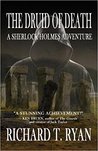 The Druid of Death: A Sherlock Holmes Adventure by Richard T. Ryan
My rating: 4 of 5 stars
As its title indicates, Richard T. Ryan’s latest Holmesian adventure delves more deeply into the British past than did its predecessors, for our great detective’s quarry seems to be resurrecting the ritual sacrifices of the ancient Druids. Young victims’ mutilated bodies are discovered at a series of Druidic sites, marked with weird symbols and surrounded by the branches of trees sacred to the cult. Because the murders take place only upon solstices, Holmes, Watson, and Lestrade have ample time to solve the case, even if the Yarder grows impatient with the pace of progress. Among the Druidic experts enlisted to assist is none other than the Rev. Sabine Baring-Gould, lyricist of “Onward, Christian Soldiers” and grandfather of another B-G venerated by Sherlockians. As in The Stone of Destiny, Ryan writes at times from the murderer’s perspective, allowing alert readers the opportunity to identify one culprit without the clues that Holmes withholds. Anachronistic dialogue and minor errors occasionally slip in, but Ryan is uniformly faithful to the characters that Conan Doyle created. His most recent tale is educational as well as entertaining, offering a tour of Druidic henges, and a primer on Druidic lore, as “icing on the cake” for a solid and satisfying mystery.
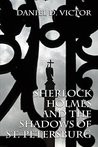 Sherlock Holmes and The Shadows of St Petersburg by Daniel D Victor
My rating: 5 of 5 stars
In this novel, Daniel D. Victor branches out from his excellent American Literati series and proves himself equally at home with Russian literature. The murder of two pawnbrokers in London’s East End appears to replicate the one in Dostoevsky’s Crime and Punishment, which Watson (while awaiting publication of his own first literary effort) happens to be reading at the time. With Holmes seeming skeptical of the connection, the Doctor, in his mentor’s absence, joins Lestrade’s investigation and interrogates a likely suspect. Naturally, the great detective is a step ahead of them, off to St. Petersburg to investigate the historical origins of Dostoevsky’s novel and consult a Russian colleague. As readers of his books expect, Victor skillfully weaves these threads into a satisfying outcome, with spot-on depictions of Doyle’s characters, impressive knowledge of the neighborhoods of London, and literary erudition that educates his readers as well as entertains them. More, please!
It may, of course, be fairly stated that my pastiches have not often focused upon solving crimes. Like his brother Mycroft, I prefer to see Sherlock Holmes’ deductive talents devoted to more important matters than the “petty puzzles of the police-court.” Yet, I deny that this preference amounts to “tampering with the Canon,” for the Canon is replete with cases that immersed the great detective in international intrigue or service to “one of the royal houses of Europe.” Long before “His Last Bow” brought Holmes’ anti-German espionage exploits to a triumphant end, the Kaiser’s shadow loomed over such cases as “The Bruce-Partington Plans,” “The Naval Treaty,” and “The Second Stain.” Thus, a pasticheur who presents Holmes and Watson as historical figures participating in historical events (what David Marcum calls “Playing the Game”) is no more tampering with the Canon than was Conan Doyle when his characters joined “The Great Game” of imperial rivalry before the First World War. My forthcoming collection Sherlock Holmes and the Crowned Heads of Europe (which will include “A Scandal in Serbia”) contains four previously unrecorded cases that led directly to that war. The first of them, “The Case of the Dying Emperor,” marked the beginning of Holmes’ personal crusade against the German Empire. It is already available as an e-book from MX Publishing (https://www.amazon.com/Sherlock-Holme...). In support of my preoccupation, I cite Marcum’s thesis that Holmes “retired” in 1903 at the behest of Mycroft, in order to concentrate more closely on the coming conflict. Why else, indeed, should a celebrated sleuth “retire” when he was only forty-nine? (“A Scandal in Serbia” suggests a secondary motive, but more—again—on that below.)
“Tampering” might more reasonably be charged against Crowned Heads because, in those stories, Watson finally wrote openly of historical events. During the years when most of the Canon was compiled, the identities of near-contemporary luminaries had perforce to be concealed. As the Doctor noted in his introduction:
As Holmes’ biographer, I was required to exercise more than usual discretion when writing of such cases, or those that could be presented to the public if suitably disguised. Some of my disguises were less than adequate, I fear, for readers with more than a passing knowledge of contemporary politics. No doubt they identified “Lord Bellinger” or “the Duke of Holderness” with ease, aware that no “King of Bohemia” had ruled an independent kingdom for four centuries. However, given the gravity of the events that lay behind them, these mythical figures had to populate my stories in order for them to be read at all.
By the late 1920s, Watson recognized that with Armageddon having come and gone:
. . . the necessity for such feeble deceptions has now passed. Our Victorian statesmen have long since departed the political arena. The Great War has swept away the dynasties of Europe. It becomes possible, therefore, to write openly of cases Holmes could not have permitted to be published only a decade ago, even in the fictionalized manner I have hitherto employed. All but one of the royal principals is dead; the survivor’s reputation cannot be diminished further by my revelations. These four inconclusive cases . . . may finally be recorded, although they shall not be published until well beyond my lifetime.
Note that sad word “inconclusive.” “A Scandal in Serbia’s” lack of resolution was another disappointment for my poor reviewer. He rightly grumbled that “[T]here seemed no clear outcome of the adventure, especially since Holmes and Watson [could] spend hours observing and waiting for prey, then act like reporters on the scene.” Deprived of the introduction to Crowned Heads, his complaint was understandable, for only there did Watson reveal that in “these four inconclusive cases” he and the great detective had failed to alter history:
[I]n every instance, Holmes’ scrupulous investigation remained unresolved, my own account unwritten, and the historical facts behind the cases faded with each passing year.
Despite the most valiant efforts of our heroes, “The Dying Emperor” died before his time; the “scandalous” Obrenovićs perished pitifully; and Franz Ferdinand survived at Welbeck Abbey only to succumb at Sarajevo. In the “fateful summer” of 1914 (wrote the Doctor), the Crowned Heads cases’ “long-delayed results combined with terrible effect, erupting in the cataclysm that brought down our vanished world.” Perhaps it was some consolation that while Holmes and Watson did not save the world from war, their timely thwarting of [v]on Bork at least preserved Great Britain from immediate disaster.
A Sidelight on Baring-Gould and his Descendants
One last complaint in the review was that “A Scandal in Serbia” employed a plot element (Holmes’ love affair with Irene Adler during the Hiatus) that was not conceived by Doyle, but by the great detective’s “biographer,” W.S. Baring-Gould. My reviewer wrote that Baring-Gould was “not quite [C]anon”; therefore, his accretions should not have been included in what was advertised as a traditional anthology. While I might argue that “traditional” need not mean “strictly Canonical,” editor Marcum and I foresaw such justifiable objections when my story was accepted. Nevertheless, we remain unapologetic Baring-Gouldists. Doyle’s primary object in the Canon, as I see it, was to demonstrate Holmes’ facility for observation and deduction. He was seldom much concerned—and, indeed, was often careless—about the details of Holmes and Watson’s private lives outside of Baker Street. The vexed question of the Doctor’s wives is only one example. Baring-Gould, and those who follow him, have attempted to flesh out the Master’s sketchy portraits and turn his two creations into fully realized human beings. To return to the Holmes-Adler love affair, which my reviewer found heretical, there was a plausible justification for it in the story he’d just read:
Surely [Watson wrote] it is no wonder that two people who had shared so strong an intellectual attraction should fall in love under the charged circumstances that attended their reunion. Fleeing the horror at the Reichenbach Falls, pursued by the most formidable of Moriarty’s minions, robbed of his very identity while disguised as Sigerson, my friend was in as vulnerable a state as any man who affects to disdain all emotion can be. In Irene Adler, he discovered—besides a companion of surpassing beauty, charm, and sympathy—a mind that matched his own as well.
Must we necessarily accept that Holmes, like his modern golem “Sherlock,” was always “a high-functioning sociopath” immune to sexual attraction? A.S. Croyle, who found a marvelous first love for the young man in When the Song of the Angels is Stilled and its successor novels, explained quite cogently that the budding detective gave up Poppy Stamford to devote himself, without feminine distraction, to the science of deduction. Odd, perhaps, but hardly inexplicable. Is it not also possible that the mature Holmes might abandon his ascetic vow upon reencountering “The Woman” who was in every sense his equal? Or that her final loss in 1903 (as Marcum and I have concluded) might have been one of the factors that led him to retire?
Similarly, Baring-Gould, assisted by recent pasticheurs, has filled in some of the Canonical gaps concerning Watson. Why aren’t there more cases from the middle 1880s? Why did a man so attracted to the ladies (and the Doctor’s proclivities have never been in doubt!) wait until age thirty-seven to marry Mary Morstan? What about those inconvenient references to a wife who can’t be her? B-G solved all these problems neatly by sending Watson to America from 1884 to 1886. He returned from San Francisco with a wife (one Constance Adams) who—although she soon expired—lasted long enough to provide me with a ghost story for the MX anthology, Part VII. However, Watson’s greatest benefactor is surely Marcia Wilson, who builds upon Adrian Conan Doyle’s description of the Doctor—“an active, loyal man with a normal intelligence and more than his fair share of courage.” In You Buy Bones, in two Test of the Professionals novels, and in several episodes of yet-to-be published fan fiction, Wilson presents John H. Watson as the man he essentially was and might have remained if not for Maiwand: a soldier. She has rescued the ex-army surgeon from the last vestiges of Nigel Bruce.
I do not agree with Baring-Gould on everything. His candidates for Jack the Ripper and the “real” King of Bohemia, for example, were quite ludicrous. Nevertheless, the biographical and case chronology in Sherlock Holmes of Baker Street should in itself assure the man an honored place among Sherlockians. Nothing in his writings is incompatible with the “traditional” Holmes and Watson as conceived by Conan Doyle. In B-G’s hands, indeed—and in the hands of the best of his successors—the Master’s characters have come more fully into life.
Below are two overdue reviews of other recent novels from Sherlockian writers with an historical bent: Richard T. Ryan and Daniel D. Victor.
The Druid of Death: A Sherlock Holmes Adventure by Richard T. RyanMy rating: 4 of 5 stars
As its title indicates, Richard T. Ryan’s latest Holmesian adventure delves more deeply into the British past than did its predecessors, for our great detective’s quarry seems to be resurrecting the ritual sacrifices of the ancient Druids. Young victims’ mutilated bodies are discovered at a series of Druidic sites, marked with weird symbols and surrounded by the branches of trees sacred to the cult. Because the murders take place only upon solstices, Holmes, Watson, and Lestrade have ample time to solve the case, even if the Yarder grows impatient with the pace of progress. Among the Druidic experts enlisted to assist is none other than the Rev. Sabine Baring-Gould, lyricist of “Onward, Christian Soldiers” and grandfather of another B-G venerated by Sherlockians. As in The Stone of Destiny, Ryan writes at times from the murderer’s perspective, allowing alert readers the opportunity to identify one culprit without the clues that Holmes withholds. Anachronistic dialogue and minor errors occasionally slip in, but Ryan is uniformly faithful to the characters that Conan Doyle created. His most recent tale is educational as well as entertaining, offering a tour of Druidic henges, and a primer on Druidic lore, as “icing on the cake” for a solid and satisfying mystery.
Sherlock Holmes and The Shadows of St Petersburg by Daniel D VictorMy rating: 5 of 5 stars
In this novel, Daniel D. Victor branches out from his excellent American Literati series and proves himself equally at home with Russian literature. The murder of two pawnbrokers in London’s East End appears to replicate the one in Dostoevsky’s Crime and Punishment, which Watson (while awaiting publication of his own first literary effort) happens to be reading at the time. With Holmes seeming skeptical of the connection, the Doctor, in his mentor’s absence, joins Lestrade’s investigation and interrogates a likely suspect. Naturally, the great detective is a step ahead of them, off to St. Petersburg to investigate the historical origins of Dostoevsky’s novel and consult a Russian colleague. As readers of his books expect, Victor skillfully weaves these threads into a satisfying outcome, with spot-on depictions of Doyle’s characters, impressive knowledge of the neighborhoods of London, and literary erudition that educates his readers as well as entertains them. More, please!


date newest »
newest »
message 1:
by
Denis
(last edited Jan 20, 2019 10:49AM)
(new)
Jan 20, 2019 10:48AM
 An interesting and well-written essay, and a worthwhile contribution to the debate. Well done, Tom! You argue your points well and pretty persuasively, with regard both to Irene Adler and to the antecedents of the First World War. As most Sherlockian scholars no doubt already have their own views of these matters, however, and their own ways of reading between the lines of the published cases, you may not succeed in converting those who disagree with you! Such, of course, is the way with Sherlockian scholarship, that there is very little which is ever agreed upon or decided in a definitive way!
reply
|
flag
 Thanks, Denis, for your kind remarks. That particular review of “A Scandal in Serbia” had “bugged” me for quite awhile. While I certainly understand the Canonical purists’ objections to B-G, and don’t really expect to change their minds, I did want to state the other side of the argument as I see it. I enjoy immersing Holmes and Watson in historical events, even though their inability to change history will probably frustrate many of my readers. If you’re intrigued by that approach, I hope you’ll give “Dying Emperor” a try. Either way, I appreciate your interest!
Senile Musings of an Ex-Boy Wonder

An occasional blog on Sherlock Holmes, other historical and literary topics, and whatever else occurs to me
- Thomas A. Turley's profile
- 8 followers

