My Journey as a Writer
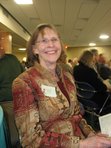
Here I am, in beautiful Merida, Yucatan, in 2018. I am standing in front of what is likely one of the last henequen plants in the region. Henequen, or green gold, once dominated the landscape and provided a livelihood for the majority of families in rural Yucatan. In the early 1900’s wealthy Europeans built mansions on this boulevard, the Paseo Montejo, and sent their children to the United States to study…all on the backs of the peasants who worked on the henequen haciendas, cutting the leaves or working in the factories that extracted the fibers that were manufactured into rope and binder twine.
When my husband, LaVail, and I moved to a small village in 1976, most families were still dependent upon the cutting and extracting of the henequen fibers, but the heyday of henequen was over. Hemp rope and twine were replaced by plastic products, cheaper and easily produced. We lived in Yaxbe (a pseudonym) for my doctoral research. I learned how rural families transitioned from agriculture to other forms of income production, and how these adaptations affected women’s roles, family structure, and migration. My research resulted in an ethnography, Katun: A Twenty-Year Journey with the Maya.
Since our research year, I have returned to the village many times, with LaVail and with our children. We have shared the joys and sorrows of life with our lifelong friends in Yaxbe. We have watched their families grow as they have watched ours. When we first arrived in the village, there were no telephones. Today, I keep in touch with our friends through FaceBook.
LaVail and I return to Merida, the capital of Yucatan, whenever we can. We love the craziness of the traffic and even the jostling with locals and tourists in the market. We visit the archaeological sites and revel in the history and the mystery of the Maya. Since retirement, I have been weaving my enthusiasm for all things anthropological and Mayan with my passion for mysteries.
In my novel, Human Sacrifice, I use the locations dear to me as a backdrop for a series of murders: Merida, the archaeological site at Uxmal, and various rural communities. While attending a conference of Mayan scholars, Professor Claire Aguila becomes a reluctant police collaborator as she confronts the possibility that someone she knows might be responsible for the deaths. It turns out that Claire and Detective Salinas had met years earlier during Claire’s internship in Merida. Claire’s knowledge of academics and Mayan village life unites them in the investigation. However, their re-established acquaintance complicates the investigation, as it threatens the trust of her colleagues. Human Sacrifice will be available soon!
Location is an integral part of storytelling, as important as plot and character. The places where I have lived have often driven my research and writing. When our family settled in Chippewa Lake, Michigan in 1981, I was a reluctant transplant to the community where LaVail’s family had settled in the 1800s. We lived in the community for over thirty years, raised our children, and became embedded with a rural community, not unlike Yaxbe. Over the years, I noticed the similarities in economic challenges and social life between these two communities. I explored these similarities in a research project that included anthropology students from Grand Valley State University. The project resulted in my second ethnography: Chippewa Lake: A Community in Search of an Identity. Both Katun and Chippewa Lake are available on Amazon.[image error]