A January Uprising 1863
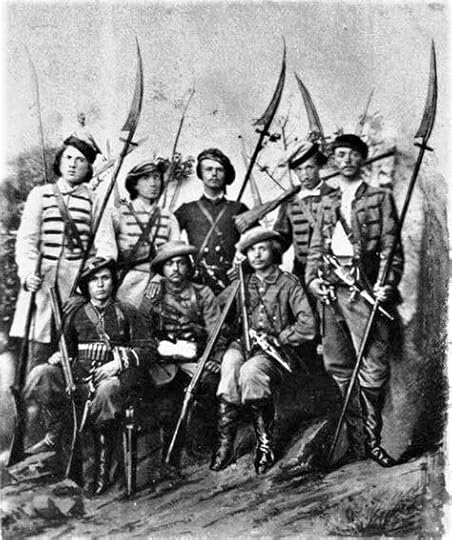
During the middle of the American Civil War, in January 1863, the people of the Russian Kingdom of Poland rose in arms against their overlords. Russia had less than a decade before lost Crimea in their war with the Ottoman/British/French Alliance. Tsar Alexander II told the Poles to “forget their dreams” of independence. Polish youths were cruelly conscripted into the Russian Army for 20 year terms of service. The guerrilla uprising that this precipitated was brutal and lasted well into 1864, when it was finally crushed by Russia. The January Uprising was the longest uprising against their oppressors by the Polish People.
Uprisings were not uncommon in Partitioned Poland. Over the 123 years the nation was wiped from the map of Europe, they occurred in each generation. In 1794, the year before the final partition of 1795, there was the Kosciusko Uprising against Russia. The Poles next rose to in 1807 support Napoleon when he entered Warsaw to battle both the Prussians and Russians, fighting by his side through to his final exile after the battle of Waterloo (even accompanying him in his first exile to Elba). After the Congress of Vienna created Congress Poland upon Napoleon’s defeat, the November Uprising of 1830 was the first to rear up against the Russian overlords! It was this rebellion that spawned a similar revolt by the students of Paris in 1832, which produced the barricades made famous in Victor Hugo’s novel Les Misérables.
Over that 123 years from 1795-1918, the Poles were denied their own language and culture by the Russians and Germans (although the third partitioning power, the Austrians, were more lenient). The Poles taught their language to their own children in the secrecy of their homes. Their revered traditions were outlawed by Russian decree and the German policy of Kulturkampf (Clash of Cultures). In another literary masterpiece, Tolstoy’s Anna Karenina, the Russian aristocracy discuss the troubles they encounter in “Russifying the Poles.”
Even after being restored by Woodrow Wilson’s 14 Points that ended World War One, Poland was near instantly at war again with the Russians in the 1919-20 Polish-Soviet War. In the Second World War, this century plus of uprisings would manifest itself as the strongest underground network of resistance in all of Europe, not only against the Nazi’s of Hitler, but also the Soviets of Stalin.
So, on this day, January 22 of 1863, as the Blue and the Gray battled each other half a world away, the Poles did what they had to in order to retain and defend their culture. THEY ROSE UP!
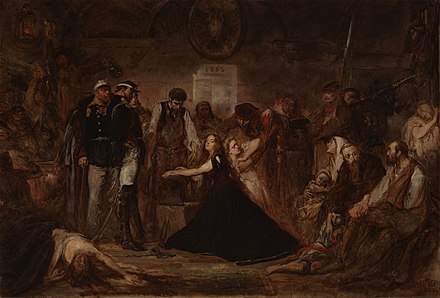 Muzeum Narodowe w Krakowie; http://www.zbiory.mnk.pl ;MNK XII-453;;fot. Pracownia Fotograficzna MNK