EMIGRATE vs IMMIGRATE: simple spelling tips to remember the difference
Here are my top tips to remember the difference between EMIGRATE and IMMIGRATE.
When to use EMIGRATEEMIGRATE is a verb that means to leave a country to live in another.
You can use EMIGRATE in a sentence like this:
“Lots of people EMIGRATE to Spain when they retire.”
OR
“My parents want to EMIGRATE to somewhere warmer.”
When to use IMMIGRATEIMMIGRATE is a verb that means to come to another country to live. It means the opposite of EMIGRATE.
You can use IMMIGRATE in a sentence like this:
“Lots of people IMMIGRATE to Europe for the weather.”
OR
“I’ll need to IMMIGRATE to Canada for the new role.”
This sentence shows the difference between EMIGRATE and IMMIGRATE in use:
“My grandpa EMIGRATED from Ireland in the 1920s and IMMIGRATED to America to find work.”
Get more tips in The Little Book of ConfusablesFun, memorable spelling tips for 600 confusing words, packed into 300+ gorgeous pages: just £11.95.
You’ll wonder how you managed without it!
GOLD award winner: 2023 eLit book awards/Distinguished Favorite: 2023 NYC Big Book Awards.
BUY NOW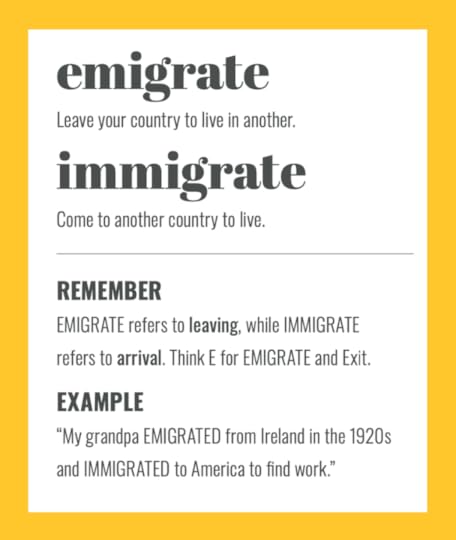
The post EMIGRATE vs IMMIGRATE: simple spelling tips to remember the difference first appeared on Sarah Townsend Editorial.
The post EMIGRATE vs IMMIGRATE: simple spelling tips to remember the difference appeared first on Sarah Townsend Editorial.