INCINERATE vs INSINUATE: top tips to help you remember the difference
Here are my simple tips to remember the difference between INCINERATE and INSINUATE.
When to use INCINERATEINCINERATE is a verb describing the process of destroying something in a fire.
You can use INCINERATE in a sentence like this:
“Quick! INCINERATE any incriminating evidence!”
OR
“All of our rubbish gets INCINERATED.”
When to use INSINUATEINSINUATE is a verb meaning to sneakily suggest that something bad is true.
You can use INSINUATE in a sentence like this:
“Are you INSINUATING they had an affair?”
OR
“I’m sorry – I didn’t mean to INSINUATE you cheated on the exam.”
This sentence shows the difference between INCINERATED and INSINUATED in use:
“The police INSINUATED that the criminals had INCINERATED the evidence.”
Pro tipTo remember the difference, remember that toxic waste is burned in an INCINERATOR. The process of burning produces CINders while INSINUATE contains SIN – something that’s often INSINUATED.
I hope these tips help you remember the difference between INCINERATE and INSINUATE in future!
Get more tips in The Little Book of ConfusablesFun, memorable spelling tips for 600 confusing words, packed into 300+ gorgeous pages: just £11.95.
You’ll wonder how you managed without it!
GOLD award winner: 2023 eLit book awards/Distinguished Favorite: 2023 NYC Big Book Awards.
BUY NOW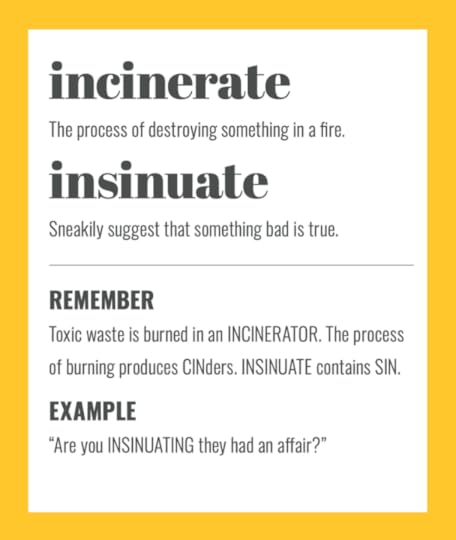
The post INCINERATE vs INSINUATE: top tips to help you remember the difference first appeared on Sarah Townsend Editorial.
The post INCINERATE vs INSINUATE: top tips to help you remember the difference appeared first on Sarah Townsend Editorial.