
NEB Concepts podcast
 For the past couple of years, I’ve been working on a European-funded project called digiNEB, which connects the New European Bauhaus (NEB) initiative with the digital ecosystem.
 If you’re not immersed in the European policy context, it’s possible you might have missed NEB. Essentially, it’s about addressing the green transition not by imposing a bunch of restrictions and targets, but by designing the world differently – to be sustainable, inclusive and beautiful. Things we want to move towards, in other words. It engages architects, designers, city planners and communities to address grand challenges.
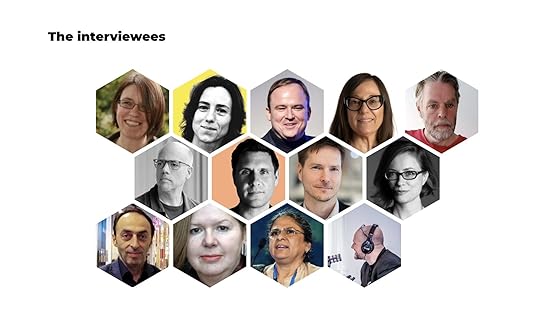
Part of my role in the project was to produce a podcast series in which I interview key players in the NEB initiative. I did that, it’s called NEB Concepts, and you can listen to it here.
One of the things you do when you’re involved in European-funded projects is you write reports. As part of one of these deliverables, one of my colleagues from a partner organisation sent me some questions about the podcast. An interview about why we did interviews.
Here’s what I said.
Short introduction to the podcast
The digiNEB project has produced a modular podcast series that features conversations about sustainability, innovation, and human-centred design with leading architects, educators, and project leaders from the NEB community. NEB Concepts allows listeners to explore themes by topic tags such as climate adaptation, technology integration, and interdisciplinary collaboration – or continue with the wide-ranging thoughts of a single interviewee. Each short episode provides a collection of ideas and practices, projects and reflections, highlighting the twin transitions and the transformative potential of the New European Bauhaus for a more inclusive and sustainable future.
Motivation: Why did you choose a podcast to share knowledge about the New European Bauhaus (NEB)? What unique value does it offer?
There are three main reasons: depth, durability and repeatability. Unlike a publication, you get the richness of the experts expressing their ideas in a medium that allows for questioning. There is the space and the scope for an interviewer to explore further, ask deeper questions and respond to arrive at a fuller understanding of a topic, usually presented without jargon.
The podcast also has permanence. Unlike social media posts that are ephemeral and fleeting, podcasts can serve as a durable resource where you can return to hear – in the speaker’s own words – what they said and, importantly, how they said it.
And unlike a workshop, you don’t have to rely on your memory or your notes – you can listen again at any time. In that respect, it represents an ideal form of ‘masterclass’ – with direct access to the expert that you can replay or share – and in a format that is conversational, informal and personal.
Impact: How does the podcast format compare to other methods like workshops or publications in fostering innovation?
One of the most straightforward and primary keys to fostering innovation is to embed the understanding that making an impact is possible. That one piece of knowledge unlocks so much innovation potential. What a podcast does is to humanise the communication. It makes the person speaking relatable, and so the listener can imagine that the kinds of innovation they describe might also be possible for them.
Publications, in particular, tend to be one-way communication: expertise being presented in the formal style of the discipline. This distances the reader from the author. Despite interactive elements, workshops also tend to have a similar ‘presenter and audience’ power dynamic.
A podcast is personal and conversational, and the interviewer stands in for the listener, able to ask questions that elicit further information and interrogate the premises and conclusions of the information being presented while creating a rapport that ensures the facts presented have an emotional and not just intellectual impact.
Ecosystem Role: How does the podcast support digiNEB’s goal of creating a unified digital ecosystem?
It’s important to realise that unity is not monolithic, and a digital ecosystem is not a megaphone or just a collection of practical tools. A NEB digital ecosystem needs to reflect the community’s diversity of voices and perspectives. A podcast provides the opportunity to reflect that diversity, reveal the very human ways in which we converge, and share knowledge in a personal and approachable way. The human voice, especially when speaking about something that deeply matters, is a powerful communication tool. The podcast leverages aspects of digital technology to provide a wonderful means of knowledge exchange within the community. It is complementary to other methods, adding richness rather than replacing other forms of content or distribution methods.
Best Practices: How do you showcase innovation best practices through the podcast, and what themes resonate most?
As an interviewer, the best way to showcase innovation best practices is to lean into the expert’s enthusiasms. People are animated by the things they do that have meaning and impact. By asking them to speak about what they find important and meaningful about their work, you will inevitably come to best practices.
There is a wide range of topics that come up in the series, but the NEB values shine through – not as adherence to policy, but as shared (or significantly overlapping) personal value systems that prioritise sustainability, inclusion and aesthetics. The recurring themes throughout the series are about the value of community engagement and participation, the far-reaching impact of NEB thinking and action – even at a small and local scale – and technology’s affordances, opportunities and challenges we need to consider, not only from a technical perspective but also from a cultural and ecosystemic one.
Outcomes: What have been the podcast’s most significant results so far? How do you measure its impact?
I would say that the podcast’s biggest potential impact is its integration into curricula and the pedagogical material for the NEB Academy, so that these expert voices can reach the next generation of architects, designers and planners whose work will shape the world and our experience of it. That said, one of the more significant impacts is the NEB community getting to know itself better. The podcast helps people learn about the human beings behind the ideas and feel like they get to know that expert as a person. This is what builds the NEB ecosystem as a community and not just a group of individuals independently working on the same sorts of problems. How you measure impact is the same way you might measure the impact of a conversation – not with numeric KPIs, but by observing what happens, what lessons are applied and what ideas filter through to the community and become part of the culture.
Advice: What tips would you give to others using podcasts for knowledge sharing and innovation transfer?
As a broadcaster, I would want my advice here to be technical or professional in nature. While it’s true that anyone can start a podcast and that far more projects should include them for knowledge exchange, dissemination and community building, it is – like all other communication forms – also a skill with technical and performative dimensions that are learned and practised. Anyone can start a podcast, but nobody should have to listen to bad ones. Good sound matters. Editing matters. Being interesting matters.
Asking open questions is essential, as is listening to the answers and asking further questions based on them. Far too many people go into an interview with just a list of questions they tick off when asked. Still more simply say whatever comes into their head without any preparation, and the interview has no shape, destination or purpose.
The most important thing, perhaps, is positioning. You need to assume your listener has a level of intelligence but not that they have deep specialist knowledge. And then you need not to be afraid to ask what might seem to be stupid questions to get the kinds of answers that genuinely convey the lessons that you are there to uncover.
Key Learnings: What lessons have you learned about the role of podcasts in advancing NEB’s goals?
What these podcasts have revealed is precisely what you might expect: that the NEB community is full of intelligent, creative and interesting people who have good ideas and incredibly strong values. I believe the best way to advance NEB’s goals is to bring that community together and work collectively. Getting to know each other, and listening to a podcast that makes you think, “I really like what this person is saying, and they sound like someone I would love to work with” – that’s a fantastic start.
The post NEB Concepts podcast first appeared on Dubber.

Andrew Dubber's Blog

- Andrew Dubber's profile
- 2 followers

