Mastering the Writing Process: Tips from Fly Fishing Guide, William F. Carman
Writing Process and Writing Space
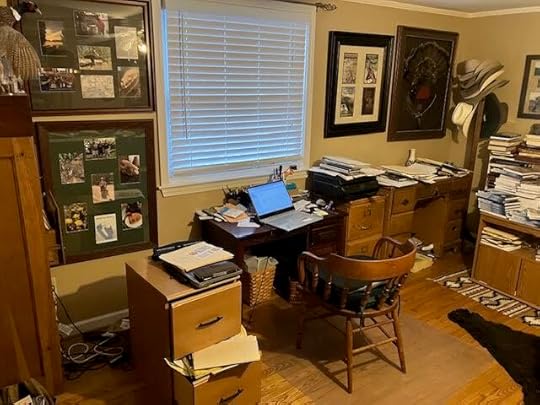
Because I am primarily a fly fishing guide, most of my writing is done in the winter when very few fly fishermen are apt to hire me. I often will come up with ideas when I am guiding, but the meat and potatoes writing is done in winter. Normally, I’ll have an idea for a story or a book, jot it down on a scrap of paper, and create a file folder (actual paper) for the concept. Later, I’ll create an outline in the file, and even later, I’ll bang out a story with a list of tasks to do to complete it…check on this fact, research another fact, fetch a photo or two from my archives, etc. Eventually, I’ll finish the first draft, edit it, finish a second draft, and edit it. Finally, I do the formatting required by the publisher and send it as a pitch. Most of my stories are sent to publishers I’ve used before, so even though it may be a cold-call pitch, the publishers know me and have some degree of confidence in my work.
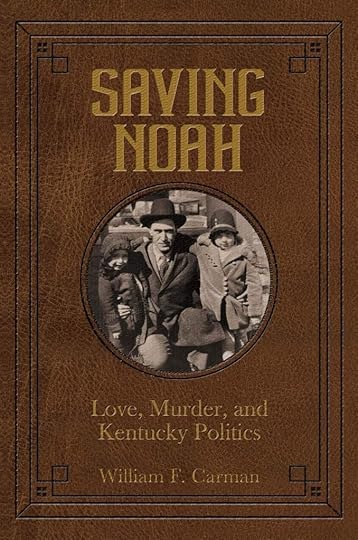
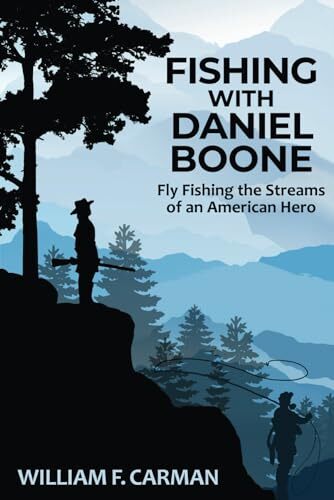
The process for my books is roughly the same, except much more drawn out. My book, Saving Noah, https://www.amazon.com/Saving-Noah-Murder-Kentucky-Politics/dp/1948901811/, started as a few scraps of paper and twenty years later became a published book. My book, Fishing with Daniel Boone, https://www.amazon.com/Fishing-Daniel-Boone-Streams-American/dp/B0D1FW7PSY/, took about five years from concept to publishing. I’m currently working on second editions of both books, as I accumulated more scraps of paper after the first editions were published.
I mostly write from eight to twelve in the morning. Afternoons are spent doing other chores. I have no prerequisite habits like drinking coffee….and I do not currently have a dog or cat. The view from my office is out a window behind my laptop. The blinds are raised if there’s a pretty snowfall, etc. The view is my backyard, which is quite private and nice in spring and fall.
Writing Method
I mostly use outlines and do not begin editing until the first draft is complete. The very first versions are hand-written on yellow pads, then typed and edited on my laptop…That process has evolved, especially over the last eight years when I started writing and guiding full-time. I’m a creature of habit, and my process has evolved into what I am comfortable doing. The biggest lesson I have learned over the last few years is how to market my writing. That process is still evolving, but it has gained momentum and I’m getting royalty checks each month.
Holding My First Published Book
When I held my first book (I’ve written five). I was so proud. When I hold it now, I wish I had done a better job. (Maybe I’ll do a second edition and clean it up!).
Idea Sources
I have old battered folders and notebooks full of yellowed, unfinished, and unpublished stories. These have been good sources of new ideas. A good writer must read; I am constantly reading. I get some ideas from authors I admire. I also harvest story ideas from banter with my fishing clients and from the landscapes where I guide…I am from a family of storytellers. so I am blessed with an abundance of family lore.
Genres
To date, all of my published work has been creative non-fiction. However, I am currently finishing up a book of fictional short stories.
Easiest Part of the Creative Process
The easiest part of my creative process is coming up with story/book ideas. The hardest, or at least the least enjoyable, is the minutiae that is required to get a story or book published. When the story/book is written, the real work begins!
Why I Write
I am a storyteller.
Cure for Writer’s Block
Set the project aside and work on another project. Something will come to you when you least expect it…in the wee hours of the morning when you are half awake, when you are driving down a country road.. our brains are always working!
What I Want My Readers to Take Away
Some of my magazine stories are instructional, so I hope the reader can gain a skill set. Some of my work is informational, such as Noah and Boone. I hope my reader gains some knowledge and empathy. For my fictional stories, I hope my readers are entertained, smile, and say something like, “Dang, that was a helluva story!”
Advice for First-Time Writers
Set goals and keep your eye on them, develop discipline, and eventually, learn to market your books/stories. They don’t sell themselves.
Favorite authors
Hemingway (short stories)—for his iceberg method.
Stephen Hunter—For his skill at weaving together complex plot lines.
James Dickey—For his skill at illustrating the mundane as important to larger themes.
Steve Rinella—For his conversational story voice,
E Donnell Thomas—For his matter-of-fact skillful narration.
Norman Maclean—For producing poetry-like prose…
[image error]Bill Carman is a graduate of UK with a master’s degree from Utah State University. He worked for thirty years designing parks and recreation areas before retiring and taking the position of Regional Director for the Rocky Mountain Elk Foundation. Bill retired after ten years of wildlife conservation for RMEF and started Kentucky Wild LLC. In that capacity, he guides hunters and anglers, conducts outdoor skill clinics, and is an accomplished outdoor writer. Bill loves introducing people to the joys of the outdoors!