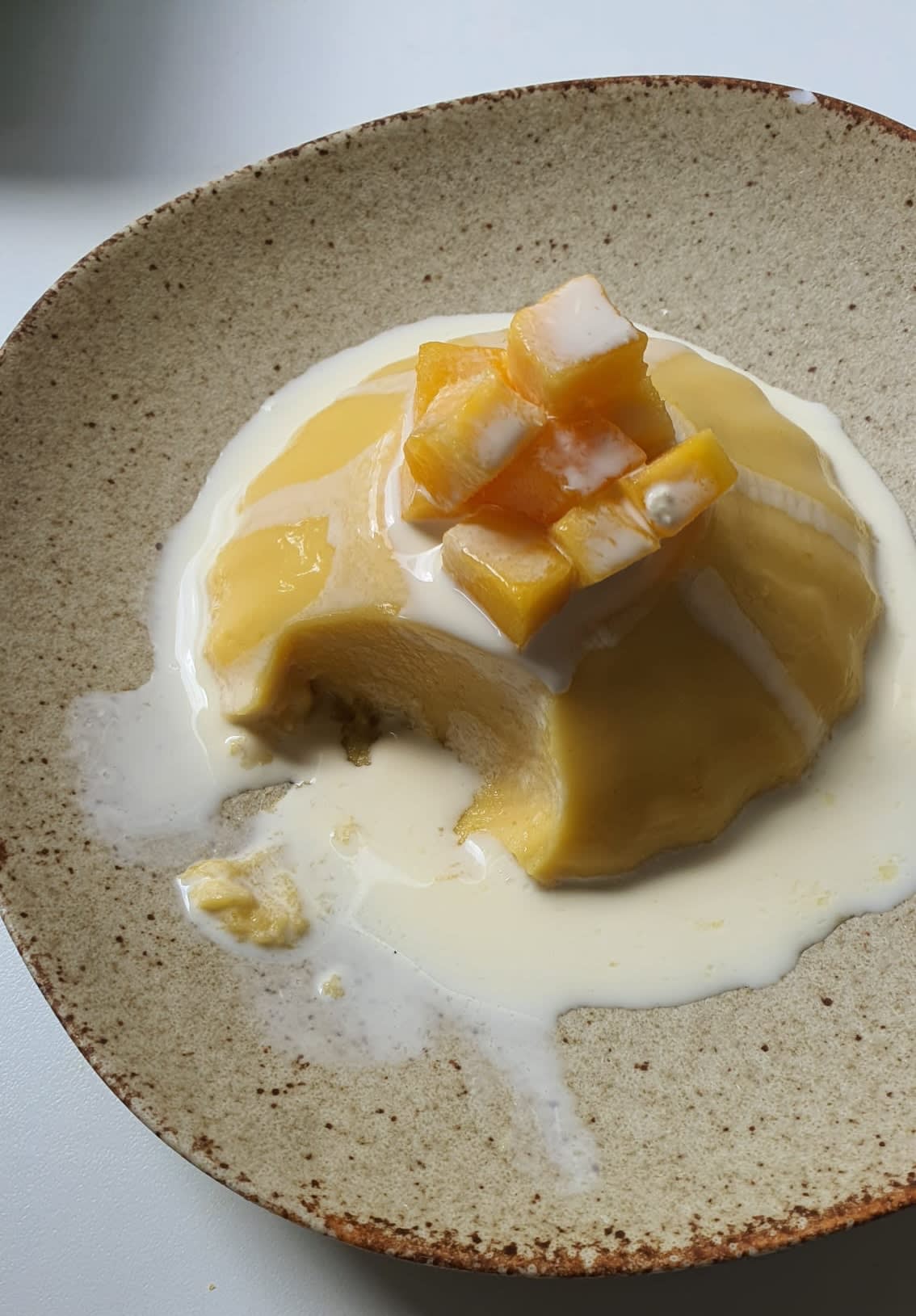
Mango pudding
Welcome to Singapore Noodles, a celebration of Asian culinary traditions and food cultures. Every week, you’ll receive historical tidbits, personal stories, and recipes delivered straight to your inbox. Archived recipes and other content can be found on the index. My cookbooks, Wet Market to Table and Plantasia, are available for purchase here and here respectively.
Today’s deep dive into mango pudding is inspired by a message I received from one of our paid subscribers, Polly, who says, “Mangoes are indeed plentiful now here in sunny Southern California. Would you know a good Hong Kong yum cha style mango pudding recipe? I recently scoured the internet and found a very promising recipe developed by a HK chef but it turned out really hard. I was going to redo the recipe by tweaking the liquid & gelatin powder ratio; but thought I would check in with you first for your advice. I like that that chef included coconut milk & ice cream in his recipe. A drizzle of evaporated milk at the end always adds a touch of nostalgia.”
If you’re a paid subscriber and have a topic you'd like me to explore, I’d love to hear from you. Thank you for being here, and enjoy this week’s post! ✨ — Pamelia
PLANTASIA UNBOXING
pameliachia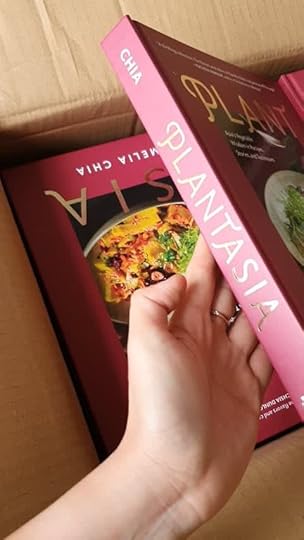 A post shared by @pameliachia
Recently, my author copies of PlantAsia arrived on my doorstep, and I was thrilled to see that it was every bit as beautiful as I had imagined! Preorders make a big difference in a book’s success—when numbers are strong, bookshops and sales teams put extra energy into getting it out into the world. The book officially lands in bookstores in late October, but if you preorder now, you’ll also receive a special booklet with bonus recipes as a little token of gratitude. Thank you so much for your support—I can’t wait to share more with you and take you along on this journey!
MANGO PUDDING
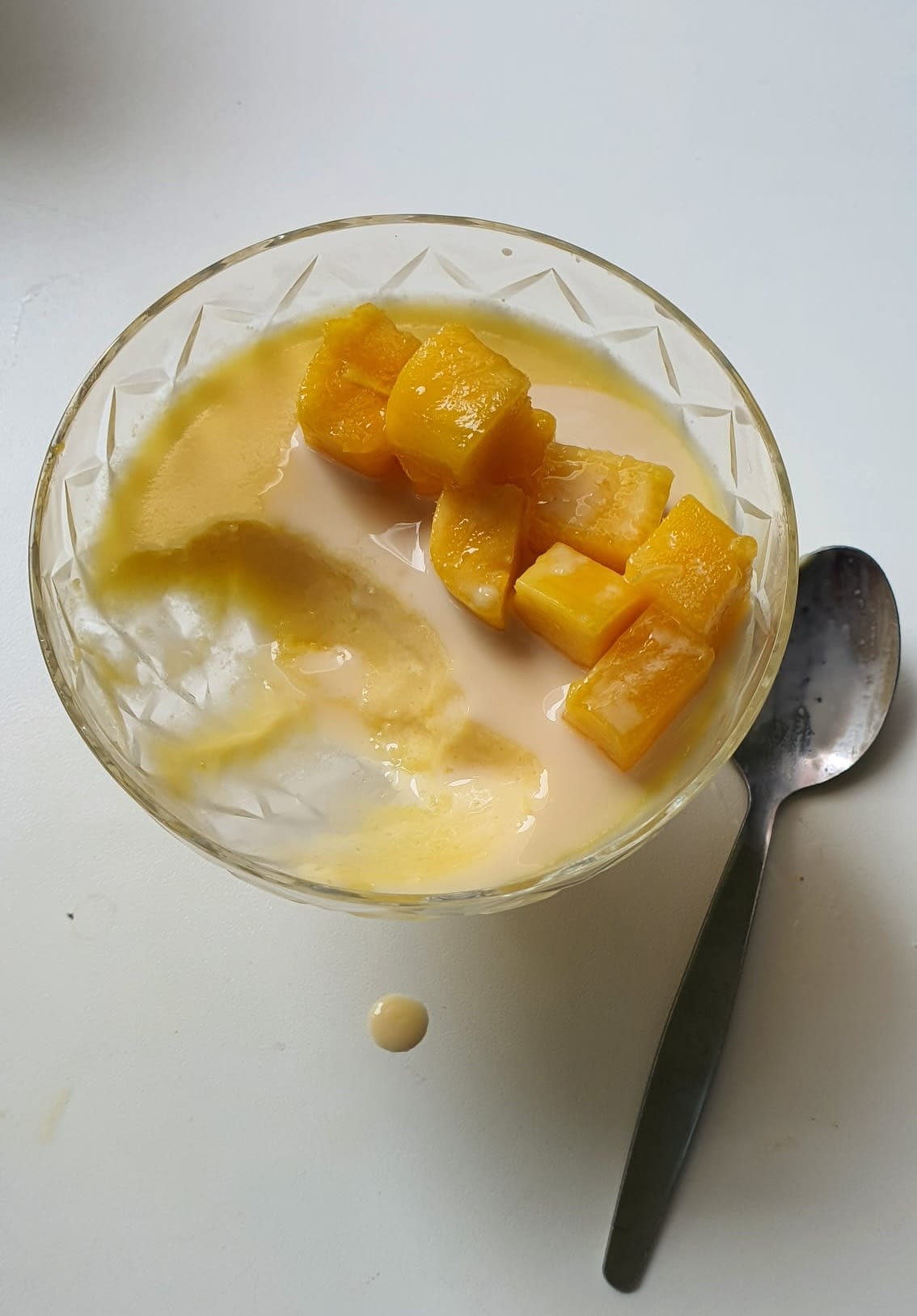
When I was growing up, mango pudding was a common snack in our refrigerator. We bought it from the supermarket in a pack of six plastic cups, and it tasted more like mango jelly with a hint of dairy. The version you typically get at Hong Kong dim sum restaurants or cha chaan tengs, however, is satisfyingly custardy without being heavy, with evaporated milk or cream as a key component.
Mango pudding has roots in Western-style custards and gelatine desserts. European desserts like blancmange—a dairy-based dessert thickened with gelatin or cornstarch—were introduced to Asia through colonial trade routes in the 19th and early 20th centuries. In regions abundant with mangoes, locals adapted these custards by incorporating fresh mango pulp while retaining the smooth, gelatinous texture of Western-style puddings.
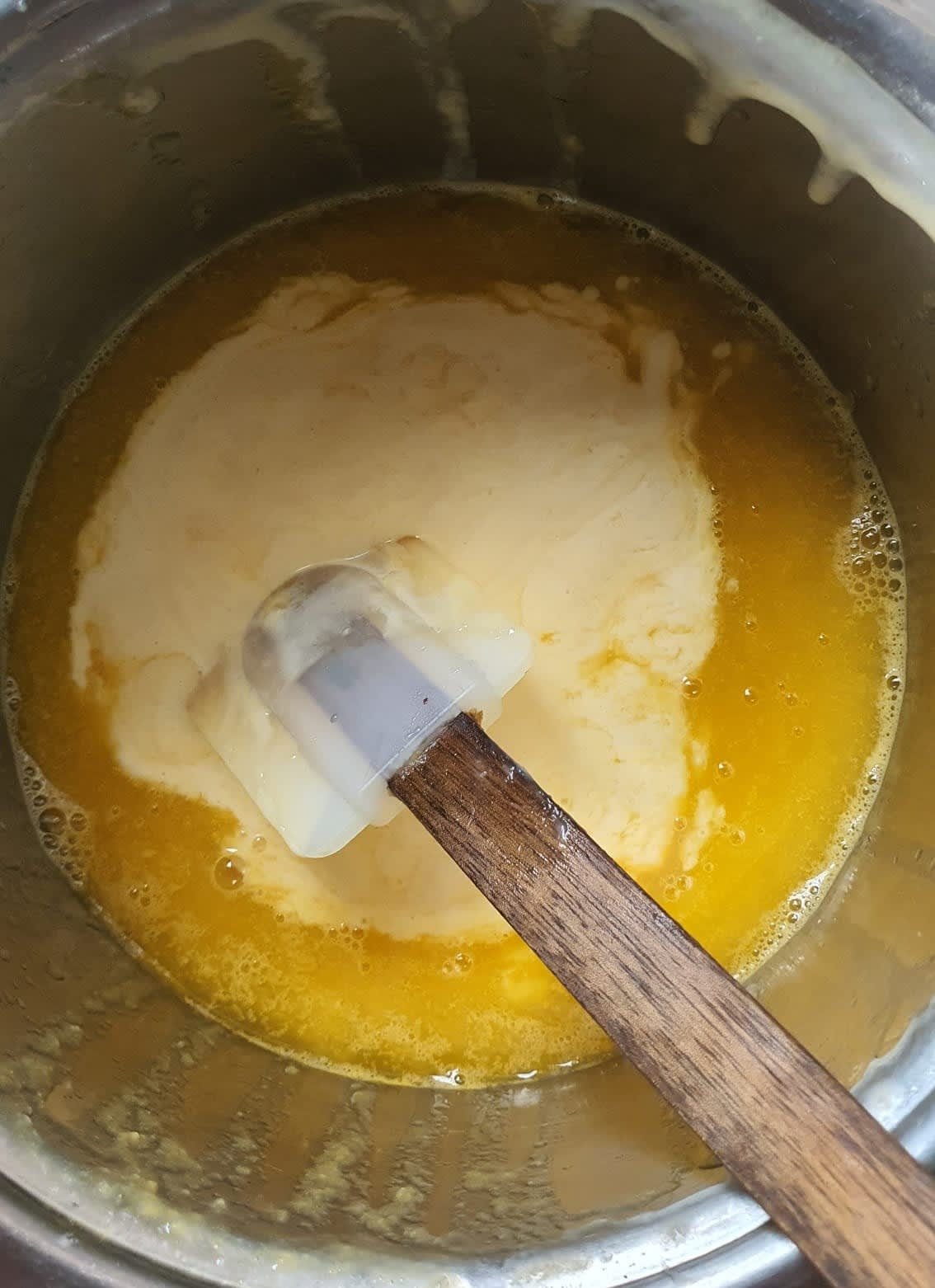
While this is a simple, do-ahead dessert to put together, there are a few tips to ensure success:
Fresh vs canned mangoes: Ripe, in-season mangoes are ideal, though canned mango pulp works great too. Some fresh mango varieties contain protein-digesting enzymes that break down gelatine chains and prevent the pudding from setting properly. Canned mango puree doesn’t have this issue because the enzymes are deactivated during pasteurisation. If using fresh mango, a gentle period of heating is enough to denature the enzymes and avoid this problem.
Gelatine sheets vs powdered gelatine: I prefer gelatine sheets over powdered gelatine. The latter must be sprinkled over cold water to bloom before dissolving in warm liquid, and if not done correctly, it can clump. Gelatine sheets are more foolproof: soak them in cold water until soft, squeeze out excess water, and dissolve in warm liquid. Avoid adding gelatine sheets to boiling liquid, as high temperatures can break down the protein chains and affect the set.
Quantity of gelatine sheets: This makes all the difference between a rubbery pudding and a soft, custardy one. Although gelatine sheet packaging often suggests a specific amount for a given volume of liquid, it’s best to treat this as a guideline for firm gels, like moulded jellies, rather than for soft puddings. Also, since mango pulp adds solids and thickness, the effective liquid content is actually less than the total weight, meaning less gelatine is needed to achieve the perfect set.
Unmoulding: You can serve mango pudding directly in the dish or unmould it. Lightly grease each cup with oil before filling. Before serving, dip the dish in hot water for a few seconds before inverting.
MANGO PUDDING
Makes 4 servings