The Hidden
A spooky theme in November? What the heck?
Well, today is Occult Day, a day for us to indulge curiosity about what lies beyond.
A lot of people believe that there’s more to our world than meets the everyday eye. We want to believe that there’s something beyond being born, paying bills and passing away. Most of the people I know have also had experiences that can’t be explained. And there are places in the world that are odd, in appearance, in feel. The ancient Celts deemed them liminal places – those that straddle the real world and the otherworld.
The term “occult” doesn’t necessarily refer to strange and dangerous things, like Satanism – it essentially translates from the Latin word occultus, i.e. clandestine, hidden or secret. It originally meant “knowledge of the hidden”. Many ancient societies, such as the Cults of Isis and Serapis in Egypt, the Greek Mystery Cults, and later on groups like the Masons, and university organizations like the Skull and Bones Society at Yale University, kept much of their knowledge secret, hidden behind membership and ritual.
If you weren’t part of the club, you simply weren’t ‘in the know’. Membership conferred belonging, and often power – not necessarily supernatural power, but real-world power in business and politics.
Perhaps it was the terror of witchcraft in previous centuries that started the transformation of “occult” into something more spooky. The Victorian vogue for spiritualism upped the ante, drawing thousands of people who desired to contact their loved ones in the afterlife. Their primary access, just as in ancient times, was through the services of a gifted seer or medium – those who could speak to the spirits.
Numerous esotericists began to pop up, studying the arcane – even Queen Elizabeth I had her own personal astrologer, John Dee, who was said to also dabble in alchemy, divination and Enochian magic, which was a system of rituals he developed with Edward Kelley to communicate with angels.
In the 1800s, a French esotericist named Éliphas Lévi was one of the first to use the word “occultism”, in his book on ritual magic, Dogme et rituel de la haute magie. He set out nine tenets of magic, including that “There is a potent and real Magic, popular exaggerations of which are actually below the truth” and “It confers on many powers apparently super-human” (as translated by A. E. Waite, the British occult scholar, author, and mystic). So there you go.
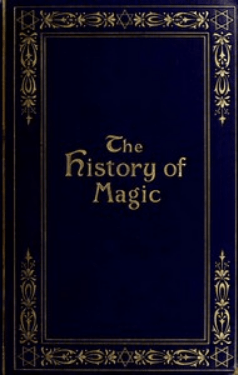 ” “The History of Magic” by Éliphas Lévi is a historical account written in the late 19th century. This work explores the origins, developments, and key figures associated with magical practices throughout history, delving into ancient beliefs to modern interpretations.” on Project Gutenberg
Fortune-telling using cards became known as occult science because people believed that it was possible to unveiling the future by using a repeatable system that could reveal the workings of the universe. Tarot cards had been around since the 15th century, but French occultists in the 18th century began to claim that they could be used for divination, and now I don’t think they’re used for anything else. I have a couple of decks myself (yes, I used to do Tarot card readings when I was a teenager, but stopped when it began to creep me out; I still have the pack).
Instead, I eventually turned my own fascination with occultism to writing. There’s just so much material to play around with! Witches, ghouls, vampires, ghosts, demons, Fae, hauntings… And people love to read such stories in droves – look at the phenomenal popularity of the Harry Potter books.
There have been some very famous and respected people interested in occultism – three ancient Greek philosophers (Pythagoras, Plato and Aristotle), Swiss psychologist Carl Jung, author Sir Arthur Conan Doyle, magician Harry Houdini – so if the subject fascinates you as well, you’re in very good company. In the face of both the sometimes inanity of day-to-day life and the stress of world news, we search for more meaning, and entertainment/escapism as well.
Since I grew up on movies like The Wizard of Oz and TV shows like The Twilight Zone, I’ve always included the paranormal in my own stories. I also read The Exorcist when it first came out, and couldn’t sleep for a week. The things we read, to give ourselves the shivers. But they also explore possibilities, and therein lies the eternal appeal.
The field of the Occult is massive and deeply-layered. We can explore more of it in future posts, as it weaves throughout my Chaos Roads trilogy. In the meantime, have fun watching and reading!
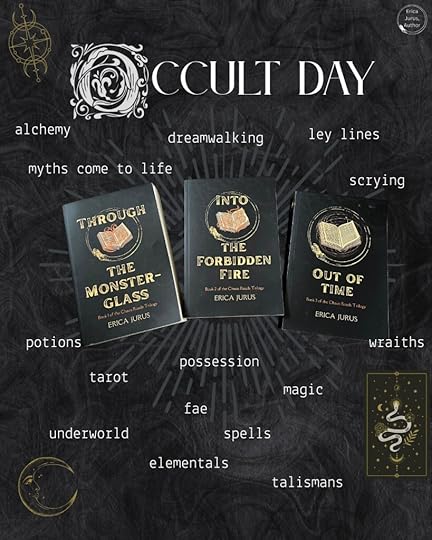 Some of the occult elements in my novels, © Erica Jurus, Author