
epigraph
An essay I have long meant to write bears (will bear, might bear) the following thesis: The last great masterpieces of the modernist epic are an anthropologist’s memoir and a work of literary criticism: Claude Levi-Strauss’s Tristes Tropiques (1955) and Hugh Kenner’s The Pound Era (1971).
Kenner thought about that book for several years before writing it, and I discover from his correspondence with Guy Davenport that his ambitions for it were quite large indeed, and artful:
I still walk round the unwritten Pound Era, craning my neck to study its structural geometry, and occasionally doing a study of some ornamentation. Quite Frank Lloyd Wright. I see that book like a Wright house. He counterpointed his great structural thrusts with magnificent detailing, a lamp post, a flower pot, integrally so. [I:328]
He was always talking through ideas for the book with Davenport, and when he realized that a stray comment from his friend — “Thought is a labyrinth” — would make an excellent final sentence of his book, so it became. Davenport’s June 1963 visit to the house Pound had grown up in, in Wyncote PA, led to a conversation with the then-current owner of the house, who recalled that five years earlier, when Pound had just been released from St. Elizabeth’s Hospital, he came there and slept in the house one last time, waking at dawn and walking barefoot down the street. “For a long time he sat on the steps of the Presbyterian church a block away” (I:355). When Kenner read this account from Davenport, he immediately realized that it would make a beautiful ending to the book he had not yet written (I:358). And so it became.
For some time Davenport tried to get Kenner to read a favorite book of his: The Lord of the Rings. (That someone with as intricately Mardarin a sensibility as Davenport loved LOTR is fascinating.) Finally, later in the year of Davenport’s visit to Wyncote — when the Kenner family were living in Charlottesville, Virginia and the scholar’s wife was dying of cancer — Kenner picked up the first volume from the University of Virginia’s library. On 16 October he wrote to Davenport, prefacing the letter with a quotation:
… But I will say this: the rule of no realm is mine, neither of Gondor nor any other, great or small. But all worthy things that are in peril as the world now stands, those are my care. And for my part, I shall not fail of my task, though Gondor should perish, if anything passes through this night that can still grow fair or bear fruit and flower again in days to come.
Then:
Dear Guy:
What do you think of the above as general epigraph to The Pound Era? On a page by itself, written without attribution, exact credit left to notes in back of book. [I:428]
This was not to be so: The Pound Era does not have an epigraph, only a dedication in memory of Kenner’s wife. And I think Kenner was probably right not to use it: it would not really have fit the tone and mood of the book. But the triangulation of these three works of epic scope – Pound’s Cantos, Tolkien’s novel, and Kenner’s own masterpiece — is an interesting one to reflect on. Certainly Davenport saw that: “Great! the epigraph. It pulls together EP as wizard, transmuter, translator, transmitter of tradition; Gondor as the “city in the mind,” Wagadu, the holy mountain, besieged Ithaka” (I:435).
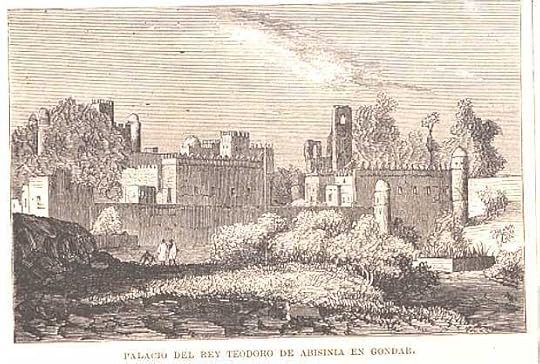
“Wagadu” — a word embedded in the name of the city now known as Ouagadougou — is the great empire of Ghana. Pound had read about its repeated destruction and rebuilding in Leo Frobenius: in Canto LXXIV he says it is “now in the mind indestructible.” Davenport’s essay “Pound and Frobenius” is brilliant on all this. Davenport may have linked Wagadu to Gondor only thematically, but I wonder if the connection to Africa may have come to him because of the Ethiopian city of Gondar. Leo Frobenius spent some time in Ethiopia….


Alan Jacobs's Blog

- Alan Jacobs's profile
- 538 followers

