Humanizing AI-Generated Content
AI blowback is one of the hottest topics on the web.
If you even suggest an opinion on it, you’re apt to start a war, especially when the discussion comes to written content. Even Substack has a button to check for AI generation.
Why are we so worried about AI?A few years ago, I was living fat and sassy (that means doing well for younger readers) writing content pieces for more than a dozen clients. Then, my client list slowly began to erode as AI content creation became more accessible. I lost ALL of my clients eventually. If anyone had a reason to be bitter and anti-AI, which I was for a time, it was me.
And then I awakened one morning and realized that AI was not going away. Rather than being angry and afraid (my fear was real, because it cost me most of my income), I decided to understand it.
Thanks for reading! Subscribe for free to receive new posts and support my work.
The wicked, as they will with all things, use AI to harm people. The AI-generated surveillance system being set up by governments is a direct affront to personal liberty, and is being used and can be used more in the future to deteriorate and eventually eliminate basic human privacy. Leo Hohmann addresses this issue about as thoroughly as anyone on the web. Follow his Substack to learn more about his understanding of this topic and views.
Where this is an issue to be VERY concerned about, we really don’t need to fear AI-generated content.
I can already hear the comments coming. Before you scramble to write whatever just triggered in your mind, stop for a moment and read the rest of what I have to say.
Let’s take a short walk through history.When I was in Junior High (I’m about to date myself), I had to write my research papers on a manual typewriter. Here’s a picture of one to help you understand the concept.

To write those papers, I had to go to the library, where I had to look in actual books, bound journals or current journals, and if I was lucky, microfilm or microfiche (google them; they were very helpful for research purposes).
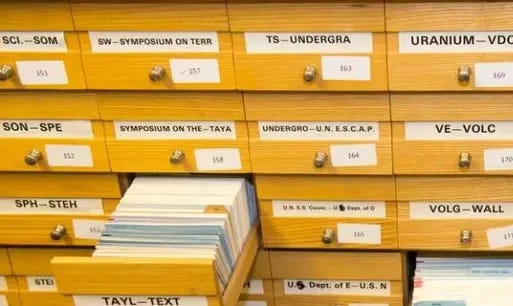
The research process didn’t change in high school, but in high school, I had access to an electric typewriter. Here’s a picture of one of those.
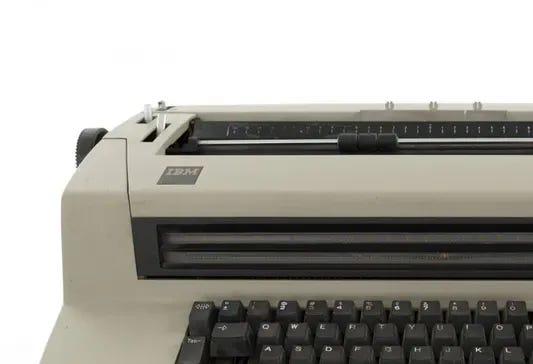
The electric typewriter required the same process as the manual typewriter, but you pushed a button to return to the next line… I’m not going to explain this. Essentially, it was still a pain in the arse to use.
I bought a digital version of the electric typewriter before going to college. This was a step toward word processing, since several lines appeared on a digital screen where you could edit them before printing to paper.
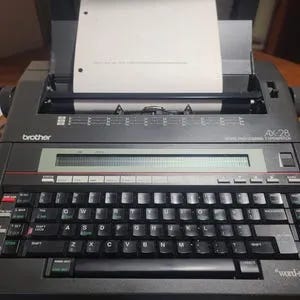 Then came word processing.
 In a movie, this is where angels would sing as the heavens open. This new tool was a godsend to writers. If you ever wrote on a manual or electric typewriter, you understand; if not, then we might as well be discussing LPs and 8-track tapes.

Life doing research papers in college changed instantly, and my digital typewriter was left forgotten. However, you still had to fix your spelling, typos, and grammatical errors manually.
Then came AI.No. I did not skip ahead. The first LLM (large language model) technology was used to scan your content and point out misspelled words and typos. There were also some basic grammar corrections, but that LLM technology came along a little bit later. Then came language translators, which are quite helpful as the world becomes more integrated. The voice-to-text technology and text-to-voice technology you’re using in your messaging apps are also AI-generated.
Should I mention that Google uses LLM technology? No. I’ll just let that one slide.
Here’s a note to the radical, anti-AI purists. YOU are no longer allowed to use your spellcheckers or grammar checkers, language translation, or messaging on your smartphone, because they are AI-driven LLM technology.
What is the truth about AI content generation?The opposing camps, the North vs. South, in the civil war of our time can be summed up as:
AI is taking over the world vs AI makes everything in life better.
Both viewpoints are wrong.In essence, this is the same argument as the gun control argument (that will bring another set of enraged arguments into my comments). Like guns, of their own accord, do not shoot people, neither is AI, of its own accord, taking over the world. Wicked men are using AI to do wicked things, just like wicked men use guns to shoot people.
On the other side of the argument, AI does not make everything in life better any more than guns make everything in life better. In the hands of good men, guns are a tool for helping maintain law and order. AI is essentially a modern tool, just like the tools I described above.
The problem is that people using AI tend to use it blindly, trusting it completely without supervision. Let me give you an analogy.
Let’s say you own a liquor store or a chain of liquor stores. Let’s say you hire an employee to work in your liquor store and you move to Tahiti. You keep track of bank deposits, but you never call in and never have anyone go by and check on your store. What would happen to your liquor store? Product would go missing, sales would drop, and your income would slowly deteriorate to nothing, right?
Why?
No supervision.AI needs supervision. AI needs to be fact-checked. AI sometimes makes spelling and grammatical errors. AI writes sentences that don’t make sense to any human. AI uses an em dash as its primary punctuation. AI sometimes forgets what it’s writing about, producing inconsistencies. There are other issues too, but these are the primary ones.
As a writer, I’ve made my peace with AI-generated content. I realize that AI haters who do not have the time or the talent to produce their own content will still need me to ghostwrite for them, and AI lovers will need me to fix the embarrassing content that AI generators produce for them.
Before I go, I want to pour fuel on the fire I’ve already started by posing a single question:
For years, authors, agents and publishers have used ghostwriters to produce fiction and non-fiction books upon which they place the author’s name. Now, when an author uses AI to do the exact same thing, everyone is suddenly angry and incensed that the book was not written by the person whose name it bears.
So, which one is more ethical?If agents, publishers, and the public are going to demand transparency with AI-generated content, then perhaps it is time that the authors, agents, publishers, and corporations who have been using ghostwriters to produce books and content reveal the identity of their ghostwriters.
Bottom line:AI is a tool.
Used for good rather than evil, it is very helpful for completing certain tasks. However, like the employee in your liquor store or whatever business you run, it requires supervision.
Humanizing AI-generated content is among the services I offer.
PM me for more information or Click Here.
BTW, AI helped me write this; I used it for spelling and grammar. Along with GIMP, I also used AI to generate the banner above (because I ain’t no graphic artist and can’t afford to hire one), and to resize it to fit properly within the text on the page, which uses AI for formatting and posting. Oh, and I used AI to help me find pictures of the various typewriters, the card catalogue, and the 8-track tape player, since I don’t have any of those items in my house and couldn’t take actual photos of them.
Thanks for reading! Subscribe for free to receive new posts and support my work.