
Find & Share Quotes with Friends
Buddhist Quotes Quotes
Quotes tagged as "buddhist-quotes"
Showing 1-30 of 46

“Zen is the very awareness of the dynamism of life living itself in us—and aware of itself, in us, as being the one life that lives in all.”
― Mystics and Zen Masters
― Mystics and Zen Masters

“You don’t have to overhaul your life overnight. Start small. Adjust your environment. Make a conscious choice to cultivate goodness. Train your mind to return to the present moment, again and again.”
― Living the Maṅgala Sutta
― Living the Maṅgala Sutta

“The great master Padmasambhava said, Even if my view is higher than the sky, The attention I pay to my actions and their effects is finer than flour.”
― On the Path to Enlightenment: Heart Advice from the Great Tibetan Masters
― On the Path to Enlightenment: Heart Advice from the Great Tibetan Masters
“The blessings of the Mangala Sutta are not achieved through fleeting moments of inspiration but through intentional design—structuring our environment, habits, and mindset in a way that allows wisdom, detachment, and peace to arise naturally.”
― Living the Maṅgala Sutta
― Living the Maṅgala Sutta
“Living the Mangala Sutta means choosing wisdom over distraction, humility over arrogance, and intention over habit.”
― Living the Maṅgala Sutta
― Living the Maṅgala Sutta
“Each of the thirty-eight blessings in the Mangala Sutta isn’t an abstract concept—it’s a concrete invitation to shift your life toward clarity, purpose, and peace.”
― Living the Maṅgala Sutta
― Living the Maṅgala Sutta
“The wisdom of the Mangala Sutta reminds us that avoiding negative influences is not about judgment or superiority—it is about protecting your mind, your peace, and your growth.”
― Living the Maṅgala Sutta
― Living the Maṅgala Sutta
“By thoughtfully designing our lives, we make progress on the path sustainable and self-reinforcing... making it easier to live in alignment with the Mangala Sutta with less struggle and more ease.”
― Living the Maṅgala Sutta
― Living the Maṅgala Sutta
“The blessings of the Maṅgala Sutta are not rules to follow; they are invitations to live with greater intention.”
― Living the Maṅgala Sutta
― Living the Maṅgala Sutta
“The Maṅgala Sutta... provides a clear blueprint for such a life. It outlines thirty-eight blessings—qualities, habits, and ways of being that lead to true well-being.”
― Living the Maṅgala Sutta
― Living the Maṅgala Sutta
“You are not bound by the past; you are building what comes next. And at the heart of it all is the mind.”
― Living the Maṅgala Sutta
― Living the Maṅgala Sutta
“When your life design fully integrates the blessing you are striving toward, you experience greater coherence, ease, and fulfillment. You no longer just believe in the blessing—you become it.”
― Living the Maṅgala Sutta
― Living the Maṅgala Sutta

“We treat our life as if it is all about the destination and not about the journey. But life can be seen as a piece of music, where the goal is not to get to the end of the song but to savour and enjoy each beautiful moment. After all, life unfolds in moments, and the joys available in this life are experienced in this moment and not the next.”
― A Practical Guide to Mindful Living
― A Practical Guide to Mindful Living
“Our first step towards finding some sort of freedom from the ups and downs of daily life is to relinquish the control the external world has over us and our emotions. The key to doing this is learning to live mindfully.”
― A Practical Guide to Mindful Living
― A Practical Guide to Mindful Living
“We often drag the fears of the past and future into the present, forgetting that in this moment right now, we are ok - nothing is going wrong, all is well, and we're safe. Don't lose this potential moment of quiet, joyful serenity.”
―
―
“Well here we are.
You wouldn't believe
what I've been through.
It was like trying to wear shoes
that didn't fit.
But I found you.
You should have seen me
going from face to face
looking into each set of eyes
waiting for you to stare back at me. ”
―
You wouldn't believe
what I've been through.
It was like trying to wear shoes
that didn't fit.
But I found you.
You should have seen me
going from face to face
looking into each set of eyes
waiting for you to stare back at me. ”
―
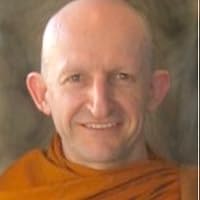
“Once Luang Por Chah was going to visit a branch monastery down near the Cambodian border. The road through the hills down to the borderlands was very twisting and precipitous. Luang Por Chah was in the front of the little pickup truck with a young Western monk and the driver, while there were a few other monks on the benches in the back.
The Western monk soon realized that the driver was extremely reckless, and he became convinced the driver had a death wish. They were haring around the steep mountain roads, with enormous drops and blind corners, screeching
around one bend after another. The monk sat there the whole time thinking, ‘We’re gonna die! We’re gonna die! We’re gonna die!’ and he kept looking over to Ajahn Chah to see if he was reacting, and whether he was going to ask the driver to slow down. Instead Ajahn Chah sat there quite calmly looking out of the windscreen and didn’t say a thing.
To the young monk’s amazement they got through the hills safely and arrived at their destination. When they got there Ajahn Chah turned around to him with a big grin and said, ‘Scary ride, huh?”
― The Breakthrough
The Western monk soon realized that the driver was extremely reckless, and he became convinced the driver had a death wish. They were haring around the steep mountain roads, with enormous drops and blind corners, screeching
around one bend after another. The monk sat there the whole time thinking, ‘We’re gonna die! We’re gonna die! We’re gonna die!’ and he kept looking over to Ajahn Chah to see if he was reacting, and whether he was going to ask the driver to slow down. Instead Ajahn Chah sat there quite calmly looking out of the windscreen and didn’t say a thing.
To the young monk’s amazement they got through the hills safely and arrived at their destination. When they got there Ajahn Chah turned around to him with a big grin and said, ‘Scary ride, huh?”
― The Breakthrough

“You want to taste all these experiences. And the ego makes it possible. Don’t curse the ego. So many scriptures curse the ego self. Instead, regard your life as about choices, experiences and desire and that you are already liberated. Don’t be afraid of desire. It is why you’re here: to taste, live. It’s just an ‘agreement’ you all made when you took on an ego. You splintered off from the whole. ~ Kuan Yin”
― Kuan Yin Buddhism:: The Kuan Yin Parables, Visitations and Teachings
― Kuan Yin Buddhism:: The Kuan Yin Parables, Visitations and Teachings
“I delight in helping to liberate souls. I don’t like suffering. However suffering reminds me of the work I need to do to help people. Liberating individuals from their suffering is my primary motivation. Of course, the reasons for suffering are as personal and varied as one’s voice or thoughts. Humankind needs to understand that suffering is just (and people accept it because of higher reasons) and that no one is a victim. ~ Kuan Yin”
― Kuan Yin Buddhism:: The Kuan Yin Parables, Visitations and Teachings
― Kuan Yin Buddhism:: The Kuan Yin Parables, Visitations and Teachings
“Don’t be too hard on yourself about your choices in life. When one subtracts (from the equation of life) physical birth and death, one can regard lessons learned as forming an infinite line. Then one can say, ‘I’m learning this right now’. Try to crystallize the components of the lesson, excluding as much as is possible gender and financial factors. Repeat to yourself, ‘this is the lesson I’m learning right now, at this exact moment in time’. ~ Kuan Yin”
― Kuan Yin Buddhism:: The Kuan Yin Parables, Visitations and Teachings
― Kuan Yin Buddhism:: The Kuan Yin Parables, Visitations and Teachings

“The student asked: Master, when will wisdom visit me? The master replied: Six years later he will visit at 6:45 pm on a Wednesday! The student answered: But master, this answer didn't make much sense to me! The master answered: So is the question you asked!”
―
―
“Buddhists are fundamentally just lazy people who've mastered avoidance—avoid Buddhists”
― Grace - A Funny Book For Women
― Grace - A Funny Book For Women
“Many people go through their entire life without any idea how busy their mind is. Without that discovery, they never come to understand the parallel between their turbulent mental state and their unsatisfying physical reality, nor do they feel motivated to do anything about it.”
― A Practical Guide to Mindful Living
― A Practical Guide to Mindful Living
“We expect people to behave in a particular way, and then get upset when they don’t. We then blame that unhappy feeling on them, when the actual cause was our own expectation.”
― A Practical Guide to Mindful Living
― A Practical Guide to Mindful Living
“He who can mount to a clear conception of Nirvāṇa will find his thought far away above the common joys and sorrows of petty men.”
―
―
“Delight is born from misery,
misery is born from delight;
sir, you should know me as
a mendicant free of delight and misery.”
―
misery is born from delight;
sir, you should know me as
a mendicant free of delight and misery.”
―
“If your mind feels restless when you sit to meditate, good. You’re seeing clearly for the first time. Be ok with it. The chaos was always there—you were just too distracted to notice. The first step in training the mind is facing it as it is, without turning away.”
―
―
“The Buddha taught that meditation, combined with the observance of a moral code and the development of wisdom, is the path to enlightenment. Through meditation, Buddhists strive to experience what the Buddha experienced — loss of self and ego, the ability to see things as they really are, and the self-transformation that goes with the attainment of enlightenment. Meditation therefore offers potential for personal growth, spiritual advancement through the conquest of psychological obstacles, and the possibility of greater happiness. This partly explains the great surge of interest in Buddhism in the Western world in the second half of the 20th century.”
― The Complete Illustrated Encyclopedia : Buddhism
― The Complete Illustrated Encyclopedia : Buddhism
All Quotes
|
My Quotes
|
Add A Quote
Browse By Tag
- Love Quotes 102.5k
- Life Quotes 81k
- Inspirational Quotes 77.5k
- Humor Quotes 45.5k
- Philosophy Quotes 32k
- Inspirational Quotes Quotes 28.5k
- God Quotes 27k
- Wisdom Quotes 25k
- Romance Quotes 25k
- Truth Quotes 25k
- Poetry Quotes 24.5k
- Life Lessons Quotes 23k
- Quotes Quotes 21.5k
- Death Quotes 21k
- Happiness Quotes 19k
- Hope Quotes 19k
- Faith Quotes 18.5k
- Inspiration Quotes 18k
- Relationships Quotes 16k
- Spirituality Quotes 16k
- Motivational Quotes 16k
- Religion Quotes 15.5k
- Life Quotes Quotes 15.5k
- Writing Quotes 15k
- Love Quotes Quotes 15k
- Success Quotes 14.5k
- Motivation Quotes 14k
- Time Quotes 13k
- Science Quotes 12.5k
- Motivational Quotes Quotes 12k