
Find & Share Quotes with Friends
God Is Dead Quotes
Quotes tagged as "god-is-dead"
Showing 1-26 of 26

“They want to be the agents, not the victims, of history. They identify with God's power and believe they are godlike. That is their basic madness. They are overcome by some archtype; their egos have expanded psychotically so that they cannot tell where they begin and the godhead leaves off. It is not hubris, not pride; it is inflation of the ego to its ultimate — confusion between him who worships and that which is worshipped. Man has not eaten God; God has eaten man.”
― The Man in the High Castle
― The Man in the High Castle

“Have you ever heard of the madman who on a bright morning lighted a lantern and ran to the market-place calling out unceasingly: "I seek God! I seek God!"—As there were many people standing about who did not believe in God, he caused a great deal of amusement. Why! is he lost? said one. Has he strayed away like a child? said another. Or does he keep himself hidden? Is he afraid of us? Has he taken a sea-voyage? Has he emigrated?—the people cried out laughingly, all in a hubbub. The insane man jumped into their midst and transfixed them with his glances. "Where is God gone?" he called out. "I mean to tell you! We have killed him,—you and I! We are all his murderers! But how have we done it? How were we able to drink up the sea? Who gave us the sponge to wipe away the whole horizon? What did we do when we loosened this earth from its sun? Whither does it now move? Whither do we move? Away from all suns? Do we not dash on unceasingly? Back-wards, sideways, forewards, in all directions? Is there still an above and below? Do we not stray, as through infinite nothingness? Does not empty space breathe upon us? Has it not become colder? Does not night come on continually, darker and darker? Shall we not have to light lanterns in the morning? Do we not hear the noise of the grave-diggers who are burying God? Do we not smell the divine putrefaction?—for even Gods putrefy! God is dead! God remains dead! And we have killed him! How shall we console ourselves, the most murderous of all murderers? The holiest and the mightiest that the world has hitherto possessed, has bled to death under our knife,—who will wipe the blood from us? With what water could we cleanse ourselves? What lustrums, what sacred games shall we have to devise? Is not the magnitude of this deed too great for us? Shall we not ourselves have to become Gods, merely to seem worthy of it? There never was a greater event,—and on account of it, all who are born after us belong to a higher history than any history hitherto!"—Here the madman was silent and looked again at his hearers; they also were silent and looked at him in surprise. At last he threw his lantern on the ground, so that it broke in pieces and was extinguished. "I come too early," he then said, "I am not yet at the right time. This prodigious event is still on its way, and is travelling,—it has not yet reached men's ears. Lightning and thunder need time, the light of the stars needs time, deeds need time, even after they are done, to be seen and heard. This deed is as yet further from them than the furthest star,—and yet they have done it!"—It is further stated that the madman made his way into different churches on the same day, and there intoned his Requiem æternam deo. When led out and called to account, he always gave the reply: "What are these churches now, if they are not the tombs and monuments of God?”
― The Gay Science: With a Prelude in Rhymes and an Appendix of Songs
― The Gay Science: With a Prelude in Rhymes and an Appendix of Songs
“Thus spoke the devil to me, once on a time: "Even God has his hell: it is his love for man". And lately did I hear him say these words: "God is dead: of his pity for man has God died".”
― Thus Spoke Zarathustra
― Thus Spoke Zarathustra
“New struggles. -- After Buddha was dead, they still showed his shadow in a cave for centuries -- a colossal, horrible shadow. God is dead, but given the way people are, there may still be caves for millennia in which his shadow is displayed. -- And we -- we must still defeat his shadow as well!”
― The Gay Science: With a Prelude in Rhymes and an Appendix of Songs
― The Gay Science: With a Prelude in Rhymes and an Appendix of Songs

“They valued themselves. Once, they knew God valued them. Then they began to think there was no God, only blind forces. So they valued themselves, they loved themselves and attended to their natures—”
― Possession
― Possession
“Forgetfulness is a property of all action. The man of action is also without knowledge: he forgets most things in order to do one, he is unjust to what is behind him, and only recognizes one law - the law of that which is to be.”
― The Collected Works of Friedrich Nietzsche (Annotated): Enriched Edition. Will to Power, Genealogy of Morals, and Zarathustra—Übermensch, nihilism critique, and eternal return
― The Collected Works of Friedrich Nietzsche (Annotated): Enriched Edition. Will to Power, Genealogy of Morals, and Zarathustra—Übermensch, nihilism critique, and eternal return
“Do we smell nothing as yet of the divine decomposition? Gods, too, decompose. God is dead. God remains dead. And we have killed him.”
―
―

“When we talk about the theology of 'God is Dead,' this means that the notion of God must be dead in order for God to reveal himself as a reality. The theologians, if they only use concepts, and not direct experience, are not very helpful. The same goes for nirvana, which is something to be touched and lived and not discussed and described. We have notions that distort truth, reality. A Zen master said the following to a large assembly: 'My friends, every time I use the word Buddha, I suffer. I am allergic to it. Every time I do it, I have to go to the bathroom and rinse my mouth three times in succession.' He said this in order to help his disciples not to get caught up in the notion of Buddha. The Buddha is one thing, but the notion of Buddha is another.”
― True Love: A Practice for Awakening the Heart
― True Love: A Practice for Awakening the Heart
“Thou old pope,” said here Zarathustra interposing, “hast thou seen that with thine eyes? It could well have happened in that way: in that way, and also otherwise. When Gods die they always die many kinds of death.
Well! At all events, one way or other — he is gone! He was counter to the taste of mine ears and eyes; worse than that I should not like to say against him.
I love everything that looketh bright and speaketh honestly. But he — thou knowest it, forsooth, thou old priest, there was something of thy type in him, the priest-type — he was equivocal.
He was also indistinct. How he raged at us, this wrath-snorter, because we understood him badly! But why did he not speak more clearly?
And if the fault lay in our ears, why did he give us ears that heard him badly? If there was dirt in our ears, well! Who put it in them?
Too much miscarried with him, this potter who had not learned thoroughly! That he took revenge on his pots and creations, however, because they turned out badly — that was a sin against good taste.
There is also good taste in piety: this at last said: ‘Away with such a God! Better to have no God, better to set up destiny on one’s own account, better to be a fool, better to be God oneself!”
― Thus Spoke Zarathustra
Well! At all events, one way or other — he is gone! He was counter to the taste of mine ears and eyes; worse than that I should not like to say against him.
I love everything that looketh bright and speaketh honestly. But he — thou knowest it, forsooth, thou old priest, there was something of thy type in him, the priest-type — he was equivocal.
He was also indistinct. How he raged at us, this wrath-snorter, because we understood him badly! But why did he not speak more clearly?
And if the fault lay in our ears, why did he give us ears that heard him badly? If there was dirt in our ears, well! Who put it in them?
Too much miscarried with him, this potter who had not learned thoroughly! That he took revenge on his pots and creations, however, because they turned out badly — that was a sin against good taste.
There is also good taste in piety: this at last said: ‘Away with such a God! Better to have no God, better to set up destiny on one’s own account, better to be a fool, better to be God oneself!”
― Thus Spoke Zarathustra

“In becoming the universe God abdicated. He destroyed himself as God. He turned what he had been, his true self, into nullity and thereby forfeited the Godlike qualities which pertained to him. The universe which he has become is also his grave. He has no control in it or over it. God, as God, is dead.”
― The Survivors
― The Survivors

“Nobody killed gods, nobody had the intention of killing gods. People simply ignored them as they failed to keep their promises”
― The Great Pearl of Wisdom
― The Great Pearl of Wisdom
“Don't be alarmed, the god I am trying to kill is the one I hate, not the one I love”
― The Great Pearl of Wisdom
― The Great Pearl of Wisdom

“It is this kind of consciousness, exacerbated to an extreme, which has made inevitable the so called "death of God." Cartesian thought began with an attempt to reach God as object by starting from the thinking self. But when God becomes object, he sooner or later "dies," because God as object is ultimately unthinkable. God as object is not only a mere abstract concept, but one which contains so many internal contradictions that it becomes entirely nonnegotiable except when it is hardened into an idol that is maintained in existence by a sheer act of will. For a long time man continued to be capable of this willfulness: but now the effort has become exhausting and many Christians have realised it to be futile. Relaxing the effort, they have let go the "God-object" which their fathers and grandfathers still hoped to manipulate for their own ends. Their weariness has accounted for the element of resentment which made this a conscious "murder" of the deity. Liberated from the strain of willfully maintaining an object-God in existence, the Cartesian consciousness remains none the less imprisoned in itself. Hence the need to break out of itself and to meet "the other" in "encounter," "openness," "fellowship," "communion".”
― Zen and the Birds of Appetite
― Zen and the Birds of Appetite
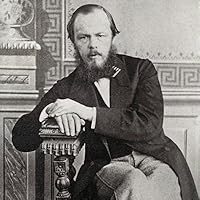
“You took all that was most extraordinary, most hypothetical, and most vague, all that was beyond the understanding of the people, and thus You acted as though You did not love them at all—and who was this? The one who had come to give His life for them!
Instead of taking control of human freedom, You intensified it and burdened man’s spiritual domain with its torments for ever. You desired man to have freedom of choice in love so that he would follow You freely, lured and captivated by You. Instead of the old immutable law, man should henceforth decide with a free heart what is good and what is evil, having only Your image before him as a guide—but didn’t it occur to You that in the end men would reject and dispute even Your image and Your truth if they were saddled with such a terrible burden as freedom of choice?
They will cry out in the end that truth is not in You, for they could not have been left in worse confusion and torment than that in which You left them, bequeathing them so many problems and unresolved questions. So You Yourself sowed the seed of the destruction of Your own kingdom; blame no one else for this.”
― The Brothers Karamazov
Instead of taking control of human freedom, You intensified it and burdened man’s spiritual domain with its torments for ever. You desired man to have freedom of choice in love so that he would follow You freely, lured and captivated by You. Instead of the old immutable law, man should henceforth decide with a free heart what is good and what is evil, having only Your image before him as a guide—but didn’t it occur to You that in the end men would reject and dispute even Your image and Your truth if they were saddled with such a terrible burden as freedom of choice?
They will cry out in the end that truth is not in You, for they could not have been left in worse confusion and torment than that in which You left them, bequeathing them so many problems and unresolved questions. So You Yourself sowed the seed of the destruction of Your own kingdom; blame no one else for this.”
― The Brothers Karamazov

“You live an insular existence, going from your soundproofed cars to your air-conditioned, insulated houses. People would not say God is dead if they only looked up at the spectacular panorama of the night sky, or had an unobstructed view of the sunset.”
― The Sun at Midnight: The Revealed Mysteries of the Ahlul Bayt Sufis
― The Sun at Midnight: The Revealed Mysteries of the Ahlul Bayt Sufis
“If indeed we shall never return to our birthplace; if indeed we have been abandoned by the gods; we are still answerable to the names of our beloveds.”
―
―
“When Nietzsche said, “God is dead”, he himself immediately replaced God with a new God, the Superman. Who would bother with Nietzsche’s philosophy if he pronounced God dead and then hanged himself? Nietzsche immediately resurrected God, hence God was never dead. God is always ready to be re-expressed. It’s not the concept of God that’s wrong, it’s the concept of the wrong God, wrongly defined and understood.”
― The Wolf Tamers: How They Made the Strong Weak
― The Wolf Tamers: How They Made the Strong Weak

“Look, see: the universe does nothing. Victim or monster, there is no one to help. God is dead. We should have tried to do our best without him.”
― Life As A Kite
― Life As A Kite
“The true formula of atheism is not "God is dead" -- the true formula of atheism is that God is unconscious.”
―
―
“God is the darkest creature in the universe, sitting on his throne of perpetual malice. He gives only one answer. Silence is his answer, always. The silence that surrounds him is the silence that condemns him. This is no ordinary silence. It’s the silence of eternity. Where did this moral monster come from? From the mad fantasies of men. He is the empty toy of an over-indulged, blue-eyed child. The world does not need him.”
― The Mistletoe Murders: A Nietzschean Murder Mystery
― The Mistletoe Murders: A Nietzschean Murder Mystery
“Why was Nietzsche’s “God is dead” speech so refreshing? It’s because the death of the external God would force people to become gods themselves. Nietzsche’s Superman is a God substitute. If you are a Superman then you are becoming God. The Last Man wants none of that. The Last Man always wants an external God. The Last Man always wants someone else running the show, bearing the burden.”
― Children See Dead People: Children's Spooky Powers
― Children See Dead People: Children's Spooky Powers
“Haven't you heard of that madman who in the bright morning lit a lantern and ran around the marketplace crying incessantly, 'I'm looking for God! l'm looking for God!' Since many of those who did not believe in God were standing around together just then, he caused great laughter. ‘Has he been lost, then?’ asked one. ‘Did he lose his way like a child?’ asked another. ‘Or is he hiding? Is he afraid of us? Has he gone to sea? Emigrated?’ — Thus they shouted and laughed, one interrupting the other. The madman jumped into their midst and pierced them with his eyes. 'Where is God?' he cried; 'I'll tell you! We have killed him - you and I! We are all his murderers. But how did we do this? How were we able to drink up the sea? Who gave us the sponge to wipe away the entire horizon? What were we doing when we unchained this earth from its sun? Where is it moving to now? Where are we moving to? Away from all suns? Are we not continually falling? And
backwards, sidewards, forwards, in all directions? Is there still an up and a down? Aren't we straying as though through an infinite nothing? Isn't empty space breathing at us? Hasn't it got colder? Isn't night and more night coming again and again? Don't lanterns have to be lit in the morning? Do we still hear nothing of the noise of the grave-diggers who are burying God? Do we still smell nothing of the divine decomposition? — Gods, too, decompose! God is dead! God remains dead! And we have killed him! How can we console ourselves, the murderers of all murderers! The holiest and the mightiest thing the world has ever possessed has bled to death under our knives: who will wipe this blood from us? With what water could we clean ourselves? What festivals of atonement, what holy games will we have to invent for ourselves? Is the magnitude of this deed not too great for us? Do we not ourselves have to become gods merely to appear worthy of it? There was never a greater deed — and whoever is born after us will on account of this deed belong to a higher history than all history up to now!' Here the madman fell silent and looked again at his listeners; they too were silent and looked at him disconcertedly. Finally he threw his lantern on the ground so that it broke into pieces and went out. 'I come too early', he then said; 'my time is not yet. This tremendous event is still on its way, wandering; it has not yet reached the ears of men. Lightning and thunder need time; the light of the stars needs time; deeds need time, even after they are done, in order to be seen and heard. This deed is still more remote to them than the remotest stars — and yet they have done it themselves!”
―
backwards, sidewards, forwards, in all directions? Is there still an up and a down? Aren't we straying as though through an infinite nothing? Isn't empty space breathing at us? Hasn't it got colder? Isn't night and more night coming again and again? Don't lanterns have to be lit in the morning? Do we still hear nothing of the noise of the grave-diggers who are burying God? Do we still smell nothing of the divine decomposition? — Gods, too, decompose! God is dead! God remains dead! And we have killed him! How can we console ourselves, the murderers of all murderers! The holiest and the mightiest thing the world has ever possessed has bled to death under our knives: who will wipe this blood from us? With what water could we clean ourselves? What festivals of atonement, what holy games will we have to invent for ourselves? Is the magnitude of this deed not too great for us? Do we not ourselves have to become gods merely to appear worthy of it? There was never a greater deed — and whoever is born after us will on account of this deed belong to a higher history than all history up to now!' Here the madman fell silent and looked again at his listeners; they too were silent and looked at him disconcertedly. Finally he threw his lantern on the ground so that it broke into pieces and went out. 'I come too early', he then said; 'my time is not yet. This tremendous event is still on its way, wandering; it has not yet reached the ears of men. Lightning and thunder need time; the light of the stars needs time; deeds need time, even after they are done, in order to be seen and heard. This deed is still more remote to them than the remotest stars — and yet they have done it themselves!”
―
“Haven't you heard of that madman who in the bright morning lit a lantern and ran around the marketplace crying incessantly, 'I'm looking for God! l'm looking for God!' Since many of those who did not believe in God were standing around together just then, he caused great laughter. ‘Has he been lost, then?’ asked one. ‘Did he lose his way like a child?’ asked another. ‘Or is he hiding? Is he afraid of us? Has he gone to sea? Emigrated?’ — Thus they shouted and laughed, one interrupting the other. The madman jumped into their midst and pierced them with his eyes. 'Where is God?' he cried; 'I'll tell you! We have killed him - you and I! We are all his murderers. But how did we do this? How were we able to drink up the sea? Who gave us the sponge to wipe away the entire horizon? What were we doing when we unchained this earth from its sun? Where is it moving to now? Where are we moving to? Away from all suns? Are we not continually falling? And backwards, sidewards, forwards, in all directions? Is there still an up and a down? Aren't we straying as though through an infinite nothing? Isn't empty space breathing at us? Hasn't it got colder? Isn't night and more night coming again and again? Don't lanterns have to be lit in the morning? Do we still hear nothing of the noise of the grave-diggers who are burying God? Do we still smell nothing of the divine decomposition? — Gods, too, decompose! God is dead! God remains dead! And we have killed him! How can we console ourselves, the murderers of all murderers! The holiest and the mightiest thing the world has ever possessed has bled to death under our knives: who will wipe this blood from us? With what water could we clean ourselves? What festivals of atonement, what holy games will we have to invent for ourselves? Is the magnitude of this deed not too great for us? Do we not ourselves have to become gods merely to appear worthy of it? There was never a greater deed — and whoever is born after us will on account of this deed belong to a higher history than all history up to now!' Here the madman fell silent and looked again at his listeners; they too were silent and looked at him disconcertedly. Finally he threw his lantern on the ground so that it broke into pieces and went out. 'I come too early', he then said; 'my time is not yet. This tremendous event is still on its way, wandering; it has not yet reached the ears of men. Lightning and thunder need time; the light of the stars needs time; deeds need time, even after they are done, in order to be seen and heard. This deed is still more remote to them than the remotest stars — and yet they have done it themselves!”
―
―
“The madman jumped into their midst and pierced them with his eyes. 'Where is God?' he cried; 'I'll tell you! We have killed him—you and I! We are all his murderers. But how did we do this? How were we able to drink up the sea? Who gave us the sponge to wipe away the entire horizon? What were we doing when we unchained this earth from its sun? Where is it moving to now? Where are we moving to? Away from all suns? Are we not continually falling? And backwards, sidewards, forwards, in all directions? Is there still an up and a down? Aren't we straying as though through an infinite nothing? Isn't empty space breathing at us? Hasn't it got colder? Isn't night and more night coming again and again? Don't lanterns have to be lit in the
morning? Do we still hear nothing of the noise of the grave-diggers who are burying God? Do we still smell nothing of the divine decomposition?—Gods, too, decompose! God is dead! God remains dead! And we have killed him! How can we console ourselves, the murderers of all murderersl The holiest and the mightiest thing the world has ever possessed has bled to death under our knives: who will wipe this blood from us? With what water could we clean ourselves? What festivals of atonement, what holy games will we have to invent for ourselves? Is the magnitude of this deed not too great for us? Do we not ourselves have to become gods merely to appear worthy of it?”
― The Gay Science: With a Prelude in German Rhymes and an Appendix of Songs
morning? Do we still hear nothing of the noise of the grave-diggers who are burying God? Do we still smell nothing of the divine decomposition?—Gods, too, decompose! God is dead! God remains dead! And we have killed him! How can we console ourselves, the murderers of all murderersl The holiest and the mightiest thing the world has ever possessed has bled to death under our knives: who will wipe this blood from us? With what water could we clean ourselves? What festivals of atonement, what holy games will we have to invent for ourselves? Is the magnitude of this deed not too great for us? Do we not ourselves have to become gods merely to appear worthy of it?”
― The Gay Science: With a Prelude in German Rhymes and an Appendix of Songs
All Quotes
|
My Quotes
|
Add A Quote
Browse By Tag
- Love Quotes 102.5k
- Life Quotes 81k
- Inspirational Quotes 77.5k
- Humor Quotes 45.5k
- Philosophy Quotes 32k
- Inspirational Quotes Quotes 29k
- God Quotes 27k
- Wisdom Quotes 25.5k
- Romance Quotes 25k
- Truth Quotes 25k
- Poetry Quotes 24.5k
- Life Lessons Quotes 23k
- Quotes Quotes 21.5k
- Death Quotes 21k
- Happiness Quotes 19k
- Hope Quotes 19k
- Faith Quotes 18.5k
- Inspiration Quotes 18k
- Spirituality Quotes 16k
- Relationships Quotes 16k
- Motivational Quotes 16k
- Religion Quotes 15.5k
- Life Quotes Quotes 15.5k
- Writing Quotes 15k
- Love Quotes Quotes 15k
- Success Quotes 14.5k
- Motivation Quotes 14k
- Time Quotes 13k
- Science Quotes 12.5k
- Motivational Quotes Quotes 12k