
Find & Share Quotes with Friends
Nuclear Power Quotes
Quotes tagged as "nuclear-power"
Showing 1-25 of 25

“It's certainly true that Chernobyl, while an accident in the sense that no one intentionally set it off, was also the deliberate product of a culture of cronyism, laziness, and a deep-seated indifference toward the general population. The literature on the subject is pretty unanimous in its opinion that the Soviet system had taken a poorly designed reactor and then staffed it with a group of incompetents. It then proceeded, as the interviews in this book attest, to lie about the disaster in the most criminal way. In the crucial first ten days, when the reactor core was burning and releasing a steady stream of highly radioactive material into the surrounding areas, the authorities repeatedly claimed that the situation was under control. . . In the week after the accident, while refusing to admit to the world that anything really serious had gone wrong, the Soviets poured thousands of men into the breach. . . The machines they brought broke down because of the radiation. The humans wouldn't break down until weeks or months later, at which point they'd die horribly.”
― Voices from Chernobyl: The Oral History of a Nuclear Disaster
― Voices from Chernobyl: The Oral History of a Nuclear Disaster

“If stupid hippies hadn't killed nuclear power, we'd have nuclear power plants, safer and cheaper than coal-fired plants, all over, and electric cars really would be zero emissions.”
― Presto!: How I Made Over 100 Pounds Disappear and Other Magical Tales
― Presto!: How I Made Over 100 Pounds Disappear and Other Magical Tales
“At that time my notions of nuclear power were utterly idyllic. At school and at the university we'd been taught that this was a magical factory that made "energy out of nothing," where people in white robes sat and pushed buttons. Chernobyl blew up when we weren't prepared.”
― Voices from Chernobyl: The Oral History of a Nuclear Disaster
― Voices from Chernobyl: The Oral History of a Nuclear Disaster

“I dispute the point that nuclear energy is 'clean' and 'cost-effective'. As I recall, when we first harnessed nuclear power it was to drop an atom bomb on a civilian population, not to save the environment. However, you must admit, the victors are never tried for war crimes.”
― Brushstrokes of a Gadfly
― Brushstrokes of a Gadfly

“You know, sometimes I don't understand what's wrong with us. This is just about the most creative and imaginative country on earth—and yet sometimes we just don't seem to have the gumption to exploit our intellectual property. We split the atom, and now we have to get French or Korean scientists to help us build nuclear power stations. We perfected the finest cars on earth—and now Rolls-Royce is in the hands of the Germans. Whatever we invent, from the jet engine to the internet, we find that someone else carts it off and makes a killing from it elsewhere.”
―
―

“Nuclear weapons free world is not a dream but a necessity for human survival. We need stop waiting for things to happen. We need to go ahead and make things happen.”
― Nuclear Weapons Free World - Peace on the Earth
― Nuclear Weapons Free World - Peace on the Earth
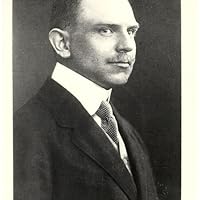
“As chemists, we must rename [our] scheme and insert the symbols Ba, La, Ce in place of Ra, Ac, Th. As nuclear chemists closely associated with physics, we cannot yet convince ourselves to make this leap, which contradicts all previous experience in nuclear physics.”
―
―
“I remembered some lines from the papers: our nuclear stations are absolutely safe, we could build one on Red Square, they're safer than samovars. They're like stars and we'll "light" the whole earth with them.”
― Voices from Chernobyl: The Oral History of a Nuclear Disaster
― Voices from Chernobyl: The Oral History of a Nuclear Disaster
“To be a scientist is to be naive. We are so focused on our search for truth, we fail to consider how few actually want us to find it. But it is always there, whether we see it or not, whether we chose to or not.The truth doesn't care about our needs or wants. It doesn't care about our governments, our ideologies, our religions. It will lie in wait for all time. And this, at last, is the gift of Chernobyl. Where I once would fear the cost of truth, now I only ask. "What is the cost of lies?”
―
―

“If you read British Foreign Office records from the 1940s, it’s clear they recognised that their day in the sun was over and that Britain would have to be the “junior partner” of the United States, and sometimes treated in a humiliating way. A striking example of this was in 1962, the time of the Cuban missile crisis. The Kennedy planners were making some very dangerous choices and pursuing policies which they thought had a good chance of leading to nuclear war, and they knew that Britain would be wiped out. The US wouldn’t, because Russia’s missiles couldn’t reach there, but Britain would be wiped out.”
―
―

“The Fukushima nuclear complex went on to become the worst man-made engineering disaster in all of human history, outside of war.”
― Health Forensics
― Health Forensics
“Chernobyl is like the war of all wars. There's nowhere to hide. Not underground, not underwater, not in the air.”
― Voices from Chernobyl: The Oral History of a Nuclear Disaster
― Voices from Chernobyl: The Oral History of a Nuclear Disaster

“Whoever is planning a nuclear war or seriously thinking about using nuclear weapons must directly be taken to a mental hospital! Mad people are mentally sick and they only need a medical treatment! Every nation has the responsibility to weed their deranged politicians out from their governments!”
―
―

“The mother can use a knife in the kitchen to chop vegetables and make a healthy meal, but if you give a knife to a child and the child accidentally injures himself, is it the fault of the knife! The same is with us humans and our nukes. Developing nukes is part of the external progress that I just mentioned a while ago, whereas being aware of how to use them would require internal progress, which unfortunately is happening at the speed of a turtle, because almost all humans have quite childishly accepted external progress to be the ultimate progress of humanity.”
― Saint of The Sapiens
― Saint of The Sapiens

“The word 'catastrophe' is not permitted as long as there is danger of catastrophe turning to doom.”
― Accident: A Day's News
― Accident: A Day's News
“Wasting nuclear power on warheads is a barbaric use of a scientific revolution.”
― Either Reformist or Terrorist: If You Are Terror I Am Your Grandfather
― Either Reformist or Terrorist: If You Are Terror I Am Your Grandfather

“The USA and the Soviet Union each had the ability to annihilate the other. Therefore- in theory at least-neither of these growling superpowers would dare attack the other, because to do so would result in its own immolation.”
― Life: An Exploded Diagram
― Life: An Exploded Diagram

“In 1992 Cuba was busy building the “Juragua Nuclear Power Plant” on its southern coast, near Cienfuegos, the capital of Cienfuegos Province. All was going well, however construction had to be suspended following the collapse of the Soviet Union. The United States had been opposed to the project and discouraged other countries from assisting Cuba in completing this monumental project. Eight years later, when the Russian economy improved some, Vladimir Putin offered to finish one of the reactors. With estimates regarding the cost to finish this reactor ranging from $300 million to $750 million, Putin offered Cuba a grant of $800 million over a period of 10 years. Because of Cuba’s heavy national debt, Castro stated that Cuba was no longer interested in finishing the plant and would be seeking other energy alternatives. In 2004, a turbine was removed from the stalled project, to be used as a replacement for a damaged turbine at the “Guiteras thermoelectric plant,” thus effectively ending the “Juragua Electic Project.”
―
―

“First lesson in life that ruined more than a few old movies. "The reactor is critical, run!!"
Stop and have a latte instead”
―
Stop and have a latte instead”
―
“The Empire State was a relatively quiet ship since she only used steam power to drive the turbines, which then spun the generators that made the electricity needed to energize the powerful electric motors, which were directly geared to turn the propeller shafts. All in all, the ship was nearly vibration free, making for a smooth ride.
With the sound of three short blasts on the ship’s whistle, we backed away from the pier. This ship was unlike most ships and we all noticed a definite difference in her sounds and vibrations. At that time, most American vessels were driven by steam propulsion that relied on superheating water. The reciprocating steam engines, with their large pistons, were the loudest as they hissed and wheezed, turning a huge crankshaft. Steam turbines were relatively vibration free, but live steam was always visible as it powered the many pumps, winches, etc. Steam is powerful and efficient, but can be dangerous and even deadly. Diesel engines were seldom used on the larger American ships of that earlier era since they were not considered cost or energy efficient. Led by German ships, diesel driven vessels, they are now the most popular engines in use.
The NS Savanna was the only nuclear merchant ship, ever built. Launched in July 21 1959, at a cost of $46.9 million, the NS Savannah was a demo-project for the potential use of nuclear energy. She was deactivated in 1971, and is now located at the Canton Marine Terminal in Baltimore, Maryland.”
―
With the sound of three short blasts on the ship’s whistle, we backed away from the pier. This ship was unlike most ships and we all noticed a definite difference in her sounds and vibrations. At that time, most American vessels were driven by steam propulsion that relied on superheating water. The reciprocating steam engines, with their large pistons, were the loudest as they hissed and wheezed, turning a huge crankshaft. Steam turbines were relatively vibration free, but live steam was always visible as it powered the many pumps, winches, etc. Steam is powerful and efficient, but can be dangerous and even deadly. Diesel engines were seldom used on the larger American ships of that earlier era since they were not considered cost or energy efficient. Led by German ships, diesel driven vessels, they are now the most popular engines in use.
The NS Savanna was the only nuclear merchant ship, ever built. Launched in July 21 1959, at a cost of $46.9 million, the NS Savannah was a demo-project for the potential use of nuclear energy. She was deactivated in 1971, and is now located at the Canton Marine Terminal in Baltimore, Maryland.”
―

“A lot of people were opposed to it.
A lot of people were for it.
I myself think about it
as little as possible.”
― Bluebeard
A lot of people were for it.
I myself think about it
as little as possible.”
― Bluebeard
“The radioactive material from one nuclear warhead can power over two thousand households for a year. Instead of wasting such potent resources on fancy, frivolous and fictitious geopolitical insecurities, let us redirect those resources to alleviate actual human suffering from society.”
― Either Reformist or Terrorist: If You Are Terror I Am Your Grandfather
― Either Reformist or Terrorist: If You Are Terror I Am Your Grandfather
“In a technologically advanced world, the most powerful nation is not the one with nuclear power, but the one with coding power.”
― Either Reformist or Terrorist: If You Are Terror I Am Your Grandfather
― Either Reformist or Terrorist: If You Are Terror I Am Your Grandfather

“One cannot have an honest discussion about the potential of nuclear power without fully acknowledging the ravages of the Hanford project. This would be tantamount to debating the future of our dying oceans without bringing up the topic of climate change.”
― Atomic Days: The Untold Story of the Most Toxic Place in America
― Atomic Days: The Untold Story of the Most Toxic Place in America
“The cruel injustice is that even though the world’s poor are doing essentially nothing to cause climate change, they’re going to suffer the most from it.”
― How to Avoid a Climate Disaster: The Solutions We Have and the Breakthroughs We Need
― How to Avoid a Climate Disaster: The Solutions We Have and the Breakthroughs We Need
All Quotes
|
My Quotes
|
Add A Quote
Browse By Tag
- Love Quotes 102.5k
- Life Quotes 81k
- Inspirational Quotes 77.5k
- Humor Quotes 45.5k
- Philosophy Quotes 32k
- Inspirational Quotes Quotes 29k
- God Quotes 27k
- Wisdom Quotes 25.5k
- Romance Quotes 25k
- Truth Quotes 25k
- Poetry Quotes 24.5k
- Life Lessons Quotes 23k
- Quotes Quotes 21.5k
- Death Quotes 21k
- Happiness Quotes 19k
- Hope Quotes 19k
- Faith Quotes 18.5k
- Inspiration Quotes 18k
- Relationships Quotes 16k
- Spirituality Quotes 16k
- Motivational Quotes 16k
- Religion Quotes 15.5k
- Life Quotes Quotes 15.5k
- Writing Quotes 15k
- Love Quotes Quotes 15k
- Success Quotes 14.5k
- Motivation Quotes 14k
- Time Quotes 13k
- Science Quotes 12.5k
- Motivational Quotes Quotes 12k