
 Sign in with Facebook
Scottish Literature Quotes
Quotes tagged as "scottish-literature"
Showing 1-20 of 20

“Historically, the language we call Scots was a development of the Anglian speech of the Northumbrians who established their kingdom of Bernicia as far north as the Firth of Forth in the seventh century. This northern Anglo-Saxon language flourished in Lowland Scotland and emerged into a distinct language on its own, capable of rich expansion by borrowing from Latin, French and other sources with its own grammatical forms and methods of borrowing. By the time of the Makars of the fifteenth century it was a highly sophisticated poetic language, based on the spoken speech of the people, but enriched by many kinds of expansion, invention and 'aureation'. Distinct from literary English, but having much in common with it, literary Scots took its place in the late Middle Ages as one of the great literary languages of Europe.”
― Literature and Gentility in Scotland
― Literature and Gentility in Scotland

“England, Ireland, Scotland and Wales might have been partners in an imperial project that required the projection of 'English Literature' as one of the defining elements of cultural superiority that justified the continuous extension of Empire throughout the nineteenth century, but they were also engaged in an internal struggle over the origins and the dynamics of that literature, and about the role of their national literatures within the consolidating discipline of English.”
― The Wealth of the Nation: Scotland, Culture and Independence
― The Wealth of the Nation: Scotland, Culture and Independence
“Scots people were vigorous industrialists and slum builders, but they never reconciled themselves spiritually to their own urban creations... It was better to help to keep alive the native faith and virtues and idyllic memories of the people than to remind them of the scorching fires of Moloch through which they were passing.”
― Literature and Oatmeal
― Literature and Oatmeal

“On the whole popular fiction in Victorian Scotland is not overwhelmingly backward-looking; it is not obsessed by rural themes; it does not shrink from urbanisation or its problems; it is not idyllic in its approach; it does not treat the common people as comic or quaint. The second half of the nineteenth century is not a period of creative trauma or linguistic decline; it is one of the richest and most vital episodes in the history of Scottish popular culture.”
― Popular Literature in Victorian Scotland: Language, Fiction and the Press
― Popular Literature in Victorian Scotland: Language, Fiction and the Press

“In a country so distant, so naturally poor, more impoverished by misgovernment and internal discord, and the meddling of a powerful and grasping neighbour, we must not look for the extended dealings that dignify trade, nor for the refinement, luxury, art, which adorned the free cities of the Continent. Instead of these we may find something even more valuable, if we are able to trace to our free institutions, and to the burgh life that glowed from them, a sturdy independence and self-reliance, honest frugality, a respect for law and order, and an intelligent love of education, somewhat above our neighbours, which, I hope, still mark our nation.
In the early literature of Scotland we have a worthy reflection of her history. Her first poet sung the achievements of Bruce. Her greatest satirist aimed his shafts at the corruptions of Rome. In the homely burghs of Scotland we may find the first spring of that public spirit, the voice of the people, which in the worst of times, when the crown and the law were powerless, and the feudal aristocracy altogether selfish in its views, supported the patriot leaders Wallace and Bruce in their desperate struggle, and sent down that tide of native feeling which animated Burns and Scott, and which is not yet dead, however much it may be endangered by the childish follies of its quixotic champions. Whatever of thought, of enterprise, of public feeling, appears in our poor history, took rise in our burghs, and among the burgess class.”
― Ancient Laws and Customs of the Burghs of Scotland, Volume I
In the early literature of Scotland we have a worthy reflection of her history. Her first poet sung the achievements of Bruce. Her greatest satirist aimed his shafts at the corruptions of Rome. In the homely burghs of Scotland we may find the first spring of that public spirit, the voice of the people, which in the worst of times, when the crown and the law were powerless, and the feudal aristocracy altogether selfish in its views, supported the patriot leaders Wallace and Bruce in their desperate struggle, and sent down that tide of native feeling which animated Burns and Scott, and which is not yet dead, however much it may be endangered by the childish follies of its quixotic champions. Whatever of thought, of enterprise, of public feeling, appears in our poor history, took rise in our burghs, and among the burgess class.”
― Ancient Laws and Customs of the Burghs of Scotland, Volume I

“The idea of the split self has been an enduringly influential trope in the academic analysis of Scottish literature as a distinct artistic field. The division of the self, and the resulting schism of personal morality, have frequently been upheld as characteristically Scottish - a literary representation of the nation's long-divided political loyalties and experiences.”
― The Edinburgh Companion to Irvine Welsh
― The Edinburgh Companion to Irvine Welsh

“George MacDonald is central to a Scottish tradition tormented by theology and with its roots in two worlds. He has been described as a link between John Galt and the kailyard, and his social novels, of which he wrote a good many, are certainly that. To my mind his deeper life is not in these solid, moralistic books, but in the stories usually described as fantasies. The most formidable of these is Lilith, one of the most ambitious books in Scottish literature. It aims to project a total metaphysical vision of the universe, in which evil gives way at last to good through repentance; even the Devil will finally repent.”
― The Great Shadow House: Essays on the Metaphysical Tradition in Scottish Fiction
― The Great Shadow House: Essays on the Metaphysical Tradition in Scottish Fiction
“Since the success of the kailyard writers was comparatively short-lived, and their ambitions limited, it seems peculiar to non-Scottish readers that the persistence of the reaction to them was so intense that 'sentimentality' remains to this day a term of literary abuse to which no defence may be offered, and counter-kailyarders go to extraordinary lengths to eliminate from their work the least trace of theological light or metaphysical hope.”
― The Great Shadow House: Essays on the Metaphysical Tradition in Scottish Fiction
― The Great Shadow House: Essays on the Metaphysical Tradition in Scottish Fiction

“It must have been soon after that when ways and means were much under discussion that Leslie and Ray came to see us in Wokingham. Leslie was working at high pressure on all sorts of subjects but although he was beginning to find his financial worries lessen he still seemed not to have found and in my opinion did not exactly know what he might be able to do best. I suggested that he wrote a great Scots drama or novel. With one voice Leslie and Ray said it would never pay. I protested that it would if it was good enough - that Scotland was gasping for a picture of the true Scotland as he and I knew it - a picture that was neither A House with the Green Shutters nor yet A Bonnie Briar Bush, neither of which to me rang true.”
― Another Song at Sunset: Jean Baxter, Scots poet and friend of Lewis Grassic Gibbon
― Another Song at Sunset: Jean Baxter, Scots poet and friend of Lewis Grassic Gibbon

“So that was Kinraddie... the Scots countryside itself, fathered between a kailyard and a bonny briar bush in the lee of a house with green shutters.”
―
―

“However harmful the kailyard tradition was to Scottish literature and the perception of Scotland, it invariably portrayed village or small town life in Scotland as harmonious and not umpleasant. At the beginning of the twentieth century, an anti-kailyard tradition of Scottish literature developed, most markedly represented by two novels: George Douglas Brown, 'The House with the Green Shutters (1901), and John MacDougall Hay, Gillespie (1914). Both were based on the authors' own experience of Scottish villages (Ochiltree and Tarbert respectively). Both display the unsavoury and tragic side of parochial life.
Could we view The Little White Town of Never Weary as a sort of riposte to this tradition? It certainly emphasises the more idyllic traditional life of rural market town and burgh.”
― The Little White Town of Never Weary
Could we view The Little White Town of Never Weary as a sort of riposte to this tradition? It certainly emphasises the more idyllic traditional life of rural market town and burgh.”
― The Little White Town of Never Weary
“Janet began to hate the sea. There was so much of it, flowing, counter-flowing, entering other seas, slyly furthering its interests beyond the mind's reckoning; no wonder it could pass itself off as sky; it was infinite, a voracious marine confederacy.”
― O Caledonia
― O Caledonia

“We may even conclude it to be an evidence of strength, rather than of weakness, that the Scots language and the Scottish literature did not maintain a separate existence. Scottish, throwing in its luck with English, has not only much greater chance of survival, but contributes important elements of strength to complete the English...”
―
―

“Superficially, this nationally marked literature is subsumed by the terms of both the universal and the global. Considered part of anglophone science fiction because British, Scottish science fiction is thus 'universal,' but as 'not English', it perversely cannot rise to the level of the 'global'.”
― Scotland as Science Fiction
― Scotland as Science Fiction
“The chief Literary Lights which modern Scotland claims to light up the scene of her night are in reality no more than the commendable writers of the interesting English county of Scotshire.”
― Scottish Scene: or, The Intelligent Man's Guide to Albyn
― Scottish Scene: or, The Intelligent Man's Guide to Albyn

“Scotch novels and Scotch reviewers were the most brilliant constellations in a northern literary galaxy which included - besides the historical romance and critical quarterly - a professional intellectual class, the entrpreneurial publisher, the nationalist ballad epic, and the monthly magazine. If not all absolutely original, here these genres and institutions acquired their definitive forms and associations, and a prestige they would bear throughout the nineteenth century.”
― Scott's Shadow: The Novel in Romantic Edinburgh
― Scott's Shadow: The Novel in Romantic Edinburgh
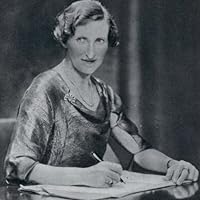
“I have thought of writing and trying to give a truthful picture of Scottish life - a cross between Drumtochty and The House with the Green Shutters - but it would probably be reviewed as a 'feebly written story of life in a Scots provincial town' and then I would beat my pen into a hatpin and retreat from the literary arena.”
― Penny Plain
― Penny Plain

“In the complexity of its structure, its kaleidoscope of perspectives, its confrontation with the effects of the First World War, its attentiveness to experience at all life stages and it embrace of linguistic, formal and philosophical 'difficulty', The Weatherhouse is arguably the great Scottish modernist feminist novel of the period.”
― The International Companion to the Scottish Novel
― The International Companion to the Scottish Novel
“Carswell's novels, Open the Door! (1920) and The Camomile (1922) sit both inside and outside the school of urban fiction. While the spaces of Glasgow thrum in their pages and are - as is frequent in other urban fiction - characterised by their contrast with alternative locales, interest in the city is also aesthetic. Glasgow here is also a city of artistic sensibilities and aspirations, of the avant-garde”
― The International Companion to the Scottish Novel
― The International Companion to the Scottish Novel
“Refusing to collaborate with a transendental, totalising and finally determining sense of national identity, Scottish novelists since the 1980s have concentrated instead on individual moments of crisis, alienation and fragmentation, moments dramatising the loss and discovery of self, as they are articulated through the lives of some of thos conventionally excluded from the story of Scotland.”
― Studies in Scottish Fiction: 1945 to the Present
― Studies in Scottish Fiction: 1945 to the Present
All Quotes
|
My Quotes
|
Add A Quote
Browse By Tag
- Love Quotes 102k
- Life Quotes 80.5k
- Inspirational Quotes 77k
- Humor Quotes 44.5k
- Philosophy Quotes 31.5k
- Inspirational Quotes Quotes 29k
- God Quotes 27k
- Wisdom Quotes 25k
- Truth Quotes 25k
- Romance Quotes 24.5k
- Poetry Quotes 23.5k
- Life Lessons Quotes 23k
- Quotes Quotes 21.5k
- Death Quotes 21k
- Happiness Quotes 19k
- Hope Quotes 19k
- Faith Quotes 18.5k
- Inspiration Quotes 18k
- Spirituality Quotes 16k
- Motivational Quotes 16k
- Relationships Quotes 16k
- Religion Quotes 15.5k
- Life Quotes Quotes 15.5k
- Writing Quotes 15k
- Love Quotes Quotes 15k
- Success Quotes 14k
- Motivation Quotes 14k
- Time Quotes 13k
- Science Quotes 12k
- Motivational Quotes Quotes 12k
