Discover new books on Goodreads
Meet your next favorite book
“According to Nominalism, universals are names of names, but not of absolute reality or notion . . .”
"Names of names" is a very strange notion. I'm not used to thinking of names as having names in turn.
In a magical context, immediately I think of the lambda cube, or stratified negations, or Russell's paradox, or consecutive universes of types. of course there is no Name of the Language of Magic. each name for a subset of the language is outside that subset...
Damianne liked this
“I teach you the overman. Man is something that shall be overcome. What have you done to overcome him?... All beings so far have created something beyond themselves; and do you want to be the ebb of this great flood, and even go back to the beasts rather than overcome man? What is ape to man? A laughing stock or painful embarrassment. And man shall be that to overman: a laughingstock or painful embarrassment. You have made your way from worm to man, and much in you is still worm. Once you were apes, and even now, too, man is more ape than any ape... The overman is the meaning of the earth. Let your will say: the overman shall be the meaning of the earth... Man is a rope, tied between beast and overman—a rope over an abyss ... what is great in man is that he is a bridge and not an end.”
―
―
“The so-called ‘psychotically depressed’ person who tries to kill herself doesn’t do so out of quote ‘hopelessness’ or any abstract conviction that life’s assets and debits do not square. And surely not because death seems suddenly appealing. The person in whom Its invisible agony reaches a certain unendurable level will kill herself the same way a trapped person will eventually jump from the window of a burning high-rise. Make no mistake about people who leap from burning windows. Their terror of falling from a great height is still just as great as it would be for you or me standing speculatively at the same window just checking out the view; i.e. the fear of falling remains a constant. The variable here is the other terror, the fire’s flames: when the flames get close enough, falling to death becomes the slightly less terrible of two terrors. It’s not desiring the fall; it’s terror of the flames. And yet nobody down on the sidewalk, looking up and yelling ‘Don’t!’ and ‘Hang on!’, can understand the jump. Not really. You’d have to have personally been trapped and felt flames to really understand a terror way beyond falling.”
―
―
“All men dream: but not equally. Those who dream by night in the dusty recesses of their minds wake up in the day to find it was vanity, but the dreamers of the day are dangerous men, for they may act their dreams with open eyes, to make it possible.”
― Seven Pillars of Wisdom: A Triumph
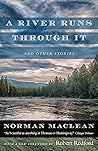
“Eventually, all things merge into one, and a river runs through it. The river was cut by the world's great flood and runs over rocks from the basement of time. On some of the rocks are timeless raindrops. Under the rocks are the words, and some of the words are theirs.
I am haunted by waters.”
― A River Runs Through It and Other Stories
I am haunted by waters.”
― A River Runs Through It and Other Stories
“A Great Rabbi stands, teaching in the marketplace. It happens that a husband finds proof that morning of his wife's adultery, and a mob carries her to the marketplace to stone her to death.
There is a familiar version of this story, but a friend of mine - a Speaker for the Dead - has told me of two other Rabbis that faced the same situation. Those are the ones I'm going to tell you.
The Rabbi walks forward and stands beside the woman. Out of respect for him the mob forbears and waits with the stones heavy in their hands. 'Is there any man here,' he says to them, 'who has not desired another man's wife, another woman's husband?'
They murmur and say, 'We all know the desire, but Rabbi none of us has acted on it.'
The Rabbi says, 'Then kneel down and give thanks that God has made you strong.' He takes the woman by the hand and leads her out of the market. Just before he lets her go, he whispers to her, 'Tell the Lord Magistrate who saved his mistress, then he'll know I am his loyal servant.'
So the woman lives because the community is too corrupt to protect itself from disorder.
Another Rabbi. Another city. He goes to her and stops the mob as in the other story and says, 'Which of you is without sin? Let him cast the first stone.'
The people are abashed, and they forget their unity of purpose in the memory of their own individual sins. ‘Someday,’ they think, ‘I may be like this woman. And I’ll hope for forgiveness and another chance. I should treat her as I wish to be treated.’
As they opened their hands and let their stones fall to the ground, the Rabbi picks up one of the fallen stones, lifts it high over the woman’s head and throws it straight down with all his might it crushes her skull and dashes her brain among the cobblestones. ‘Nor am I without sins,’ he says to the people, ‘but if we allow only perfect people to enforce the law, the law will soon be dead – and our city with it.’
So the woman died because her community was too rigid to endure her deviance.
The famous version of this story is noteworthy because it is so startlingly rare in our experience. Most communities lurch between decay and rigor mortis and when they veer too far they die. Only one Rabbi dared to expect of us such a perfect balance that we could preserve the law and still forgive the deviation.
So of course, we killed him.
-San Angelo
Letters to an Incipient Heretic”
― Speaker for the Dead
There is a familiar version of this story, but a friend of mine - a Speaker for the Dead - has told me of two other Rabbis that faced the same situation. Those are the ones I'm going to tell you.
The Rabbi walks forward and stands beside the woman. Out of respect for him the mob forbears and waits with the stones heavy in their hands. 'Is there any man here,' he says to them, 'who has not desired another man's wife, another woman's husband?'
They murmur and say, 'We all know the desire, but Rabbi none of us has acted on it.'
The Rabbi says, 'Then kneel down and give thanks that God has made you strong.' He takes the woman by the hand and leads her out of the market. Just before he lets her go, he whispers to her, 'Tell the Lord Magistrate who saved his mistress, then he'll know I am his loyal servant.'
So the woman lives because the community is too corrupt to protect itself from disorder.
Another Rabbi. Another city. He goes to her and stops the mob as in the other story and says, 'Which of you is without sin? Let him cast the first stone.'
The people are abashed, and they forget their unity of purpose in the memory of their own individual sins. ‘Someday,’ they think, ‘I may be like this woman. And I’ll hope for forgiveness and another chance. I should treat her as I wish to be treated.’
As they opened their hands and let their stones fall to the ground, the Rabbi picks up one of the fallen stones, lifts it high over the woman’s head and throws it straight down with all his might it crushes her skull and dashes her brain among the cobblestones. ‘Nor am I without sins,’ he says to the people, ‘but if we allow only perfect people to enforce the law, the law will soon be dead – and our city with it.’
So the woman died because her community was too rigid to endure her deviance.
The famous version of this story is noteworthy because it is so startlingly rare in our experience. Most communities lurch between decay and rigor mortis and when they veer too far they die. Only one Rabbi dared to expect of us such a perfect balance that we could preserve the law and still forgive the deviation.
So of course, we killed him.
-San Angelo
Letters to an Incipient Heretic”
― Speaker for the Dead
Matthew’s 2025 Year in Books
Take a look at Matthew’s Year in Books, including some fun facts about their reading.
More friends…
Polls voted on by Matthew
Lists liked by Matthew