
Discover new books on Goodreads
Meet your next favorite book

Edward
https://www.goodreads.com/mrquatt


Edward
is currently reading
Reading for the 2nd time
 Edward said:
"
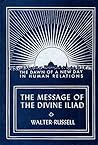
I started reading Walter Russell about ten Years ago now. I don't stray far from it, because, in my head and heart, I know it to be true. He was a Cosmic messenger from God. And if you believe it or don't, It is your choice. For me, I'll study this m
...more
"
Edward said:
"
I started reading Walter Russell about ten Years ago now. I don't stray far from it, because, in my head and heart, I know it to be true. He was a Cosmic messenger from God. And if you believe it or don't, It is your choice. For me, I'll study this m
...more
"
progress:
(page 2860 of 286)
"Pretty sure I'll never put any of his material away. This is going to be a never ending journey for me. I love this man and all that he produced in this world." — Mar 15, 2022 08:22PM
"Pretty sure I'll never put any of his material away. This is going to be a never ending journey for me. I love this man and all that he produced in this world." — Mar 15, 2022 08:22PM


“No one starts as a self-hater. But rack up all of your mistakes and take a large enough number of wrong turns in life and soon you stop trying to forgive yourself. Everywhere you look you find shame or failure staring back.”
― Harvard Square
― Harvard Square
“Children of Alcoholics stop expecting or wanting help because the continual feeling of disappointment is too painful.”
― After the Tears: Helping Adult Children of Alcoholics Heal Their Childhood Trauma
― After the Tears: Helping Adult Children of Alcoholics Heal Their Childhood Trauma

“Your own Self-Realization is the greatest service you can render the world.”
―
―
“You must know what you want, to find what you want.”
―
―
“The Laundry List Characteristics of an Adult Child 1) We became isolated and afraid of people and authority figures. 2) We became approval seekers and lost our identity in the process. 3) We are frightened by angry people and any personal criticism. 4) We either become alcoholics, marry them or both, or find another compulsive personality such as a workaholic to fulfill our sick abandonment needs. 5) We live life from the viewpoint of victims, and we are attracted by that weakness in our love and friendship relationships. 6) We have an overdeveloped sense of responsibility, and it is easier for us to be concerned with others rather than ourselves; this enables us not to look too closely at our own faults, etc. 7) We get guilt feelings when we stand up for ourselves instead of giving in to others. 8) We became addicted to excitement. 9) We confuse love and pity and tend to “love” people we can “pity” and “rescue.” 10) We “stuffed” our feelings from our traumatic childhoods and have lost the ability to feel or express our feelings because it hurts so much (Denial). 11) We judge ourselves harshly and have a very low sense of self-esteem. 12) We are dependent personalities who are terrified of abandonment and will do anything to hold on to a relationship in order not to experience painful abandonment feelings, which we received from living with sick people who were never there emotionally for us. 13) Alcoholism is a family disease; we became para-alcoholics (codependents)† and took on the characteristics of that disease even though we did not pick up the drink. 14) Para-alcoholics (codependents) are reactors rather than actors.”
― Adult Children of Alcoholics/Dysfunctional Families
― Adult Children of Alcoholics/Dysfunctional Families

Edward’s 2025 Year in Books
Take a look at Edward’s Year in Books, including some fun facts about their reading.

11 books
|
48 friends

13 books
|
30 friends

4 books
|
21 friends

1 book
|
33 friends

21 books
|
13 friends

0 books
|
45 friends

1 book
|
12 friends

42 books
|
33 friends
More friends…


Favorite Genres
Polls voted on by Edward
Lists liked by Edward