Thomas

Add friend
Sign in to Goodreads to learn more about Thomas.

https://www.goodreads.com/thomashumberg

Antifragile: Thin...
Thomas is currently reading
by Nassim Nicholas Taleb (Goodreads Author)
bookshelves: currently-reading
Rate this book
Clear rating

progress: 
 
  (page 250 of 426)
Mar 20, 2019 01:27PM

 
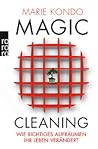
Magic Cleaning: W...
Rate this book
Clear rating

progress: 
 
  (page 113 of 223)
Aug 08, 2018 04:48AM

 
Hallucinations
Thomas is currently reading
Rate this book
Clear rating

progress: 
 
  (page 130 of 326)
Apr 08, 2018 06:00AM

 
See all 13 books that Thomas is reading…
Loading...
Alan W. Watts
“We are living in a culture entirely hypnotized by the illusion of time, in which the so-called present moment is felt as nothing but an infintesimal hairline between an all-powerfully causative past and an absorbingly important future. We have no present. Our consciousness is almost completely preoccupied with memory and expectation. We do not realize that there never was, is, nor will be any other experience than present experience. We are therefore out of touch with reality. We confuse the world as talked about, described, and measured with the world which actually is. We are sick with a fascination for the useful tools of names and numbers, of symbols, signs, conceptions and ideas.”
Alan Wilson Watts

Michel Houellebecq
“It's a curious idea to reproduce when you don't even like life.”
Michel Houellebecq, The Elementary Particles

Slavoj Žižek
“In a traditional German toilet, the hole into which shit disappears after we flush is right at the front, so that shit is first laid out for us to sniff and inspect for traces of illness. In the typical French toilet, on the contrary, the hole is at the back, i.e. shit is supposed to disappear as quickly as possible. Finally, the American (Anglo-Saxon) toilet presents a synthesis, a mediation between these opposites: the toilet basin is full of water, so that the shit floats in it, visible, but not to be inspected. [...] It is clear that none of these versions can be accounted for in purely utilitarian terms: each involves a certain ideological perception of how the subject should relate to excrement. Hegel was among the first to see in the geographical triad of Germany, France and England an expression of three different existential attitudes: reflective thoroughness (German), revolutionary hastiness (French), utilitarian pragmatism (English). In political terms, this triad can be read as German conservatism, French revolutionary radicalism and English liberalism. [...] The point about toilets is that they enable us not only to discern this triad in the most intimate domain, but also to identify its underlying mechanism in the three different attitudes towards excremental excess: an ambiguous contemplative fascination; a wish to get rid of it as fast as possible; a pragmatic decision to treat it as ordinary and dispose of it in an appropriate way. It is easy for an academic at a round table to claim that we live in a post-ideological universe, but the moment he visits the lavatory after the heated discussion, he is again knee-deep in ideology.”
Slavoj Žižek, The Plague of Fantasies

Alan W. Watts
“Jesus Christ knew he was God. So wake up and find out eventually who you really are. In our culture, of course, they’ll say you’re crazy and you’re blasphemous, and they’ll either put you in jail or in a nut house (which is pretty much the same thing). However if you wake up in India and tell your friends and relations, ‘My goodness, I’ve just discovered that I’m God,’ they’ll laugh and say, ‘Oh, congratulations, at last you found out.”
Alan Wilson Watts, The Essential Alan Watts

Paul Kalanithi
“Yet the paradox is that scientific methodology is the product of human hands and thus cannot reach some permanent truth. We build scientific theories to organize and manipulate the world, to reduce phenomena into manageable units. Science is based on reproducibility and manufactured objectivity. As strong as that makes its ability to generate claims about matter and energy, it also makes scientific knowledge inapplicable to the existential, visceral nature of human life, which is unique and subjective and unpredictable. Science may provide the most useful way to organize empirical, reproducible data, but its power to do so is predicated on its inability to grasp the most central aspects of human life: hope, fear, love, hate, beauty, envy, honor, weakness, striving, suffering, virtue.”
Paul Kalanithi, When Breath Becomes Air

596 Audiobooks — 16653 members — last activity 4 hours, 8 min ago
Audio & audiobooks are getting more and more popular for commuters & those wanting to squeeze in another book or two a month while doing other activit ...more

year in books
Ludwig
379 books | 26 friends

SarahJa...
3,203 books | 35 friends

DR.Amir...
375 books | 3,969 friends

Duchesse
121 books | 17 friends

Martin ...
5 books | 7 friends

Günther...
89 books | 5 friends

Raphael...
96 books | 555 friends

Victori...
7 books | 3 friends

More friends…

Favorite Genres


Polls voted on by Thomas

Lists liked by Thomas