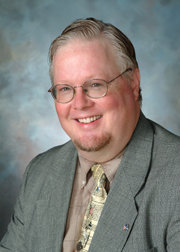
Richard Munro

Add friend
Sign in to Goodreads to learn more about Richard.

https://spiritofcecilia.com/tag/men/

The Muse of Histo...
Rate this book
Clear rating

 
Nimitz at War: Co...
Rate this book
Clear rating

 
Loading...
Victor Davis Hanson
“In a 2017 poll taken by the University of Pennsylvania’s Annenberg Public Policy Center, most Americans appeared ignorant of the fundamentals of the US Constitution. Thirty-seven percent could not name a single right protected by the First Amendment. Only one out of four Americans could name all three branches of government. One in three could not name any branch of government. In a 2018 survey conducted by the Woodrow Wilson National Fellowship Foundation, almost 75 percent of those polled were not able to identify the thirteen original colonies. Over half had no idea whom the United States fought in World War II. Less than 25 percent knew why colonists had fought the Revolutionary War. Twelve percent thought Dwight D. Eisenhower commanded troops in the Civil War.”
Victor Davis Hanson, The Dying Citizen: How Progressive Elites, Tribalism, and Globalization Are Destroying the Idea of America

Edith Hamilton
“The Greeks were the first people in the world to play, and they played on a great scale. All over Greece there were games, all sorts of games; athletic contests of every description: races—horse-, boat-, foot-, torch-races; contests in music, where one side out-sung the other; in dancing—on greased skins sometimes to display a nice skill of foot and balance of body; games where men leaped in and out of flying chariots; games so many one grows weary with the list of them. They are embodied in the statues familiar to all, the disc thrower, the charioteer, the wrestling boys, the dancing flute players. The great games—there were four that came at stated seasons—were so important, when one was held, a truce of God was proclaimed so that all Greece might come in safety without fear. There “glorious-limbed youth”—the phrase is Pindar’s, the athlete’s poet—strove for an honor so coveted as hardly anything else in Greece. An Olympic victor—triumphing generals would give place to him. His crown of wild olives was set beside the prize of the tragedian. Splendor attended him, processions, sacrifices, banquets, songs the greatest poets were glad to write. Thucydides, the brief, the severe, the historian of that bitter time, the fall of Athens, pauses, when one of his personages has conquered in the games, to give the fact full place of honor. If we had no other knowledge of what the Greeks were like, if nothing were left of Greek art and literature, the fact that they were in love with play and played magnificently would be proof enough of how they lived and how they looked at life. Wretched people, toiling people, do not play. Nothing like the Greek games is conceivable in Egypt or Mesopotamia. The life of the Egyptian lies spread out in the mural paintings down to the minutest detail. If fun and sport had played any real part they would be there in some form for us to see. But the Egyptian did not play. “Solon, Solon, you Greeks are all children,” said the Egyptian priest to the great Athenian.”
Edith Hamilton, The Greek Way

Gilbert Highet
“Shakespeare's bitter play [Troilus and Cressida] is therefore a dramatization of a part of a translation into English of the French translation of a Latin imitation of an old French expansion of a Latin epitome of a Greek romance. (p. 55)”
Gilbert Highet, The Classical Tradition: Greek and Roman Influences on Western Literature

Ernest Hemingway
“Coward,” Pablo said bitterly. “You treat a man as coward because he has a tactical sense. Because he can see the results of an idiocy in advance. It is not cowardly to know what is foolish.” “Neither is it foolish to know what is cowardly,” said Anselmo, unable to resist making the phrase.”
Ernest Hemingway, For Whom the Bell Tolls

Apollonius of Rhodes
“With these words of prayer he threw the barley-grains. The two heroes responsible for the oxen, might Ankaios and Herakles, girded themselves in preparation. The latter crashed his club down on the middle of the forehead of one ox; in one movement its heavy body fell to the ground. Ankaios cut the other's broad neck with his bronze axe, slicing through the tough tendons; it fell sprawling over its two horns. Their comrades quickly slaughtered and flayed the oxen, chopping and cutting them up and removing the thigh pieces for sacrifice These they covered all over with a thick layer of fat and burnt them on spits, while the son of Aison poured libations of unmixed wine. Idmon rejoiced as he gazed at the flame, which burnt brightly all around the sacrifices, and the favourable omen of the murky smoke, darting up in dark spirals.”
Apollonius Rhodius, Jason and the Golden Fleece

8115 The History Book Club — 26214 members — last activity 6 hours, 55 min ago
"Interested in history - then you have found the right group". The History Book Club is the largest history and nonfiction group on Goodread ...more
203026 Proud Readers of Great Stories — 523 members — last activity Apr 29, 2020 04:08PM
For anyone who enjoys reading great stories in any genre, you've come to the right place. We're bringing back the good books in a big way. Join us! ...more

year in books
Vidur K...
1,165 books | 85 friends

MuzWot ...
1,241 books | 5,387 friends

Lance
2,673 books | 473 friends

Asif
4,533 books | 699 friends

Clay Davis
3,045 books | 545 friends

Levan R...
2,133 books | 2,567 friends

Ken Cru...
130 books | 661 friends

Aditya ...
3,223 books | 105 friends

More friends…


Polls voted on by Richard

Lists liked by Richard