
Discover new books on Goodreads
Meet your next favorite book


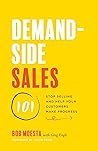


the things you make are products (or services), but your company is the thing that makes those things. That’s why your company should be your best product.


“In one of his most important lessons, he told his sons that conquering an army is not the same as conquering a nation. You may conquer an army with superior tactics and men, but you can conquer a nation only by conquering the hearts of the people.”
― Genghis Khan and the Making of the Modern World
― Genghis Khan and the Making of the Modern World

“By the summer of 1940, Britain and its empire were hanging on for dear life. The stroke of a pen in the small hours in Moscow the previous summer sealing an agreement between Nazi Germany and Communist Soviet Union had made the world look very different, very quickly. The future lay with a new series of connections that would link Berlin through the Soviet Union deep into Asia and the Indian subcontinent, one that would re-route trade and resources away from western Europe to its centre.”
― The Silk Roads: A New History of the World
― The Silk Roads: A New History of the World
“The Middle Ages in Europe are traditionally seen as the time of Crusades, chivalry and the growing power of the papacy, but all this was little more than a sideshow to the titanic struggles taking place further east. The tribal system had led the Mongols to the brink of global domination, having conquered almost the whole continent of Asia. Europe and North Africa yawned open; it was striking then that the Mongol leadership focused not on the former but on the latter. Put simply, Europe was not the best prize on offer. All that stood in the way of Mongol control of the Nile, of Egypt’s rich agricultural output and its crucial position as a junction on the trade routes in all directions was an army commanded by men who were drawn from the very same steppes: this was not just a struggle for supremacy, it was the triumph of a political, cultural and social system. The battle for the medieval world was being fought between nomads from Central and eastern Asia.”
― The Silk Roads: A New History of the World
― The Silk Roads: A New History of the World
“Later, the Mongols became intensely interested in the techniques that had been pioneered by western Europeans, copying designs for catapults and siege engines created for the Crusaders in the Holy Land and using them against targets in East Asia in the late thirteenth century. Control of the Silk Roads gave their masters access to information and ideas that could be replicated and deployed thousands of miles away.”
― The Silk Roads: A New History of the World
― The Silk Roads: A New History of the World
“It is easy to feel confused and disturbed by dislocation and violence in the Islamic world, by religious fundamentalism, by clashes between Russia and its neighbours or by China’s struggle with extremism in its western provinces. What we are witnessing, however, are the birthing pains of a region that once dominated the intellectual, cultural and economic landscape and which is now re-emerging. We are seeing the signs of the world’s centre of gravity shifting –back to where it lay for millennia.”
― The Silk Roads: A New History of the World
― The Silk Roads: A New History of the World

Szymon’s 2025 Year in Books
Take a look at Szymon’s Year in Books, including some fun facts about their reading.

849 books
|
42 friends

1,438 books
|
67 friends

805 books
|
402 friends

2,411 books
|
47 friends

640 books
|
135 friends

759 books
|
100 friends

483 books
|
133 friends

407 books
|
69 friends
More friends…


Polls voted on by Szymon
Lists liked by Szymon