Emory Moon's Blog
December 22, 2022
U.S. Army basic training
Tens of thousands of young men and women were recruited and drafted into the ranks of the US military services during America's extended engagement in the Vietnam conflict, which lasted from 1965 to 1973. They were sent overseas to fight in battle or provide support in various ways. Regardless of whether you were involuntarily conscripted or signed up to choose your own professional path, you had to go through training, which was a harrowing and unforgettable experience.
During the Vietnam War, the basic training program required 352 total hours of instruction, or 44 hours per week for eight weeks. However, trainees who completed the program noted that the education, physical and emotional obstacles, and courses took significantly longer than was technically required. After that, trainees went through the next eight weeks of advanced training before being sent to the front lines or to whatever position they were eventually assigned. Here's a glimpse at what it was like to go through basic training during Vietnam, from hand-to-hand combat and bayonet training to running miles every day in full gear and hitting the firing range, based on the recollections and stories of soldiers who really went through the experience.
Recruits wore their gear nearly every time they went out to jog, march, camp, or do any other drill. This included a gun, a uniform, boots, and a rucksack. They would sometimes bring rain gear and helmets with them. Soldiers were trained for real-world conditions on the front lines, thus this added a layer of difficulty to already demanding tasks.
Waking up early may have been one of the most difficult learning curves and life changes for recruits who were not acclimated to the tough physical demands of basic training. They had no choice but to become accustomed to it, and it frequently occurred before morning. Trainees appeared to be expected to wake up at 5 a.m. every day, rain or shine. When recruits awoke, the first thing on their minds wasn't food from the mess hall or a cup of coffee. Instead, they had no choice but to lace up their boots and run an average of 5 to 6 miles before being able to eat breakfast. Running wasn’t the only required exercise recruits had to endure before getting to eat. In some training camps, before each meal, trainees were required to regularly cross the horizontal ladder, often known as monkey bars. It was a difficult task, and one that may have put a strain on your hands.
New recruits were also given the basic lessons they'd need to serve in the American armed forces in between hours upon hours of physical training, referred to as PT for short. Lessons on conduct, behavior, basic medical knowledge, and other non-physical lessons were included in this training.
Recruits would also have to march out to the firing range almost every day, which was often located far away from the rest of the training grounds or barracks at some forts. The ranges were occasionally on the beach, and recruits were sometimes obliged to camp there, which meant they had to bring all of their belongings.
Hand-to-hand combat was taught to recruits for eight hours throughout basic training, with the goal of instilling confidence in their ability when they were confronted with a close-quarters fighting situation. Grappling, pugil stick workouts, and bayonet training were all part of the regimen. While calisthenics and other types of physical fitness regimens have largely replaced bayonet training in modern basic training, it was a key element of the drills for recruits during Vietnam. Although the last time the US military led a bayonet charge was during the Korean War in 1951, bayonets were still utilized in interpersonal combat scenarios. While they all trained and practiced with their bayonets, the drill instructors drove home the need of being good, efficient soldiers.
For recruits, the true amount of physical training, or PT, was astonishing, and among the most challenging components of that training were confidence and obstacle courses. Overhead bars, wall climbs, jumping jacks, and rope climbing were among the tasks, which were often done in excruciatingly uncomfortable circumstances with temps approaching 100 degrees or plunging below freezing. To advance to Advanced Individual Training, the last task was to complete all of the obstacle courses in a certain amount of time.
During the Vietnam War, the general objective of basic training was to turn citizens into soldiers in a short length of time so they could be transported off to help in the battle, whether or not they were truly ready. This entailed hardening the recruits and exposing them to what they could face in the field.
Recruits didn't have it any easier when it came to eating than they had throughout training. To even go inside the mess hall, they had to follow a very particular procedure and routine, and drill instructors would scream at them to eat quicker - or eat less for recruits who needed to lose weight. The trainees who cooked the meals and cleaned up afterward - whether in the mess hall or out in the woods after bivouac training sessions - had it even worse because such jobs were among the most despised. It was known as KP duty (kitchen police duty) and it was a job that everyone in basic training had to complete. The obligation was rotated among the different recruits. It was, however, also employed as a form of punishment for trainees who didn't perform as well as they should, misbehaved, or complained to superiors and instructors.
Despite the fact that basic training and the eight weeks of advanced training were frantic, tough, and physically demanding, many trainees still had some free time at the end of the day. They kept loneliness and homesickness at bay by connecting over mail, gifts, and tales from home during these hours.



December 5, 2022
Indigenous Fowl of Vietnam
The Ho chicken, also known as the gà H, is a Vietnamese chicken breed that originated in the province of Bc Ninh. It is one of many Vietnamese chicken kinds, including gà Ri (the most common breed), gà Tàu Vàng, gà Ni, gà ông To, gà Ma, gà Tam Hoàng, gà Lng Phng, and others. The feather colors of Ho roosters and hens are clearly split into two groups. In particular, the cocks have dark feathers, whilst the hens have lighter feathers.
Ga Ho is an unusual Vietnamese breed of chicken that has become a symbol in the country. The chicken (especially the rooster), according to legend, possesses the five traits of a man of honor: literacy, martial arts, physical strength, humanity, and loyalty. In the context of the AIGs, the meaning is that the Ho chicken rising to greet the sun is a metaphor for the Vietnamese sports industry's ready to host this significant event.
The Ho chicken's physical traits reveal a wide range of feather colors. Ho hens have a wide range of feather colors, indicating that the population of this chicken breed is genetically diverse. Ho chickens have been raised in the domestic conditions of rural areas in Vietnam for a long time, where several distinct chicken breeds are grown in the same location. As a result, these individuals could freely move from one family to another without the need for a separating fence, implying that crosses between chicken breeds were uncontrolled. Despite this, various breeding goals have been pursued. This chicken is, in fact, a traditional Vietnamese product utilized in key ceremonies related to spiritual life.

December 2, 2022
The Saigon River
An interlaced system of rivers, streams, and canals is one of the most distinctive aspects of Southern Vietnam or the Mekong Delta, which is both a benefit and a disadvantage of this region. Economic benefits from improving inland water transit may be the most advantageous benefit. In this regard, we may have to highlight the Saigon River, which has played an essential part in assisting Ho Chi Minh City (previously Sai Gon) in becoming the Pearl of the Far East, and is today a popular tourist attraction not to be missed by visitors to Ho Chi Minh City.
For those who have lived in Ho Chi Minh City for a long time, the Saigon River is regarded as a historic witness of the city, having observed the city's progress from the past to the present, bringing benefits to the city and its population, and beautifying the city to aid tourism development. In particular, it was from this river that Uncle Ho set off in the ship Admiral Latouche-Tréville in 1911 in search of a new means to free the country. Now we'll go explore this river and provide you with useful information for your upcoming visit to Ho Chi Minh City.
Where is the Saigon River Located?The headwaters of the Saigon River is in Binh Phuoc province's Hon Quan district (a province in Southeast Region in Vietnam). Before reaching the East Sea, it passes through three Vietnamese provinces: Tay Ninh, Binh Duong, and Ho Chi Minh City. It also serves as a dividing line between Binh Duong and Ho Chi Minh City.
Saigon River unites with Dong Nai River to form Nha Be River, which then divides into two river branches named Long Tau and Soai Rap before flowing to the sea through Can Gio Gate in Nha Be District, a suburb district of Ho Chi Minh City.
What is the Length of the Saigon River?From upstream to the Can Gio Gate, the Saigon River is 256 kilometers long, with an 80-kilometer part running through Ho Chi Minh City. According to maps, the river is located in the north of the city and flows approximately parallel to its length, forming a natural border with Binh Duong Province. Because of this characteristic, the Saigon River was formerly an essential conduit connecting two ends of the city when transportation was not as convenient as it is now.
What is the Depth of the Saigon River?The Saigon River's deepest section in Ho Chi Minh City is around 20 meters deep, with a width ranging from 225 meters to 370 meters. It is appropriate for small ships, boats, and yachts to operate because of its depth. The Saigon River was once used by the French colonists as the principal conduit for transhipping exploited natural resources from Southern Vietnam to French large ships in the East Sea through barges or small ships.
History of Saigon RiverSaigon River has always played an important role in the development of Ho Chi Minh City throughout history, or to put it another way, Saigon River is a constant companion to the city.
In the seventeenth century, when Ho Chi Minh City was just a little area in southern Vietnam named Gia Dinh, the only way to get there was to sail up the Saigon River. The Vietnamese government — the Nguyen Dynasty – decided to open and develop trade at this time. Due to the intertwined system of rivers and its ideal location near the sea, Gia Dinh quickly became one of Vietnam's principal commerce ports. From other provinces, the main method to Gia Dinh is to sail through Can Gio Gate to the Nha Be River, then turn right into the Saigon River to reach Gia Dinh.
The peak period of Saigon was from the eighteenth century to the first half of the twentieth century, and the function of the Saigon River grew in importance as a result. Saigon became the first commerce port in the Far East under the hands of the French colonists. Hundreds of ships from China, Malaysia, the Netherlands, and Portugal docked in Saigon every day to load up on Vietnamese agriculture and silks. The French colonists also established Nha Rong Port on the Saigon River, which became an important halt on the trade routes from Europe to Asia.
The elders in Ho Chi Minh City still remembered the opulent pictures of Saigon from the past. It is for this reason that Saigon is known as "The Pearl of the Far East."
Saigon River HighlightsThe Saigon River flows peacefully from above, with several twisting parts that resemble a delicate scarf. Because the river is rich in alluvial, the water's primary color is red; nevertheless, the color can change according to the sky and sun. On sunny days, the sky is blue, and clouds can be seen reflected in the river.
Although roads and transportation have advanced significantly in recent years, residents can still travel between districts by boat because the Saigon River runs through nearly all of Ho Chi Minh City's districts. As a result, travelers may see the entire city by floating a boat along the Saigon River.
Not only does the Saigon River run through the city, but it also connects Ho Chi Minh City to other provinces and tourist attractions such as the Cu Chi tunnels, a well-known historical landmark in the city's suburbs. Alternatively, you can sail along the Saigon River to the Mekong Delta, where you can explore regions in Vietnam's south pole. Regardless of where you may find yourself, it can easily be said that the Saigon River is a remarkable river that truly is teeming with history and natural beauty.

November 19, 2022
Historic Cemeteries of New Orleans
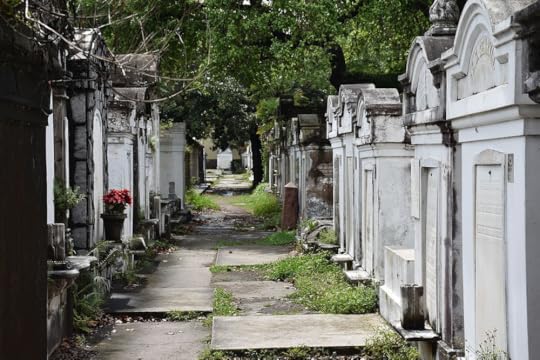
The Historic Cemeteries of New Orleans, located in New Orleans, Louisiana, are a collection of forty-two historically and culturally significant cemeteries. These cemeteries differ from most cemeteries in the United States in that they are a mix of historical influences from France, Spain, and the Caribbean on New Orleans, as well as limits imposed by the city's high water table. The city's ethnic, religious, and socioeconomic heritages are reflected in the cemeteries. Architecturally, they are mostly above-ground graves, family tombs, civic association tombs, and wall vaults, with neoclassical designs and regular patterns comparable to city streets.
Some of the historic cemeteries are tourist destinations, and they are sometimes referred to as "Cities of the Dead." Because determining whether or not a cemetery is historic is subjective, there may be more or less than forty-two historic cemeteries in New Orleans. Historians have given similar views of New Orleans' cemeteries. Because New Orleans is at or below sea level, the soil has a high water table. In New Orleans, a body or coffin put in an in-ground tomb runs the risk of becoming waterlogged or possibly being dislodged from the ground. As a result, the inhabitants of New Orleans have tended to favor above-ground burials.
HistoryThe early settlement of New Orleans, founded in 1718 by French colonial powers, was an unpleasant outpost plagued by sickness, tropical storms, and poor sanitation. The high mortality rate that resulted, combined with the colony's rapid growth, prompted the establishment of a burial system early in New Orleans' history. On maps of New Orleans from 1725, the first known public cemetery may be found on a block in what is now known as the French Quarter. St. Peter Street Cemetery was the name of the cemetery. The majority of burials took place in the ground, which was a financial requirement for the city at the time. By 1743, it had been fenced in, and by 1800, it had been closed.
At the same time, bodies were buried along the Mississippi River's natural levee and in various areas in and around what is now known as Jackson Square. The St. Louis Church was used to bury wealthy individuals. A yellow fever pandemic devastated New Orleans in 1788. The proximity of the St. Peter Street Cemetery and the high water table for in-ground burials, combined with the pandemic, caused a sanitation dilemma for burying the deceased. As a result, city officials established the St. Louis Cemetery (later known as St. Louis Cemetery Number 1), which was located outside of the city's fortifications at the time.
The decision to locate in a suburban area was made in accordance with the practice of other communities in tropical areas around the world. Even though the new cemetery was lower and wetter than the one it was replacing, in-ground burials persisted in the early years. This cemetery was originally only for Roman Catholics, but beginning in 1804 Protestant graves were allowed next to the Roman Catholic cemetery.
By 1804 in St. Louis Cemetery, the first above-ground tombs had been erected, and by 1818 they were commonplace. The elevation of the St. Louis Church to cathedral status in 1794 accelerated the trend of above-ground burials. As a result, clergy and other privileged members of the community could no longer be buried within the church, so they and their families sought the distinction of an above-ground grave at St. Louis Cemetery. In addition, during the early nineteenth century, New Orleans had become more prosperous economically. Because of these factors, tombstones at St. Louis Cemetery became prestige symbols in the neighborhood.
According to city of New Orleans death records, the Bayou St. John Cemetery was established in 1835 to house the bodies of persons who died as a result of yellow fever epidemics. The site was chosen because it was away from the city's general population at the time, making it a safe spot for burial during epidemics. By the mid-1840s, the cemetery had been closed, and its exact site is unknown today. The Bayou St. John Cemetery was established in 1835 for the bodies of persons who died as a result of yellow fever epidemics, according to city of New Orleans death records. The site was chosen because it was far away from the city's general population at the time, making it a safe spot to bury people in epidemics. By the mid-1840s, the cemetery had closed, and its exact site is still unknown.
Burial CustomsWhen a burial is required for an above-ground tomb in New Orleans, the cemetery sexton opens the outside tablet marking the opening to the tomb's vault. Behind the tablet, the vaults are usually blocked off with brick, which must also be removed. The remains of the most recently interred corpse in the tomb are then packed in a sack and moved to the tomb's bottom. This area at the bottom of the tomb is known as a "caveau" or a "receiving vault" in local slang. The corpse's remains can now be buried because the remains have been moved in this manner.
The tombs cannot be opened in this manner for at least one year and one day, according to local tradition, in order to ensure that the corpse currently in the tomb is exposed to one complete New Orleans summer, allowing for adequate decomposition. The cemetery sexton re-encloses the vault aperture with masonry and replaces the tablet, as per suitable burial customs. The names of the departed, as well as their birth and death dates, are usually etched onto the tablet or elsewhere on the tomb. The above-ground graves are typically not airtight, allowing for adequate gas exchange for the corpse's decomposition. Even under the hard conditions of New Orleans' environment, the habit of waiting one year and one day between tomb openings was not always sufficient for adequate decomposition. These rites of burial are still practiced today.
The Creation of DesignsAs above-ground tombs grew more prominent in New Orleans in the early nineteenth century, tomb design echoed the Roman influences prevalent in European cemeteries at the period. The afterlife, according to the ancient Romans, began in the tomb, therefore proper homage was to be paid to the deceased in their final resting places. For these reasons, early above-ground tombs were often made of brick, were much larger than the coffin, and had appropriate homage ornamentation.
In the early nineteenth century, tombs in New Orleans began to incorporate columbaria. These are enclosed constructions containing chambers or niches for individual burials that are near together, reducing burial costs. Persons of modest means couldn't afford extravagant tomb buildings, so they pooled their resources to build columbaria, which allowed numerous people to be buried together. These could be caskets or urns containing their ashes. Columbaria were frequently built by benefit groups.
As the city of New Orleans continued to grow rapidly in the early nineteenth century, the necessity for mass burials of low-income persons arose. Oven tombs were created in cemeteries like St. Louis Cemetery No. 1 to meet this need. Vaults, crypts, or niches are built within a cemetery wall or into an above-ground tomb in these designs. The body is deposited in the vault where it decomposes relatively quickly in New Orleans' hot, subtropical climate, and just bones remain after about a year. After that period, the bones or other remains are relocated, usually to the ground in the oven tomb, to make way for the newly deceased to be buried in the vault that has been vacated. Plaques or other inscriptions on the tomb's external surface are commonly used to honor the deceased. In this technique, a huge number of people, often dozens, can be buried in a single tomb. The oven tombs belonged to families in several circumstances.
A part of St. Louis Cemetery No. 1 allowed people of protestant faiths to be buried there. Much of the protestant part of New Orleans was razed in 1821 to make way for Tremé Street. In 1822, the Girod Street Cemetery was established as a Protestant cemetery. The Gates of Mercy Cemetery for Jewish graves opened in 1828. Gates of Mercy Cemetery used copings, which were in-ground burials in a raised bed, because the Jewish faith at the time required in-ground interments. It was erected in the Lafayette neighborhood of New Orleans, which was then a suburb, by the Israelite Congregation Shanarai Chasset to serve Jewish persons of German ancestry.
By 1830, New Orleans cemeteries had transformed from lonely burial sites to aesthetically distinct settings with city-street patterns, or "cities of the dead," as they were known.
Different Types of TombsThe majority of tombs were box tombs and step tombs from the late 18th century to the middle of the nineteenth century. With four brick walls, frequently stuccoed, and a nearly level roof, these could fit a single coffin laying straight on the ground. Stepbacks were added to the step tombs, allowing for greater design options.
Various types of wall tombs were created from the early nineteenth century until the middle of the twentieth century. Oven tombs, wall vault tombs, and block vault tombs were architectural variations of single-burial chambers built around the cemeteries' perimeter walls or on free-standing cemetery structures. Individual chambers stacked on top of one another, usually four chambers high, were common in various types of wall tombs. It's possible that the deceased in any given chamber will be replaced at any time. Some of these were burial grounds for members of society.
Family and societal tombs were built in a wide range of architectural styles and forms. These tombs featured pediment tombs, parapet tombs, platform tombs, pediment tombs with barrel-shaped vaults, and graves with sarcophagi erected on top. Other tombs served as memorials. Neoclassical, Greek revival, Egyptian revival, Gothic revival, Romanesque revival, Renaissance revival, and Byzantine revival were among the styles that were revived.
Large, multi-vaulted graves became widespread in New Orleans cemeteries by the middle of the nineteenth century. Individual graves were substantially larger than family tombs, making them more cheap. Mutual help societies, fraternal organizations, and labor unions built these tombs. They were separated by race as well as religion, as was customary at the time. Epidemics, particularly of yellow fever and cholera, fueled demand for new cemeteries, larger tombs, and mutual aid at the period. Individual burial in the society tombs cost around $100 USD towards the end of the nineteenth century. Hundreds of people were buried in certain society tombs over the course of decades.
In the high water table of New Orleans, cemetery planners created new ways to accommodate burials. Coping graves were the most common. Soil was piled up above the ground and held in place by walls, allowing the deceased to be buried above the water table. In keeping with the Jewish tradition of in-ground burial, coping graves were most common in Jewish cemeteries.
Influences of EthnicityVarious ethnic groups frequently built society graves in the nineteenth century. The New Orleans Italian Mutual Benevolent Society commissioned Italian artist Pietro Gualdi to design and construct their society mausoleum, which was completed in 1856 in St. Louis Cemetery Number 1. Gualdi's design was inspired by themes from the Renaissance and Baroque periods in Italy.
In 1904, the Song On Tong Association completed a society tomb in the Cypress Grove Cemetery. This mausoleum was designed to meet the demands of the Chinese immigrant population it served. The cemetery was designed to face east, toward the rising sun, as is customary in Chinese architecture. Inside the tomb, there was room for burial offerings such burnt incense and food for the dead. The tomb's purpose was to serve as a temporary resting place for the dead until they could be transferred to China for permanent burial.
The Zulu Social Aid & Pleasure Club was a fraternal club for African-Americans in New Orleans that provided tombs for its members and their families in the early twentieth century.
Potter’s FieldsIn the early nineteenth century, less affluent persons in New Orleans were frequently buried in established cemeteries' wall vaults. This was paid for by their family. The body would be removed from the wall vault if the family failed to pay the rent. In the uptown neighborhood of New Orleans, the Locust Grove Cemetery No. 1 began as a potter's field in 1859. In 1877, Locust Grove Cemetery No. 2 was established nearby as a potter's field. Both were dismantled after they closed in 1879. Following that, an elementary school and a playground were built on the locations of these two cemeteries.
Holt Cemetery was established in the late 1800s as a potter's field for the impoverished. Carrollton Cemetery, also known as the Green Street Cemetery, has a potter's field in its grounds. In addition, destitute persons were buried at Charity Hospital Cemetery. Interment was usually done in a shallow in-ground grave at these locations. A disproportionate number of African-Americans are buried in these areas. Cemeteries in New Orleans remained segregated for much of the city's history, which lasted until the end of the Jim Crow South. Although African-Americans were allowed to be buried in established cemeteries, they were only allowed to do so in designated areas.
Holt Cemetery was established in the late 1800s as a potter's field for the impoverished. Carrollton Cemetery, also known as the Green Street Cemetery, has a potter's field in its grounds. In addition, destitute persons were buried at Charity Hospital Cemetery. Interment was usually done in a shallow in-ground grave at these locations. A disproportionate number of African-Americans are buried in these areas. Cemeteries in New Orleans remained segregated for much of the city's history, which lasted until the end of the Jim Crow South. Although African-Americans were allowed to be buried in established cemeteries, they were only allowed to do so in designated areas.
Rural Garden CemeteriesMetairie Cemetery, located on relatively high land along the Metairie Ridge on the outskirts of New Orleans, opened in 1872. In the city, it was the first example of a rural garden cemetery. Metairie Cemetery is located within the municipal borders of New Orleans, despite its name referring to a New Orleans suburb. This cemetery bears no resemblance to the Spanish, French, or Creole influences found in New Orleans' earlier historic cemeteries. Many wealthy people are buried there, and the tombs show a wide range of personal tastes. A large number of celebrities and other historically notable people are buried in the cemetery. It was dubbed "Suburbs of the Dead" by the locals.
Military CemeteriesDuring the American Civil War, the Chalmette National Cemetery opened in New Orleans in 1864. It was established as a result of the United States Congress's authorization to establish cemeteries to commemorate servicemen who died in wartime conflicts. The Battle of New Orleans, in eastern New Orleans, was the location of many troops' deaths during the War of 1812, and the Chalmette National Cemetery was created on that spot. The cemetery's original aim was to bury Union troops who died in Louisiana during the Civil War. There were, however, civilians buried there as well. Approximately 7000 deceased troops were re-interred in various local cemeteries. Around 7000 African-American civilians were also laid to rest in Chalmette National Cemetery.
These were re-interred at a new Freedmen's Cemetery adjacent to Chalmette National Cemetery shortly after the American Civil War. Confederate soldiers buried there were also reinterred in other New Orleans cemeteries. To honor the warriors who perished in the Union cause, Union Army veterans built the Grand Army of the Republic Monument on the grounds of the Chalmette National Cemetery in 1874. Although military burials continued at the Chalmette National Cemetery during the Vietnam War, the Southeast Louisiana Veterans Cemetery took its place in 2014.
Future PreservationThe Historic Cemeteries of New Orleans suffered increasing neglect and decay throughout the twentieth century, despite the fact that many of them continued to accept new burials. Even at the turn of the century, the damage was visible. "There are vaults and tombs so far decayed and rotten that the passer-by can look within and see iron caskets that have been resting there for perhaps half a decade," according to a 1906 story in the New Orleans Daily Picayune newspaper, referring to the Girod Street Cemetery. Even though it was actively being used for fresh burials, the Holt Cemetery, a potter's field, showed extreme deterioration, with human remains visible above ground.
Due to lands sinking in the soft, moist soil and local floods, cemetery maintenance in New Orleans has been particularly difficult. The region's semi-tropical environment was severe on above-ground tombs. Looting, vandalism, and purposeful damage were among the human activities that took their toll. The situation was worsened by the lack of consistency in the care provided by the tomb owners' family. The early twentieth century saw the fall of beneficent societies, which resulted in the neglect of their tombs. While cemetery operators offered perpetual care plans that included the upkeep of graves for a set cost in perpetuity, they were not frequently adopted, and perpetual care was sometimes used incorrectly.
The Society for the Preservation of Ancient Tombs, sponsored by famed local novelist Grace King, began an early repair attempt in 1923. Although the organization had about 150 members, it had few finances. It prioritized the renovation of famous people's tombs. They also tracked down descendants of famous persons in order to seek their help in the restoration.
The historic cemeteries of New Orleans had begun to deteriorate by the mid-1970s. The phrase "Slums of the Dead" was popularized in a 1974 report by the New Orleans Times-Picayune newspaper in reference to the degradation in cemeteries. Some graves, according to the state board of health, have become public health concerns.
The Girod Street Cemetery and the Gates of Mercy Cemetery had also been dismantled. As a result, rules preventing the destruction of cemeteries were passed by the Louisiana State Legislature in 1974. Various civil organizations, the most renowned of which being Save Our Cemeteries, became involved in the restoration and preservation of these. This group, founded by preservationist Mary Louise Christovich, aimed to increase public awareness about the state of the city's historic cemeteries and raise funds for their repair. It received funding from the Save America's Treasures program and spearheaded attempts to have certain New Orleans cemeteries included to the National Register of Historic Places.
Various businesses in the twenty-first century are dedicated to the restoration of historic cemeteries in the southeast Louisiana region, either as a non-profit or for the repair of individual tombs as a business. In addition, the Archdiocese of New Orleans is working on restoring abandoned graves in historic cemeteries under their jurisdiction. The University of Pennsylvania's Center for Architectural Conservation conducted the "Dead Space Project" in the early 2010s to document the state of some of New Orleans' historic cemeteries and provide a risk assessment. For this, the program took advantage of geographic information systems.
Some ancient cemeteries in other cities, such as Laurel Hill Cemetery in Philadelphia, Pennsylvania, Glasnevin Cemetery in Dublin, Ireland, and Bonaventure Cemetery in Savannah, Georgia, have served as models for the restoration of New Orleans cemeteries.
Cemeteries in New Orleans have been gathering places for inhabitants since the early nineteenth century. Many of the historic cemeteries have developed legends over time, like that of the voodoo queen Marie Laveau. The legend, like the Jazz funerals, has piqued the interest of the tourism industry in New Orleans. In comparison to other cemeteries in the United States, the cemeteries are architecturally unique. While cemeteries were not an early element of the city's design, their presence became evident as the city grew. Tourist interest in the Historic Cemeteries of New Orleans grew as a result of the community's concentration on the cemeteries, as well as the architecture, closeness, and mythology.
November 14, 2022
Steamboats on the Mississippi
What is the history of steamboats on the Mississippi River? Individual inventors like John Fitch and James Rumsey worked for twenty-five years in the last quarter of the eighteenth century to use steam power in water transportation of goods and people. Until then, products and cargo were transported on flatboats or keelboats down the Mississippi River. In fact, all movement on the river was primarily one-way, with any attempt at upstream conveyance requiring expensive poling against the current over long periods of time.
While Fitch and Rumsey argued over the patent rights to a successful steamboat design that was put into service between Philadelphia and New Jersey, others continued to work on steamboats that could navigate the Mississippi's tremendous current. Following Scotland's successful upstream running of the Charlotte Dundas on the River Carron in 1801, American inventors, including Oliver Evans and Robert Fulton, set out to put a steamboat into service in the United States.
With his steamboat Clermont, Fulton was able to sail the 150 miles of the Hudson River from New York City to Albany in just over 30 hours. The New Orleans became the first steamboat on the Mississippi in 1811, ushering in a new era of river transportation and a romantic period defined by sidewheelers and sternwheelers. Fulton recognized the economic potential of using steamboats to move people and goods up and down the Mississippi, and in 1811 the New Orleans became the first steamboat on the mighty river, ushering in a new era of river transportation and a romantic period defined by sidewheelers and sternwheelers.
The Mississippi River had few steamboats in the early years, but they were remarkable. The Comet, a small steamboat, made a similar journey to New Orleans, and after the War of 1812, more steamboats began to tread across the Mississippi's waters. The Vesuvius, a steamboat owned by Fulton and designed similarly to the New Orleans and Enterprise, was launched in 1814 and featured design upgrades that made it better suited to negotiate shallow water and strong currents. The Washington, which was launched in 1816 and brought with it the well-known design of several decks, was a two-deck steamboat that allowed the upper deck to be reserved for people while the lower deck housed freight.
With the presence of a rising number of steamboats and the resulting rise of cities along its path, Mississippi River navigation was evolving into an economic and travel bonanza. As they developed into key port cities, Memphis, St. Louis, and Natchez grew in population and economic development. Not unexpectedly, as port cities grew, so did the number of steamboats on the water.
The city of New Orleans recorded 21 steamboat arrivals in 1814; but, during the next 20 years, that number increased to almost 1200. The steamboat's status as a mode of transportation was assured.
The theatrical Chapman family saw the steamboat's promise as an entertainment vessel and had their own steamboat built in 1837 after multiple runs of entertainment productions on existing boats. This vessel, known as the Floating Theater, was the forerunner of the well-known showboat that propelled steamboat travel into the magnificent age that is now well recognized as an important experience for Mississippi River passengers.
Steamboat transport on the Mississippi River saw an evolution of development, safety legislation, and design change that cemented its position in history, despite being disrupted for a time by the Civil War and the arrival of the automobile. The lavishly decorated, numerous decked sternwheelers that adorn the river now recall a long and colorful history that aided in the expansion of a nation and captured readers' imaginations in novels and stories for all time.

October 27, 2022
Fire breathing Dragons
Dragons are among the most well-known and persistent of the world's mythological creatures, with millennia of belief in their existence.
Dragon stories can be found throughout the world, from the Americas to Europe, and from India to China. They have a long and rich history in a variety of forms, and they continue to appear in our literature, movies, and television shows as courageous heroes strive to slay the beasts on a regular basis. It's unclear when or when dragon myths initially appeared, but the massive, flying serpents have been recounted since the time of the ancient Sumerians and Greeks.
When Christianity expanded over the world, dragons took on a more ominous meaning and became associated with Satan. Most individuals who heard about dragons in medieval times knew them from the Bible, and it's possible that most Christians at the time believed in their physical existence. After all, Leviathan, the gigantic creature detailed in Chapter 41 of the Book of Job, sounds like a dragon: "Its back has rows of shields tightly sealed together; each is so close to the next that no air can pass between. They are joined fast to one another; they cling together and cannot be parted. Its snorting throws out flashes of light; its eyes are like the rays of dawn. Flames stream from its mouth; sparks of fire shoot out. Smoke pours from its nostrils as from a boiling pot over burning reeds. Its breath sets coals ablaze, and flames dart from its mouth."
Dragons were believed to be based not only on mythology but also on hard proof, or so people thought long ago. For millennia, no one understood what to make of the massive bones that were sometimes discovered around the world, and dragons looked like a natural alternative for those unfamiliar with dinosaurs.
While most people can easily imagine a dragon, people's conceptions and descriptions of dragons vary greatly. Some dragons have wings, while others lack them. Some dragons have the ability to talk or spew fire, while others do not. Some are merely a few feet long, while others are several miles long. Some dragons reside in underwater castles, while others, like Smaug in JRR Tolkein's "The Hobbit," can only be found in caves and inside mountains.
The name "dragon" comes from the ancient Greek word "draconta," which means "to watch," implying that the beast guards valuables, such as mountains of gold coins or gems. But this doesn't make sense because a powerful monster like a dragon shouldn't have to pay for anything, right? It's probably more of a metaphorical treasure, a reward for valiant warriors like the Knights of Camelot who would defeat the evil beast, rather than a treasure for the greedy dragon.
Dragons are one of the few monsters in mythology who are primarily depicted as a powerful and terrifying foe to be defeated. They don't exist solely for their own sake; they mostly serve as a foil for daring adventurers. Other mythological creatures, such as trolls, elves, and fairies, interact with humans (sometimes maliciously, sometimes usefully), but their primary function is not warfare.
Legends of pure and godly saints battling and vanquishing Satan in the guise of dragons were produced by the Christian church. According to English Heritage, the most famous of these was St. George the Dragon Slayer, who, according to legend, came upon a village endangered by a huge dragon. He saves a beautiful woman, wards off the beast with the sign of the cross, and kills it. The residents of the town are promptly converted to Christianity after witnessing St. George's faith and bravery.
Scholars believe that dragons got their fire-breathing ability from medieval images of hell's mouth, such as works by Dutch painter Hieronymus Bosch and others. The entrance to hell was frequently represented as a monster's mouth, with Hades' signature fire and smoke erupting out. The connection is logical if one believes not only in the literal presence of hell, but also in the literal existence of Satanic dragons.
Aside from medieval theology, few people today believe in the physical reality of dragons in the same way they believe in Bigfoot or the Loch Ness Monster. The dragon (or at least the one most recognized to Westerners) is simply too large and magnificent to be taken seriously. It's simply improbable that any huge, winged fire-breathers inhabit Earth's lands or skies unnoticed in this day of satellite imagery and smartphone photographs and movies.
Regardless, dragons have existed in some form or another for millennia. They have sparked our collective imagination through epic fantasy fiction by J.R.R. Tolkien and others, and show no signs of dying out anytime soon.

October 26, 2022
The Wolfman
The Wolf Man is a 1941 American horror film directed by George Waggner and written by Curt Siodmak. The title role is played by Lon Chaney Jr. and the title character has had a significant impact on Hollywood's representations of the werewolf tale. The film is Universal Pictures' second werewolf feature, following the less commercially successful Werewolf of London six years prior (1935). This picture is a part of the Universal Monsters franchise, and its production has received critical acclaim. Following the success of this film, Lon Chaney Jr. would return as "The Wolf Man" in four sequels, the first of which was Frankenstein Meets the Wolf Man in 1943.
In the original picture, Chaney did not experience an on-screen facial metamorphosis from man to wolf, as he did in all sequels. Only the last 10 minutes of the show featured the lap-dissolved progressive makeups, which were displayed discreetly. Larry takes off his shoes and socks in the first transition. His feet have turned hairy and have grown into massive paws (courtesy of uncomfortable "boots" made of hard rubber, covered in yak hair). In the closing scene, the werewolf uses the traditional approach to gradually return to Larry Talbot's human form.
The makeup and transition moments have become legendary, yet most of the stories are untrue. Chaney's change from man to monster took a long time to complete; the entire costume took five to six hours to apply and an hour to remove. In “Werewolf of London” (1935), Jack Pierce designed it for Henry Hull, but Hull claimed that the disguise made little sense within the plot because "Dr. Glendon" had to be identifiable by the characters even in his werewolf form. Pierce was tasked with creating a second version that revealed more of Hull's face. Pierce then reused his 1941 film's original concept.
As the images were shot frame by frame, Chaney stated he was forced to sit immobile for hours. He stated he was left seated while the crew took a break for lunch at times, and he was also ambiguous about using the restroom. Special effects men allegedly hammered small finishing nails into the skin on the sides of Chaney's hands to keep them still for close-ups, according to Chaney.
However, studio logs show that during the filming of Abbott and Costello Meet Frankenstein (1948), the entire crew, including Chaney, took a two-hour break during a transformation and finished the scene later that day (though the makeup for "Abbott and Costello Meet Frankenstein" had been redesigned by Bud Westmore over the original Jack Pierce makeup). A plaster mold was created to keep his head steady while his image was captured and his outline was drawn on glass panes in front of the camera. Chaney then went to makeup artist Jack Pierce's office, where Pierce used grease paint, a rubber snout appliance, and a series of wigs to glue Chaney's face together. Chaney next headed to makeup artist Jack Pierce's department, where Pierce bonded layers of yak hair to Chaney's face using grease paint, a rubber snout gadget, and a succession of wigs.
Chaney would return to the set, line himself up using the glass panes as a guide, and film many feet. Chaney would then go back to the makeup department. A fresh layer would be added to signify that the change has progressed. After that, he'd go back to the sound stage to film. This was repeated approximately a half-dozen times. On screen, Talbot's lap dissolve change took only seconds, whereas Chaney's took about ten hours.
In all of the 1940's cinematic appearances, "The Wolf Man'' is the only Universal monster played by the same actor. "[The wolf man] was my baby," Lon Chaney Jr. repeatedly stated in interviews. The film remains the most recognizable and most cherished interpretation of the [werewolf] tale,' according to the cinema reference book "1001 Movies You Must See Before You Die". "The Wolf Man" is also one of three top-tier Universal Studios monsters without a direct literary source,"The Mummy" and the "Creature from the Black Lagoon" are the other two.

October 25, 2022
Gothic Mansions of New Orleans
In the strictest sense, "Victorian" refers to Queen Victoria's long rule over the United Kingdom, from 1837 to 1901. By extension, it alludes to the society, customs, and tastes of the time. However, in New Orleans and elsewhere, the adjective is most commonly used to describe architecture, particularly late-nineteenth-century forms. Let's take a step back to comprehend the factors that influenced their look.
Local craftsmen built homes and other structures throughout the 1700’s by adopting techniques from France, the Caribbean, West Africa, and Spain to the swampy environment of subtropical Louisiana. The style was known as Creole, and it was primarily practical. New Orleans became more Americanized in the early 1800s, its population diversified, and its architectural arts reflected the new order. Professional architects from outside the city pushed old Creole customs aside in favor of new shapes inspired by Enlightenment ideologies and ancient Greece and Rome. The regal architecture that followed became known as classical or neoclassical, with Greek Revival being the most notable example, and it symbolized rationalism, order, and refined nobility.
However, by the 1840s and 1850s, grandiose Greek temples and mansions had become drab and out-of-style. Too much aristocracy and order sparked a reaction known as romanticism, which emphasized emotionality, beauty, and the individual's spirit. More sumptuous aesthetics emerged, with segmented-arch doors and windows, elaborate molding, and an abundance of paired volute-shaped brackets lining roof eaves and galleries. Such architectural zeal flourished later in the Victorian era, and most New Orleanians think of Victorian architecture when they think of the 1870s-1900s.
Stick, with its focus on wooden detailing ("stick work"); Queen Anne, with its towers and turrets; and Eastlake, with its panoply of brackets, quoins, railings, spindles, and skin-like shingling, were among those types. There was also stony Romanesque with its robust rounded archways, francophile Second Empire with its mansard roofs, imposing Gothic with its pointed arches, nostalgic Tudor with its rusticity, and Beaux-Arts, a flamboyant expression of classical and Renaissance ideas. Floral ornaments and cornucopias of fruit were strewn across the exteriors and interiors of buildings during this period, almost literally. It was not the moment for modesty.
There were some democratizing features to the movement. Woodworking became more affordable as a result of mass production, allowing builders and owners of ordinarily modest homes to transform them into attractive mini-mansions: thus our thousands of gingerbread-encrusted Victorian Italianate shotgun houses. Similar to today's Bayou St. John and Mid City, homes with minimal decoration were featured in pattern books ("catalog houses") and mass-constructed for middle-class families, resulting in pleasant neighborhoods. Algiers Point has a high concentration of late-Victorian residences since a devastating fire destroyed its ten core blocks in 1895, when these designs were at their pinnacle in popularity for new building.
The upper-class housing stock would become the classic specimens of late-Victorian residential architecture: massive, vertically massed frame homes with complex roofs, deep-set wrap-around porches, and much decoration. Architects marketing such plans found a ready market in the Uptown areas of New Orleans, which exploded in popularity following the 1885 World's Industrial and Cotton Centennial in what is now Audubon Park. Throughout an 1888 real estate article titled "The Sound of the Saw and Hammer is Heard in the Land," the Daily Picayune stated, "The current season in New Orleans has been one of excessive activity in...building and improvements." "The architecture is considerably more intricate and original than it was previously," the journalist observed, "the prevailing style for cottages and residences being the Queen Anne, Eastlake, old colonial, etc.(,) all of which will prove to be ornaments to the city."
New commercial and institutional buildings were also adorned with Victorian ornamentation, causing areas of downtown to lose its antebellum scale and distinction in favor of the current style of other American cities. Despite their aesthetic splendor, the Mercier Building on Canal at Dauphine streets (constructed 1887 and home to the original Maison Blanche) and its rival Godchaux's (1899) on Canal at Chartres streets might be picked up and deposited into Cincinnati, Boston, or Detroit with ease. Most New Orleanians considered this as a positive development rather than a negative.
Late-Victorian exorbitance was fueled by a number of variables. Given the relatively unrestricted mining of natural resources at the period, raw materials such as lumber, quarried stone, and coal for calefaction were inexpensive. Production and shipping expenses were reduced because of mechanized mills and upgraded rail lines. Skilled labor and domestic aid were inexpensive, there was no federal income tax, and real estate taxes were low, all of which freed up household cash to be invested in a home. There were no zoning laws regulating size or style, and utility costs were non-existent or fledgling because municipal water, gas, and electricity services were either non-existent or nascent.
Moreover, this was the Gilded Age, during which time industry and economic prosperity expanded the ranks of the upper classes, resulting in the formation of a new American elite. Unlike previous generations, this one boldly showcased its wealth, and there was no better way to do so than through one's home. Motifs were endlessly mixed and matched, and house sizes grew ever greater.
And it was this that sparked the backlash.
It developed in the 1880s in England and spread to the United States by the early 1900s. Its concept was, by definition, low-key and subdued, favoring hand-crafted natural simplicity above machine manufacturing and superfluous embellishment. The movement became known as Arts and Crafts, and its central tenet was that less is more, and that too much is not only excessive, but also vulgar.
The extravagance continued following Queen Victoria's death in 1901 and Prince Edward's accession to the throne. The Modernist movement, which began in the 1870s and grew in strength after World War I, was likely more responsible for the demise of Victorian and Edwardian architecture than the rising costs of owning a large drafty timber house.
Around 1910, a movement in style began in the area, as more architects and homeowners discovered the refreshing beauty of simpler, earthier forms.
The styles originated in California in the twentieth century, not in the Northeast or England, nor in medieval or ancient predecessors. Late-Victorian architecture, on the other hand, has made a lasting imprint across the country, virtually becoming the archetype in many Americans' thoughts of what lovely houses and idealized domesticity "suppose" to look like. Victorian houses appear frequently in Christmas cards, children's books, and toys, such as doll houses and model railway layouts, and they've been utilized as props in films ranging from hope ("It's a Wonderful Life") to horror ("It's a Scary Movie") ("Psycho").
The Victorian era had a significant structural impact on the cityscape of New Orleans. Despite the city's famous for its Creole heritage, the late 1800s have significantly more extant structures than the 1700s and early 1800s combined, and late-Victorian style specimens far outweigh those of Creole or Greek.
The elegance of that era can also be seen in new construction facades. Nearly three out of every four facades had a historical pastiche, according to a survey I performed of hundreds of homes erected after the 2005 Katrina catastrophe, and the majority of those paid homage to late-Victorian preferences, either partly or entirely.
October 22, 2022
Black Cats and their Stigma
Black cats have been associated with superstitions and folklore throughout history. Negative superstitions arose during the Medieval Period (500 AD to 1500 AD), with black cats becoming connected with the devil in many parts of Europe. It is considered that the Norman and Germanic people invented the concept that seeing a black cat crossing your path brought bad luck and that seeing a black cat meant death was on the way. Fears of black cats swiftly spread, and it wasn't long before black cats were being mass-culled. The extermination of black cats is claimed to have contributed to the overpopulation of mice and rats at the period, allowing the Bubonic Plague to spread fast and kill nearly 25 million people over the course of five years.
Hysteria and fear of sorcery were also prevalent during the Medieval Period. Many innocent women (and men) were persecuted because they were accused of performing magic. Black cats were thought to be used by witches to carry out bad activities and communicate with the devil. Other legends stated that witches would disguise themselves as black cats in order to conceal their identities or conduct charms in private.
When Europeans arrived in America, they brought their black cat beliefs with them. During the Salem witch trials, which saw over 200 people convicted of witchcraft and 19 people killed, the persecution of witches and cats (and dogs) continued. During this time, black cats, among other animals, were accused of assisting witches in casting spells and even of doing witchcraft. As a result, the black cat superstition became ingrained in American culture, and many people used it as a justification for mistreating and abusing black cats. Black cats, on the other hand, were revered in some cultures as a sign of good fortune and luck, particularly in Ancient Egypt.
In Egypt, cats were associated with the gods. Bastet was a strong warrior deity who defended the pharaoh and was known to be part cat, part woman. Bastet is thought to bestow good fortune upon individuals who own cats. The Egyptians used cats to preserve royal food reserves from rats and mice, and killing a cat was punishable by death. Egyptians were so fond of cats that they would often mummify them once they died. The death of a cat would be mourned. The tradition of burying owners and their cats together was popular.
The Japanese, like the Egyptians, were known to appreciate their feline pets. The Maneki Neko, or Lucky Cat, is a popular charm for bringing good fortune and wealth. It is frequently seen inside businesses waiving one paw in good luck. A black cat is also popular among Japanese ladies, who believe it will attract suitors.
Despite understanding that the traditional superstitions are unfounded, many people still fear seeing a black cat. Black cats are still used as costumes, decorations, and party themes around Halloween because of their association with witches. Unfortunately, this means that black cats are more likely to be mistreated — and even killed – on Halloween.
When compared to other colored cats, black cats, and even black and white cats, have a lower chance of getting adopted from shelters. Because of their color, black cats are more likely to be homeless for longer periods of time and require more support in finding loving homes. Anyone who has ever had a black cat knows that the color of the cat's fur has no bearing on the animal's personality or devotion. If they treat it with care and affection, it will bring them good fortune and happiness for many years.

May 21, 2022
The Ginger Redhead
There are a number of various distinguishing qualities to redheads, aka “gingers.” Whether you are a natural redhead or a hair-dye bottle redhead, being a ginger is not simply the color of your hair alone; being ginger is plain and simply a way of life. So what makes up the characteristics of a redhead?
For starters, it is (most obviously) the color of your hair. Red hair comes in a wide array of hues, including (but not limited to), strawberry blonde, copper, auburn, mahogany, fire-engine red, ginger, and so many more. It can easily be said that if someone points out the fact that you have “red hair,” and they don’t specify a particular shade, they have no clue what it takes to be a true ginger.
Redheads are also notoriously sensitive to the sun, and it's not simply because of sunburn. Redheads find themselves far more prone to develop heat rash, heatstroke, and migraines as a result of excessive sun exposure, and the damage done is more likely to result in skin cancer.
Freckles are also quite a prevalent trait among redheads, though not every ginger has freckles, the vast majority of freckles also tend to be a direct result from sun exposure (though some are just all-natural).
Finally, gingers are noted to have very fiery personalities. The hair of a redhead is virtually the same color as our disposition. Not only are they supposed to be fiery by nature, but unfortunately, they are also frequently teased because of their hair color, which can lead to a build-up of powerful self-defense mechanisms. Redheads tend to be extremely hyper-aware when it comes to someone about to start something, and they are quick to defend themselves.
Whether you are a ginger yourself or are simply enthralled by these magical, mystical individuals, it can most certainly be said that they walk their very own path and fail to care what those around them think of them. Redheads are a special breed, with an attitude that makes them both charismatic, unique, and boast a strength all their own.