Beth Bonness's Blog
November 25, 2025
How can we balance respecting ourselves while respecting others?

Src: kazuend Unsplash
On our honeymoon, the first time I went river rafting, I slipped into the middle of the raft. With a bit of panic in his eyes, my new husband reached for me.
“Leave her there!” The guide said as we went over some rapids.
I flopped around like a fish thrown into the bottom of the boat. Everyone’s legs straddled the giant rubber tubes, like when galloping on a horse. I struggled to peek over the sides. And when I’d try to heave myself up, gravity kept pulling me back down, as if the river was laughing at me.
I should have held on tighter like the guide warned us.
What is respect and what does it feel like in our bodies? How can we balance respecting ourselves while respecting others?
trailer with Marcy Syms
what is respect and how does it feel in our bodies?Every year in the Pacific Northwest, there are warnings about river currents and ocean sneaker waves people get caught up in. Our kids grew up learning to “respect the river” (and ocean) in an environmental way and knowing you can’t always predict or control what will happen. With this month’s topic of respect, there’s a broader playing field when extended to our relationships that I wanted to explore.
In the latest thought echoes podcast, Marcy Syms, social entrepreneur, philanthropist, and author shares insights from her latest book Leading with Respect. Marcy believes respect is a missing ingredient in today’s workplace (and in many of our relationships). She offers advice on what we can do about it.
There are many aspects to respect. Marcy emphasizes the importance self-respect, and to her, it precedes all other forms. Before we can be there for others, we need to recognize and honor our own needs and limits. Think of the advice about putting your own oxygen mask on first before helping others.
When I think of respecting ourselves, the first thing I think of is acknowledging our mind-body connection, especially when it comes to the impact of stress. Yes, there’s good stress, but often it’s bad stress that catches up with us. Stress comes from trying to control something out of our control. I think it’s important to respect stress, and not ignore it, like I did 18 years ago this month when I had a series of strokes. My husband said the days before my first stroke, I was so amped up, I was hard to be around.
Recently, I found a new review of my poetry chapbook, Transition Thunderstorms, in The Broken Spine by Alan Parry. Brought me right back to my strokes and subsequent recovery.
“Where Bonness excels is in making the clinical feel mythic and the domestic feel like a front line. The recurring thanksgiving with a side of no thank-you series is a blistering narrative thread that captures the surreal banality of hospital life … Bonness weaponises white space and silence, she forces the reader to pause, stutter, and reassemble meaning from the fragments.”— Alan Parry
Stroke recovery was about letting go of trying to do so much at work. Granted, it was right before the 2008 financial crisis and businesses were in a frenzy with trying to meet end-of-year revenue targets. Most people had no idea what was coming.
My life’s teeter-totter weighed down all on one side. I realized how off-balance I’d gotten with work. Ignoring my stress disrespected myself and my family. On the positive side, my strokes provided a pause in time to let me tap into myself and learn the importance of balance, both physically and mentally. Of learning when to push and when to pause.
how can we balance respecting ourselves while respecting others?As Marcy says, once we are in tune with ourselves, respect for others begins with paying attention — the simple act of really listening. And not just waiting for our turn to talk.
Active listening involves listening for total meaning. Both the content and the feeling, often not picked up unless you become aware of nonverbal cues (e.g. tone of voice, facial or body expressions, speed of speech).
Psychologists Carl Rogers and Richard Farson defined the concept of active listening back in 1957. The goal is for the speaker and listener to gain a mutual understanding. For the speaker, to receive confirmation on what is being spoken, and for listeners to absorb an understanding.
There are many techniques to train your active listening skills. For example, resist the urge to interrupt (hard for me), paraphrase (not parrot), ask open-ended questions like: Could you elaborate on that? How does that make you feel? What are your biggest concerns? What support would help you move forward?
Setting boundaries in relationships is another aspect of respect that is also very important. Marcy encourages us not to think of boundaries as barriers, but rather as a framework for “mutual understanding,” at work and with family and friends.
In the morning while I’m writing and my husband catches up with the news, he’ll share something he read. It would take time for me to get back into my thoughts. It took me a while, vacillating between feeling frustrated and not wanting to cut him off, before I asked him to wait until after I’d finished. He said sure and almost always does.
Everybody’s different, with different boundaries. We all have them. We all cross them. Ignoring them doesn’t help. Judging someone for having different boundaries doesn't help. Sharing where yours are, and honoring where someone else’s are makes for a richer and more balanced relationship. Including with ourselves.
When researching the state of the world regarding respect, I found Nicole Krauss’s, “11 Reasons Why Respect is Important for Everyone,” helpful. “When you respect someone, you will spend time showing them gratitude. You have no problems letting them know how much better your life is with them in it,” Nicole says.
What could that mean for you? “When someone respects you enough to show how grateful they are for knowing you, you will feel as if you’ve made an impact on their life. This may make you wonder if there are other people out there who feel the same way about you,” Nicole adds.
“Respect is circular. When you give it authentically, it echoes back stronger.”— Marcy Syms
***
Once we floated to a quieter spot post-rapids, my husband reached out an arm to help me back up, or did he pull me up by my life jacket? I can’t remember. I was okay. A little banged up and bruised (and red in the face), but okay.
We all depend on others, whether we like it or not. Sometimes there are moments in life when the current is stronger than we are, and our work is not to fight it—or rescue someone from it—but to respect it. I learned the hard way to honor life’s currents, and I’m grateful for my second chance while I practice setting healthy boundaries for myself and my relationships.
WOULD LOVE TO HEAR YOUR COMMENTS.
If you enjoyed learning more about the nature of our thoughts, I invite you to subscribe to thought echoes.


October 21, 2025
How can we make hope contagious?
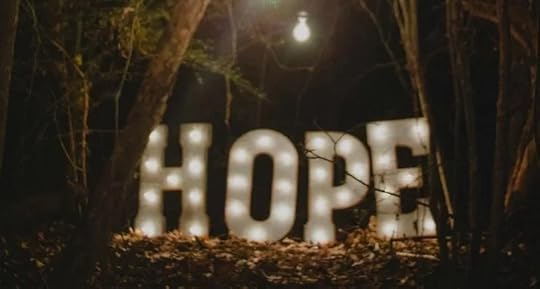
Src: Ron Smith Unsplash
Riding on a windy flight delayed out of Dubrovnik, Croatia, to London, fingers crossed hoping we’d make our connection back to the States.
Last night, my husband and I stayed at a small hotel, five minutes’ walking distance from the airport. We had a leisurely breakfast at a nearby bistro. Both buildings, so close to the airport, they needed special government permission to operate. My weather app showed gusty winds right about the time we were set to take off. We’d missed an epic downpour flying a week ago, but it seemed another storm was brewing as the blue-grey storm clouds hovered overhead.
Queueing up for our flight, there wasn’t a jetway, so people waited outside. The winds picked up as passengers held onto their hats and bags. Once on board, all buckled in, the captain announced we had a delay because our type of airplane wasn’t approved to take off with this kind of wind.
An hour later, while still gaining altitide, the plane lurched. Then dropped. A woman farther up screeched a bit. People grabbed hold of their armrests. My eyebrows raised. I smiled at my husband across the aisle. “That was something.” You could hear nervous laughter as the captain steadied the plane.
Maybe the pilot would make up time, and we’d still make our connecting flight.
What is hope? How is it different from optimism, toxic positivity, or hopium? Can we make hope contagious?
trailer with Play Josh Davis & Greg Prosmushkin
what is hope, and how is it different from optimism, toxic positivity, or hopium?Dubrovnik air traffic control managed to thread the needle for our flight with limited runways due to the high winds, but we missed our connecting flight waiting for Mother Nature to take a beat. Took some time, lots of steps between terminals, and two airline guys to get it sorted before receiving hotel and dinner vouchers with hundreds of other passengers.
Once in our London hotel outside Heathrow Airport, I’m catching up on email and the news before our long flight home. I’m saddened to learn that Jane Goodall died at 91-years-old in Los Angeles, California.
My favorite quote revealed Jane’s sense of humor and her grit, Jane Goodall’s Thoughts for a Report: Hope Isn’t Just Wishful Thinking. “That’s why I’m traveling 300 days a year. It’s no good just talking about what should be done. We’ve got to flipping well do it.”
My first post on Twitter (years ago from a now-deleted account) happened to be on World Optimist Day. A friend had loaned me Jane Goodall’s 2021 book, with a passage that still resonates with me today.
“Optimism says ‘everything will be fine.’ Pessimism says ‘nothing will work out.’ Hope, on the other hand, is the dogged determination to do what is in our power to make things work out”— Jane Goodall
Seemed fitting to post on World Optimist Day as a nuance for all of us optimists. Jane doesn’t see hope as foolish or empty, but the juice to help carry on and work toward a better world. Not the toxic positivity or the false hope of “hopium.” Jane advocated for, and invites each of us to focus on what is in our power. Hope may not be a strategy, but it certainly fuels strategies.
During this month’s thought echoes podcast with psychologist and neurologist Josh Davis, and executive coach and entrepreneur Greg Prosmushkin, we had a lively conversation about the importance of understanding other people’s perspectives. In their book, The Difference That Makes the Difference: NLP and the Science of Change, Josh and Greg offer practical advice including how to de-escalate conflict and improve trust (even in tense relationships) using a simple concept (although not necessarily simple to apply): assume good intentions.
As Josh and Greg explain in their book, “At the heart of NLP (neurolinguistic programming) is a process for understanding what makes people tick— yourself and others. When we understand how we and others think, feel, and act in key situations, we have the raw material with which to make change happen, often quickly and profoundly.”
As Greg shared during the podcast, “Presuppose that everybody has a good reason, good intent for what they're doing. Most people are not sociopaths … They're serving some kind of an internal need, and if we can find out what that need is, we can change the way we interact with them.”
He gave an example of a hypochondriac, where his initial reaction was to be annoyed with all their complaining. Then once he dug deeper, trying to understand his “map of reality,” he realized they were lonely and felt powerless. Instead of feeding into the sympathy spiral, he looked for other ways to help that person exert some control in their lives.
Assuming good intentions enables us to shift our perspective to trying to understand why someone is doing what they are doing or not doing (including ourselves).
can we make hope contagious?When I woke up in our layover-hotel in London, I’m thinking how could we make Jane Goodall’s hope contagious? Go viral in a good way. Since COVID, contagious swings towards infection. As in, are you still contagious? Better keep away from direct contact for awhile. Before COVID, I’d think of contagious as in smiles and laughter.
During our podcast conversation, Josh shared:
“This thought echoes idea. It’s really interesting. There is research to show that the beliefs you arrive with in a situation are going to influence not just your own behavior, but then, through your behavior, how other people are going to react to you.”— Josh Davis
Jane’s vision of hope encourages persistent action, figuring out a way. It’s emotionly-inspired, like lighting a fire. Hope is a spark.
That’s the vision Jane had for her Roots & Shoots program for kids - their mission: to empower young people to affect positive change in their communities. She encouraged them to stand up for what they believe in.
They use a 4-step formula. How might we as adults use this framework to spread hope in our own communities?”
Get Engaged: learn about issues in your community
Observe: if unsure of what issue you want to address, try brainstorming
Take Action: pick something and set up a plan
Celebrate: your project is complete, time to celebrate!
Hope in action looks different in every culture — from classrooms to countries.
***
During our two-week vacation through Croatia and Greece, my brother-in-law arranged local tours by historians. Hearing about the Croatian War of Independence in the 1990s by day and staying on the Adriatic Sea by night. The rental owner describing images of soldiers and horses on their generational family property just decades before. His 80-year-old mother sweeping fallen olives on the patio in the morning, wearing a Tupac hip-hop t-shirt and offering us homemade pastries.
When in Athens we were greeted with signs saying: “welcome to the birthplace of democracy,” and our Acropolis tour guide reminding us of how democracy expanded from landowners and step by step expanded to include all adults. Everyone eventually got to vote. Everyone was expected to vote.
It was hard not to compare the enabling of democracy a half world away with what’s happening with the grand American democratic experiment back at home. Our tour guides drew parallels between previous wars in Europe and the world today, especially with what they see happening in the US.
During these polarizing times, finding a way to talk to each other at times seems impossible, yet, Josh and Greg's book gave me hope and ideas to try. And as Jane Goodall advocates, maintaining hope is a choice, an active choice to move things — whatever strikes you — in a more positive direction.
“It’s important to take action and realize that we can make a difference, and this will encourage others to take action. Then we realize we are not alone and our cumulative actions truly make an even greater difference. That is how we spread the light. And this, of course, makes us all ever more hopeful.”— Jane Goodall
WOULD LOVE TO HEAR YOUR COMMENTS.
If you enjoyed learning more about the nature of our thoughts, I invite you to subscribe to thought echoes.
October 17, 2025
How can we make hope contagious?
Src: Ron Smith Unsplash
Riding on a windy flight delayed out of Dubrovnik, Croatia, to London, fingers crossed hoping we’d make our connection back to the States.
Last night, my husband and I stayed at a small hotel, five minutes’ walking distance from the airport. We had a leisurely breakfast at a nearby bistro. Both buildings, so close to the airport, they needed special government permission to operate. My weather app showed gusting winds right about the time we were set to take off. We’d missed an epic downpour flying a week ago, but it seemed another storm was brewing as the blue-grey storm clouds hovered overhead.
Queing up for our flight, there wasn’t a jetway, so people waited outside. The winds picked up as passengers held onto their hats and bags. Once on board, all buckled in, the captain announced we had a delay because our type of airplane wasn’t approved to take off with this kind of wind.
An hour later, while still gaining altitide, the plane lurched. Then dropped. A woman farther up screeched a bit. People grabbed hold of their armrests. My eyebrows raised. I smiled at my husband across the aisle. “That was something.” You could hear nervous laughter as the captain steadied the plane.
Maybe the pilot would make up time, and we’d still make our connecting flight.
What is hope? How is it different from optimism, toxic positivity, or hopium? Can we make hope contagious?
trailer with Play Josh Davis & Greg Prosmushkin
what is hope, and how is it different from optimism, toxic positivity, or hopium?Dubrovnik air traffic control managed to thread the needle for our flight with limited runways due to the high winds, but we missed our connecting flight waiting for Mother Nature to take a beat. Took some time, lots of steps between terminals, and two airline guys to get it sorted before receiving hotel and dinner vouchers with hundreds of other passengers.
Once in our London hotel outside Heathrow Airport, I’m catching up on email and the news before our long flight home. I’m saddened to learn that Jane Goodall died at 91-years-old in Los Angeles, California.
My favorite quote revealed Jane’s sense of humor and her grit, Jane Goodall’s Thoughts for a Report: Hope Isn’t Just Wishful Thinking. “That’s why I’m traveling 300 days a year. It’s no good just talking about what should be done. We’ve got to flipping well do it.”
My first post on Twitter (years ago from a now-deleted account) happened to be on World Optimist Day. A friend had loaned me Jane Goodall’s 2021 book, with a passage that still resonates with me today.
“Optimism says ‘everything will be fine.’ Pessimism says ‘nothing will work out.’ Hope, on the other hand, is the dogged determination to do what is in our power to make things work out”— Jane Goodall
Seemed fitting to post on World Optimist Day as a nuance for all of us optimists. Jane doesn’t see hope as foolish or empty, but the juice to help carry on and work toward a better world. Not the toxic positivity or the false hope of “hopium.” Jane advocated for, and invites each of us to focus on what is in our power. Hope may not be a strategy, but it certainly fuels strategies.
During this month’s thought echoes podcast with psychologist and neurologist Josh Davis, and executive coach and entrepreneur Greg Prosmushkin, we had a lively conversation about the importance of understanding other people’s perspectives. In their book, The Difference That Makes the Difference: NLP and the Science of Change, Josh and Greg offer practical advice including how to de-escalate conflict and improve trust (even in tense relationships) using a simple concept (although not necessarily simple to apply): assume good intentions.
As Josh and Greg explain in their book, “At the heart of NLP (neurolinguistic programming) is a process for understanding what makes people tick— yourself and others. When we understand how we and others think, feel, and act in key situations, we have the raw material with which to make change happen, often quickly and profoundly.”
As Greg shared during the podcast, “Presuppose that everybody has a good reason, good intent for what they're doing. Most people are not sociopaths … They're serving some kind of an internal need, and if we can find out what that need is, we can change the way we interact with them.”
He gave an example of a hypochondriac, where his initial reaction was to be annoyed with all their complaining. Then once he dug deeper, trying to understand his “map of reality,” he realized they were lonely and felt powerless. Instead of feeding into the sympathy spiral, he looked for other ways to help that person exert some control in their lives.
Assuming good intentions enables us to shift our perspective to trying to understand why someone is doing what they are doing or not doing (including ourselves).
can we make hope contagious?When I woke up in our layover-hotel in London, I’m thinking how could we make Jane Goodall’s hope contagious? Go viral in a good way. Since COVID, contagious swings towards infection. As in, are you still contagious? Better keep away from direct contact for awhile. Before COVID, I’d think of contagious as in smiles and laughter.
During our podcast conversation, Josh shared:
“This thought echoes idea. It’s really interesting. There is research to show that the beliefs you arrive with in a situation are going to influence not just your own behavior, but then, through your behavior, how other people are going to react to you.”— Josh Davis
Jane’s vision of hope encourages persistent action, figuring out a way. It’s emotionly-inspired, like lighting a fire. Hope is a spark.
That’s the vision Jane had for her Roots & Shoots program for kids - their mission: to empower young people to affect positive change in their communities. She encouraged them to stand up for what they believe in.
They use a 4-step formula. How might we as adults use this framework to spread hope in our own communities?”
Get Engaged: learn about issues in your community
Observe: if unsure of what issue you want to address, try brainstorming
Take Action: pick something and set up a plan
Celebrate: your project is complete, time to celebrate!
***
During our two-week vacation through Croatia and Greece, my brother-in-law arranged local tours by historians. Hearing about the Croatian War of Independence in the 1990s by day and staying on the Adriatic Sea by night. The VBRO owner describinhg images of soldiers and horses on their generational family property just decades before. His 80-year-old mother sweeping fallen olives on the patio in the morning, wearing a Tupac hip-hop t-shirt and offering us homemade pastries.
When in Athens we were greeted with signs saying: “welcome to the birthplace of democracy,” and our Acropolis tour guide reminding us of how democracy expanded from landowners and step by step expanded to include all adults. Everyone eventually got to vote. Everyone was expected to vote.
It was hard not to compare the enabling of democracy a half world away with what’s happening with the grand American democratic experiment back at home. Our tour guides drew parallels between previous wars in Europe and the world today, especially with what they see happening in the US.
During these polarizing times, finding a way to talk to each other at times seems impossible, yet, Josh and Greg's book gave me hope and ideas to try. And as Jane Goodall advocates, maintaining hope is a choice, an active choice to move things — whatever strikes you — in a more positive direction.
“It’s important to take action and realize that we can make a difference, and this will encourage others to take action. Then we realize we are not alone and our cumulative actions truly make an even greater difference. That is how we spread the light. And this, of course, makes us all ever more hopeful.”— Jane Goodall
Hope in action looks different in every culture — from classrooms to countries.
WOULD LOVE TO HEAR YOUR COMMENTS.
If you enjoyed learning more about the nature of our thoughts, I invite you to subscribe to thought echoes.
September 16, 2025
How can we repair cracks in our relationships?
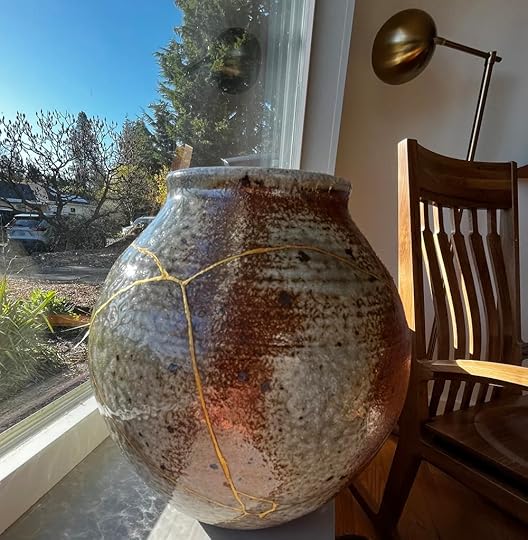
Src: daughter’s kintsugi vase
“Do all your sisters have lines?” My 4-year-old granddaughter asks me as she strokes my cheek on the deck where I am drinking coffee. We’re sharing the last of thumbprint cookies with Marionberry jam my eldest daughter gave my husband for his birthday.
I tilt my head. “Lines?” I smile. “You mean wrinkles?”
My granddaughter pats my other cheek. She nods her head yes, looking at me with those saucer-sized, blue eyes. She’s here for the weekend with lots of family and friends, visiting for the wedding celebration for our youngest daughter.
“Yes,” I said. Thinking of all my Line Sisters, with our wisdom, wrinkle-cracks around the eyes representing life experiences. Some satisfying. Some painful. All earned.
What are cracks in a relationship? And how can we honor the inevitable rifts and explore ways to repair them using the Japanese Kintsugi or golden repair approach?
what are cracks in a relationship?trailer with Céline Santini
We all have relationships that feel unrepairable at times. We grew up with the expression “time heals all wounds.” The expectation was that overtime, you'd forgive and forget. That's not really how it works. Sometimes you forgive. Sometimes you can't. And you don't always forget.
There’s a quote from a book I read recently, The Ministry of Time, a sci-fi romance by Kaliane Bradley, that even my optimist self knows to be true. “You can’t trauma-proof life, and you can’t hurt-proof relationships.”
No matter how hard we try to navigate the ebb and flow waters of a relationship, there are rocks below the surface we don’t see. We’re human, intentionally or unintentionally, we will hurt people, especially those close to us.
At the family elopement of my youngest daughter earlier this summer, I wanted to say something, not from the rearview mirror of my marriage, but from trying to remember what it felt like before I married my husband. I spoke of imagining what it was like to be in that space of the before time, with all the anticipation and hopeful expectations swirling around me. Around them. Yet, it was hard not to look in the rearview mirror as we stood in a circle around the almost newlyweds.
Marriage involves layers of intertwinedness from years of for-better-and-worse all knotted up in their unique relationship bundle, like a tree’s roots, all gnarly and beautiful at the same time.
In this month’s thought echoes podcast I interviewed Céline Santini, author of Kintsugi: Finding Strength in Imperfection. She explains that Kintsugi is an ancient Japanese art form from the 15th century involving an extremely detailed process that can last several weeks or months for repairing broken pottery. My youngest daughter, a potter, introduced me to Kintsugi when someone accidentally dropped one of her vases.
In Japanese, kin means gold and tsugi means joint—together they literally mean golden joinery. For Céline, Kintsugi is much more than art. “It's art therapy, because Kintsugi is like when you break a ball. You can either put it in the trash, or you can decide to disguise the repair. But there’s a third option. Instead of hiding the repair, you highlight the scars with pure gold. Paradoxically, the object becomes more treasured, more precious. It’s stronger for having been broken. It’s a perfect metaphor for life.”
Céline uses the Japanese golden repair technique as a form of self-care. Her approach is part art therapy, part modern psychology, and breaks down into 6 steps as she works with people physically repairing a pot and journaling about themselves:
Break: something unforeseen happens, a wrong move, a shock, and everything falls apart; you accept and make a choice to give something a second chance
Assemble: examine and assemble the pieces of the puzzle to get ready for a repair, and if you're missing a piece, look for what you might add
Wait: make sure pieces stay in place and the lacquer is allowed to breathe to dry and harden for days
Repair: clean the excess and sand to smooth the surface using your fingers to verify, apply lacquer once more which shows brilliant red veins
Reveal: when lacquer is still moist, delicately apply gold powder, let dry and polish to show the gold brilliance
Sublimate: take a step back and contemplate the repair, remember the story behind the break and accept the imperfections of the object, now more beautiful and precious once repaired
One of my favorite realizations from working through this process is that occasionally part of the repair is adding something else. When a piece of pottery is broken, a part might be missing. You can add a piece from another object. The same is true with healing a relationship, occasionally we need a different piece or perspective to help in the repair process.
“Kintsugi is a metaphor of life. It gives hope because it reminds you that your journey will be imperfect, you will always find a solution, you can gain experience from everything that you go through, and you will bounce back.”— Céline Santini how can we honor & repair inevitable rifts in our relationships?
There are cracks in a relationship, coated with an emotional lacquer, clear not red. My childhood family, like many, learned to let time pass. Instead of gold dust, we let time be sprinkled over the fresh emotional lacquer.
Over the course of my marriage, intentions have been misspoken. Silence, like the red lacquer of Kintsugi, settling a bit before the words “I’m sorry,” dust the apology into our unique pattern over 45 years of misunderstandings, mixed into the memories of love radiating beneath. Stronger. Reinforced with “I’m sorry” gold dust.
In “3 Rules from the Japanese ‘Kintsugi’ Philosophy for Lasting Love,” Mark Travers offers these insights:
Celebrate Imperfection: embrace imperfection and transience, find beauty in life’s inevitable changes
Craft Your Resilience: not just in bouncing back, but embrace the repair process and commit to working through conflicts and misunderstandings
Honor Transformation: allow each individual to evolve independently while also growing as a couple together
Therapy is big on talking through issues. But one piece of marriage advice I did share with my daughter — is knowing when not to talk too. There may be no way to hurt-proof our relationships, yet if we give them enough space, time comes along in the memories that fuse into the golden repair lines in our lives.
***
Later in the weekend, everyone’s all dressed up at the wedding celebration in an urban winery nearby. The little kids donning tattoos (a few adults too). Someone at the party started taking pictures. All my sisters stood in a row, first by outfit color then by birth order. All five of us. The newly minted 5 Line Sisters with wrinkle-cracks on our faces and micro-cracks in our relationships, healed or healing over.
Marriages and all relationships take patience and time with inevitable fissures. Time is a salve — knowing when, if, and how to bring something up is an artful dance developed over years in friendships, in families, and in marriages. For me, Céline’s Step #3: Waiting may be the hardest, allowing time for the healing to take place.
What relationships in your life have cracks? And what might you use for emotional lacquer and gold dust to help repair them?
WOULD LOVE TO HEAR YOUR COMMENTS.
If you enjoyed learning more about the nature of our thoughts, I invite you to subscribe to thought echoes.
August 18, 2025
Are you easily distracted?

Src: Hugh Han Unsplash
As I lounge in an overstuffed chair, balancing my morning coffee mug in my lap and writing in my journal, my phone chimes with a text.
“Keep on gettin’ better!”
My Midwest cousin on a sister thread. I stare at the phone. Keep on gettin’ better? My cousin stepped in as point-person for updates on our aunt after our uncle died suddenly. My thumb swipes through the text thread for any clues to what I missed in the flurry of messages the last few days.
Some part of me wonders what I didn’t catch. Another part says, it’s nothing. With four sisters scattered across the country, we keep in touch with family updates on a sister thread (and periodically with a cousin or two). This latest thread added into the mix of texts in anticipation of family visiting from across the country in a few weeks.
I admit to skimming the latest ones lighting up my phone at a faster clip than normal. My stomach drops a bit in not knowing what my cousin meant.
I text my sister, “Better every day?” As in life is day by day or are you recovering from something I should have known about???”
What happens when we’re distracted? How can we better manage our distractions and regain traction for the people and the projects most important to us?
what happens when we are distracted?trailer with Maggie Jackson
We all experience distractions. We’re pulled away by some interruption or trigger. Our devices ding. Someone comes to talk to you. You have a question you want to research and reach out to Google or ChatGPT — sending you off in a different direction for longer than you expected, and probably checking email, the news, or social media along the way.
As Maggie Jackson, author of Distracted, invites us to — “imagine walking into a room where everything was bouncing and flashing and moving all around very quickly and lots of it. And we walk in and don’t remember why we are there. That’s what our world is made up of with all our digital devices.”
In this month’s thought echoes podcast, Maggie explains how there's more research now on what happens to our brains in this world with digital devices. How everything competes for our attention and where our intentions are compromised because of this “constant barrage of inputs.”
There’s a fragmented nature of time and space in our distractions, a constant context switching back-and-forth like walking around a buffet table tasting many things and not able to choose one.
Maggie cites scientists who are worried about young people who are on their devices all the time. Their imagination network, related to their inner life, is not getting practice. The worry is they won’t be able to utilize that kind of thinking or see the value of it in their futures.
One story she told stuck with me. In a journalism class where students agreed to turn off their devices, one student said there was this “little voice” in his head he hadn’t heard before. I cannot imagine what it must feel like to go through life so distracted by digital devices and disconnected from oneself.
Seems our brains are changing. Our habit of being so connected to devices is disconnecting us from our inner lives. Many say they are good at multitasking, which is a misnomer. What we’re really doing, as Maggie spells out, is “task switching.” And the cost of this steady drip of fragmenting time and space affects our ability to learn, causes memory issues, reduces our capacity to focus for chunks at a time, and overwhelms our adeptness to discern what’s important in the moment.
When I’m writing or reading in a quiet zone of silence and reflection, I don’t like to be interrupted, but I am guilty of wanting an answer and being impatient in the gap between wanting an answer and getting it.
I’ve started using the send-later option on my iPhone when sending texts. It’s my compromise — when I’m in squirrel-interruption mode, I try not to trigger it for someone else. If the girls are at work and I don’t need an answer right away, I schedule a text for after dinner, but not too late. And for birthday wishes I schedule a photo based on whether the receiver is an early riser or a late starter.
“People who multtask a lot have trouble discerning what’s important in their environment. There are huge impacts on our lives from living this constant diet of distraction.”— Maggie Jackson how can we better manage our distractions?
Not all distractions are bad or unhealthy. Sometimes when we’re stressed, we could use a break and get out of our swirling heads. Sometimes diversions, or refocusing energy, is healthy. With a caveat …
In Are We Pacifying Ourselves with Distractions? Leah Marone asks simple questions. Are these distractions truly helping us unwind, or are they merely pacifying us? Are we really staying busy by overcommitting and constantly working to keep us from thinking about our thoughts?
Leah notes, “Emotional regulation comes from facing discomfort and processing feelings—not escaping them. Otherwise, we become overwhelmed and increasingly dependent on distractions to keep the chaos at bay. Emotions are messages from within, and ignoring them prevents us from learning more about ourselves.”
What’s most disconcerting to me is that most of us are not prioritizing “down time” or “slow time” to reflect and allow our brains to integrate what we’ve learned and experienced. This impacts our potential to more creatively problem-solve because our perspectives are narrower. Add in sleep issues, and we handicap our ability to create long-term memories too.
Leah suggests taking small, intentional steps to break the cycle, very similar to what Maggie suggests too:
Daily check-ins: What’s on my mind? What am I feeling?
Limit distractions: Set boundaries
Create space for rest: A walk or quiet time
***
Within minutes, my sister responds with a long message about being in the ER testing positive for malaria. Malaria?!?!
As I stare at my sister’s text, “Sorry, thought the message was passed to all sisters.” I read the news slowly, letting the details sink in. Turns out, what she has is like malaria, she’s on meds, and should be okay. I search for malaria in my text threads. Sure enough — there it is. Three days before on a thread without my cousin.
Funny how a text thread shifts depending on where you start reading. I picked up with, “She is calling you later,” thinking the “you” was me. It wasn’t. Then a flurry of back-and-forth messages from various sisters, and I’m thinking it’s all about my sisters traveling.
I’ll acknowledge being conditioned to a habit of Whack-a-Mole throughout my day from decades of working in corporate and parenting. I'm still learning to slow down periodically without distractions. I’m pretty good at carving out quiet time for reflection in the morning while writing before the games begin in my daily routine. But I’m still working on taking pauses between various activities and resisting the urge to barrel through my todo list.
How are you distracted? Where is your energy being hijacked? How could you carve out more slow time for your own mental health and the relationships with the important people in your lives?
WOULD LOVE TO HEAR YOUR COMMENTS.
If you enjoyed learning more about the nature of our thoughts, I invite you to subscribe to thought echoes.
July 15, 2025
How can we learn when it’s time to let go?
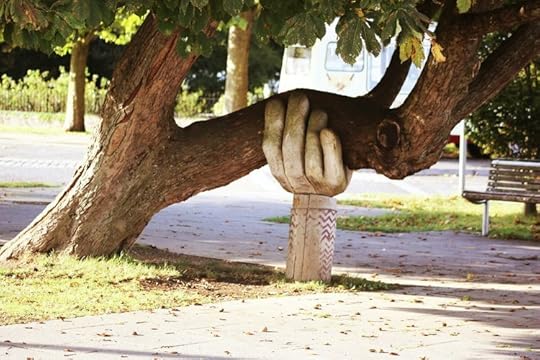
Src: Neil Thomas Unsplash
what are attachments?
We’re up on Lopez Island in the San Juans in Washington State, all dressed up in fancy wedding clothes, wearing tennis shoes and sandals. A dozen of us hiked a 1/4 mile through the forest. Some of us are wearing backpacks carrying champagne flutes and animal crackers, others holding fresh flowers to a lookout with the backdrop of neighboring islands peeking up through the sunshine-sparkling water. A slight breeze blew my daughter’s hair as she beams facing her almost-husband.
How does it feel when your youngest is getting married? For me, I feel conflicted. There’s part of me that isn’t ready for my last daughter to get married. I thought I had more time. But she’s ready. I need to learn to let her go.
It’s not like we talk every day on the phone, or that she runs everything by me. I suspect it has more to do with me than her. There’s this soft, quiet, sad part of me that’s not ready to let go. But why? What am I really afraid of letting go of?
What are attachments? How can we release our hold on attachments and learn when it’s time to let go?
trailer with Bob Rosen
According to Bob Rosen, psychologist, researcher, and author of Detach: Ditch Your Baggage to Live a More Fulfilling Life, our lives are full of attachments: like our attachment to stability (being uncomfortable with uncertainty) or to the past (not being able to accept and forgive) or the future (worrying and being unable to live in the moment). In his book, and on this month’s thought echoes podcast, Bob invites us to take stock of our relationship with our attachments and offers advice on how to replace them with healthy aspirations.
What fascinated me about Bob’s unique perspectve was the weaving together of Western and Eastern approaches to life; our Western get-it-done with an Eastern wabi-sabi, not-so-fast attitude.
During our conversation, I mentioned to Bob that we couldn’t cover all 10 attachments and offered my top 2: control and perfectionism (a bit of control on my part). He said, “The attachment to control and the attachment to perfection is very common, particularly around business people.”
He explained how from an early age, we’re taught to shape our ecosystem. We learn to influence and maneuver around people in our lives to control situations to feel safe. But then something happens. We “bump into reality because we can’t control a lot of what goes on in our lives, and we hide our vulnerability. So many people get hijacked by control. And the secret is learning how to get in touch with vulnerability. To allow yourself to recognize that you don't control everything. And you let it go.”
When I read his book, the attachment to control almost flashed red at me. Turns out there are 4 types: 1) controlling others, 2) controlling yourself, 3) passive-aggressive, and 4) people-pleaser. People-pleasing was a surprise to me. I saw that as something someone would do if they did not feel in control, either to protect themselves or out of a lack of self-confidence.
On reflection, when I’m people-pleasing, I think of it as a way to avoid conflict. I remember Mom sharing in her later years about life with five little girls and how she tried to present a sense of calm at home when Dad was around. She didn’t want him staying at work late because there was so much chaos at home. Her way of controlling the situation: trying to control her daughters and people-pleasing for Dad.
The concept of control hijacking our lives and learning how to embrace vulnerability as a way to let go really stuck with me. Simply understanding the different types of control provided a filter to reflect on my upbringing and what may have seeped into my parenting style.
“Western psychology is all about goals, aspirations, and problem-solving, and Eastern psychology is all about understanding the power of impermanence, change, and uncertainty. So I wrote the book to weave those two concepts together.”— Bob Rosen how can we learn when it’s time to let go?
When I finished my interview with Bob, I felt like I’d started a new exercise routine. A mental health exercise routine.
First, you need to learn the new routine. It has 10 exercises. Then you realize your mind (like your body) is different every time you exercise. Sometimes I can only do one full plank pushup; the rest are on my knees. Other times, a weight is too easy, so I increase it a bit. It feels that way going through the checkpoints of the 10 attachments where Bob asks probing questions in each chapter of his book.
Stability —> embrace agility
Past —> accept and forgive
Future —> live in the present
Control —> share our vulnerability
Perfection —> befriend our imperfections
Success —> celebrate our achievements
Pleasure —> find peace with life’s ups and downs
Youth —> embrace where we are
Self —> explore belonging and generosity
Life —> welcome gratitude
This may seem formulaic, but think of it as a DIY mental-health check-up. We all sometimes feel a bit stuck or that we’re giving up too much mental real-estate to something or someone. But maybe, by exploring Bob’s list of attachments and their anecdotes, we might find some insights and relief.
***
We walked back through the sunlit dappled forest from the family elopement on Lopez Island, all three daughters with their husbands. Still catches in my throat for me to say that with my youngest.
On the ride back to our rental that didn’t have hot water until 9:30pm the night before (imagine pots of water on the gas stove and in the microwave to heat up enough water so our two little granddaughters could have a somewhat warm bath), I glanced at my husband. “Our family balance has changed. For most of the girls’ lives, they’ve been the center of our universe and we theirs. We’re not the center of their universes anymore. They have their own universes and we can visit. We’re visiting stars.”
What are all the ways we can learn to let go? To have the self-awareness to know when to move the intensity dial up or down?
***
P.S. What I didn’t mention is that while journaling one morning about the challenges of choosing a universal theme for my memoir, I realized the overarching theme was about learning when to let go. Moments later, while catching up on emails, I received a request to interview Bob for his book, Detach, which was all about letting go.
Of course I received an email right after I settled into what our dance with chance in saving a 100-year-old mansion taught me — all the different ways to let go. How serendipity shows up when dreams change and life turns out differently than expected. How relationships, romantic or otherwise, are a balancing act and invite vulnerability into the mix. And how knowing when to let go and walk away leaves room for something new.
WOULD LOVE TO HEAR YOUR COMMENTS.
If you enjoyed learning more about the nature of our thoughts, I invite you to subscribe to thought echoes.
June 19, 2025
How can we use tiny experiments to learn more about ourselves?

Src: Hans Reniers Beakers Unsplash
Last weekend, I visited my youngest daughter and we experimented with paper-making for her wedding — a tub of water, a small picture frame and modified splatter guard screen, lavender from her yard, and early drafts of my memoir torn up and added to old tax paperwork. The high-pitched grinding of paper pieces in the Osterizer sent her cat into the next room.
She swirled the pulp in the large tub of water before using the make-shift mold and deckle to scoop up the mush onto the screen. After shaking a few times and tipping to let the excess water drain, she flipped the speckled sheets onto various fabrics to try different textures: towel, dishcloth, and pillowcase. A dozen or so experiments dried in the hot sun on her deck. She ironed one to see if the custom invitation stamped onto the paper would show enough detail.
What are experiments? How is experimenting different than trying something new or exploring? How can we use tiny experiments to learn more about ourselves?what is experimenting?
trailer with Anne-Laure Le Cunff
Who hasn’t done a thought experiment? It all starts with a question – what if? What ifs play out all around. What if I took a different route to work? What if I tried that jammer recipe with no oil? What if I used a handwriting-to-text app to digitize my journals versus using dictation software?
Lots of ideas. I’m usually patient enough to try once or twice. But what if — I created a time-bound, repeated trial where I kept track of what happened and spent time reflecting on the results?That’s a tiny experiment as defined by Anne-Laure Le Cunff, this month’s thought echoes podcast interviewee, neuroscientist, founder of Ness Labs, and author of Tiny Experiments: How to Live Freely in a Goal-Oriented World.
We have lots of opportunities to experiment. Anne-Laure suggests a simple formula — I will [action] for [duration].
Say you want to try meditation, but never seem to have the time. I will meditate 5 minutes for 5 days.
Or you’re looking to spend more quality time with friends. I will call a friend a week for 4 weeks versus only emailing or texting.
Or you want to playfully try different restaurants on date night. I will pick a different restaurant for the next 4 date nights.
One of my questions — would a handwriting-to-text app transcribe my journals faster than typing or dictating them into digital format? Ever since college, I’ve wanted to digitize my journals to fact-check, look for patterns, see how my beliefs and philosophy of life have changed, and sometimes to end an argument over who said what. I’m still a year behind in digitizing them for my memoir background.
My tiny experiment — I will use a handwriting-to-text app AND dictation software for 7 journal entries to see which is faster. And as Anne-Laure says, “There’s no pressure, there’s no right, there’s no wrong, there’s just doing it.”
“A tiny experiment isn’t a complete overhaul of your life. It’s a low-risk repeated action you take to learn something new, spark a shift, or test a possibility. It’s how you can make change not only manageable, but fun.”— Anne-Laure Le Cunff How can we use tiny experiments to learn more about ourselves?
Whatever stage in life you are: starting your career, young parent, mid-life crisis, top of/changing your career, or retired, deep down we all want to live a fulfilling life and often get caught up in our busyness and the global dynamics of the world around us.
As Anne-Laure says, “What if instead of trying to fix everything at once, we got curious and tried something small? That’s the magic of tiny experiments.”
To come up with tiny experiments to try (even in the middle of a hectic week), Anne-Laure has several suggestions, including:
Practice self-anthropology: What energizes you? What drains you? If you hit a slump in the afternoon, try 10-minute walks for 10 days instead of caffeine.
Notice fixed mindsets: Catch yourself saying, "I could never do that,” and brainstorm one small, repeatable action to take to challenge that belief.
As Anne-Laure says, “Success is just collecting the data, conducting the experiment, and learning something new about yourself; about the kind of work that you might want to do, and that's really the essence of a tiny experiment.”
Historically, productivity was all about efficiency in the quantity of time we spend on various activities. Anne-Laure writes about how Greeks valued the qualitative nature of time: Kairos. It recognizes that the value of time depends on the situation. Finding ways to be mindfully productive, “making the most of our time isn’t about doing more, but about being more: more present, more engaged, and more attentive to the quality of our experience.”
Anne-Laure offers many tools to help you navigate the world of tiny experiments. One of the most delightful is what she calls a metacognition tool: Plus Minus Next. After each occurrence of whatever you are doing you note: positive observations, negative observations, and plans for what’s next.
Using the meditation example:
Plus: I noticed being a bit calmer.
Minus: My crossed legs hurt.
Next: I’ll sit on a chair tomorrow.
At the end of your duration, you’ll have a series of observations and adjustments you made. From there, you can decide what you want to do going forward: continue? pivot? or pause.
Head, Heart, Hand is another tool, especially helpful if you feel like you’re procrastinating. Ask 3 questions:
Is the task appropriate? If not, can you redefine how you're doing it?
Is the task exciting? If not, can you redesign the experience so it is?
Is the task doable? If not, is there a way to get help or more training?
With my journal experiment, my hypothesis was that a handwriting-to-text app would be faster than dictating.
I was wrong.
When I finished and discovered dictation was faster, I was surprised. I thought the handwriting experiment failed, but it didn’t. I learned something new. There’s value in learning that something didn’t come out the way you expected.
For my daughter, it turns out the paper experiment didn’t create a flat enough surface to stamp text onto, but they will make delightful seed paper for thank-you notes.
We live in uncertain times, and many feel a bit untethered. Maybe using tiny experiments is a way to initiate incremental progress toward something you’ve been wanting to do for a while. They present a new relationship with learning.
Experimenting is about trial and error with a little mystery thrown in. I welcome a little mystery in my life. Even if what I learn is different than what I expected. What about you? Do you welcome a little mystery into your life and what tiny experiments can you try?
WOULD LOVE TO HEAR YOUR COMMENTS.
If you enjoyed this post, I invite you to subscribe to my monthly
May 20, 2025
How can we learn to navigate life with a strong inner compass?
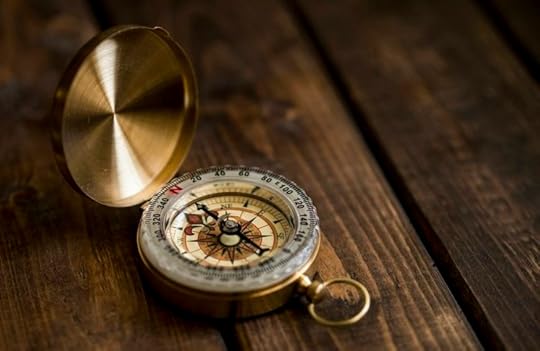
Src: Aaron Burden Unsplash
My heart beat fast, post-workout, as I smiled at my co-writing friends on Zoom, rocking on my blue exercise ball that I used instead of a chair. My mind swirled with to-dos. I couldn’t decide what writing project to work on. I really wanted a latte, but felt getting one was a distraction, so willed myself to stay put.
The co-writing group was a cameras-on-or-off-for-90-minutes group. I turned my camera off. Paced a bit. Told myself to meditate for 5 minutes. Toward the end, with my eyes closed, something nudged my crossed legs. As I opened my eyes, my blue exercise ball swayed inches from my face, like an invitation to play. The breeze must have pushed it, but what was I thinking right before the nudge?
Meandering. I chuckled. Seemed my intuition visited me in the form of a slightly deflated orb urging me to meander up to the coffee shop around the corner to get that latte, where I ended up giving a stranger my phone number.
What is an inner compass? And how do we learn to navigate the ocean of life with a strong one?
what’s an inner compass?trailer with Hrund Gunnsteinsdóttir
In this month’s thought echoes podcast with Hrund Gunnsteinsdóttir, we explored the waters of intuition she wrote about in her new book: InnSæi: Heal, Revive and Reset with the Icelandic Art of Intuition.
Hrund described three aspects of InnSæii (the Icelandic word for intuition):
Unconscious Mind (sea within) — the unconscious world within us, holds space for imagination and absorbs all our sensory inputs. If you put the sea within into silos or boxes, it ceases to flow.
Self-Awareness (to see within) — our ability to see inside ourselves, to know ourselves and our emotions well enough to be able to put ourselves into other people's shoes and discern intuition from biases, fears, and wishful thinking.
Inner Compass (to see from the inside out) — meaning to navigate the ocean of life with all its uncertainty and do so with a strong inner compass — knowing what to say yes or no to and feeling good about it.
Instinct is something that is wired into our DNA, but intuition develops over time. That was a new twist for me. I knew we all have intuition (whether we hear or listen to it or not). But for me, I felt it’s always been there, not something that grows over time and was affected by all we take in, consciously and unconsciously.
As the world keeps changing, we have an opportunity to “be tuned into ourselves and the world around us, be better able to navigate like fish in water, helping us become more resilient,” says Hrund. She advises to have a sense of humor. We’re human and definitely not perfect. Honing our intuition takes patience and practice.
Hrund surprised me when she said we cannot rely on our intuition if we feel emotionally imbalanced. I always thought if we honed our intuition we could rely on it in stressful situations like meditation with the promise that if you practice being calm and present you’ll be able to call upon that skill on a moment’s notice.
And she surprised me again, when she talked about how emotions were about putting things in motion, to let them go out of our bodies. My approach for processing emotions has been more about replaying something that happened and brainstorming what I could do differently to avoid an unwanted emotion. What I haven’t been doing (like all my life) is sitting with the emotion — to acknowledge, absorb, take action or not, and letting it go. I’m imagining engaging this way of processing my emotions would be healthier for me and those around me.
“Intuition as an inner compass really helps us discern what we think, what’s important that we do, and also understand what are the things we might want to let go of and feel good about it.”— Hrund Gunnsteinsdóttir
Think of intuition as part of our intelligence. When we weave together analysis and intuition, rational thinking and creativity, Hrund refers to this as flow. She spoke of finding the balance between the two rhythms of being and doing. Being deliberate and being receptive. Having a plan and being open to the unexpected. Resting and being very active. It’s as if we need to allow the flowing in our lives to ebb once in a while, a slice of space to absorb our doings.
There are several ways we can’t hear or don’t listen to our intuition. One of them is because so many of us are in fight or flight mode so much of the time. Or burning out by doing too much. Or we get stuck (think of stagnant water that needs to flow, or a frozen glacier that melts and leaves behind beautiful mineral deposits in the process, as John Grant, a musician, explains in InnSæi).
Hrund offers an antidote, “When we are fully present in the moment, we are best able to tune into our intuition and build on all the knowledge, expertise, and experience we’ve accumulated throughout our lives. If we're not fully present, our system is not as regulated as it could be, and it's easier to panic. It’s easier to jump to conclusions.” We want to train ourselves to listen to our intuition. Every time we don’t listen, we’re training ourselves to ignore it and that seems like a missed opportunity.
If we use our values as an intuition filter, according to Victoria Lemle Beckner, PhD, we have a way to “identify the qualities within ourselves that we want to express in our behavior, such as being curious, brave, loving, fair, dedicated, artistic, and playful. They can guide what we do (calling a friend who needs support) and how we do it (with kindness and empathy). Values resonate in the heart and are freely chosen. At any moment, we have the capacity to bring openness to a difficult conversation or creativity to making dinner. Values are not about how the other person responds or whether the dinner turns out tasty. When we act from our values, we often feel alive, in flow, and aligned internally. Even when difficult feelings are present, acting from our values feels right.”
When I asked Hrund how people could start to hone their intuition, she recommended starting an attention journal. Pay attention to what you’re paying attention to. Make a simple note as if documenting a photo shoot: nice smile, colorful flags. No judgment, just notice what you are noticing. Try it for a week and see what patterns emerge.
Another good suggestion came from Christy Geiger. When learning to listen to your intuition, test for “boomerangs.” That concept, caught my attention — there were times I thought I’d made a decision in a grounded way only to have a lingering doubt surface a day later. Christy says, “The ‘boomerang’ effect is a useful checkpoint, prompting you to re-evaluate and make any necessary adjustments. It does not mean the gut was wrong, it means there are more layers and dynamics to be concerned with.”
***
While waiting for my latte and chatting with the barista about slipping away from my co-writing group, a guy behind me wanted to learn more. I smiled as soon as he had questions for me.
So, this is why I had an impulse to get a latte.
Although when I told my husband, his intuition told him something else.
“You gave a strange man your phone number?”
I laughed.
Gotta keep your sense of humor. We aren’t perfect, and our intuition isn’t always either.
When was a time you remember listening to your intuition?
WOULD LOVE TO HEAR YOUR COMMENTS.
If you enjoyed this post, I invite you to subscribe to my thought echoes newsletter below.
April 15, 2025
Can pausing for poetry take us to unexpected places?
Src: Jessica Furtney Unsplash
A few weeks ago, in the early morning before I woke up too much, a phrase kept repeating itself in my head — time tumbles ... time tumbles. The words coaxed me to listen and follow them back into the edges around my sleep — time tumbles as it stretches. I kept my eyes closed, holding onto the words not wanting to break the spell.
Two minutes. I had roughly two minutes to pause in this liminal space between sleep and waking up to soak up whatever my subconscious’ night shift was sharing before the day shift came on duty. I let the phrase repeat itself so I could remember it, having no idea where the words came from or what they meant — but it felt like the start of a poem I wanted to spend time with — time tumbles as it stretches from place to place.
Where does poetry come from? How can we learn to pause and follow the invitation to visit unexpected places?
where does poetry come from?trailer with Katie Prince
During this month’s thought echoes podcast in honor of National Poetry Month here in the US, I interviewed poet Katie Prince. I asked her about the origin of her poems in Tell This to the Universe, especially about the people she’d lost and how she wrote about them on the page. She said her poems came to her in a variety of ways: an idea, a phrase, a thought concept, or an active image.
The magic emerged when she followed them until something interesting happened. “At some point, the language will take over. The poem will go somewhere that I didn't expect it to.”
As Katie reflected back on both the people she lost and her earlier self when she wrote these poems, she shared one aspect of poetry’s alchemy. “Your thoughts of people in the world, or your representation of them can somehow bring a ghost form of them back for a moment. The ghost version of my past self is there. I’m not that different now, but she was certainly a raw, exposed nerve at the time. Maybe that's the magic of it. You're bringing back a person from nothingness.”
how can we learn to pause and follow the invitation to unexpected places?There’s a hidden power in pausing, according to Jeffrey Davis M.A. in “How the Art and Science of Pausing Boosts Your Well-Being." He explains how slowing down is about more than resting. We have an opportunity to create space for our mental well-being too:
Listen to Our Inner Signals: Our bodies know when something’s not right; pay attention for when to take a break
Foster Creativity: Our brains get a chance to stretch and make unexpected connections if we give them breaks from trying to always be in control
Reconnect with Priorities: Taking pauses helps us recalibrate with what truly matters in our lives whether family, purposeful work, or personal growth
As Davis suggests, we can use the simple gesture of taking a moment in our busy schedules to absorb what’s within and around us. We can try adding micro-pauses (10-15 minutes to step away and let our minds wander). Or, another idea is through poetry.
Poetry slows us down. Opens us up. Some poems resonate. Some slip by like walking past a grocery aisle with too many options. We can’t choose, so we keep going. From my perspective, it doesn’t matter which poetry you read. Think of it as an appetizer. You like some and not others, but keep tasting. Where to start? Poetry.org lets you explore by occasion, theme, form, or customized search.
There are so many different types of poetry. I’m drawn to free-verse — the fragmented nature of jumping from association to association (more the way my mind works). Poetry acts as an emotional conductor of sorts, guiding us along for the experience.
One of my favorite books on writing poetry is poemcrazy by Susan Wooldridge. For Susan, poetry helps us make sense of the world in ways different than prose. Poetry allows the peppering of images and leaves gaps. She says, “Poetry is in a different class of writing. It’s almost a mystical way of going within ourselves and making discoveries about who we really are.” If you are lucky enough to spend any time with Susan, you quickly get sucked into the vortex of her love of language. There’s a thrill of playing with words and where they take you.
Something happens in the writing of poetry, an opening up, a willingness to be witness to what you are experiencing. An opportunity to let our subconscious communicate emotions through its language of images, then we can translate those images to words on the page.
If you’ve never written poetry — as Katie says, “The value isn't whether it's good or not, it’s how the writing has changed you, opened something up new for you, or given you a different perspective.”
As poet/philosopher David Whyte says, “Poetry can stir the memory of words that reside in our bodies in different ways.” He re-iterates “poetry’s invitation of bringing what we feel inside into a conversation with the outside world.” Poetry bears witness.
At the end of the podcast, I asked Katie for her words of wisdom for people who don't experience poetry on a regular basis.
“There’s nothing like poetry when you’re in the depths of something. There’s no better method, I think, for distilling pure experience. All a poem does is pay attention.”— Katie Prince
***
Holding loosely to the time tumbles phrase, I gingerly woke up enough to get out of bed. I reached for my journal and followed the phrase — not from a specific image, but from a sense of movement, of time passing.
As I continue to work on my memoir on our dance with chance when moving a 100-year-old mansion and what I learned about myself and my marriage, my subconscious offered me encouragement. As did Erica Bauermeister, author of House Lessons, a memoir about moving a home in Port Townsend, Washington. She shared how her book took 15 years to finish and about the perspective gained by waiting that long.
time tumbles
as it streetches from place to place
between memories that watch each other
hugging closer
then letting go
waiting to tumble and stretch again
When was a time poetry spoke to you? Can you create some white space for poetry to invite you to unexpected places?
WOULD LOVE TO HEAR YOUR COMMENTS.
If you enjoyed this post, I invite you to subscribe to my thought echoes newsletter below.
March 18, 2025
How can we create more balance in our relationships?
Src: Demmis Yart Unsplash
Up in Mazama, Washington, on a family summer vacation almost a decade ago, one of my daughters was spotting me. I stood barefoot on a blue slack line — held taut between two towering cedar trees — about 12 inches or so off the ground. I don’t remember wind, just a comfortable temperature with the quiet gurgle of a river running in my peripheral vision.
To stay balanced, you don’t look down; you focus on something farther away. Not the horizon, but a ways off. I focused on the tree at the end of my 20’ slack line and held my arms out to each side like playing airplane as a kid. I leaned to the right to slowly lift my left foot and gently arch it forward in front of my right foot by a few inches. Then I leaned left, in a mirror dance as the slack line swayed back and forth.
***
What is balance in a relationship? How can we embrace both feminine and masculine traits in the dance between autonomy and intimacy?
what is balance in a relationship?What I appreciated when reading Dr. Rick Hanson, PhD’s article, “The Dance of Intimacy and Autonomy," was his frame of reference on balance in a relationship. It’s not a black-and-white, either-or, one-size-fits-all perspective.
According to Dr. Hanson, “At the core of every meaningful relationship is the balance between intimacy and autonomy. Intimacy fosters deep connection through trust and shared experiences, while autonomy preserves individuality and personal integrity.”
Dr. Hanson identifies 4 patterns of closeness and independence we move between depending on the circumstances:
Integrated: comfortable and skillful with both closeness and agency
Engulfed: highly connected but not free to act or express yourself fully
Isolated: strong sense of personal desires but weak connections with others
Adrift: disassociated from both others and oneself
I can fall into the engulfed pattern, saying yes when I mean no because I don’t want to hurt someone’s feelings or I don't have an alternative. Sometimes I don’t say what I’m feeling, because I don’t take the time to know what I’m feeling other than I’m not comfortable.
Most of us want closeness and independence, or an integrated relationship. Hard to do that simultaneously, hence the dance – the right foot, left foot nature of creating memories together. One piece of advice from Dr. Hansen that resonated with me was learning to sit with discomfort instead of reacting impulsively.
There’s so much context around situations that influence our responses — not every battle needs to be fought, and sometimes deciding to give in gracefully is the better choice.
For me, the hardest thing seems to be taking a beat — to ask myself what I am feeling. I jump to — happy-camper everything back to an even keel at the expense of not giving voice to what may have been stirred up unintentionally by somebody else.
My desire to strike the right balance is as much for me and my relationships as it is for modeling for my daughters and granddaughters. It’s like I’m in a petri dish on display, and the people-pleaser in me wants to be a good example.
embracing both feminine & masculine giftsAnother part of balance for ourselves and in the entwined-ness of our relationships involves feminine and masculine characteristics. Feminine traits are often described with words like: receptive, collaborative, and intuitive — right brain perspectives. While the masculine mindset is described as: analytical, courageous, goal-oriented — left brain activities.
It’s easy to say — these traits are not intended to be only men exhibit masculine traits and only women display feminine traits — but culturally harder to see them as gifts we all hold in common, just in different proportions depending on the circumstances.
According to Andrea Mein DeWitt, “While both lists of traits could be considered positive and productive, there is an interesting contrast between them; masculine energies are primarily about ‘doing,’ while feminine energies speak to ‘being.’” The goal is accessing more awareness and a healthy balance of both masculine and feminine gifts.
trailer
As this month’s thought echoes podcast guest, Elina Teboul, who wrote Feminine Intelligence, explains, “Since the Enlightenment era, we have prioritized this masculine approach, which again is all about the left brain, all about a rational way of thinking. And in order to step into that feminine right brain consciousness, it really is about making time for body experiences so that inner knowing and inner listening, you can bring into the masculine to take action on it. But it really does start with finding a space for different kinds of activities that are not traditionally intellectual ones.”
“We can step into this right brain consciousness. We want to make the world different than it is, and we shift into a more collective conscious mindset, and we are able to stand up for those beliefs with confidence and conviction in our workplaces, and so this is, I think, a gift that our culture really needs at this moment.”— Elina Teboul
***
Back on the slack line, with the rest of my family watching/not watching, I fell a few times. But then something happened. I found myself breathing slower in sync with my aerial dance steps. At one point, my daughter had her arm barely around my waist. Another moment, she lets me imperceptibly touch her shoulder to keep my balance as I practice. During this slow-motion pause in time, in a roll-reversal, my daughter quietly encourages and supports me.
Relationships are fluid, and as much as we, I often want a calm respite from the dance, it may be more about my realizing I need to step back a moment from my energized-get-it-done attitude. Setting aside internal alone time is rejuvenating.
As Karyn Hall, PhD encourages us to ask as part of our mental wellness, “Are you content?” If we’re finding ourselves on auto-pilot in our relationships, she suggests taking some time for self-reflection on how we are feeling. Sit in the discomfort for a bit, and make any adjustments. Taking time will benefit you and those around you.
WOULD LOVE TO HEAR YOUR COMMENTS.
If you enjoyed this post, I invite you to subscribe to my thought echoes newsletter below.