David Michie's Blog
November 29, 2025
When did your inner journey truly begin?
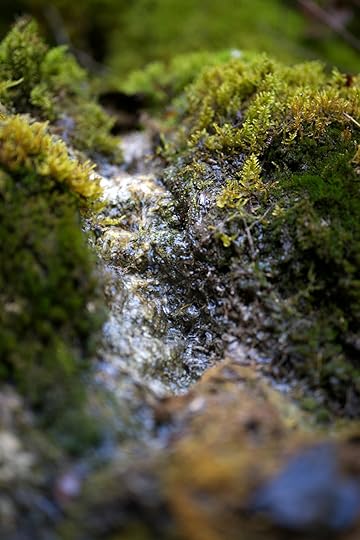 Photo by Job Vermeulen on Unsplash
Dear Subscribers,
First of all, Happy Thanksgiving weekend to all our American friends! I hope you are enjoying a really special break. And thanks for the beautiful goodwill messages you shared with other readers last week.
Just as I enjoy writing and sharing new mouse-size musing ‘by’ His Holiness’s Cat, in months to come I look forward to offering fresh fictional snippets from the world of my new novel, The Good Karma Refuge for Elephants.
This week, we join narrator Rob - basically, me - and his godmother, near her cottage in the Nyanga mountains. My own, dear godmother, Kay, lived in just such a cottage and we, too, used to enjoy our rambles in the forest talking about exactly such subjects as these ….
I loved walking with Kay in the pine woods near her cottage. There was something gently but powerfully restorative about breathing in crisp mountain air, redolent with conifers. Of having every footstep cushioned by the quilt of bronzed pine needles. Of catching glimpses through the branches of the blue lake in the far distance.
Wolfhound Thor and Jack Russell Tiki dashed from one scent to the next, noses quivering. And with the branches above us whispering in the breeze, conversation with my godmother flowed effortlessly.
We reached a smooth granite boulder—flat as a bench, mottled with green and gold lichen—and Kay settled onto it with familiar ease. She gazed out towards the azure waters below; clearly, this was a favourite stopping place. Just beyond, water burst between moss-covered rocks, hurrying downhill in a bright, insistent rush.
“That’s from the spring in my garden,” she told me.
She’d shown me the small rivulet earlier, and the tiny pond she’d formed from its crystal flow.
“Years ago we had a hydrologist survey this area.”
“So the water disappears on your property—?”
“And reappears here,” she nodded.
“Goes underground but keeps moving,” I said.
Kay gave me a knowing look. “As I was saying earlier…”
It took me a moment to work it out. “Oh – that,” I raised my eyebrows ruefully.
We had been talking about my meditation practice. Or lack of it. How my sitting routine unfolded irregularly. There were months when it was a natural part of my daily rhythm. Followed by periods when life took over and there was never enough time, or I just wasn’t in the right head space.
“Just because something slips from view,” she said, holding my gaze, “doesn’t mean it’s gone. Sometimes”—she nodded toward the spring—“it resurfaces with even greater force.”
“I can see.” The spring here was much more vigorous than the tenuous trickle in her garden.
“In the early stages there’s usually fits and starts. Going underground and re-appearing later. Joining into bigger streams, cascading down waterfalls, before turning into a big, steady river. What starts out as nothing more than a squiggle at the top of the mountain, with no impact on anything in particular, becomes more and more important the further it goes. There’s a kind of inevitability about it. Keep on doing it and the results must come.”
“What I’m curious about,” I said after mulling this over, “is why this spring - to use your metaphor - appears in some places but not others. Why does meditation seem so natural, even obvious, to some, but for other people it’s completely foreign?”
“Karma,” shrugged Kay. “Previous life stuff.” Then looking farther down the valley, “Our inner journey unfolds over many lifetimes.”
I thought of colleagues back in London who would dismiss the idea out of hand: If we’ve lived before, why can’t we remember it? Case closed.
“For most Westerners, that’s difficult to accept,” I said.
She nodded. “We weren’t raised with the idea of beginningless time or endless space. It feels too vague, too open-ended. But we really need to ask the questions that our cultures never asked. The questions we perhaps stopped asking as children.
“Easterners find our own ideas equally baffling. How can there be a Big Bang without a previous cause? A creator without an origin? How can something arise from nothing?”
“Just like mind,” I murmured.
She smiled. We had spoken earlier of the Buddhist understanding of mind as a formless stream of knowing. How consciousness is an energy more subtle than matter. How the current mind moments we experience arise from previous ones, and the brain, like an individual TV set, while vital to mind’s functioning, is not to be mistaken for the broadcast.
“So what you’re saying,” I clarified, “is that even if we only find this path late in life, it was always there—like a subterranean river.”
Kay nodded. “A human life is what… sixty, eighty, maybe a hundred years? What are a few decades—or even lifetimes—in the context of eternity?”
I snapped my fingers. The sound felt small against the vastness before us.
The landscape stretched wide and wild, unmarked by any sign of habitation. Beneath the rolling pines and glittering water, I could see the broad stream leaving the lake—the very one that would become the Gairezi, joining the Mazowe, and later feeding the mighty Zambezi River.
From here, the brevity of a single life was self-evident. And just as obvious was the unbroken chain of cause and effect—the river of events flowing, inevitably, to the sea.
“Whatever spiritual tradition we follow,” Kay said softly, “the destination is the same. All the great teachers point us to the mouth of the river, where it meets the ocean. Many rivers. One ocean.”
She turned to me, eyebrows raised in gentle invitation.
“Becoming one with the experience of enlightenment?” I asked.
“Non-dual with a state of heart whose true nature is divine,” she said with a smile. “And always was. Even when it was the littlest, silver trickle.”
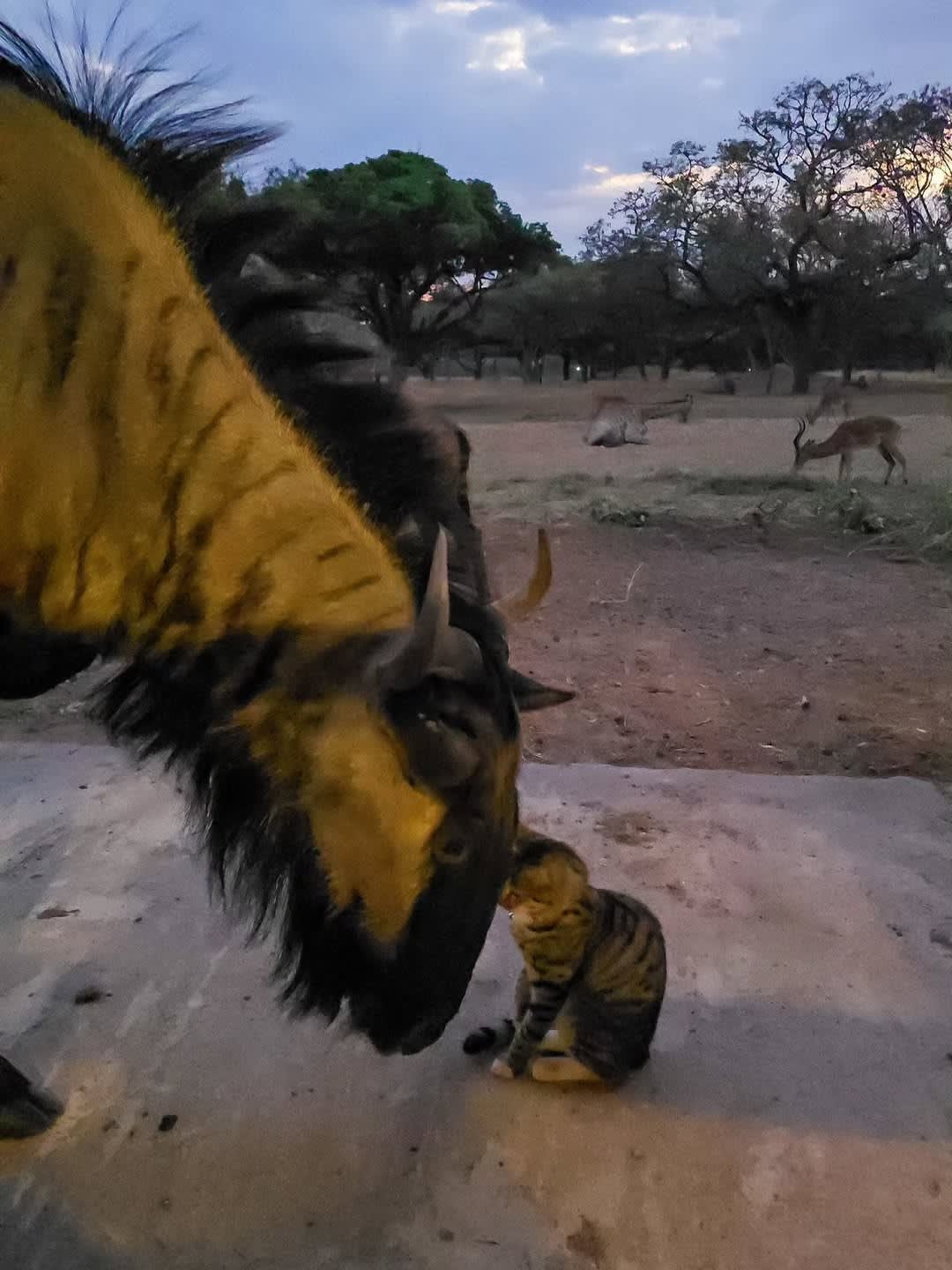
Photo: Noodle the wildebeest sharing a mind moment with Barney the kitten. Notice how Noodle’s eyes are high up his head. (Photo credit: @bosnian_girl_in_africa)
This week’s update comes from Wild is Life/Zimbabwe Elephant Nursery, one of the three non-profits which all paying subscribers help support:
“Over the years, our sanctuary has been full of these weird and wonderful bonds. A loyal dog who adored an elephant. A cheeky goat who insisted on napping beside a calf. A giraffe who chose a peacock as its favourite companion. And now… Barney and Noodle, deep in discussion like they’re planning world peace.
Life here always reminds us that connection doesn’t follow rules. It follows the heart.
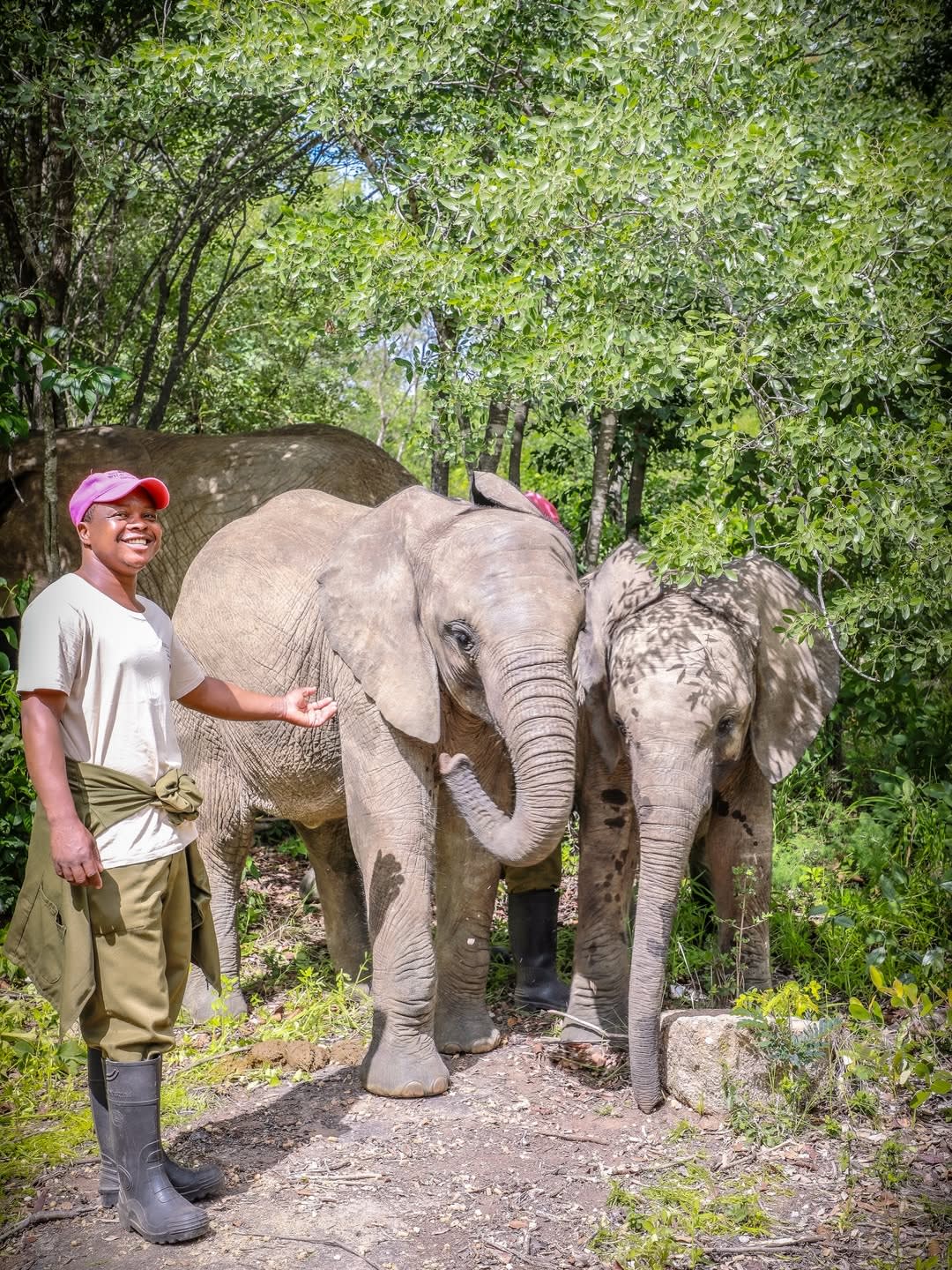
Photo: Taking the herd of orphans out into another beautiful summer’s day …
“We have been reflecting on what we’re grateful for, and a few things shine brighter than the rest.
We’re grateful for this incredible community of friends and followers who stand with us, cheer us on, and support the work we do each day. You make the hard days lighter and the beautiful moments even sweeter.
We’re grateful to be the only sanctuary of our kind in Zimbabwe, a place where elephants and so many other wild souls are given safety, dignity and a real second chance.
We’re grateful for the privilege of easing suffering, offering gentle rehabilitation, and helping animals return to the wild where they belong.
And we’re grateful to play a small part in protecting Zimbabwe’s wild spaces for the generations still to come.
What are YOU grateful for today?”
Hi Everyone,
David here again. I just had to share these images. Don’t they point so exquisitely to the theme of today’s story - to the values of love and connection that transcend all else?
Please help get the word out about this newsletter by sharing with anyone you feel may ‘get it’:
PS
Don’t forget the discounted prices of many of my books in paperback and e-formats. More on that here.
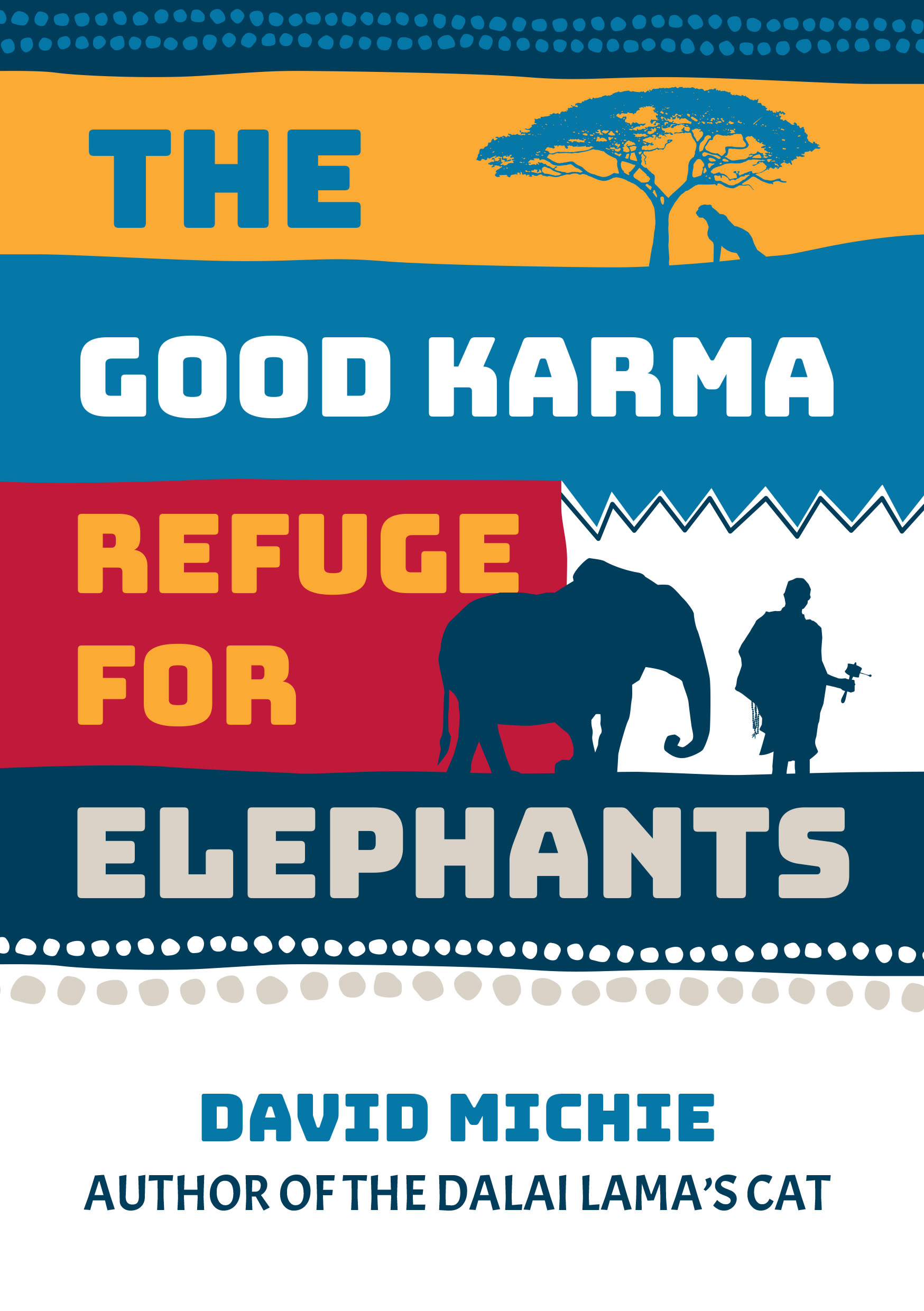
You can get your copy of my new book here:
USA: Barnes & Noble Bookshop.org Amazon (paperback) Kobo Kindle
UK: Waterstones Kindle Amazon (paperback) Kobo
Australia: Dymocks Kindle Amazon (paperback) Kobo
Germany: Thalia.de Kindle Amazon (paperback)
South Africa: Exclusive Books
Zimbabwe: The Booklist at the Hub, 14 Hindhead Avenue, Chisipite, Harare
FOR THOSE OF YOU WHO PREFER TO LISTEN:
AUDIBLE: USA UK Australia and New Zealand Germany
Google Apple Spotify Kobo Libro FM


November 25, 2025
Discounted books as a thank-you!
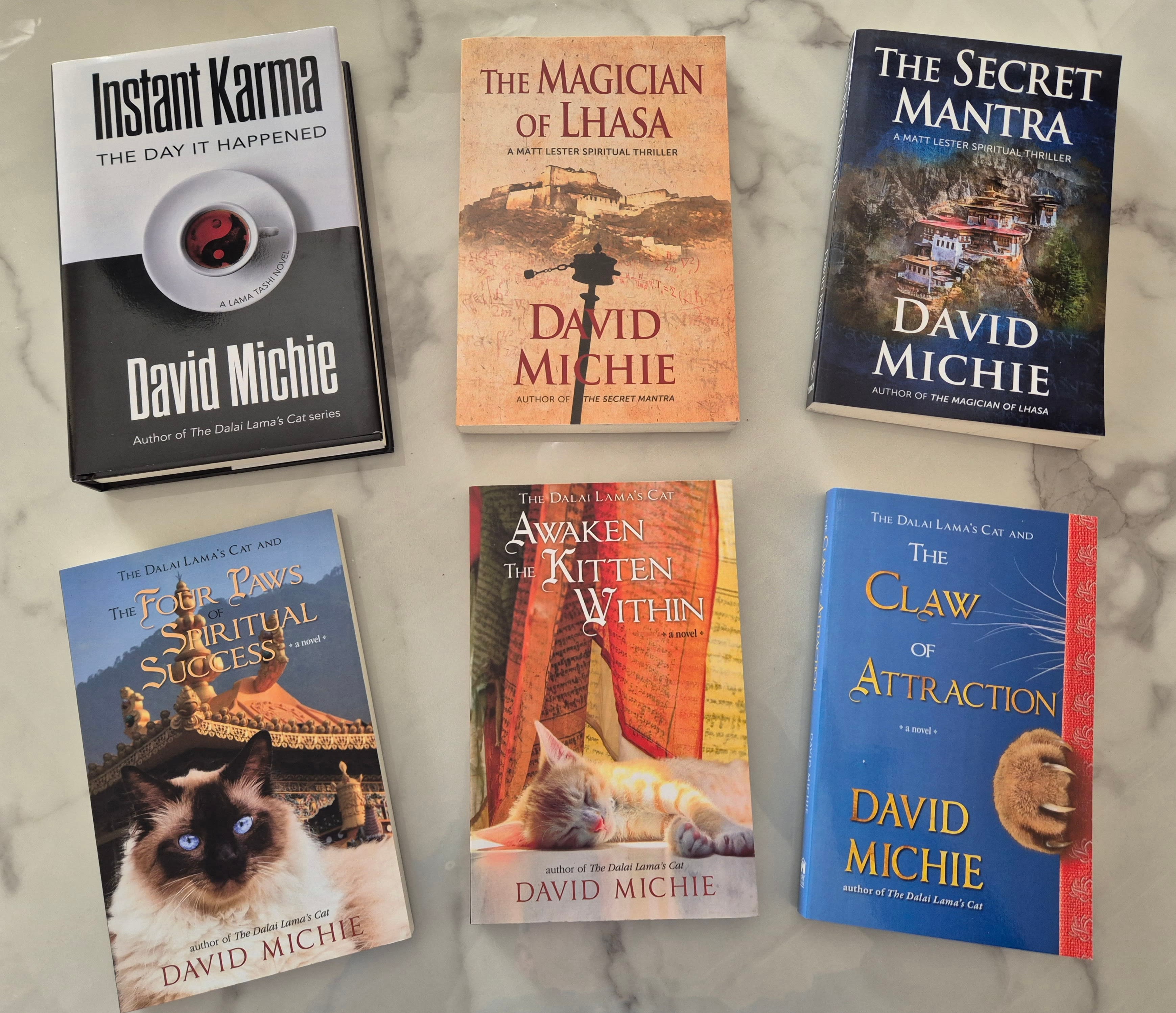
If you’ve been thinking of picking up one of my books—or sharing one with a friend—this weekend might be a good moment. A number of my titles happen to have Thanksgiving/Black Friday discounts.
For anyone who enjoys giving books over the festive season, the paperback editions have been reduced from around $15 each to just under $11.
And if you feel like treating yourself to a Kindle read, they are discounted to $2,99.
These reductions are a way to express my gratitude—for your interest in my work, and for the kindness you’ve shown in helping support vulnerable people and animals.

Paperback - $10.70
Kindle - $2.99 Get “Instant Karma” on Amazon
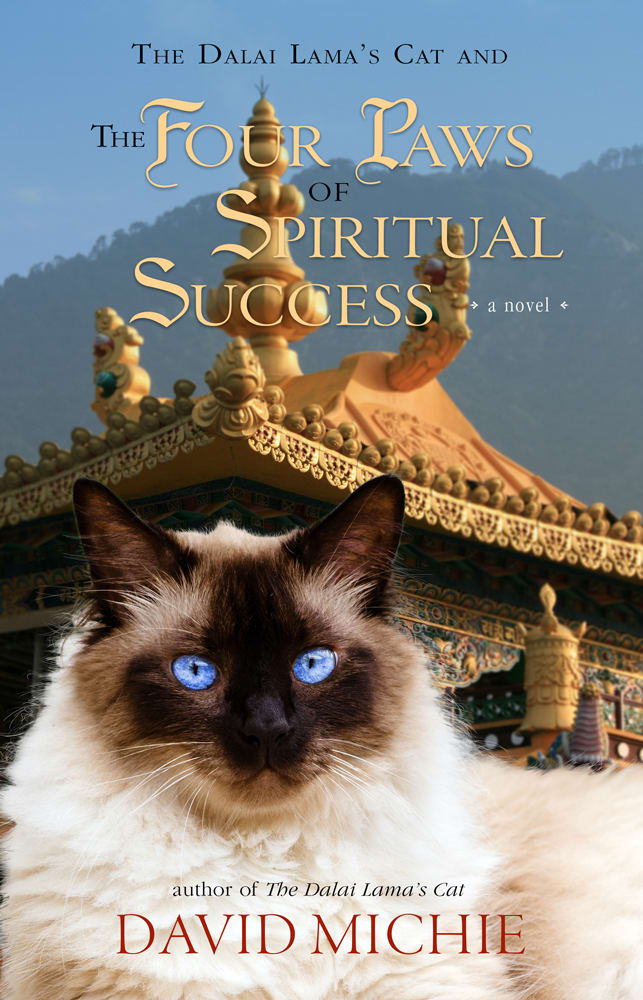
Paperback - $10.50
Kindle - $2.99 Get “Four Paws” on Amazon
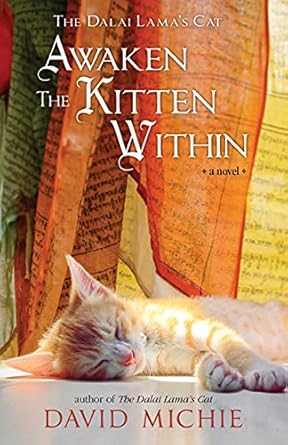
Paperback - $10.90
Kindle - $2.99 Get “Awaken the Kitten” on Amazon
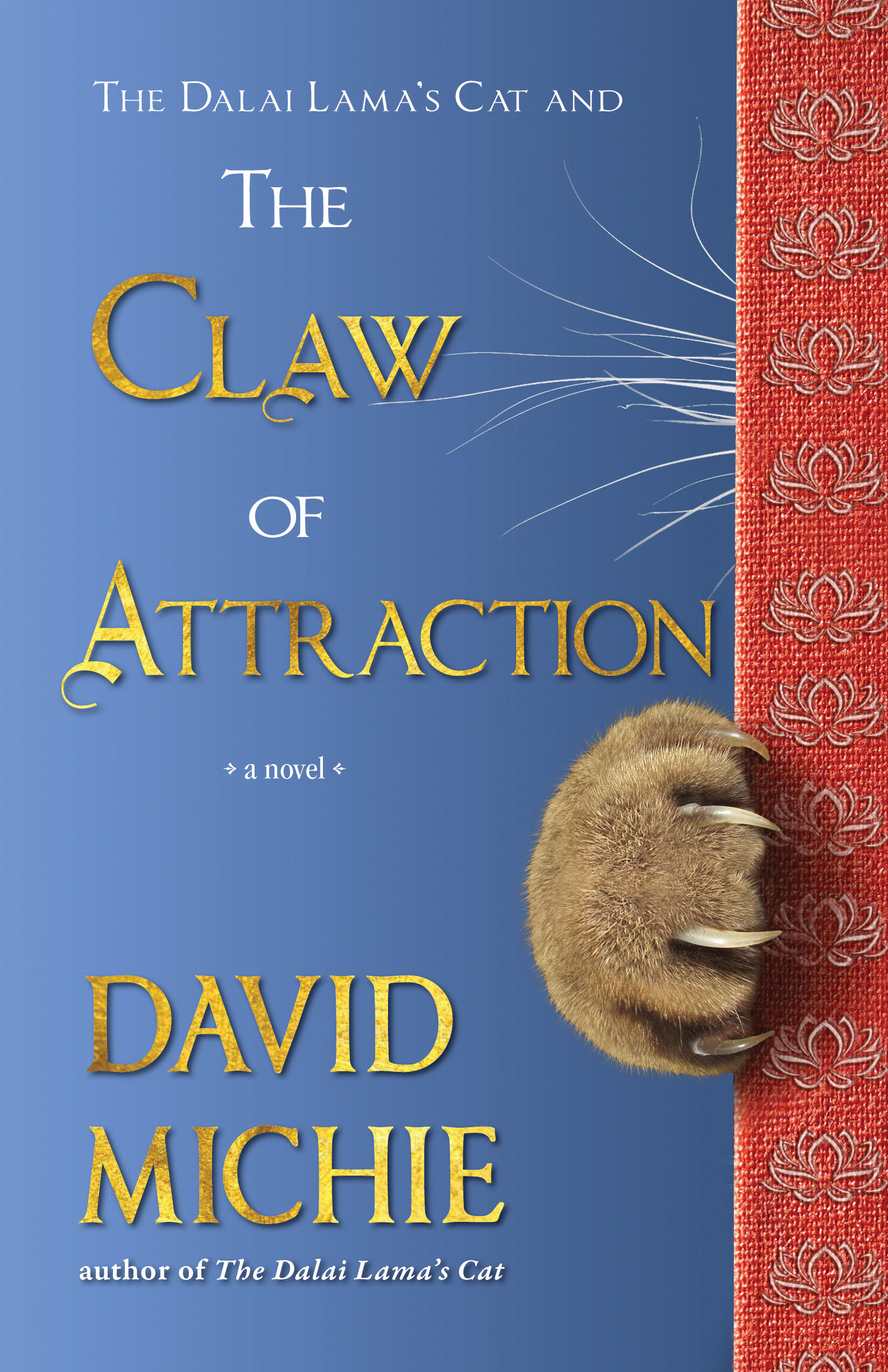
Paperback - $10.95
Kindle - $2.99 Get “The Claw of Attraction” on Amazon
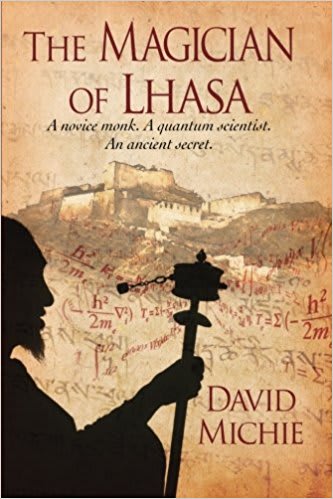
Kindle - $2.99 Get “The Magician” on Amazon

Kindle - $2.99 Get “The Secret Mantra” on Amazon
My new baby, The Good Karma Refuge for Elephants, only came into the world on 14 November, so is not discounted. I’ve been delighted by the beautifully heartfelt reviews I’ve recevied both online and by email.
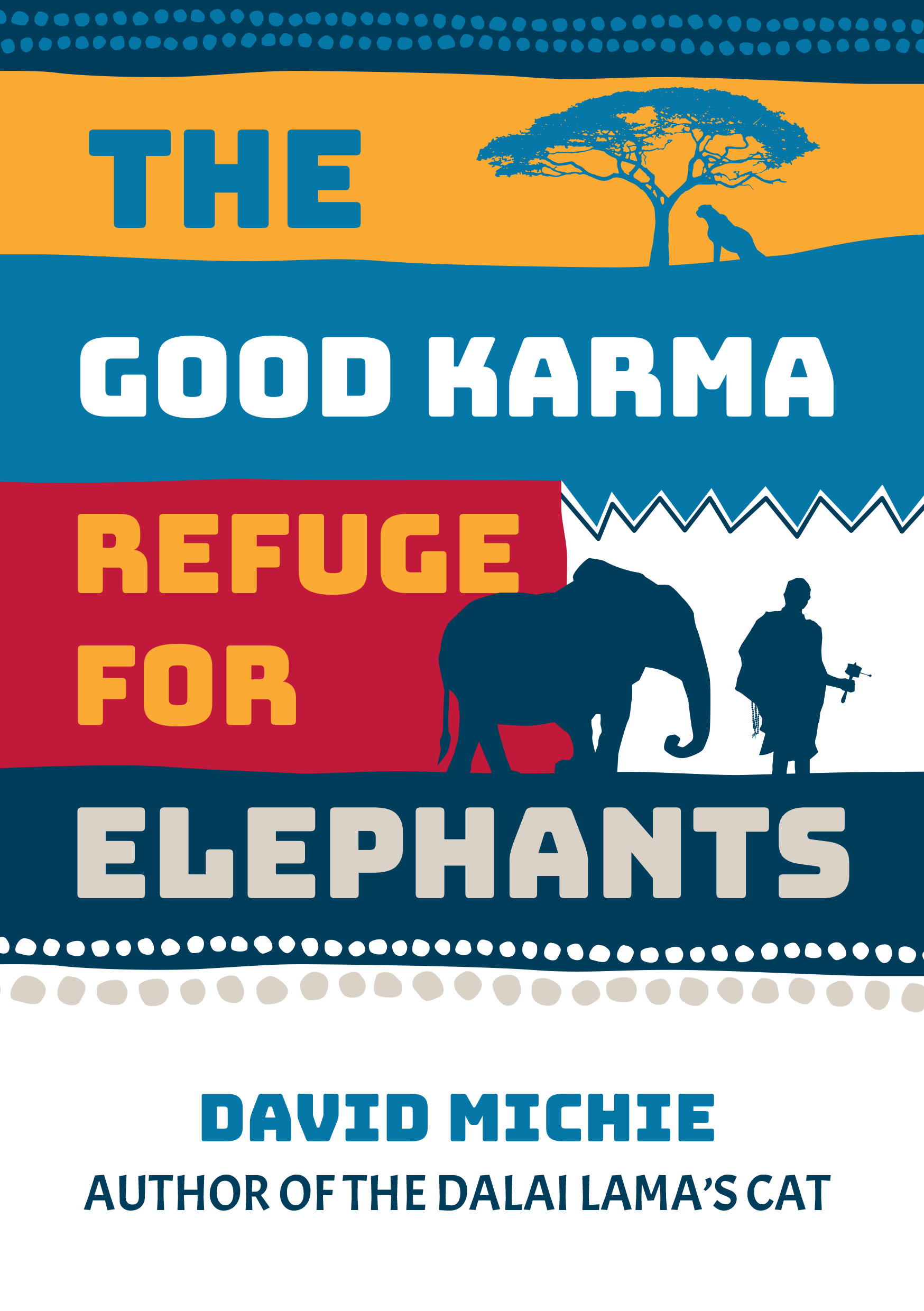
I couldn’t stop smiling as I read David Michie’s new book! K. Martens:
What delightful new characters. I am glad to count Rob, Lakshmi, Riley, Yogi Tarchin among many others that I look forward to meeting again. It will fun to watch Kadiki grow up and challenging to come to understand Bodhi. I am confident I have much learn from their journey in this mesmerizing country. The glossary of African terms and the focus on learning about this part of the world further enriches Michie’s role as a master teacher. I am always most grateful for his well crafted teachings.
As an ardent admirer of HHC I was anxious about the move to this new focus. If you share my concern, please be reassured that this feels like the beginning of a rich new journey.
The extraordinary blessing of animals, Laurie Bradach:
The Good Karma Refuge for Elephants is a quietly transformative novel—one that reminds us how profoundly animals can change the human heart. Michie captures the remarkable blessing of being in the presence of animals: their ability to sense us fully, to draw us into the present moment without a single word spoken. Through beautifully rendered scenes of non-verbal communication, he shows how allowing animals to lead can become its own form of spiritual practice.
Couldn’t put it down. Linda W:
Fantastic book. A weaving of African culture and history, legends, animal facts, Buddhist wisdom, and a good story.
An amazing story, J. Muench:
What a beautiful story!!! I was not sure what to expect but I am a HUGE fan of David Michie, and, whatever he writes, it’s gonna be good!!
He has another enchanting and heartfelt story that feels a bit more personal--a little bit more of David tucked into the main character, Nick. Nick is on the ‘climb the ladder’ hamster wheel in London, where the higher he goes, the less soul-fulfilling it becomes. He travels back to his original home in Zimbabwe to close out his aunt’s estate, and--enter karma! I won’t spoil any of the story, but I can tell you I know this hamster wheel well, or maybe you also have an intimate connection to this ladder you are supposed to climb... there is more out there needing you besides that damn ladder or hamster wheel. I was totally drawn into this story, the descriptions, the smells, the joy and the difficulties... Typical life yes, but what does it take to highlight that the ladder or hamster wheel is just a vapor? An absolutely beautiful story highlighting our interconnectedness to not only other humans but to animals, the land, and the wheel of dharma. Highly recommend!!
Get “The Good Karma Refuge” on Amazon
November 22, 2025
Frayed and tired of it? Rinpoche's three living antidotes.
Dear Subscribers,
Before we head into this week’s post, my heartfelt thanks for your wonderfully generous and excited response to my new novel. The Good Karma Refuge for Elephants is now out in the world, and I really do appreciate all your beautiful messages and kind online reviews.
How lucky am I?!
As we head into the final stretch of the year, I know that many people are, however, feeling a kind of cumulative fatigue that creeps in at the edges. A sense of being worn down by the challenges we face ourselves, or the ones weighing on people we love. A feeling that we are living through permanent crises with no let-up. Over-saturated, overstimulated, and over-it, many are tuning out, disengaging, and curling inward in self-protection mode.
And yet… there is another way to meet this moment.
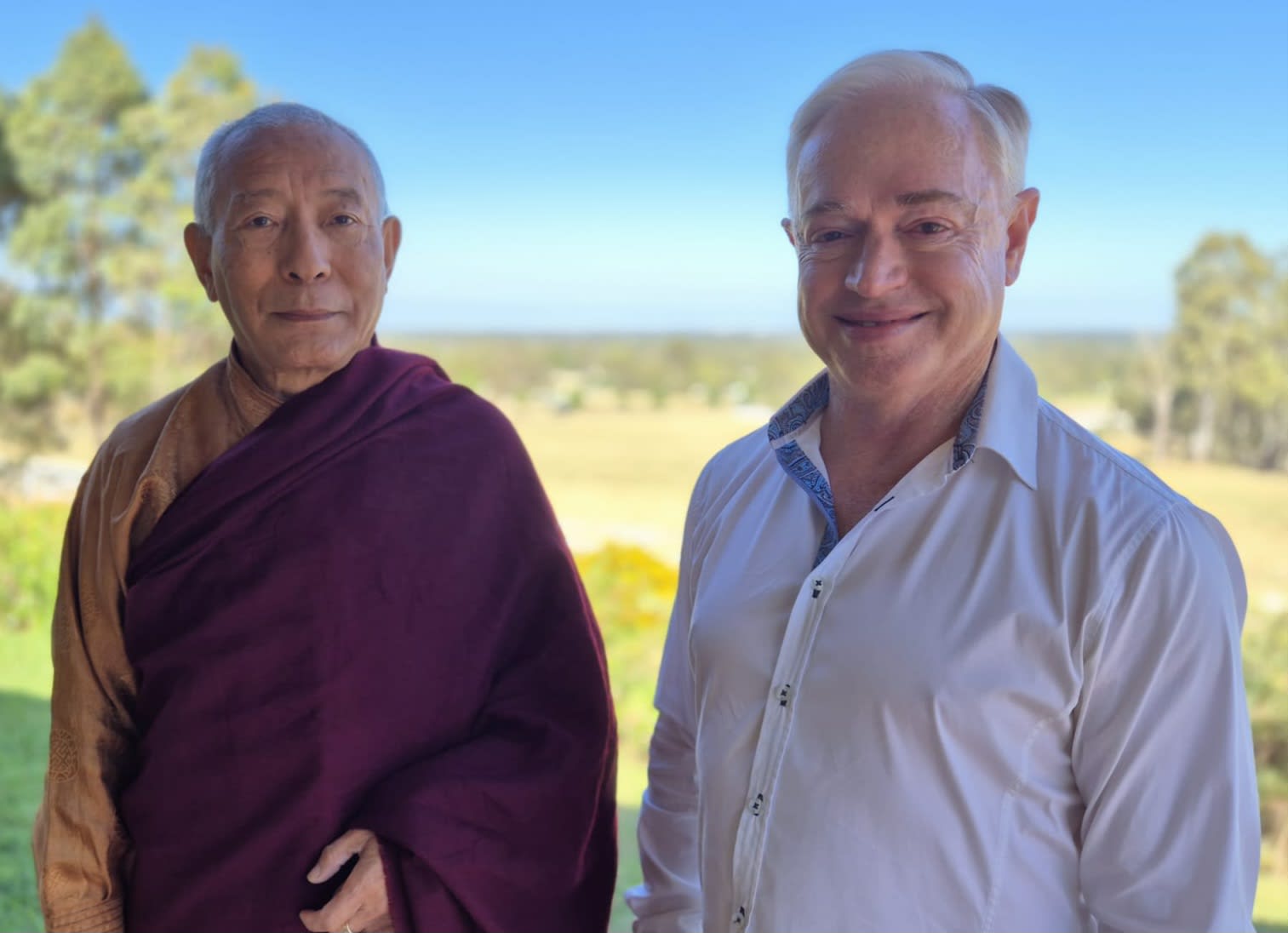
I have just come away from a week in the presence of my kind and precious guru, Zasep Tulku Rinpoche. Based in Nelson, British Columbia, Rinpoche is now almost 78—and in the past year alone he has travelled to Mexico and Bolivia, to his centres across Canada and Australia offering empowerments and retreats, to Africa on Mindful Safari, and to South Korea and Mongolia (twice). In every place, students line up with worries about health, relationships, finances, and family. Students email and message him day and night, from every time zone.
If anyone should be feeling frayed and fatigued, surely it would be him.
But no. Rinpoche moves through the world with a lightness, spontaneity, and irrepressible good humour that is quietly contagious. It is impossible to be around him and not feel lifted. He cares deeply about the world, and he certainly has political opinions—but none of these things define him, or weigh him down. His vision is simply too wide, too compassionate, and too joyful for that.
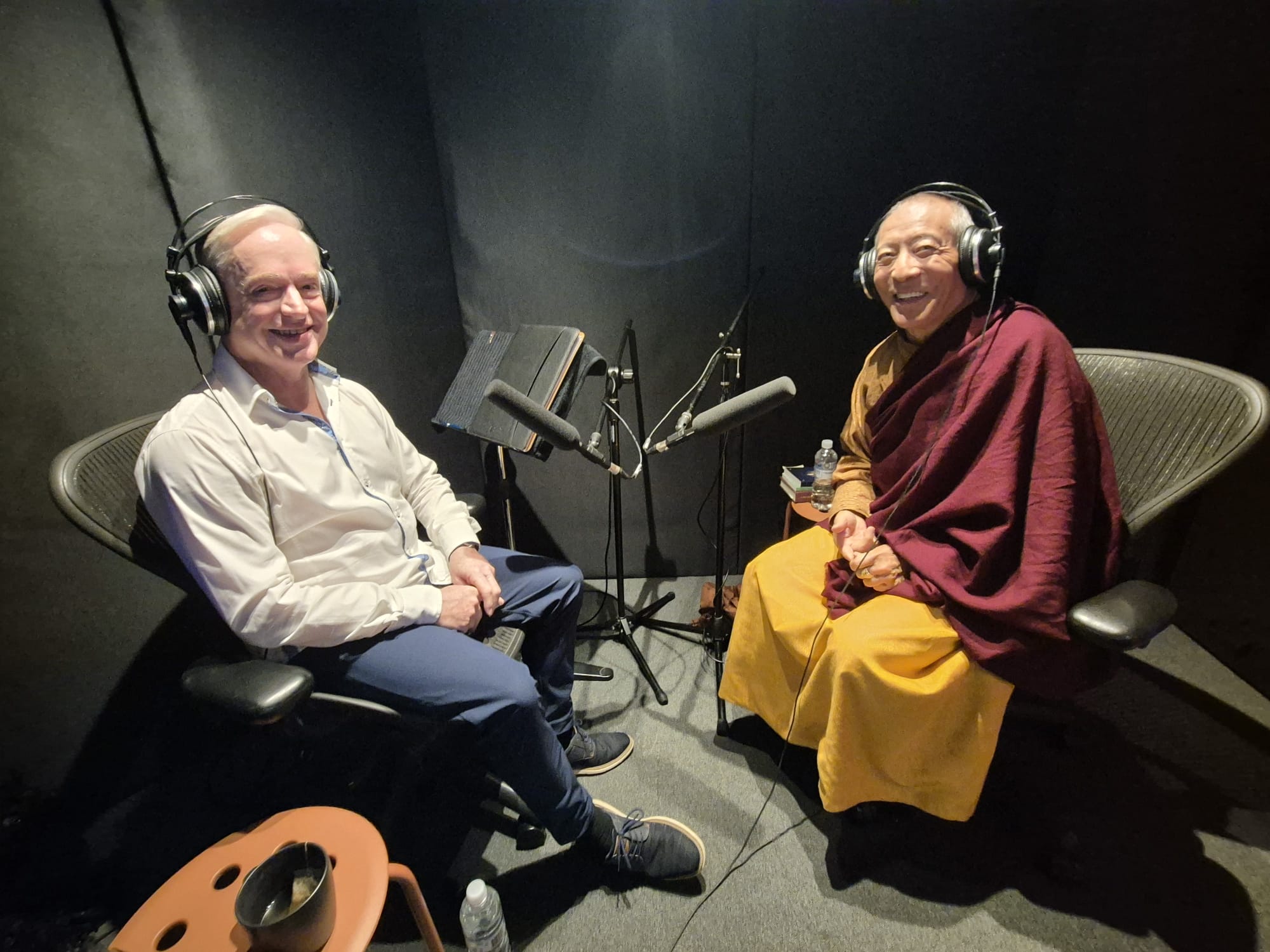
Over the past fortnight I’ve had the privilege of spending long hours recording with Rinpoche in the studio, preceded by a week of teachings at the Tibetan Buddhist Society gompa in Perth. Earlier this year, Koala and I also spent time with him on a special Tara Safari in Africa. With all of this still very fresh in my heart, I wanted to try and capture something of what makes Rinpoche such an extraordinary human being—someone fully in the world, while remaining wonderfully, delightfully untouched by it. Someone I’d like to be more like.
Three qualities stand out as living antidotes for these weary times.
1. Everything arises from mind itselfRinpoche is a yogi, born and raised in Tibet. Recognised as a tulku at five, rigorously trained, and steeped in insight, he lives from the deep knowing that everything arises from mind. Our entire experience of reality is shaped by awareness—not in a “nothing exists” sense, but in the sense that the way things exist for us is a result of our conditioning, habits, and karma.
This understanding isn’t theoretical for him. It’s lived.
Last week, he paused over his Tibetan texts, looked up, and said with typical clarity:
“We can make a decision not to whine and complain and go on about blah blah blah. Only we can do that. No one can do it for us. If we choose, we can focus on positive things. Changing our mind”—and here he mimed changing gears in a car—“is like shifting gear. We can choose.”
This, of course, is a constant theme in what I write about here. Not because it’s new, but because we all need reminding. Me very much included. We are constantly being invited into the trance that reality “out there” is fixed and factual, reinforced minute by minute by social media, news commentary, and conversations with friends.
But as Viktor Frankl wrote after surviving the Holocaust, even when everything is taken from us, we still have the freedom to choose our thoughts.
Marcus Aurelius echoed it:
“If you are distressed by anything external, the pain is not due to the thing itself, but your estimate of it.”
Rinpoche seems to meet each moment unburdened—without baggage or projection, without needing to affirm a particular idea of himself. He comes from openness. From freshness. From a clarity of heart that is almost palpable. And that state of mind is available to all of us.
2. We are multi-life beings, constantly creating our futureThere is a saying in Buddhism:
“If it is about this life, it is not Dharma. If it is about the future, it is Dharma.”
Meaning: the true perspective is the long one.
Rinpoche says he doesn’t remember his previous lives in detail—just odd moments of déjà vu, as many of us have. But what is unmistakable is that he lives with the awareness of continuity, of causes and conditions flowing over lifetimes.
Just as we can look back now on decisions we made in our twenties with a knowing smile—or wince—Rinpoche sees these patterns playing out across lifetimes. Generosity leading to prosperity. Cruelty or selfishness manifesting later as obstacles or suffering.
One day, driving together, we spoke about how difficult it is to explain to good, gentle people that their current suffering may be the result of karma from a previous life—karma they don’t remember. It can feel unfair, almost inhuman. But this isn’t about blame. It’s simply the law of cause and effect at a bigger scale than we usually consider.
Rinpoche often emphasises how negative mental states affect the body. Anger can harm the heart. Sorrow the lungs. Karma plays out over differing timescales, but it can be cleansed at any moment.
The deeper point, which landed again and again in his presence, is this:
Everything that unfolds begins in mind first. Today’s thoughts shape tomorrow’s reality—and the next lifetime’s too.
So when we allow ourselves to be swept into despair by the day’s headlines, we are not just damaging our mood—we are shaping the architecture of our future. Why sacrifice the happiness of lifetimes by engaging with a sensationalised news cycle?
 3. Gratitude is the source of abundance
Rinpoche says “thank you” constantly. He lives in the rhythm of giving and receiving. Born in a Tibetan yurt with none of the amenities we take for granted, he is now a multilingual global nomad—equally at ease with a smartphone as with a vajra and bell.
What struck me again this week is how naturally he lives in appreciation. Tiny things delight him. If he doesn’t get his preferred food or drink, he doesn’t sink into disappointment. He doesn’t complain. There is always something else to enjoy.
What he does possess, abundantly, is equanimity. And equanimity is its own form of wealth. It makes every place, every person, every moment feel workable.
This isn’t just my rose-coloured view as his student. Last weekend at the recording studio, people with no background in Buddhism melted in his presence within minutes. They wanted to help him. They responded instinctively to his humour, his light, his wholehearted attention. It is very difficult not to love someone who sees you so clearly and with such self-evident benevolence.
Summary: Three antidotes for a weary worldIf you’re feeling a little blah, worn out, or weighed down as yet another festive season barrels toward us, I hope these glimpses from my time with Rinpoche help to gently reorient your heart:
• Our experience of reality depends on our mind.
We can shift gears. We can choose a different focus for our attention.
• These precious human lives are fleeting and filled with possibility.
The mind habits we indulge today shape lifetimes. Guard your equanimity as fiercely as you would your most cherished possession.
• Gratitude transforms the ordinary into the extraordinary.
Wonder is not naïve — it is a form of wisdom. And it leads us back, again and again, to a authentic appreciation.
As Rinpoche shows, when we cultivate gratitude, openness, and the quiet courage to return to our better nature, we guide our hearts to where the beauty is.
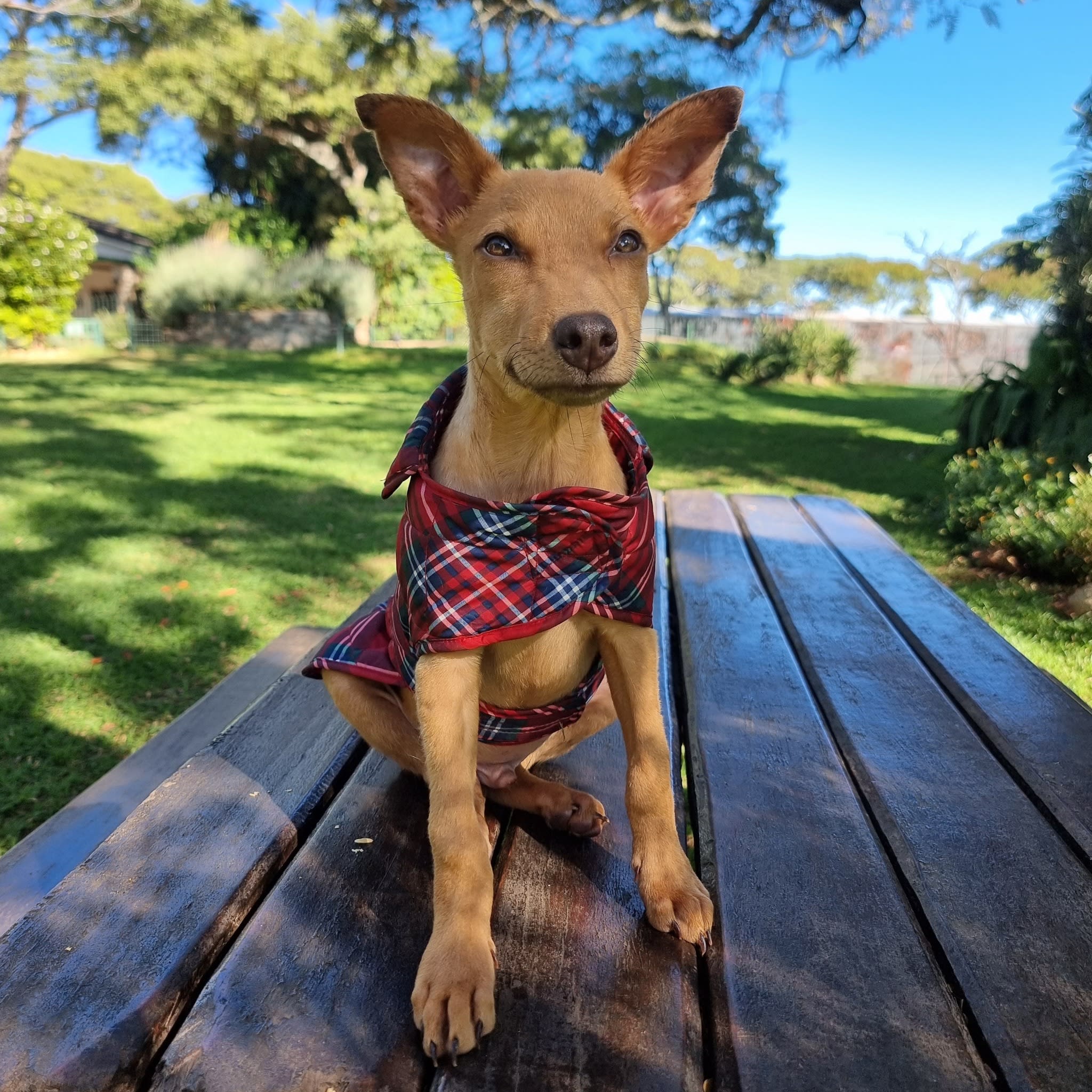
Photo: Biscuit - the dog formerly known as ‘Piglet’
This week’s good news update comes to us from Sarah Carter at Twala Trust, one of the three non-profits supported by paying subscribers:
“‘Piglet’ arrived at Twala with 14 other unwanted puppies. He was the littlest by far and was bullied by the others. Of course our volunteers took one look at that darling face with the biggest ears and the piggiest little snoot and scooped him up to live with them in to volunteer house.
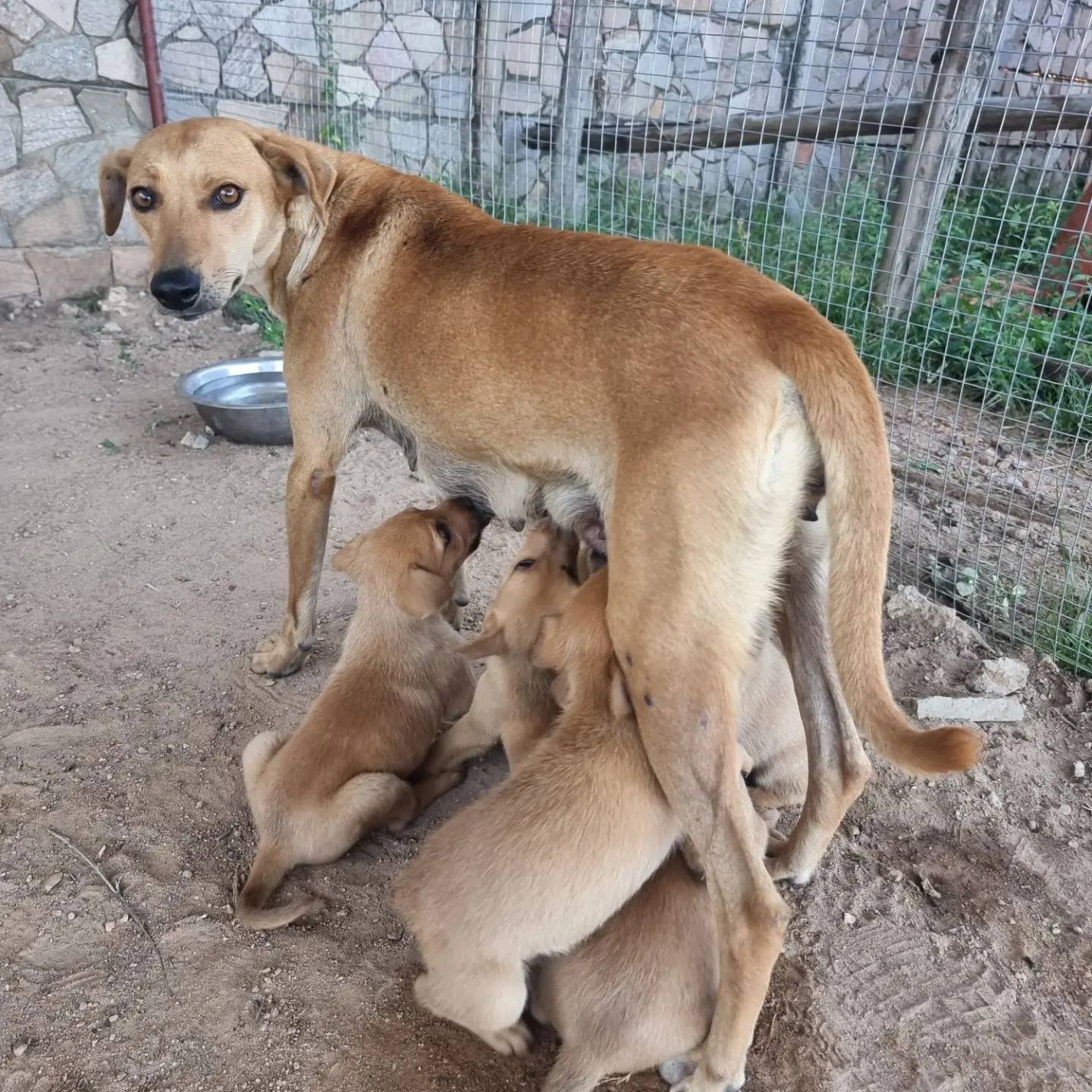
Photo: ‘Piglet’ as one of 14 unwanted puppies when first arriving at Twala Trust in Goromonzi, Zimbabwe
“One by one the other puppies found homes. ‘Piglet’ kept on hoping his special person would find him. He lived with a bunch of old dogs and of course volunteers came and went, and ‘Piglet’ felt he hadn’t yet found his place in the world.
And then he met Andy and his family. Over the course of a few weeks, And, his sons and ‘Piglet’ made that magical connection on visits to Twala, and ‘Piglet’ found his forever family at last.
He had lots of adjustments to make and his family were right alongside him as he learnt, working with a trainer and becoming a Very Good Boy.
When his family returned to the USA, Piglet - now Biscuit - went with them, all the way to Maryland! There he lives the happiest life we could wish for this little African dog!
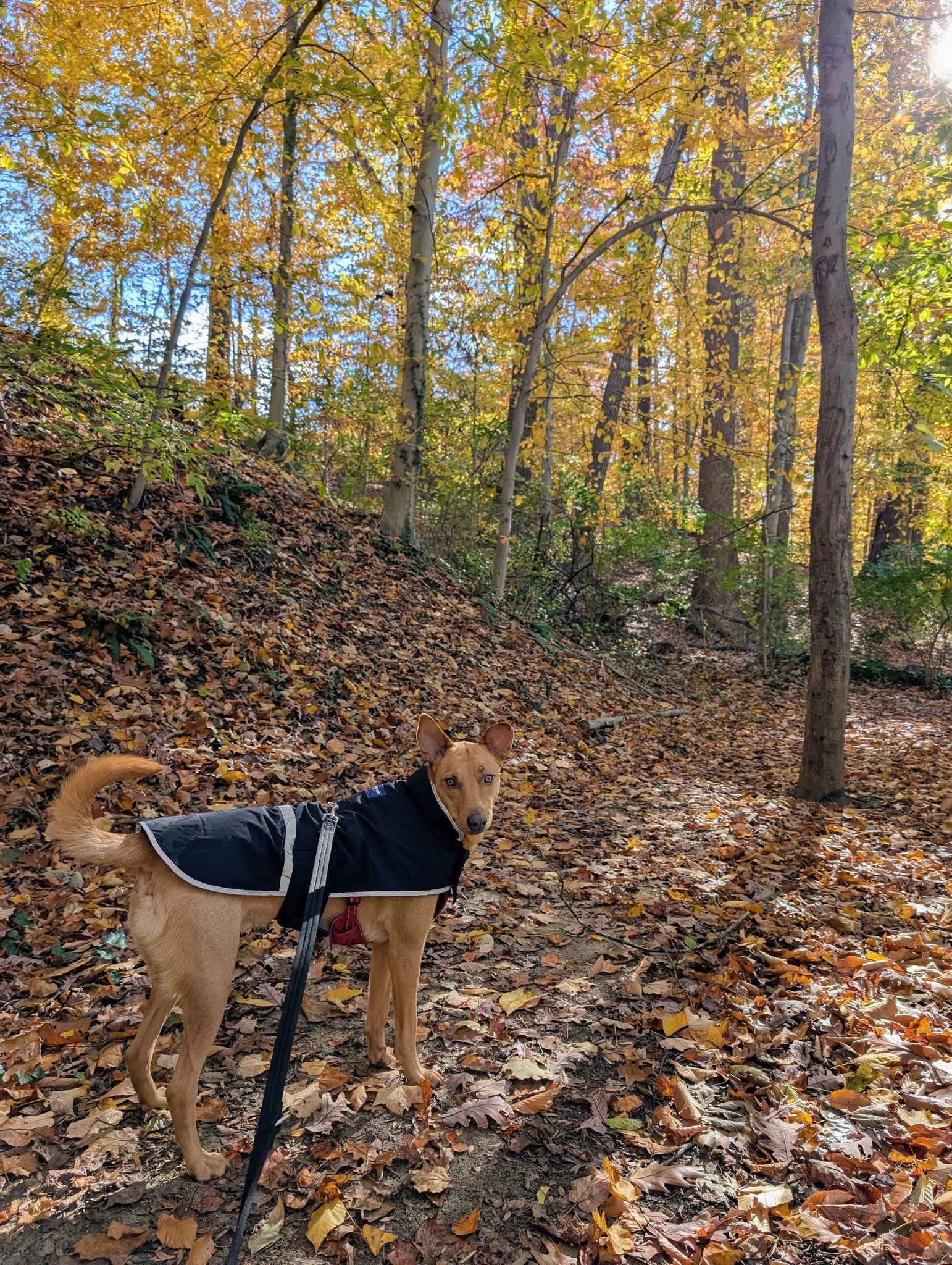
Photo: Biscuit in Maryland. Walkies!
Thank you to Andy and family for choosing ‘Piglet’ and taking him with you to the other side of the world as a part of your family.”
David here again:
And thank you to all the Dalai Lama’s Cat newsletter paying subscribers who do so much to help the ‘Goromonzi Piglets’ of this world become ‘Maryland Biscuits’!
There is something quite magical and deeply fulfilling about playing a small part in these real-life and extraordinary stories of rescue, interconnection and compassion in action.
Whatever else happens today, this we have done.
May all beings have happiness and its causes!
May all beings be free from suffering!
November 15, 2025
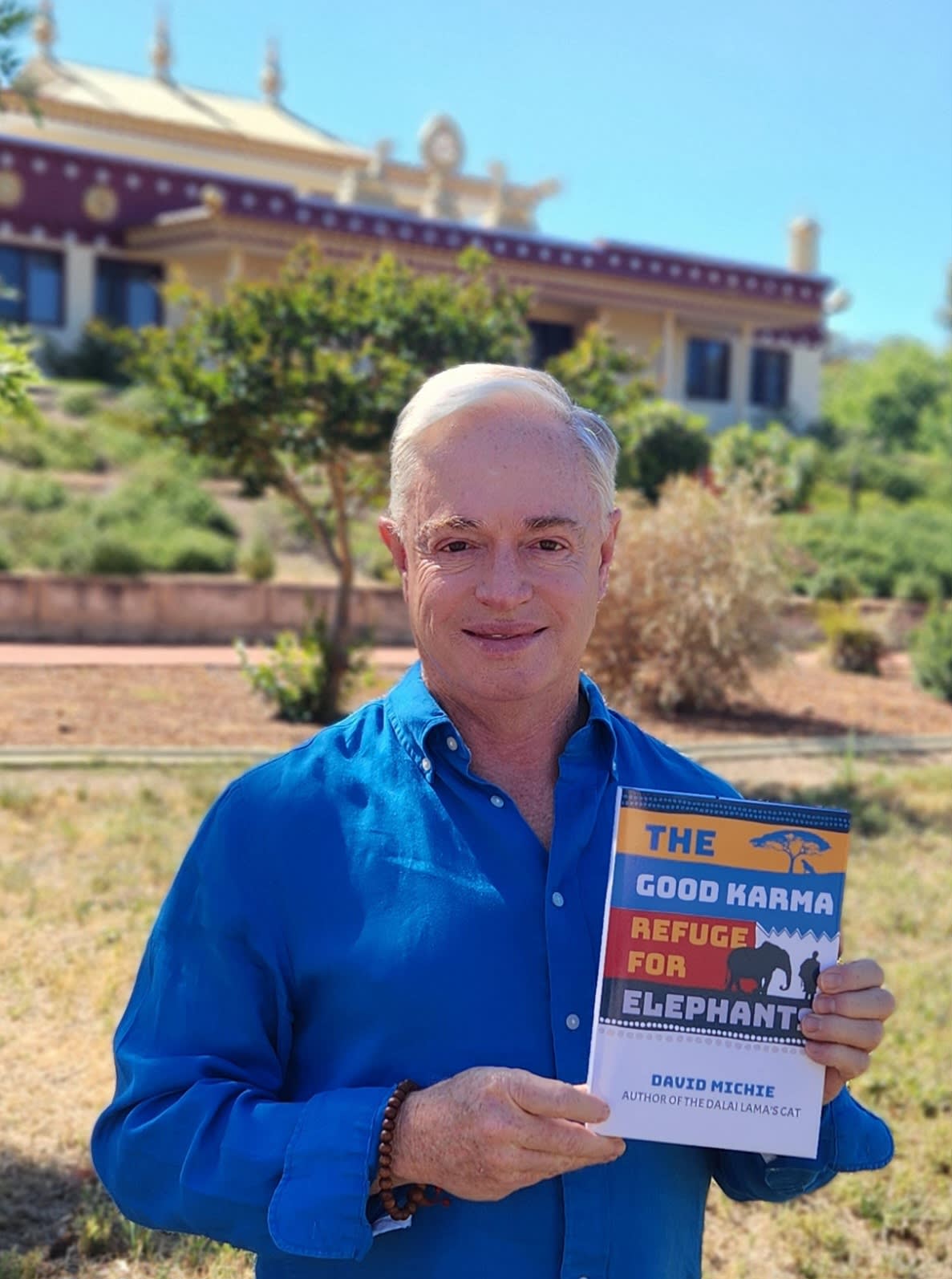
The Good Karma Refuge for Elephants
Dear Readers,
I am delighted to let you know that my new novel, The Good Karma Refuge for Elephants is now published.
Hurrah!
You can get your copy from the usual online retailers as well as bricks and mortar stores which have Ingram accounts.
You’ll find links to where you can order/download the novel at the bottom of this post.
To celebrate with a taster, I am sharing the Prologue and part of Chapter One below.
So find yourself a comfy spot, make yourself a drink, and join me on a visit to my kumusha, my homeland, in Africa …
Prologue
London, UK
NICK BERKELEY chose to make the offer in the timeless elegance of his London club. At an immaculately set table in a discreet corner of the dining room, my mentor and good friend invited me to set up my own fund management business within the investment firm he chaired. I would be independent but would have a constant inflow of money to manage. I could set my own strategies yet be part of a global blue-chip brand. At the age of fifty-six, the opportunity promised to be the most lucrative of my career.
As our meal ended, we agreed that a few details needed to be resolved. Of these, my non-compete period seemed so unimportant that we hardly discussed it.
‘Landers will put me on “gardening leave”,’ I said, referring to the firm where I’d made my name over the past decade. It was standard practice for investment directors who left for competitors to be placed on a period of paid leave during which all contact with clients was barred. Gardening leave was a hiatus during which you were forced to disappear.
‘Six months?’ he confirmed.
I nodded.
‘Devon?’ Nick and his wife had stayed at my country home in the past.
‘Who knows?’ I remembered the email I’d received from Aunt Carrie. ‘Maybe a chance for that long-delayed visit to Zimbabwe.’
‘Ah. Robbie Forbes goes back to his roots.’ He regarded me with a perceptive gaze before prodding me in the chest with his forefinger. ‘Maybe Africa is what makes you different.’
We exchanged a smile. It was a recurring theme of his — how I wasn’t like so many of my fund manager contemporaries. How I was attuned to the longer game.
When the deal went official, several friends whom I told of my unfolding plans were sceptical.
‘Isn’t violent crime really awful there?’ asked some.
‘That’s Jo’burg,’ I answered. ‘Not Zim.’
‘No water or electricity?’ Others looked dubious.
‘Aunt Carrie lives off-grid. She has a borehole and solar panels. Zimbabweans “make a plan”.’ I quoted the unofficial national motto.
I was so settled in my London life and so busy preparing for my time away that the real threat posed by Africa never occurred to me. Even if it had, I would have dismissed it. Perhaps a form of protective amnesia made me oblivious to it. Having been abruptly removed from my childhood world at the end of school, I was heedless about what I would feel when I returned — the forceful, heartfelt jolt of homecoming.
It’s an experience that affects many people, even those with no previous link to Africa. Anthropologists offer a plausible explanation. This place, they tell us, is the cradle of humanity. It’s where our earliest ancestors lived. We emerged into the world from the womb of Africa. She is our mother and her blood courses through our veins. It was she who first held us in her arms, whose soft breath blew on our faces. We may have long forgotten the warmth of her sun on our skin, the caress of her satin dust on the soles of our feet. But when we return, we feel the belonging and we know that we have come home. Whatever we may be used to calling ourselves — British, American, European — much to our own surprise, we discover an earlier identity, for we are all children of Africa too.
In my own case, this revelation was accompanied by one of an even greater order. I could have met my guru Rinpoche anywhere in the world, but it so happened that I encountered him in Zimbabwe. Had I needed to arrive at a particular moment in life for the wisdom he imparted?
When the student is ready, the great inner traditions tell us, the teacher will appear. This process is less mystical than it may seem, suggesting only that whatever wisdom may exist in our lives, until our mind is open to its transformative power we are blind to it.
Before going on gardening leave, I had been a regular meditator for years, encouraged by my godmother Kay to spend twenty minutes each morning focusing on the breath. I benefited in ways hard to describe, but I wouldn’t make any great claims about my practice. However, some subtle but important shift must have occurred, because it seems I was at a place that I was ready for what Rinpoche had to show me.
If I have learned anything from him it is that, far from living in an objective world, how we see, hear, and experience things arises, first and foremost, in our minds. This reversal of assumptions has the most extraordinary significance. Not least that if we wish to experience reality in its most exquisite form, we don’t need to change the world around us or wait to go to heaven. By cultivating the mental causes, transcendent states are available to us here and now.
Africa nudges us towards a different way of being. She re-awakens us to a long-forgotten past when we lived with the immediacy of children, the innocence of young lovers, an openness we may believe was irretrievably lost.
When we can find simple joy in the dawn fragrance of African violets or the babble of bulbuls in the shrubs, in sweet wisps of mopane wood smoke from a village fire or in soulful gospel choruses rising from beneath a distant winter thorn tree, when no matter what streams through our senses we are filled with an unaccountable wonder, we know how it may be possible to leave our jaded selves behind. To let go of whatever notions we cling to and live with the same easy spontaneity as Rinpoche himself — a way of being where the heart is more benevolent and outward focused.
All of which brought me to a dilemma: Having tasted this exalted reality, at what point was I ready to return to my London life of long hours, relentless pressure, and untold riches? When should I tear myself away from Africa to apply what I had learned from my guru to the ‘real’ world?
It is a dilemma faced by each of us who has the immense good fortune to sit in the presence of a realised being and to feel the awe of connection ripple through eternity.
 Chapter One
Ruwa, Zimbabwe
‘THEY’RE HERE!’
On Ruwa Rock, three villagers exuberantly waved their arms. From the top of the kopje, the huge, eggplant-shaped granite boulder that balanced dramatically at the bottom of the garden — they could see the whole district below: a sun-baked sprawl of brown scrub and brittle trees. On this clear November morning, any vehicle turning off the main road would send up a trail of dust at the moment it turned onto the dirt track.
Down at the car park, the band struck up. Organising today’s events with her usual joyful exuberance, Diva Derembwe had persuaded two marimba players and three drummers to accompany the welcoming committee who burst into Shona chorus. The sudden outbreak sent a troop of vervet monkeys scrambling through the msasa trees. The monkeys, in turn, set off Sonny and Cher, peacock and peahen, occupying their usual perches at either end of the thatched roof above us. As they brayed loudly, Mampara the wildebeest glanced up from the lush-green lawn before shaking his horned head with a dismissive snort.
Along with others lining the hallway of the former homestead, I took the white scarf out of my pocket, preparing for our visitor. Yogi Tarchin was the very first Tibetan teacher to visit the Ruwa Buddhist Society, and one of only a handful of lamas ever to visit Africa. Standing beside the large, snowy-haired Harris Gould, who along with Diva comprised the Ruwa Buddhist Society, I felt I was here under false pretences. Not only was my understanding of Buddhism shaky to say the least, I wasn’t even a local. Not really.
I caught a glimpse of my reflection in a clouded, gilt-framed mirror and brushed a grey lock off my forehead before straightening my jacket. As I caught the tang of creosote from the tarred poles above merging with the equally long-held memory of Cobra Floor Polish, I thought how unlikely all this was. True, I was a willing participant in today’s cheerful if quirky event, but it didn’t seem to have much to do with me.
The singing and clapping rose to a crescendo as a battered Land Rover pulled up under the msasas. All of us in the hall turned to peer into the distance as the passenger door of the vehicle opened and a slight figure in a yellow shirt and ochre pants emerged. Diva greeted him with a deep bow and a proffered white scarf. Accepting the scarf, he raised it in his hands and, in the traditional Tibetan custom, placed it around her neck in blessing. Several more such offerings were being made by other greeters. As Himalayan etiquette was observed with impeccable formality, yards away the band whooped and jived with unrestrained vigour.
Diva ushered the lama towards the house. But Yogi Tarchin had other ideas. There was a lightness about him apparent even from here. An irrepressible spontaneity. Turning to the musicians, he smiled broadly, clapping in rhythm. They responded with an appreciative lurch in volume. Several greeters needed no further encouragement and were soon dancing next to their VIP visitor. Village children materialised from nowhere, stamping their feet joyfully in the dust. The rising music level sparked a renewed frenzy among the vervet monkeys, who swooped dangerously low through the canopy, barking with excitement. For a moment it seemed that Yogi Tarchin’s welcome might go chaotically off-course.
But then he turned to Diva, who was waiting in a fawn-coloured dress and high heels, perfectly tailored, as for every occasion. Dark hair falling in elaborately coiled braids, woven through for today’s visitor with threads of red and gold, she guided the lama through the trees onto the emerald-green lawn that formed a luxuriant runner up to the house.
~
Forty-something Diva was a force of nature, compelling your attention with a combination of girlish frivolity and commanding power. Large, emotion-filled eyes decorated with startlingly brilliant eyeshadow would turn from deeply imploring to ecstatically grateful in an instant. Within moments of meeting, you’d feel connected to her seemingly boundless warmth. It was only because of Diva that I was here.
When Diva was a young woman two decades ago, experimenting with organic skin care products in the kitchen of her Chisipite home, Aunt Carrie had been her business mentor. Since then, Diva’s Treasure Trees Apothecary business had grown from a cottage industry to a national brand, Diva becoming a local business celebrity. Fervent about the power of Zimbabwe’s indigenous trees as a source of healing and beauty, Diva was on a mission to popularise her unique range of baobab, kigelia, and other products.
When I’d travelled from London six weeks ago to help Aunt Carrie through cancer treatment, I’d soon met Diva, who was a regular visitor. When Carrie’s health, instead of responding positively to treatment, took a grave turn for the worse, it had been Diva who’d arranged hospital admission at short notice. Diva who knew exactly how to access the best medical specialists. Diva who had helped Carrie and me as we found ourselves approaching the precipitous end.
Instead of supporting my mother’s sister, the last of her generation in my family, through what was nothing more than a bothersome bump in her return to full health, I had ended up moving her from hospital to hospice and, days later, holding her hand as she passed away.
Carrie had made me the executor and a beneficiary of her will. She didn’t own much — the house, a car, a modest amount in savings. There were a few items she wanted given to friends. It was a simple estate to dispose of. But what to do about her gardener with the dazzlingly optimistic name of Marvellous? He had worked here for well over a decade, and in a country where nine out of ten people were unemployed, his chances of finding a new job were non-existent.
What of Thor and Tiki, Carrie’s wolfhound and Jack Russell respectively, who had only ever known life in this Ruwa house and who, in Carrie’s absence, were increasingly bonding to me? What of the birds in the garden that Aunt Carrie fed every morning — a practice I continued? The village man who visited to sell her vegetables every Thursday morning? Mr Buba, a not-so-regular but no less important visitor, who made sure her inverter and generator worked smoothly when there was no electricity available — which was most days. A vulnerable ecosystem was coming to an abrupt end.
For the time being I stayed in the guest bedroom as I began wrapping up things. It wasn’t how I envisaged spending my gardening leave, but having applied for probate, it would be at least two weeks until I could finalise the estate and depart.
~
I was emptying cupboards early one afternoon when I heard a car coming up the dust driveway. Thor and Tiki launched into a frenzy of barking. They settled when they recognised the car. It was Diva’s Land Cruiser, the vehicle of choice for navigating Harare’s dangerously potholed streets.
‘It’s not a social visit,’ she explained, emerging from the cab wearing a bright floral top and white pants. Her eyes searched mine, and mine hers, with the intimacy that comes from shared grief.
‘We have a Tibetan lama coming to the Ruwa Buddhist Society on Saturday. You’ll be his neighbour, so I thought you might like to come as well,’ she said, placing the emphasis, in that curious way of some Zimbabweans, on the “as”.
‘John Elliott’s place, right?’ I pointed across the garden.
She nodded. ‘He left us the property.’
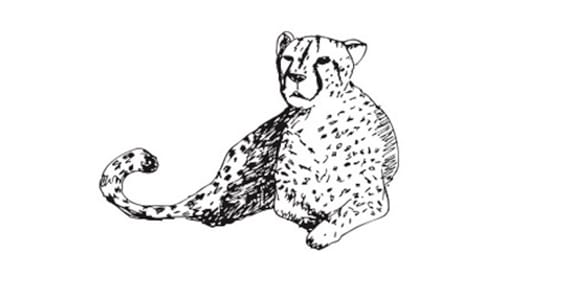
I remembered Carrie telling me how her neighbour of over thirty years had set up a charity to make sure that his cheetah was looked after when he died. He had stumbled across Bodhi in the bush as an abandoned cub just weeks old. Unable to find her mother, and with the cub’s life in danger, he had reluctantly taken her home to raise, with the mothering of his domestic tabby cat, Football. Bodhi had grown quickly from mewing cub to lithe and muscular big cat. All efforts to rewild her ended in failure. No matter how suitable a release site they took her to, she always returned to John, Football, and the place she regarded as home.
John came to accept her as his constant if unlikely companion. When people went to visit him, they’d find Bodhi sprawled on a sofa beside him or lying in a patch of sunshine nearby. John became known locally as “the cheetah guy”, the two of them even finding fame in a small way. There had been a few magazine articles and an appearance on a National Geographic documentary.
What neither John nor anyone else predicted was how Bodhi would react when John’s time came to pass. He had died in his sleep one night at home, three years ago. By the following afternoon the cheetah had vanished, never to be seen again. The irony escaped no one: The whole reason John had set up the Ruwa Buddhist Society walked out the door the day he passed.
‘Will the lama stay long?’ I asked Diva.
‘A few days,’ she shrugged. ‘Week or two at the most. It’s up to him. When we heard about this Rinpoche visiting his brother up at Hwange, we got in touch and asked if he’d be willing to offer us a teaching.’
‘On Saturday?’ I confirmed.
‘I know you meditate,’ she responded to my hesitancy.
‘Just basic breathing stuff.’
‘Come along!’ she beamed, her dangly bead earrings glinting in the light as she hooked me with her most persuasive appeal. ‘Carrie would.’
It was true. Carrie’s sense of community would take her next door, and she would probably also have been curious to meet a Tibetan lama. Although she wasn’t religious in any formal way, in her last days at the hospice we had spoken freely of her imminent death and I’d been struck by how accepting, even positive she was about it — which made it easier for me to be accepting also. A near-death experience over a decade before had changed the way she felt about transitioning, as she called it. Her equanimity had been authentic. ‘Don’t waste any tears over me, Robbie,’ she’d smiled on her pillow. ‘I’m looking forward to what comes next.’
Diva and Yogi Tarchin were halfway up the lawn. John’s former homestead comprised three large rondavels linked by broad passages in a sprawling crescent-shaped structure, all beneath a magnificent sweep of silver-grey thatch. Under the eaves, a string of vividly coloured Tibetan prayer flags fluttered in the breeze.
I wondered what the lama made of this oasis in the veldt. Shielding his eyes from the sun, he took in the immensity of Ruwa Rock, and somewhat closer, the long necks of Debbie and Kim, John Elliott’s giraffes, who stood motionless in the distance observing the ruckus at the house. The lama chuckled on catching sight of a family of warthogs, affronted by the continuing din in the car park, sprinting across the lawn, tails aloft like radio aerials — Mum, Dad, and three piglets. An elegant pair of crowned cranes paused hesitantly in the shade of a gigantic flamboyant tree, observing the arrivals with their fine golden plumes raised on full alert.
Suddenly Rinpoche and Diva were out of the blazing sunshine and inside with us. In the flurry, dust motes shimmered in a mid-morning glow. One by one, we indoor greeters offered the lama our white scarves.
Other than bringing a scarf, I had not prepared for this encounter, nor did I expect anything in particular. But now that it was happening, I felt the strangest sensation. Not on account of Yogi Tarchin’s appearance, although his warm brown eyes, ageless face, grey moustache, and goatee gave him the look of an archetypal eastern sage. Rather, it was a radiant sense of lightness, of joy, that seemed to emanate from him. The ineffable sensation that even though you could see and touch him, his presence was somehow more energetic than physical. As if his body were hardly there at all.
As I bent in offering, our eyes met. In that instant, it was as if Rinpoche gazed through the person I usually took myself to be and saw something more panoramic. Not a 56-year-old businessman who had returned to the country of his birth to take care of an ailing aunt and now found himself in limbo. Instead, a boundless reality beyond that, one from which I had been for so long disconnected that, incredibly, I had forgotten it was even there. So benevolent was Rinpoche’s expression, however, so wholehearted his acceptance, that I felt a surge of the most powerful emotion. In his gaze was all the reassurance I could hope for, that however things appeared to be, beneath the surface, all was well.
This entire experience happened in an instant — then he was moving on. I could tell it was the same for the others who encountered him. The briefest pause. The meeting of eyes and hearts. The upwelling of emotion. Next to me, Harris Gould brushed at his cheek.
Early reviews posted online in the past 24 hours …
Pamela Barit Nolan *****
Each one of David Michie’s books seems to touch my heart more deeply. I read this latest book in a day, devouring each chapter and reflecting on my own journey through life. The characters are beautifully developed and the descriptions of the natural world exquisite. The interconnected relationships between humans, animals and nature remind me to be fully present in order to drink in the present moment and not to miss any amazing detail of the world that we live in. I encourage all readers to dive into this story with hearts open. Pay attention as David leads us through this story – ask yourself how each chapter might relate to you and the choices you are making in life. I hope we all find the profound sense of peace and purpose that the main character of this story is able to embrace.
AR *****
Combining lush descriptions of the African veldt, an animal sanctuary, and a beautiful experience of Buddhism, Michie’s character has returned to the place of his birth for an unexpected series of new adventures. Even those who are not as interested in the Buddhist perspective will delight in Kadiki, the tiny orphan elephant who lights up the story, and the mysterious cheetah, Bodhi. I recommend this book as an escape - a refuge - from the terrors of the world right now.
Kimberly L Novak *****
David Michie’s The Good Karma Refuge for Elephants is a charming, uplifting read that beautifully blends the spirit of Zimbabwe with touches of Tibetan philosophy. Michie has long been gifted at weaving Buddhist ideas into engaging stories, and this book is no exception.
The novel is told through the eyes of Rob, whose transformation begins when he meets his guru. The cast of human and animal characters are written with such personality you feel like you know them. For readers who savor quiet, comforting stories, who delight in African cultures, who are drawn to Buddhist wisdom, and who cherish animals, this novel shines as a little gem waiting to be discovered.
Karen LeCocq *****
Another excellent book by David Michie! I have been a fan of his books for many years now, both the fiction and non fiction. I did not think he could top his Dalai Lama’s Cat series, however, this book immediately caught my attention. (Perhaps because there is a very strong cat presence in the story, illusive and almost mythical.) I really admire the teaching quality in all of David’s books, even in his fiction. I always learn from them while also being immerse in a powerfully moving storyline. He has a real talent for entertaining his readers and enlightening them at the same time. This book is no exception.
Donna J Parkinson *****
Another lovely inspirational story by David Michie. You can easily visualize all the beautiful animals, flora and fauna of Africa encountered by the characters. The story is illustrative of David’s own journey from marketing to Buddhism and following one’s spiritual path. But I forget not to read his books on a plane. My seat mates always notice me wiping the tears that squeeze out while I’m reading the touching story. Definitely a good uplifting read!
Becca *****
A most engaging account of one man’s unexpected journey from the corporate rat race to the tranquility of purpose found. Michie seamlessly melds Zimbabwean traditions and culture with Tibetan Buddhist wisdom and practices into a fascinating story of awareness and belonging. This deceptively easy read evokes a sense of enchantment, providing deep insights along with enigmatic and lovable animals, exotic flora and charming human characters. Highly recommend!
To continue reading, get your copy of The Good Karma Refuge for Elephants in paperback, hardback, e-book or audio formats by clicking the links below:
USA: Barnes & Noble Bookshop.org Amazon (paperback) Kobo Kindle
UK: Waterstones Kindle Amazon (paperback) Kobo
Australia: Dymocks Kindle Amazon (paperback) Kobo
Germany: Thalia.de Kindle Amazon (paperback)
South Africa: Exclusive Books
Zimbabwe: The Booklist at the Hub, 14 Hindhead Avenue, Chisipite, Harare
FOR THOSE OF YOU WHO PREFER TO LISTEN:
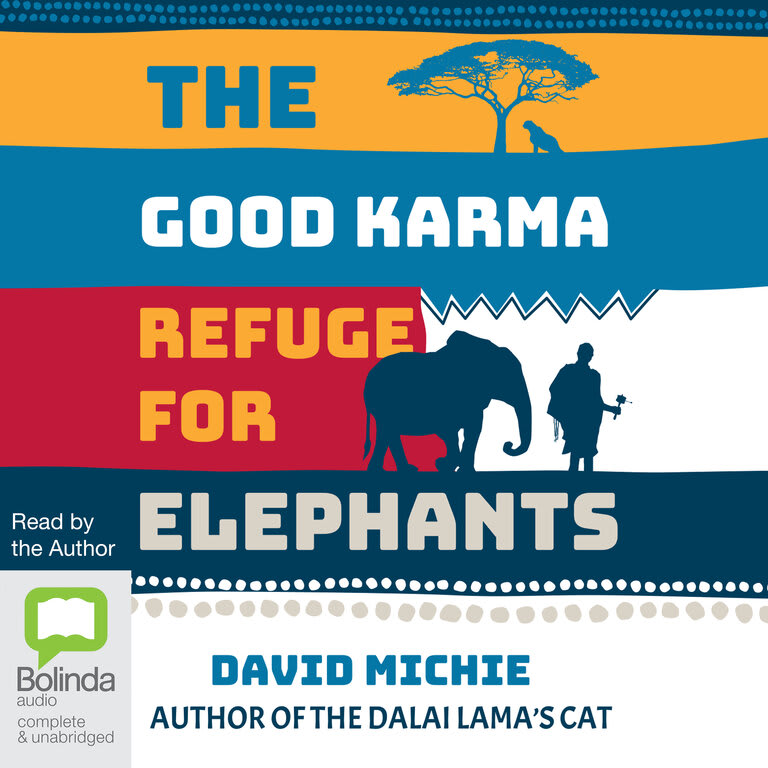
AUDIBLE: USA UK Australia and New Zealand Germany
Google Apple Spotify Kobo Libro FM
Please share the news of my new novel with anyone you feel may be interested.
November 8, 2025
At last! A clear idea of where Budda came from

‘Transmission’ is a word we often hear used about receiving teachings – whether in person or through writing. As a boy, way before the days of internet and wifi, late at night I used to lie in bed listening to long wave transmissions from overseas radio stations on the small, portable radio that was my prized possession. There was something exciting, in a clandestine way, being able to tune into radio stations that weren’t censored by our government which was doing all it could to preserve its version of reality – a starkly different version from stations in Holland and UK.
Some longwave radio transmissions were much clearer than others. There was so much static that many were impossible to hear. This is the notion of ‘transmission’ I brought with me to the Dharma, where we learn that what is happening is not simply a downloading of information from teacher to student, but a more subtle process.
In Buddhism, we study not for information but transformation. We are seeking not to accumulate knowledge, but to shift our mental behaviour, thereby changing our experience of reality. So, when a teacher sits in front of us, more than a purveyor of facts, she is seeking to motivate, to energise our practice, to transmit. And some teachers - like some radio stations on my little portable set – sound much clearer to us than others.
Our next-door neighbour may have a different experience. Thanks to the vagaries of the air waves and different transistor sets, they may find other stations easier to listen to. And that’s perfectly fine. The main thing is to find a useful source of wisdom and stay tuned!
I feel incomprehensibly lucky to have found such a radio network for my Dharma inspiration. Nevertheless, it can be stimulating to turn the dial sometimes to hear what else is being broadcast. One such broadcaster I discovered is Simon Haas who, despite his European name, is a teacher from the Hindu tradition. Buddha himself grew up in a Hindu culture, and I have often felt remiss not knowing more about the context which shaped his worldview.
If you feel similarly uninformed, you may find ‘The Book of Dharma’ a wonderful read. I found myself utterly engrossed, recognising the place from which many concepts I thought of as ‘Buddhist’ came, and inspired by the many parables and stories woven throughout this beautifully-written book.
I have struggled in the past to read commentaries about Hinduism. I have come away bamboozled by the plethora of deities, and shocked by some of the practices associated with them. I have also found it hard to reconcile the dramatic metaphysical chaos with the profound wisdom embodied by some Hindu sages. ‘The Book of Dharma,’ however, is like finding a radio station refreshingly free from static. It introduces us to wisdom with a relatable clarity and simplicity.
As usual, rather than me write more about the books I enjoy, I’d rather offer you a few of the quotes I highlighted while reading, so that you too can enjoy a few moments of transmission directly.
As you read through these, I hope you may catch a glimpse of some inspiring gems of wisdom to take back to your own reality, points to ponder in your own practice.
Some exotic lands have mines of sapphires and diamonds. Others are rich in silver or gold. Some, like India, have hidden treasure troves of wisdom. The sages of India believed, however, that there is only one wisdom in this world, which does not belong to any single nation or culture. That wisdom came to be known as the philosophia perennis – universal truths that transcend time and space.
This reminds me of how Mahatma Gandhi once said that “Hinduism includes all religions. I am a Hindu, and also a Christian and a Muslim and a Jew, and so are all of you.” It’s a mind-bending perspective for those of us conditioned to understand the fine distinctions not only between different spiritual traditions, but between different groups within a particular religion. For years I battled with a vision of such universality, before learning to ‘look through’ the cultural and other outward differences to the core purpose at their hearts.
Two people can look at the exact same thing and see something totally different. This is because the world we experience is not the only world there is. There are many possible worlds. We create ours with every thought, with every act. As anthropologist Clifford Geertz observed, “man is an animal suspended in webs of significance that he himself has spun.”
You will be as familiar with the point made in the paragraph above, which is such a presence in the Buddha’s teachings, as with the profundity of the following quote from Victor Frankl, whose work I also often invoke:
“We who lived in concentration camps can remember the men who walked through the huts comforting others, giving away their last piece of bread. They may have been few in number, but they offer sufficient proof that everything can be taken from a man but one thing: the last of the human freedoms – to choose one’s attitude in any given set of circumstances, to choose one’s own way.”
We each have the ability to create our world. But we have forgotten our potency and are living out a small human story. Much like James Henry Paine, we are sitting on a great hidden wealth, but we act as if we are impoverished. Our forgotten wealth is our ability to live intentionally, to alter the very design of our perceptual world.
During the book, the author introduces some quite challenging perspectives. The following, of Carl Jung’s is one that may be unsettling and therefore worthy of reflection:
“Everything that irritates us about others,” observed Carl Jung, “can lead us to an understanding of ourselves.” We don’t see things as they are. No, we see them as we are.
Similarly deserving of profound contemplation is this idea:
We want our perceptual world to be outstanding; but few stop to consider whether they are outstanding. A reflection will never surpass its source. Similarly, our perceptual world will never be better than who we are. Real improvement therefore starts within. Change the landscape within and we reshape the landscape without.
How to make a start on our inner landscape re-design? As in a literal garden, it may have a lot to do with removing what is already there.
As Boston Globe columnist Ellen Goodman observed: Normal is getting dressed in clothes that you buy for work, driving through traffic in a car that you are still paying for, in order to get to the job that you need so you can pay for the clothes, car and the house that you leave empty all day in order to afford to live in it.
If the life worth living exists for us somewhere out in the future, it implies our life right now is not good enough. This way of seeing becomes a habit. In other words, we develop a habit of looking at life as deficient. This, then, is what we are bound to experience in any future that emerges for us in the present. We become habituated to a world characterised by lack, or emptiness. No external circumstances will erase that habit of ours.
What to do? One of the most powerful antidotes to all this - another constant theme of my writing and your lives, dear readers - is gratitude.
Gratitude creates immediate abundance. It generates immense positive energy. Studies have shown that talking and writing about what we are thankful for amplifies happiness. If we focus every day on the things in our life we are truly grateful for, we will find that what we are grateful for will keep increasing in our life. Thankfulness is one of the most potent forces for annihilating negative thoughts in our world.
I love the way Simon Haas quietly and - with subversive humour – comprehensively demolishes the whole notion of the constructed self. I so wish that everyone in the world could sit down quietly, understand and reflect on the following few paragraphs. What a different reality we would all experience!
Qualities and attributes exist in pairs: stingy and generous, dull and interesting, stupid and clever, irritating and agreeable. One depends upon the other for its meaning. When we think or speak harshly of someone, we implicitly assign ourselves the positive opposite. For example, if I tell my friends that such-and-such person is “positively dull”, I am implying that I am at least moderately interesting. I wouldn’t seriously condemn someone as a “loser” if I didn’t think I was at least on my way to being a “winner”. Thus, in thinking or speaking harshly of others, we reinforce our own illusions. We create a false identity for ourselves, which we must then safeguard and protect in our small human story.
Happiness is our natural state of being when the edifice of illusion is removed or stripped away. Therefore, the way to happiness is not to try to create it. Rather, it is to seek everything that obstructs it. There is no need to try to become happy. It’s sufficient simply to remove what blocks or obstructs our inborn happiness. Thus, happiness is “excavated”. It is brought out of ourselves, like the cleaning of a dusty mirror or the shining of a brilliant gemstone.
I hope you have found this week’s transmission stimulating and helpful. If you wish to explore more, I think you’ll find Simon Haas’s “The Book of Dharma” a delightful and stimulating read.
This week’s nonprofit charity update comes from Wild is Life/Zimbabwe Elephant Nursery:
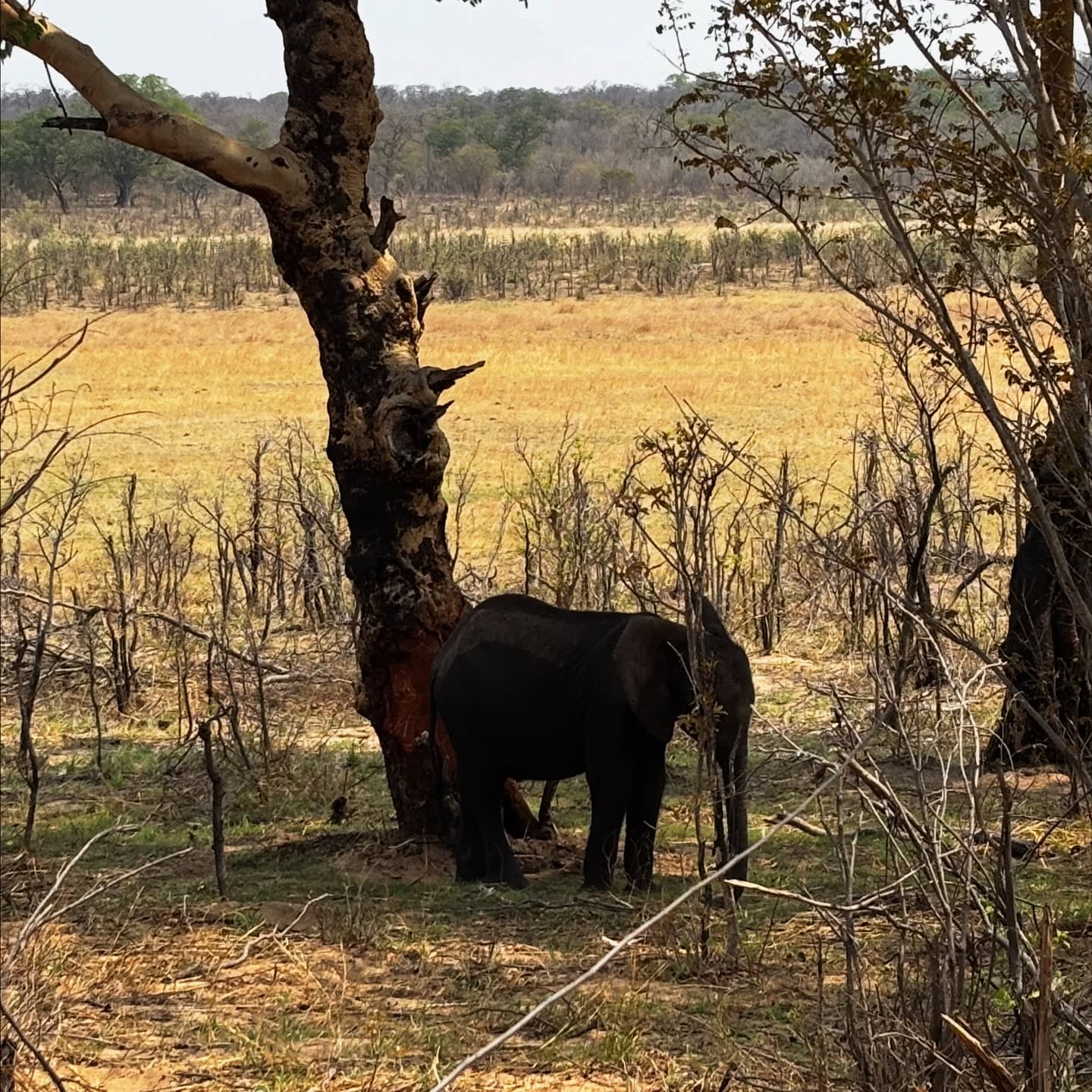
“Two weeks ago, a small elephant calf was spotted wandering alone through Chambonda, in Zambezi National Park near Victoria Falls.
Thin. Dehydrated. Struggling to keep up with passing herds.
He had lost his mother - still just 18 months old, still of milk-drinking age, still far too young to survive alone. Elephant mothers never willingly abandon their calves. When a little one is alone, it almost always means tragedy.
Then came another sighting… He was being chased by a pack of hyenas.
We knew we had to act.
Together with ZimParks, the Forestry Commission, and the Victoria Falls Wildlife Trust, our Wild is Life team began the search. For days, there was nothing - just silence, heat, and tracks fading into dust.
Then, on Wednesday… hope.
The calf was found near Chambonda Tented Camp, exhausted but alive. Under the fierce 38°C sun, the teams worked quickly - darting him safely, keeping watch for predators, and lifting his small body onto a Land Cruiser for the 40-minute drive to Panda Masuie.
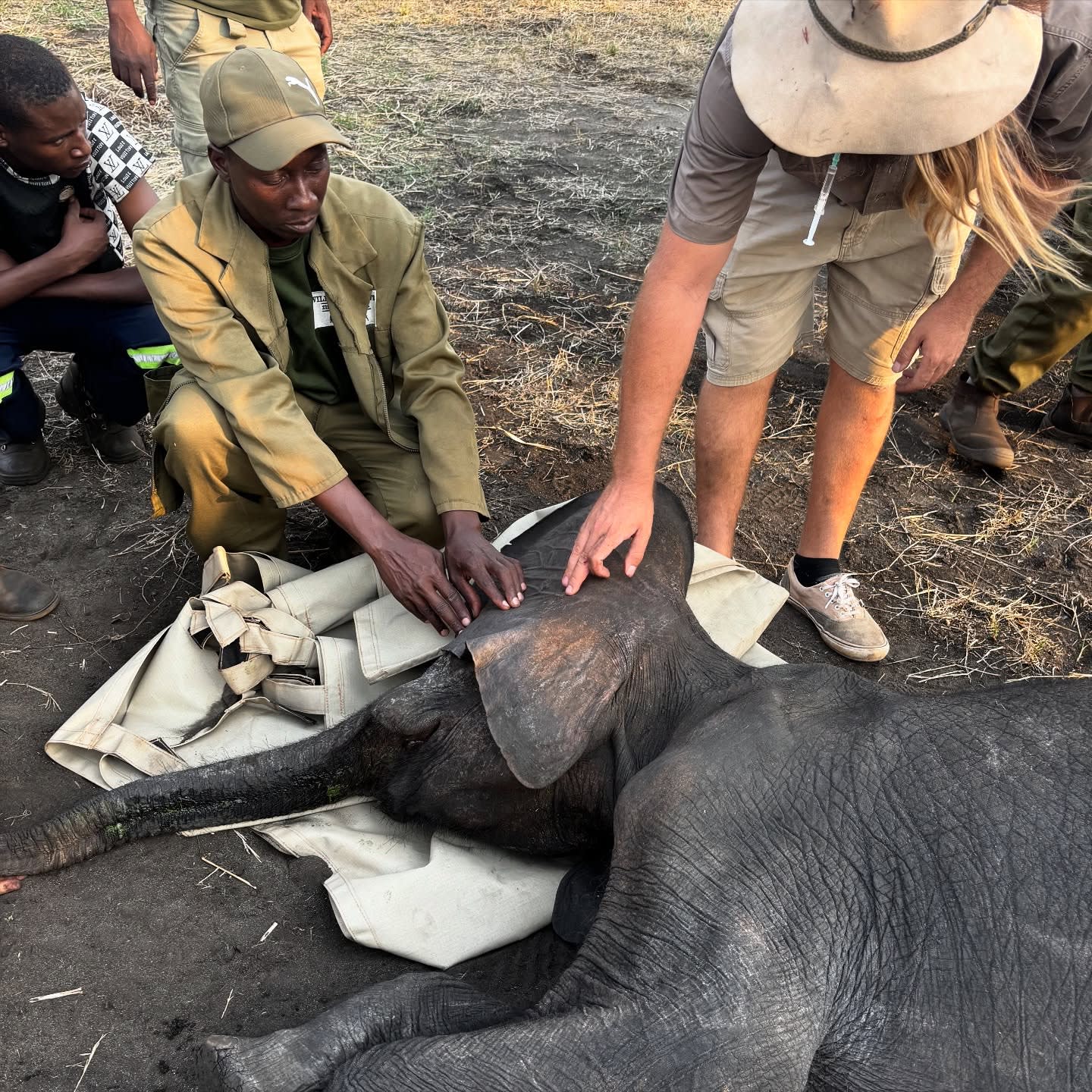
It’s no small feat to move an elephant… even a baby. The team monitored his breathing and cooled him through the rough journey. The wild herds nearby never stirred. The forest stayed calm.
And then, he arrived.
Even before they could see him, the Panda Masuie herd knew.
From across the bomas came deep rumbles and trumpets - the elephants announcing that a new life had joined their family.
When the calf awoke, Norah and Annabelle rushed to his side - trunks reaching, touching, comforting. The welcome lasted twenty minutes - a chorus of excitement and tenderness.
That night, Norah, Annabelle, Summer, and Maggie refused to leave him. They checked on him constantly, standing guard as he slept on his feet, still uncertain, still grieving.
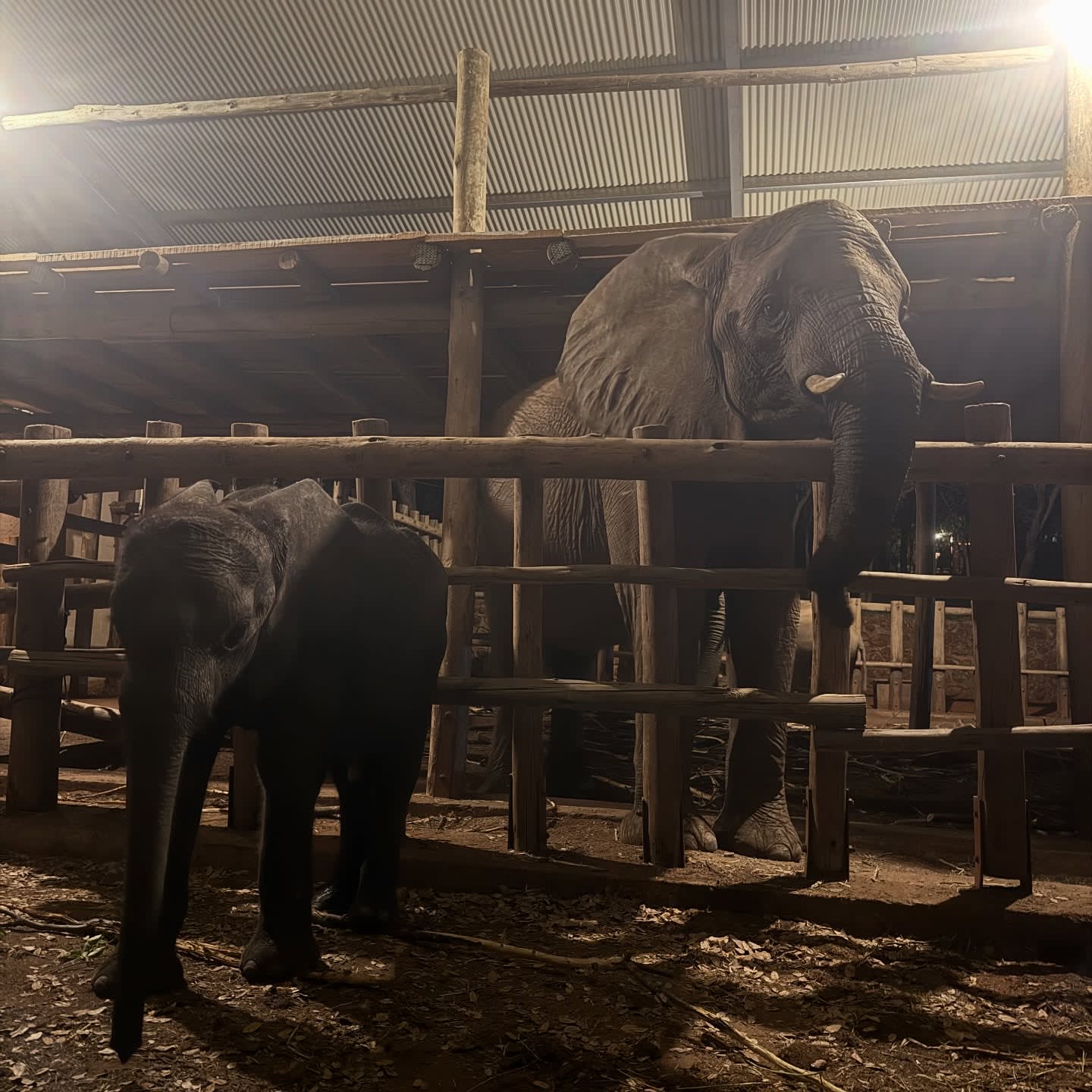
By morning, Moyo and her herd surrounded him with quiet care. And today, under the gentle patience of Paradzai, our most experienced Carer… He finally took his first full bottle of milk.
A moment of pure joy. A sign that trust has been found and strength will follow.
Make sure to swipe to see the incredible video of the elephants welcoming the new baby you may be moved to tears!”
Video: rushing in to meet the new arrival. Listen out for the joyful tummy rumbles. The calf was kept separated in the boma, initially, so that she wasn’t overwhelmed, before being taken in by aunties Norah, Annabelle and Moyo.
Hi Everyone,
David here again. I just want to say thanks to each and every one of you who has chosen to become a paying subscriber. In so doing you are supporting the unique and extraordinary work done by the team at Panda Masuie - not to mention the elephant orphans themselves, like this precious new addition.
May all beings be free from suffering!
Be the change you wish to see in the world!
Please feel free to share this post with anyone you feel it may help!
November 1, 2025
How mantras work
 Photo by Jeremy Bishop on Unsplash
Dear Paying Subscribers,
Before starting this week’s post, special thanks to all of your who so very generously donated in response to Tuesday’s appeal. I am delighted to let you know that we have raised enough funds not only for prosthetic limbs to help get Star back on his feet, but to support others too.
ROKPA Suppor…
October 27, 2025
Heartfelt thanks from ROKPA Support Network
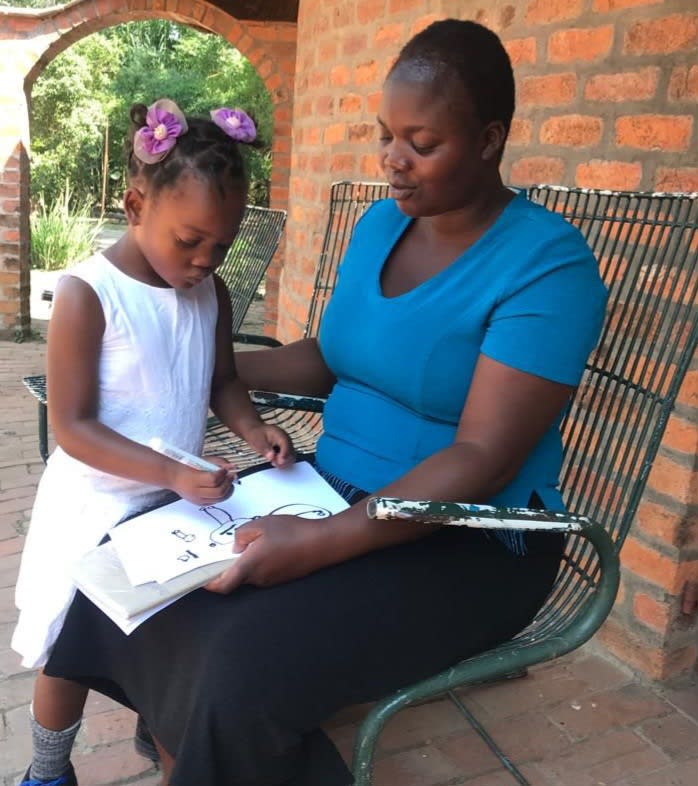
Photo: Tiny with her daughter, Noku
I am pleased to be sharing some very heartwarming news from Vivienne Kernohan and Ellen Bembere from ROKPA Support Network in Harare, Zimbabwe:
“NOKUTENDA KASHIRI is a lively little girl, now aged five and her mother, Tiny Masvaure’s third child. Nokutenda was born prematurely in 2020 after which a hospital error led to serious damage to her leg, resulting in the amputation of her lower left leg.
As a result of Noku’s problems, Tiny and her children were chased away from home, but a well-wisher allowed them to look after an undeveloped housing stand. Because of Noku’s frequent hospital visits, Tiny also lost her job and later they were made homeless again, when a relative of the well-wisher tried to take advantage of Tiny’s need for accommodation.
In January 2023, Noku had to undergo a further amputation because the prosthesis with her growing leg was giving her a lot of pain. At the age of five, her surgical wound healed, she needed a prosethetic leg that could be adjusted as she grows. At US $1,800 the cost of such a prosthetic was well outside what ROKPA Support Network could afford.
At this point, the Michie Foundation offered ROKPA funds for Noku’s new leg. The advanced device, which bends at the knee, has already granted her much greater mobility and independence
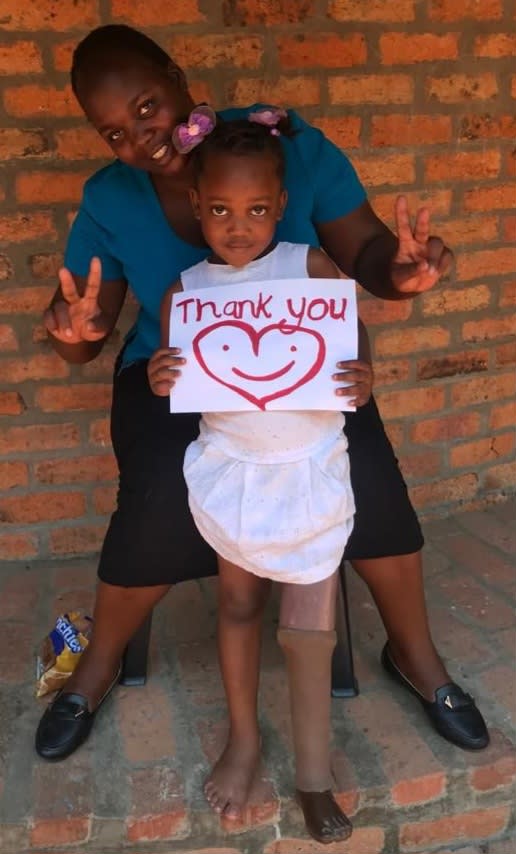
Photo: Tiny and Noku at ROKPA Support Network centre in Chitungwiza
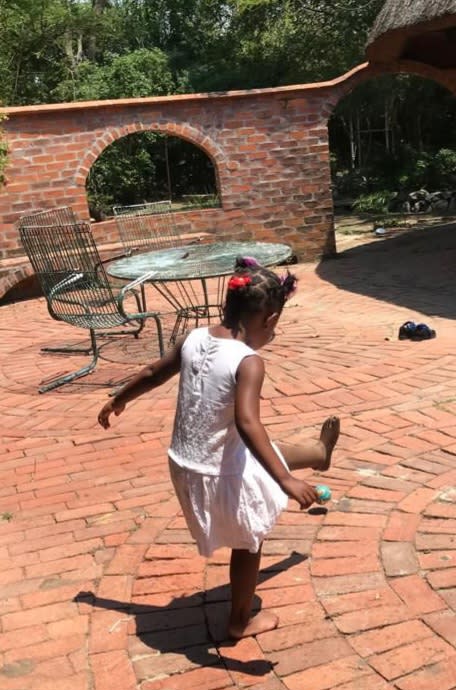
Tiny, Noku’s Mum says: “Noku is back to her cheerful self and can now play with her friends. She loves soccer and can kick the ball with both legs. She’s even started trying to climb trees like her friends.
Her new prosthesis is easy for her to wear and remove - she can do it all on her own. This is a huge relief for me, especially since I have asthma and carrying her was quite challenging. Thank you so much for supporting us!”
Help Star to Walk and Support His Family Again
As it happens, Noku is far from alone in needing help with an artifical limb:
“On his way to work, in April last year, Star Marufu, aged 35, was involved in a devastating bus accident, which changed his life irrevocably. A dedicated husband and father, he lost both his legs, leaving him confined to a wheelchair and stripped of his ability to support his family.
Before the accident, he sold second-hand shoes in and around Harare, walking from one place to another selling shoes to workers, which his clients paid for at the end of the month. Now, the immense burden of feeding their family rests on the shoulders of his young wife, Letwin, who has become the family’s only breadwinner, while also having to care for their 6-month-old twins and their three other children, aged 13, 10 and 3.
Their living conditions clearly illustrate their struggle; all seven share a cramped rented room without electricity and have no choice but to rely on the compassion of generous well-wishers.
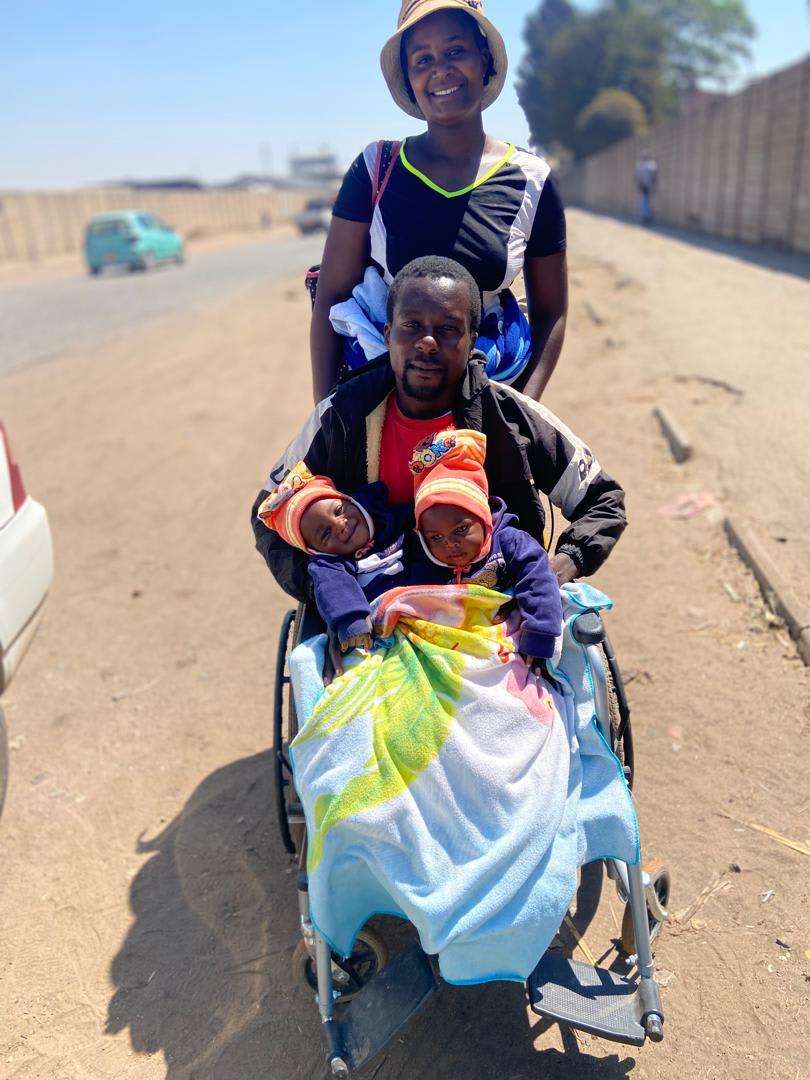
Photo: Star, his wife and the twins
A Glimmer of Hope
Star’s condition has recently been assessed and he has been recommended to obtain prosthetic legs equipped with dynamic feet. These will enable him to walk again and empower him to return to work and are key to restoring his dignity, reclaiming his role as provider and securing his family’s future.
The life-changing prostheses he needs cost a huge US $2,216, well outside ROKPA Support Netwsork’s financial capacity to support.
ROKPA have assisted the family with critical food and medicine, but the opportunity for Star to stand on his own two feet again depends on our efforts and on your support.
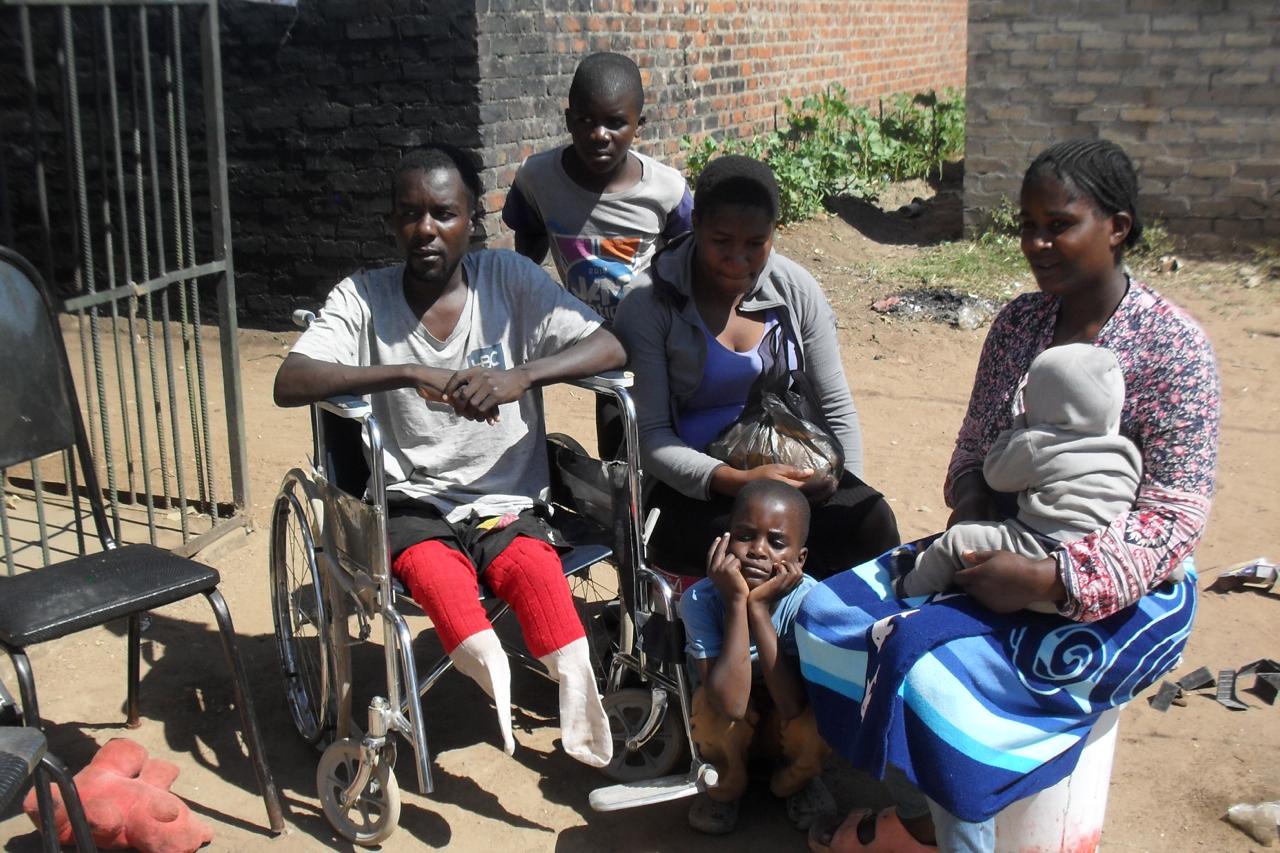
Photo: Star with his family at home
Tragically, this story is far from an unusual one in Zimbabwe, which has a vehicle accident fatality rate of over 41 people per 100,000 of the population – apparently the highest in the world according to the WHO. The shortage of public transport means a single accident often results in multiple deaths, due to overloaded commuter omnibuses. In a country with no social safety net, the deaths are only one side of the story.
At ROKPA Support Network we see the other consequences of these dreadful accidents, which include permanent disability, amputations and families left without breadwinners, children orphaned and a huge burden on other family members. Presently, we have two other families like Star’s. Your help can make a huge difference in allowing these families to get back some semblance of normality.
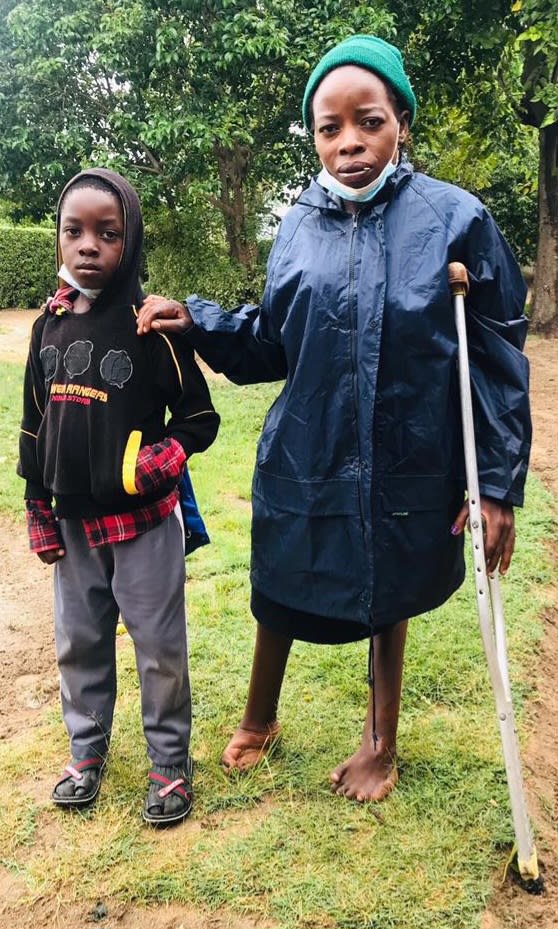
Photo: Happy with her son, Junior
I was finalising this post when I received the above photo of Happy, one of ROKPA’s start-up beneficiaries, with her son Junior. Happy has serious challenges with her feet and ROKPA is currently having her assessed to see if she can be provided with adapted shoes, or braces.
What is ROKPA Support Network?
Part of ROKPA International, ROKPA Support Network is a humanitarian organisation founded in 1980 by Akong Tulku Rinpoche, Lea Wyler and Dr. V. Wyler, ROKPA helps some of the poorest people through its activities in a high-density town called Chitungwiza. Many Chitungwiza residents face severe socio-economic challenges made worse by the country’s economic crisis.
Hi Everyone,
David here again. As many of you are aware, I donate half of the subscription money you pay me to our supported nonprofits, one of which is ROKPA.
Our collective donations go some way to helping. But if any of you would like to donate directly to ROKPA Support Network, you can do so here. Your money will be used to help buy prosethetics for those like Noku and Star who couldn’t otherwise afford them, and hopefully find a solution for Happy:
May all beings be free from suffering!
Donations via our partnership with GDG are tax deductible in USA, UK, Australia, New Zealand and the Netherlands.
Please share this post with anyone you feel may have an interest:
The Dalai Lama's Cat: Buddhist compassion in action is a reader-supported publication. To receive new posts and support my work, consider becoming a free or paid subscriber.
October 25, 2025
If hell doesn't exist, why did Buddha describe it so vividly?
As the son of church-going Presbyterians, I got off lightly when it came to hell. At Sunday school we were taught of its existence — but mildly. Guilt and eternal damnation were mostly eschewed in favour of all things bright and beautiful.
Catholics, I used to hear, took a much stronger line. Sin and guilt were deeply ingrained. On the other hand, they had confession. My father often told the story of how, as a young teenager, a precocious pair of Catholic girls used to torment him by smoking and swearing — enviable vices strictly off-limits to him — before announcing that they could confess everything that weekend, say a few Hail Marys, and start the next week pure as snow once again. As a Presbyterian, it seemed, the odds were stacked against him!
Hell loomed suddenly front and centre one day when our regular Religious Instruction teacher at school had flu. Her replacement, Mrs Farrow, from a different denomination, possessed a powerful, unnerving charisma. In less than half an hour our class of eleven-year-olds discovered how enmeshed we were in the raging battle between Good and Evil. How unseen legions of dark forces could be summoned by so much as a wondering glance.
I pedalled home as fast as I could that day, rummaged through my Tell Me Why magazines for several articles on ghosts and the occult, flinging them into our fire pit before Beelzebub could place his clammy hands around my neck.
Other kids were equally panic-stricken. When parents inevitably found out, even the Catholic mums and dads thought Mrs Farrow had gone too far. She wasn’t invited back.
I had no interest in religion as a young man. So when I began meditating for stress management reasons in my early thirties, and found my way to Tibetan Buddhism, hearing teachings about hell realms - for the first time in decades - was deeply disappointing. Seriously? Wasn’t Buddhism non-theistic? Hadn’t I left all that belief-based mumbo jumbo behind?
While descriptions of hell are sparse and metaphorical in the Bible, standard Buddhist texts are quite the opposite. They go to town on the breadth and depth of torment. There are great hells, surrounding hells, and cold hells — and within each of these, numerous permutations of misery.
In one, people fight in hand to hand combat to the death. But not even death brings peace. After a while, they are revived, and the fighting starts all over again. In another, beings are so cold that all they can do is howl with pain — for aeons.
Hell, in Buddhism, is not a singular place so much as a vast spectrum of awful possibilities. The saving grace is that none of them last forever. Each experience endures only for as long as the karma that produces it.
These hells aren’t the invention of some errant teacher. Buddha himself described them in The Sūtra Requested by Subāhu.
Only recently I heard how, after delivering this terrifying discourse, the Buddha returned to an audience of very sober faces. Which was when he added his extraordinary qualification.
In Buddhist logic, a syllogism is a structured reasoning statement. It comprises three steps - and sometimes a fourth. In step one, you state the subject. In step two, you make a statement about it. In step three, you give your reason for the statement. Step four, if you wish, offers an example.
What Buddha said about the hell realms has come down to us in this syllogism:
Consider the realms of hell.
They don’t exist,
because they lack inherent existence.
They are, for example, like this very place where we are sitting now.
We can imagine the initial shock in the hearts of his students: Not all that again! Then the flood of relief — They don’t exist! — followed by fresh confusion. So what were all those gory descriptions about?
Until, finally, the deeper revelation lands: They are, for example, like this very place where we are sitting now.
Time and again, the Dharma brings us to this same pivotal point. Even those of us who have been studying and practising for decades — and should know better — still slip into assuming that there is one reality: the one that we happen to be inhabiting. If you and I sit in the same room, your reality must be mine.
Only, it’s not. My delicious meal may be your ordeal. Your thrilling night out may be my idea of hell. Our experiences are shaped by our minds — by our conditioning, our karma.
We may share group karma that makes certain perceptions seem objective. But that illusion — that there’s a world “out there” entirely separate from us — is exactly what both Buddha and modern physics challenge.
“Physical concepts,” said Einstein, “are free creations of the human mind and are not, however it may seem, uniquely determined by the external world.”
“The concept of substance has disappeared from fundamental physics,” said Sir Arthur Eddington.
“An independent reality in the ordinary physical sense can neither be ascribed to the phenomena nor to the agencies of observation,” said Niels Bohr.
“The objective world arises from the mind itself,” said Buddha.
So — do realms of torment exist? Hell yeah! But not as we may think. There are countless hells, because there are countless minds creating and experiencing them. We don’t have to die to go to hell. Some people, surrounded by comfort and wealth, are living in hell at this very moment.
Even so, when our very subtle minds are no longer tethered to our bodies — when we exist only as beings of thought in the bardo — our habitual patterns of mind are empowered. They define our reality.
So perhaps there is a thread that connects the Bible, Mrs Farrow, and the Buddha after all. As we think, so we become.
Our physical lives may buffer us from the full force of our consciousness. But the day will arise when thought alone is our reality. And when it does, if we have cultivated hearts steeped in love and compassion, we can do something glorious with that transcendence.
Not for our own sake — we will already be free — but for the sake of all those who still believe that the very place where we are sitting now is real in a way that has nothing to do with them.
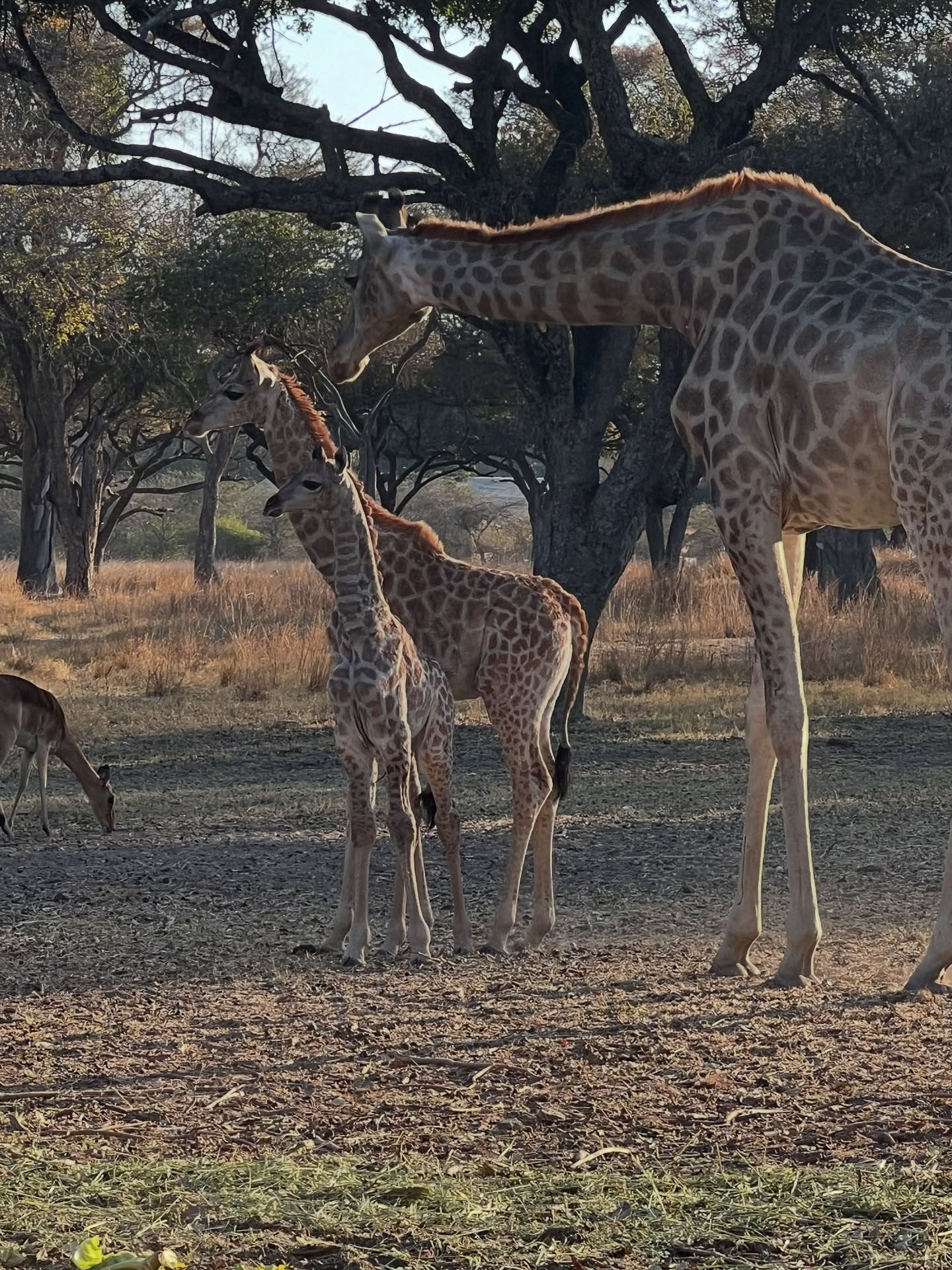
Photo: Mum Catherine with baby George, standing next to Camilla
This week’s photo update is from Wild is Life/Zimbabwe Elephant Nursery, one of the non-profits we support.
Autumn in the northern hemisphere means it is spring in Zimbabwe - the season of new life. From Wild is Life:
“Our newest arrival is this long-legged little treasure — and the very first baby boy born to our giraffe family! George’s mum Catherine (a first-time mama) is doing wonderfully, and with her rich milk he’s growing fast and strong. He can already run, stretch, and do “giraffe things” with such pride.
But just look how little he still is standing next to Camilla — who herself is still so young! It’s a sweet reminder of how fresh and fragile his journey really is. Welcome to the world, George. We can’t wait to watch you grow tall under the ZEN skies.
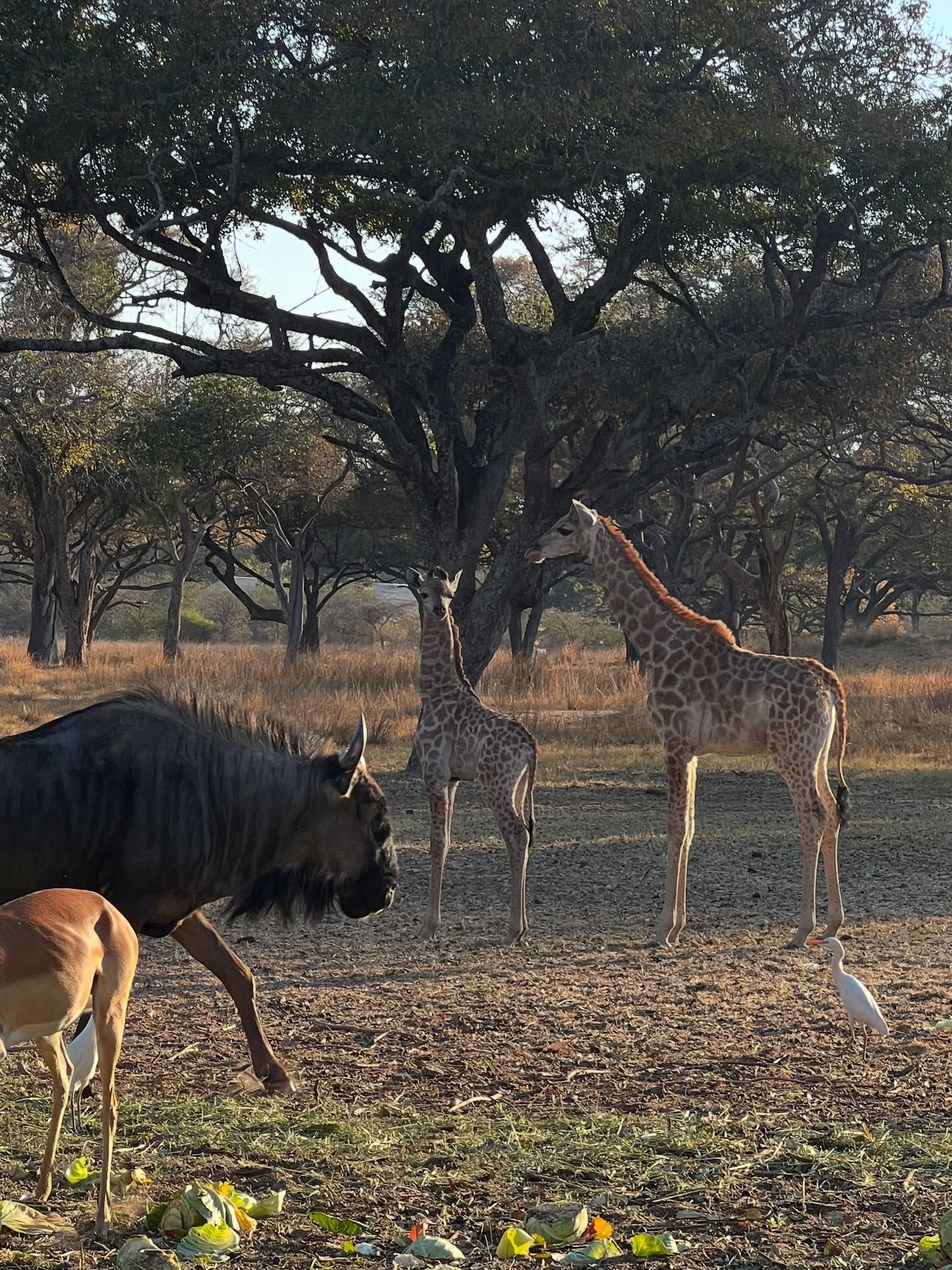
Photo: George and Camilla keep a close eye on Noodle the wildebeest
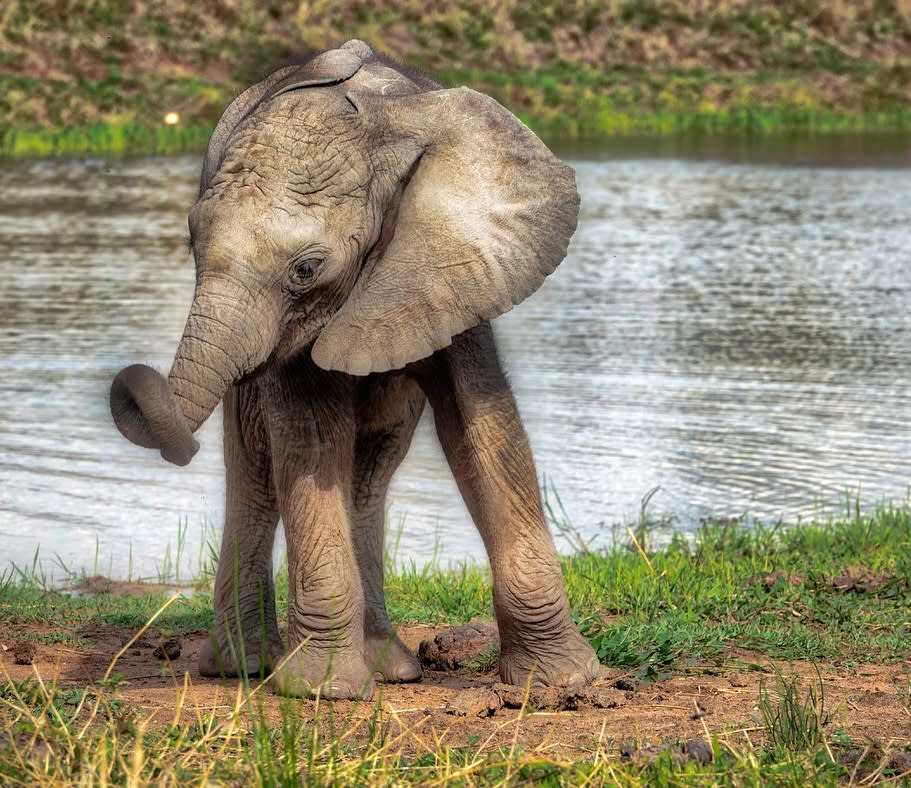
Photo: Elie calf Coco
"Coco’s start to life was one of the most traumatic of our orphans.
She was rescued as a fragile four-month-old after her mum was hit and killed by a bus. Her jaw had been fractured as we suspect she was standing just underneath her mother at the time… When she was discovered she was frantic, injured, screaming and covered in her mother’s blood. She arrived to our care, frightened, injured, and deeply withdrawn.
With patience, love, and the gentle guidance of Moyo - who quite literally taught her to eat, one cube at a time - Coco slowly found her feet again. She has remained sensitive and cautious, but over the years her trust has blossomed.
Now, Coco is a confident young elephant, strong and beautiful. She often spends days at a time venturing out at Panda Masuie, dipping her toes into the wild alongside her best companion Unity.
Her story is proof: from the darkest beginnings can grow the brightest futures. And Coco’s future is shining.
Be the change you want to see in the world:
If you know anyone who you feel may benefit from this post, please do share it!
October 18, 2025
What's the greatest kindness you can be shown, dear reader?
Dear Readers,
Last week, at the end of my post, I shared an update from Twala Trust Animal Sanctuary, one of the non-profits we support. This included a photo of Juno, a dog who had arrived at the sanctuary in the a truly miserable condition - starving to the point that her bones stuck out, a flea allergy painfully inflamed her skin, she was suffering from mammary tumours and an ingrown eyelid. Many of you asked to be told what happened to her next.
Well, I am very glad to be offering you a much happier update about Juno at the end of today’s post!
This newsletter is subtitled ‘Buddhist Compassion in Action’ for a reason. We support those who are caring for some of the most vulnerable people and animals in the world.
If my articles and stories bring you insight, encouragement, or wisdom, and if you are currently a free subscriber, please consider upgrading to paid to read the Dalai Lama’s Cat’s new mouse-size musing. A single US$7 a month subscription can help bring hope to those in need.
My heartfelt thanks to each one of you who is part of our circle of light: our subscribers span the world. It is truly special to belong to this little community of people who understand that our inner journey depends on our outward behaviour. If we seek the end of our own suffering, we work to end the suffering of others. In one sense, it really is that simple.
Now, onto today’s story from His Holiness’s Cat …
Tuesday evening in Namgyal temple. Geshe Wangpo is drawing his weekly teaching to a close. At the front, the heads of the maroon-robed monks are bowed in reverence. Along from where I am nestled between Serena and Franc, I watch the closed palms and serene absorption on the faces of Sid, Serena, Franc and Ludo, as they chant the four immeasurables. A faint but distinctive waft of Deodar, blows through the windows, merging with wisps of sandalwood incense. Thangka rods clunk softly against the walls in the evening breeze.
There is always a moment of stillness at the end of the chanting. A hushed but luminous sense of a shared reality – boundless and more exquisite than the one in which we are all usually engaged. A state of heart from which most of us in the temple have no wish to step away.
Eventually, a creak as Geshe Wangpo leans forward on his teaching throne. His students get ready to rise, as they always do, out of respect for their guru. But he is holding out his arm, urging them to stay.
“I have a request,” he says, glancing around at their faces. “Something I would like you to consider before next week’s class.”
It is unusual for Geshe-la to say anything after the chanting has ended, much less to offer his students homework. He has everyone’s rapt attention.
“What is the kindest thing that anyone has ever done for you?” Tilting his head to one side he regards them with a smile.
While the monks continue gazing steadily ahead in strict discipline, on the rows of meditation cushions occupied by the townsfolk, some are exchanging puzzled expressions.
Sensing their unspoken questions, Geshe Wangpo phrases his question with an enigmatic look: ‘What is the greatest kindness it is possible to be shown?”
It was not a question I had ever heard being asked. Nor, going by the looks of others in the temple, was it one they’d heard either. But it was an intriguing one, not so?
In an instant, pivotal moments in my life sprang to mind. But which of these was the most decisive? Here was a new way to search through the many memories of my life : of the many kindnesses I had received, which was the greatest?
That night as I lay to rest on the windowsill overlooking the monastery courtyard, all manner of interventions and beneficence surfaced as I contemplated a myriad of memories. My rescue by Serena from a pair of slavering hell hounds who had chased me almost to my death – or so it had felt at the time. Wonky on my pins, heart pounding and, by some miracle, able to scramble up a trellis, when Serena had come to my rescue it had been the most glorious deliverance!
I was showered with constant kindnesses too by her mother, Mrs. Trinci, my greatest benefactor. Drowsily, I wondered if ongoing smaller kindnesses over many years might equate to one large and dramatic one?
And, of course, that kindness of all kindnesses when His Holiness had first seen me: the smallest of three kittens stolen by a pair of street urchins in New Delhi. Having sold my two larger and more attractive siblings, the urchins had decided I was unsaleable. Wrapping me in a grubby, week-old scrap of newspaper, I was destined for death on the rubbish heap when, watching all this unfold from the back of a car while stuck in a traffic jam, the Dalai Lama sent his attendant to save me.
Where would I have been without that intervention? Indeed, where would you be, dear reader?
Geshe Wangpo’s question came up several days later at The Himalayan Book Café. Serena and Sid had stopped in for a late morning coffee. Spotting them in one of the banquettes, I made my way towards them. It wasn’t long before Franc came to join us. And then after a while, from the bookstore, Sam. There was always a warm feeling when those in this special circle gathered together: friends deeply connected by a shared past, as well as an ongoing dharma practice.
“So, who has the answer to lama’s question?” Serena asked brightly, glancing from Franc to Sam.
‘On the greatest kindness?” Franc confirmed.
She nodded.
Sam leaned back on the banquette. “What do you think?”
October 14, 2025
Thank you from Roxy - Founder at Wild is Life
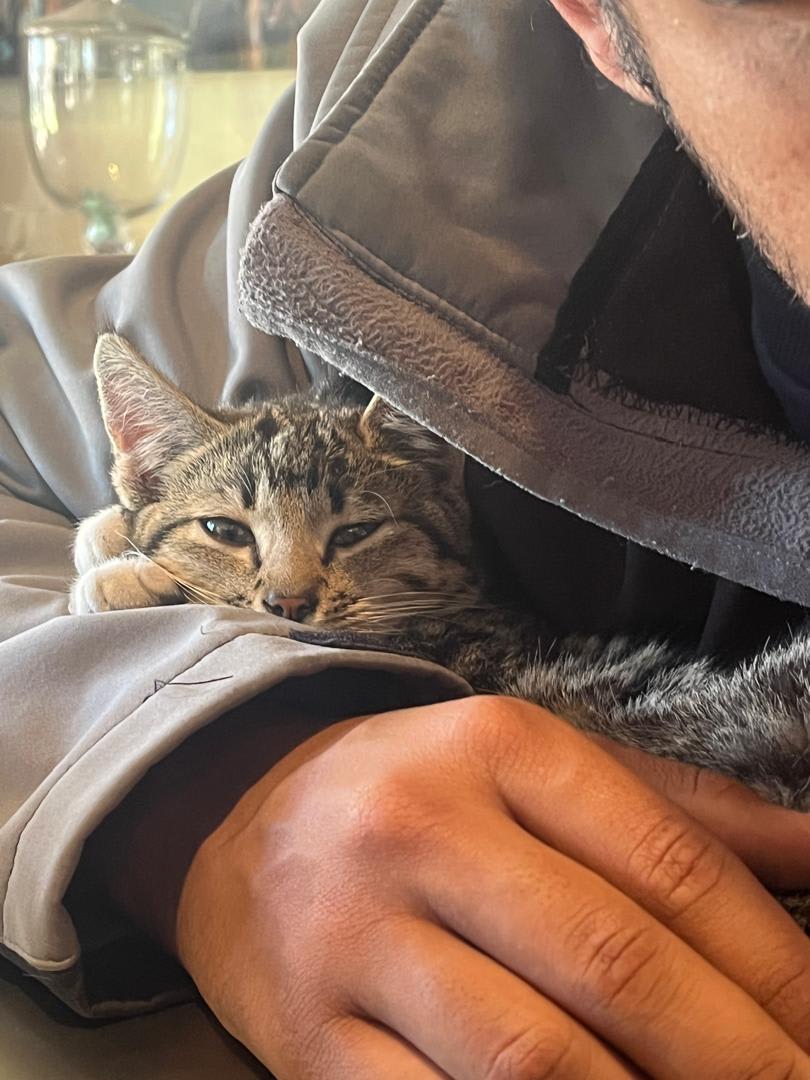
Photo: A new creature stalks the veld at Wild is Life!
Following the extraordinary generosity of many subscribers who made direct donations to Wild is Life after their recent fire, over and above my emergency transfer of funds, we have received this lovely email from Roxy.
My dear David, Koala, and all the lovers of HHC!
I wanted to write, primarily, to thank you all for contributing a significant amount of money towards our “fire fund”. As you may recall, we had a dreadful and angry fire streak through the farm at alarming speed, destroying everything in its path. It was simply terrifying and I was extremely worried about it hitting the Sanctuary.
Luckily, we managed to keep it at bay from this small section of the farm. However, all the surrounding bush, grazing and grasslands were burned. This meant that we had no browse available to cut for our herbivores. To this end, after various appeals, one of which was through David and Koala, we have managed to secure enough money to buy lucerne hay. It is hugely expensive, due to the transport costs, but has been an absolute life saver for all the animals, most especially the browsers - elephant, giraffe, kudu, rhino).
So, my deepest appreciation to you all, for the money and for the many thoughts of care and concern about our dilemma.
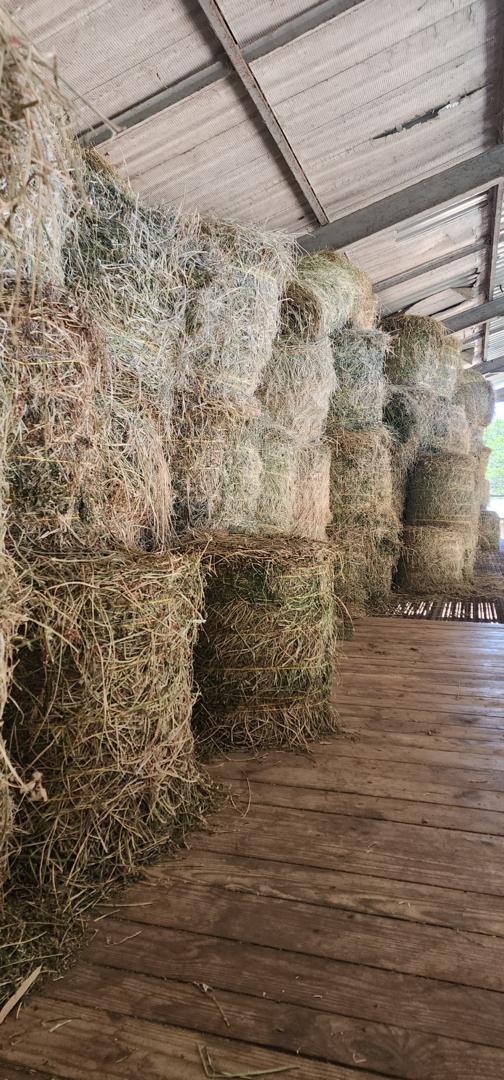
Photo: Bales of the lucerne hay contributed by subscribers to see the browsers through until next rainy season
The temperatures have risen considerably in Zimbabwe, with the onset of our dry summer. We anxiously await the rain, due late November, but in the meantime, I find my joy in the explosion from the trees and the rising of the sap in the garden. In Panda Masuie, our release site near Victoria Falls, the elephant are struggling with the heat.
Moyo, having lost the use of one of her ears during an accident, is particularly vulnerable. Elephant use their ears to cool themselves. The continual flapping of the ears cools down the blood, which then keeps the elephant in a state of homeostasis. However, Moyo is 50% down on cooling capacity and worse, she cannot hold the ear back, so it gets very hot in the sun. Of late, we have noticed her being somewhat fractious and bad tempered. We think she was getting headaches from the heat. So, Moyo now has a spa treatment twice a day, where her head and ears are hosed with cool water.
She LOVES it! I think that the attention she is getting also contributes to her improved demeanour! Of course, the ellies mud bathe and swim at lunchtime to cool down. It is certainly the most joyful time of day for them.
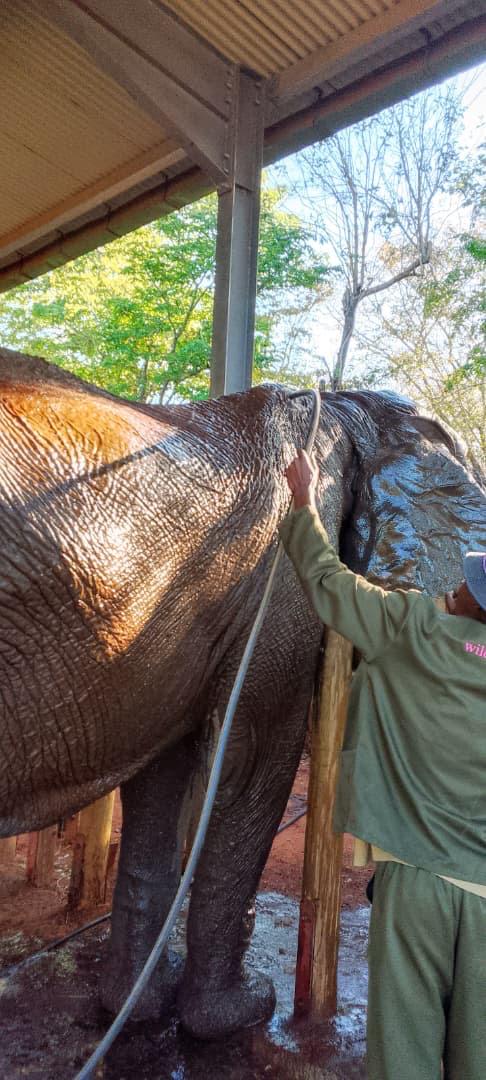
Photo: special spa treatment for herd matriarch Moyo
We recently did a rescue of a young bull up in the far north of the country. Having only one photograph to make an assessment, I completely misjudged his age. I thought that sending a vet team by air up to the region, we could bring him home and fix him up. On arrival, the team discovered that he was much bigger than anticipated and certainly would not fit through the door of the plane! However, the team immobilized the youngster and removed the most horrific cable snare from his front leg. It had embedded right down to the bone and was severely infected. (Highlighted in the 4 October post).
The snare was removed successfully, but without ease. Steel cable is notoriously difficult to cut. The wound was debrided and cleaned and long acting antibiotics were given. He was then left behind, with the hope that he would recover. It nearly kills me having to leave an elephant behind in such a state, but I also know that animals have a remarkable ability to heal as well as a resilience that we cannot comprehend.
A team from the Akashinga Antipoaching Unit have been keeping an eye on this little chap. I was worrying about the swelling and lack of movement that he was enduring. However, yesterday, I received new photos and video of him. Well! The change is miraculous. He is still lame but can move at speed, the wound is closing up and the swelling is down. It is not perfect but he is clearly able to get to food, as his body condition has improved tremendously.
Video: one week after snare removal. The male elie calf is eating, moving and on the mend
I am SO happy! Every life matters and this little unknown fellow, wandering alone in the bush, was important to me. One forms a relationship with the rescues and it is a relationship that cannot be put into words. It just is. And it matters.
Apart from HHC, I am not a huge fan of domestic cats. I have no particular antipathy towards them, but I don’t seek out their company. Recently, I was having a meeting and I heard a strange crying coming from the plants nearby. There I found a kitten, possibly 5/6 months old. I was shocked and simply could not understand where he had come from.
Anyhow, Cath cleaned him up, fed him and gave him a cosy basket. Of course, the whole team fell in love with him. I watched him sideways, with my eyebrow raised.
After some weeks, he ventured up to the house and plonked himself on my lap. He settled in, deeply purring and totally content. I did not dare to move, such was the feeling of comfort and joy I was experiencing! I felt love! It happened quite often, that he would seek me out for a quiet few moments of peace and happiness. It progressed. He then joined me in bed! He slept on my chest, purring away, irritable when the usual insomnia kicked in and the light came on. He would be gone in the morning.
However, I soon realized that he was not bonding with me in particular. He is a flake of note. He joins the tour every day and finds a lap and a gentle hand, from complete strangers. He wanders around the entire sanctuary, sometimes sleeping in a flower bed or on a sofa when he feels the need. He brings joy to so many!
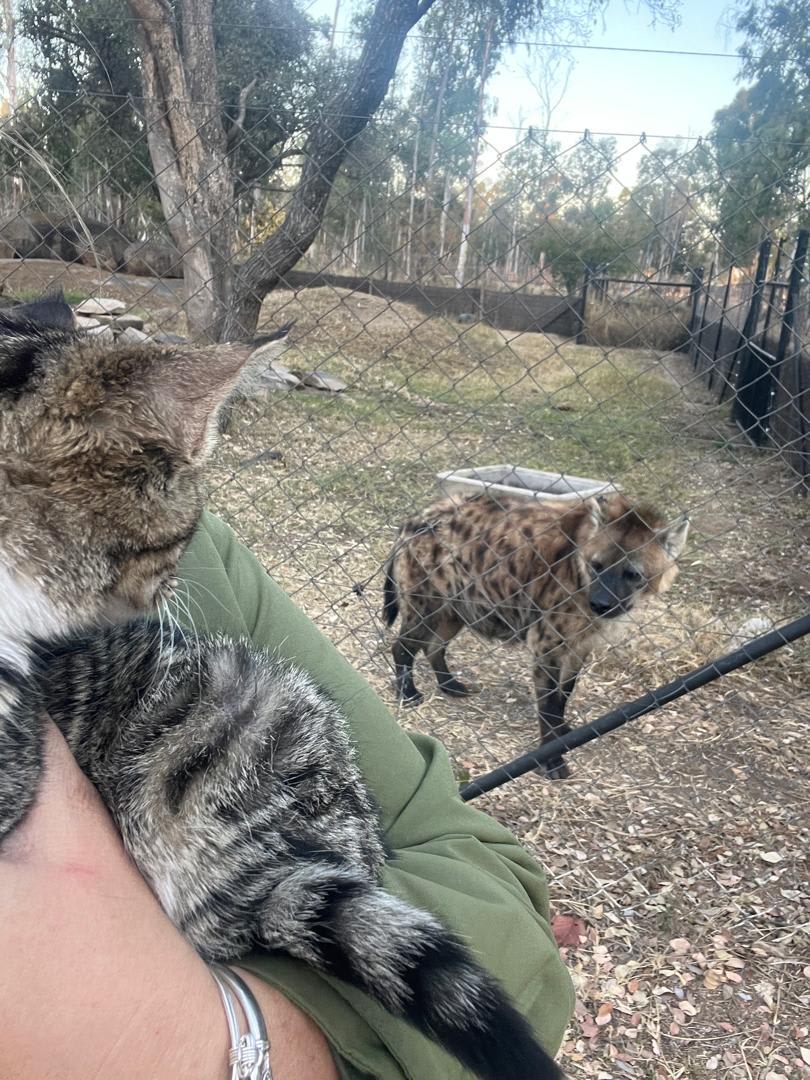
Photo: on tour. Unlike most most domestic tabby, this one has daily encounters with some pretty frightening beings - fortunately on the other side of diamond mesh
Now, I miss him. I’ve not seen him for a few days, but he is around. He clearly feels that I am not in need of comfort or therapy at present. To begin with, I was most put out! I now realize and understand the lesson of attachment!
He will never be ‘Mine”. He will always be “His”. His own soul, his own care, his own joy and his own preservation. This is a good lesson.
Sending you all my love
Rox xxx
If anyone wishes to make a direct donation to Wild is Life/Zimbabwe Elephant Nursery at any time, you can do so using the link below. If you are a resident of USA, UK, Australia, New Zealand or the Netherlands, your donation can be tax deductible: