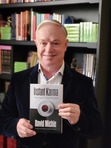
At last! A clear idea of where Budda came from

‘Transmission’ is a word we often hear used about receiving teachings – whether in person or through writing. As a boy, way before the days of internet and wifi, late at night I used to lie in bed listening to long wave transmissions from overseas radio stations on the small, portable radio that was my prized possession. There was something exciting, in a clandestine way, being able to tune into radio stations that weren’t censored by our government which was doing all it could to preserve its version of reality – a starkly different version from stations in Holland and UK.
Some longwave radio transmissions were much clearer than others. There was so much static that many were impossible to hear. This is the notion of ‘transmission’ I brought with me to the Dharma, where we learn that what is happening is not simply a downloading of information from teacher to student, but a more subtle process.
In Buddhism, we study not for information but transformation. We are seeking not to accumulate knowledge, but to shift our mental behaviour, thereby changing our experience of reality. So, when a teacher sits in front of us, more than a purveyor of facts, she is seeking to motivate, to energise our practice, to transmit. And some teachers - like some radio stations on my little portable set – sound much clearer to us than others.
Our next-door neighbour may have a different experience. Thanks to the vagaries of the air waves and different transistor sets, they may find other stations easier to listen to. And that’s perfectly fine. The main thing is to find a useful source of wisdom and stay tuned!
I feel incomprehensibly lucky to have found such a radio network for my Dharma inspiration. Nevertheless, it can be stimulating to turn the dial sometimes to hear what else is being broadcast. One such broadcaster I discovered is Simon Haas who, despite his European name, is a teacher from the Hindu tradition. Buddha himself grew up in a Hindu culture, and I have often felt remiss not knowing more about the context which shaped his worldview.
If you feel similarly uninformed, you may find ‘The Book of Dharma’ a wonderful read. I found myself utterly engrossed, recognising the place from which many concepts I thought of as ‘Buddhist’ came, and inspired by the many parables and stories woven throughout this beautifully-written book.
I have struggled in the past to read commentaries about Hinduism. I have come away bamboozled by the plethora of deities, and shocked by some of the practices associated with them. I have also found it hard to reconcile the dramatic metaphysical chaos with the profound wisdom embodied by some Hindu sages. ‘The Book of Dharma,’ however, is like finding a radio station refreshingly free from static. It introduces us to wisdom with a relatable clarity and simplicity.
As usual, rather than me write more about the books I enjoy, I’d rather offer you a few of the quotes I highlighted while reading, so that you too can enjoy a few moments of transmission directly.
As you read through these, I hope you may catch a glimpse of some inspiring gems of wisdom to take back to your own reality, points to ponder in your own practice.
Some exotic lands have mines of sapphires and diamonds. Others are rich in silver or gold. Some, like India, have hidden treasure troves of wisdom. The sages of India believed, however, that there is only one wisdom in this world, which does not belong to any single nation or culture. That wisdom came to be known as the philosophia perennis – universal truths that transcend time and space.
This reminds me of how Mahatma Gandhi once said that “Hinduism includes all religions. I am a Hindu, and also a Christian and a Muslim and a Jew, and so are all of you.” It’s a mind-bending perspective for those of us conditioned to understand the fine distinctions not only between different spiritual traditions, but between different groups within a particular religion. For years I battled with a vision of such universality, before learning to ‘look through’ the cultural and other outward differences to the core purpose at their hearts.
Two people can look at the exact same thing and see something totally different. This is because the world we experience is not the only world there is. There are many possible worlds. We create ours with every thought, with every act. As anthropologist Clifford Geertz observed, “man is an animal suspended in webs of significance that he himself has spun.”
You will be as familiar with the point made in the paragraph above, which is such a presence in the Buddha’s teachings, as with the profundity of the following quote from Victor Frankl, whose work I also often invoke:
“We who lived in concentration camps can remember the men who walked through the huts comforting others, giving away their last piece of bread. They may have been few in number, but they offer sufficient proof that everything can be taken from a man but one thing: the last of the human freedoms – to choose one’s attitude in any given set of circumstances, to choose one’s own way.”
We each have the ability to create our world. But we have forgotten our potency and are living out a small human story. Much like James Henry Paine, we are sitting on a great hidden wealth, but we act as if we are impoverished. Our forgotten wealth is our ability to live intentionally, to alter the very design of our perceptual world.
During the book, the author introduces some quite challenging perspectives. The following, of Carl Jung’s is one that may be unsettling and therefore worthy of reflection:
“Everything that irritates us about others,” observed Carl Jung, “can lead us to an understanding of ourselves.” We don’t see things as they are. No, we see them as we are.
Similarly deserving of profound contemplation is this idea:
We want our perceptual world to be outstanding; but few stop to consider whether they are outstanding. A reflection will never surpass its source. Similarly, our perceptual world will never be better than who we are. Real improvement therefore starts within. Change the landscape within and we reshape the landscape without.
How to make a start on our inner landscape re-design? As in a literal garden, it may have a lot to do with removing what is already there.
As Boston Globe columnist Ellen Goodman observed: Normal is getting dressed in clothes that you buy for work, driving through traffic in a car that you are still paying for, in order to get to the job that you need so you can pay for the clothes, car and the house that you leave empty all day in order to afford to live in it.
If the life worth living exists for us somewhere out in the future, it implies our life right now is not good enough. This way of seeing becomes a habit. In other words, we develop a habit of looking at life as deficient. This, then, is what we are bound to experience in any future that emerges for us in the present. We become habituated to a world characterised by lack, or emptiness. No external circumstances will erase that habit of ours.
What to do? One of the most powerful antidotes to all this - another constant theme of my writing and your lives, dear readers - is gratitude.
Gratitude creates immediate abundance. It generates immense positive energy. Studies have shown that talking and writing about what we are thankful for amplifies happiness. If we focus every day on the things in our life we are truly grateful for, we will find that what we are grateful for will keep increasing in our life. Thankfulness is one of the most potent forces for annihilating negative thoughts in our world.
I love the way Simon Haas quietly and - with subversive humour – comprehensively demolishes the whole notion of the constructed self. I so wish that everyone in the world could sit down quietly, understand and reflect on the following few paragraphs. What a different reality we would all experience!
Qualities and attributes exist in pairs: stingy and generous, dull and interesting, stupid and clever, irritating and agreeable. One depends upon the other for its meaning. When we think or speak harshly of someone, we implicitly assign ourselves the positive opposite. For example, if I tell my friends that such-and-such person is “positively dull”, I am implying that I am at least moderately interesting. I wouldn’t seriously condemn someone as a “loser” if I didn’t think I was at least on my way to being a “winner”. Thus, in thinking or speaking harshly of others, we reinforce our own illusions. We create a false identity for ourselves, which we must then safeguard and protect in our small human story.
Happiness is our natural state of being when the edifice of illusion is removed or stripped away. Therefore, the way to happiness is not to try to create it. Rather, it is to seek everything that obstructs it. There is no need to try to become happy. It’s sufficient simply to remove what blocks or obstructs our inborn happiness. Thus, happiness is “excavated”. It is brought out of ourselves, like the cleaning of a dusty mirror or the shining of a brilliant gemstone.
I hope you have found this week’s transmission stimulating and helpful. If you wish to explore more, I think you’ll find Simon Haas’s “The Book of Dharma” a delightful and stimulating read.
This week’s nonprofit charity update comes from Wild is Life/Zimbabwe Elephant Nursery:
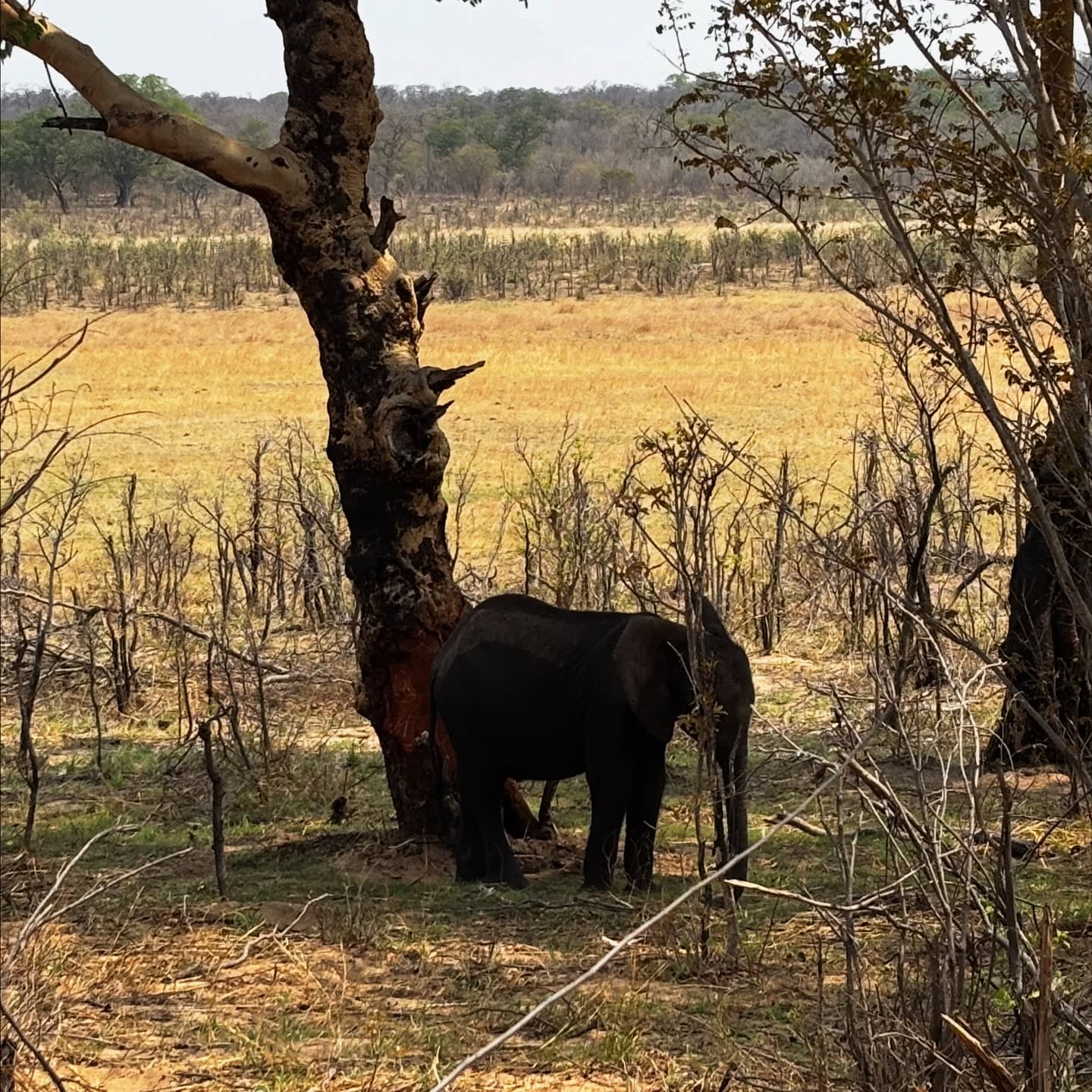
“Two weeks ago, a small elephant calf was spotted wandering alone through Chambonda, in Zambezi National Park near Victoria Falls.
Thin. Dehydrated. Struggling to keep up with passing herds.
He had lost his mother - still just 18 months old, still of milk-drinking age, still far too young to survive alone. Elephant mothers never willingly abandon their calves. When a little one is alone, it almost always means tragedy.
Then came another sighting… He was being chased by a pack of hyenas.
We knew we had to act.
Together with ZimParks, the Forestry Commission, and the Victoria Falls Wildlife Trust, our Wild is Life team began the search. For days, there was nothing - just silence, heat, and tracks fading into dust.
Then, on Wednesday… hope.
The calf was found near Chambonda Tented Camp, exhausted but alive. Under the fierce 38°C sun, the teams worked quickly - darting him safely, keeping watch for predators, and lifting his small body onto a Land Cruiser for the 40-minute drive to Panda Masuie.
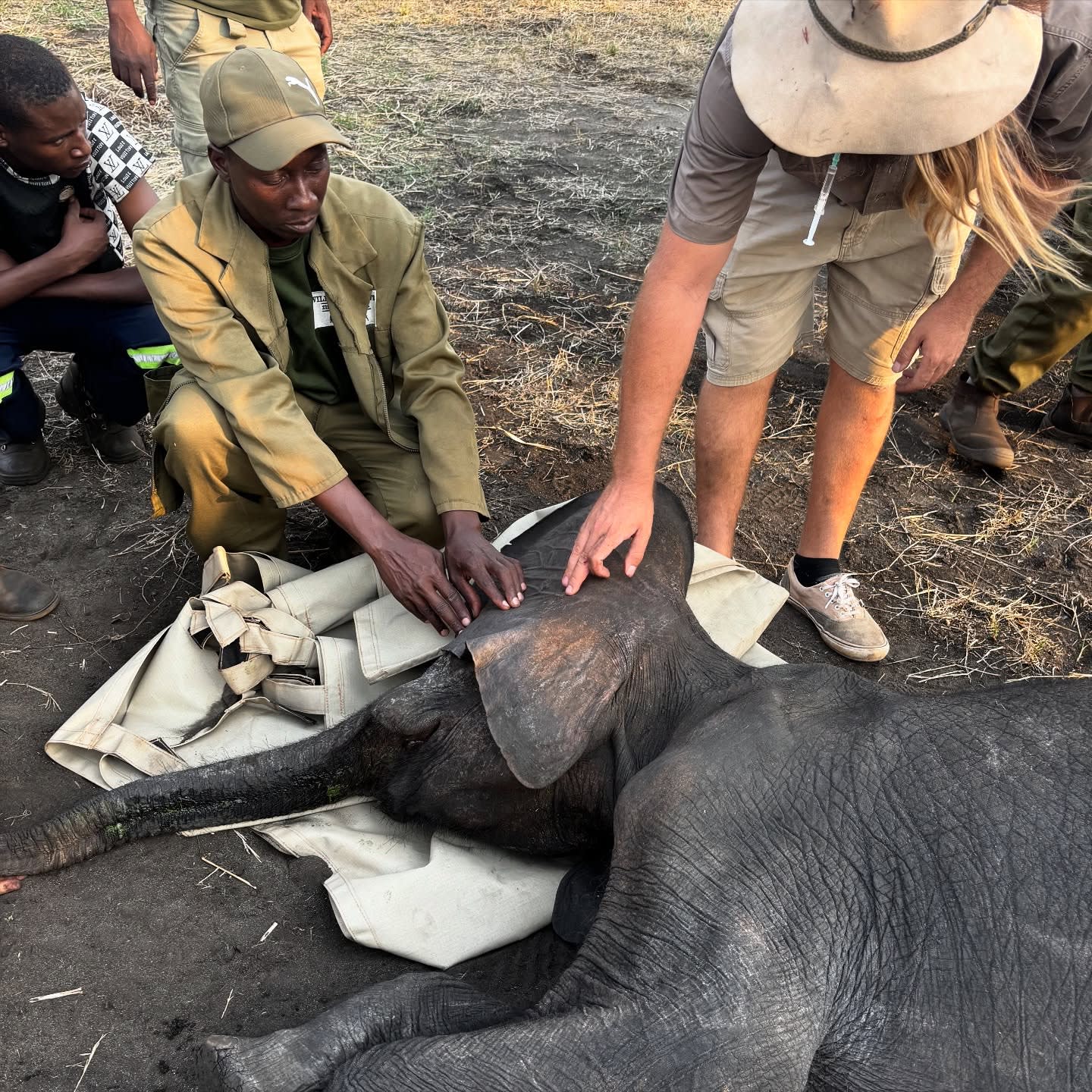
It’s no small feat to move an elephant… even a baby. The team monitored his breathing and cooled him through the rough journey. The wild herds nearby never stirred. The forest stayed calm.
And then, he arrived.
Even before they could see him, the Panda Masuie herd knew.
From across the bomas came deep rumbles and trumpets - the elephants announcing that a new life had joined their family.
When the calf awoke, Norah and Annabelle rushed to his side - trunks reaching, touching, comforting. The welcome lasted twenty minutes - a chorus of excitement and tenderness.
That night, Norah, Annabelle, Summer, and Maggie refused to leave him. They checked on him constantly, standing guard as he slept on his feet, still uncertain, still grieving.
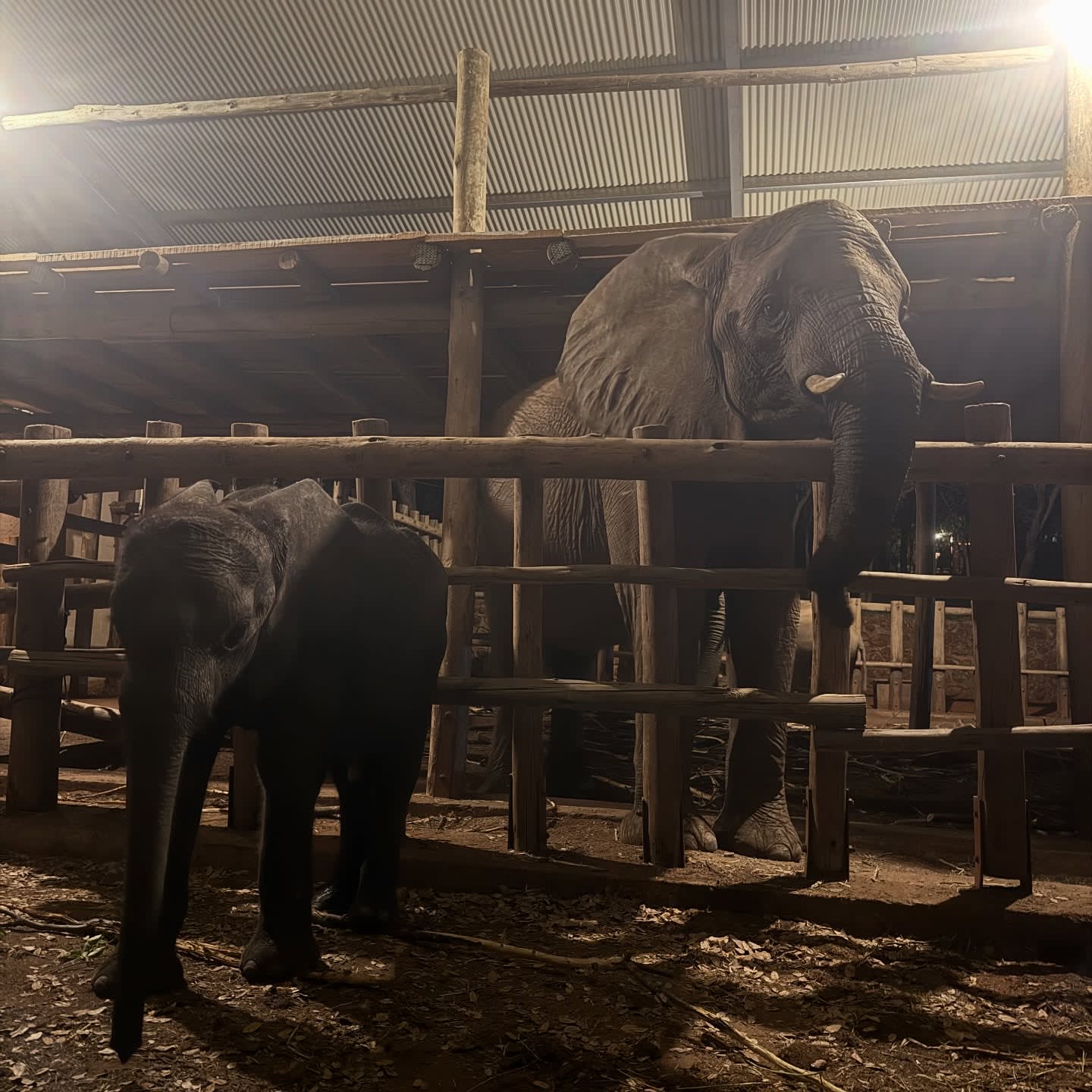
By morning, Moyo and her herd surrounded him with quiet care. And today, under the gentle patience of Paradzai, our most experienced Carer… He finally took his first full bottle of milk.
A moment of pure joy. A sign that trust has been found and strength will follow.
Make sure to swipe to see the incredible video of the elephants welcoming the new baby you may be moved to tears!”
Video: rushing in to meet the new arrival. Listen out for the joyful tummy rumbles. The calf was kept separated in the boma, initially, so that she wasn’t overwhelmed, before being taken in by aunties Norah, Annabelle and Moyo.
Hi Everyone,
David here again. I just want to say thanks to each and every one of you who has chosen to become a paying subscriber. In so doing you are supporting the unique and extraordinary work done by the team at Panda Masuie - not to mention the elephant orphans themselves, like this precious new addition.
May all beings be free from suffering!
Be the change you wish to see in the world!
Please feel free to share this post with anyone you feel it may help!