Sergei V. Chapnin's Blog
September 10, 2026
Book Talk: Religious Communities Under Pressure
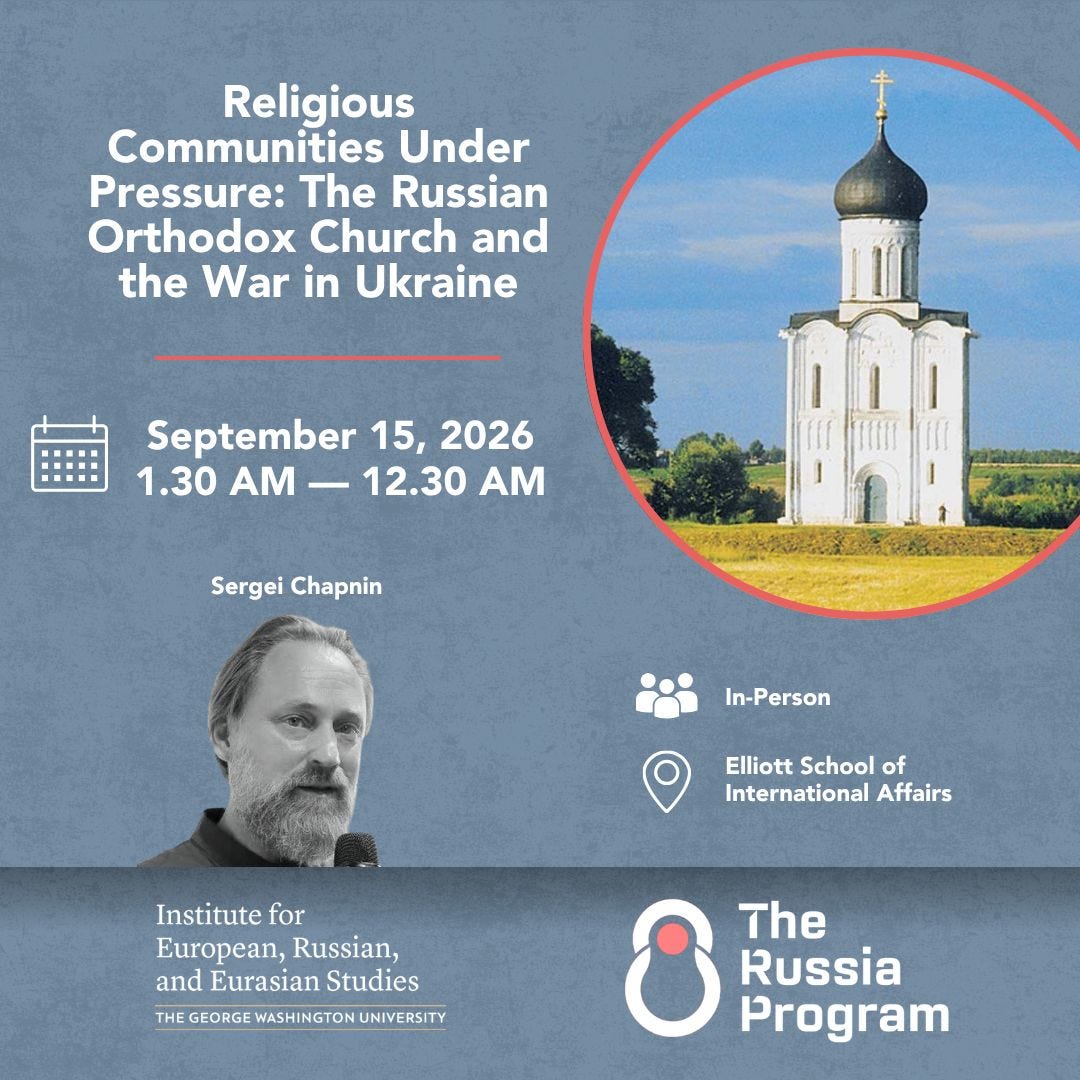
A conversation with Peter Rollberg on the book — and on what almost five years of war have done to religious life in Russia.
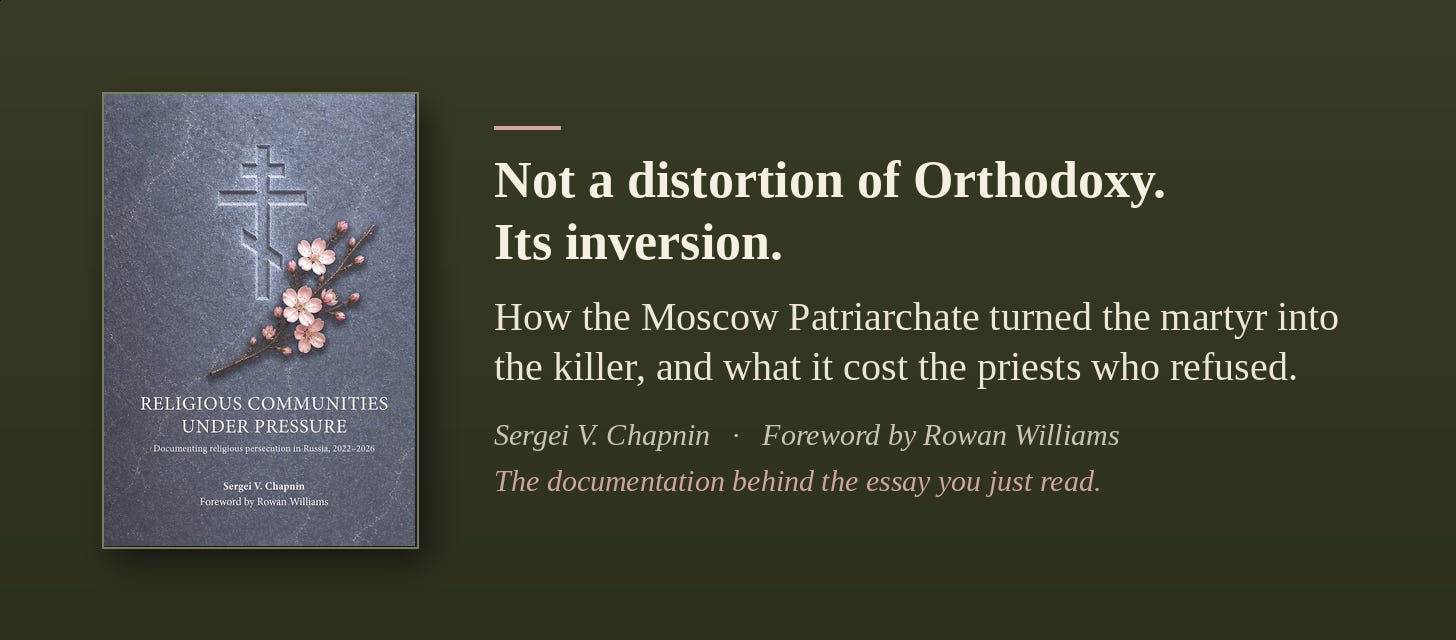
On Tuesday, September 15, at 11:30 a.m., I’ll present my book Religious Communities Under Pressure: Documenting Religious Persecution in Russia, 2022–2026 at George Washington University. Peter Rollberg — Professor of Slavic Languages, Film Studies, and International Affairs at GWU — will moderate.
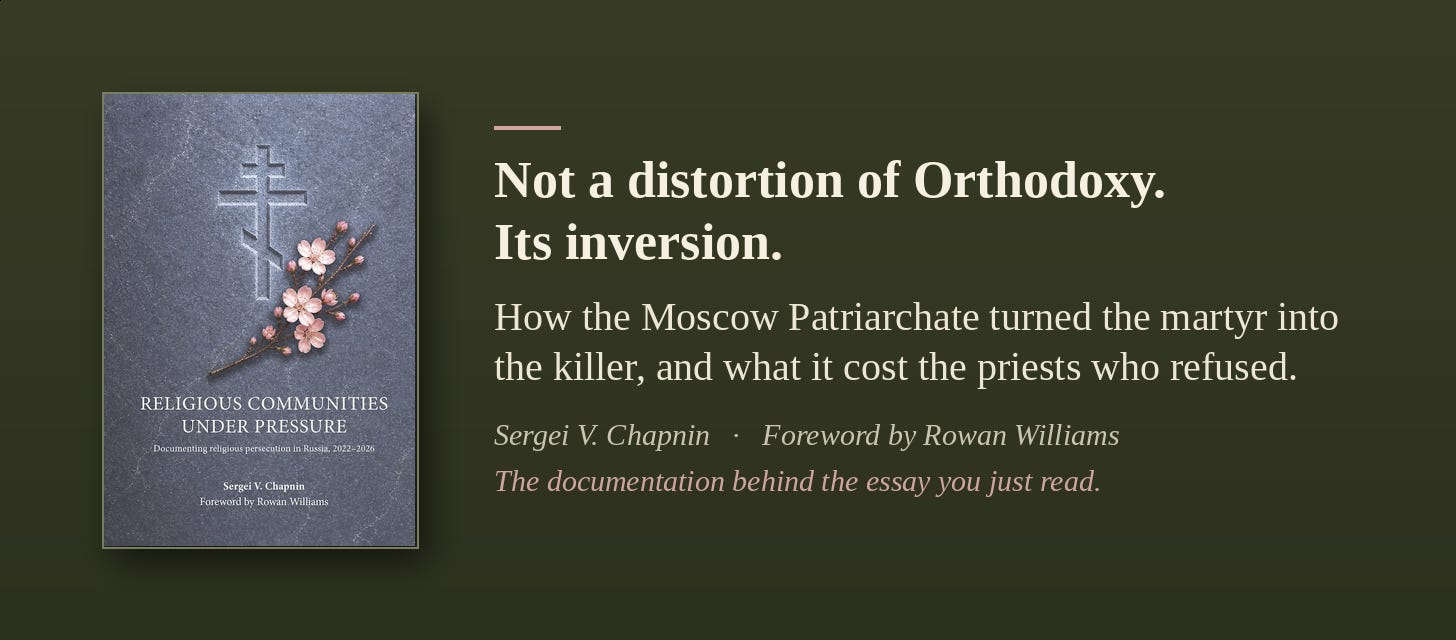
The book follows what has happened inside Russia since February 2022: not only the Orthodox priests silenced for refusing to bless the invasion, but Catholics, Protestants, Muslims, Buddhists, and Jehovah’s Witnesses drawn into the same widening machinery of pressure. It rests on four years of official documents, court rulings, synodal decisions, and testimonies that are rarely read side by side.
George Weigel included the book in his Summer Reading List 2026 in First Things, and returned to the state of the Russian Church in his Wall Street Journal column, “Putin’s War and Kirill’s Blasphemy.” The book carries endorsements from Rowan Williams, Vladimir Kara-Murza, Archbishop Elpidophoros, and John Chryssavgis.
If you’ll be in Washington, please come — it’s in person, and I’ll bring a few copies for anyone who’d like one.
Tuesday, September 15, 11:30 a.m.
Lindner Family Commons, Room 602
Elliott School of International Affairs, GWU
1957 E St NW, Washington, DC 20052
>>","action":null,"class":null}" data-component-name="ButtonCreateButton">Register now >>>


September 9, 2026
A False Defender
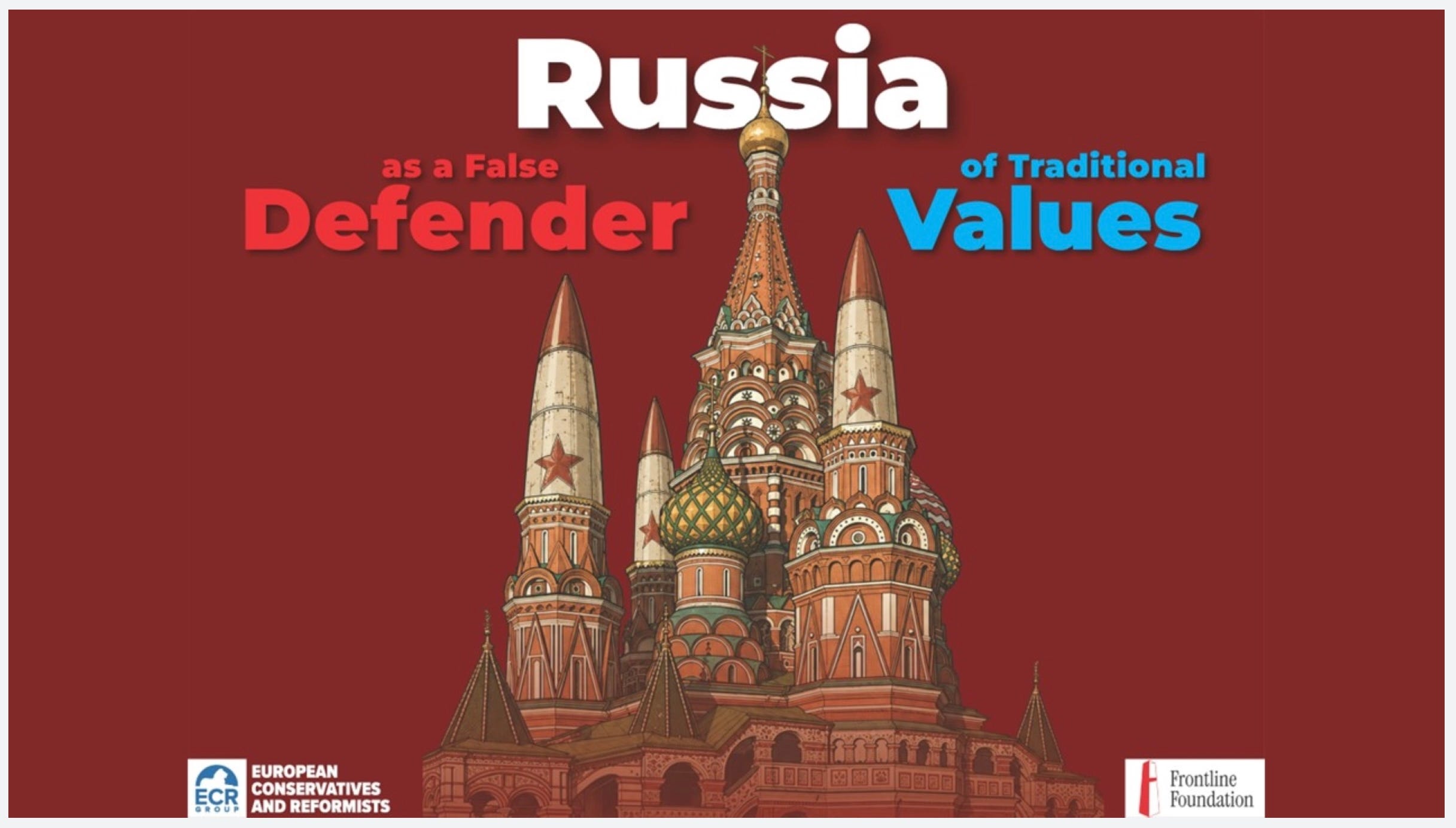
Remarks delivered today by video, in abridged form, at the conference “Russia as a False Defender of Traditional Values,” organized by the ECR Group in the European Parliament in cooperation with the Frontline Foundation (European Parliament, Brussels, 9 September 2026). The full text is published here. These remarks draw on the author’s policy paper Faith Under Pressure (Free Russia Foundation, 2026).
Good morning, America is just waking up. I’m glad to be with you, even if only on a screen.
Let me start with one word.
Picture a church in Moscow. A priest is handed a prayer, written by Patriarch Kirill. The prayer asks God to give Holy Rus’ (Putin’s Russia) victory. The priest changes one word. Instead of victory, he asks for peace. For that one word, the official Church strips him of the priesthood.
Hold on to that picture: a priest severely punished by his own Church for praying for peace. Once you see why that is not an accident, but the system working exactly as it was designed to work, you’ll understand everything I want to say.
I’m telling you this from the inside. For fifteen years I worked in the Moscow Patriarchate. In December 2015 I was fired, on Patriarch Kirill’s personal order, after a lecture at the Carnegie Center in Moscow, where I warned that Russia—both the Church and the state—was preparing to use the language of faith to justify war. People told me I was exaggerating. I wasn’t.
My fellow speakers today map Russia from the outside: the intelligence picture, the disinformation and propaganda, the networks. I come at it from a different place. I’m not a security analyst. I’m a journalist, a scholar, and a Christian, and the only side I’m on is that of the believers this system persecutes, of every confession, not only my own. Now I want to take you inside. Inside the Church that built the doctrine that pro-Moscow conservative networks are selling around the world.
This conference calls Russia a false defender of traditional values. Let me be exact about the charge. The problem isn’t that Russia defends these values badly, or insincerely. It’s that the state and the Church together have counterfeited them, and the counterfeit now gives permission to kill.
Start here. I want to argue that “traditional values” (and even the Orthodox Church itself, as others noted here today) are not decoration on a repressive state. They are embedded in the state’s operating system. And the Russian Orthodox Church isn’t a hired decorator; it’s the co-author. Kirill wrote this TV concept himself, among a few others, in the year 2000, ten years before the Kremlin found it useful. The Church didn’t join the project late. It started it, and sold it.
I’m not going to tell you that caring about family, about children, about continuity between generations, is empty. It isn’t. These are real goods; many of you feel them, and so do millions of Russians. That’s exactly why the forgery works, because you can’t counterfeit what’s worthless.
But under the war, look what that forgery becomes. A doctrine that set out to make the nation and the family holy has ended up making violence holy, and finally death itself. In September 2022, Patriarch Kirill told believers that a soldier who dies in this war does something that “washes away all sins.” He compared it, directly, to the sacrifice of Christ on the cross.
Think about what that inverts. In the Christian tradition, the martyr is a witness, holy because he would rather die than kill. Kirill’s formula makes the opposite man holy: the one who kills. The martyr is replaced by the killer. Mikhail Epstein gives it the right name: a theology of terror.
So the cult of life ends up producing a theology of dying. Russia, as the self-proclaimed defender of Christianity, ends up producing an anti-Christianity. This isn’t a stricter kind of faith. It’s a different religion, wearing Christian clothes.
Once killing becomes a value, the priest who prays for peace isn’t just an inconvenience. He’s a heretic. That’s why he loses his rank in days, and is told to leave the country within hours. Here the Church isn’t following the state. It’s running ahead of it.
And this isn’t one priest, or one prayer. In my book Religious Communities Under Pressure: Documenting Religious Persecution in Russia, 2022–2026, I document more than a hundred cases, across more than a dozen denominations. In most of them, the state does the persecuting directly. The Orthodox case is different: here the Church punishes its own, its court often moving before the state even acts.
So why does this matter in this room? The easy question is whether Putin’s Russia is sincerely Christian, or just cynical. It’s the wrong question. The answer is neither. It’s one system: the Church supplies the moral language, and that language fuels a war of aggression abroad and repression at home. And yes, it was built for export too, to win admirers in the West, in Africa, in Asia. If you mistake it for a Christian ally, you are not its convert. You are its recruit.
And this is not only a matter of conscience. It’s a matter of your security. My fellow speakers track the delivery system; I’m describing the warhead, the meaning it carries. A doctrine that can bless a soldier’s death can split your societies, recruit your own believers, and hand a war of aggression the language of a divine mission. It’s aimed at you not with missiles, but with meaning.
And let me be clear where I stand. I’m not criticizing the tradition from the outside. George Weigel (the biographer of John Paul II, and no one’s idea of a liberal) and I have discussed these questions directly, and from our two Churches, a Catholic and an Orthodox, we reach the same conclusion. This is not East against West. It’s forgery against the Gospel.
Let me end on the hopeful note, because it’s also the practical one. Do not write off the Russian Church, and do not confuse it with Patriarch Kirill. The alternative to his doctrine isn’t Western secularism. It already exists, inside the Russian tradition itself. Inside the Church there is dissent, and there is resistance, but it has been stripped of its voice: defrocked, jailed, driven out. What Moscow casts out, Constantinople takes in. Father Alexei Uminsky (an old friend of mine, mentioned here earlier today) led the funeral service for Mikhail Gorbachev, and was defrocked for refusing the prayer for victory. He is serving today, back at the altar, in Paris; others like him are now in Turkey, in Lithuania, and in other European countries.
These are the voices to listen for: not the patriarch who blesses the war from the ambo of a golden-domed cathedral, but the priest he defrocked for saying the word peace.
A regime that had really taken Christianity to heart would have nothing to fear from a man who prays for peace. This one is afraid of him, afraid enough to destroy his life in a single day. That fear is the most honest testimony we have. It tells us which faith is real, and which one is the counterfeit.
Thank you.
September 7, 2026
The Whole Picture
For years, I have been writing about the post-Soviet religious revival, the Russian Orthodox Church in Russia and the diaspora, and then its long surrender to state power, the war it agreed to bless, and the believers who resist. I have written a few dozen essays, in one outlet after another, mostly in Russian but now also in English, and by now even I cannot hold them all in my memory. I cannot expect you to. Yet what is happening to the Churches in Russia, and to the people who refused to endorse the war, cannot be understood one article at a time. It has to be followed as it unfolds, from the 1990s through the 2000s and up to today.
So I am starting to gather all my work in one place. You will now find it at chapnin.org: some of the essays, the new book documenting the persecution, the record of the lectures, and more. You will also find something I have rarely let you see together: my photographs from the cities I have visited, icons painted by my friends, and portraits of friends and of people I have come to know. Some of them have passed away, but they live on in my memory and my prayers.
The writing keeps account of what is being lost in the life of religious communities in Russia. The photographs are about the opposite: what remains. With a camera, I look for the Church that is still beautiful, for prayer, and for the visual language in which beauty still speaks. There are only about thirty images there for now. I will go back into my archives and add to them, and I mean that as a real promise. And perhaps, one day, I will make an exhibition of them.
If you have time, walk through all of it slowly. If you are reading this, the site was made for you. Stay close; this is where the record will go on growing.
August 10, 2026
“Ограда любви” с колючей проволокой (in Russian)
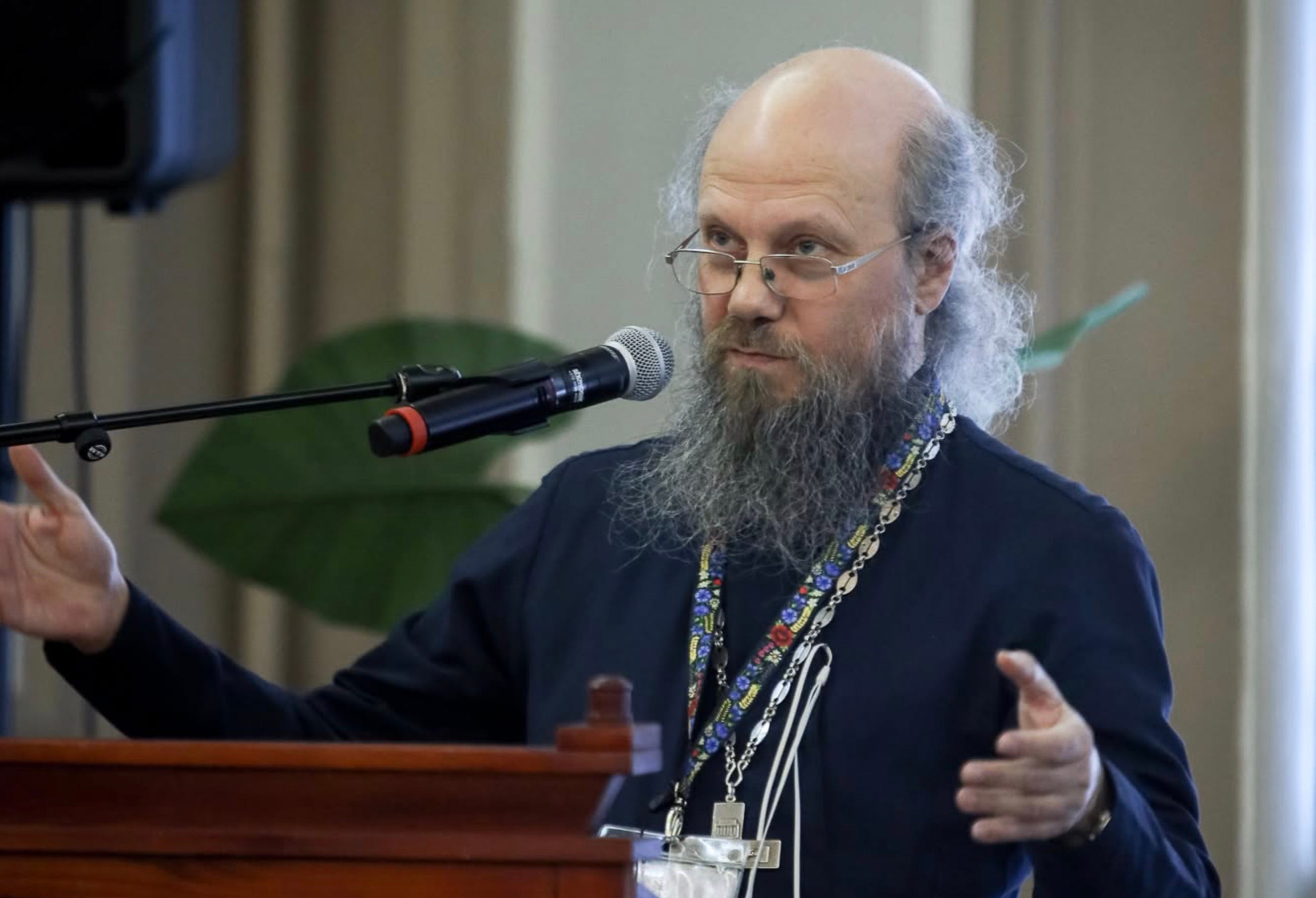
На фото: протоиерей Игорь Прекуп. Photo credit: ФБ страница ЭПХЦ
Прочитал недавно статью протоиерея Игоря Прекупа «Основы канонических связей и отношений» и не удержался – прокомментировал её на фб-странице автора. Разговор у нас с ним получился серьезный, поэтому хочу вынести некоторые тезисы этой дискуссии в отдельный текст.
Сперва несколько слов о контексте для тех, кто не следит за темой. Отец Игорь принадлежит к Эстонской православной христианской церкви (ЭПХЦ) – это новое и довольно необычное название той юрисдикции в Эстонии, которая исторически связана с Московским Патриархатом (не путать с Эстонской апостольской православной церковью, которая под Константинополем). С 2024 года Эстонское государство пытается принудить ЭПХЦ разорвать её связи с Москвой. Сперва эстонская полиция отказала в продлении вида на жительство митрополиту Евгению, тогдашнему главе ЭПХЦ и гражданину России, – его депортировали зимой 2024 года, а в 2025 вслед за ним ещё семерых клириков. В октябре 2024 года МВД предложило довольно жесткие поправки к закону о церквях и приходах, правительство одобрило их в январе 2025, однако президент дважды отказывался подписывать закон, называя его «юридическим кошмаром». Парламент дважды переголосовывал текст без изменений, в июне 2026 Конституционный суд признал закон соответствующим конституции. 27 июня 2026 года он вступил в силу.
Аргументация государства не про церковные каноны, а про безопасность: связь с иностранным религиозным центром, который «поддерживает или поддерживал военную агрессию» и «призывает к войне», закон определяет как угрозу. И хотя сам патриарх Кирилл не называл агрессию против Украины «священной войной» – эту формулировку в апреле 2024 года принял Всемирный русский народный собор, форум, который патриарх Кирилл бессменно возглавляет и на котором лично выступал. При этом сам патриарх не раз публично оправдывал эту войну.
Плюс постоянные разговоры о «русском мире» как о духовном пространстве, охватывающем «каноническую территорию» РПЦ на постсоветских землях, дают основания включать в зону этого религиозно-политического влияния и Эстонию. Сегодня государство требует от ЭПХЦ убрать из устава упоминания Москвы, сменить руководство, избрать нового митрополита и передать государству Александро-Невский собор в Таллине. Смена названия с «Эстонской православной церкви Московского патриархата» на «Эстонскую православную христианскую церковь» весной 2025-го чиновников не удовлетворила. Сегодня ЭПХЦ готовится оспаривать закон в Страсбурге.
Статья о. Игоря в защиту канонического подчинения Москве написана хорошо, и это стоит отметить сразу: аргументы подобраны разумно и аккуратно, с опорой на источники, а не на благочестивые заклинания. Отец Игорь выстраивает статью на пяти основных доводах. Во-первых, различение канона и закона: канон, по его определению, не шаблон и не бюрократическая норма, а «ограда любви», средство выявления и выравнивания «кривизны и шероховатостей» в отношениях, изначально строящихся на любви, а не на предписании. Во-вторых, различение верховенства права и верховенства закона: государство способно принять закон, прямо противоречащий естественной нравственности, а каноническое право в этом смысле ближе к праву естественному, чем к позитивному, потому что коренится не в государственных интересах и не в здравом смысле, а в Божественном Откровении. В-третьих, экклезиологический довод: Церковь не просто земная организация и не какое-то сообщество по интересам, а богочеловеческий организм, «Дом Божий», Тело Христово, и вне этого образа, по слову самого автора, все разговоры о ней как о религиозной институции «уводят в сторону от истины». В-четвёртых, исторический довод: неразрывную связь ЭПХЦ с Москвой отец Игорь видит не в административном удобстве, а в том, что эстонцы, приобщаясь к православию через русских миссионеров начиная с X–XII веков, приобщались тем самым «и к их святым предкам» – то есть к духовной семье, а не просто к одной из церковных юрисдикций. И в-пятых, довод, которому отец Игорь придаёт особое значение, – аналогия с семейным правом, продолжающая мысль о «духовной семье» из предыдущего пункта. Даже жизнь семьи, основанной на глубоко личных, интимных чувствах, государство законодательно регулирует; брак остаётся общественным институтом, обязанным соответствовать законодательству, – но, по мысли автора, это не значит, что светское расторжение брака автоматически расторгает то, что было освящено духовно. Так и каноническая связь с той же «духовной семьей», о которой шла речь выше, – по логике отца Игоря, должна переживать любой административный разрыв, продиктованный государством. При этом основной тезис о недопустимости государственного вмешательства во внутреннюю жизнь Церкви по сути верный, тут я на стороне автора: эстонское государство, требуя от ЭПХЦ разорвать связи с Московской патриархией и действуя с административным нажимом, поступает так, как государству действовать не до́лжно.
Есть в статье один пример, который призван удержать юридическую рамку и который сам автор считает удачной находкой. При первом чтении статьи мой глаз зацепился именно за него, и согласиться с ним я никак не могу. Когда отец Игорь говорит о том, что закон и право могут расходиться (законодатель способен предписать то, что противоречит естественной нравственности), как иллюстрацию он приводит нацистскую Германию. Да, я понимаю, что пример подобран не случайно: этот кейс давно исследован, по нему есть судебные решения и есть внутренний немецкий консенсус.
Спорить вроде бы не с чем, тем не менее проблема здесь есть. И она в том, что статья совсем не о Германии. Она о том, можно ли сегодня автономным церквям всеми силами удерживать каноническую и духовную связь с Московским патриархатом в условиях, когда государство давит на эти церкви извне, требуя разорвать её, а сам Московский патриархат системно поддерживает агрессию России против Украины. Нет, это не вопрос далёкого прошлого – это то, что происходит сегодня прямо на наших глазах: и прежде всего это вопрос о патриархе, который благословляет войну и наговорил целый ворох ересей в связи с этим; о священниках, отказывающихся благословлять насилие и отправляющихся за это под церковный суд или в изгнание; о церковной иерархии, срощенной с властью настолько, что различить, где кончается Тело Христово и начинается госаппарат, – уже не богословская задача, а вопрос к тем, кто расследует военные преступления России. Вот здесь и нужен был бы иной, актуальный пример – из тех, что не устоялись и до конца не исследованы, по которому еще нет судебных решений, а вот моральное алиби у сотрудничающих с путинским режимом всё еще есть. Словом, было честнее говорить о том, как стремительно расходятся закон и право в современной России.
Пример Германии не столько иллюстрация тезиса, сколько попытка уклониться от прямой моральной оценки происходящего. Я сказал об этом отцу Игорю прямо, он ответил, что я несправедливо приписываю ему лукавство и что пример выбран за ясность, а не для того, чтобы спрятаться. Возможно. Но результат один: статья с блеском защищает право Церкви на канонические связи, скреплённые общей историей, святостью, памятью новомучеников – и старательно избегает вопроса, остаются ли эти связи «оградой любви». Если глава той «духовной семьи», о которой говорит о. Игорь, благословляет войну и отсекает от этой семьи тех, кто дерзает процитировать Евангелие, то в этой семье явные проблемы. Пока этот вопрос не поставлен со всей ясностью, прекрасная «ограда любви», которую вдохновенно рисует о. Игорь, уже обернулась оградой с колючей проволокой для многих россиян, в том числе и православных.
Мой второй аргумент из комментариев в фб связан с попыткой уточнить, что автор понимает под учением о Церкви. Он выводит каноническую связь не из административного удобства, а из экклесиологии. Он пишет, что и само церковное право исходит из экклесиологии, которая, в свою очередь, «отрасль догматического богословия, учение о Церкви». Согласимся, связь следует понимать и осмыслить в богословских понятиях прежде всего, а не чисто административных или (гео)политических. Но здесь стоит сказать прямо: модель, из которой Прекуп выводит необходимость именно такой, административно оформленной и якобы нерушимой связи с Москвой, – модель универсалистская, по сути имперская, и она давно устарела. Ещё Николай Афанасьев убедительно показал: полнота Церкви пребывает в местной общине, собранной вокруг своего епископа на Евхаристическом собрании, а не в надстройке, которая слишком часто присваивает себе право говорить и решать за все местные церкви сразу. Сам Прекуп ссылается на Афанасьева, но, по-моему, неудачно – не замечая, что его же евхаристическая экклезиология работает не в пользу вертикали, а против неё.
Для меня же главная перспектива в экклезиологии – эсхатологическая: Церковь не есть природная данность и не хранитель «естественного» порядка, а образ Царства, которое всегда впереди неё самой и всегда её судит. С этой точки зрения апелляция к «естественному праву», на котором держится второй аргумент статьи, – ход изначально слабый: естественное право годится, чтобы спорить с государством на его языке, но само по себе ничего не говорит о том, что Церковь – не «собственность» той или иной нации и не хранитель «духовной семьи», скреплённой кровью и историей, а нечто принципиально иное. Апеллируя к природе, а не к Царству, легко защитить связь с Москвой. Но при этом точно так же легко оправдать «русский мир»: и то, и другое можно объявить «естественным». И вопрос тогда не только не снимается, но и обостряется: что происходит с догматической связью, когда глава той духовной семьи публично учит вещам, которые богословие без всякой натяжки называет ересью, – обожествлению государства, «русскому миру» как разновидности религиозного национализма, благословению убийства как святого дела? Держаться единства во что бы то ни стало в такой ситуации – вовсе не значит держаться православия. Это значит упорствовать в ереси, потому что единство в этих вещах и есть содержание, а не оболочка.
Отец Игорь в комментариях к статье возразил: патриарх не есть вся РПЦ и сводить Церковь к одному человеку методологически неверно. Да, все так, если мы говорим о богословском принципе и некоей абстрактной Церкви. Но за годы патриаршества Кирилла Гундяева различие личности и института практически стёрлось: право говорить от имени РПЦ монополизировано настолько, что сегодня патриарх и есть РПЦ – в глазах государства, в глазах прессы, да и в глазах большинства архиереев, которым проще молчать, чем оспаривать этот статус (при этом сама болезнь, разумеется, гораздо глубже и шире одной «проблемной» фигуры – это системное сергианство на всех уровнях церковных институтов и даже самой логики восприятия Церкви). Мирян, да и духовенство при этом никто не спрашивал. Приватизация бренда «РПЦ» уже состоялась.
В дискуссии отец Игорь возражает на это формулой «первый среди равных»: судить о Поместной Церкви следует положительно, то есть по тому, что в ней соответствует соборным постановлениям, а не по фигуре предстоятеля. Однако соборные постановления предполагают реальную, а не декларативную соборность – а вот её в РПЦ давно нет даже формально. Апелляция к «тому, что соответствует соборным решениям» имеет смысл лишь там, где есть орган, способный эти решения принимать и строго спрашивать за их исполнение в том числе и с патриарха. Где такого органа нет, различение «патриарх» и «Церковь» перестаёт быть богословским принципом и становится фигурой речи.
Как показывает история православия, сам язык «общения», «духовной семьи», и даже «евхаристического единства» сам по себе ничего не гарантирует – исторически он не раз оборачивался оправданием имперской симфонии власти и Церкви, а не защитой от неё. «Духовная семья» без постановки вопроса о ее внутренней свободе вовсе не гарантия подлинного/канонического православия, а всего лишь риторический ход, скрывающий бедственное положение дел. И пока ситуация не изменилась, различение властного «патриарха» и той безмолвствующей от страха «духовной семьи», о которой говорит о. Игорь, стоит рассматривать в совсем другом ключе. Многие в этой семье, боюсь, живут в страхе перед своим «великим господином и отцом», который оказался и авторитарным правителем, и абьюзером одновременно.
На это отец Игорь ответил более жестко. И здесь, мне кажется, наше расхождение глубже, чем вопрос терминологии. У отца Игоря за различением «должного» и «фактического» стоит «подлинная» РПЦ, то есть некая абстрактная сущность, пребывающая в чистоте и праведности поверх любых исторических событий, которую нынешнее патриаршество лишь искажает, возможно всего лишь слегка. Однако абстрактной РПЦ, отделенной от её конкретного исторического бытия, не существует. РПЦ – это конкретная Церковь со всеми проблемами её исторического бытия, а не нечто благоухающее и ожидающее где-то сбоку, пока исторические факты забудутся или же сами начнут ей соответствовать. Говоря «патриарх и есть РПЦ», я говорю о единственной существующей сегодня, конкретной Церкви. И это, замечу, один и тот же ход, который отец Игорь использует во всей нашей дискуссии: Германия вместо путинской России, естественное право вместо конкретной ситуации, «патриарх – не вся РПЦ» вместо той конкретной Церкви, власть в которой этот патриарх захватил. Каждый раз отец Игорь моментально отступает в безопасную абстракцию вместо трезвого взгляда на то, что именно происходит здесь и сейчас. Собственно, о том же самом приёме я уже писал несколько недель назад – там речь шла о диаконе Полянском, который тем же способом разводит видимую Церковь и невидимую святость, чтобы иерархия могла скрываться от ответственности за свои компромиссы и предательства. Аргумент у меня был буквально тот же самый: нельзя цитировать канонизированных новомучеников XX века и не замечать живых исповедников нашего времени, которые сегодня отказываются благословлять войну и сидят за это в тюрьмах.
Но куда интереснее другое: сам отец Игорь неожиданно признает: то, что происходит с РПЦ – это «экклезиологическая ересь сергианства» и прибавляет, что нынешний этап – «всего лишь её закономерный этап развития». Это уже смело. И в признании этого диагноза наши позиции, казалось бы, сближаются. Однако не стоит обманываться этим внешним сближением – в оценках тяжести болезни мы не сходимся. Публично назвать явление ересью и вести себя так, будто бы внутри этой ереси можно выжить, оставаясь православным, – это опасная эквилибристика. После таких утверждений к о. Игорю падает доверие не только как к автору статьи, но и как к пастырю. Боюсь, он либо не до конца осознаёт, насколько сергианство как ересь опасно именно сейчас, либо, осуждая его на словах, на деле готов с ним примириться.
Будем помнить, что у этой болезни есть и более широкое, соборно признанное именование – этнофилетизм, осуждённый Константинопольским Собором 1872 года именно за отождествление церковного единства с национальным. «Русский мир» – это его нынешняя, самая острая, хотя и не единственная форма в православном мире.
Тут стоит быть честным до конца. Отец Игорь напоминает, что идеологию «русского мира» он прямо называл «деструктивной». Это действительно ясное слово, но это еще не позиция. Сегодня мало назвать эту идеологию деструктивной. Надо сказать прямо: не маргинальные идеологи и «православные патриоты», а РПЦ как институт и многие церковные иерархи лично приложили немалые усилия к тому, чтобы эта версия религиозного национализма получила широкое распространение, в том числе среди русскоязычной паствы в Эстонии. Это не богословская ошибка где-то на периферии, а систематическая работа, которую годами вели те самые церковные институты, к которым отец Игорь принадлежит. Понимаю, сдержанность в критике патриарха он объясняет не страхом за себя, а желанием не создавать лишних проблем своему архиерею, который, по его словам, «находится сейчас в очень уязвимом положении» – и, учитывая депортации клириков ЭПХЦ, о которых шла речь выше, эту осторожность по-человечески можно объяснить, даже если я считаю такую позицию недостойной. Получается, что корпоративная солидарность стоит выше стремления свидетельствовать о правде.
Есть в ответе о. Игоря и, казалось бы, сильный ход, попытка личного свидетельства: «Пока у меня есть выбор быть в той Церкви, которую травят и шельмуют, или бросить её и перейти туда, где этих проблем нет, я выбираю первое. Я с теми, кого хулят, на кого наветуют, кого травят, шельмуют». Но как это понимать? Эти слова звучат крайне двусмысленно. Защищает ли он официальную Церковь и лично патриарха Кирилла, жёсткую оценку которому дали и церковные иерархи ряда Церквей, и известные богословы, или же это солидарность с теми, кого патриарх Кирилл лишил сана, с гонимыми и преследуемыми православными, твёрдо стоящими на антивоенных позициях? С какой из этих двух Церквей он декларирует свою солидарность? Увы, боюсь, что с первой. Именно поэтому он всеми силами держится за РПЦ и видит в этом единственно возможный вариант принадлежности к каноническому православию. Выходит, что имперское милее.
И последнее. У отца Игоря в статье есть красивый аргумент про семейное право. Он пишет, что жизнь сообщества, “основанного на глубоко личных чувствах и интимных отношениях, как семья”, тем не менее “законодательно регламентируется и регулируется”, и что “брак – это общественный институт, и в этом качестве он должен соответствовать законодательству. Так же и отношения в Церкви”. А вывод из этой аналогии такой: «юридическое расторжение брака не влечет за собой автоматически расторжение брака освященного, церковного, “венчанного”». То есть государство может развести супругов по своим законам, а перед Богом брак остаётся в силе. По аналогии – Эстонское государство может административно оторвать ЭПХЦ от Москвы, но духовная связь всё равно сохранится.
Но если уж использовать аналогию с браком, то давайте доведем её до конца, а не только до более менее удобного места где-то посередине. Церковь никогда не считала венчанный брак нерасторжимым при любых обстоятельствах. Среди оснований для прекращения церковного брака нет механического признания гражданского развода; к таким основаниям могут относиться, среди прочего, прелюбодеяние, насилие и отпадение одного из супругов от веры. Если каноническая связь с Московским Патриархатом – это духовный брак, то вопрос, который аналогия сама подсказывает, звучит вовсе не так, как формулирует ее автор – «может ли Эстония его расторгнуть», а не совершил ли один из супругов то, что вся церковная традиция всегда считала основанием для развода. И ответ стоит искать совсем не там, где предлагает о. Игорь. Стоит заметить: слово «абьюзер» в нашей переписке первым произнёс сам отец Игорь – он написал, что Церковь «страдает от абьюзера... я считаю для себя неприемлемым её бросать (а не его)». Разницу между жертвой и абьюзером он, значит, тоже видит. Хорошо. Тогда вопрос в том, можно ли сегодня в РПЦ отделить одно от другого: оставаться в общении с иерархией, которую тот же абьюзер продолжает возглавлять, назначать и контролировать, – и одновременно называть это верностью жертве, а не соглашательством с абьюзером? Отец Игорь ответил в комментариях так: «положение отца в современной семье и его же положение в патриархальной – две большие разницы»; уйти оттуда, по его словам, – «вопрос ничего другого, кроме волевого выбора». Может быть. Но апелляция к патриархальному укладу как объяснению того, почему выйти труднее, – это не опровержение аналогии со злоупотреблением, а её лишнее подтверждение: именно неравенство и узурпация власти внутри такой структуры и делает подобные отношения потенциально абьюзивными, а не снимает вопрос в принципе.
Разговор о Русской Церкви как о единой духовной семье, как о едином Теле Христовом, стал невозможным после 24 февраля 2022 года, когда члены РПЦ отправились убивать других членов той же самой Церкви, а патриарх до сих пор этого не заметил и поэтому не остановил войну. Более того, он на протяжении всех лет войны искал аргументы для оправдания российской агрессии и посылал в буквальном смысле слова тысячи православных священников в зону боевых действий, чтобы они «окормляли» оккупационные войска и благословляли российских солдат на убийство своих единоверцев в Украине. Как после всех этих преступлений, – свершающихся на наших глазах! – протоиерей Игорь Прекуп может всерьёз сравнивать РПЦ в её нынешних исторических формах с семьёй?
Неожиданным для меня в этом разговоре оказалось то, что отец Игорь полностью и безоговорочно отождествляет нынешнюю РПЦ с Церковью Христовой. Увы, я так не думаю. Русская Церковь расколота. РПЦ как коррумпированный институт и авторитарное государство позволяют до поры маскировать этот раскол, но долго это не продлится.
Наш спор с о. Игорем в конечном счёте о том, готовы ли мы признать – и встревожиться – что имперская религия на наших глазах разрушает изнутри историческую Церковь в России. Спор о том, что делать, когда ты видишь этот ужас: смириться и сказать, что мы не знаем других форм канонического православия, или же открыто встать на стороне тех, для кого Христос – живое упование, и кто за это свидетельство платит реальную цену: тюрьмой, изгнанием, лишением сана.
August 8, 2026
Kirill's Heresy Has Reached the Wall Street Journal
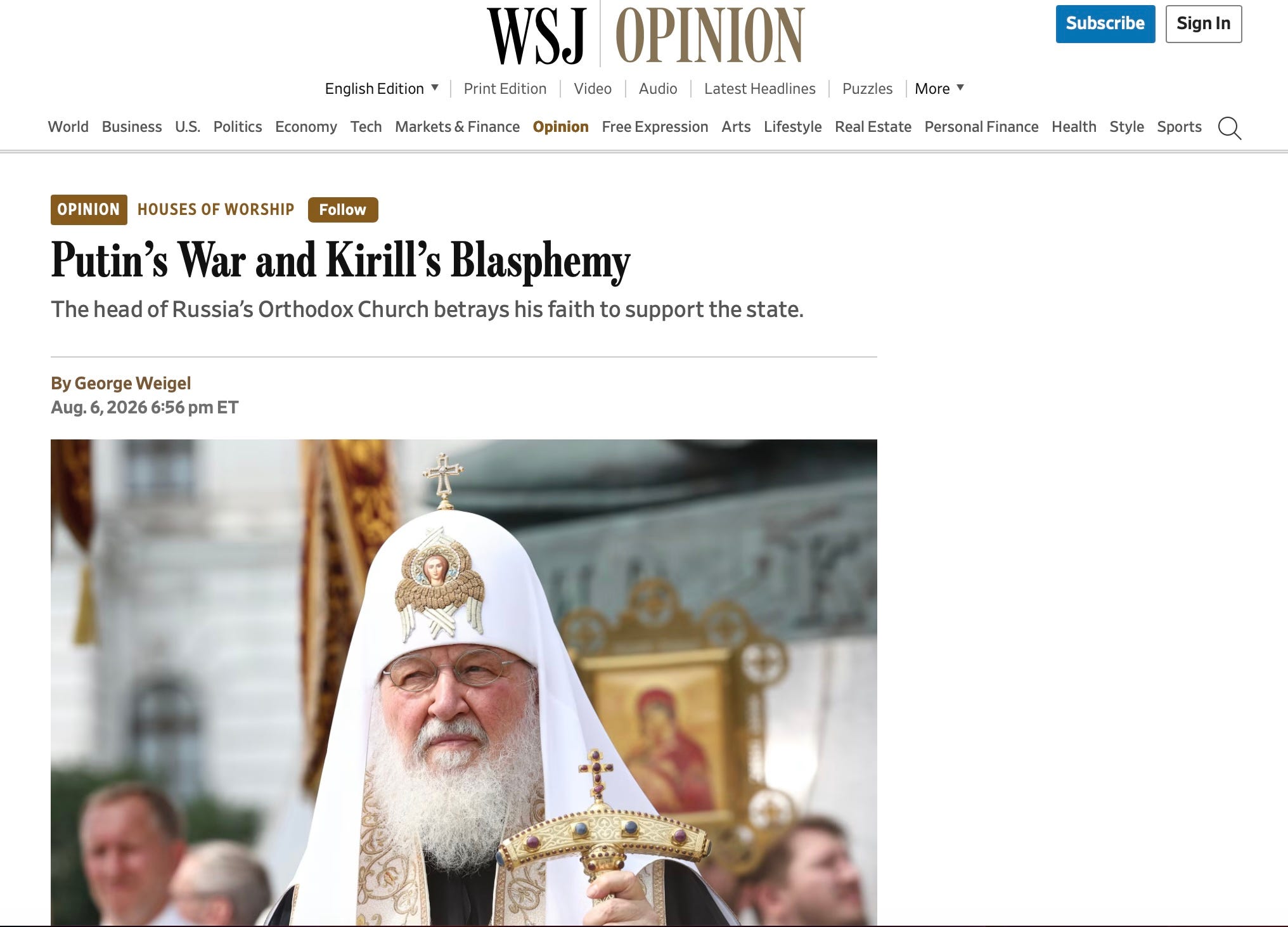
George Weigel's column in yesterday's The Wall Street Journal, "Putin's War and Kirill's Blasphemy," cites my book Religious Communities Under Pressure as evidence of the Moscow Patriarchate's campaign against clergy and laity who refuse to bless the war on Ukraine:
"As former patriarchate official Sergei Chapnin documents in his book 'Religious Communities Under Pressure,' the Russian Orthodox Church persecutes and disowns any of its clergy and laity who oppose the war on Ukraine. Mr. Chapnin warned a decade ago that Patriarch Kirill was transforming Russian Orthodoxy into a political ideology and later predicted that he would valorize a future Russian war against Ukraine in religious language. Now he demonstrates that the Moscow patriarchate's campaign of repression... targets any religious believer who challenges Kremlin policy and practice."
I'm grateful to Mr. Weigel for reading the book closely enough to engage its argument rather than just its conclusion. Ten years ago, describing Patriarch Kirill's Orthodoxy as a political ideology sounded to some like polemics. It reads differently now.
Religious Communities Under Pressure >>>
Weigel's column (WSJ, paywalled) >>>
July 29, 2026
George Weigel's Summer Reading List
George Weigel’s Summer Reading List came out today — in First Things, and word for word in Catholic World Report — and Religious Communities Under Pressure made the cut:
“Sergei Chapnin, Religious Communities Under Pressure: Through dozens of case studies, an expert on Russian Orthodoxy describes the corruption of the Church he loves by its willful self-subordination to the power of the Kremlin. Give it to anyone you know who fancies Tsar Putin a defender of Christian values and to any Catholic integralists in your circle.”
George and I only got to know each other this year — he from Washington, a lifelong Catholic conservative, I from fifteen years inside the Moscow Patriarchate. Different rooms entirely. What struck me, talking with him, was how much of the diagnosis we already shared before we’d ever compared notes — on what a church becomes when it trades conscience for the favor of the state.
I’m grateful for two things at once: for a solidarity with the persecuted that he held long before he’d heard of this book, and for now choosing to put the book itself in front of his readers.
Good company on the list too: Bishop Erik Varden and Pope Benedict XVI.
Full piece: https://firstthings.com/the-summer-reading-list-2026/
My book on Amazon: https://www.amazon.com/dp/B0H5G277LW
P.S. If the book struck a chord — a review and a few stars on Amazon would go a long way in getting it in front of more readers. I'd be grateful.
July 20, 2026
A Church of No One
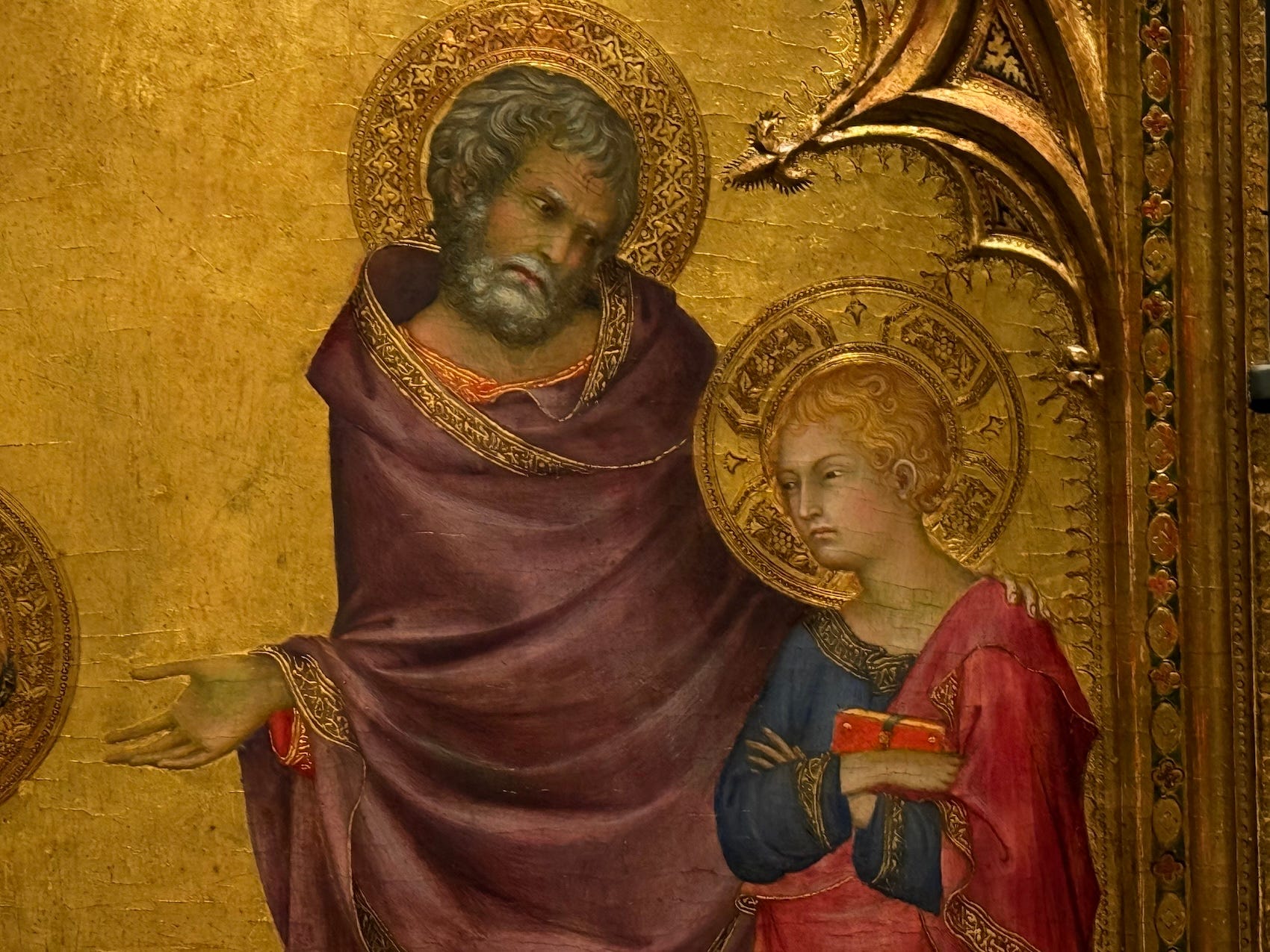
A few weeks ago I published a piece on this page about Metropolitan Hilarion — about the myth, believed even by bishops who should have known better, that he was the Church’s presumptive next patriarch, and about the catastrophic personal solitude, decades of never building a single relationship of trust among equals, that made any real candidacy impossible from the start. It’s part of a longer pattern in what I write here: on the Russian Orthodox Church’s collaboration with state power, on the scandals of its hierarchs, on the political subservience of its leadership. Deacon Poliansky (a strange pseudonym, a man with no name — a kind of headless horseman) has now replied, and the reply deserves an answer on its own terms. His argument, in short: the institution can be corrupt, but the Church cannot. The Moscow Patriarchate’s hierarchy is not the whole Church — only a local congregation of her members. Her holiness survives untouched by whatever Kirill or Hilarion do, because the true Church is carried instead by martyrs and quiet confessors, visible and invisible, following the pattern of the twentieth century’s New Martyrs. Critics like me, on his account, risk mistaking the institution’s sins for the death of the Church itself — a failure of theological vision, not a diagnosis.
This is a serious charge. Someone who hasn’t read much of what I’ve written, from the early 1990s onward, and is judging from a post or two, might reasonably reach it. I’ll answer at length, then — most of what I’ve argued on this subject over the years is in Russian, and unavailable to an English-language reader.
Poliansky’s argument rests on Khomiakov. I’m afraid he has misread him. Khomiakov himself is not beyond challenge here — Georges Florovsky later argued that his romantic vision of sobornost drifted toward idealism, borrowed more from German philosophy than from patristic realism, too taken with an invisible communion to reckon with the Church’s stubborn historical mess. That caution is worth keeping in view. But set it aside for now, because Poliansky’s use of Khomiakov fails on Khomiakov’s own terms, before we ever get to whether Khomiakov himself needs correcting. Khomiakov never asked us to choose between the visible and the invisible Church. He asked us to have the courage to see both at once, without letting one excuse the other. What Deacon Poliansky offers instead is a Church that is visible only when convenient and invisible the moment it becomes inconvenient. Fittingly, this argument comes from a name no one can hold accountable — the same structure in miniature: an authority that answers for nothing because it made sure never to be named. The New Martyrs he invokes did not achieve sanctity by looking past Metropolitan Sergius’s 1927 Declaration of loyalty to the atheist Soviet state. They achieved it by refusing that declaration, at the cost of their lives, while the hierarchy that issued it kept its offices, struggling to preserve its titles and its seat at every table that mattered. That is not a rebuke of institutional critique. It is institutional critique, canonized. And it cuts the other way from how Poliansky uses it. If the Church’s holiness really survives no matter what her hierarchs do, then the hierarchy has lost its last excuse. Its failures can no longer hide behind a promise of the Church’s permanence that was never the hierarchy’s to borrow in the first place. Khomiakov’s doctrine does not shield Kirill from judgment. It removes the only thing that could have.
There is a word in the ascetic tradition for what this move actually is, and it isn’t found in political theory. It is prelest’: a delusion that flatters the soul, mistakes a comforting picture of reality for reality itself, and calls the mistake faith. The Fathers don’t prescribe more refined theology as its remedy. They prescribe trezvenie: sober, clear-eyed attention to what is actually in front of you. Khomiakov asked for exactly that kind of sobriety, held toward the visible and the invisible Church at once. Poliansky asks for the opposite: a calm refusal to look at the visible, dressed up in the language of the invisible. None of this excuses me from the same demand. Trezvenie turned only outward, never inward, is not trezvenie at all. It’s just prelest’ with better manners, and pointing that risk out in someone else doesn’t mean I’ve escaped it myself. I criticize a great deal, and I don’t plan to stop. But the criticism comes from care for the Church, not from any wish to discredit her.
There is also a more uncomfortable problem here: which martyrs get named, and which don’t. Kochurov, Evdokimova, Ostroumov cost Poliansky nothing to name. They passed away, canonized, long past the point where anyone owes them anything. The tradition he claims to defend is not a closed one. There are priests, monastics, and laypeople in Russia right now refusing to bless this war, sheltering the persecuted, losing their parishes, their freedom, sometimes their lives, for exactly the fidelity he attributes to the New Martyrs of a century ago. Denis Popovich and Nikita Ivankovich — two devout seminary graduates who once served as subdeacons to Metropolitan Tikhon (Shevkunov) — have spent more than a year in Moscow’s Lefortovo FSB prison on fabricated terrorism charges, their real offense being that they questioned the war. Their case is one among the more than 115 I’ve documented in my new book, Religious Communities Under Pressure. Neither Poliansky nor the vast majority of local Orthodox churches comfortably settled in free countries have shown much interest in naming them, praying for them, defending them, or standing with them while that would still cost something. It is easier to canonize the dead than to stand with the living.
The real institutional Church in Russia today includes the blessing of weapons. It includes the compromised patriarch and the bishops who chose survival over witness. This isn’t a scandal confined to two men. It’s the latest version of what the tradition itself now names Constantinian captivity: the Church trading her prophetic distance from Caesar for a seat near his throne, and calling the trade communion. Poliansky doesn’t quite deny this — he defers it. Kirill and Hilarion remain, on his account, members who might yet repent; nothing expels them, nothing forces the question now. True enough — but what, or who, actually calls them to repent? The prophetic voices that might have are being silenced. That’s the real move, subtler than denying their membership: every reckoning gets pushed onto some future repentance with no deadline and no required sign. It isn’t my account of the Church that’s imagined. It’s his: a Church that never has to answer for anything today, because whatever might answer for itself tomorrow is, by his own account, still safely inside.
Poliansky’s construction has a further problem, and it comes from inside his own logic. Press it and it proves too much. If holiness floats entirely free of the people who make up the Church, then it isn’t only Kirill’s weapon-blessing that stops counting as evidence of what the Church “really” is — Kochurov’s death for his flock does too, on the same logic, however much Poliansky would resist that conclusion. Both become equally external to an identity located somewhere else. That is not what Poliansky intends. It is where his own argument leads: sanctity cut loose from every actual believer, living or dead.
Nicholas Afanasyev put the point more concretely than Khomiakov ever did: the Church’s fullness isn’t distributed through some invisible communion at all, but enacted, in full, in the concrete eucharistic assembly gathered around a bishop — this altar, this gathering, now. On that account, a patriarch blessing weapons isn’t corruption happening off to the side of the true Church. It’s corruption happening at the exact point where the Church is supposed to happen. Khomiakov’s own communion of the living, the dead, and the unborn is, in Benedict Anderson’s sense, an imagined community too. That alone isn’t the problem. There’s a real objection nearby, and it deserves a straight answer, not a dodge: Christ himself forbade pulling up the tares before the harvest, precisely because human judgment about who belongs and who doesn’t can’t be trusted (Matthew 13:24–30). That parable isn’t some detail Poliansky forgot. It may be the strongest form of his argument. But the parable is about God’s patience with a mixture only He gets to sort out. It was never an excuse for the sower to stop knowing wheat from tares, or for anyone to pretend the field has no tares at all. The difference is that Khomiakov’s invisible Church still judges. It disciplines through repentance, confession, the actual falling-away of infected members that he describes without flinching. Poliansky’s version keeps the language of judgment but removes every way that judgment could ever reach the visible hierarchy. His Church knows how to absolve. It has forgotten how to see, and to call out what it sees. What’s left resembles an imagined community more than sobornost: a collective felt rather than lived, defined by no one in particular, answerable to no one in particular.
This isn’t to say nothing costs anything in Poliansky’s Church; martyrdom plainly does, and he is right to honor it. But notice who pays. The cost has been shifted entirely onto the laity and the persecuted, while the hierarchy that blesses weapons and works with the state settles its account with a cheap theology that was never going to charge it anything at all.
Khomiakov himself gives us the better ending, and Poliansky already quoted it: no one is saved alone. That’s as true of hierarchs as of martyrs, and it cuts against the very delay Poliansky is proposing. Repentance put off to some unnamed future is repentance sought alone, apart from the only communion in which Khomiakov says it can happen at all. If Kirill and Hilarion are to be saved, it will not be by a theology that lets them wait it out in comfort. It will be by entering, now, into the same communion of prayer and consequence that Denis Popovich and Nikita Ivankovich have already been living in, in Lefortovo, for more than a year. That repentance would have to show itself institutionally, not only spiritually — an actual break with the privileges the state grants a compliant hierarchy, not a private sorrow kept behind the iconostasis. And it cannot run on Poliansky’s timeline, because Popovich and Ivankovich are not living on it either.
Comforting doctrine. A cheap theology’s excuse not to repent. The same invitation extends to Poliansky, not only to the men he’s defending — but unlike his, mine comes with a date on it: today, while Popovich and Ivankovich are still in Lefortovo to hear it.
July 14, 2026
Hilarion, Who Never Was
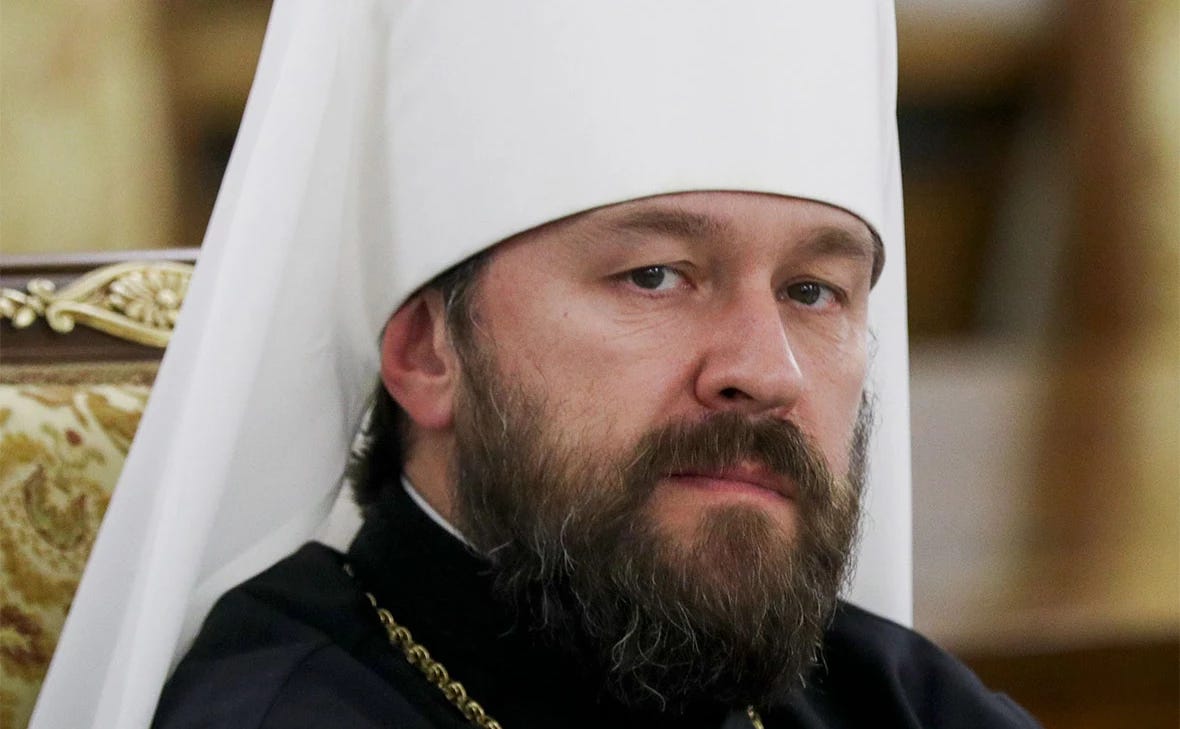
Фото: Михаил Терещенко / ТАСС
I spent the first two weeks of July in Rome, at the European Academy of Religion conference, and then in Berlin, meeting with Orthodox folks from different jurisdictions. One conversation kept recurring: “How could this possibly have happened to Metropolitan Hilarion, such a gifted theologian, the leading candidate for the patriarchal throne!” (I wrote in detail about what actually happened here). Knowing him personally was capital many people hoped to keep drawing on once Hilarion ascended the Moscow throne.
None of this sighing surprised me. I’d heard it all before. What struck me was the scale. The people voicing such tender sympathy for Hilarion weren’t naive laypeople who’d read too many church-related websites. These were bishops, priests, theologians: people whose job, among other things, is presumably to understand how power actually works inside the Russian Orthodox Church. And yet all of them had been naive beyond naive, living for years inside a well-crafted myth.
Hilarion was never ever a serious candidate for the patriarchal throne. Never. It was a bluff—a brazen, cynical one. For years his aides and the staff of the Department of External Church Relations sold this line to interlocutors across Russia, Europe, and America, in public statements and in whispers alike, counting precisely on that ignorance and admiration of the Russian Church.
Hilarion has one enormous problem, and it was an insurmountable obstacle to the patriarchate. He is catastrophically alone, pathologically so, I’d even say. Not for lack of contacts: he has dealt with hundreds, thousands of people, delivered speeches, acted as a diplomat, written books, conducted concerts.
But he was alone in the sense that, across his entire church career, he never wanted, or never managed, to build a single relationship of equals. Around him there were only subordinates he had raised up, who owed him everything and hung on his every word, or contacts held at a vast, carefully maintained distance. Friends, partners, people he reckoned with as equals: he never had any. He may not have been capable of it at all, not by accident of temperament, but by an inner constitution, a spiritual disposition, that treated the very idea of friendship as a threat. In Orthodox thought, to be a person is to exist in relation to other persons; being, as the old formula has it, is communion. It is hard to think of anyone who believed this less, in practice, than the man who spent decades explaining it, with great erudition, to audiences in the West.
The same bluff fed on a further confusion: direct access to the patriarch was mistaken for influence over the episcopate, though the two were relationships of an entirely different, even opposite, nature. The one visible exception to Hilarion’s general solitude was his closeness to Kirill, first as metropolitan, then as patriarch. But the exception confirms the diagnosis rather than refuting it. For Hilarion, that closeness was not only a source of career advancement but a deeply painful kind of relationship, in which the patriarch invariably played the strict, commanding father, and Hilarion himself was cast as the frightened, trembling son. Perfect love, St John tells us, casts out fear. Whatever bound these two men, it was not that. This was not friendship, not a partnership of equals: it was the same vertical structure, only transposed into the register of feeling.
A patriarch is elected by a sobor. Ideally, where the Church is free, this is an act of sobornost in its original, Afanasievan sense: not an administrative procedure but an assembly bound together by mutual trust among equals. Voting at a sobor has nothing to do with citation counts or international name recognition; it is, above all, an act of trust and hope. A bishop at a sobor votes for someone he has a personal relationship with, someone he respects. Building a faction at a sobor takes someone who has spent years investing in other people, not as pieces on a chessboard, but as people whose fate he actually cares about. Hilarion was never capable of that kind of engagement, and everyone who had even brief contact with him knew it perfectly well. Imagining a substantial bloc of bishops prepared to vote for him was impossible long before the unfortunate accidents of the past three years made it obvious to everyone else.
I really hope that those who spent years believing Hilarion was supposed to be the future patriarch (and, let’s be honest, counting on some dividend from that acquaintance) will finally take a sober look at how terribly power actually works in the Russian Church. There is something genuinely sad in a life built this way, though the sadness excuses nothing it enabled.
And forget the whole idea like a bad dream.
July 3, 2026
Why in the world is the foreword by Rowan Williams?
A question came up about my book — specifically, about why the foreword was written by Dr. Rowan Williams rather than an Orthodox author. Michèle Marr asked it, and I think it’s an important one, so I answered in detail on Fr. Volodymyr Zablotskyy‘s page. I’m sharing the exchange here.
Michèle: Why in the world is the foreword by Rowan Williams?
Me: A fair question. Let me answer it directly.
Two young men — Denis Popovich and Nikita Ivankovich — are graduates of a Russian Orthodox seminary. Both are ethnic Ukrainians. For a year and a half they have been held in Lefortovo, the FSB prison, on a terrorism charge invented by the security services — a supposed plot against Metropolitan Tikhon. They say their confessions were taken under torture. The Church they trained to serve has said nothing.
Rowan Williams spoke about them. Publicly. By name. Earlier this year he took up my article in Public Orthodoxy and quoted it — the leading Anglican theologian, amplifying a case that Orthodox institutions preferred to ignore.
Now ask the second half of your question. Where were the Orthodox voices? The bishops abroad, the Orthodox press outside Russia — people who are free, who risk nothing — stayed silent.
So the foreword is not a decoration. It is part of the argument of this book. When an Anglican says what Orthodox shepherds will not, that silence is exactly what I am documenting.
You ask why an Anglican wrote the foreword.
I ask: why did no Orthodox one?
Michèle: Was an Orthodox asked? I do not know. But in the writing and publishing world, people are typically invited to write a forward. They don’t typically offer or volunteer. Thank you for your reply. Russia and Ukraine relationship is something many of us in the West struggle to understand. Much like we struggled, and often still do, to understand Serbia and Bosnia, not at all to say that the situations are the same. We try.
Me: Michèle, you’re right that a foreword is normally invited, not volunteered. But that convention can harden into pure form: a matter of prestige and protocol, a name lent to add weight. I wanted the foreword to mean something else.
For me it is not a stamp of status. It is a form of witness. So the real question is whose witness — and why.
I did not ask an Orthodox bishop. The bishops free to speak stayed silent — not a word for the Orthodox Christians being persecuted in Russia. Their silence had already abandoned the persecuted. To invite one of them to write a foreword would be to ask for a signature without conviction.
Rowan Williams, the former Archbishop of Canterbury, did the opposite. He learned of these cases (among them two young seminarians jailed on a fabricated terrorism charge) and could not stay silent. He spoke about them, on his own, in an interview in The Independent, and earlier this year he cited my article in Public Orthodoxy. He had already placed himself alongside the persecuted. So I asked the man who had already chosen to stand with them. That is why the foreword is his.
And on your last point — I’m grateful you said it plainly. The West does struggle to read Russia, and the comparison with Serbia and Bosnia is an honest one, differences and all. The book is my attempt to make one part of it easier to understand: not Russia as a bloc, but the people inside it who refused to bless the war, and what it cost them. That you try is already more than most. It is why I write.
The book is here: amazon.com/dp/B0H5G277LW
June 26, 2026
Kremlin Trolls Were Among the First to Read My Book
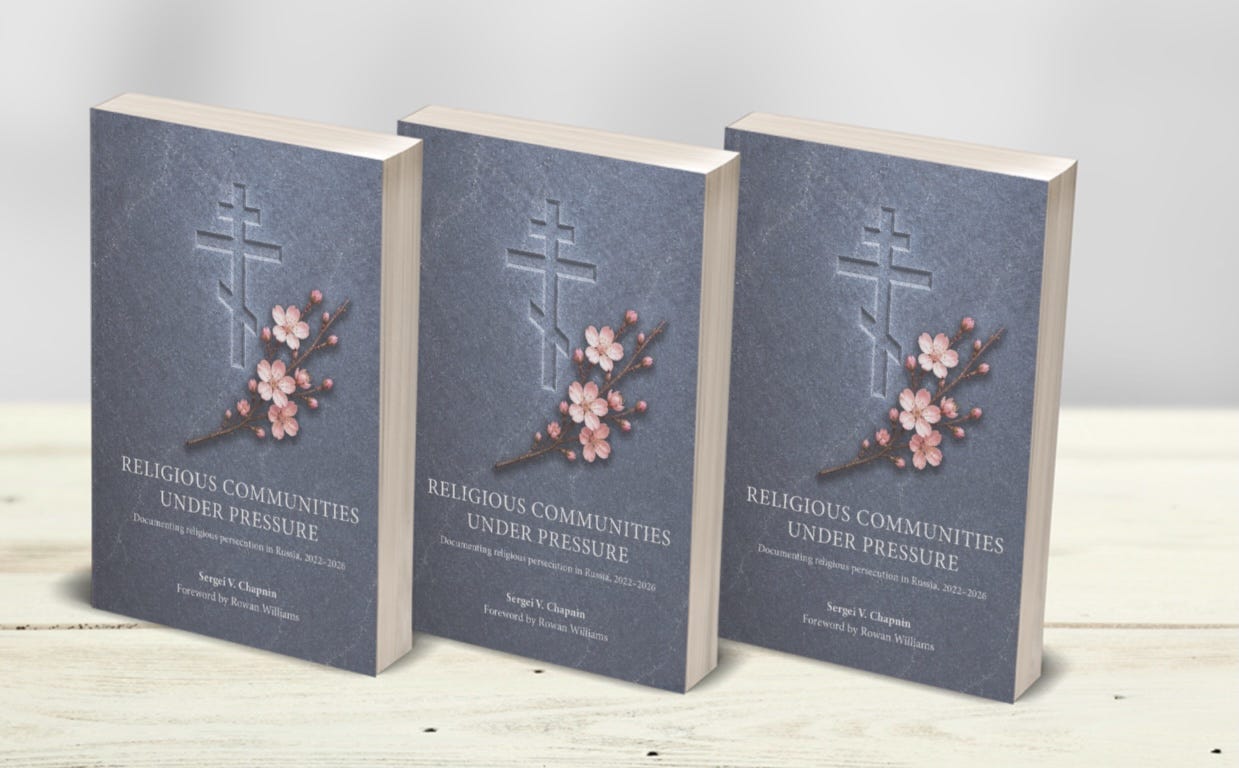
The first review of my book appeared on Amazon on June 20th — one star, posted within days of publication. “Andrei G.” declared it “clearly biased political propaganda” and accused me of selecting evidence to support a predetermined political position rather than honestly examining the issue. Whether he actually read the book is another question entirely.
I looked up his profile. Before my book caught his attention, “Andrei G.” had reviewed buckthorn oil, greeting cards, a steamer, and ginger spice. Clearly a man of wide-ranging intellectual interests. Kremlin trolls, it turns out, monitor my work with remarkable attentiveness — and apparently shop on Amazon in their spare time.
His review temporarily pushed my book down in Amazon’s ratings. It didn’t last.
The second review came from Aristotle Papanikolaou, my colleague at Fordham, who has followed my research for years and read earlier versions of this work as it developed from a policy paper into a book. His response wasn’t a formality: “An excellent, honest, and objective assessment. Important information in the fight against the Russian regime and the collaboration of the Russian Orthodox Church.” Five stars.
But the response that has stayed with me is from Fr. Volodymyr Zablotskyy, a priest at Holy Trinity Orthodox Church in Yonkers, NY. He wrote in his blog not a book notice but a genuine theological reflection — and arrived at the question my book keeps pressing: What happens when the Church gradually loses its ability to speak prophetically to the state?
His answer draws on the long arc of Christian witness — Nathan and David, Elijah and Ahab, the Baptist and Herod — and lands on something that cuts across every national context: “The Church is not called to oppose every government. Neither is she called to endorse every government. She is called to proclaim Christ.”
And then this sentence, which I think is the moral center of his reading: “Whenever faithful Christians begin to fear speaking honestly within the Church, something precious is already being lost. The Church should be the safest place for truth.”
This is exactly what my book is about. Not Russia as an exotic case study. Russia as a warning.
I can see that copies have already been ordered by readers in the United States, the United Kingdom, Belgium, Germany, and Australia. Thank you — and I look forward to your reviews. If my book has been useful to you, an honest rating or a few words on Amazon makes a real difference — especially now, when the competition for visibility has clearly begun.
A Kindle edition is coming soon. If you haven't yet — the book is here: amazon.com/dp/B0H5G277LW
Next Wednesday, July 1, I’ll be presenting my book at EuARe in Rome. The conversation is widening.