ARCANA ARCANORUM
The term Arcana Arcanorum (Latin for “Secrets of Secrets”) refers to a body of high esoteric teachings and practices that have migrated through various occult orders since the 18th century. It originated in the Neapolitan esoteric-Masonic milieu of the mid-1700s, was absorbed into Count Cagliostro’s Egyptian Rite (often associated with the “Scala di Napoli” or Ladder of Naples), and eventually found new expression in the sex-magick doctrines of Aleister Crowley’s A∴A∴ and the upper degrees of the Ordo Templi Orientis (O.T.O.) in the 20th century.
![The Arcana Arcanorum is an esoteric system preserved, away from prying eyes, [composed of] Masons, Rosicrucians , Martinist,... – @maggiemay63 on Tumblr](https://substackcdn.com/image/fetch/%24s_!Uur7!,f_auto,q_auto:good,fl_progressive:steep/https%3A%2F%2Fsubstack-post-media.s3.amazonaws.com%2Fpublic%2Fimages%2F9c83bed4-1a23-4334-b8e7-b578b88d2cbd_562x796.jpeg)
The following presents a historical timeline of the Arcana Arcanorum’s development and a thematic analysis of how its concept evolved, from alchemical and theurgical practices in Enlightenment Naples to the sexual-magical interpretation under Crowley.
Magick Without Tears with Marco Visconti thrives on reader support. By choosing a paid subscription, you help keep new posts coming and fund ongoing research and writing. Thank you for considering a paid subscription to support this publication.
Historical Timeline of Arcana Arcanorum Developmentc. 1740s–1770s: Naples and Raimondo di Sangro’s Ordine Osirideo
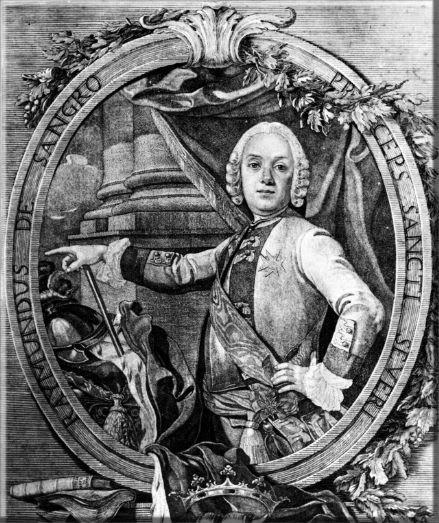
In the mid-18th century, Prince Raimondo di Sangro of San Severo (1710–1771) – an inventor, alchemist, and aristocratic Freemason – is credited with founding an “Osirian” or Egyptian Masonic Order in Naples. This secret Ordine Osirideo integrated Egyptian symbols and Hermetic Arcana Arcanorum teachings (the “secret of secrets” of occult science) into a high-degree Masonic framework. Raimondo’s Neapolitan lodge became a repository of arcane knowledge combining Neoplatonic, Kabbalistic, and alchemical currents.
1780s: Cagliostro’s Egyptian Rite & “La Scala di Napoli”
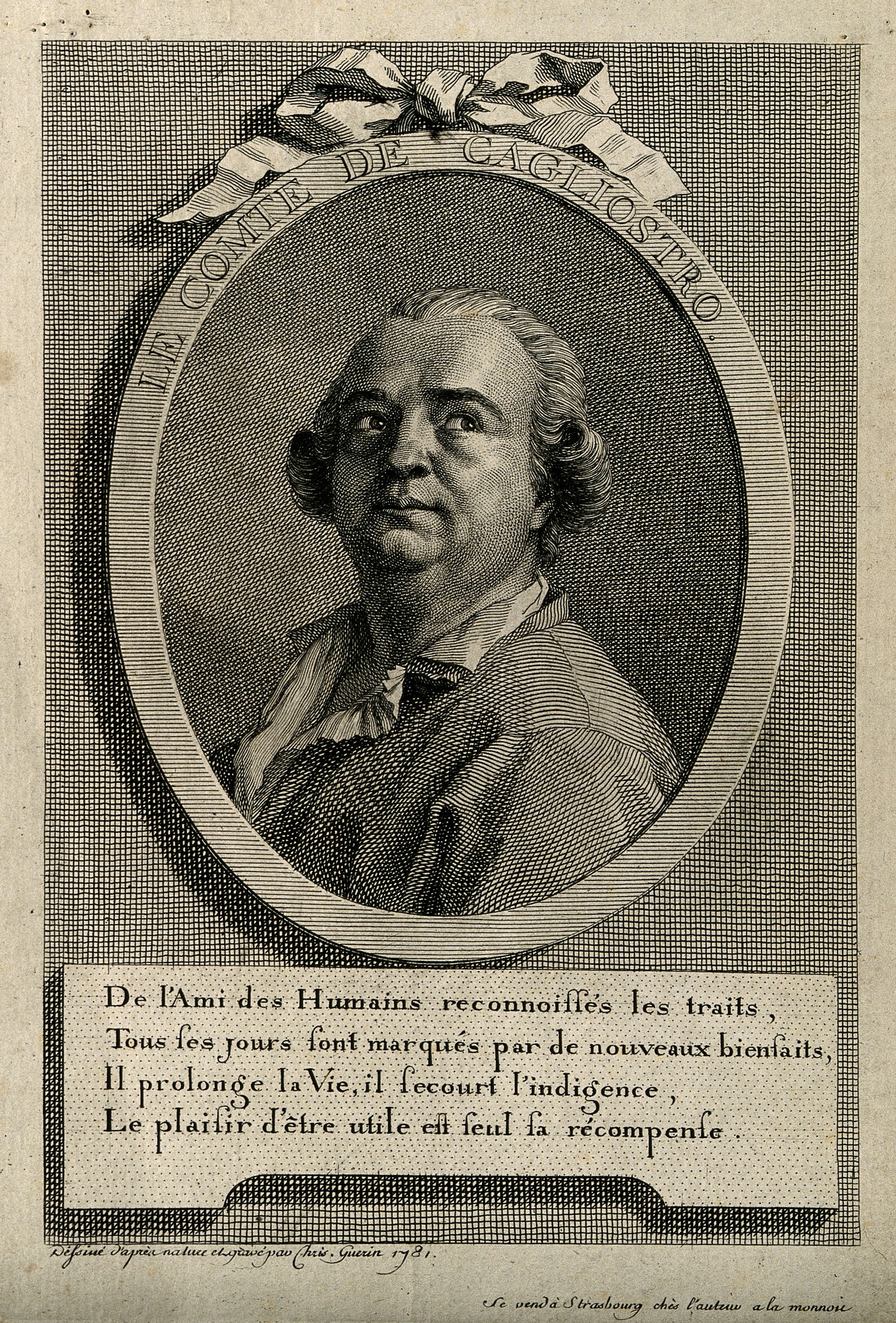
The itinerant occultist Count Alessandro di Cagliostro travelled through Italy and was initiated into the Arcana Arcanorum in Naples, according to later Masonic legend. In 1783, Cagliostro spent time in Naples, absorbing the secret practices of Raimondo’s circle, sometimes called “La Scala di Napoli”, the Ladder of Naples. Cagliostro used this knowledge to create his own Egyptian Rite of Freemasonry (est. 1784) in which the highest teachings were known as the “Secreto Secretorum”, essentially equivalent to the Arcana Arcanorum. His rite, unlike conventional Freemasonry, included operative mystical practices: he prescribed intensive forty-day retreats (or quarantines) for initiates to achieve spiritual illumination and even physical rejuvenation (see below). These represent a direct transmission of the Arcana Arcanorum’s aims into a new initiatory system.
1805–1816: Rise of the Misraïm Rite and Arcana Arcanorum Integrated
After Cagliostro’s fall and his arrest in 1789 by the Papal regime, the Arcana Arcanorum teachings continued to circulate in secret. By the early 1800s, a Masonic high-degree system called the Rite of Misraïm, purportedly of Egyptian lineage, was active in Italy and France. In 1813, a group of initiates obtained the Arcana Arcanorum manuscripts in Naples and conveyed them to France. On October 8, 1816, an Italian manuscript titled Arcana Arcanorum – essentially an outline of the secret ritual curriculum of the Neapolitan tradition – was submitted to the Grand Orient of France. It contained the teachings attached to the last four degrees (87°–90°) of the Misraïm Rite. In November 1816, a Grand Orient committee examined these degrees; they noted that the Arcana Arcanorum imparted concrete “operative” occult practices that had previously been lacking in those high grades. Thus, from 1816 onward, the Rite of Misraïm formally included the Arcana Arcanorum as its pinnacle, with degrees 87°–90° explicitly designated for transmitting this “secret of secrets.” Masonic historians record that a certain Brother de Lassalle, Misraïm Grand Master for Naples, had brought in these Neapolitan high-degree secrets (the “Naples Regime” Arcana) to enrich the rite.
1860s–1880s: Memphis & Misraïm and the Occult Revival
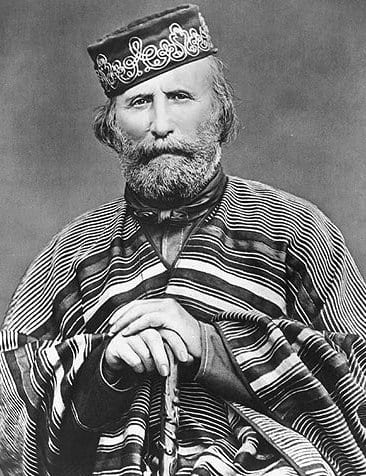
The Rite of Memphis, a similar Egypt-themed masonic system with 95 degrees, founded in 1838, and the Misraïm Rite eventually merged. The combined Ancient and Primitive Rite of Memphis-Misraïm (unified under Giuseppe Garibaldi in 1881) preserved the Arcana Arcanorum as a collective term for its highest degrees. Throughout the 19th century, esotericists like Éliphas Lévi and later Gérard Encausse (Papus) sought charters in these rites, attracted by the mystique of the Arcana Arcanorum degrees. However, the actual Arcana teachings remained restricted to initiates of the innermost circles. Notably, by the late 1800s, all three streams – Rosicrucian mysticism, high-grade Freemasonry, and occult fraternities – were aware of the Arcana Arcanorum legend: it represented the ultimate synthesis of mystical knowledge (alchemy, Kabbalah, theurgy) supposedly preserved from antiquity.
1890s–1930: Giuliano Kremmerz’s Ordine Egizio and the Fratellanza Terapeutica e Magica di Myriam
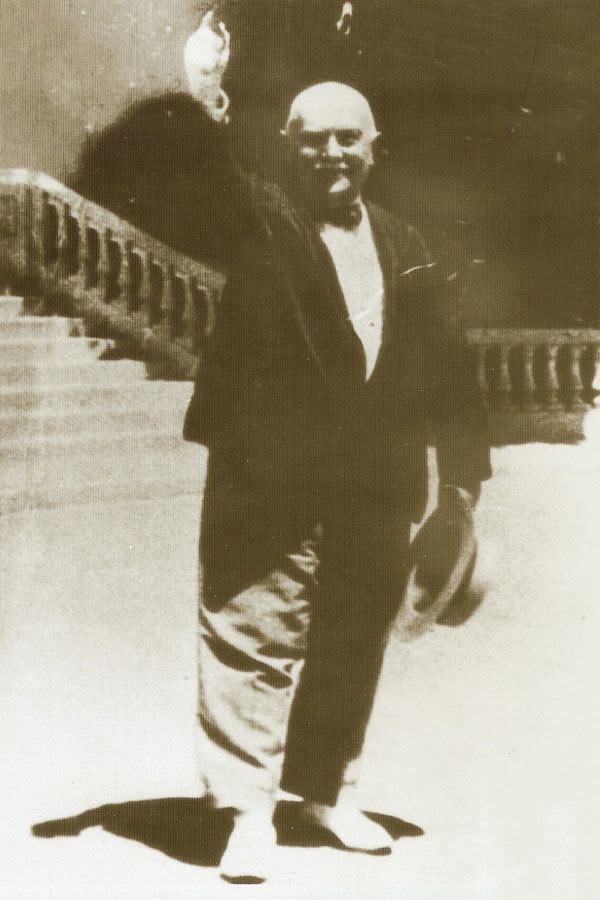
In the last decade of the nineteenth century, Ciro Formisano, known as Giuliano Kremmerz, emerged from the Neapolitan Arcana Arcanorum milieu. Around 1896, he founded the Fratellanza Terapeutica e Magica di Myriam, presenting it as an operative Hermetic school for healing pro salute populi and as a continuation of the Osirian Egyptian line associated with Raimondo di Sangro. Kremmerz maintains ties with Egyptian Rite circles of Memphis-Misraïm and receives Martinist initiation from Papus, serving as a regional delegate in Campania. Attempts to align his public-facing therapeutic Schola with the reserved Ordine Osirideo Egizio meet resistance from its Synedrium. Yet, he continues under the aegis of a Grande Ordine Egizio while establishing Accademie in Italy.
1896–1930: Kremmerz’s Arcana Arcanorum
Within Kremmerz’s closed initiatory corpus, the Arcana are reframed through alchemical and erotic theurgy aimed at the formation of a Body of Light. Later twentieth-century heirs often deny any sexual component, a claim contested by Italian researchers such as Vittorio Fincati, who cite manuscripts and testimonies from the Neapolitan line. Kremmerz works in the very years that will see Crowley systematise sexual magick for the Anglophone world; direct contact is unproven, yet mutual awareness is realistic.
1907–1912: Aleister Crowley’s A∴A∴ and Affiliation with O.T.O.
In the early 20th century, British occultist Aleister Crowley emerged as a key figure in reviving and transforming the Arcana Arcanorum. In 1907, Crowley (along with George Cecil Jones) founded the A∴A∴ (Argentum Astrum), a magical order structured in graded initiations. While not directly part of Memphis-Misraïm, A∴A∴ incorporated many arcane practices from the Golden Dawn and older grimoires – such as the invocation of the Holy Guardian Angel, a central element of the Arcana Arcanorum. Meanwhile, Crowley also made contact with the Memphis-Misraïm Rite: in 1909, he received a patent from Grand Master John Yarker granting him high degrees (33°/ 90°/ 95°) and authority in those rites. Soon after, in 1912, Crowley was initiated by Theodor Reuss into the Ordo Templi Orientis (O.T.O.), a German para-masonic order that had itself woven together various high-degree systems (including Memphis-Misraïm) and claimed to possess the core secret of the Arcana Arcanorum. Crowley took the magical name Baphomet and assumed leadership of O.T.O.’s British section. This period marks the transition of Arcana Arcanorum into a modern occult context, as Crowley began infusing his Thelemic philosophy and sexual magick techniques into the received framework.
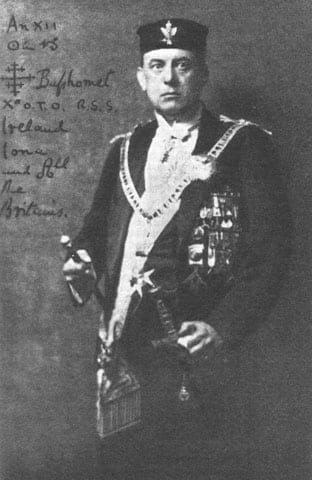
1913–1947: Crowley’s Thelemic Reinterpretation – Sex Magick Unveiled
Under Crowley’s guidance, the O.T.O. incorporated sexual magic as the climax of the Arcana Arcanorum tradition. Crowley rewrote O.T.O. rituals and composed new ones (e.g. the Gnostic Mass in 1913) to express the “secret of secrets” in symbolic form. By the 1920s, Crowley openly hinted that the true secret of the Templars and high-degree Masonry was the usage of sexual energy and fluids in the Great Work – a doctrine he had begun to teach to his initiates. In his writings and secret instructions, Crowley linked this modern erotic alchemy to its esoteric predecessors: for example, he considered the medieval Abramelin ritual of angelic communion essential to all serious occult work (just as Cagliostro had in the 1780s), and he equated the O.T.O. IX° sexual formula with the creation of the alchemical “Elixir of Life” or Philosopher’s Stone, long sought by alchemists. After Crowley died in 1947, both the A∴A∴ and O.T.O. continued, led by students who preserved his teachings. The Arcana Arcanorum, now stripped of its overtly Masonic dress, lived on as the core of Crowley’s Thelemic spiritual practice – combining Eastern tantra, Western alchemy, and the mystical Qabalah into a unified path. Other occult orders of the mid-20th century, such as Emile Dantinne’s 1927 Ordre Hermès Tres-Megiste in Belgium, also integrated Arcana Arcanorum practices into their highest degree, demonstrating the enduring appeal of this “secret within all secrets.”
The timeline above sketches the movement of the Arcana Arcanorum from Naples to the modern era.
In the extended subscriber edition that follows, I unpack each stage in full, explore the key figures and ritual technologies, review the primary documents, and show how its themes from angelic invocation to sexual alchemy take concrete form. If you value this work, consider joining to read the complete analysis.
Magick Without Tears with Marco Visconti is a reader-supported publication. You have read only 1/5 of the entire article so far. To read it in its entirety, become a paid subscriber now.
Arcana Arcanorum in 18th-Century NaplesIn 18th-century Naples, an esoteric circle formed around Raimondo di Sangro, the Prince of San Severo. Raimondo was a brilliant and eccentric nobleman known for his scientific inventions and alchemical experiments. As a Freemason (he was an early member of Neapolitan lodges under the authority of the Grand Lodge of England), Raimondo became interested in infusing Masonry with Egyptian and Hermetic wisdom. He reportedly established an Ordine Osirideo Egizio in Naples in the 1750s, working semi-independently of mainstream Masonry.
In this Ordine Osirideo, Raimondo and his associates studied what they called the Arcana Arcanorum, which included knowledge of alchimia, magia, e cabala that had been passed down through select initiates. Later, Masonic commentators identify Raimondo di Sangro as a guardian of these mysteries: “according to legend, [Cagliostro] received them in Naples from the Marquis of San Severo” (i.e., Raimondo). This suggests Raimondo’s lodge was believed to have custody of a primaeval Egyptian wisdom-tradition, said to derive from “keepers of the traditions of Ancient Egypt”.